
Scenario A Lisa has a diagnosed learning disability
Scenario A: Lisa has a diagnosed learning disability. She requires more time to write tests. Some students complain that it isn’t fair that she gets more time. 1) Is it fair Lisa gets more time? Why or why not?
Scenario B Ms. K reminds students that everyone is required to show up to class on time, at 9: 00 am sharp. Mark lives farther away than everyone else. He asks Ms. K if he can be given an exception to the rule and be allowed to come to class at 9: 15 am. 1) Is it fair that Mark be given an exception to the rule? Why or why not?
Discussion • When is it appropriate to apply the same rule to everyone (Scenario B) and when is it appropriate to offer an accommodation (Scenario A)? • What would the consequences be if Lisa was treated the same as everyone else? • What would be the consequences for Mark and for his classmates if he was treated differently (i. e. he could come late to class)?
- treating everyone equally isn’t always actually fair - instead equity should be the goal - ensure differences do not prevent some from accessing the same opportunities as everyone else - may need accommodations - these do not impede on the rights or opportunities of others.
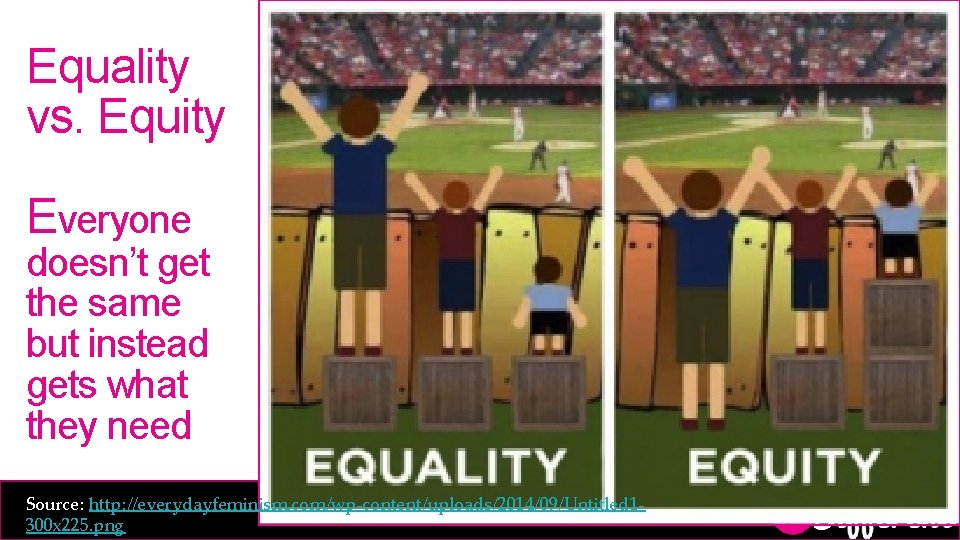
Equality vs. Equity Everyone doesn’t get the same but instead gets what they need Source: http: //everydayfeminism. com/wp-content/uploads/2014/09/Untitled 1300 x 225. png
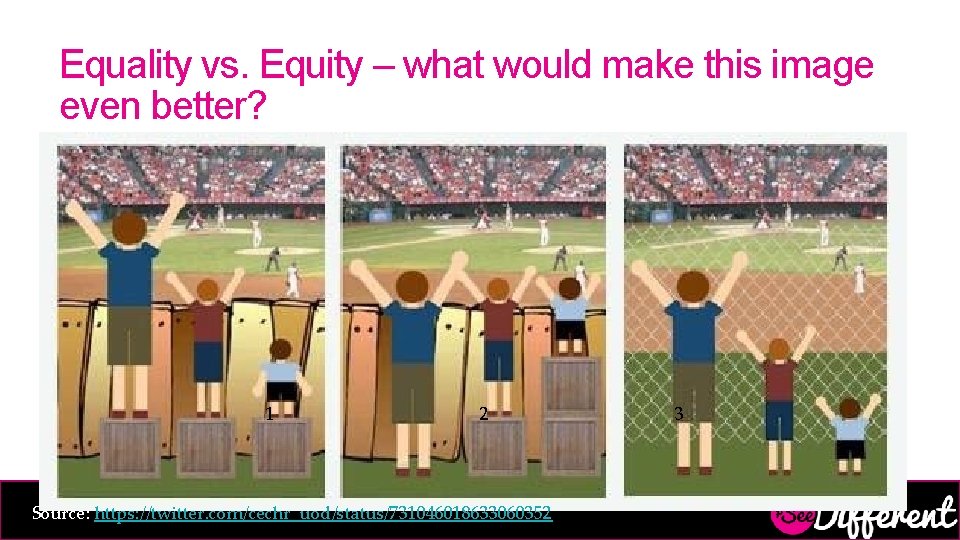
Equality vs. Equity – what would make this image even better? 1 2 Source: https: //twitter. com/cechr_uod/status/731046018633060352 3

Harrison Bergeron
Recycling bin Exercise
Scenarios Tom is in grade 11 and considering his options for postsecondary. He is visiting many universities and colleges to scope out his options and better understand what campus life is like. Tom’s mom and dad are driving him to different cities, showing him the ins and outs of the post-secondary institutions they attended when they were young. They have offered to pay for his tuition until he starts earning on his own.
Scenarios Prom is fast approaching at Jane Doe Public School. Lisa and Jamal, an inter-racial couple, have dated for nearly two years. They have both bought their tickets but they are still debating whether to go to prom as a couple or not. They fear that making their relationship public may invite public scrutiny or gossip. They aren’t sure if they are ready for people to know about them. • Based on the above description, think about the possible barriers and sites of privilege. How close are Lisa and Jamal to the basket (goal: attending prom)?
1. What does the word ‘privilege’ mean? ” 2. Brainstorm all the privileges you think you have. “Ways That We Have Privilege in Our Society“

Privilege Walk

Debrief

White Privilege Peggy Mc. Intosh published her now-classic essay “White Privilege: Unpacking the Invisible Knapsack. ” In it, she describes the phenomenon of white privilege as a collection of “unearned assets that I can count on cashing in each day, but about which I was meant to remain oblivious. ” Recognizing privilege doesn’t mean suffering guilt or shame for your lot in life. Nobody’s saying that straight, white, middle-class, able-bodied males are all a bunch of a%##*s who don’t work hard for what they have. Recognizing privilege simply means being aware that some people have to work much harder just to experience things you take for granted (if they ever can experience them at all). https: //www. huffpost. com/entry/explaining-white-privilege-to-a-broke-white-person_b_5269255
- Slides: 14