
Scatterplots Association and Correlation Statistics 7 Definition Scatterplots
- Slides: 22
Scatterplots, Association, and Correlation Statistics 7
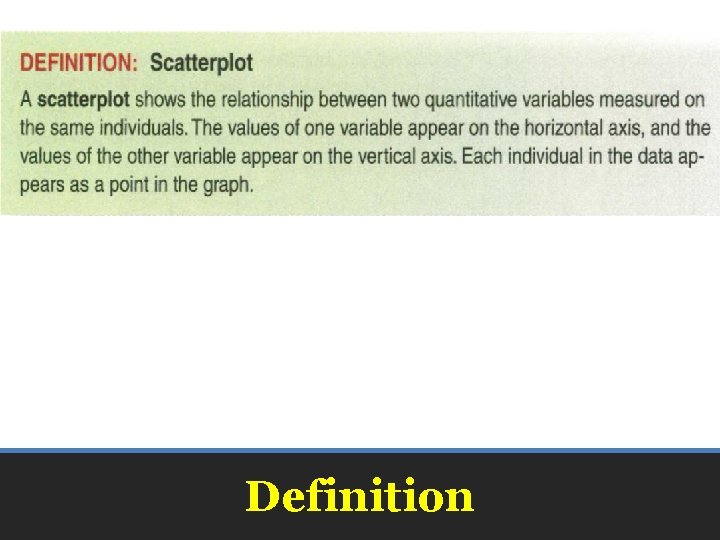
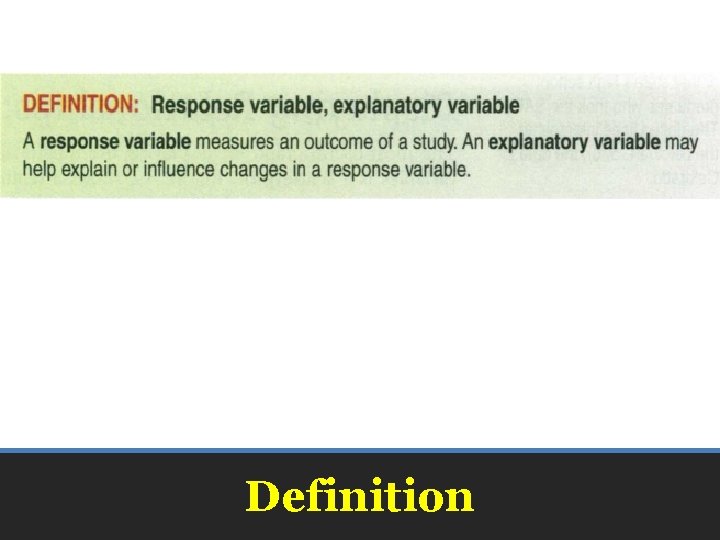
Definition
• Scatterplots may be the most common and most effective display for data. – In a scatterplot, you can see patterns, trends, relationships, and even the occasional extraordinary value sitting apart from the others. • Scatterplots are the best way to start observing the relationship and the ideal way to picture associations between two quantitative variables. Looking at Scatterplots
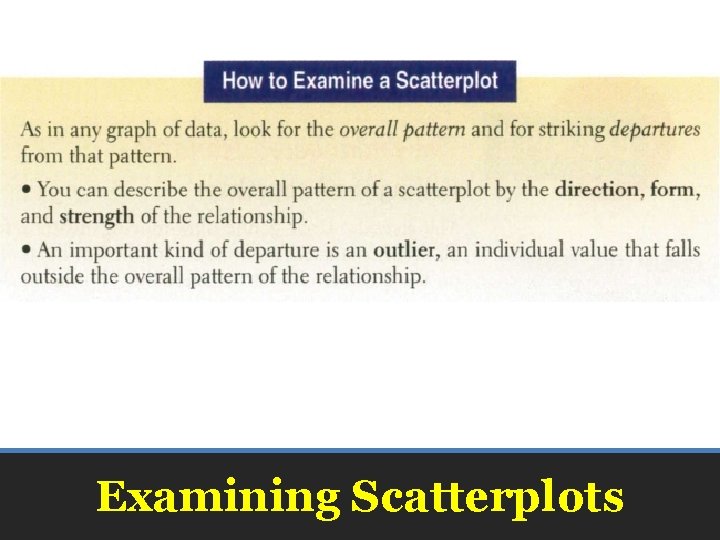
Examining Scatterplots
• When looking at scatterplots, we will look for direction, form, strength, and unusual features. • Direction: – A pattern that runs from the upper left to the lower right is said to have a negative direction. – A trend running the other way has a positive direction. Looking at Scatterplots
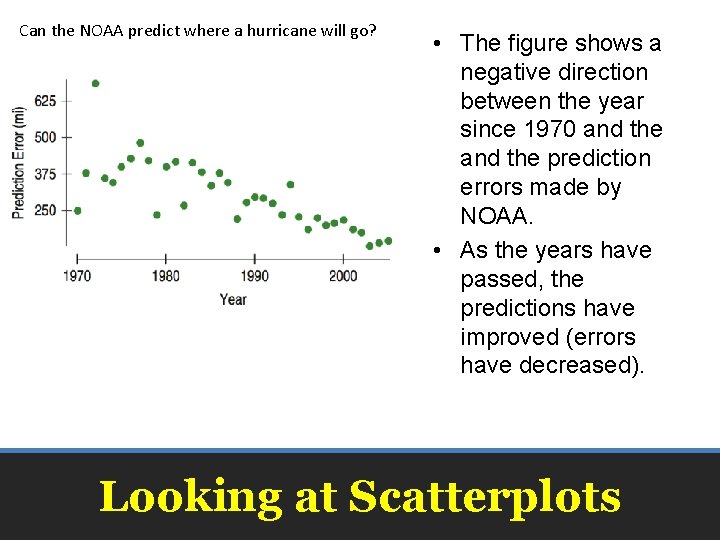
Can the NOAA predict where a hurricane will go? • The figure shows a negative direction between the year since 1970 and the prediction errors made by NOAA. • As the years have passed, the predictions have improved (errors have decreased). Looking at Scatterplots
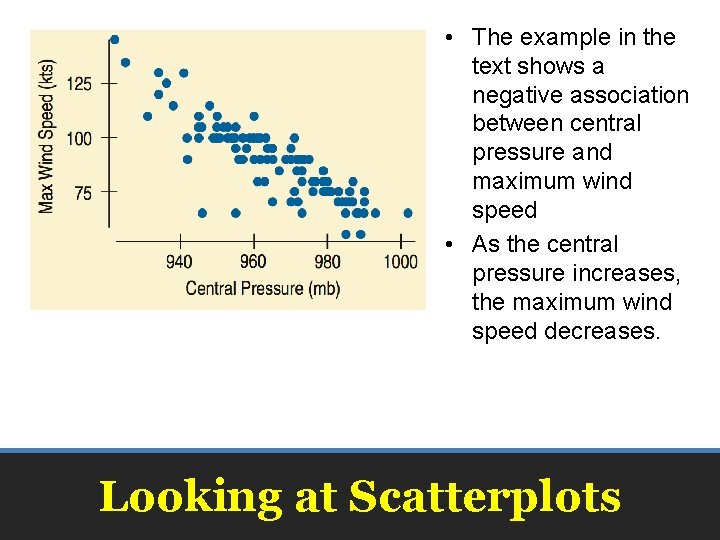
• The example in the text shows a negative association between central pressure and maximum wind speed • As the central pressure increases, the maximum wind speed decreases. Looking at Scatterplots
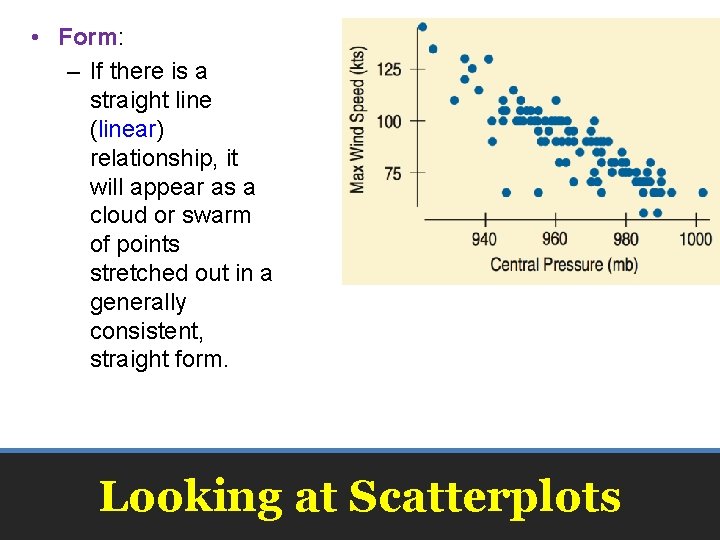
• Form: – If there is a straight line (linear) relationship, it will appear as a cloud or swarm of points stretched out in a generally consistent, straight form. Looking at Scatterplots
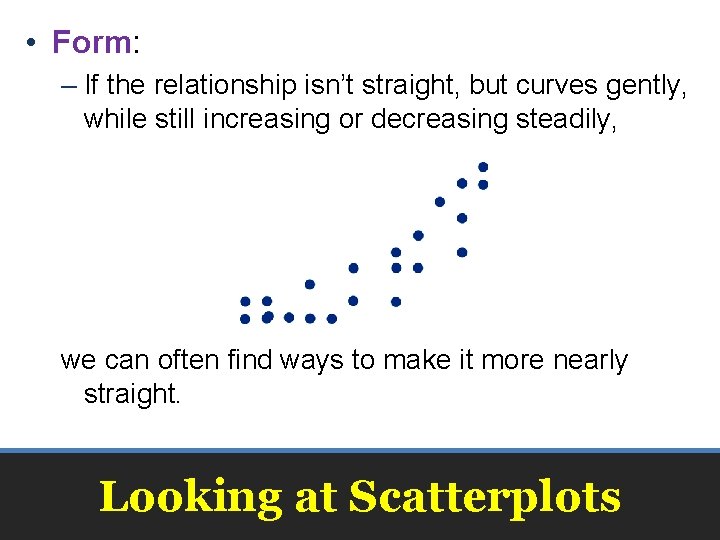
• Form: – If the relationship isn’t straight, but curves gently, while still increasing or decreasing steadily, we can often find ways to make it more nearly straight. Looking at Scatterplots
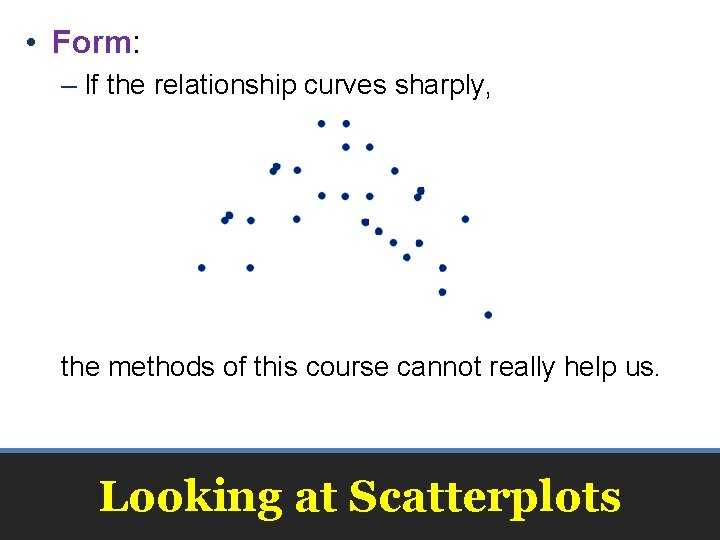
• Form: – If the relationship curves sharply, the methods of this course cannot really help us. Looking at Scatterplots
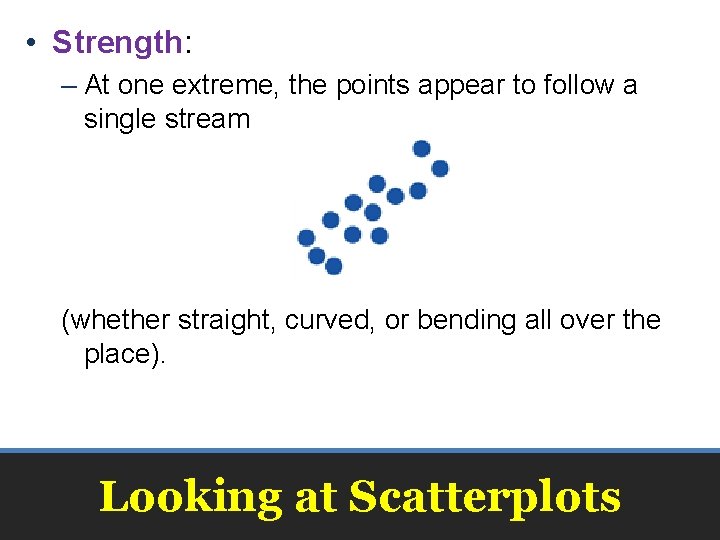
• Strength: – At one extreme, the points appear to follow a single stream (whether straight, curved, or bending all over the place). Looking at Scatterplots
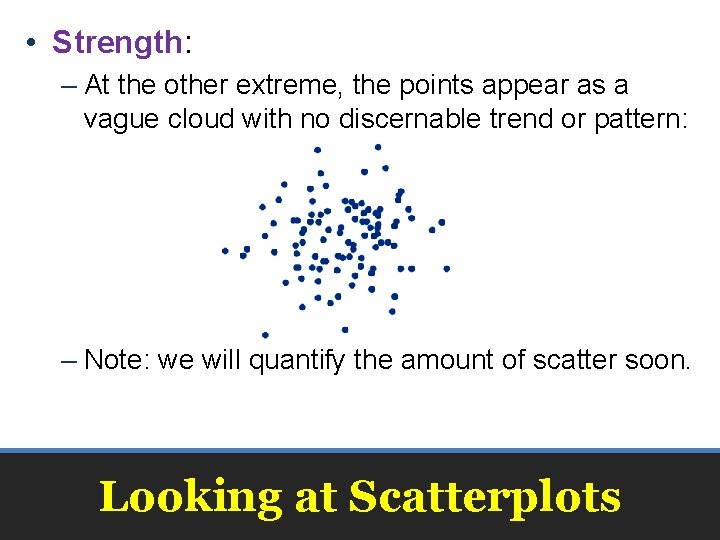
• Strength: – At the other extreme, the points appear as a vague cloud with no discernable trend or pattern: – Note: we will quantify the amount of scatter soon. Looking at Scatterplots
• Unusual features: – Look for the unexpected. – Often the most interesting thing to see in a scatterplot is the thing you never thought to look for. – One example of such a surprise is an outlier standing away from the overall pattern of the scatterplot. – Clusters or subgroups should also raise questions. Looking at Scatterplots
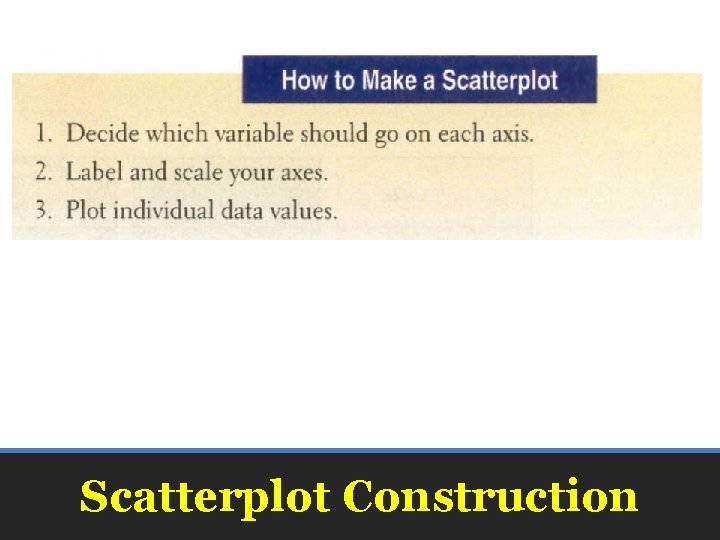
Scatterplot Construction
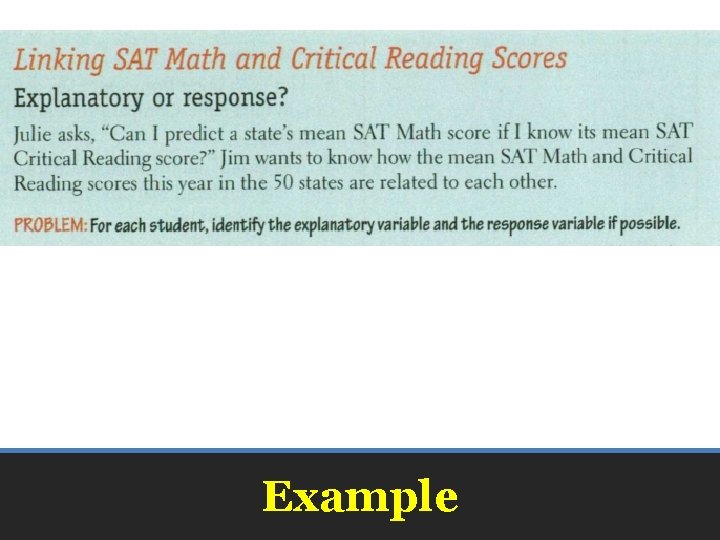
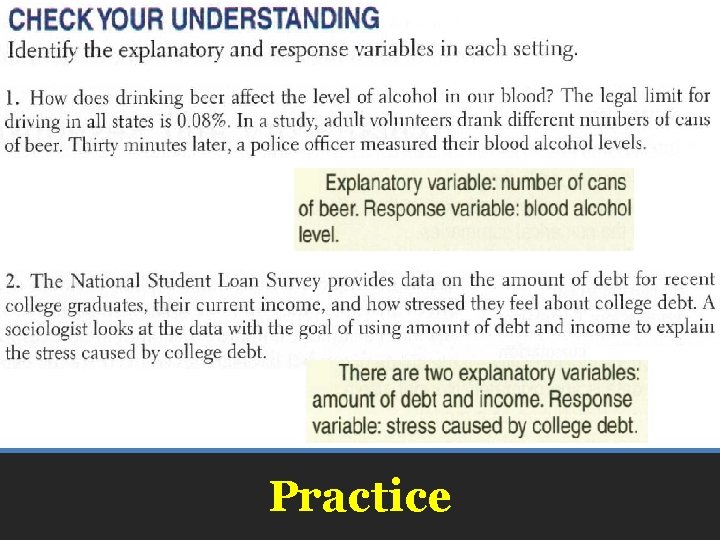
• It is important to determine which of the two quantitative variables goes on the x-axis and which on the y-axis. • This determination is made based on the roles played by the variables. • When the roles are clear, the explanatory or predictor variable goes on the x-axis, and the response variable (variable of interest) goes on the y-axis. Roles for Variables
Definition
Example
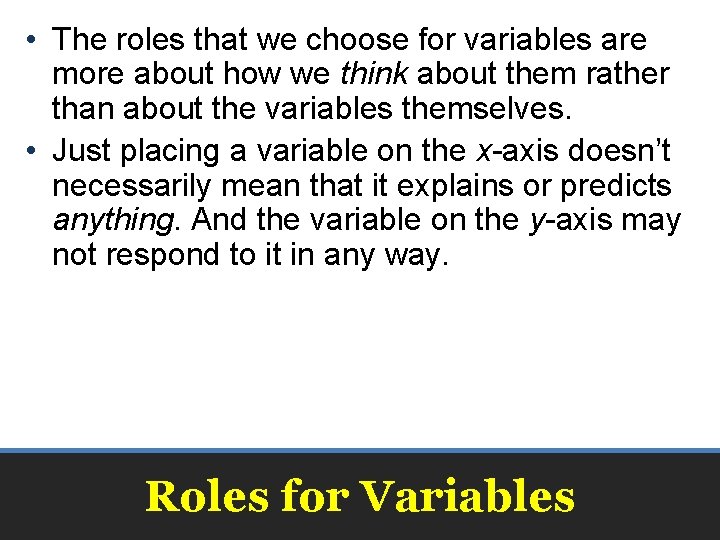
• The roles that we choose for variables are more about how we think about them rather than about the variables themselves. • Just placing a variable on the x-axis doesn’t necessarily mean that it explains or predicts anything. And the variable on the y-axis may not respond to it in any way. Roles for Variables
Practice
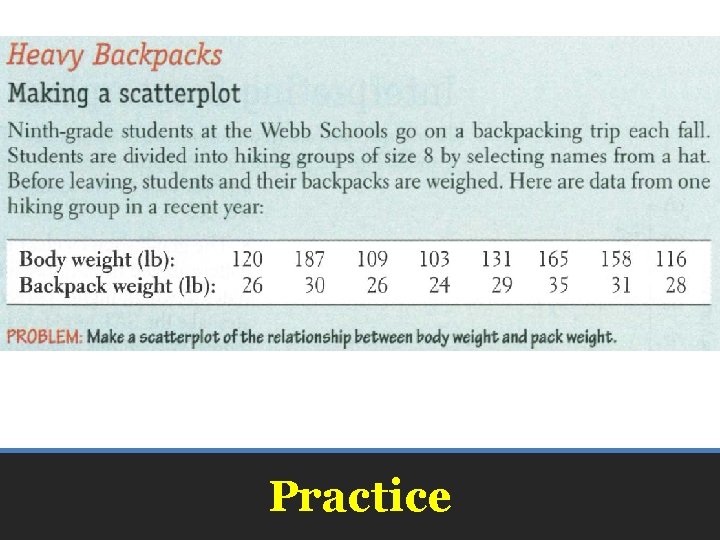
Practice
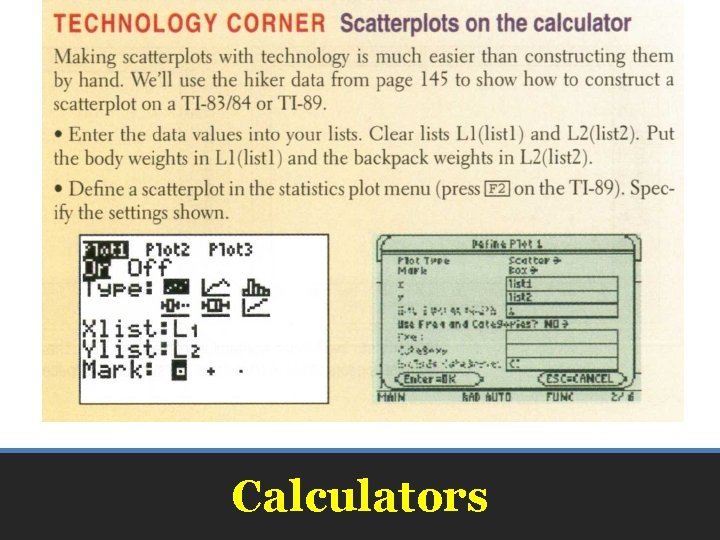
Calculators
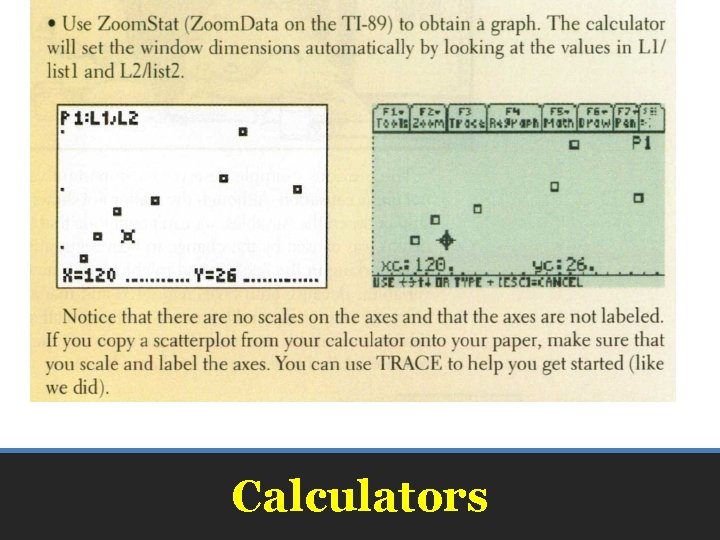
Calculators