
Scarlet Fever Laura Guzman Daniela Hernandez v What
- Slides: 12
Scarlet Fever Laura Guzman & Daniela Hernandez
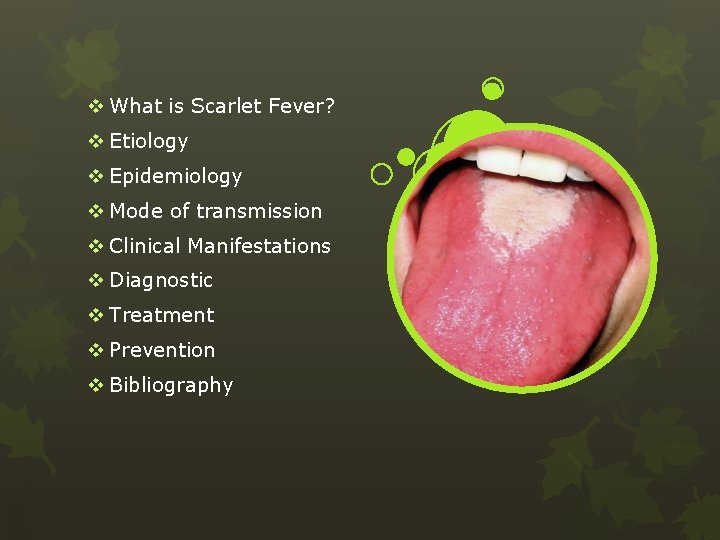
v What is Scarlet Fever? v Etiology v Epidemiology v Mode of transmission v Clinical Manifestations v Diagnostic v Treatment v Prevention v Bibliography
What is Scarlet Fever? v Scarlet Fever is an upper respiratory infection caused by a group A streptococcus bacteria. v This bacteria makes a toxin that can cause a red rash, hence the name “scarlet” fever. v Scarlatina is due to a throat infection caused by a bacterium (germ) called streptococcus. v There are various strains (types) of streptococcus. v They cause different infections and a strain called group A streptococcus causes scarlet fever. v The fever rash occurs when the streptococcal bacteria release poisons toxins that make the skin go red. v Most common in children aged 3 -15 years, the most common age being 4 years. It more frequently occurs in the late winter or in early spring.
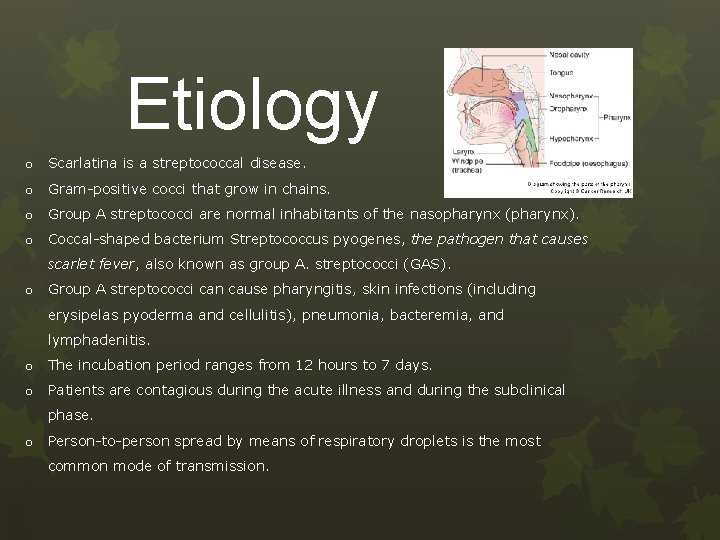
Etiology o Scarlatina is a streptococcal disease. o Gram-positive cocci that grow in chains. o Group A streptococci are normal inhabitants of the nasopharynx (pharynx). o Coccal-shaped bacterium Streptococcus pyogenes, the pathogen that causes scarlet fever, also known as group A. streptococci (GAS). o Group A streptococci can cause pharyngitis, skin infections (including erysipelas pyoderma and cellulitis), pneumonia, bacteremia, and lymphadenitis. o The incubation period ranges from 12 hours to 7 days. o Patients are contagious during the acute illness and during the subclinical phase. o Person-to-person spread by means of respiratory droplets is the most common mode of transmission.
Epidemiology v As many as 10% of the population contracts group A streptococcal pharyngitis. Of this group, as many as 10% then develop scarlet fever. v The infection rate increases in overcrowded places. v Immunity, which is type specific, may be induced by a carrier state or overt infection. v Predominantly occurs in children aged 5 -15 years, though it can also occur in older children and adults. v By the time children are 10 years old, 80% have developed lifelong protective antibodies against streptococcal pyrogenic exotoxins. v Scarlatina is rare in children younger than 2 years because of the presence of maternal antiexotoxin antibodies and lack of prior sensitization. Ø February 2014: a total of 868 notifications of scarlet fever with onset dates during weeks 5 to 8 of 2014 were made to Public Health England (PHE) compared to an average of 444 for the same period over the past four years. Ø Ever since 1990, these are the highest notification totals for this time of year.
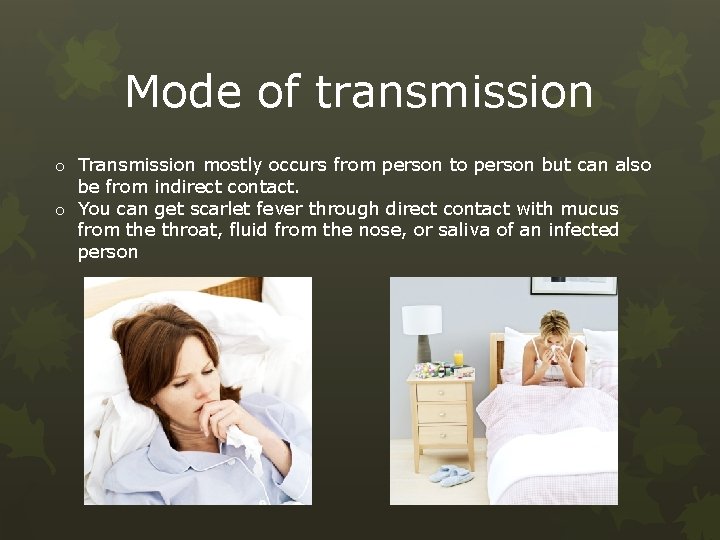
Mode of transmission o Transmission mostly occurs from person to person but can also be from indirect contact. o You can get scarlet fever through direct contact with mucus from the throat, fluid from the nose, or saliva of an infected person
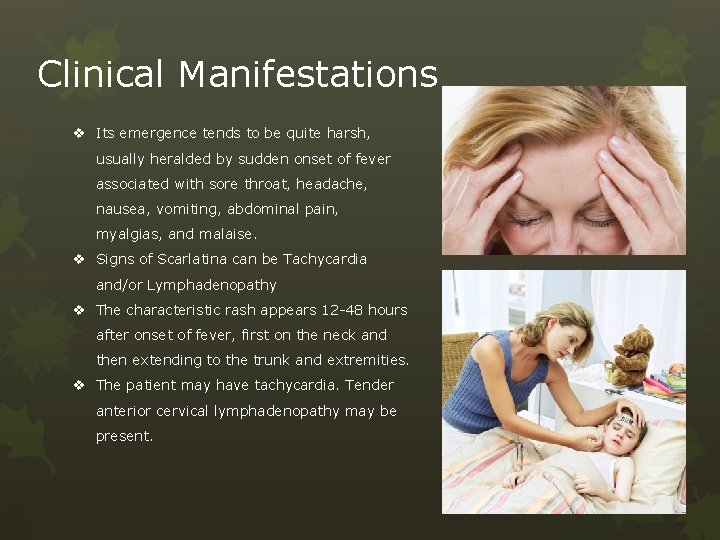
Clinical Manifestations v Its emergence tends to be quite harsh, usually heralded by sudden onset of fever associated with sore throat, headache, nausea, vomiting, abdominal pain, myalgias, and malaise. v Signs of Scarlatina can be Tachycardia and/or Lymphadenopathy v The characteristic rash appears 12 -48 hours after onset of fever, first on the neck and then extending to the trunk and extremities. v The patient may have tachycardia. Tender anterior cervical lymphadenopathy may be present.
COMPLICATIONS Most cases of scarlet fever have no complications at all. However, in the early stages, there is a small risk that you might get one of the following: • Meningitis • Throat abscess • Acute rheumatic fever • Pneumonia • Inflammation of the sinuses (sinusitis)
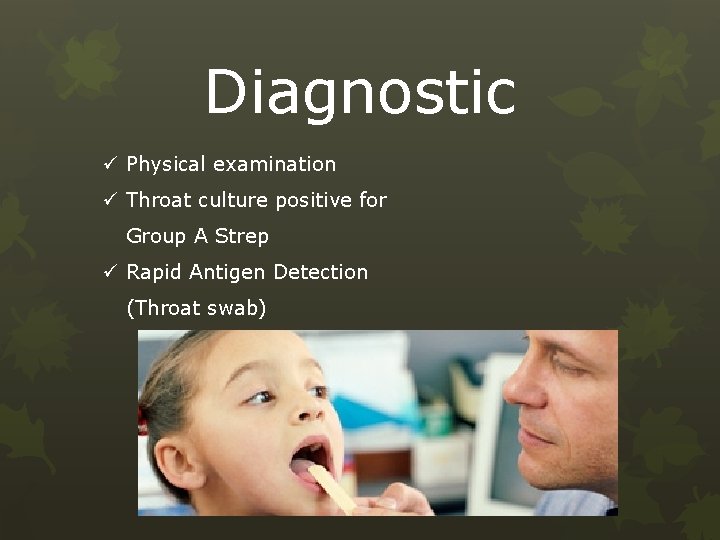
Diagnostic ü Physical examination ü Throat culture positive for Group A Strep ü Rapid Antigen Detection (Throat swab)
Treatment • There is no vaccine, but the disease is effectively treated with antibiotics. • Treatment is to speed recovery and to prevent possible complications. Antibiotics: A 10 -day course of penicillin is usually advised. Other antibiotics are advised if you are allergic to penicillin. It is important to finish the course of antibiotics: Ø This makes sure all the bacteria are killed and reduces the chance of complications.
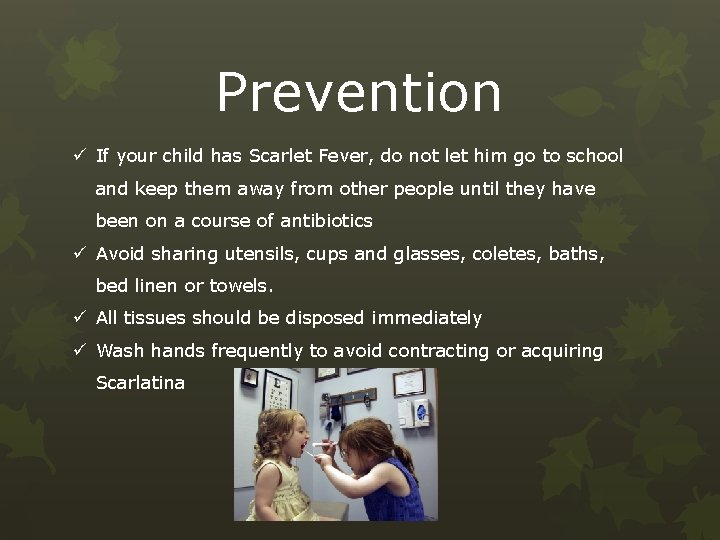
Prevention ü If your child has Scarlet Fever, do not let him go to school and keep them away from other people until they have been on a course of antibiotics ü Avoid sharing utensils, cups and glasses, coletes, baths, bed linen or towels. ü All tissues should be disposed immediately ü Wash hands frequently to avoid contracting or acquiring Scarlatina
Bibliography Vorvick, L. J. (Ed. ). (2012, May 15). Scarlet Fever. Retrieved May 1, 2014, from The New York Times website: http: //www. nytimes. com/health/guides/disease/ scarlet-fever/overview. html Kenny, T. , Dr. (2013, May 31). Scarlet Fever. Retrieved May 1, 2014, from Patient website: http: //www. patient. co. uk/health/scarlet-feverleaflet Scarlet Fever. (2013, March 28). Retrieved May 1, 2014, from NHS Choice website: http: //www. nhs. uk/conditions/Scarlet-fever/Pages/Introduction. aspx Klein, MD, J. (2012, July). Scarlet Fever. Retrieved May 2, 2014, from http: //kidshealth. org/parent/infections/bacterial_viral/scarlet_fever. html Zabawski Jr, DO, E. J. , & James, MD, W. D. (2014, April 30). Emedicine - Scarlet Fever. Retrieved April 30, 2014, from http: //emedicine. medscape. com/article/1053253 -overview#a 0156