
SCARCITY ECONOMIC SYSTEMS AND FREE ENTERPRISE Economics Mr
- Slides: 50
SCARCITY, ECONOMIC SYSTEMS, AND FREE ENTERPRISE Economics Mr. Biddle
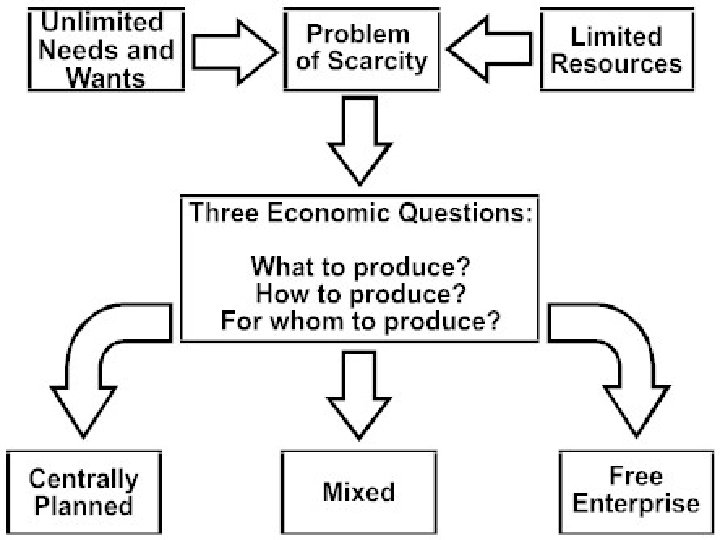
Economics ¨ Economics: the attempt to satisfy seemingly unlimited wants and needs using limited resources
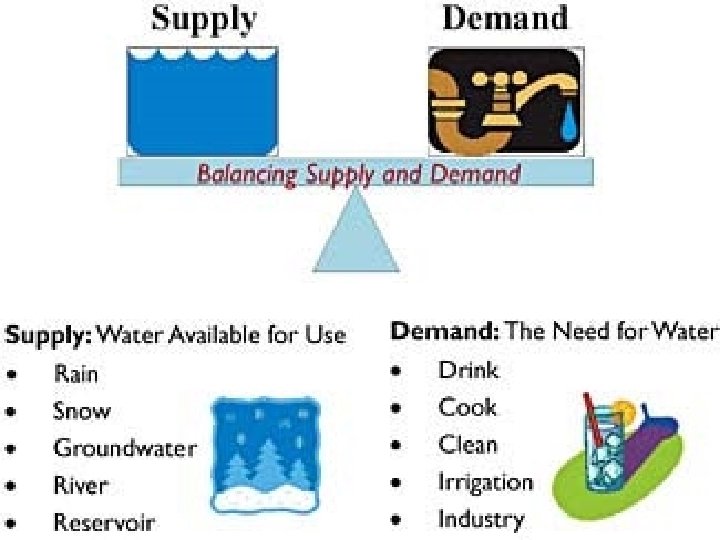
Scarcity ¨ Imbalance between unlimited wants and limited resources available for satisfying those wants. – Not having enough resources to produce all the things people would like to have.
Scarcity Chart
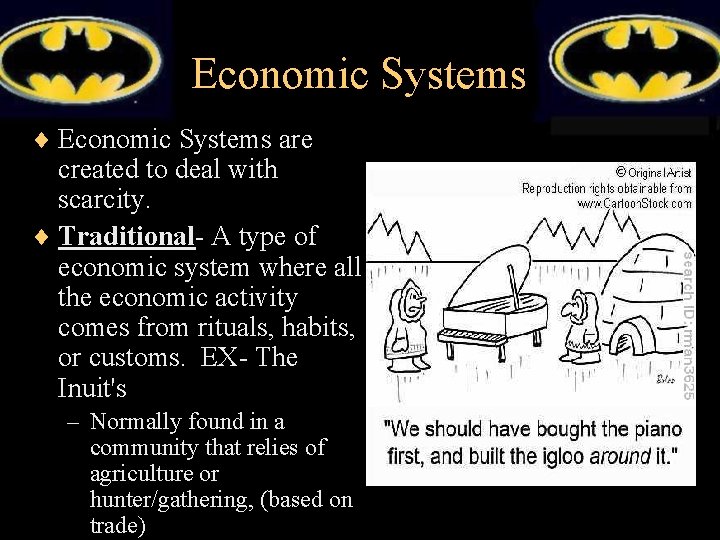
Economic Systems ¨ Economic Systems are created to deal with scarcity. ¨ Traditional- A type of economic system where all the economic activity comes from rituals, habits, or customs. EX- The Inuit's – Normally found in a community that relies of agriculture or hunter/gathering, (based on trade)
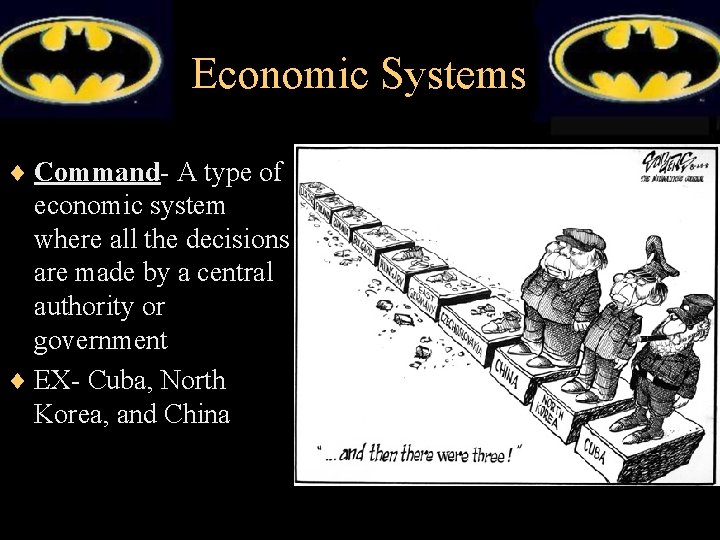
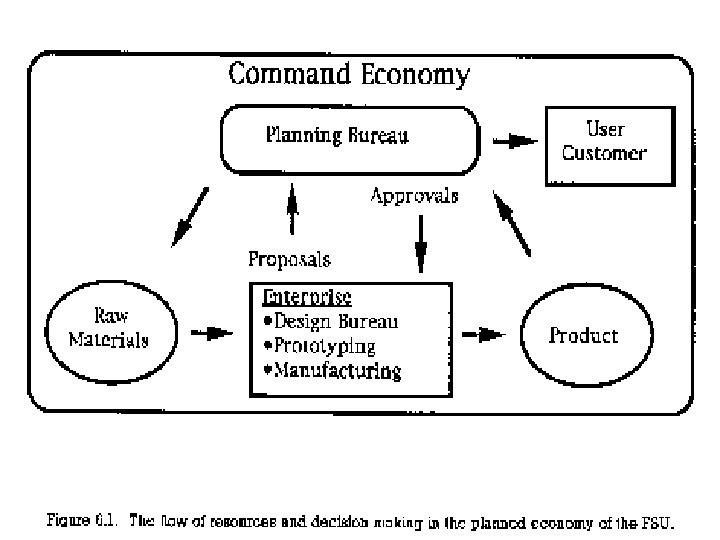
Economic Systems ¨ Command- A type of economic system where all the decisions are made by a central authority or government ¨ EX- Cuba, North Korea, and China
Economic Systems ¨ Market- An Economic system where individuals and firms act in their own best interests. – People make all the decisions with no government interference
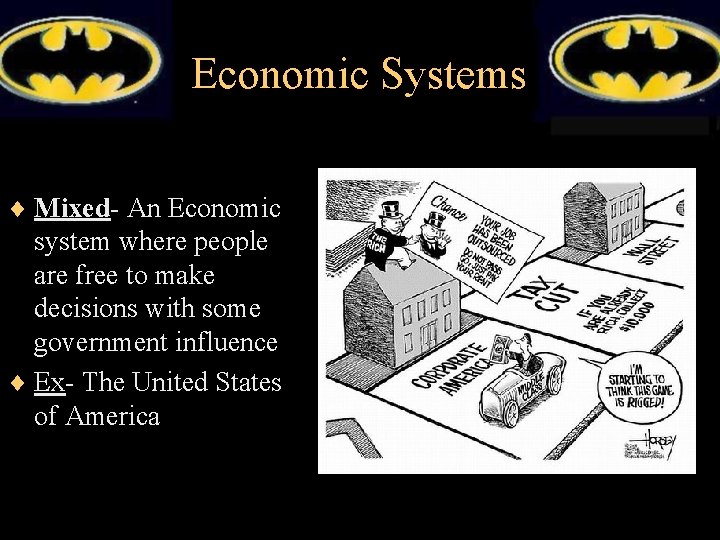
Economic Systems ¨ Mixed- An Economic system where people are free to make decisions with some government influence ¨ Ex- The United States of America
Reading Groups 2 nd Period Group 1 Carlee Peters Sidney Dietrich Kaylin Wells Shannon Carey James Holder Group 2 Jacob Nordheim Clay Thompson Morgan Sydnor Dylan Roseberry Chris Bruin Group 4 Alex Blackaby Bobbie Carroll Steven Rice Group 3 Brett Bowen Wade Browning Kody Workman Jacob Johnson Alex Clymer Group 5 Nancy Shoemaker Kelsey Brewer Emilee Feltner Jackson Jenkins Rachael Piechnik Ashley Williams Taylor Gabbard Zach Williams
Reading Groups 5 th Period Group 1 Taelor Mc. Millin Blake Pollard Erin Fitzpatrick Garret Marshall Caleb Schaller Group 2 Zach Risen Ashley Deering Brandon Gibbs Hunter Schalk Cheyenne Meadows Group 3 Courtney Brierly Melanie Hill Sean Neuspickel Hailey York Kenneth Ross Group 4 Holly Jenkins Dakota Burton Cory Dozier William Neace Trevor Hown Group 5 Garret Partin Edward Bartram Melanie Teegarden Dawn Shaefer Emily Prince Anthony Clower
Reading Groups 7 th Period Group 1 Gowan Brock Kenton Wells Jordan Bishop Chandler Aulick Hannah Sweetland Group 2 Sienna Price Jesse Witt Scribe Zagazeta Tanner Daugherty Dakota Barnes Group 3 Summer Childers Angel Harrison Hannah Lee Ansley Baker Group 4 Anthony Coffman Kevin Trent Darrell Pugh Dakota Spencer Kenton Shoemaker Group 5 Doug Eglian Sammy Ross Alexis Caudill Brent Goins
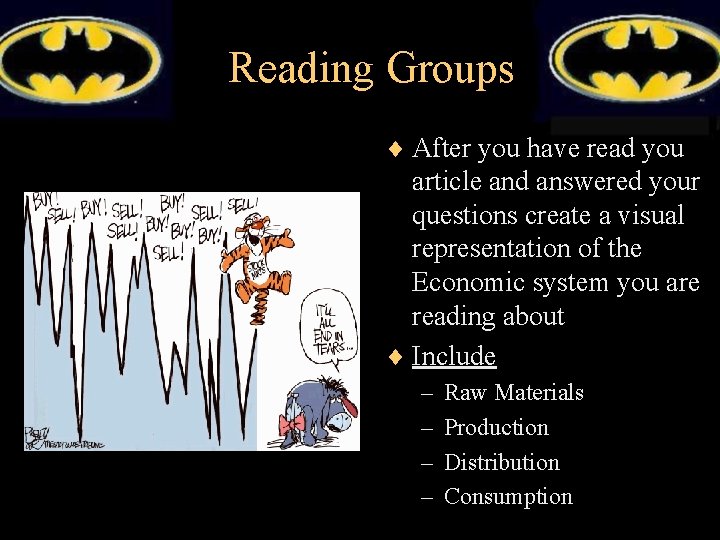
Reading Groups ¨ After you have read you article and answered your questions create a visual representation of the Economic system you are reading about ¨ Include – – Raw Materials Production Distribution Consumption
Market System ¨ Economic system in which supply, demand, and the price system help people make decisions and allocate resources – Same as a Free Enterprise Economy – Normally based on a system of Capitalism, where people own the factors of production
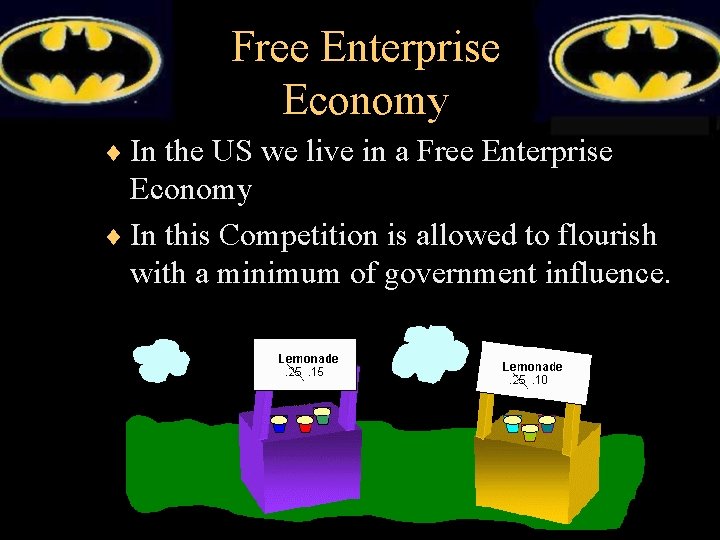
Free Enterprise Economy ¨ In the US we live in a Free Enterprise Economy ¨ In this Competition is allowed to flourish with a minimum of government influence.
5 Characteristics of a Free Enterprise Economy 1. Economic Freedom 2. Voluntary Exchange 3. Private Property Rights 4. The Profit Motive 5. Competition
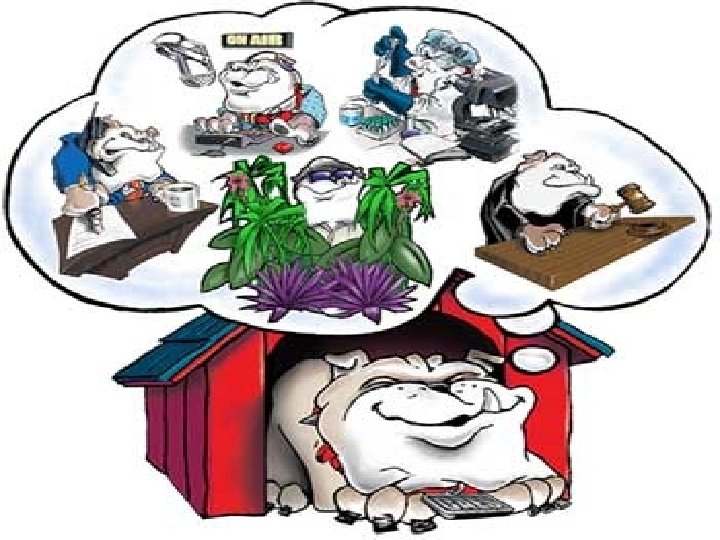
Economic Freedom ¨ Individuals are free to choose all economic decisions, such as, where and when they want to work: – Days/nights – Indoors/outdoors – In an office/at home – Have your own business/work for someone else – Leave job/Take a new job – What do I want to purchase?
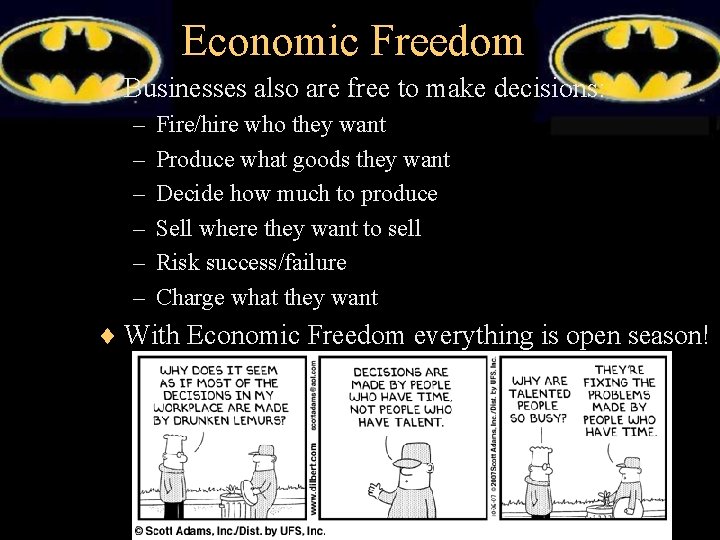
Economic Freedom ¨ Businesses also are free to make decisions: – Fire/hire who they want – Produce what goods they want – Decide how much to produce – Sell where they want to sell – Risk success/failure – Charge what they want ¨ With Economic Freedom everything is open season!
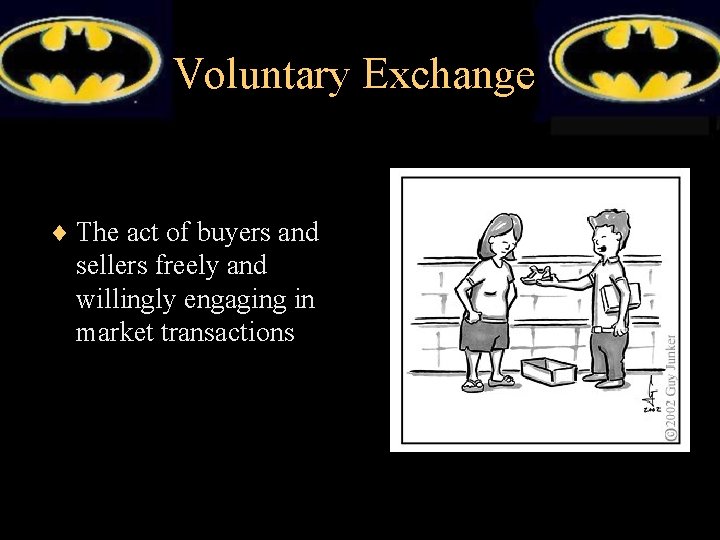
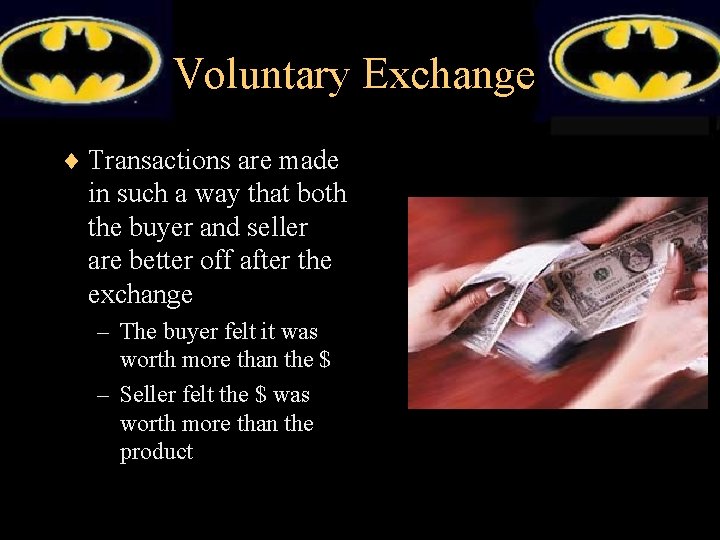
Voluntary Exchange ¨ The act of buyers and sellers freely and willingly engaging in market transactions
Voluntary Exchange ¨ Transactions are made in such a way that both the buyer and seller are better off after the exchange – The buyer felt it was worth more than the $ – Seller felt the $ was worth more than the product
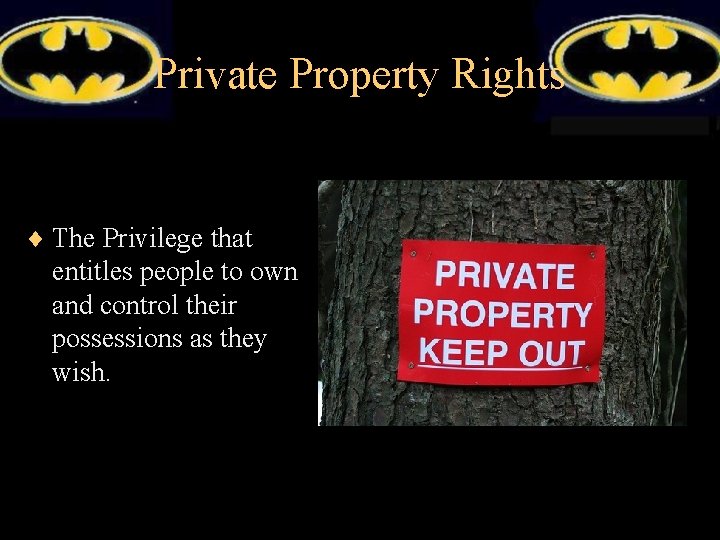
Private Property Rights ¨ The Privilege that entitles people to own and control their possessions as they wish.
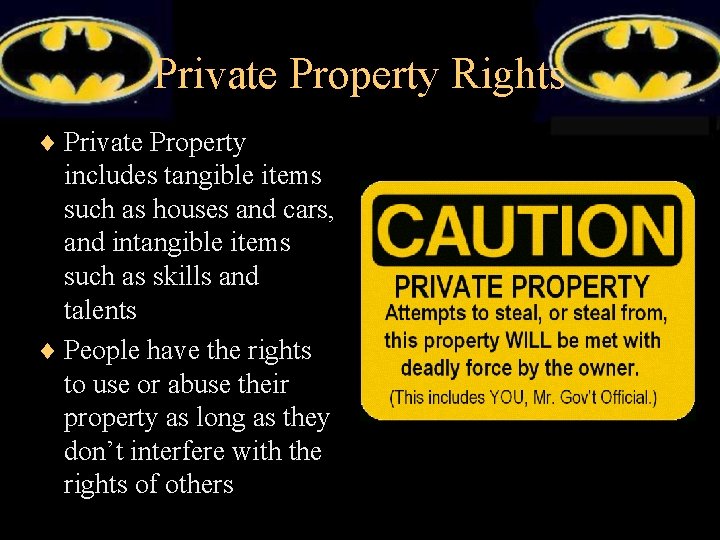
Private Property Rights ¨ Private Property includes tangible items such as houses and cars, and intangible items such as skills and talents ¨ People have the rights to use or abuse their property as long as they don’t interfere with the rights of others
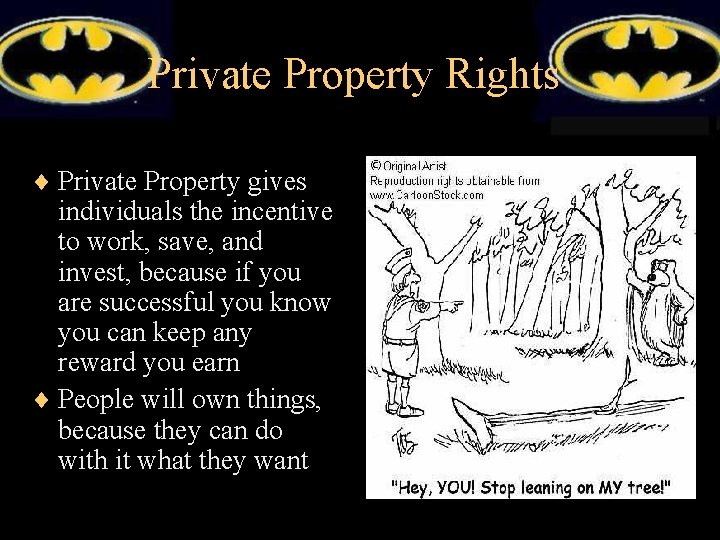
Private Property Rights ¨ Private Property gives individuals the incentive to work, save, and invest, because if you are successful you know you can keep any reward you earn ¨ People will own things, because they can do with it what they want
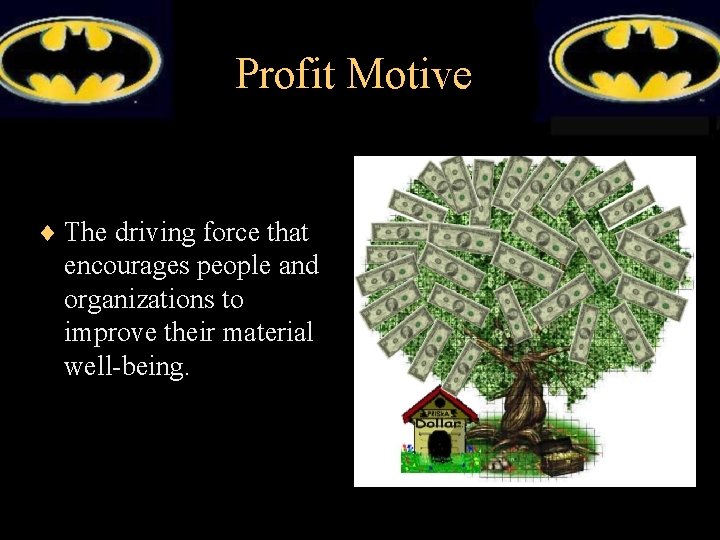
Profit Motive ¨ The driving force that encourages people and organizations to improve their material well-being.
Profit Motive ¨ Profit- the extent to which persons or organizations are better off at the end of a period than they were at the beginning ¨ Entrepreneurs- those who risk entering a business in hopes of making a profit – F. E. E. allows people to risk their $ in a business venture
Competition ¨ The struggle among sellers to attract consumers while lowering costs and creating new products ¨ Because capitalism is based on freedom and voluntary exchange, buyers compete to find the best products at the lowest price
The Role of the Entrepreneur ¨ The Entrepreneur is one of the most important people in the economy ¨ The Entrepreneur: – Organizes and manages land, capital, and labor – Starts up new businesses – Creates new products ¨ All of this in order to seek the reward called Profit!
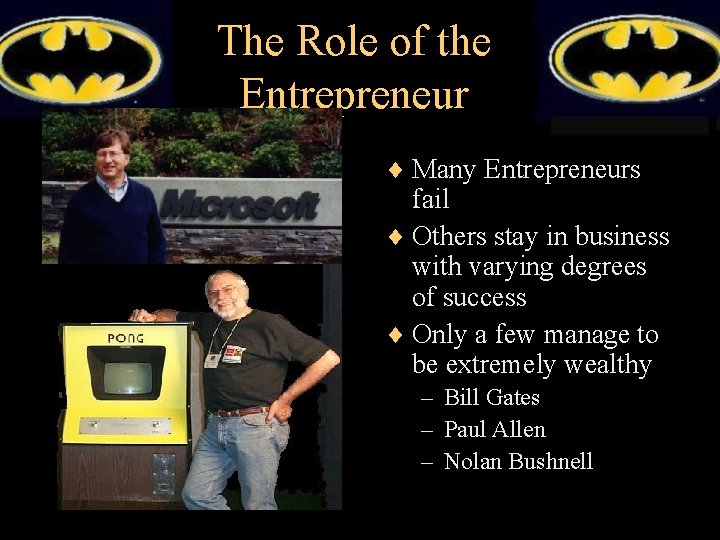
The Role of the Entrepreneur ¨ Many Entrepreneurs fail ¨ Others stay in business with varying degrees of success ¨ Only a few manage to be extremely wealthy – Bill Gates – Paul Allen – Nolan Bushnell
The Role of the Entrepreneur ¨ Entrepreneurs are the catalyst of a F. E. E. – Starts the action ¨ When the Entrepreneur is successful everyone benefits. – – The Entrepreneur gets profit and a growing business The workers are rewarded with a better job (more $) Consumers are rewarded with new and better products The Government is rewarded with a higher level of economic activity and larger Tax receipts, used to build roads, schools, libraries, etc. – Everyone Benefits!
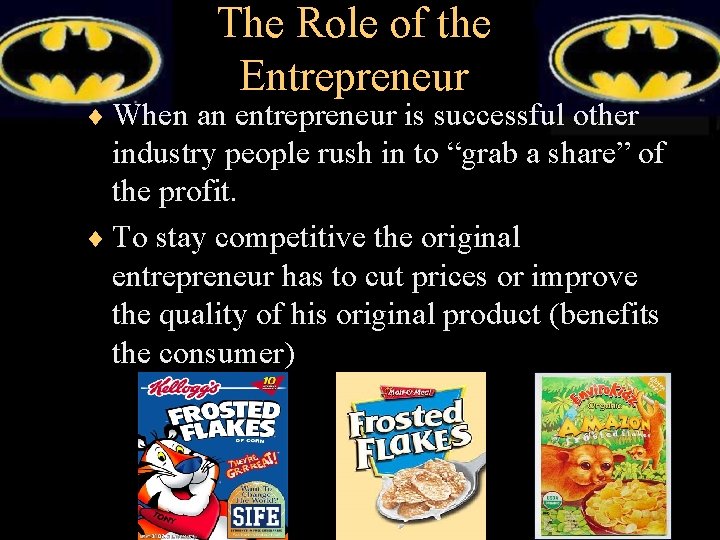
The Role of the Entrepreneur ¨ When an entrepreneur is successful other industry people rush in to “grab a share” of the profit. ¨ To stay competitive the original entrepreneur has to cut prices or improve the quality of his original product (benefits the consumer)
The Role of the Entrepreneur ¨ In the end , the entrepreneurs search for profit leads to a chain of events that involves new products, greater competition, more production, higher quality, and lower prices for consumers
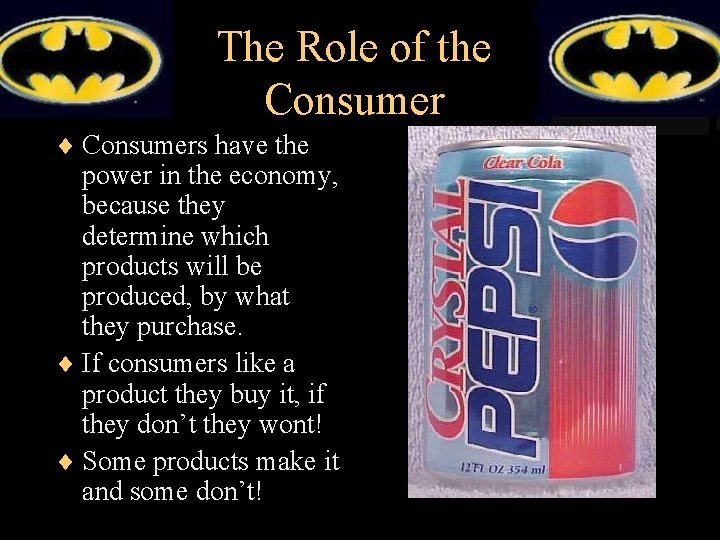
The Role of the Consumer ¨ Consumers have the power in the economy, because they determine which products will be produced, by what they purchase. ¨ If consumers like a product they buy it, if they don’t they wont! ¨ Some products make it and some don’t!
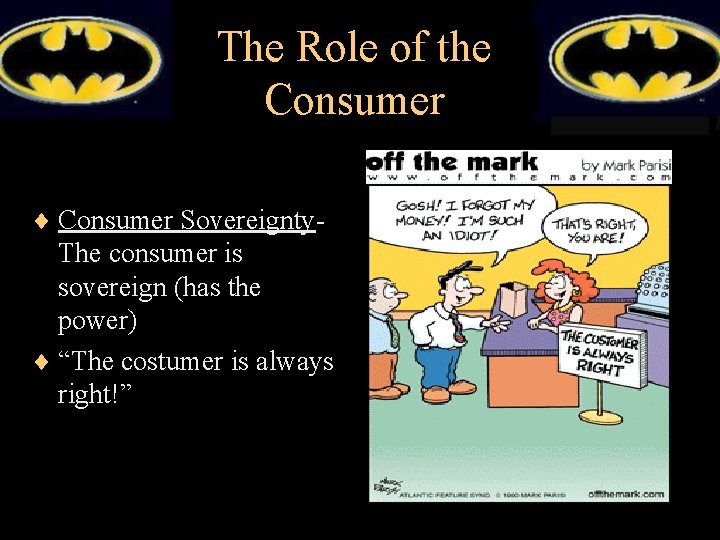
The Role of the Consumer ¨ Consumer Sovereignty- The consumer is sovereign (has the power) ¨ “The costumer is always right!”
The Role of the Government ¨ Government has a role, because citizens want them to have a role. – Justified, b/c the benefits outweigh the costs ¨ The Government is the: – Protector – Provider of goods and services – Consumer – Regulator – Promoter of National Goals
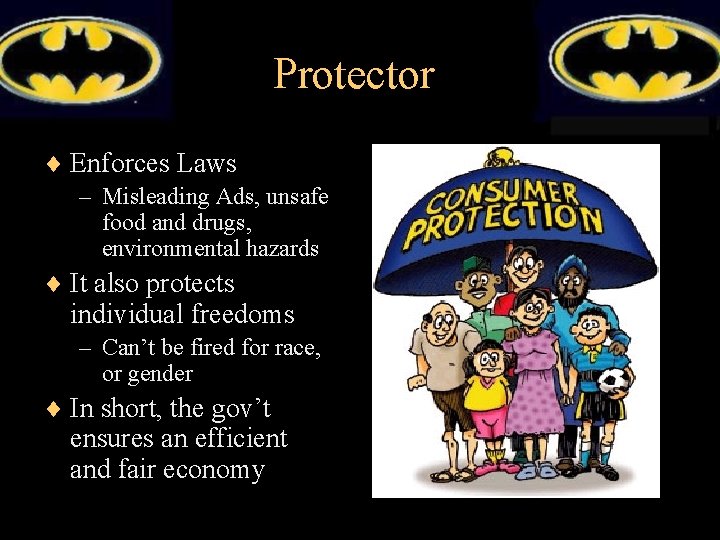
Protector ¨ Enforces Laws – Misleading Ads, unsafe food and drugs, environmental hazards ¨ It also protects individual freedoms – Can’t be fired for race, or gender ¨ In short, the gov’t ensures an efficient and fair economy
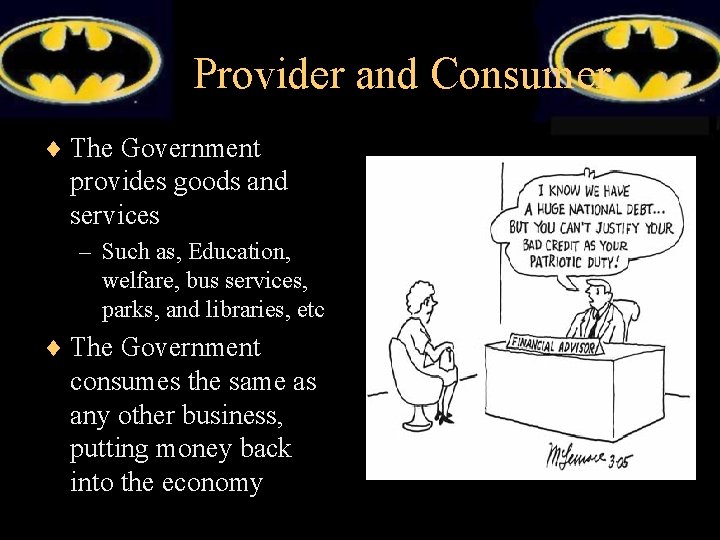
Provider and Consumer ¨ The Government provides goods and services – Such as, Education, welfare, bus services, parks, and libraries, etc ¨ The Government consumes the same as any other business, putting money back into the economy
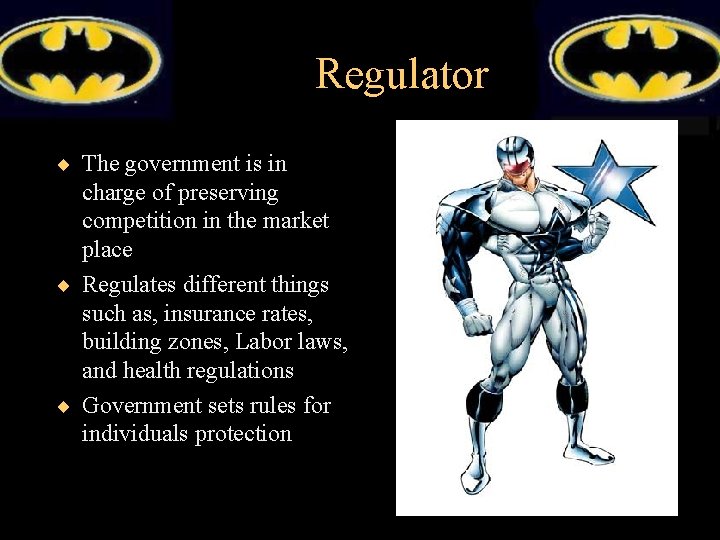
Regulator ¨ The government is in charge of preserving competition in the market place ¨ Regulates different things such as, insurance rates, building zones, Labor laws, and health regulations ¨ Government sets rules for individuals protection
Promoter of National Goals ¨ The government strives to achieve economic goals of freedom, efficiency, equity, security, full employment, price stability, and economic growth – Social Security – Child Labor Laws – Set Minimum Wage
Mixed Market Economy ¨ Modified Private Enterprise Economy ¨ People carry on with their economic affairs freely, but are subject to some government intervention and regulation