
Scaling functions Fix filter or connect the dots
- Slides: 21
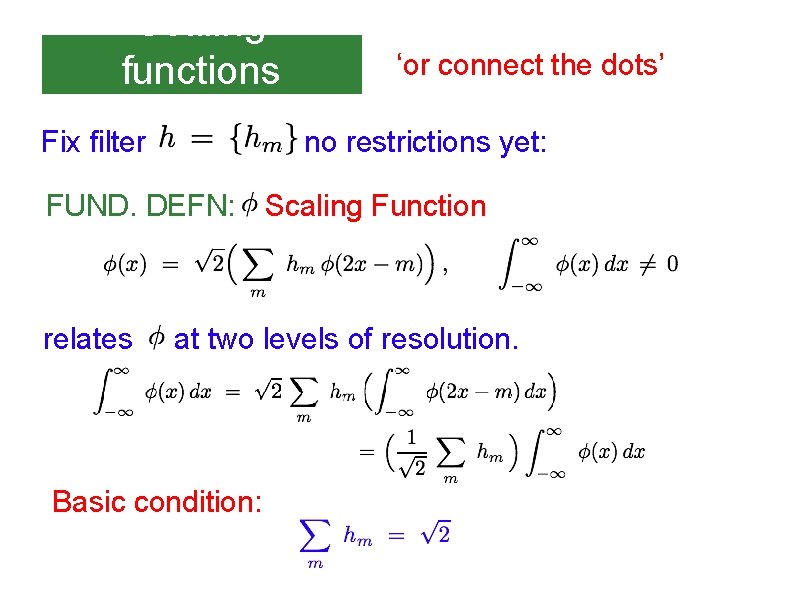
Scaling functions Fix filter ‘or connect the dots’ no restrictions yet: FUND. DEFN: Scaling Function relates at two levels of resolution. Basic condition:
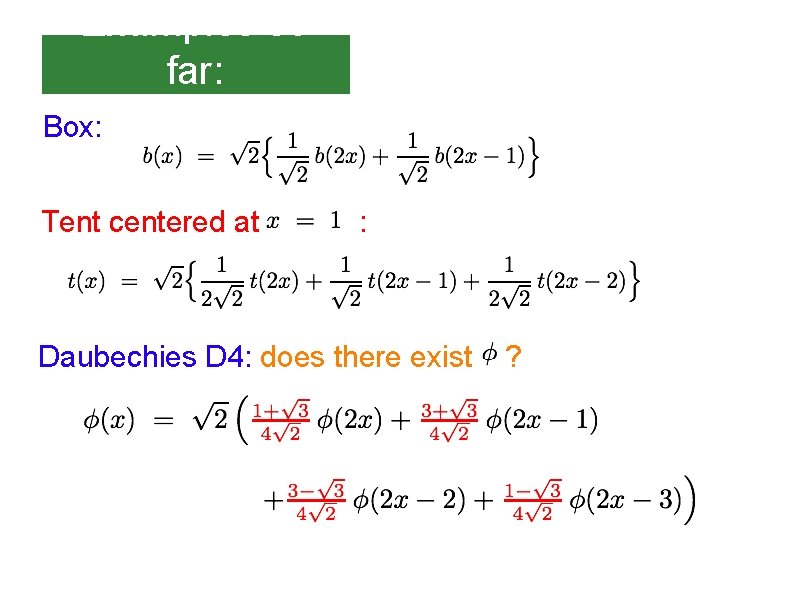
Examples so far: Box: Tent centered at : Daubechies D 4: does there exist ?
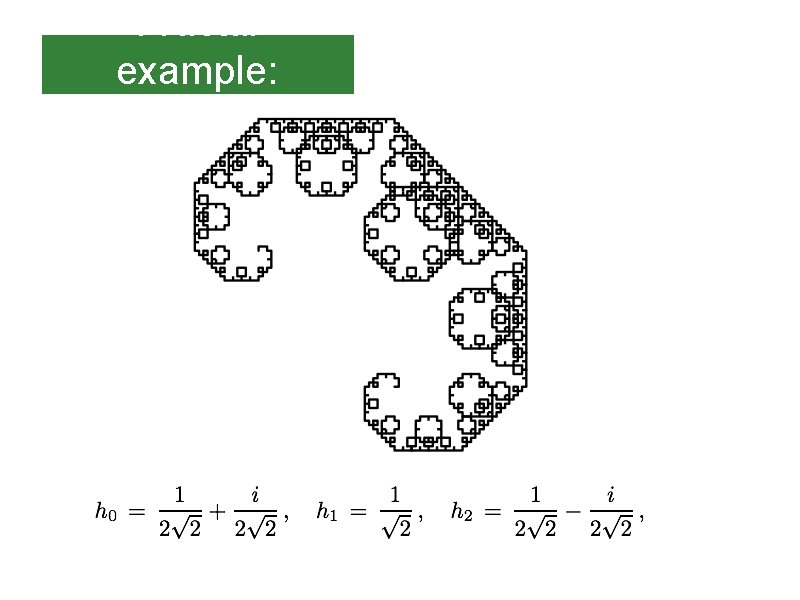
Fractal example:
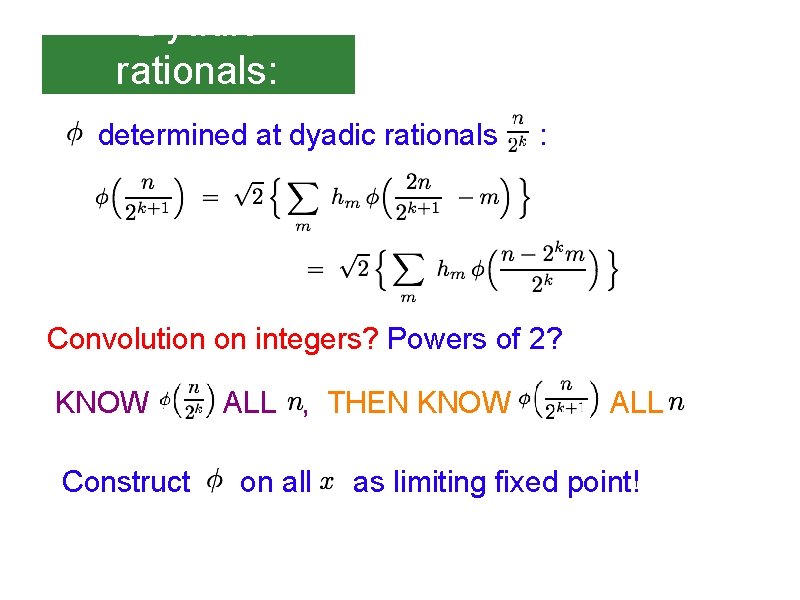
Dyadic rationals: determined at dyadic rationals : Convolution on integers? Powers of 2? KNOW Construct ALL , THEN KNOW on all ALL as limiting fixed point!
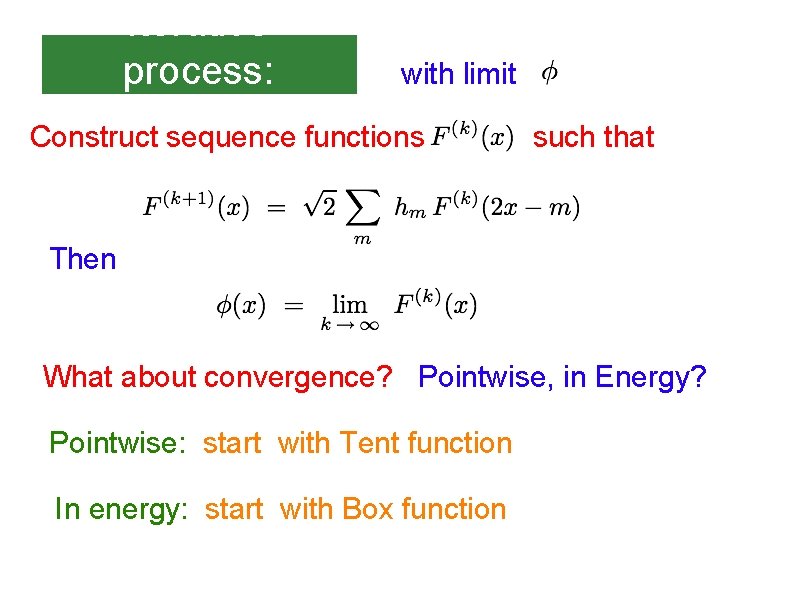
Iterative process: with limit Construct sequence functions such that Then What about convergence? Pointwise, in Energy? Pointwise: start with Tent function In energy: start with Box function
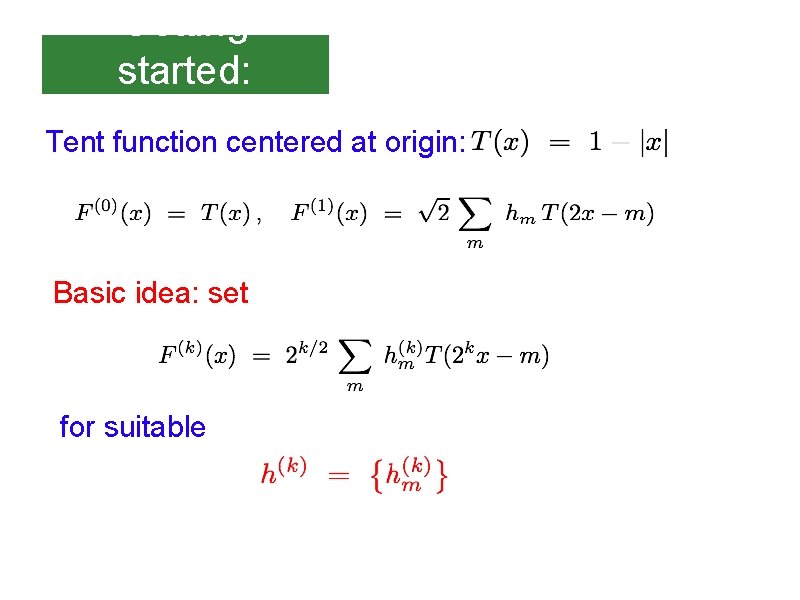
Getting started: Tent function centered at origin: Basic idea: set for suitable
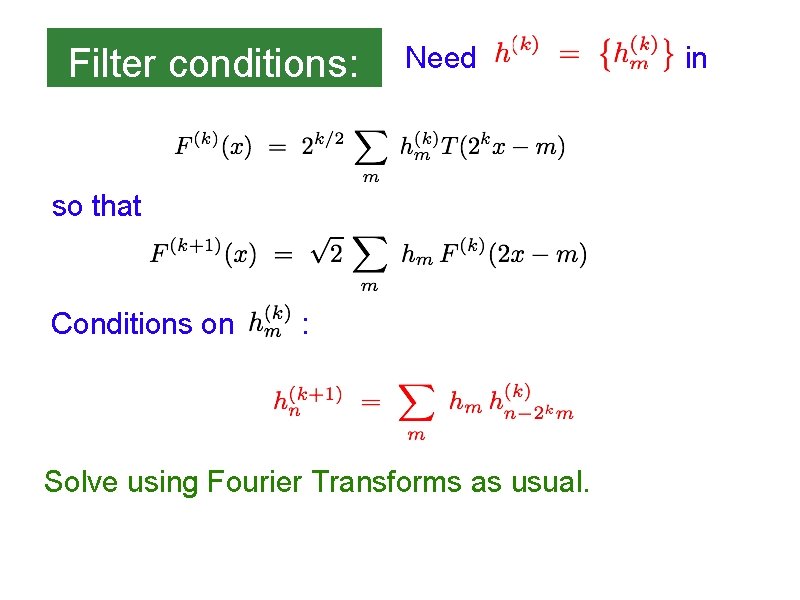
Filter conditions: Need so that Conditions on : Solve using Fourier Transforms as usual. in
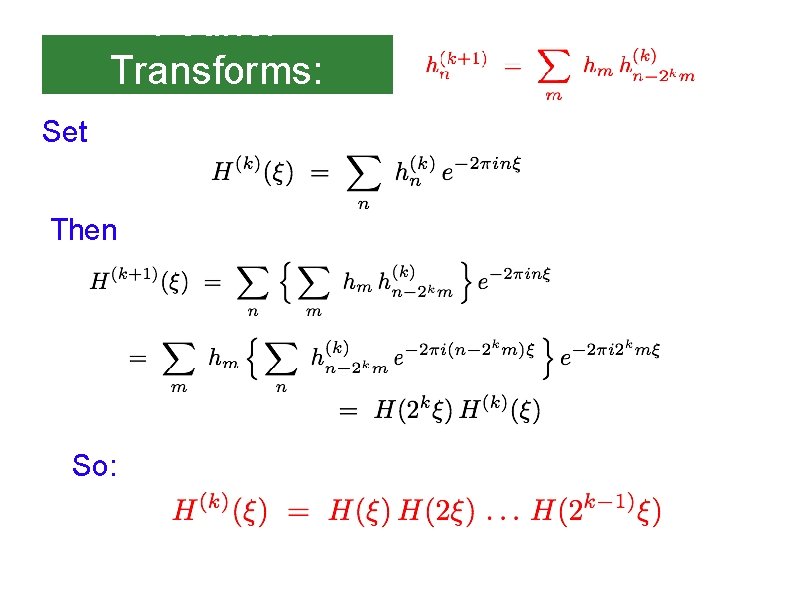
Fourier Transforms: Set Then So:
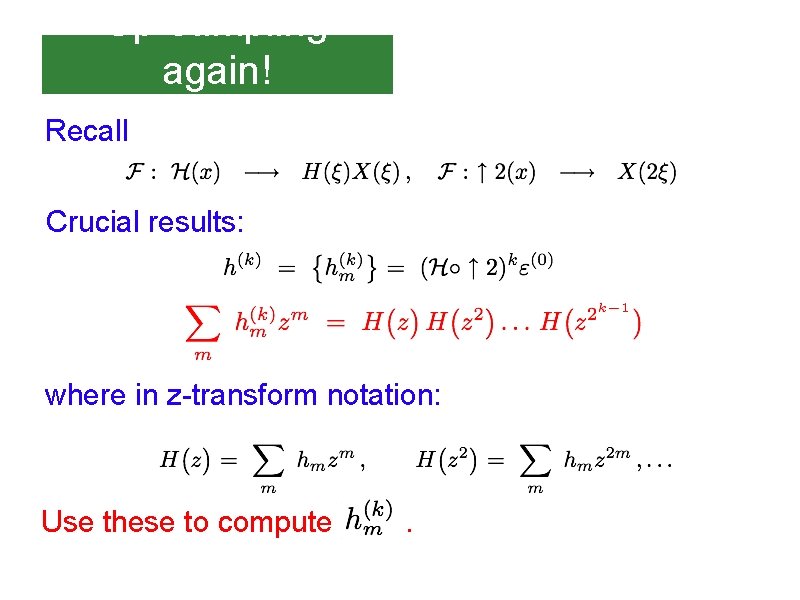
Up-sampling again! Recall Crucial results: where in z-transform notation: Use these to compute .
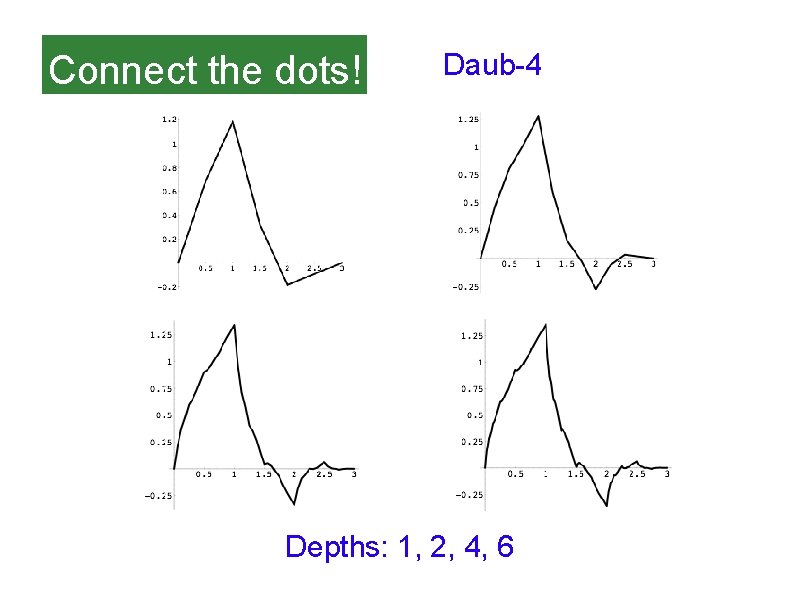
Connect the dots! Daub-4 Depths: 1, 2, 4, 6
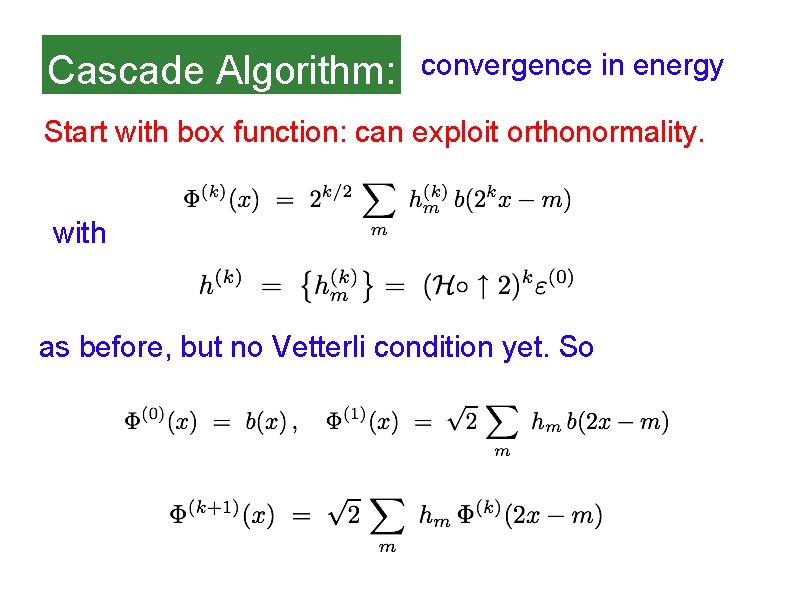
Cascade Algorithm: convergence in energy Start with box function: can exploit orthonormality. with as before, but no Vetterli condition yet. So
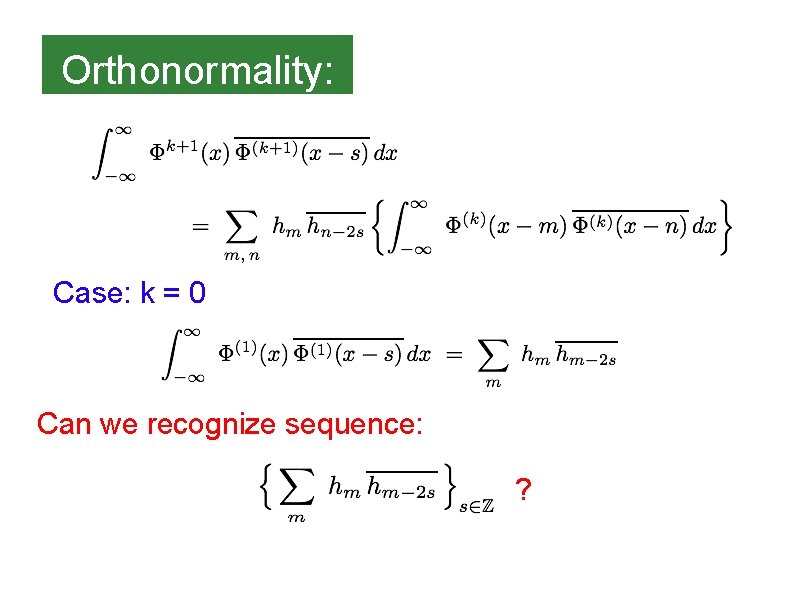
Orthonormality: Case: k = 0 Can we recognize sequence: ?
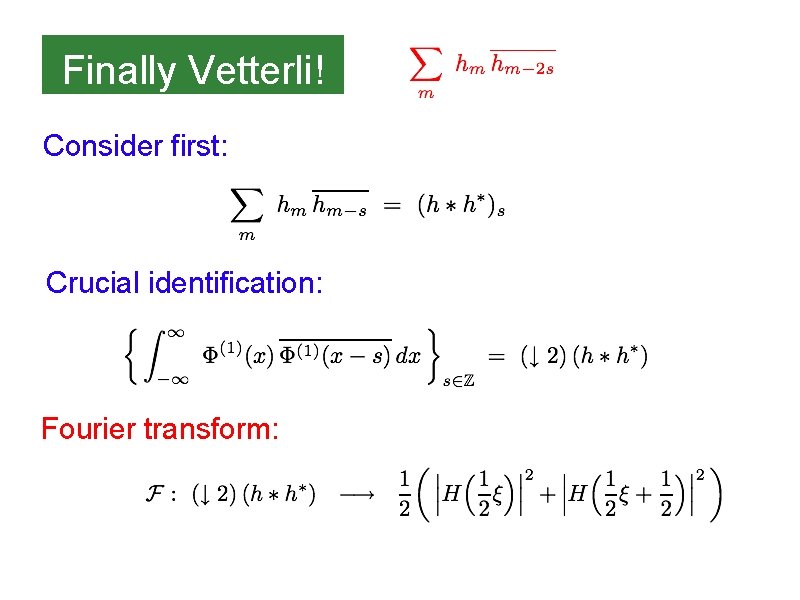
Finally Vetterli! Consider first: Crucial identification: Fourier transform:
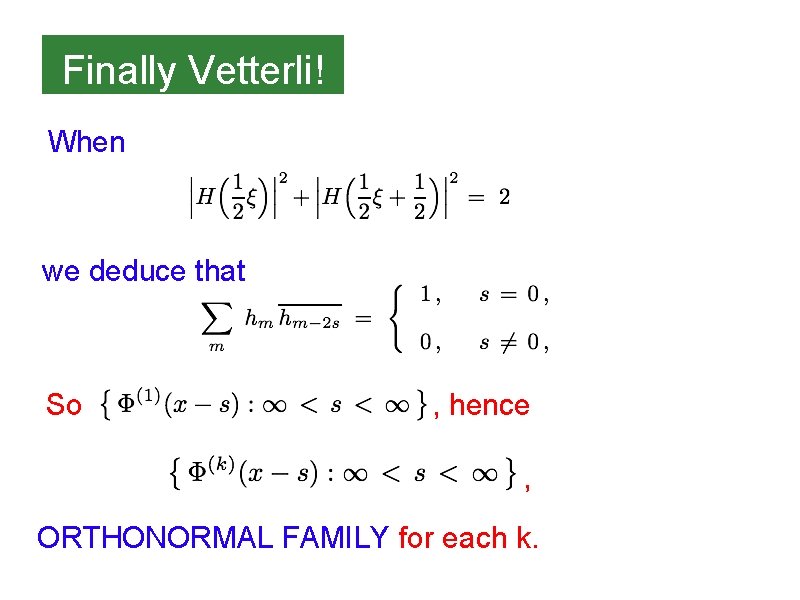
Finally Vetterli! When we deduce that So , hence , ORTHONORMAL FAMILY for each k.
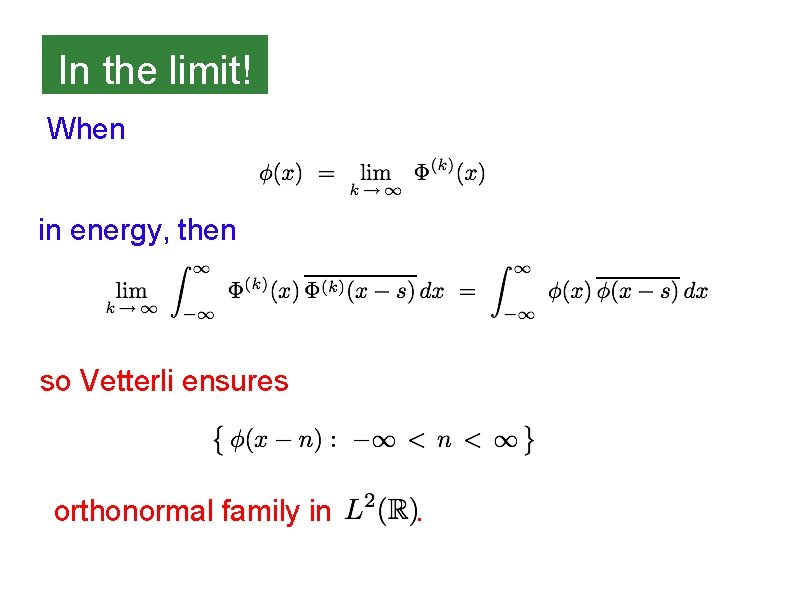
In the limit! When in energy, then so Vetterli ensures orthonormal family in .
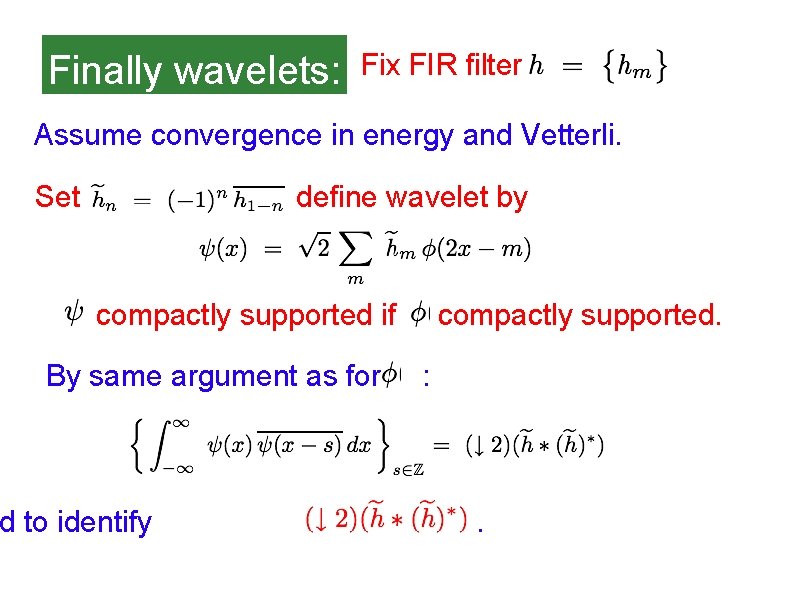
Finally wavelets: Fix FIR filter Assume convergence in energy and Vetterli. Set define wavelet by compactly supported if By same argument as for d to identify compactly supported. : .
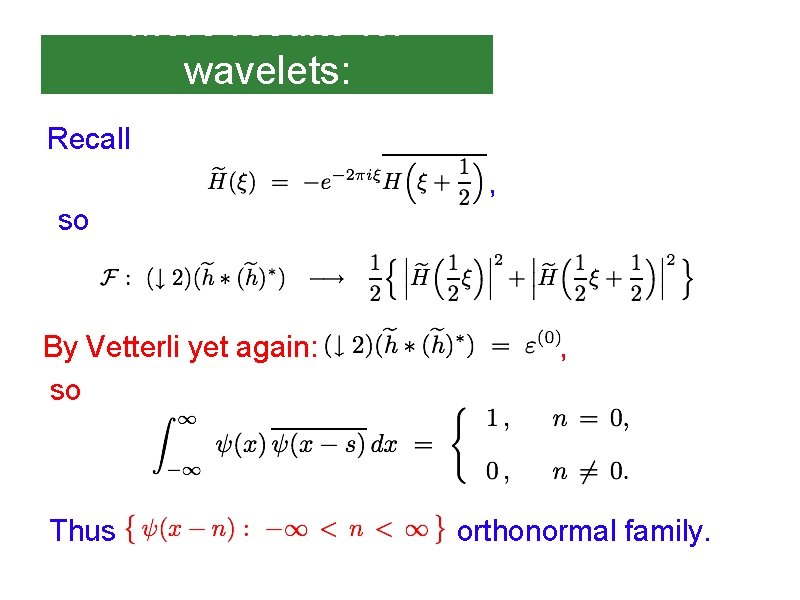
More results for wavelets: Recall , so By Vetterli yet again: so Thus , orthonormal family.
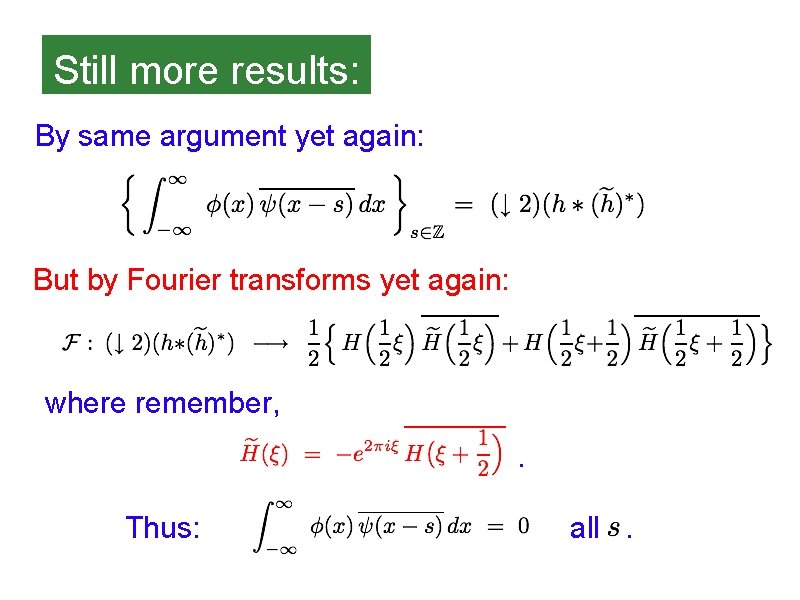
Still more results: By same argument yet again: But by Fourier transforms yet again: where remember, . Thus: all.
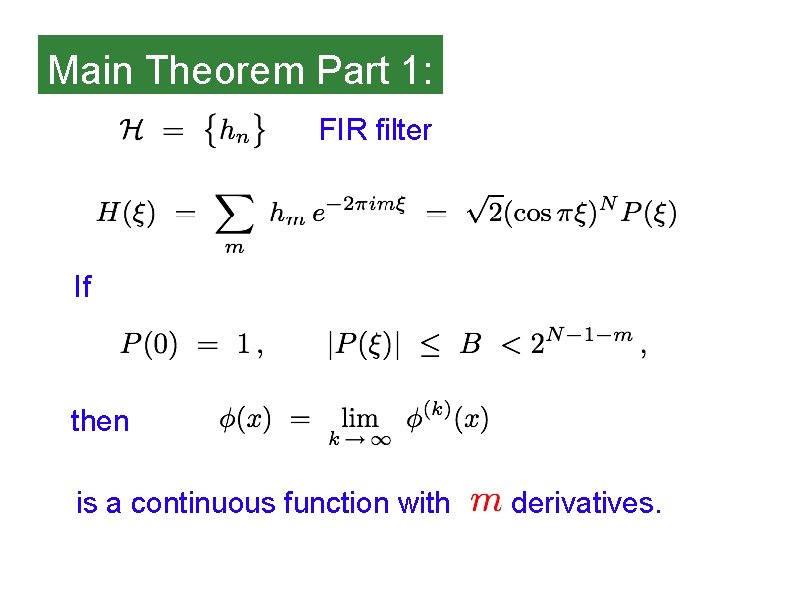
Main Theorem Part 1: FIR filter If then is a continuous function with derivatives.
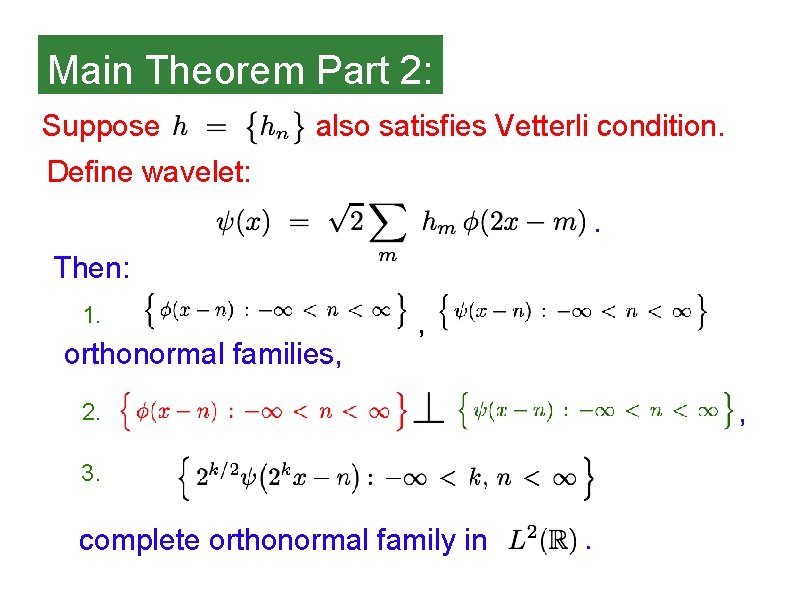
Main Theorem Part 2: Suppose also satisfies Vetterli condition. Define wavelet: . Then: 1. orthonormal families, , , 2. 3. complete orthonormal family in .
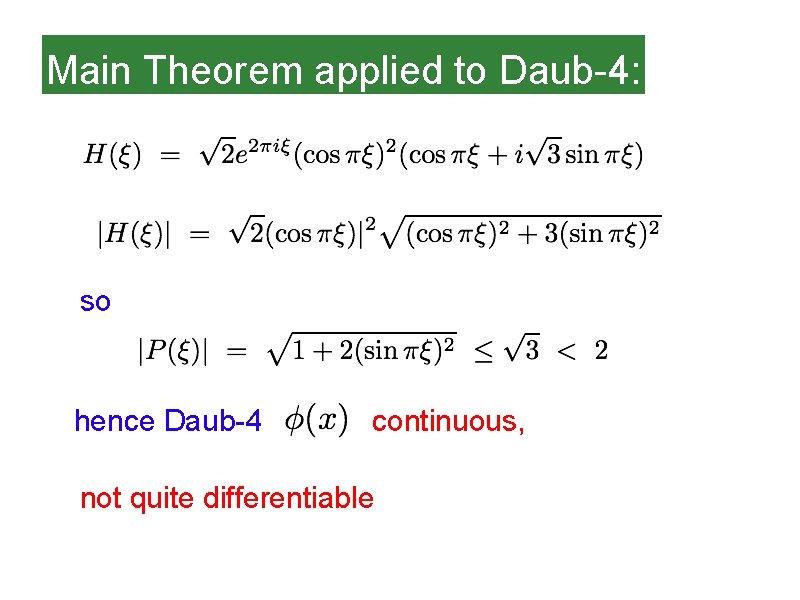
Main Theorem applied to Daub-4: so hence Daub-4 continuous, not quite differentiable