
Scaling Distributed Machine Learning with the Parameter Server
Scaling Distributed Machine Learning with the Parameter Server By M. Li, D. Anderson, J. Park, A. Smola, A. Ahmed, V. Josifovski, J. Long E. Shekita, B. Su. EECS 582 – W 16 1
Outline • Motivation • Parameter Server architecture • Why is it special? • Evaluation EECS 582 – W 16 2

Motivation EECS 582 – W 16 3
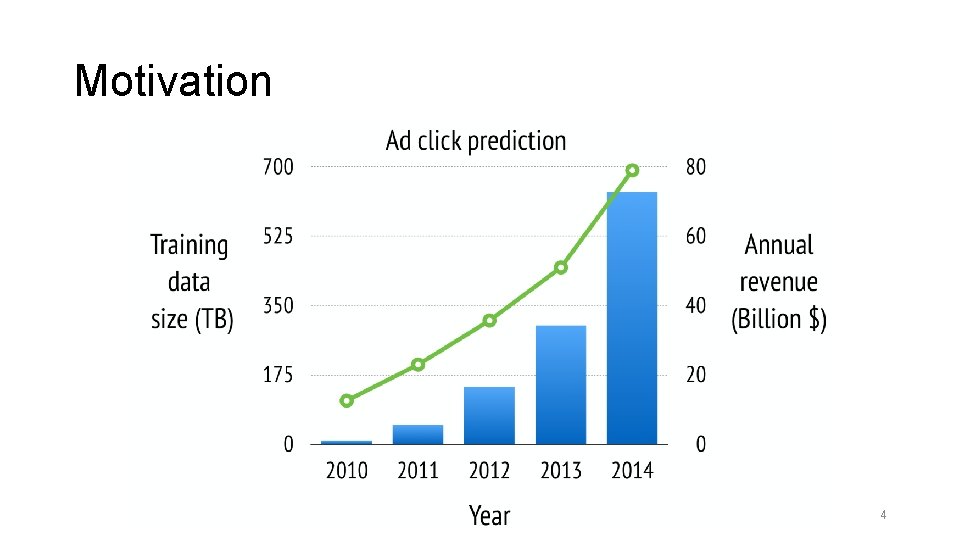
Motivation EECS 582 – W 16 4
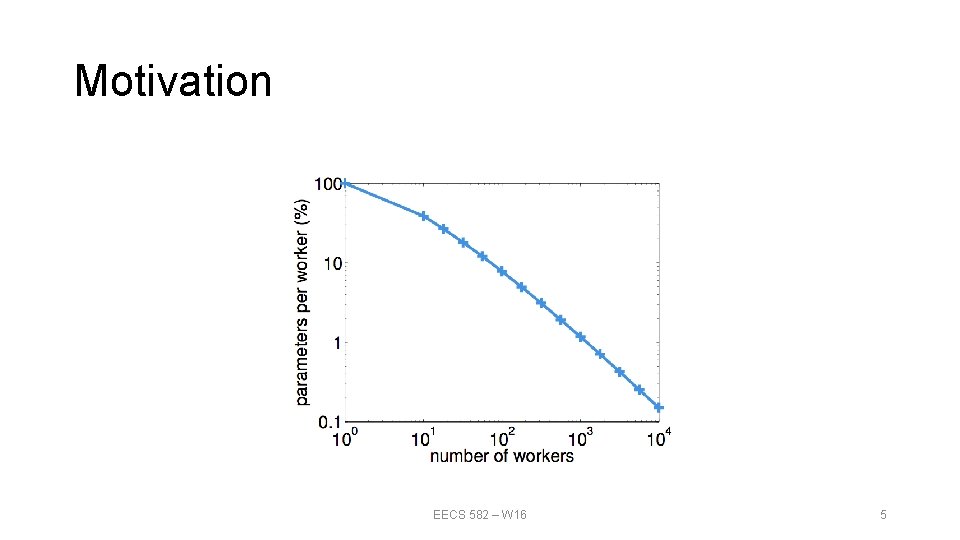
Motivation EECS 582 – W 16 5
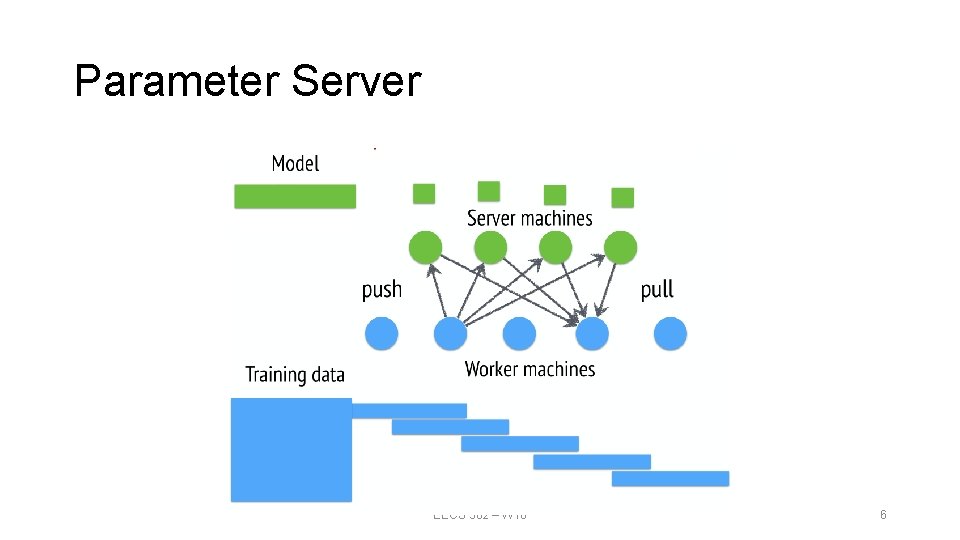
Parameter Server EECS 582 – W 16 6
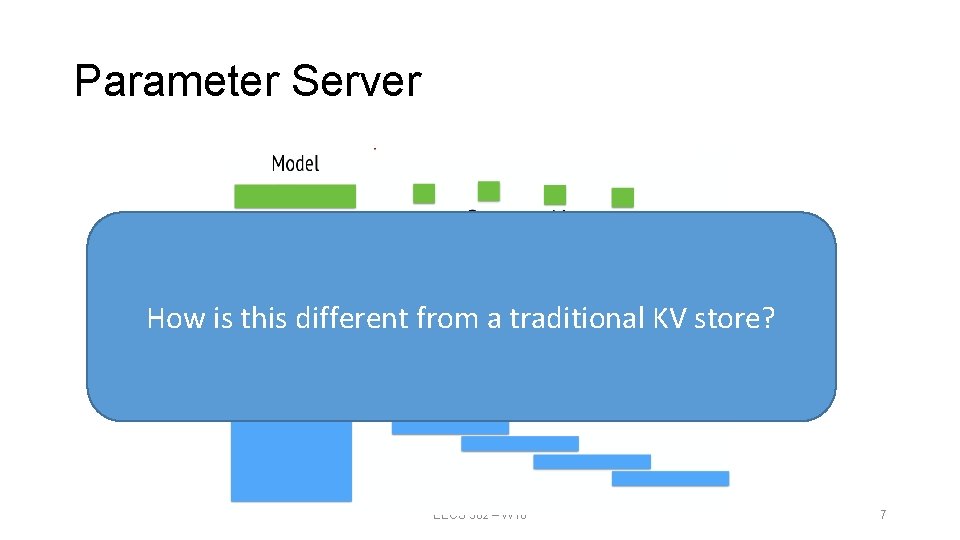
Parameter Server How is this different from a traditional KV store? EECS 582 – W 16 7
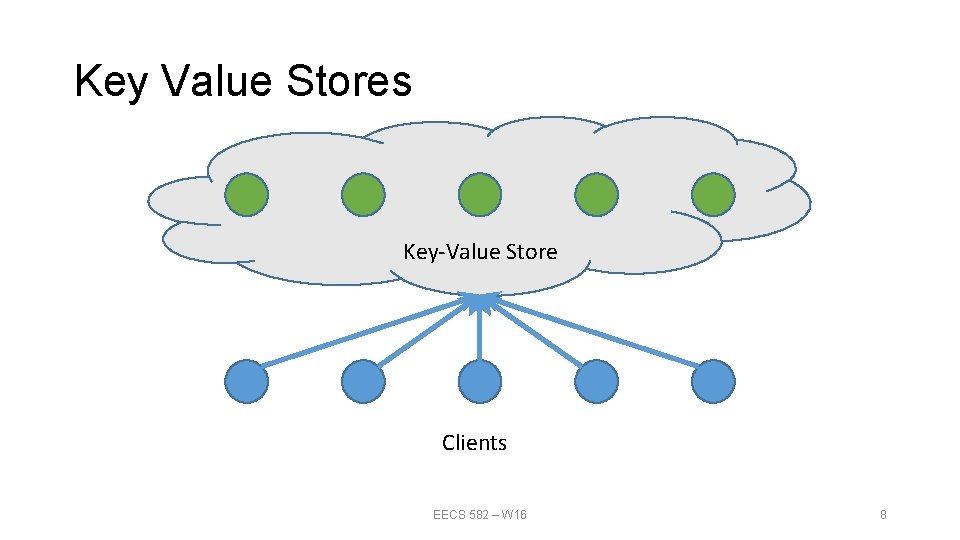
Key Value Stores Key-Value Store Clients EECS 582 – W 16 8
Diff from KV (leverage domain knowledge) • Treat KVs as sparse matrices • Computation occurs on PSs • Flexible consistency • Intelligent replication • Message Compression EECS 582 – W 16 9
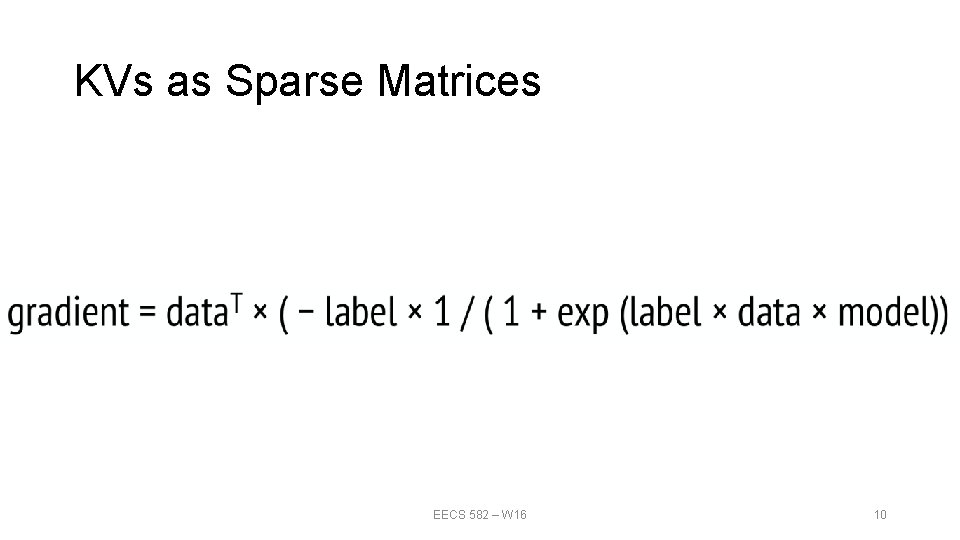
KVs as Sparse Matrices EECS 582 – W 16 10
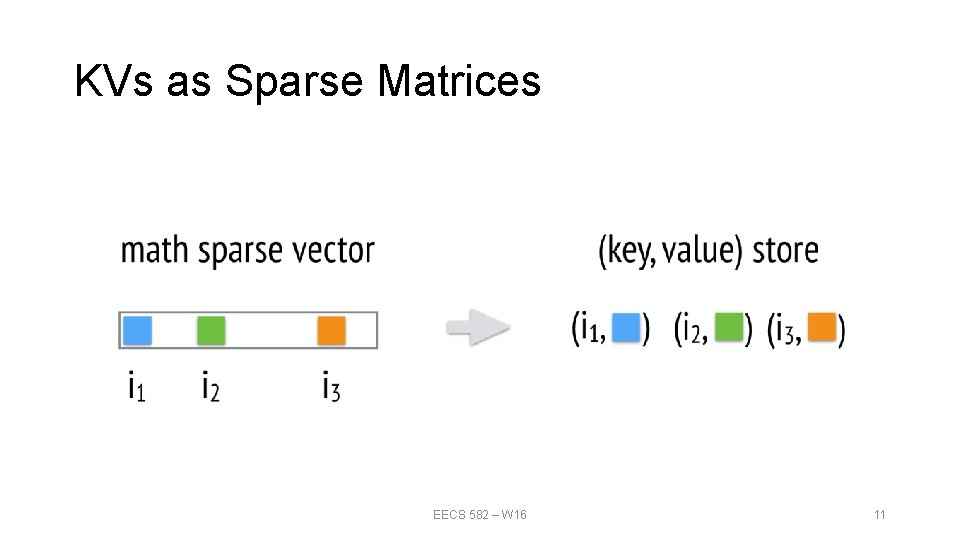
KVs as Sparse Matrices EECS 582 – W 16 11
User-defined Functions • PSs aggregate data from the workers: • In distributed gradient descent workers push gradients that PSs use to calculate how to update the parameters • Users can also supply user defined functions to run on the server EECS 582 – W 16 12
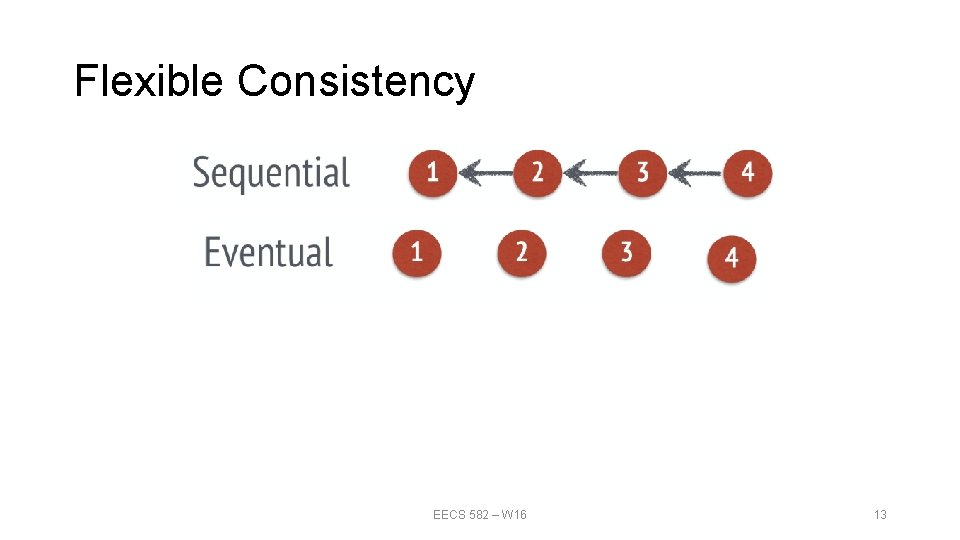
Flexible Consistency EECS 582 – W 16 13
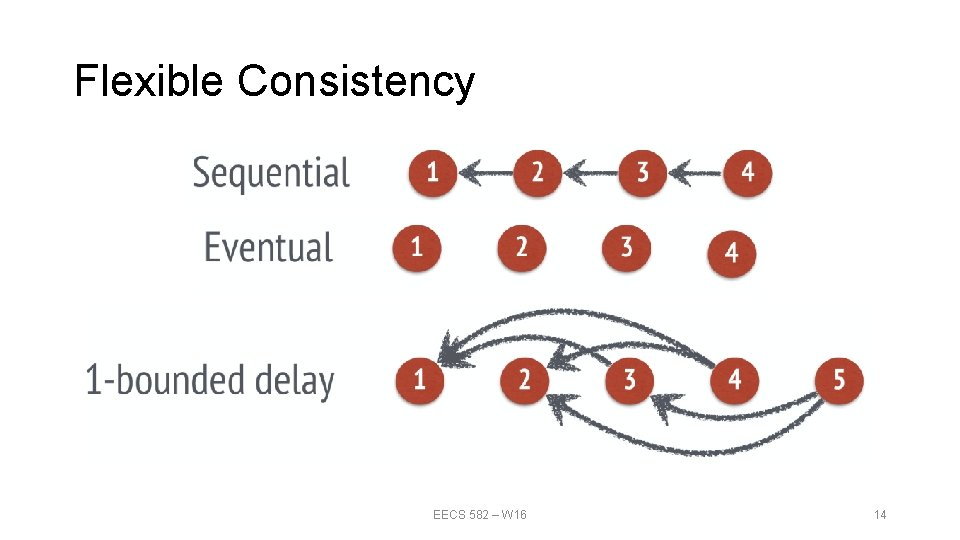
Flexible Consistency EECS 582 – W 16 14
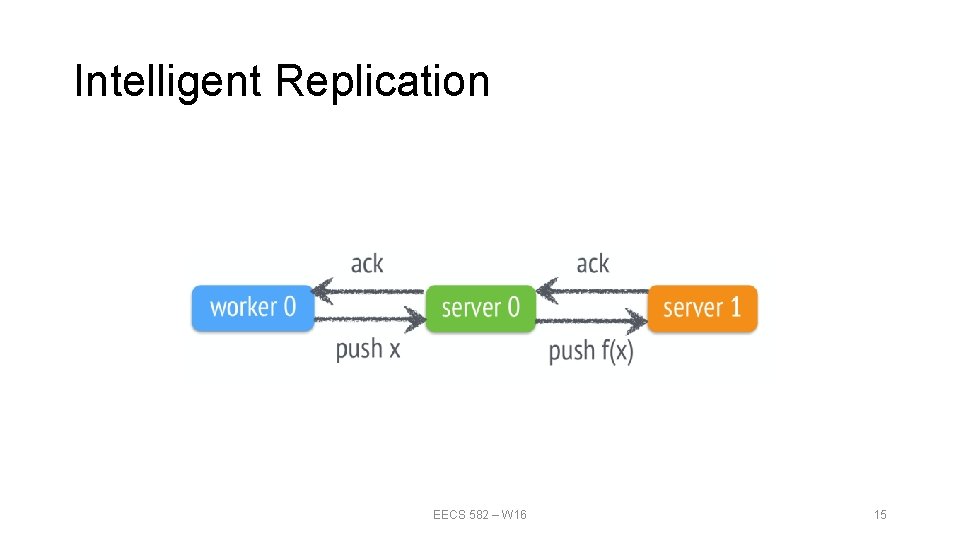
Intelligent Replication EECS 582 – W 16 15
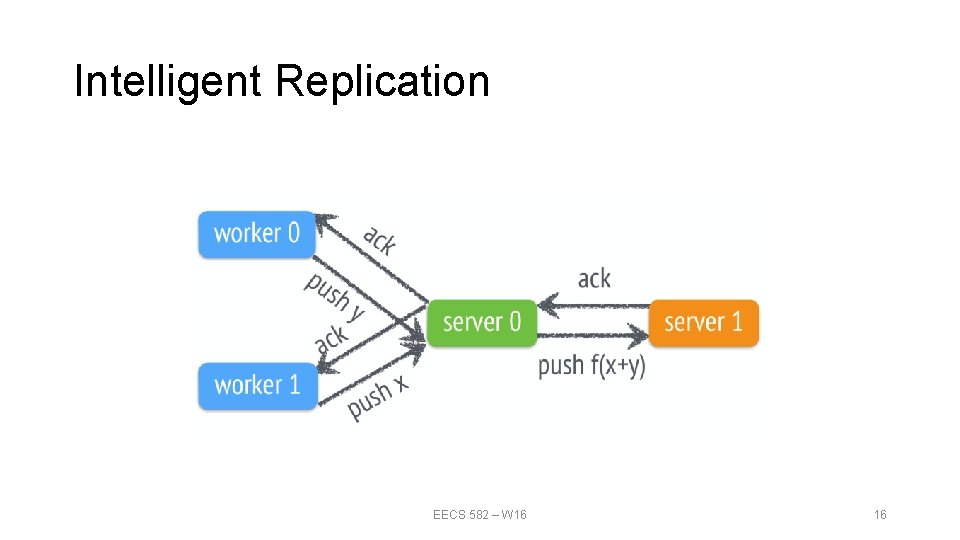
Intelligent Replication EECS 582 – W 16 16
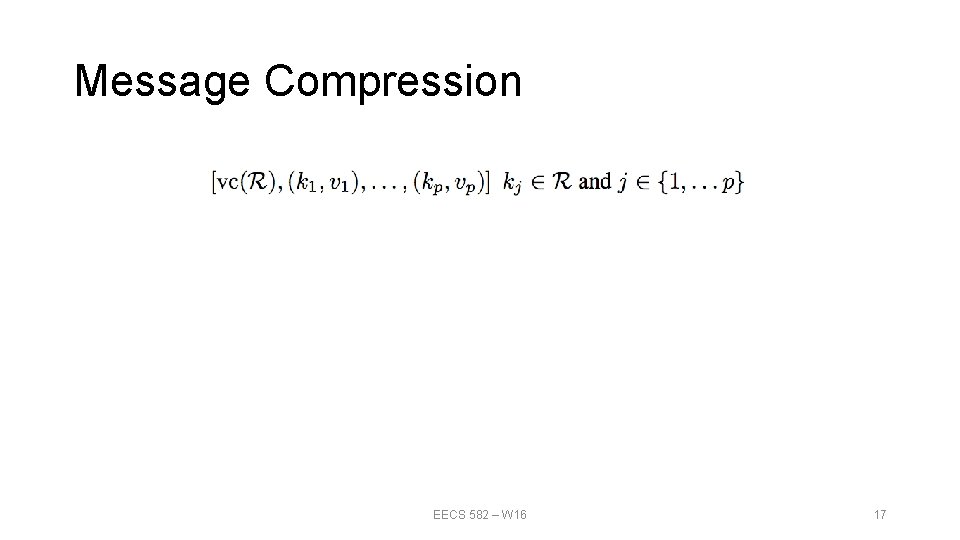
Message Compression EECS 582 – W 16 17
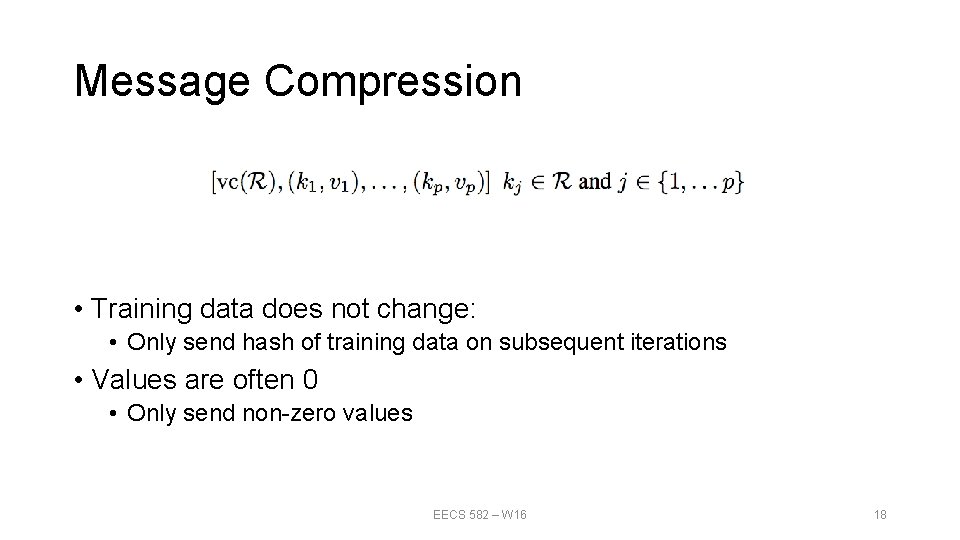
Message Compression • Training data does not change: • Only send hash of training data on subsequent iterations • Values are often 0 • Only send non-zero values EECS 582 – W 16 18
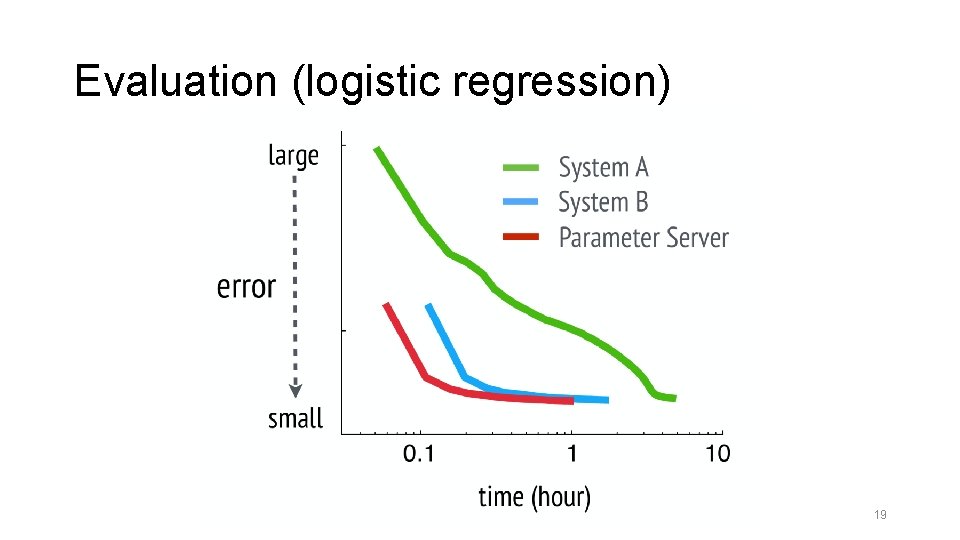
Evaluation (logistic regression) EECS 582 – W 16 19
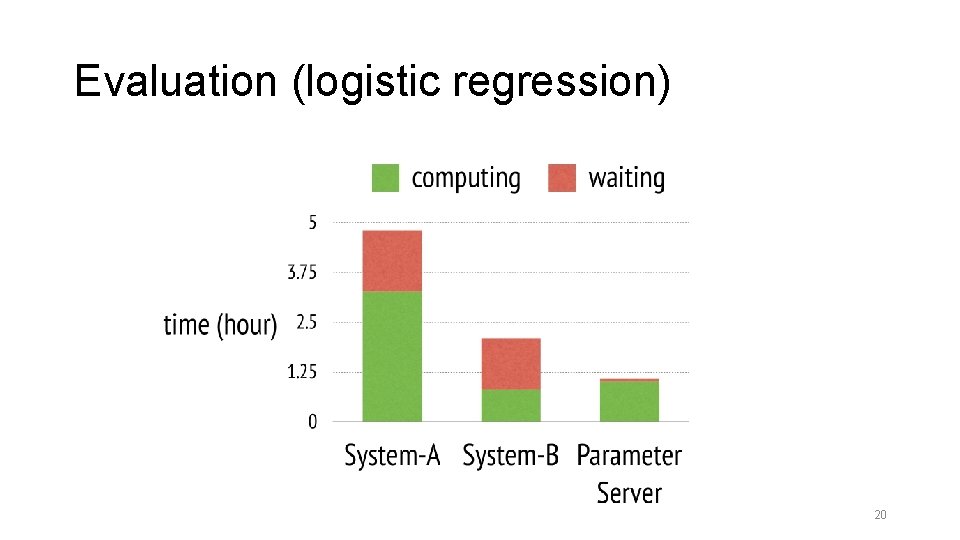
Evaluation (logistic regression) EECS 582 – W 16 20
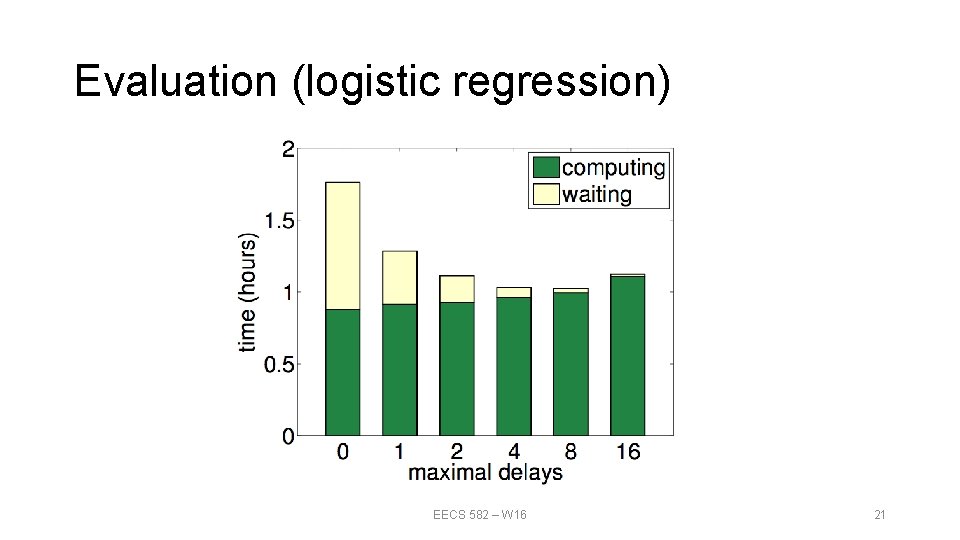
Evaluation (logistic regression) EECS 582 – W 16 21
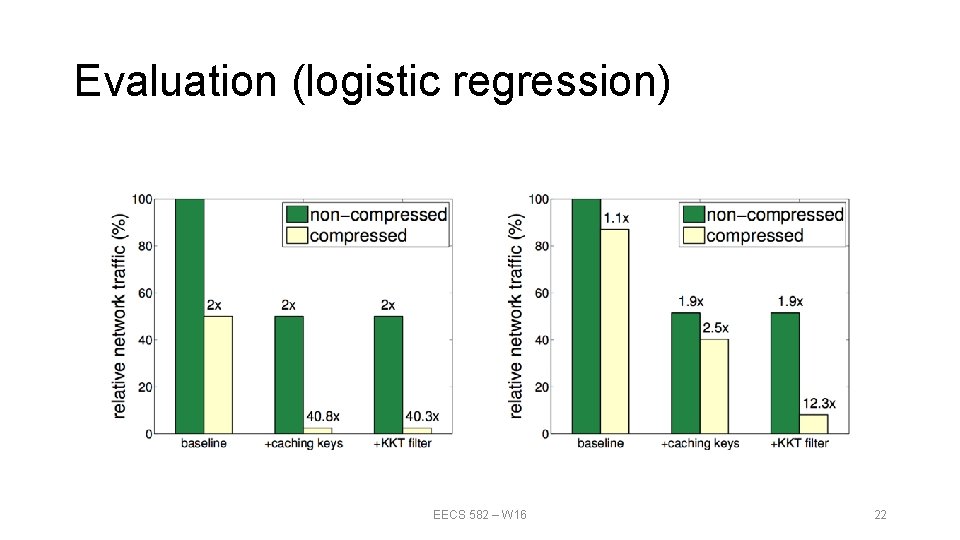
Evaluation (logistic regression) EECS 582 – W 16 22
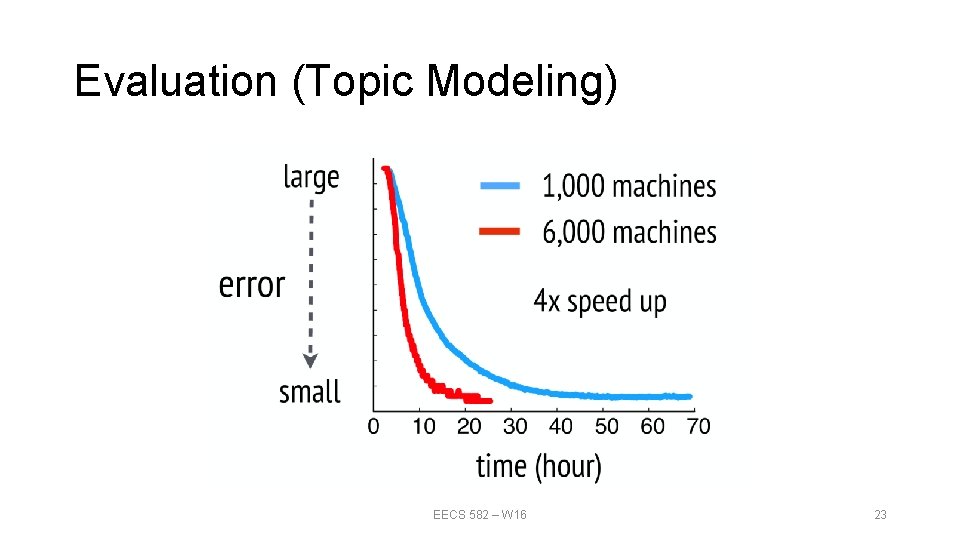
Evaluation (Topic Modeling) EECS 582 – W 16 23
Conclusion • The Parameter Server model is a much better model for machine learning computation than comparing models EECS 582 – W 16 24
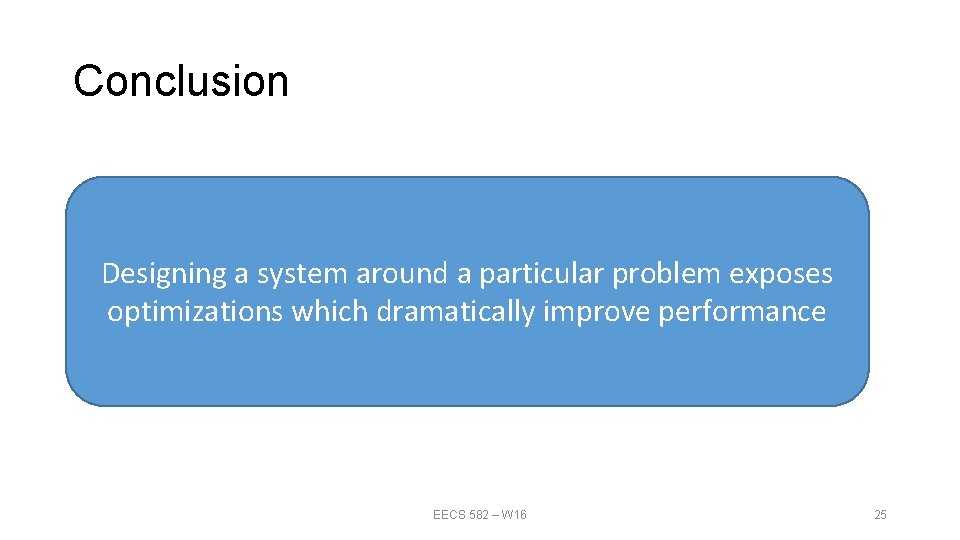
Conclusion Designing a system around a particular problem exposes • The Parameter Server model is a much betterperformance model for optimizations which dramatically improve machine learning computation than comparing models EECS 582 – W 16 25
- Slides: 25