
Scaling Deep Reinforcement Learning to Enable DatacenterScale Automatic
Scaling Deep Reinforcement Learning to Enable Datacenter-Scale Automatic Traffic Optimization Li Chen, Justinas Lingys, Kai Chen, Feng Liu (SAIC) SING Group, HKUST

Scaling Deep Reinforcement Learning to Enable Datacenter-Scale Au. TO Li Chen, Justinas Lingys, Kai Chen, Feng Liu (SAIC) SING Group, HKUST
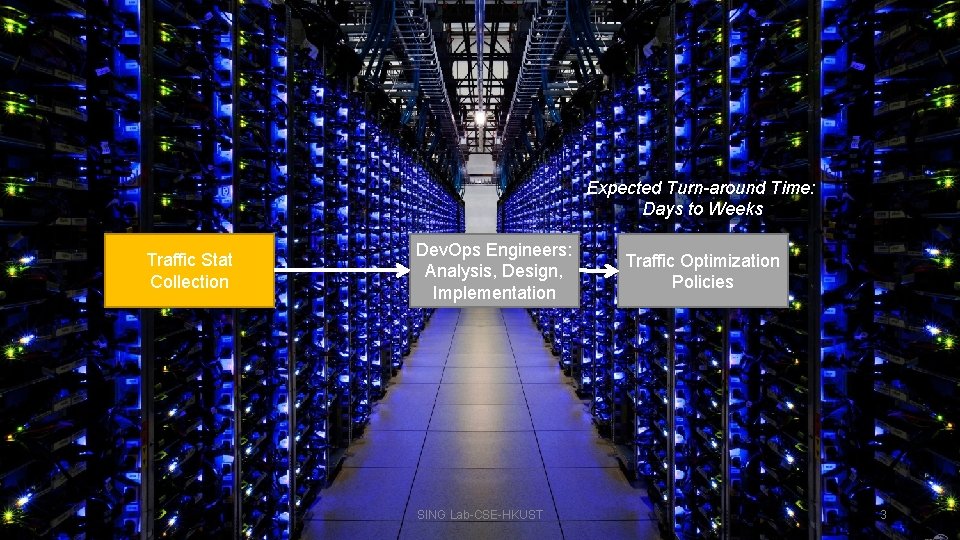
Expected Turn-around Time: Days to Weeks Traffic Stat Collection Dev. Ops Engineers: Analysis, Design, Implementation SING Lab-CSE-HKUST Traffic Optimization Policies 3
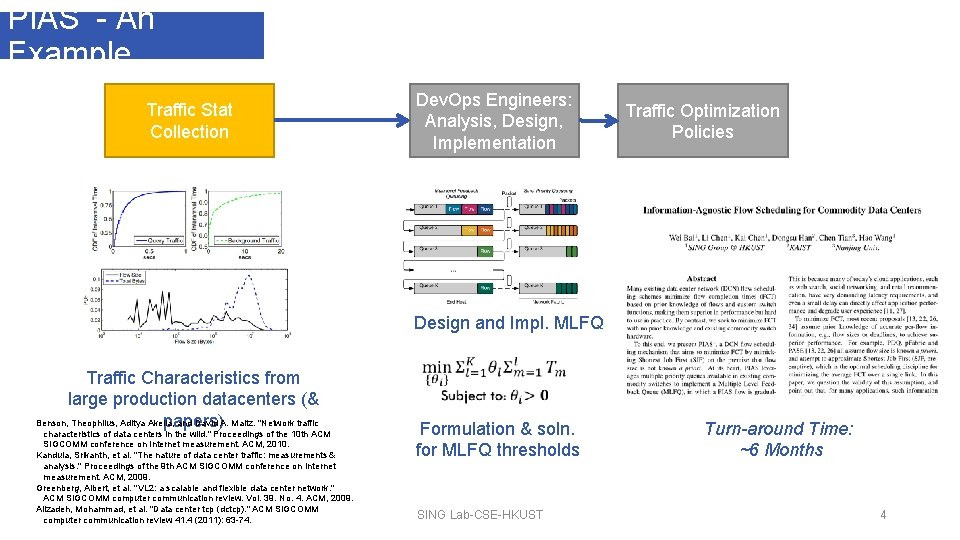
PIAS - An Example Traffic Stat Collection Dev. Ops Engineers: Analysis, Design, Implementation Traffic Optimization Policies Design and Impl. MLFQ Traffic Characteristics from large production datacenters (& Benson, Theophilus, Aditya Akella, and David A. Maltz. "Network traffic papers) characteristics of data centers in the wild. " Proceedings of the 10 th ACM SIGCOMM conference on Internet measurement. ACM, 2010. Kandula, Srikanth, et al. "The nature of data center traffic: measurements & analysis. " Proceedings of the 9 th ACM SIGCOMM conference on Internet measurement. ACM, 2009. Greenberg, Albert, et al. "VL 2: a scalable and flexible data center network. " ACM SIGCOMM computer communication review. Vol. 39. No. 4. ACM, 2009. Alizadeh, Mohammad, et al. "Data center tcp (dctcp). " ACM SIGCOMM computer communication review 41. 4 (2011): 63 -74. Formulation & soln. for MLFQ thresholds SING Lab-CSE-HKUST Turn-around Time: ~6 Months 4
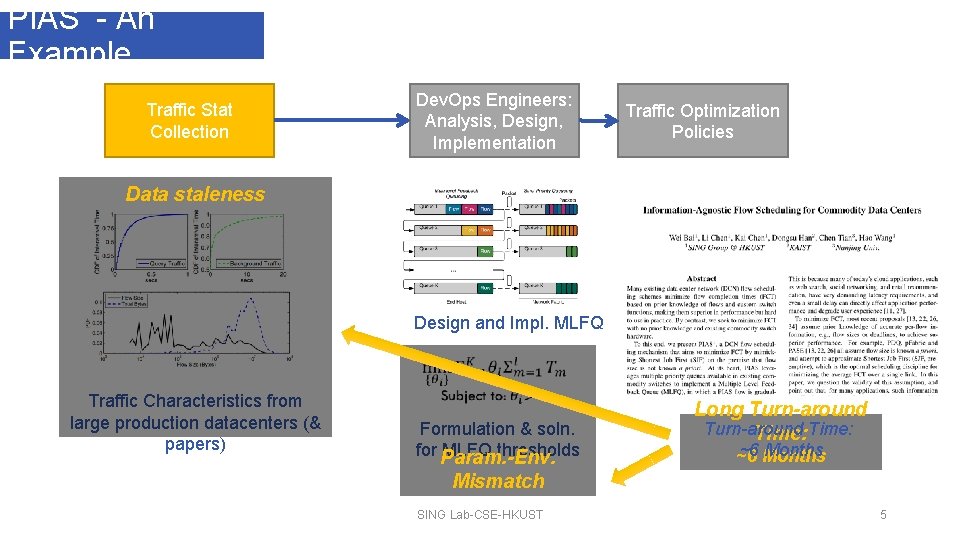
PIAS - An Example Traffic Stat Collection Dev. Ops Engineers: Analysis, Design, Implementation Traffic Optimization Policies Data staleness Design and Impl. MLFQ Traffic Characteristics from large production datacenters (& papers) Formulation & soln. for Param. -Env. MLFQ thresholds Long Turn-around Time: ~6 Months ~6 Mismatch SING Lab-CSE-HKUST 5
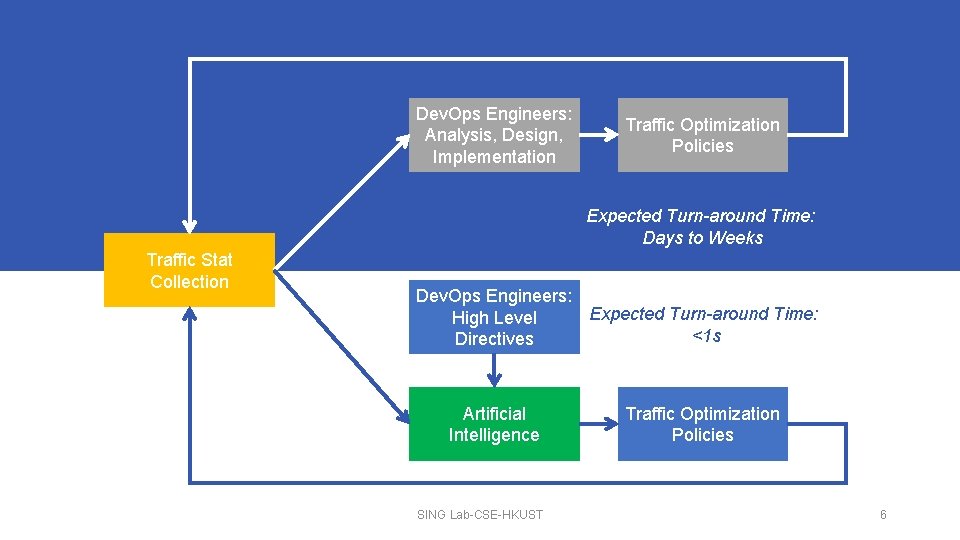
Dev. Ops Engineers: Analysis, Design, Implementation PIAS: An Example Traffic Optimization Policies Expected Turn-around Time: Days to Weeks Traffic Stat Collection Dev. Ops Engineers: Expected Turn-around Time: High Level <1 s Directives Artificial Intelligence SING Lab-CSE-HKUST Traffic Optimization Policies 6

Datacenter-scale Traffic Optimizations (TO) • Dynamic control of network traffic at flow-level to achieve performance objectives. • Main goal is to minimize flow completion time. • Very large-scale online decision problem. • >105 servers* • >103 concurrent flows per second per server* Data Center Network Web Big Data Cache DB *Singh, Arjun, et al. "Jupiter rising: A decade of clos topologies and centralized control in google's datacenter network. " ACM SIGCOMM Computer Communication Review. Vol. 45. No. 4. ACM, 2015. *Roy, Arjun, et al. "Inside the social network's (datacenter) network. " ACM SIGCOMM Computer Communication Review. Vol. 45. No. 4. ACM, 2015. SING Lab-CSE-HKUST 7
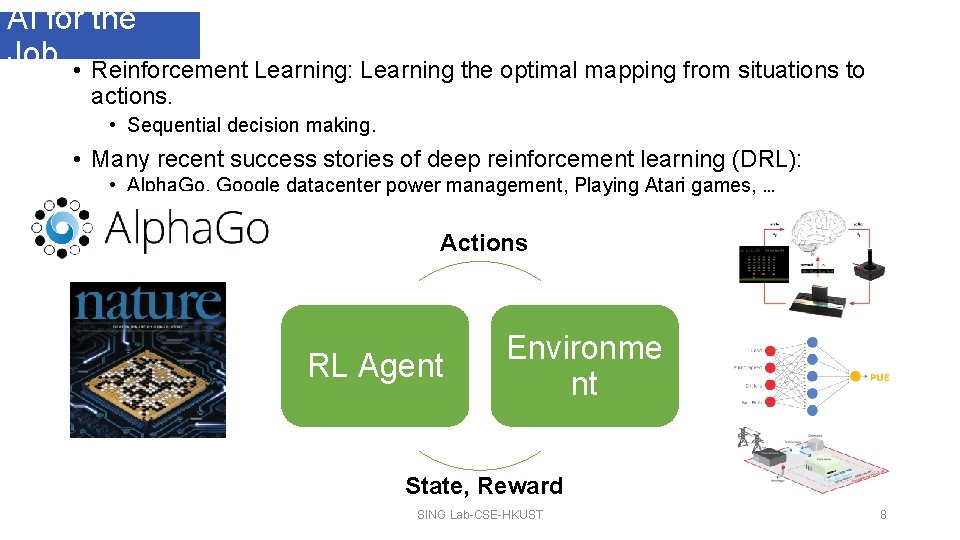
AI for the Job • Reinforcement Learning: Learning the optimal mapping from situations to actions. • Sequential decision making. • Many recent success stories of deep reinforcement learning (DRL): • Alpha. Go, Google datacenter power management, Playing Atari games, … Actions RL Agent Environme nt State, Reward SING Lab-CSE-HKUST 8
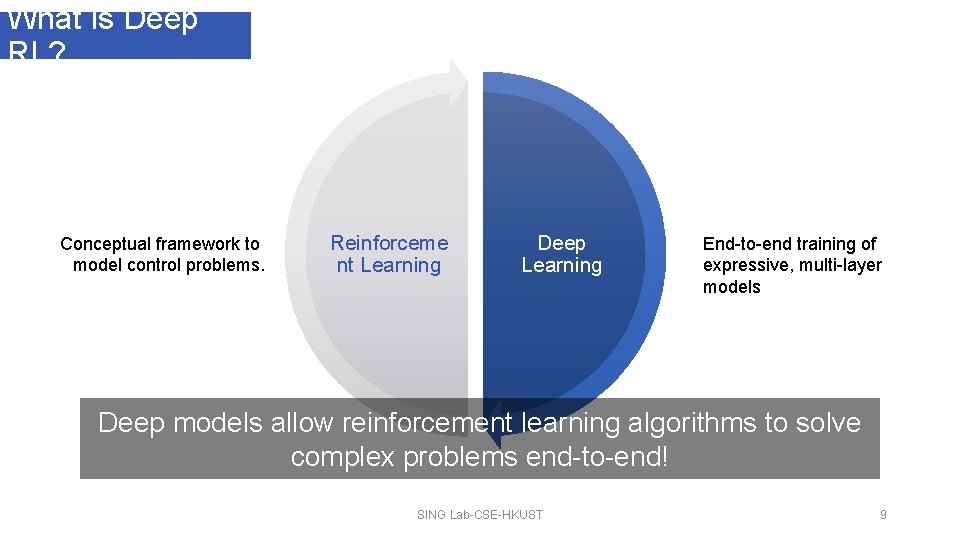
What is Deep RL? Conceptual framework to model control problems. Reinforceme nt Learning Deep Learning End-to-end training of expressive, multi-layer models Deep models allow reinforcement learning algorithms to solve complex problems end-to-end! SING Lab-CSE-HKUST 9
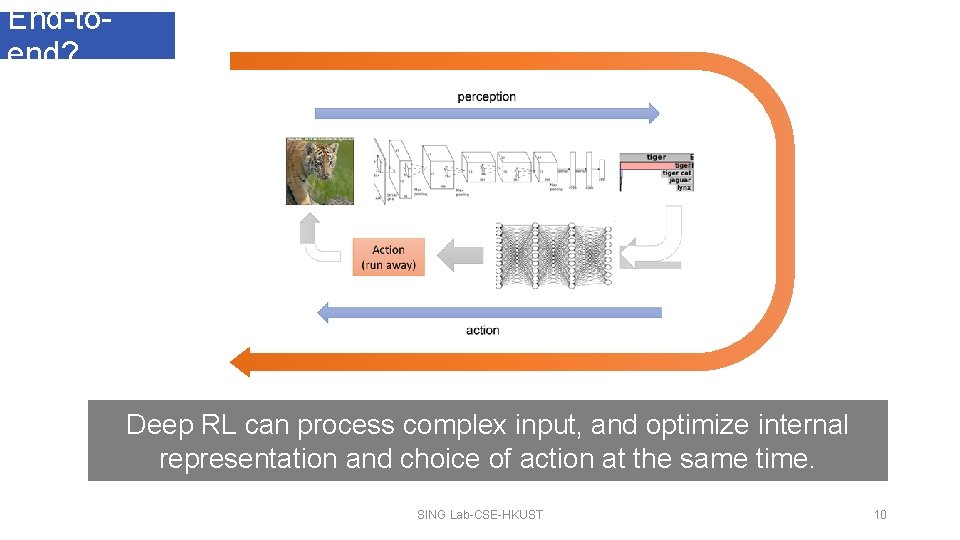
End-toend? Deep RL can process complex input, and optimize internal representation and choice of action at the same time. SING Lab-CSE-HKUST 10

Reinforcement Learning Model In each time step t… Agent DCN Environment 11
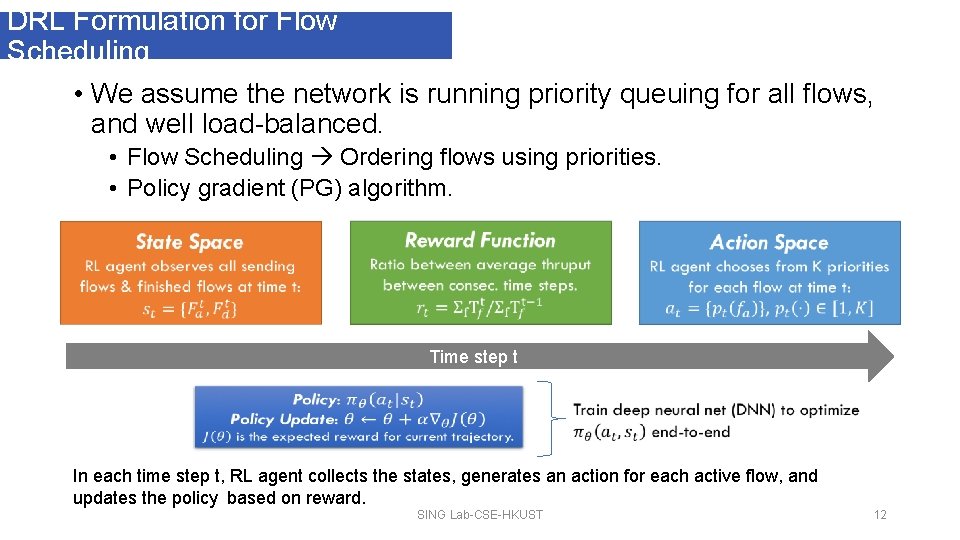
DRL Formulation for Flow Scheduling • We assume the network is running priority queuing for all flows, and well load-balanced. • Flow Scheduling Ordering flows using priorities. • Policy gradient (PG) algorithm. Time step t In each time step t, RL agent collects the states, generates an action for each active flow, and updates the policy based on reward. SING Lab-CSE-HKUST 12
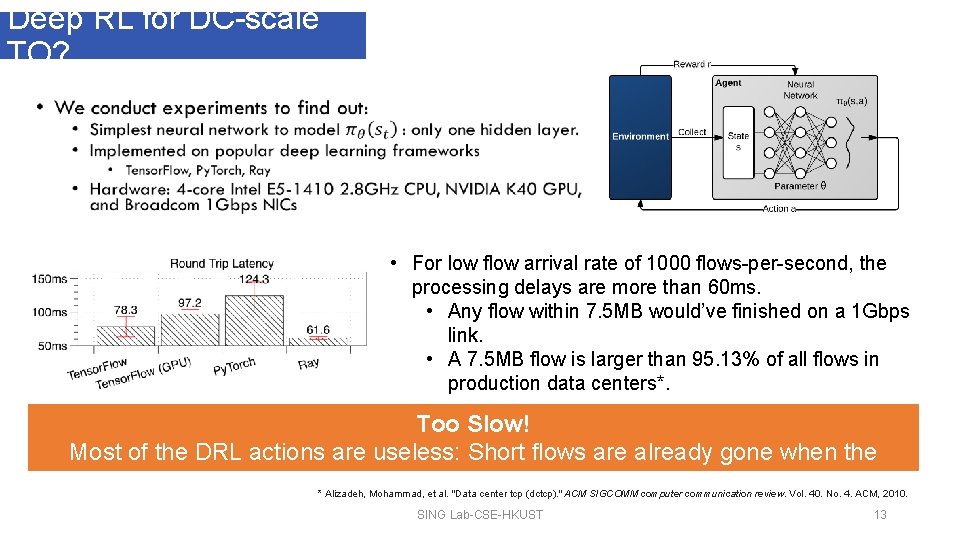
Deep RL for DC-scale TO? • • For low flow arrival rate of 1000 flows-per-second, the processing delays are more than 60 ms. • Any flow within 7. 5 MB would’ve finished on a 1 Gbps link. • A 7. 5 MB flow is larger than 95. 13% of all flows in production data centers*. Too Slow! Most of the DRL actions are useless: Short flows are already gone when the actions arrive. * Alizadeh, Mohammad, et al. "Data center tcp (dctcp). " ACM SIGCOMM computer communication review. Vol. 40. No. 4. ACM, 2010. SING Lab-CSE-HKUST 13
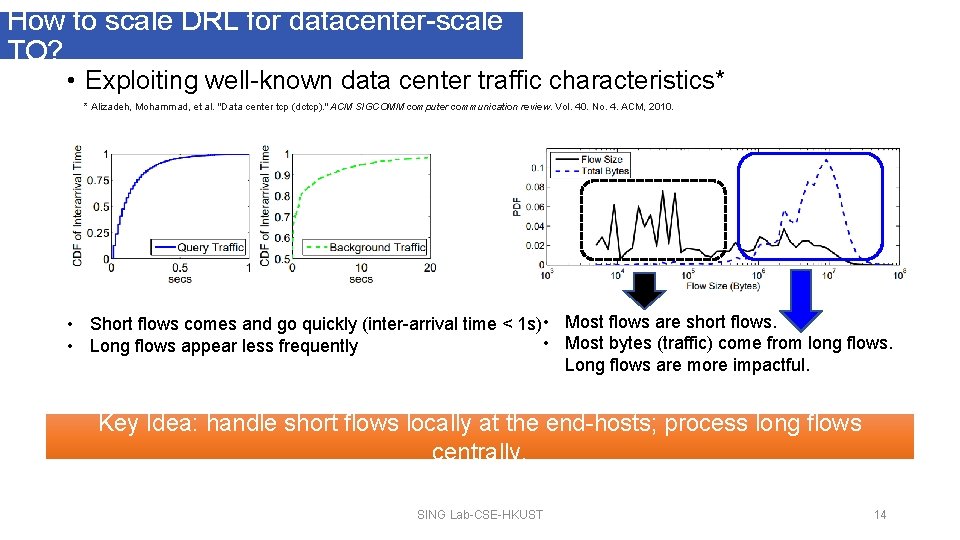
How to scale DRL for datacenter-scale TO? • Exploiting well-known data center traffic characteristics* * Alizadeh, Mohammad, et al. "Data center tcp (dctcp). " ACM SIGCOMM computer communication review. Vol. 40. No. 4. ACM, 2010. • Short flows comes and go quickly (inter-arrival time < 1 s) • Most flows are short flows. • Most bytes (traffic) come from long flows. • Long flows appear less frequently Long flows are more impactful. Key Idea: handle short flows locally at the end-hosts; process long flows centrally. SING Lab-CSE-HKUST 14
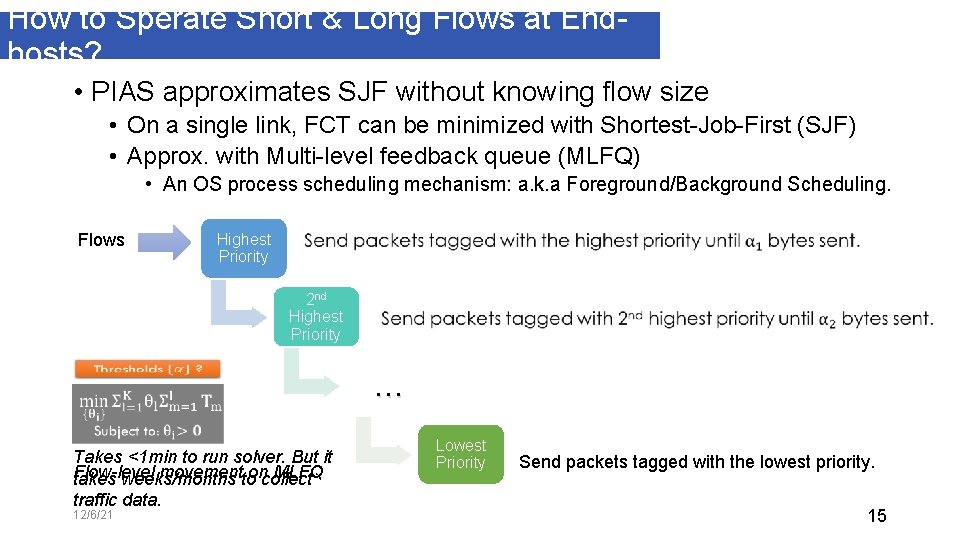
How to Sperate Short & Long Flows at Endhosts? • PIAS approximates SJF without knowing flow size • On a single link, FCT can be minimized with Shortest-Job-First (SJF) • Approx. with Multi-level feedback queue (MLFQ) • An OS process scheduling mechanism: a. k. a Foreground/Background Scheduling. Flows Highest Priority 2 nd Highest Priority … Takes <1 min to run solver. But it Flow-level movementtooncollect MLFQ takes weeks/months traffic data. 12/6/21 Lowest Priority Send packets tagged with the lowest priority. 15
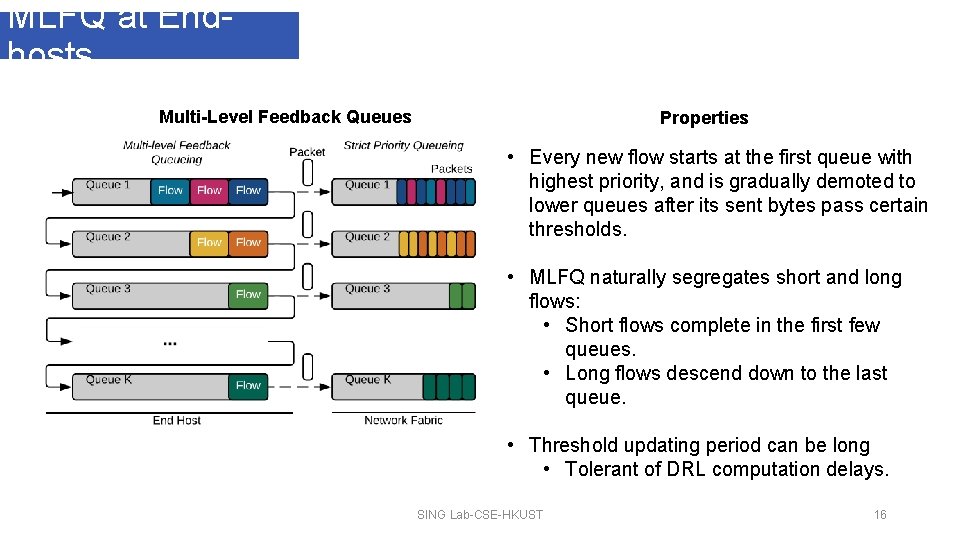
MLFQ at Endhosts Multi-Level Feedback Queues Properties • Every new flow starts at the first queue with highest priority, and is gradually demoted to lower queues after its sent bytes pass certain thresholds. • MLFQ naturally segregates short and long flows: • Short flows complete in the first few queues. • Long flows descend down to the last queue. • Threshold updating period can be long • Tolerant of DRL computation delays. SING Lab-CSE-HKUST 16
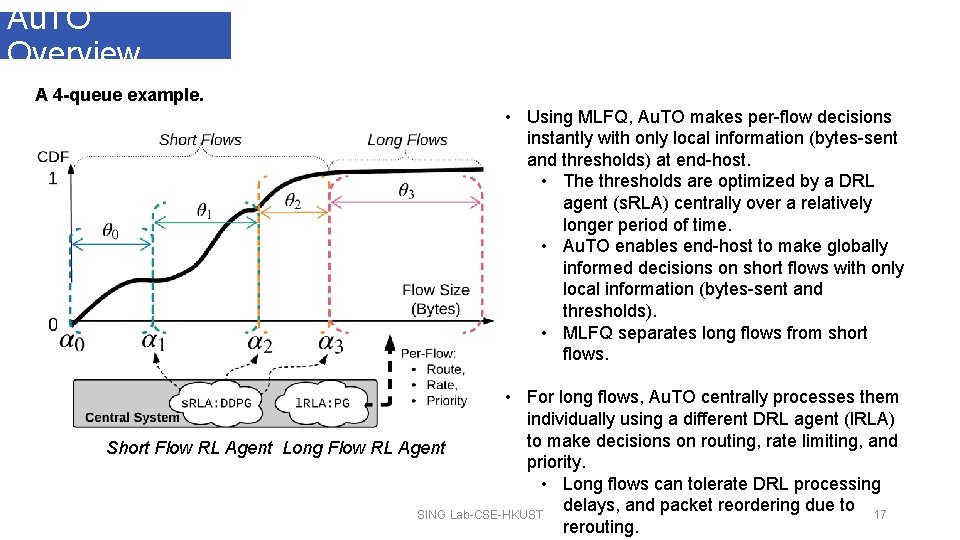
Au. TO Overview A 4 -queue example. • Using MLFQ, Au. TO makes per-flow decisions instantly with only local information (bytes-sent and thresholds) at end-host. • The thresholds are optimized by a DRL agent (s. RLA) centrally over a relatively longer period of time. • Au. TO enables end-host to make globally informed decisions on short flows with only local information (bytes-sent and thresholds). • MLFQ separates long flows from short flows. • For long flows, Au. TO centrally processes them individually using a different DRL agent (l. RLA) to make decisions on routing, rate limiting, and Short Flow RL Agent Long Flow RL Agent priority. • Long flows can tolerate DRL processing delays, and packet reordering due to 17 SING Lab-CSE-HKUST rerouting.
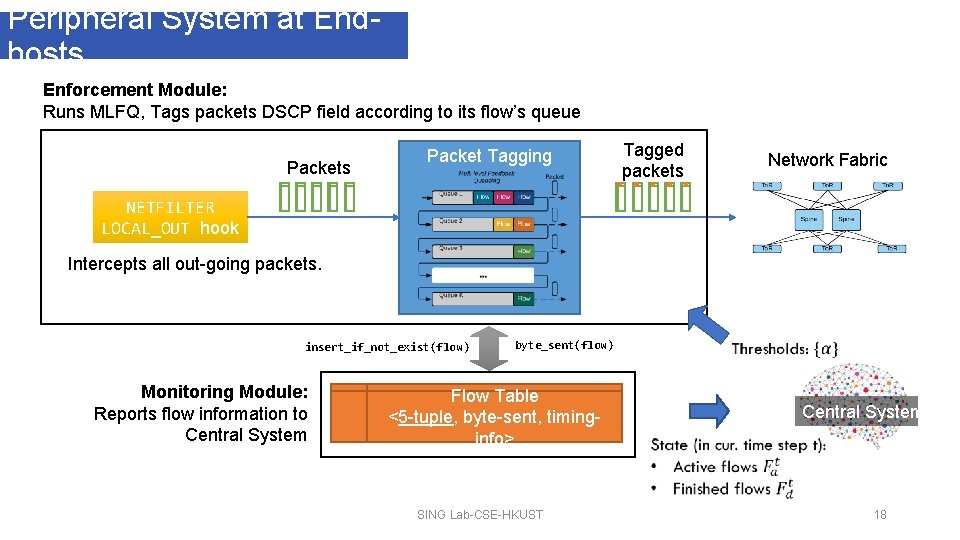
Peripheral System at Endhosts Enforcement Module: Runs MLFQ, Tags packets DSCP field according to its flow’s queue Packets Packet Tagging Tagged packets Network Fabric NETFILTER LOCAL_OUT hook Intercepts all out-going packets. insert_if_not_exist(flow) Monitoring Module: Reports flow information to Central System byte_sent(flow) Flow Table <5 -tuple, byte-sent, timinginfo> SING Lab-CSE-HKUST Central System 18
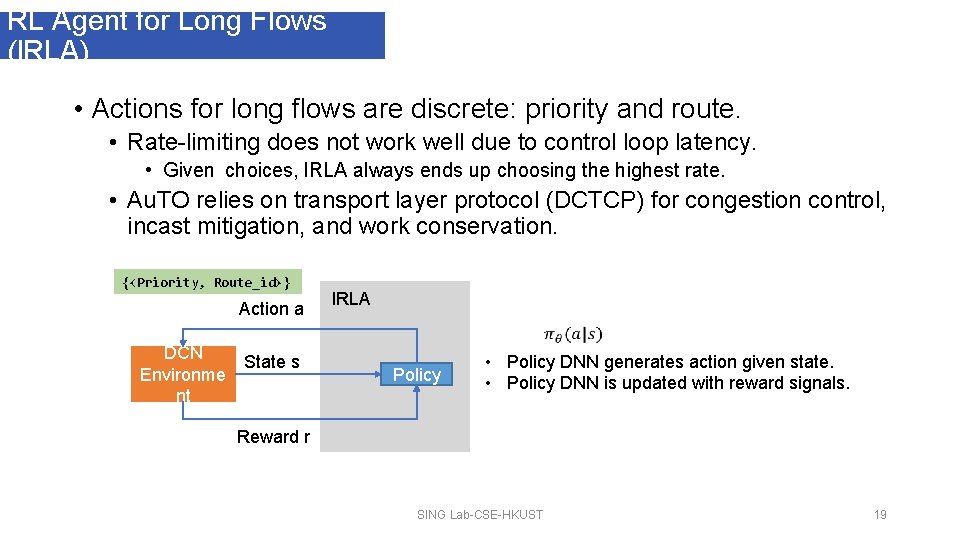
RL Agent for Long Flows (l. RLA) • Actions for long flows are discrete: priority and route. • Rate-limiting does not work well due to control loop latency. • Given choices, l. RLA always ends up choosing the highest rate. • Au. TO relies on transport layer protocol (DCTCP) for congestion control, incast mitigation, and work conservation. {<Priority, Route_id>} Action a DCN Environme nt State s l. RLA Policy • Policy DNN generates action given state. • Policy DNN is updated with reward signals. Reward r SING Lab-CSE-HKUST 19
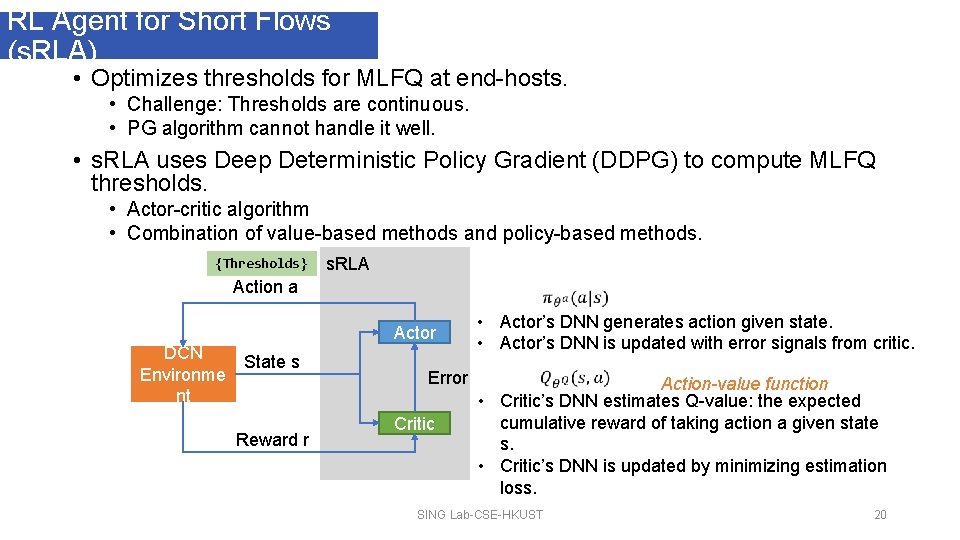
RL Agent for Short Flows (s. RLA) • Optimizes thresholds for MLFQ at end-hosts. • Challenge: Thresholds are continuous. • PG algorithm cannot handle it well. • s. RLA uses Deep Deterministic Policy Gradient (DDPG) to compute MLFQ thresholds. • Actor-critic algorithm • Combination of value-based methods and policy-based methods. {Thresholds} s. RLA Action a Actor DCN Environme nt State s Reward r Error Critic • Actor’s DNN generates action given state. • Actor’s DNN is updated with error signals from critic. Action-value function • Critic’s DNN estimates Q-value: the expected cumulative reward of taking action a given state s. • Critic’s DNN is updated by minimizing estimation loss. SING Lab-CSE-HKUST 20
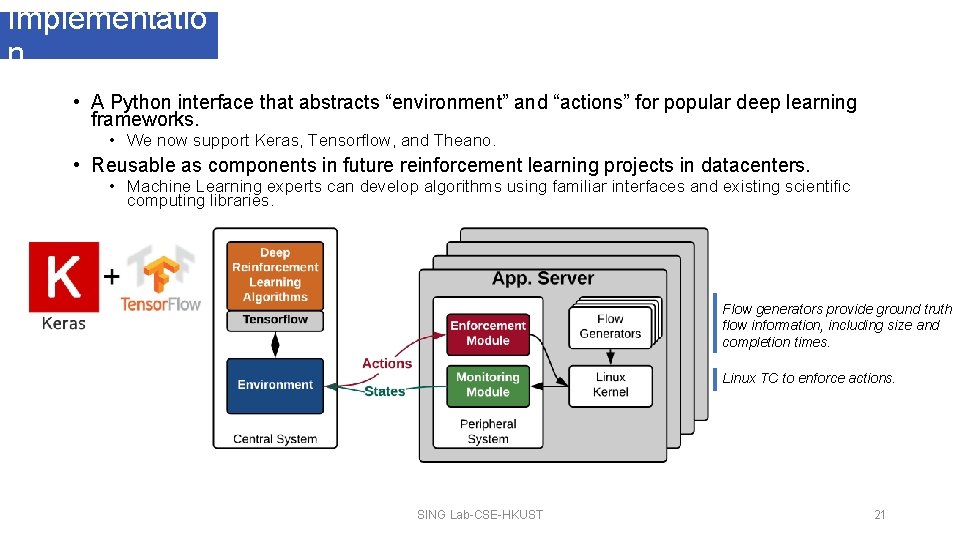
Implementatio n • A Python interface that abstracts “environment” and “actions” for popular deep learning frameworks. • We now support Keras, Tensorflow, and Theano. • Reusable as components in future reinforcement learning projects in datacenters. • Machine Learning experts can develop algorithms using familiar interfaces and existing scientific computing libraries. Flow generators provide ground truth flow information, including size and completion times. Linux TC to enforce actions. SING Lab-CSE-HKUST 21
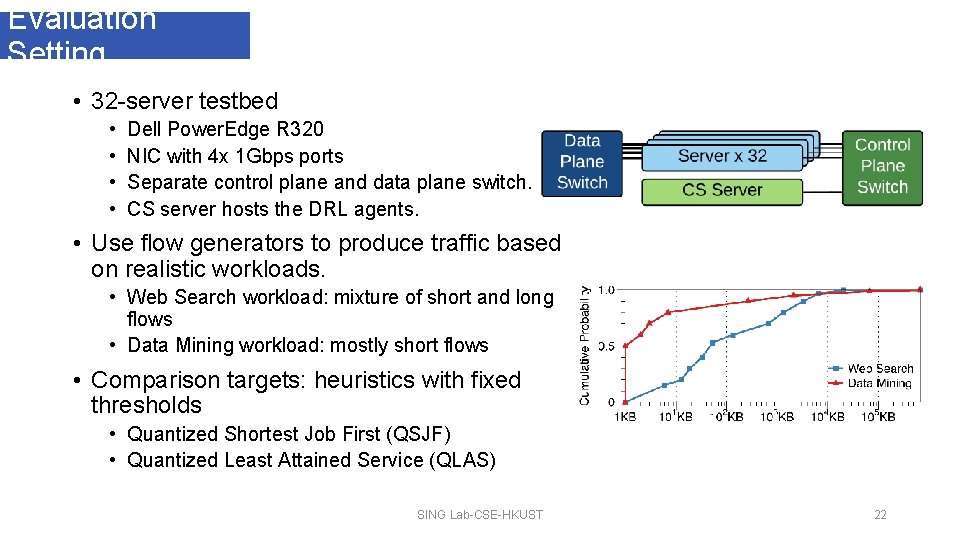
Evaluation Setting • 32 -server testbed • • Dell Power. Edge R 320 NIC with 4 x 1 Gbps ports Separate control plane and data plane switch. CS server hosts the DRL agents. • Use flow generators to produce traffic based on realistic workloads. • Web Search workload: mixture of short and long flows • Data Mining workload: mostly short flows • Comparison targets: heuristics with fixed thresholds • Quantized Shortest Job First (QSJF) • Quantized Least Attained Service (QLAS) SING Lab-CSE-HKUST 22
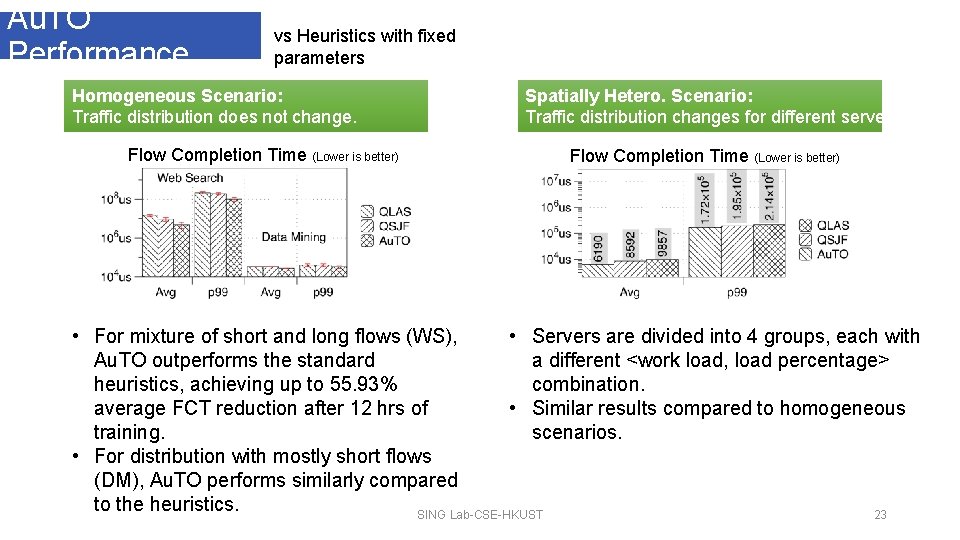
Au. TO Performance vs Heuristics with fixed parameters Homogeneous Scenario: Traffic distribution does not change. Flow Completion Time (Lower is better) Spatially Hetero. Scenario: Traffic distribution changes for different servers. Flow Completion Time (Lower is better) • For mixture of short and long flows (WS), • Servers are divided into 4 groups, each with Au. TO outperforms the standard a different <work load, load percentage> heuristics, achieving up to 55. 93% combination. average FCT reduction after 12 hrs of • Similar results compared to homogeneous training. scenarios. • For distribution with mostly short flows (DM), Au. TO performs similarly compared to the heuristics. SING Lab-CSE-HKUST 23
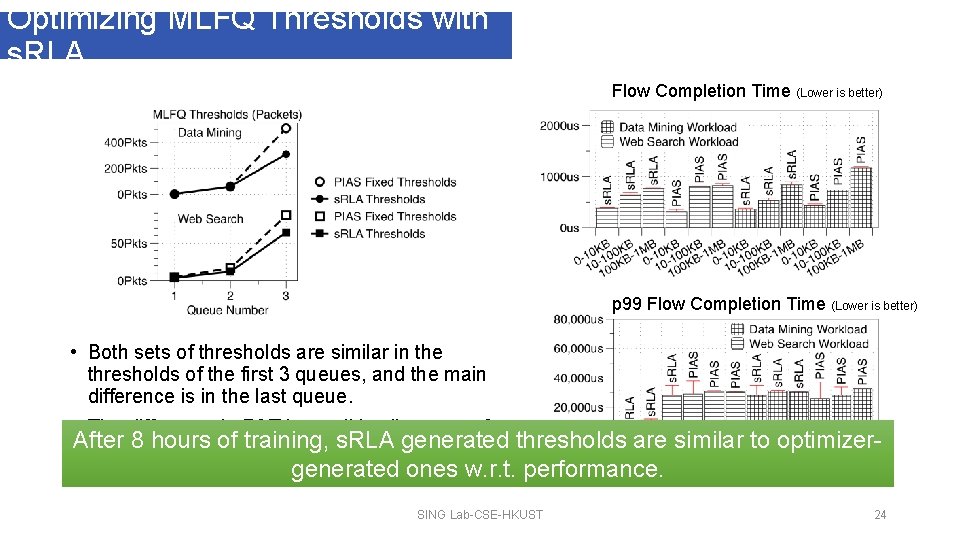
Optimizing MLFQ Thresholds with s. RLA Flow Completion Time (Lower is better) p 99 Flow Completion Time (Lower is better) • Both sets of thresholds are similar in the thresholds of the first 3 queues, and the main difference is in the last queue. • The difference in FCT is small in all groups of After 8 hours of training, s. RLA generated thresholds are similar to optimizerflow sizes. generated ones w. r. t. performance. SING Lab-CSE-HKUST 24
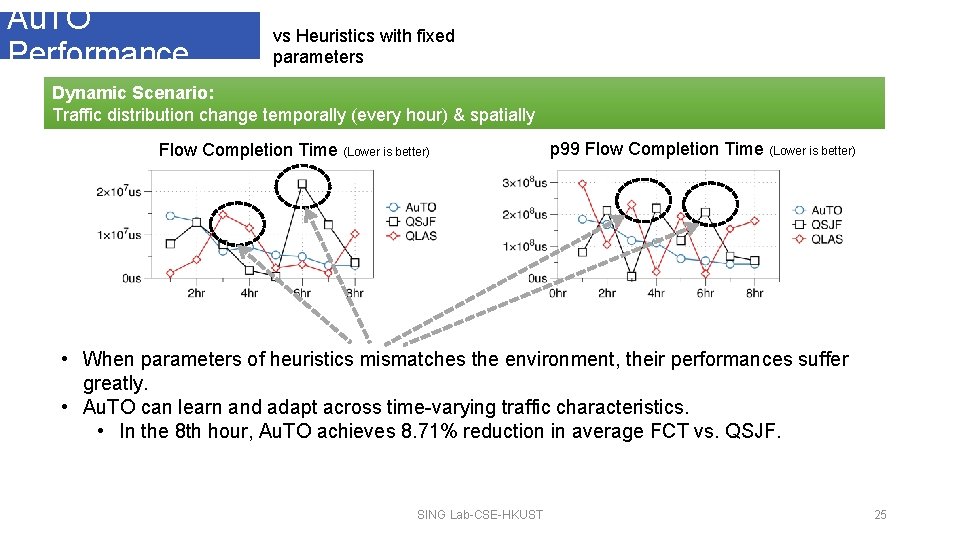
Au. TO Performance vs Heuristics with fixed parameters Dynamic Scenario: Traffic distribution change temporally (every hour) & spatially Flow Completion Time (Lower is better) p 99 Flow Completion Time (Lower is better) • When parameters of heuristics mismatches the environment, their performances suffer greatly. • Au. TO can learn and adapt across time-varying traffic characteristics. • In the 8 th hour, Au. TO achieves 8. 71% reduction in average FCT vs. QSJF. SING Lab-CSE-HKUST 25
Summa ry • DRL has been successful in solving complex online control problems. We attempt to enable DRL for automatic traffic optimizations in data centers. • Initial experiments show that the latency of current DRL systems is the major obstacle to traffic optimizations at the scale of current datacenters. • Au. TO solves this problem by exploiting long-tail distribution of datacenter traffic. • MLFQ to segregate short & long flows. • Short flows are handled at end-host locally with DRL-optimized thresholds. • Long flows are processed centrally by another DRL algorithm. A first step towards automating datacenter traffic optimizations. SING Lab-CSE-HKUST 26

Q&A SING Lab-CSE-HKUST 27
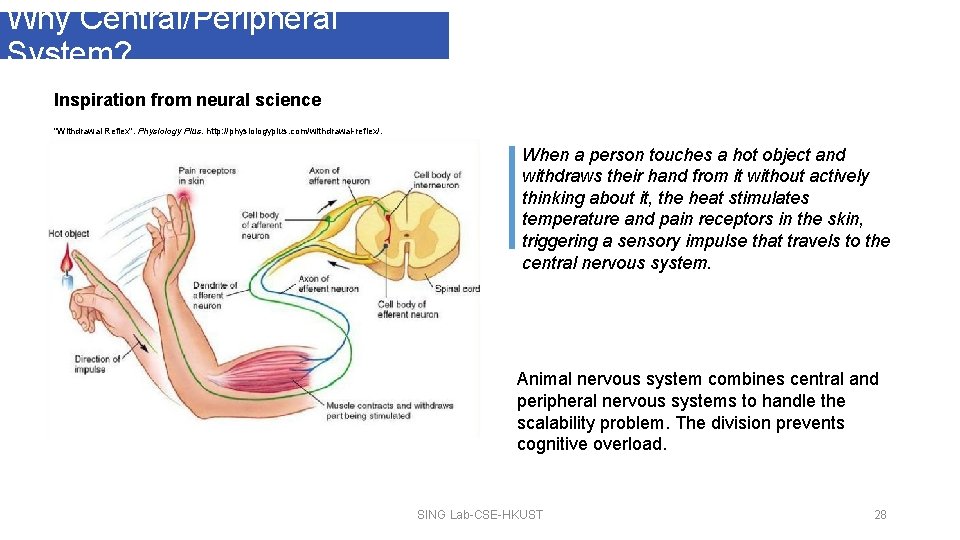
Why Central/Peripheral System? Inspiration from neural science "Withdrawal Reflex". Physiology Plus. http: //physiologyplus. com/withdrawal-reflex/. When a person touches a hot object and withdraws their hand from it without actively thinking about it, the heat stimulates temperature and pain receptors in the skin, triggering a sensory impulse that travels to the central nervous system. Animal nervous system combines central and peripheral nervous systems to handle the scalability problem. The division prevents cognitive overload. SING Lab-CSE-HKUST 28
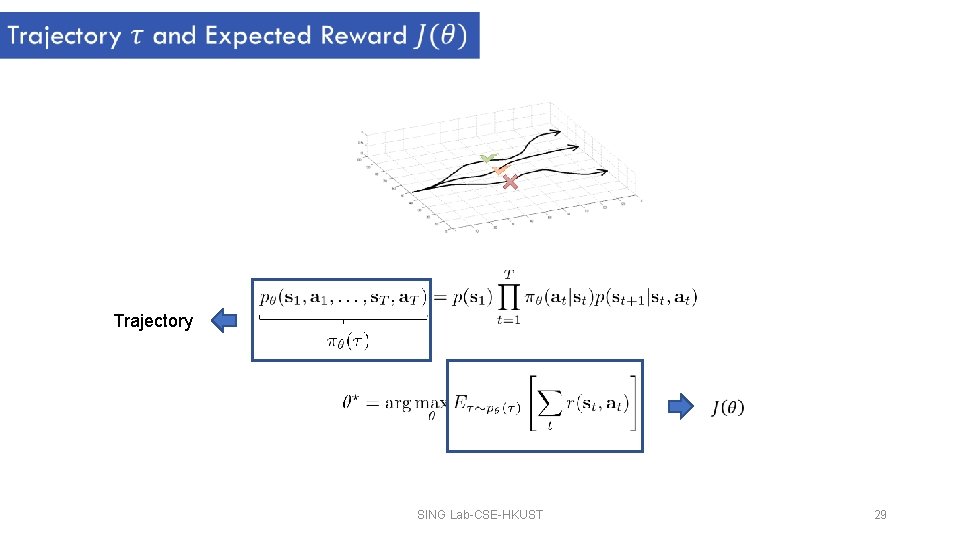
Trajectory SING Lab-CSE-HKUST 29
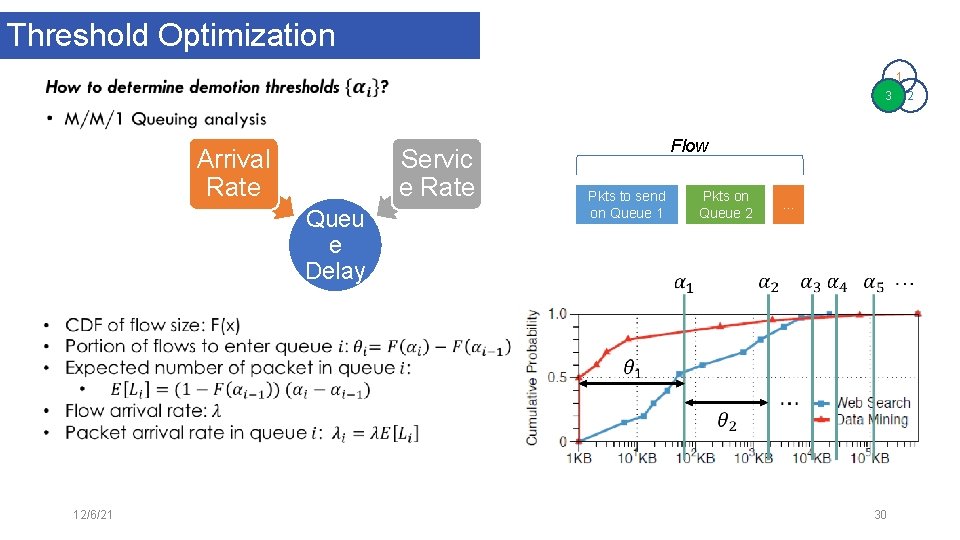
Threshold Optimization 1 3 • Arrival Rate Servic e Rate Queu e Delay 12/6/21 Flow Pkts to send on Queue 1 Pkts on Queue 2 … 30 2
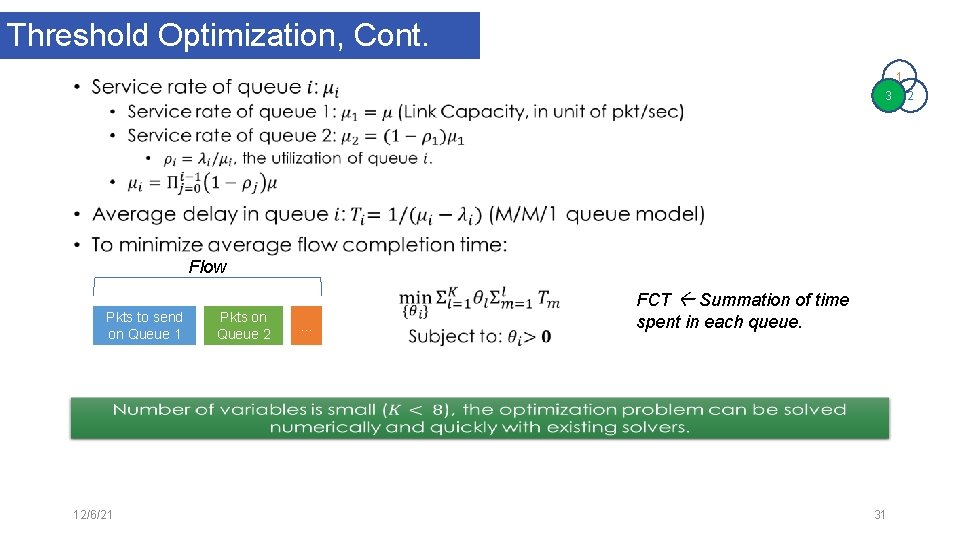
Threshold Optimization, Cont. 1 3 Flow • Pkts to send on Queue 1 12/6/21 Pkts on Queue 2 … FCT Summation of time spent in each queue. 31 2
- Slides: 31