
Scales Introduction to Drafting and Design What is


- Slides: 21
Scales Introduction to Drafting and Design
What is a scale?
Scale § There are two different meanings for the word scale § The size to which an object is drawn § An instrument with a system of ordered marks at fixed intervals used as reference standards in measurements. § A scale establishes a proportion used in determining the dimensional relationship of an actual object to the representation of the same object on a drawing.
What are the different types of scales?
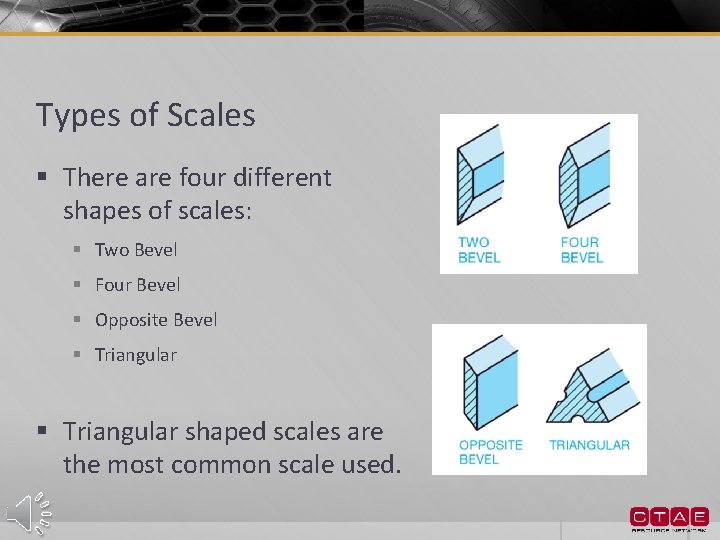
Types of Scales § There are four different shapes of scales: § Two Bevel § Four Bevel § Opposite Bevel § Triangular shaped scales are the most common scale used.
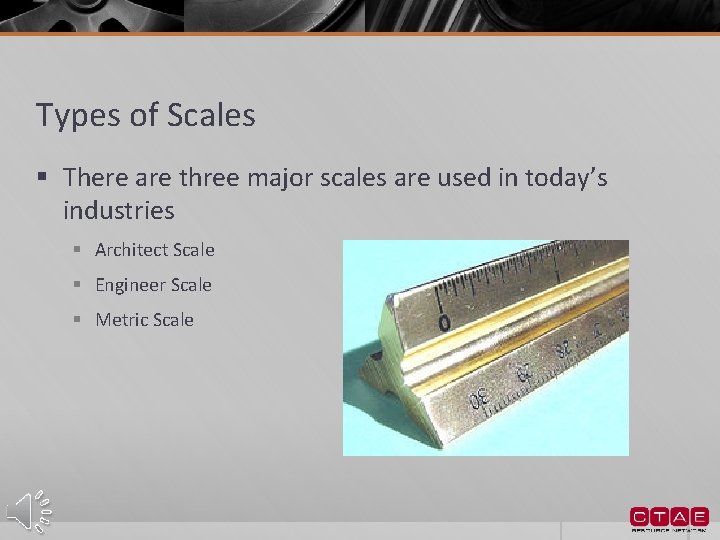
Types of Scales § There are three major scales are used in today’s industries § Architect Scale § Engineer Scale § Metric Scale
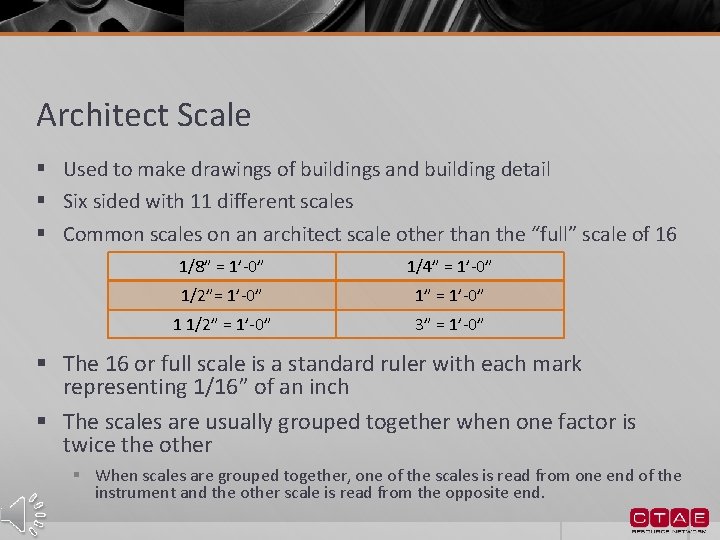
Architect Scale § Used to make drawings of buildings and building detail § Six sided with 11 different scales § Common scales on an architect scale other than the “full” scale of 16 1/8” = 1’-0” 1/4” = 1’-0” 1/2”= 1’-0” 1” = 1’-0” 1 1/2” = 1’-0” 3” = 1’-0” § The 16 or full scale is a standard ruler with each mark representing 1/16” of an inch § The scales are usually grouped together when one factor is twice the other § When scales are grouped together, one of the scales is read from one end of the instrument and the other scale is read from the opposite end.
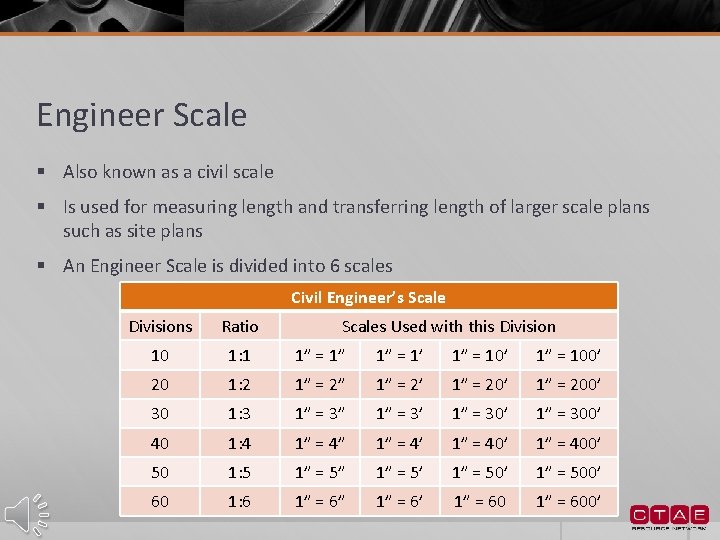
Engineer Scale § Also known as a civil scale § Is used for measuring length and transferring length of larger scale plans such as site plans § An Engineer Scale is divided into 6 scales Civil Engineer’s Scale Divisions Ratio Scales Used with this Division 10 1: 1 1” = 1” 1” = 1’ 1” = 100’ 20 1: 2 1” = 2” 1” = 2’ 1” = 200’ 30 1: 3 1” = 3” 1” = 3’ 1” = 300’ 40 1: 4 1” = 4” 1” = 4’ 1” = 400’ 50 1: 5 1” = 5” 1” = 5’ 1” = 500’ 60 1: 6 1” = 6” 1” = 6’ 1” = 600’
Engineer Scale § The engineer scale and the architect scale are similar in appearance § The engineer scale is designed to be more precise by using a decimal scaling scheme § Whereas an architect’s scale uses fractional scaling. § Engineer scales are only read from left to right where architect scales can be read from left to right and right to left.
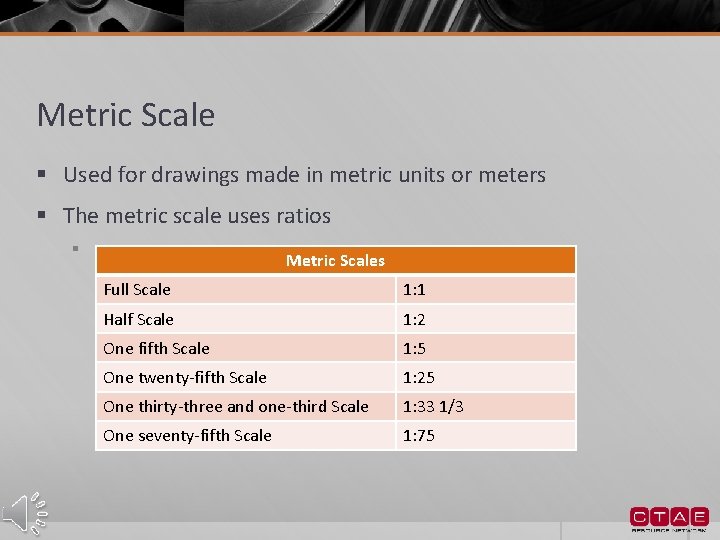
Metric Scale § Used for drawings made in metric units or meters § The metric scale uses ratios § Metric Scales Full Scale 1: 1 Half Scale 1: 2 One fifth Scale 1: 5 One twenty-fifth Scale 1: 25 One thirty-three and one-third Scale 1: 33 1/3 One seventy-fifth Scale 1: 75
How do we use each scale?
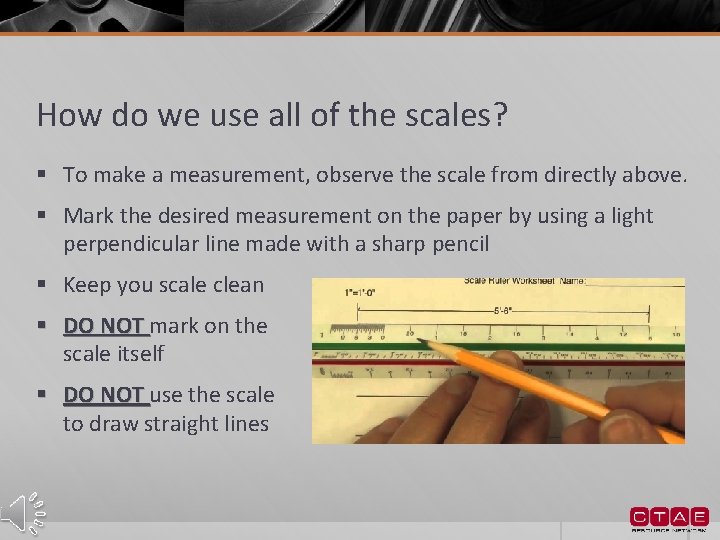
How do we use all of the scales? § To make a measurement, observe the scale from directly above. § Mark the desired measurement on the paper by using a light perpendicular line made with a sharp pencil § Keep you scale clean § DO NOT mark on the scale itself § DO NOT use the scale to draw straight lines
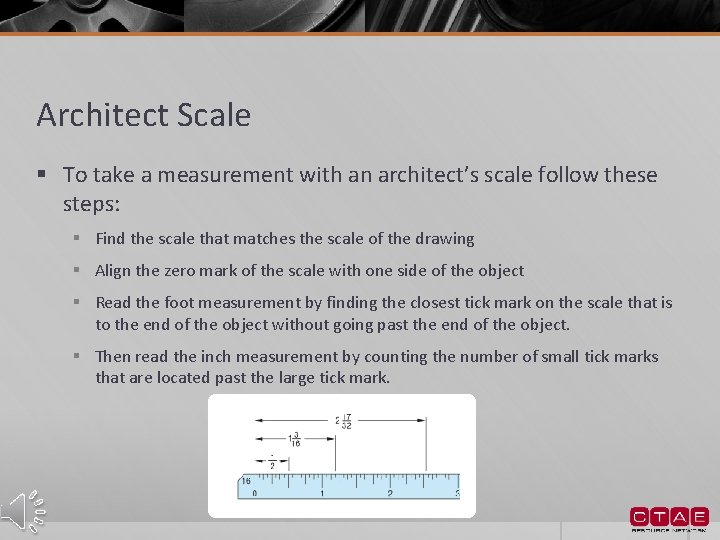
Architect Scale § To take a measurement with an architect’s scale follow these steps: § Find the scale that matches the scale of the drawing § Align the zero mark of the scale with one side of the object § Read the foot measurement by finding the closest tick mark on the scale that is to the end of the object without going past the end of the object. § Then read the inch measurement by counting the number of small tick marks that are located past the large tick mark.
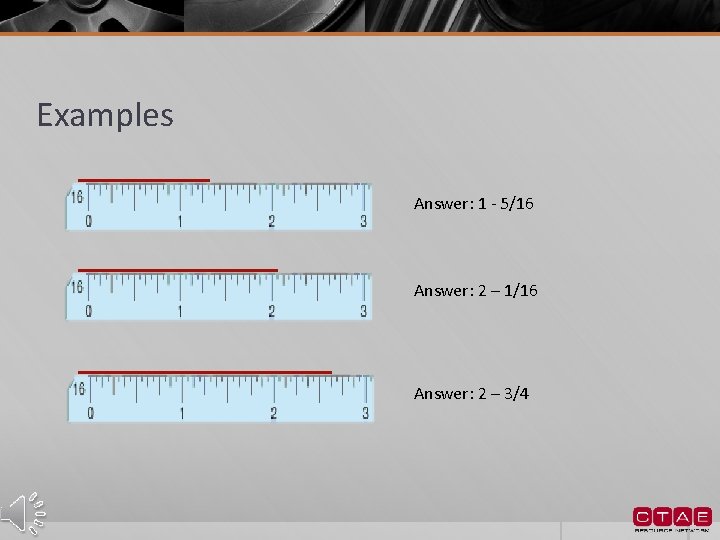
Examples Answer: 1 - 5/16 Answer: 2 – 1/16 Answer: 2 – 3/4
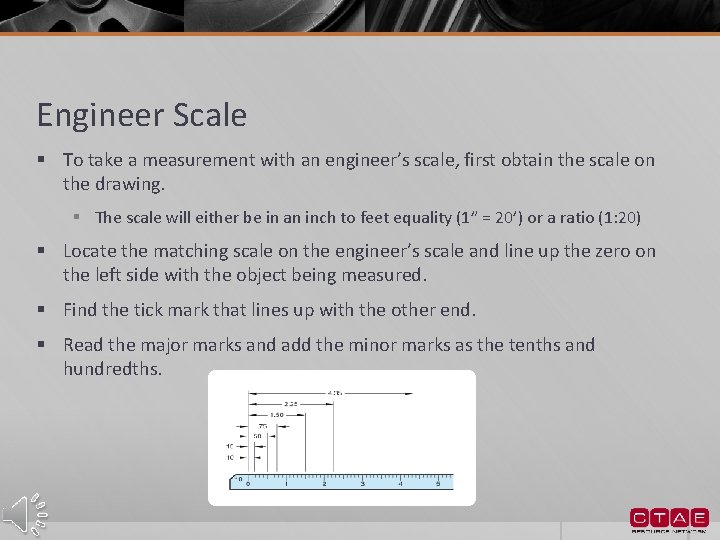
Engineer Scale § To take a measurement with an engineer’s scale, first obtain the scale on the drawing. § The scale will either be in an inch to feet equality (1” = 20’) or a ratio (1: 20) § Locate the matching scale on the engineer’s scale and line up the zero on the left side with the object being measured. § Find the tick mark that lines up with the other end. § Read the major marks and add the minor marks as the tenths and hundredths.
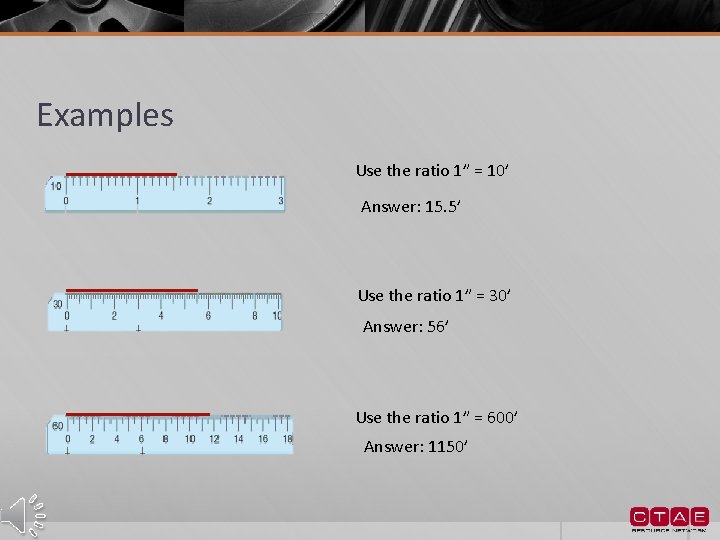
Examples Use the ratio 1” = 10’ Answer: 15. 5’ Use the ratio 1” = 30’ Answer: 56’ Use the ratio 1” = 600’ Answer: 1150’
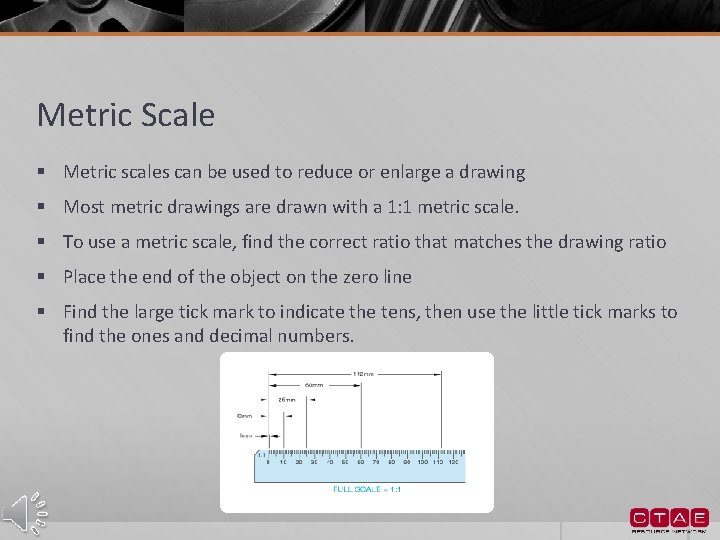
Metric Scale § Metric scales can be used to reduce or enlarge a drawing § Most metric drawings are drawn with a 1: 1 metric scale. § To use a metric scale, find the correct ratio that matches the drawing ratio § Place the end of the object on the zero line § Find the large tick mark to indicate the tens, then use the little tick marks to find the ones and decimal numbers.
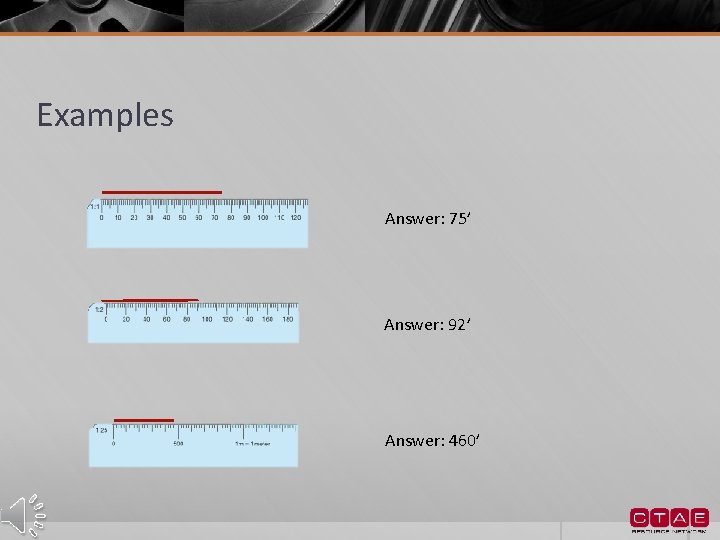
Examples Answer: 75’ Answer: 92’ Answer: 460’
How do you determine the scale of a drawing?
Scale of a Drawing § Scales are in constant use on the drawing board because accurate drawings are a must § To select a scale for a drawing you must consider the following about the drawing: § The actual size of the objects drawn § The amount of detail to show § The media size (size of paper used for drawing) § The amount of dimension and notes required § The scale of a drawing is listed in the title block of the drawing
In summary … § There are three scales that we can use: architecture, engineering and metric scales § These scales can be either two bevel, four bevel, opposite bevel and triangular shaped § The triangular shape is the one that is used the most § Make sure to view the scale from above when making measurements and place the end of the line on the zero marker § Now take what you have learned in this presentation and complete Activity 8. 1 – What’s the Scale?