
Scale in the Chesapeake Bay Program Watershed Model
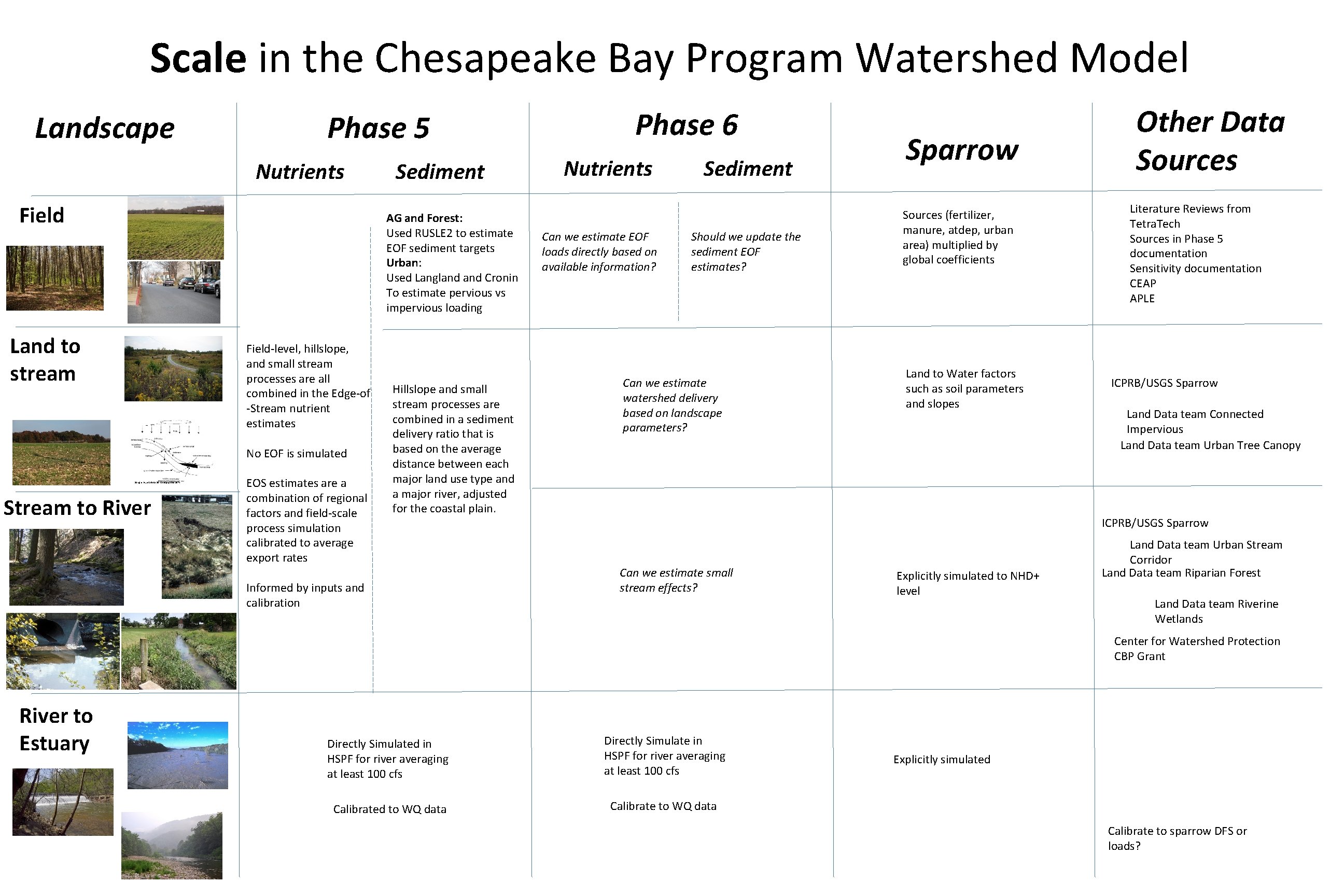
Scale in the Chesapeake Bay Program Watershed Model Landscape Phase 5 Nutrients Field Sediment AG and Forest: Used RUSLE 2 to estimate EOF sediment targets Urban: Used Langland Cronin To estimate pervious vs impervious loading Land to stream Field-level, hillslope, and small stream processes are all combined in the Edge-of -Stream nutrient estimates No EOF is simulated Dougherty, et all doi: 10. 2134/jeq 2004. 1973 Stream to River EOS estimates are a combination of regional factors and field-scale process simulation calibrated to average export rates Hillslope and small stream processes are combined in a sediment delivery ratio that is based on the average distance between each major land use type and a major river, adjusted for the coastal plain. Informed by inputs and calibration Phase 6 Nutrients Can we estimate EOF loads directly based on available information? Sediment Should we update the sediment EOF estimates? Can we estimate watershed delivery based on landscape parameters? Sparrow Sources (fertilizer, manure, atdep, urban area) multiplied by global coefficients Land to Water factors such as soil parameters and slopes Other Data Sources Literature Reviews from Tetra. Tech Sources in Phase 5 documentation Sensitivity documentation CEAP APLE ICPRB/USGS Sparrow Land Data team Connected Impervious Land Data team Urban Tree Canopy ICPRB/USGS Sparrow Can we estimate small stream effects? Explicitly simulated to NHD+ level Land Data team Urban Stream Corridor Land Data team Riparian Forest Land Data team Riverine Wetlands Center for Watershed Protection CBP Grant River to Estuary Directly Simulated in HSPF for river averaging at least 100 cfs Directly Simulate in HSPF for river averaging at least 100 cfs Calibrated to WQ data Calibrate to WQ data Explicitly simulated Calibrate to sparrow DFS or loads?
- Slides: 1