
SCAI Shock Classification David A Baran MD FACC
SCAI Shock Classification David A. Baran, MD, FACC, FSCAI, FHFSA System Director, Advanced Heart Failure, Transplant and MCS Sentara Heart Hospital Professor of Medicine Eastern Virginia Medical School, Norfolk, Virginia

Disclosures • Consulting: Abiomed, Livanova, Abbott, M 3, Aortrix, Getinge • Research: Abbott • Speaker: Novartis, Pfizer

Traditional Definition of Cardiogenic Shock Persistent SBP < 90 mm Hg not responsive to fluid administration alone Secondary to cardiac dysfunction Associated with signs of hypoperfusion of a CI < 2. 2 L/min/m 2 and a PCWP > 15 mmg Hg
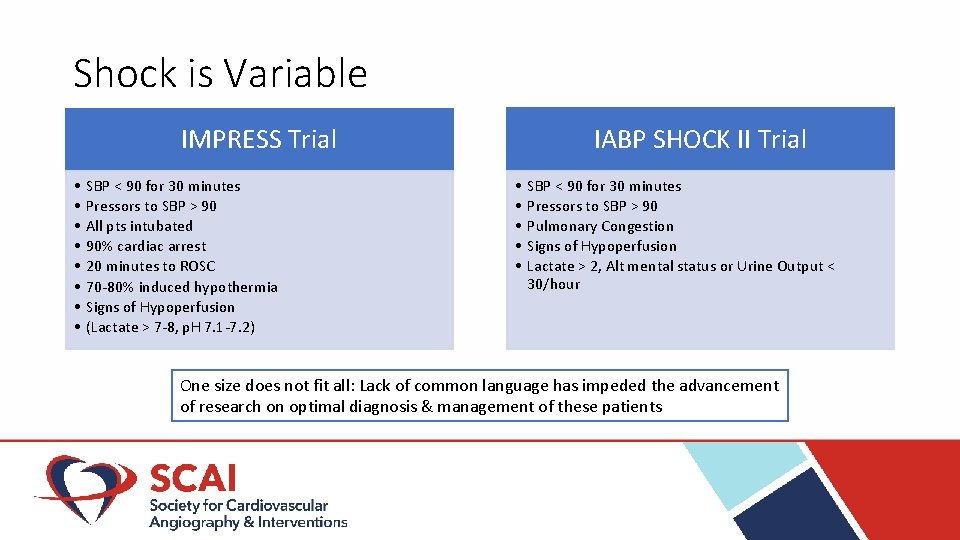
Shock is Variable IABP SHOCK II Trial IMPRESS Trial • • SBP < 90 for 30 minutes Pressors to SBP > 90 All pts intubated 90% cardiac arrest 20 minutes to ROSC 70 -80% induced hypothermia Signs of Hypoperfusion (Lactate > 7 -8, p. H 7. 1 -7. 2) • • • SBP < 90 for 30 minutes Pressors to SBP > 90 Pulmonary Congestion Signs of Hypoperfusion Lactate > 2, Alt mental status or Urine Output < 30/hour One size does not fit all: Lack of common language has impeded the advancement of research on optimal diagnosis & management of these patients
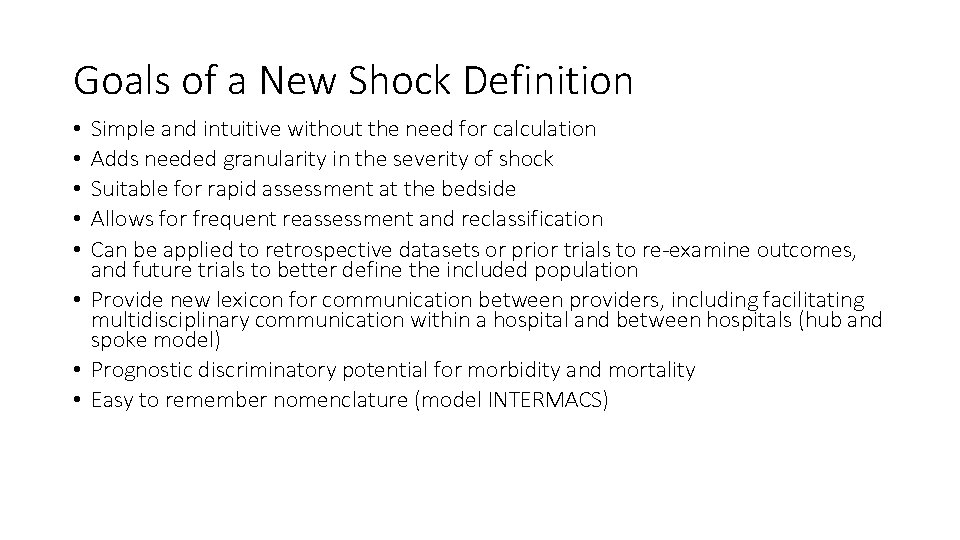
Goals of a New Shock Definition Simple and intuitive without the need for calculation Adds needed granularity in the severity of shock Suitable for rapid assessment at the bedside Allows for frequent reassessment and reclassification Can be applied to retrospective datasets or prior trials to re‐examine outcomes, and future trials to better define the included population • Provide new lexicon for communication between providers, including facilitating multidisciplinary communication within a hospital and between hospitals (hub and spoke model) • Prognostic discriminatory potential for morbidity and mortality • Easy to remember nomenclature (model INTERMACS) • • •

Multidisciplinary Lexicon Experts with diverse backgrounds engaged in the creation of the SCAI SHOCK system Interventional Cardiology Heart Failure Critical Care / Cardiology Emergency Medicine Endorsed by AHA, ACC, STS, and SCCM Critical Care Nursing Cardiac Surgery

SCAI Clinical Expert Consensus Statement on the Classification of Cardiogenic Shock David A. Baran MD, FSCAI (Co‐Chair); Cindy L. Grines MD, FACC, FSCAI; Steven Bailey MD, MSCAI, FACC, FACP; Daniel Burkhoff MD, Ph. D; Shelley A. Hall MD, FACC, FHFSA, FAST; Timothy D. Henry MD, MSCAI; Steven M. Hollenberg MD; Navin K. Kapur MD, FSCAI; William O'Neill MD, MSCAI; Joseph P. Ornato MD, FACP, FACC, FACEP; Kelly Stelling RN; Holger Thiele MD, FESC; Sean van Diepen MD, MSc, FAHA; Srihari S. Naidu MD, FACC, FAHA, FSCAI (Chair) Baran, DA, Grines, CL, Bailey, S, et al. SCAI clinical expert consensus statement on the classification of cardiogenic shock. Catheter Cardiovasc Interv. 2019; 1– 9. https: //doi. org/10. 1002/ccd. 28329

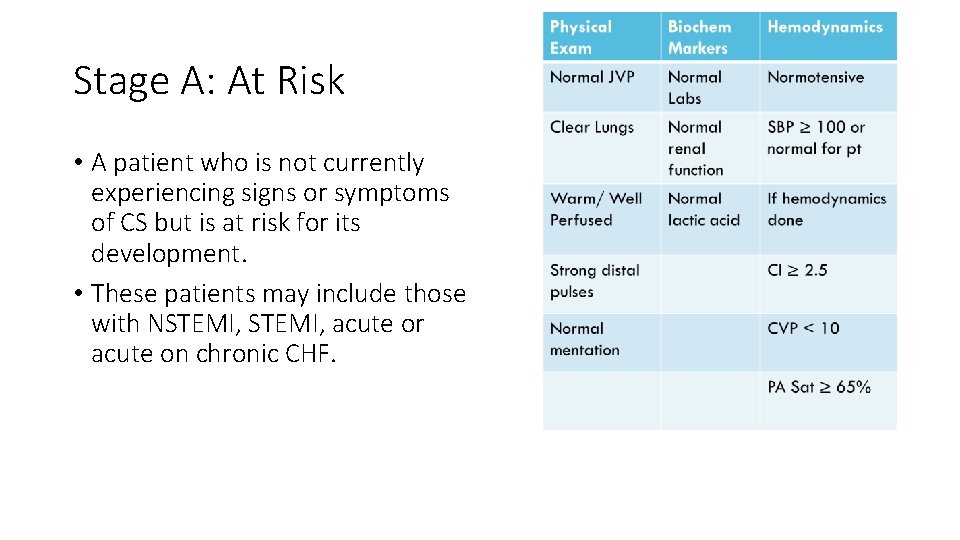
Stage A: At Risk • A patient who is not currently experiencing signs or symptoms of CS but is at risk for its development. • These patients may include those with NSTEMI, acute or acute on chronic CHF.

Stage B: Beginning • A patient who has clinical evidence of relative hypotension or tachycardia without hypoperfusion.

Stage C: Classic • A patient with hypoperfusion that requires interventions such as inotrope, pressor, or perc. MCS to restore perfusion. • These patients typically have relative hypotension.
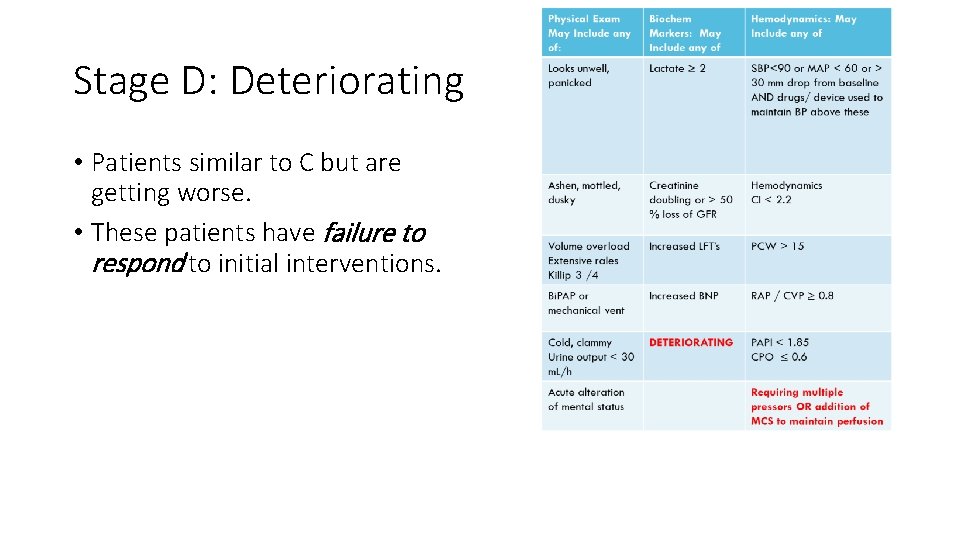
Stage D: Deteriorating • Patients similar to C but are getting worse. • These patients have failure to respond to initial interventions.
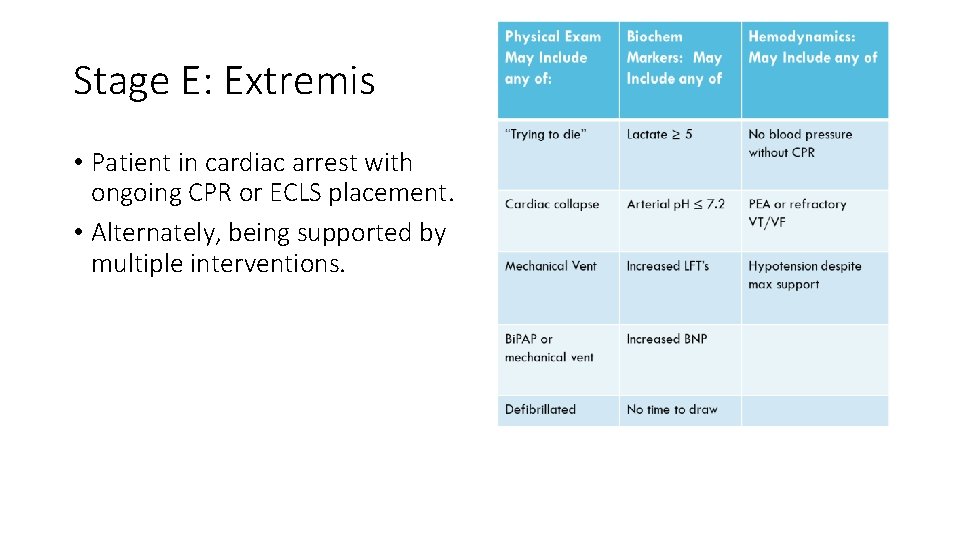
Stage E: Extremis • Patient in cardiac arrest with ongoing CPR or ECLS placement. • Alternately, being supported by multiple interventions.

Risk Modifier for Cardiac Arrest • Any cardiac arrest however brief (Defib or CPR) • SCAI SHOCK B(A) = A patient with relative hypotension or tachycardia without hypoperfusion who suffers a witnessed VF successfully defibrillated and remains without signs of hypoperfusion • If signs of hypoperfusion develop after the arrest, this patient would be SCAI SHOCK C(A), and in need of initial efforts to improve perfusion; if those efforts do not work, the patient is now SCAI SHOCK D(A)
Case #1 • • 57 -year-old woman who had acute onset of arm pain while carrying laundry Pain not relieved after 2 hours of doing cleaning and chores and comes to the ER Blood pressure 90 / 65, pulse 101 Looks anxious but appropriate to questions Clear lungs and heart exam normal Extremities somewhat cool but 2+ pulses ECG with ST elevation in lateral leads Going to lab for urgent cath
Case #1 • • 57 -year-old woman who had acute onset of arm pain while carrying laundry Pain not relieved after 2 hours of doing cleaning and chores and comes to the ER Blood pressure 90 / 65, pulse 101 Looks anxious but appropriate to questions Clear lungs and heart exam normal Extremities somewhat cool but 2+ pulses ECG with ST elevation in lateral leads Going to lab for urgent cath ANSWER: Stage B “Beginning”
Case #2 • • • 62 -year-old man who is seen in the emergency room with chest pain and anterior STEMI Blood pressure 85/50, pulse 115 Cool, clammy, profusely diaphoretic No murmur, basilar crackles Extremities intact Going to Lab for cath / PCI
Case #2 • • • 62 -year-old man who is seen in the emergency room with chest pain and anterior STEMI Blood pressure 85/50, pulse 115 Cool, clammy, profusely diaphoretic No murmur, basilar crackles Extremities intact Going to Lab for cath / PCI ANSWER: Stage C “Classic”
Case #3 • • • 78 -year-old man brought in by EMS after collapsing at Costco Wife says last thing he told her is he was having “the big one” and clutched chest Initial rhythm VF – converted with 200 J shock Intubated at site “Stable” on wide open fluids during transport and dopamine 20 mic/kg/min Blood pressure 80/ palp, HR 130 Crackles everywhere, ? Murmur Cool everything EKG LBBB
Case #3 • • • 78 -year-old man brought in by EMS after collapsing at Costco Wife says last thing he told her is he was having “the big one” and clutched chest Initial rhythm VF – converted with 200 J shock Intubated at site “Stable” on wide open fluids during transport and dopamine 20 mic/kg/min Blood pressure 80/ palp, HR 130 Crackles everywhere, ? Murmur Cool everything EKG LBBB ANSWER: Stage D(A) “Deteriorating” with arrest modifier
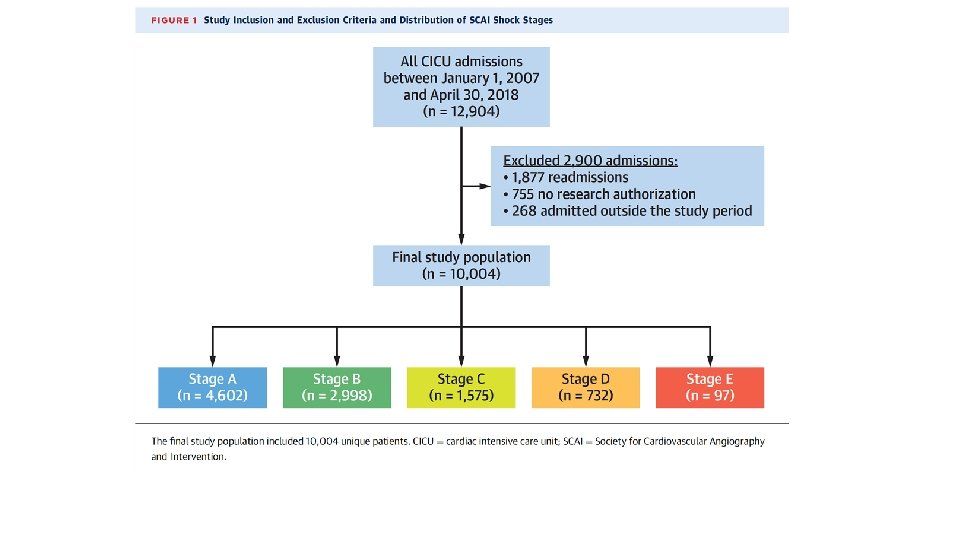
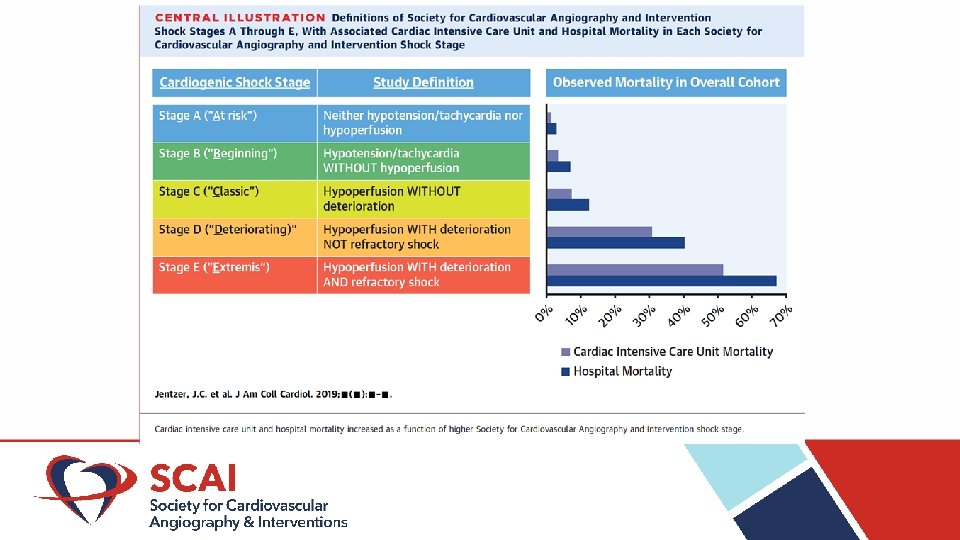
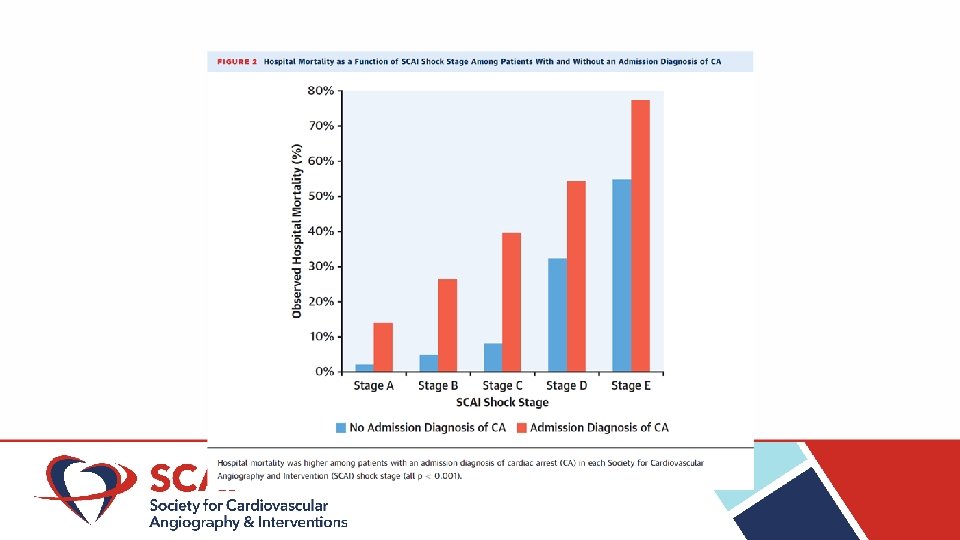
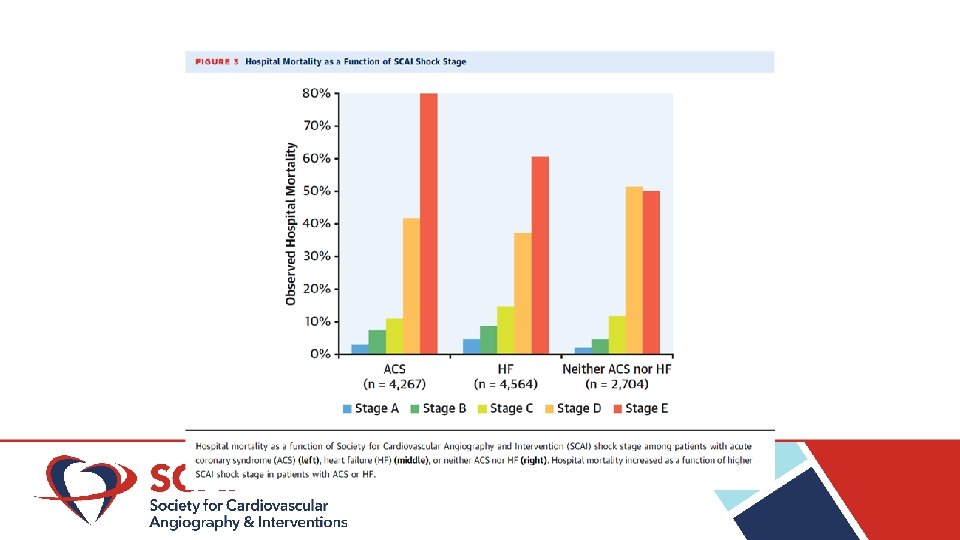
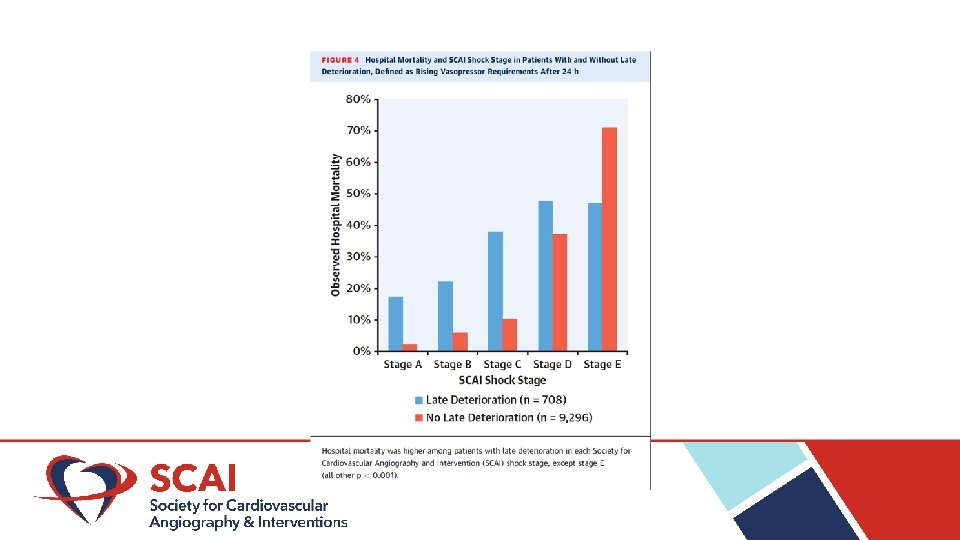
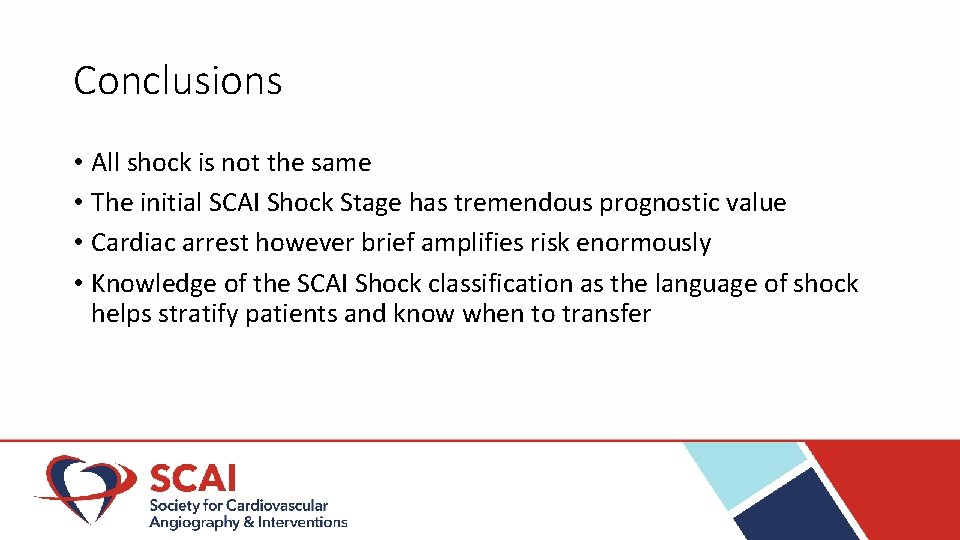
Conclusions • All shock is not the same • The initial SCAI Shock Stage has tremendous prognostic value • Cardiac arrest however brief amplifies risk enormously • Knowledge of the SCAI Shock classification as the language of shock helps stratify patients and know when to transfer
- Slides: 27