
Scaffolds to Success TRi O Learning Communities for
- Slides: 24
Scaffolds to Success: TRi. O Learning Communities for Underprepared Students Yakima Valley Community College • • Kerrie Abb, Dean of Arts and Sciences Marc Coomer, Asst Dean for Student Support Wilma Dulin, SD Instructor/Faculty Director OIE Gordon Koestler, English Instructor
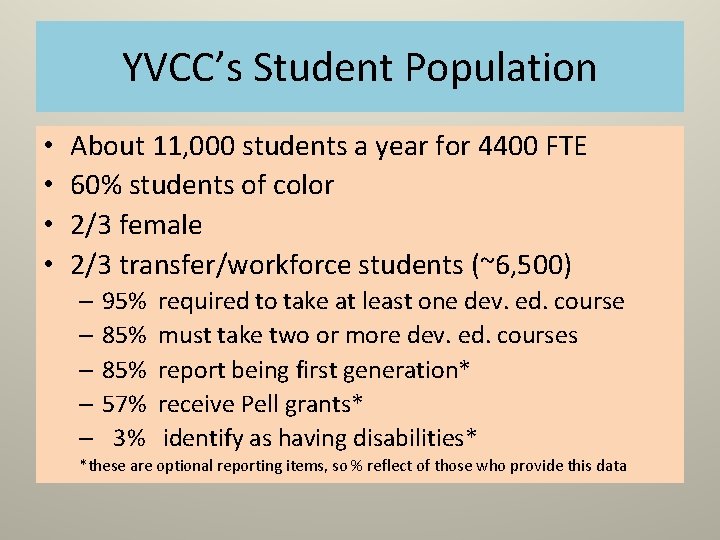
YVCC’s Student Population • • About 11, 000 students a year for 4400 FTE 60% students of color 2/3 female 2/3 transfer/workforce students (~6, 500) – 95% – 85% – 57% – 3% required to take at least one dev. ed. course must take two or more dev. ed. courses report being first generation* receive Pell grants* identify as having disabilities* *these are optional reporting items, so % reflect of those who provide this data
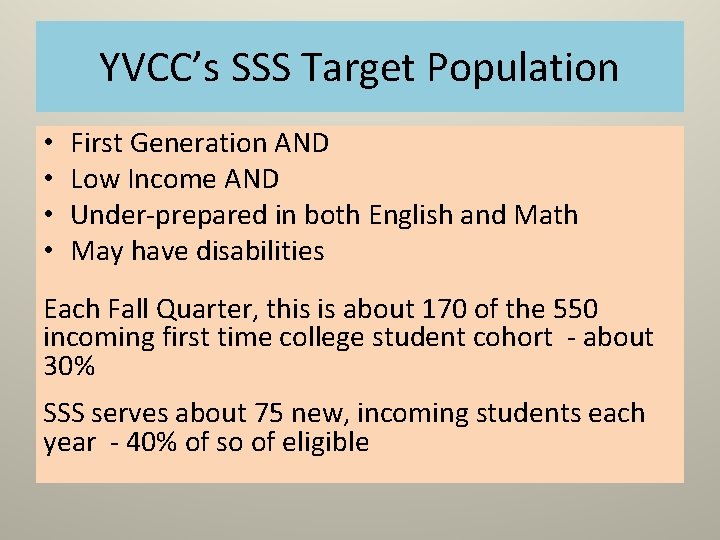
YVCC’s SSS Target Population • • First Generation AND Low Income AND Under-prepared in both English and Math May have disabilities Each Fall Quarter, this is about 170 of the 550 incoming first time college student cohort - about 30% SSS serves about 75 new, incoming students each year - 40% of so of eligible
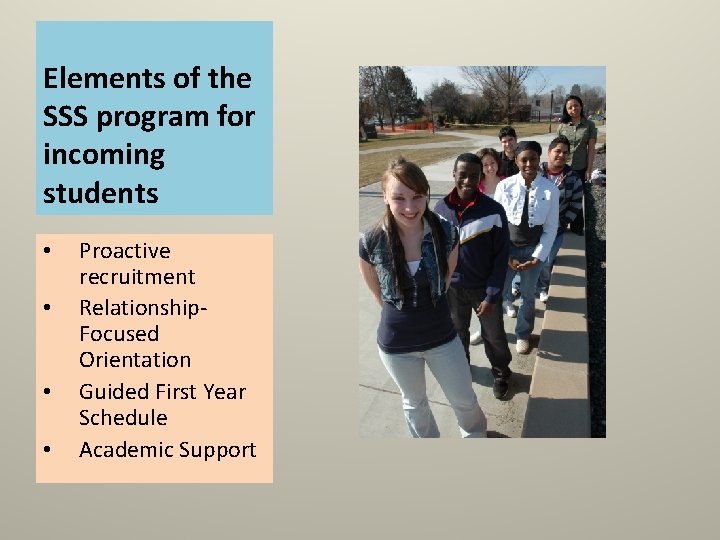
Elements of the SSS program for incoming students • • Proactive recruitment Relationship. Focused Orientation Guided First Year Schedule Academic Support
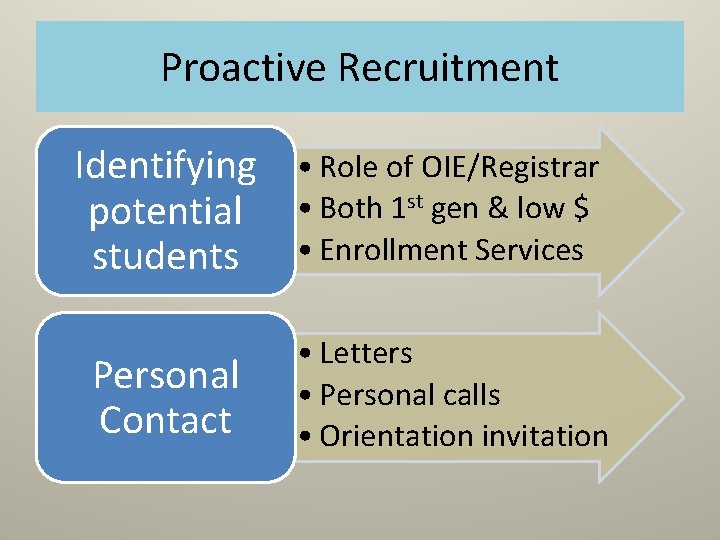
Proactive Recruitment Identifying potential students • Role of OIE/Registrar • Both 1 st gen & low $ • Enrollment Services Personal Contact • Letters • Personal calls • Orientation invitation
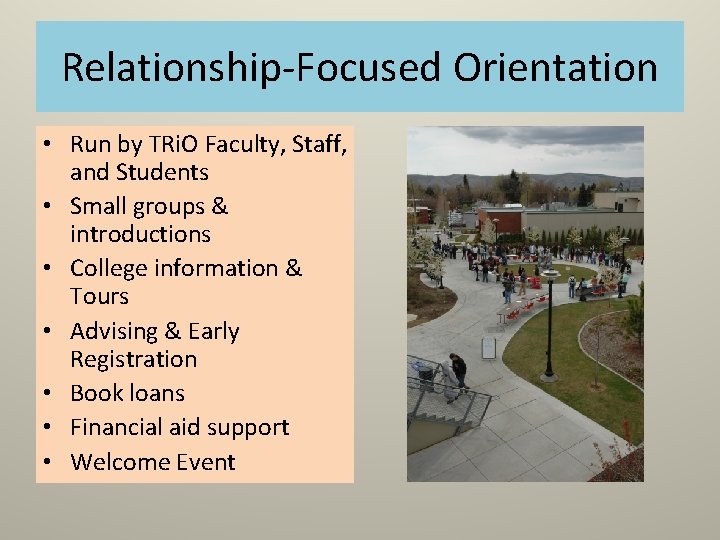
Relationship-Focused Orientation • Run by TRi. O Faculty, Staff, and Students • Small groups & introductions • College information & Tours • Advising & Early Registration • Book loans • Financial aid support • Welcome Event
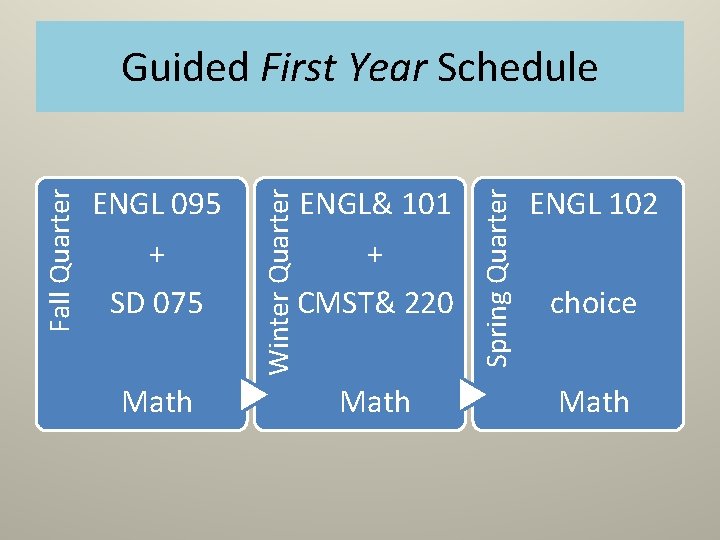
Math ENGL& 101 + CMST& 220 Math Spring Quarter ENGL 095 + SD 075 Winter Quarter Fall Quarter Guided First Year Schedule ENGL 102 choice Math
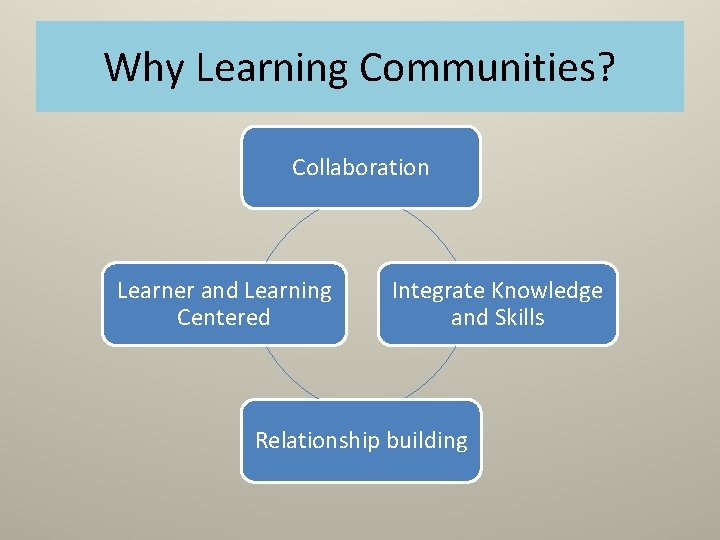
Why Learning Communities? Collaboration Learner and Learning Centered Integrate Knowledge and Skills Relationship building
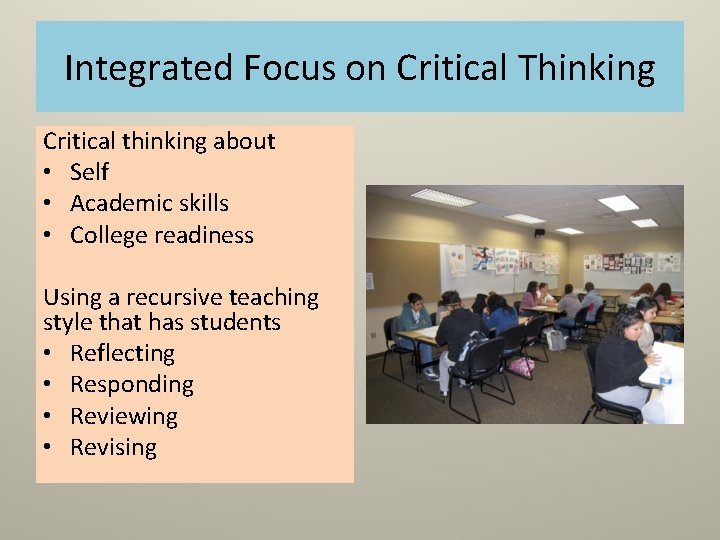
Integrated Focus on Critical Thinking Critical thinking about • Self • Academic skills • College readiness Using a recursive teaching style that has students • Reflecting • Responding • Reviewing • Revising
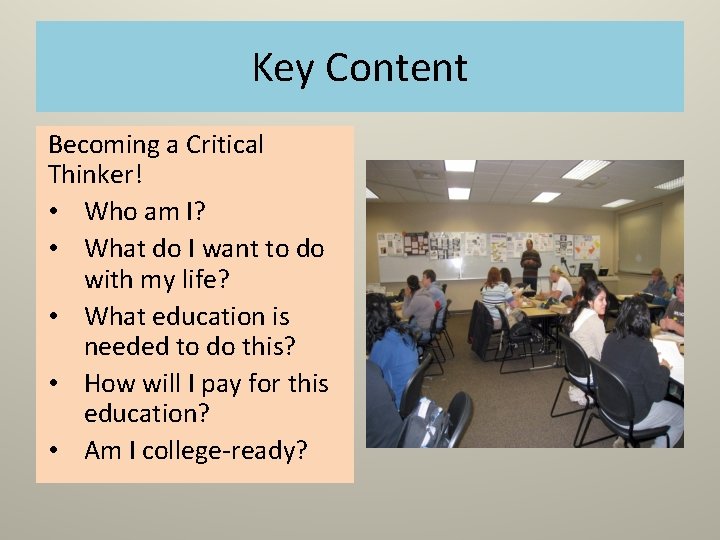
Key Content Becoming a Critical Thinker! • Who am I? • What do I want to do with my life? • What education is needed to do this? • How will I pay for this education? • Am I college-ready?
Common Elements • All instructors are academic advisors for SSS • Use common texts and, whenever possible, open source materials • Collaborative learning and team assignments • Study skills integrated in the classroom • Weekly seminars
Example: How to Seminar Lesson • • Think and Brainstorm: Quality discussions Set up note taking for video Show Video Compare notes Add to brainstorm Share rubric Assign seminar topic Seminar
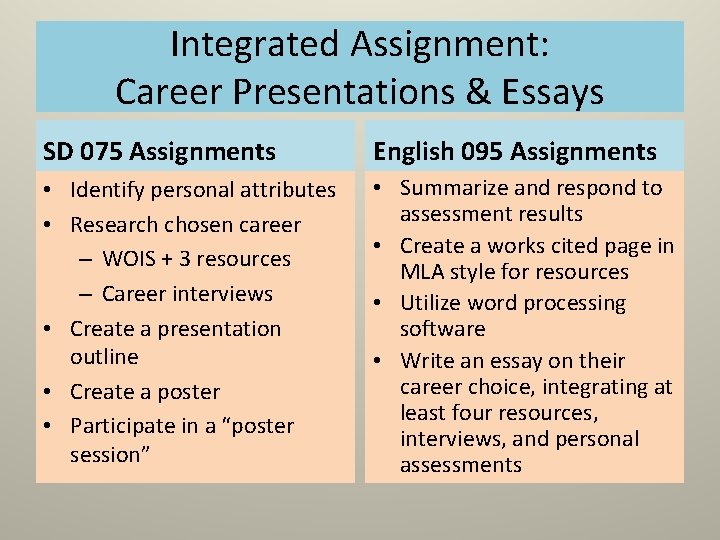
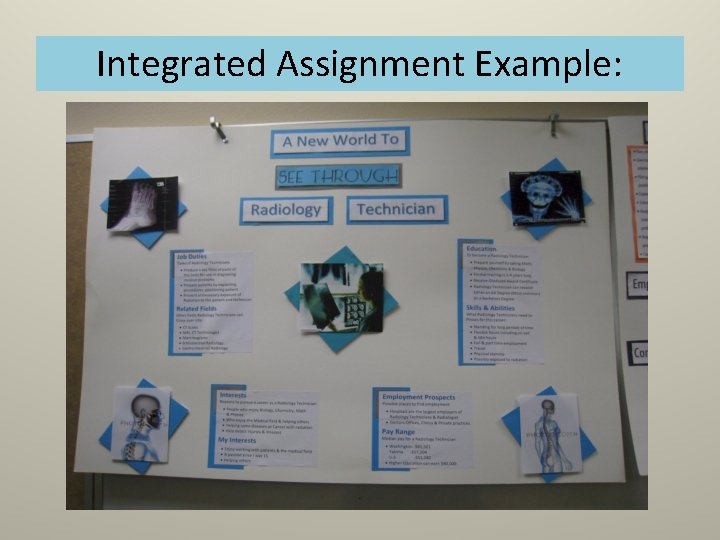
Integrated Assignment: Career Presentations & Essays SD 075 Assignments English 095 Assignments • Identify personal attributes • Research chosen career – WOIS + 3 resources – Career interviews • Create a presentation outline • Create a poster • Participate in a “poster session” • Summarize and respond to assessment results • Create a works cited page in MLA style for resources • Utilize word processing software • Write an essay on their career choice, integrating at least four resources, interviews, and personal assessments
Integrated Assignment Example:
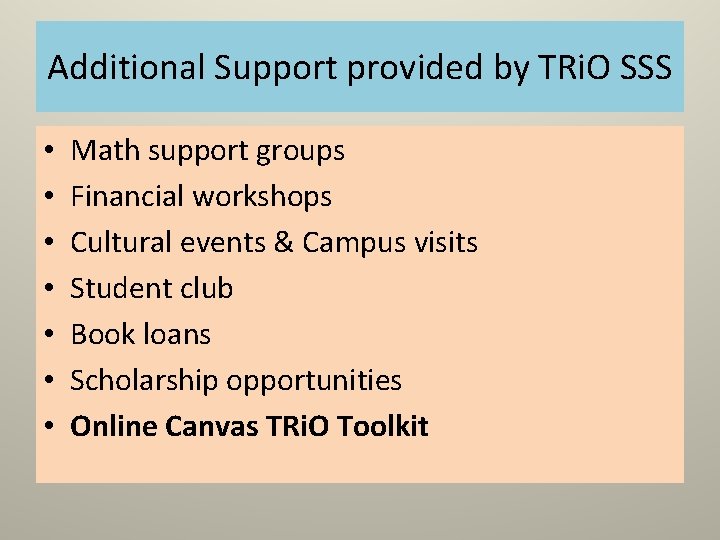
Additional Support provided by TRi. O SSS • • Math support groups Financial workshops Cultural events & Campus visits Student club Book loans Scholarship opportunities Online Canvas TRi. O Toolkit
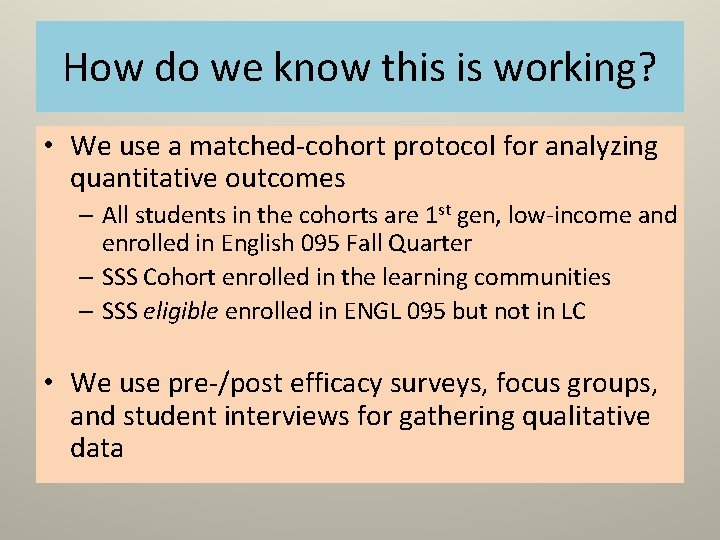
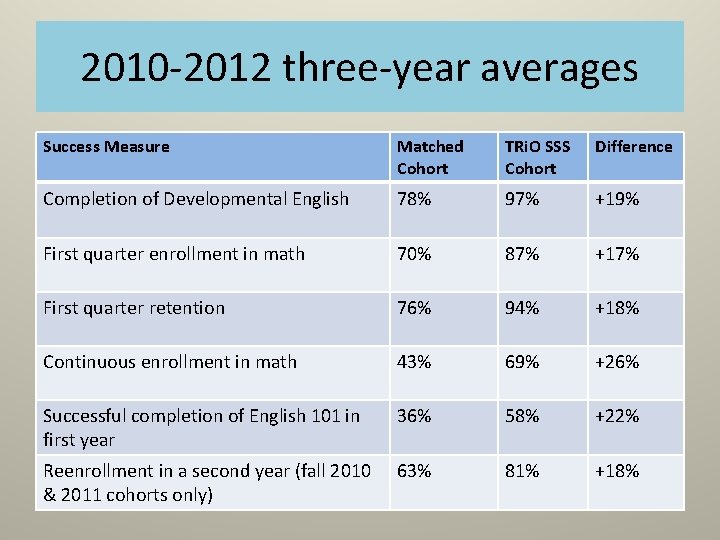
How do we know this is working? • We use a matched-cohort protocol for analyzing quantitative outcomes – All students in the cohorts are 1 st gen, low-income and enrolled in English 095 Fall Quarter – SSS Cohort enrolled in the learning communities – SSS eligible enrolled in ENGL 095 but not in LC • We use pre-/post efficacy surveys, focus groups, and student interviews for gathering qualitative data
2010 -2012 three-year averages Success Measure Matched Cohort TRi. O SSS Cohort Difference Completion of Developmental English 78% 97% +19% First quarter enrollment in math 70% 87% +17% First quarter retention 76% 94% +18% Continuous enrollment in math 43% 69% +26% Successful completion of English 101 in first year 36% 58% +22% Reenrollment in a second year (fall 2010 & 2011 cohorts only) 63% 81% +18%
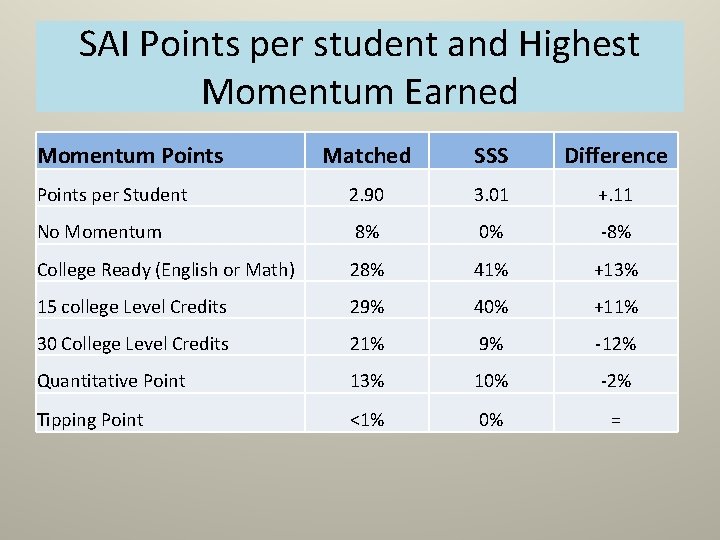
SAI Points per student and Highest Momentum Earned Momentum Points Matched SSS Difference Points per Student 2. 90 3. 01 +. 11 No Momentum 8% 0% -8% College Ready (English or Math) 28% 41% +13% 15 college Level Credits 29% 40% +11% 30 College Level Credits 21% 9% -12% Quantitative Point 13% 10% -2% Tipping Point <1% 0% =
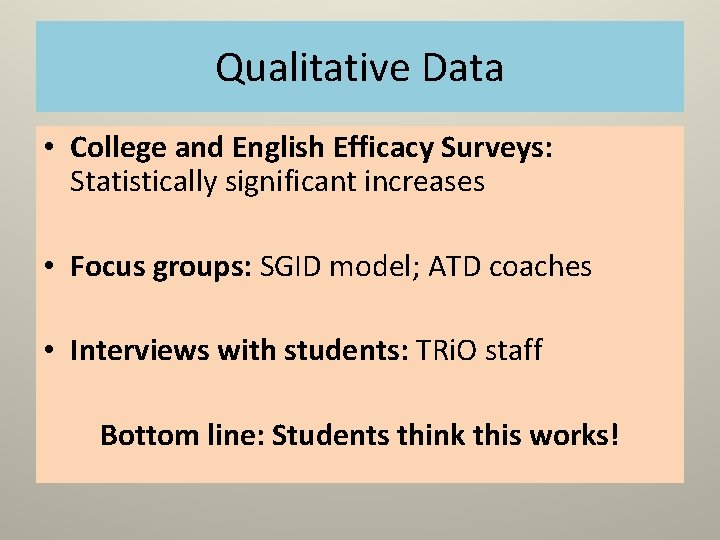
Qualitative Data • College and English Efficacy Surveys: Statistically significant increases • Focus groups: SGID model; ATD coaches • Interviews with students: TRi. O staff Bottom line: Students think this works!
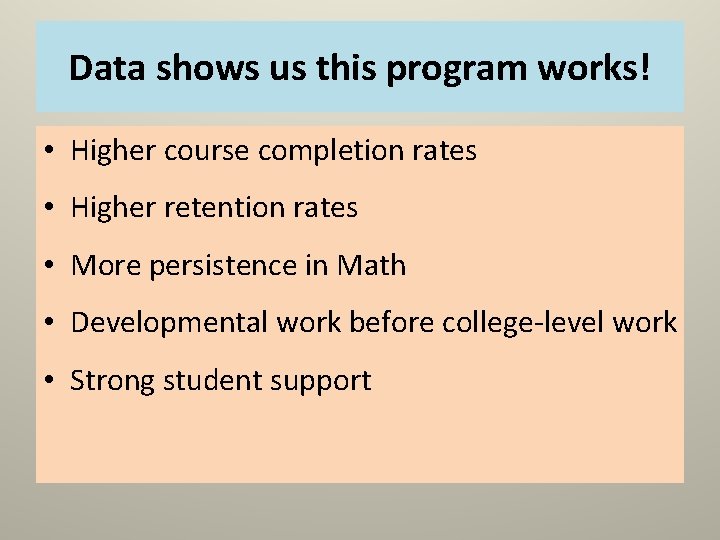
Data shows us this program works! • Higher course completion rates • Higher retention rates • More persistence in Math • Developmental work before college-level work • Strong student support
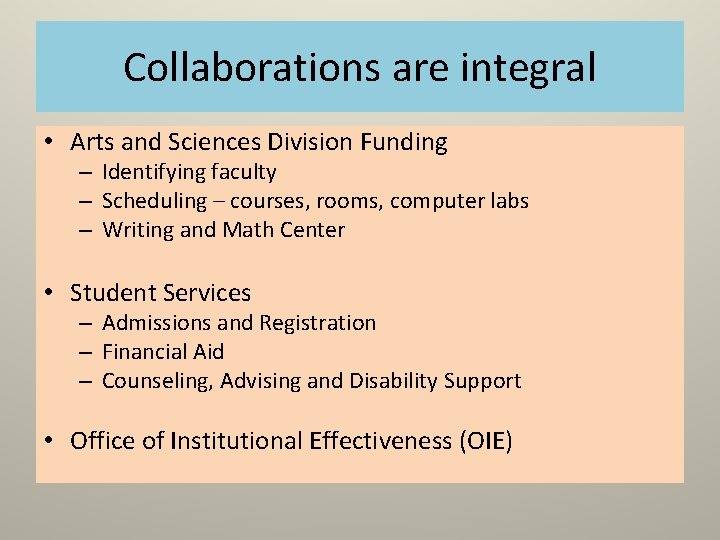
Collaborations are integral • Arts and Sciences Division Funding – Identifying faculty – Scheduling – courses, rooms, computer labs – Writing and Math Center • Student Services – Admissions and Registration – Financial Aid – Counseling, Advising and Disability Support • Office of Institutional Effectiveness (OIE)
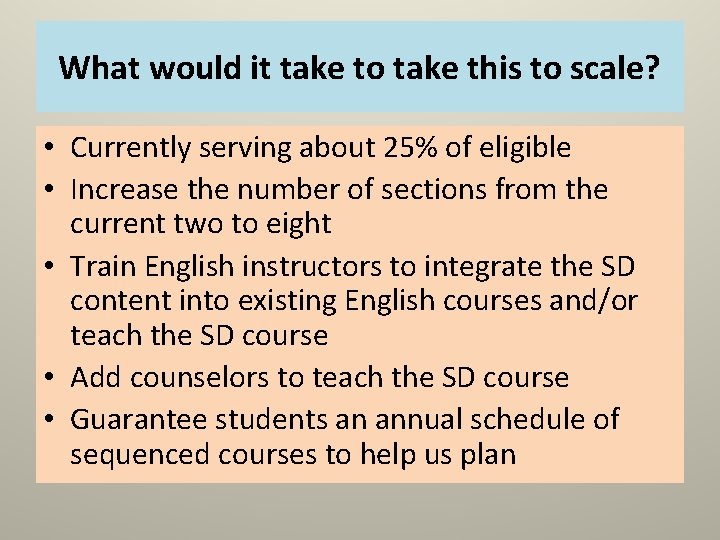
What would it take to take this to scale? • Currently serving about 25% of eligible • Increase the number of sections from the current two to eight • Train English instructors to integrate the SD content into existing English courses and/or teach the SD course • Add counselors to teach the SD course • Guarantee students an annual schedule of sequenced courses to help us plan
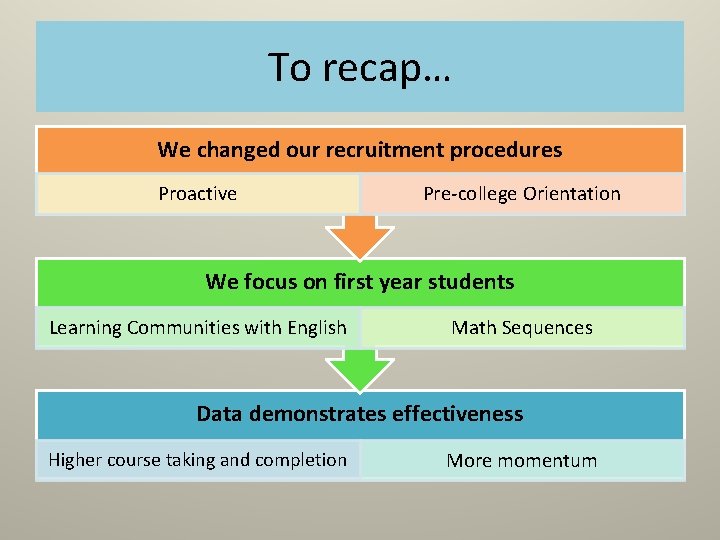
To recap… We changed our recruitment procedures Proactive Pre-college Orientation We focus on first year students Learning Communities with English Math Sequences Data demonstrates effectiveness Higher course taking and completion More momentum
To contact us… • Kerrie Abb 509 -574 -4871 • Marc Coomer 509 -574 -4960 • Wilma Dulin 509 -574 -6832 • Gordon Koestler 509 -574 -4828 kabb@yvcc. edu mcoomer@yvcc. edu wdulin@yvcc. edu gkoestler@yvcc. edu