
Scaffolding Reading and Writing in Early Literacy Classrooms
- Slides: 42
Scaffolding Reading and Writing in Early Literacy Classrooms Priscilla L. Griffith, Ph. D. Professor, University of Oklahoma (USA) Director of the Oklahoma Writing Project Teacher Consultant Immediate Past President of the Oklahoma Reading Association The University of Oklahoma 820 Van Vleet Oval, ECH 114 Norman, OL 73019 405 -325 -1508 pgriffith@ou. edu
A Quick Write • What is your first remembered experience about reading or writing? • Share your writing with the person next to you. • Who would like to read what you wrote?
Definitions • Early Literacy Classrooms – classrooms at Grades Pre-K through 1 • Scaffolding - systematic support in the classroom that allows young children to move towards independence in literacy.
Beliefs about Early Literacy Learning • Reading and writing co-exist in their development along a continuum from emergent to conventional behaviors. • “Almost every child learns to read print and write print at the same time (Clay, 2001 p. 91). ”
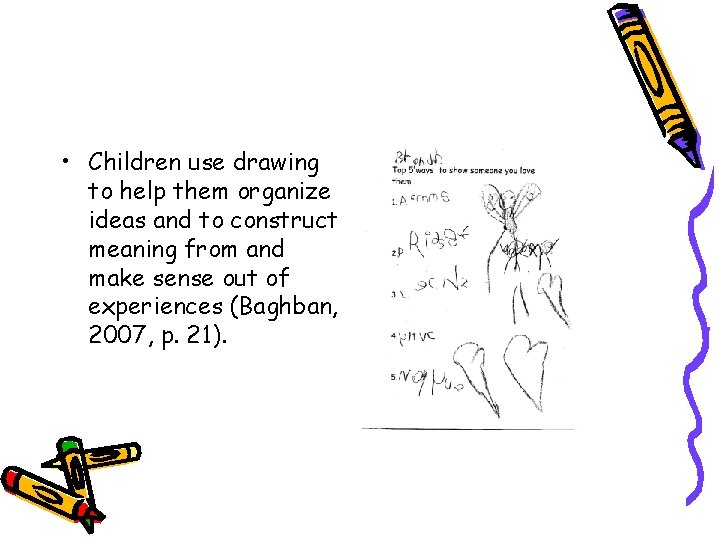
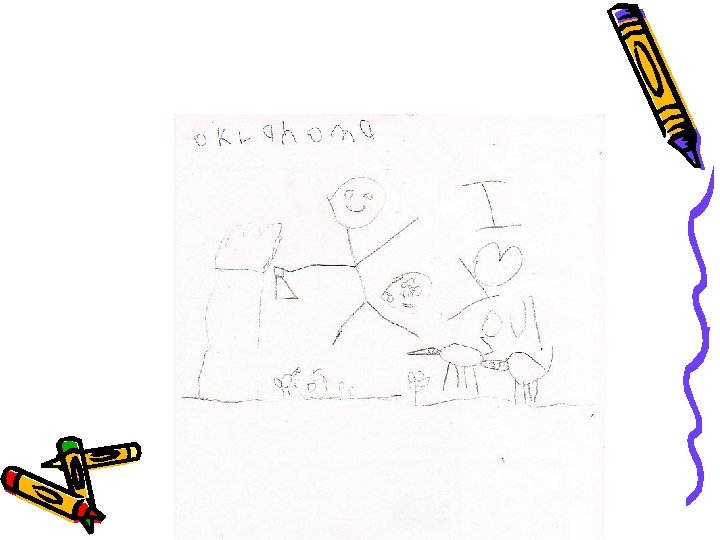
• Children use drawing to help them organize ideas and to construct meaning from and make sense out of experiences (Baghban, 2007, p. 21).
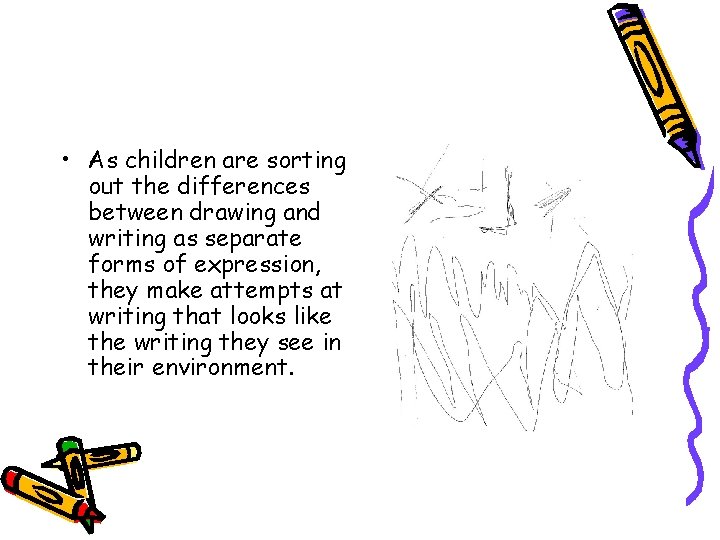
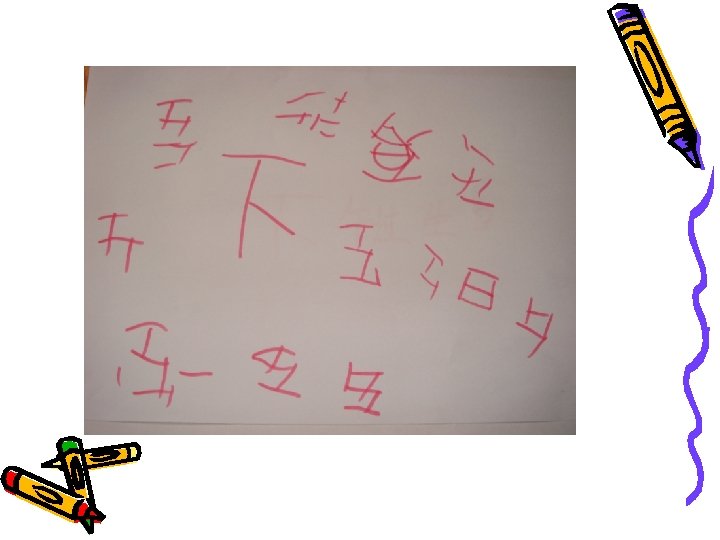
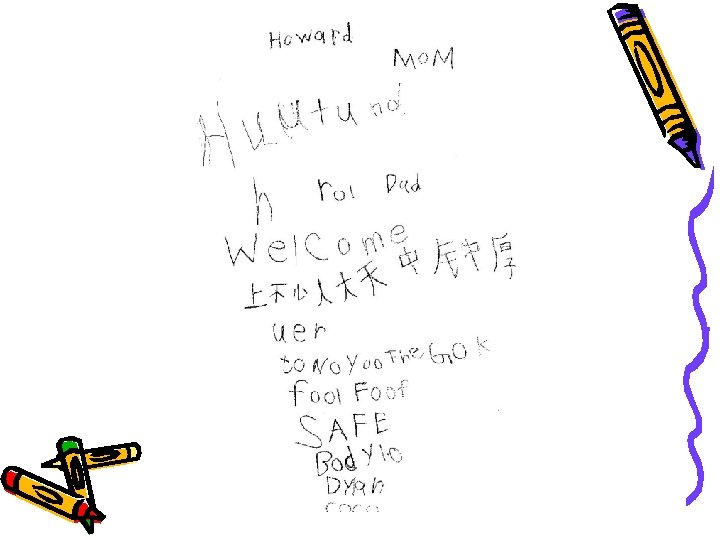
• As children are sorting out the differences between drawing and writing as separate forms of expression, they make attempts at writing that looks like the writing they see in their environment.
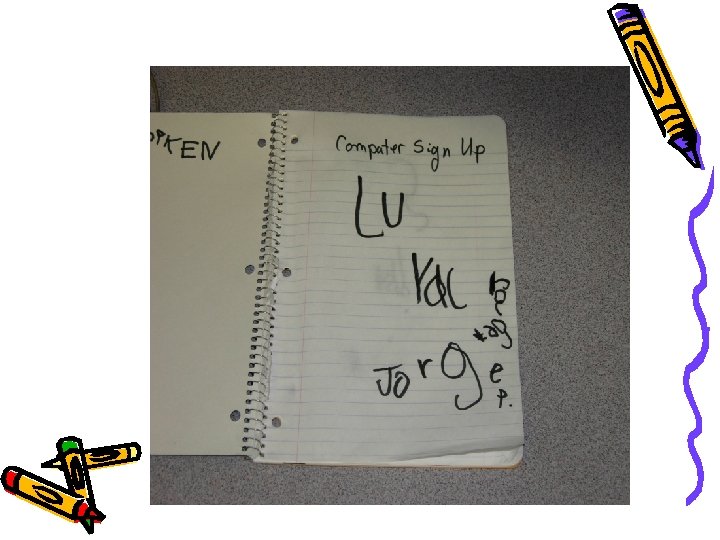
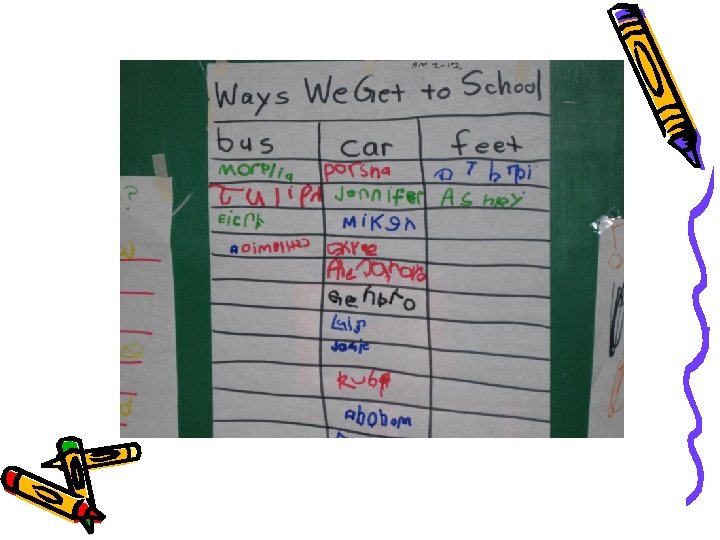
• Reading and writing are primarily social activities. They involve interaction with adults and peers in an environment designed to promote reading and writing experiences in meaningful contexts. This point is at the heart of organizing both the environment and the instruction in a classroom. • Every aspect of the classroom environment should support opportunities for children to engage in literacy activities.
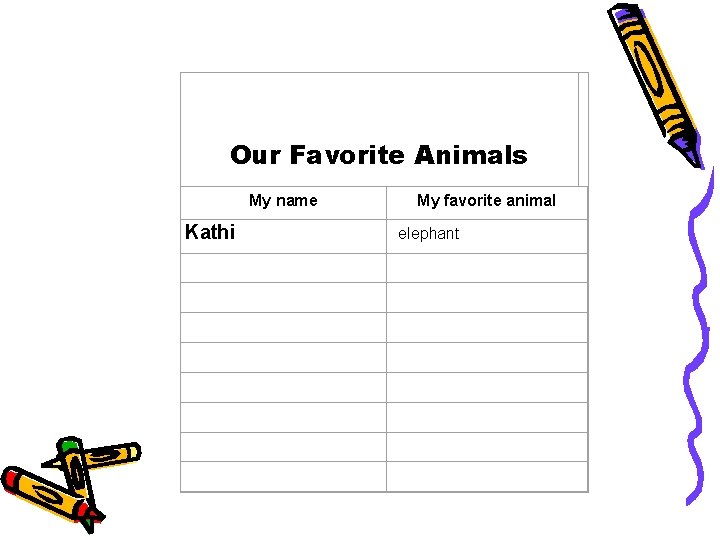
Our Favorite Animals My name Kathi My favorite animal elephant
• A quick write – How do you think reading and writing are related? • Share your writing with the person next to you. • Who would like to read what you wrote?
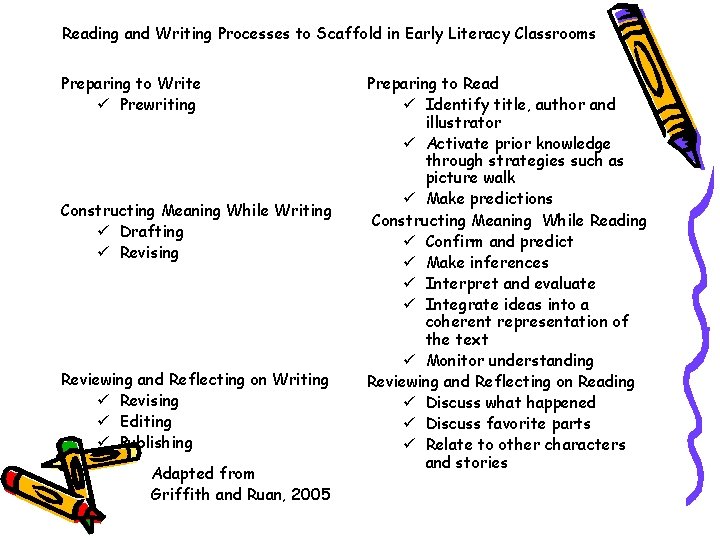
Reading and Writing Processes to Scaffold in Early Literacy Classrooms Preparing to Write ü Prewriting Constructing Meaning While Writing ü Drafting ü Revising Reviewing and Reflecting on Writing ü Revising ü Editing ü Publishing Adapted from Griffith and Ruan, 2005 Preparing to Read ü Identify title, author and illustrator ü Activate prior knowledge through strategies such as picture walk ü Make predictions Constructing Meaning While Reading ü Confirm and predict ü Make inferences ü Interpret and evaluate ü Integrate ideas into a coherent representation of the text ü Monitor understanding Reviewing and Reflecting on Reading ü Discuss what happened ü Discuss favorite parts ü Relate to other characters and stories
Why integration? Both reading and writing • involve language and thought. • involve written language. • are interactive. Each informs the other. • are the active construction of meaning.
This presentation will focus on two major aspects of scaffolding reading and writing in early literacy classrooms: (1) Organizing the Environment (2) Organizing Instruction
Organizing the Environment Every classroom should have • a class library • a writing center • literacy tools in every center Organizing Instruction • Reading and writing experiences in meaningful contexts
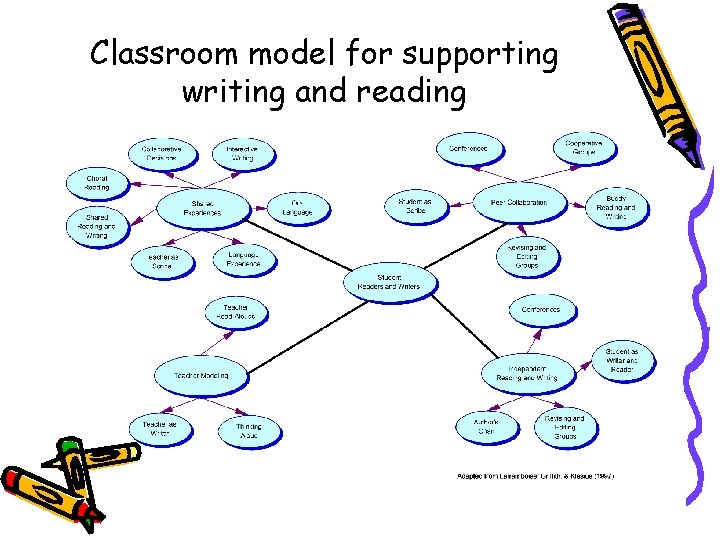
Classroom model for supporting writing and reading
Teacher Modeling During Writing • Think-aloud • Use the vocabulary of instruction Emphasize initial sounds • Rubber-band words • Emphasize onsets and rimes • Do not overusing any strategy
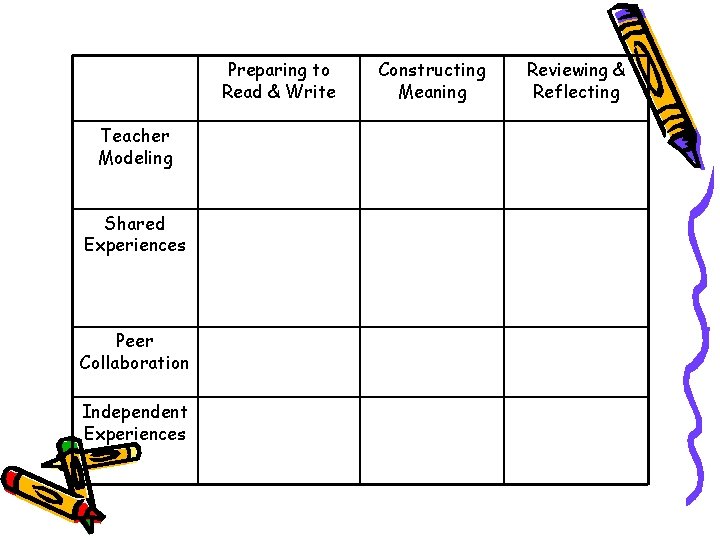
Preparing to Read & Write Teacher Modeling Shared Experiences Peer Collaboration Independent Experiences Constructing Meaning Reviewing & Reflecting
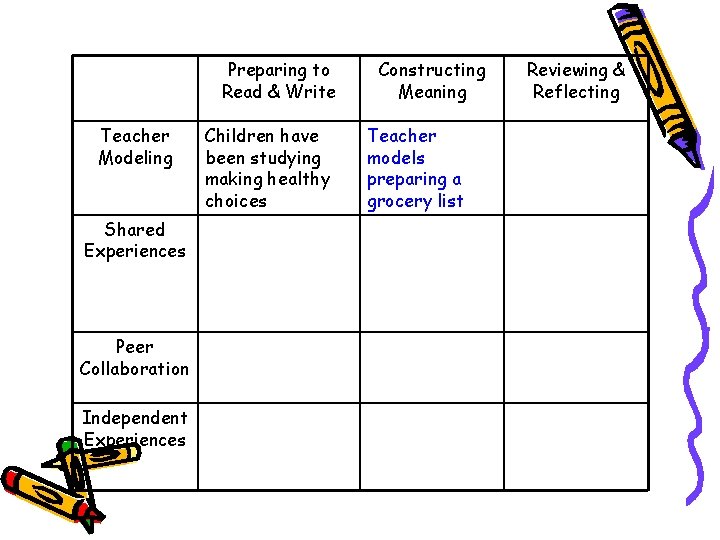
Preparing to Read & Write Teacher Modeling Shared Experiences Peer Collaboration Independent Experiences Children have been studying making healthy choices Constructing Meaning Teacher models preparing a grocery list Reviewing & Reflecting
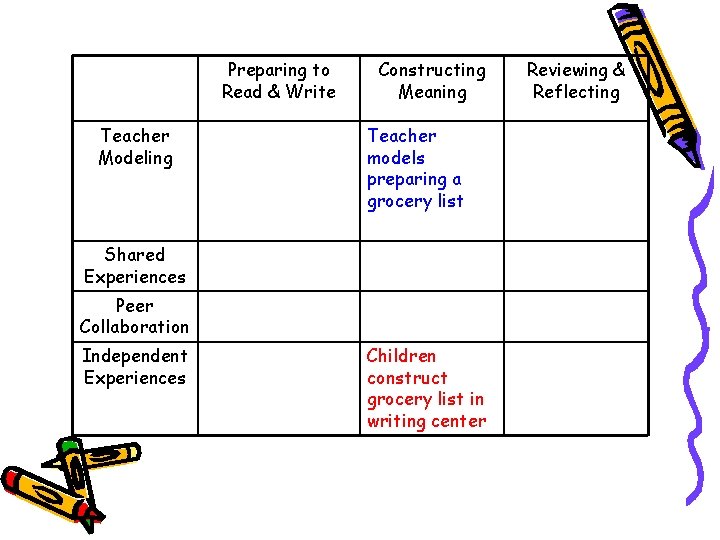
Preparing to Read & Write Teacher Modeling Constructing Meaning Teacher models preparing a grocery list Shared Experiences Peer Collaboration Independent Experiences Children construct grocery list in writing center Reviewing & Reflecting
Teacher Modeling During Reading Teacher Behaviors: ü Clarify information ü Demonstrategies of a reader: predicting and confirming ü Develop story structure ü Draw attention to illustrations ü Extend vocabulary ü Inform ü Metanarrate (text and/or pictures) ü Point out text features Adapted from Klesius & Griffith, 1996
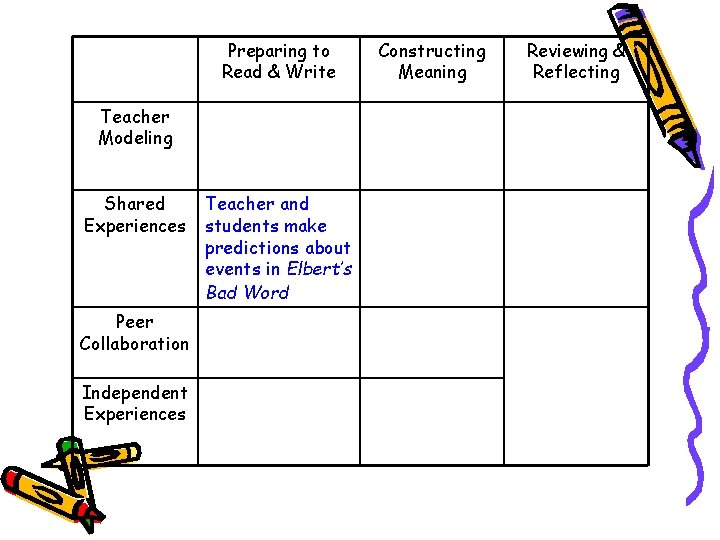
Preparing to Read & Write Teacher Modeling Shared Experiences Peer Collaboration Independent Experiences Teacher and students make predictions about events in Elbert’s Bad Word Constructing Meaning Reviewing & Reflecting
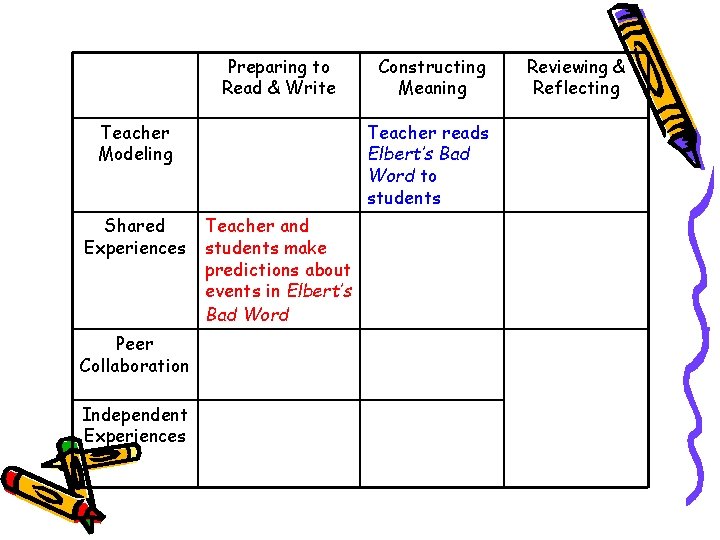
Preparing to Read & Write Teacher Modeling Shared Experiences Peer Collaboration Independent Experiences Constructing Meaning Teacher reads Elbert’s Bad Word to students Teacher and students make predictions about events in Elbert’s Bad Word Reviewing & Reflecting
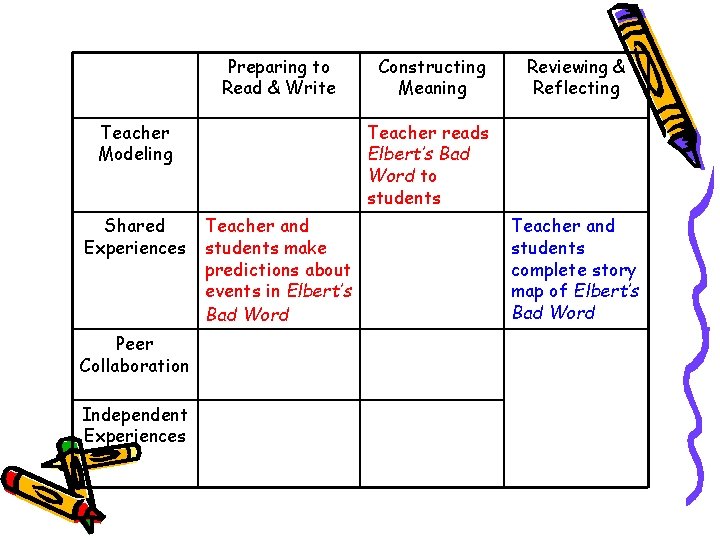
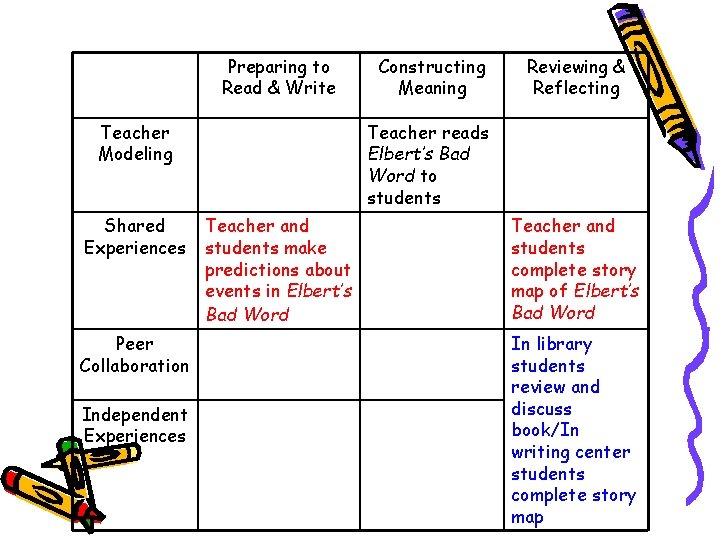
Preparing to Read & Write Teacher Modeling Shared Experiences Peer Collaboration Independent Experiences Constructing Meaning Reviewing & Reflecting Teacher reads Elbert’s Bad Word to students Teacher and students make predictions about events in Elbert’s Bad Word Teacher and students complete story map of Elbert’s Bad Word
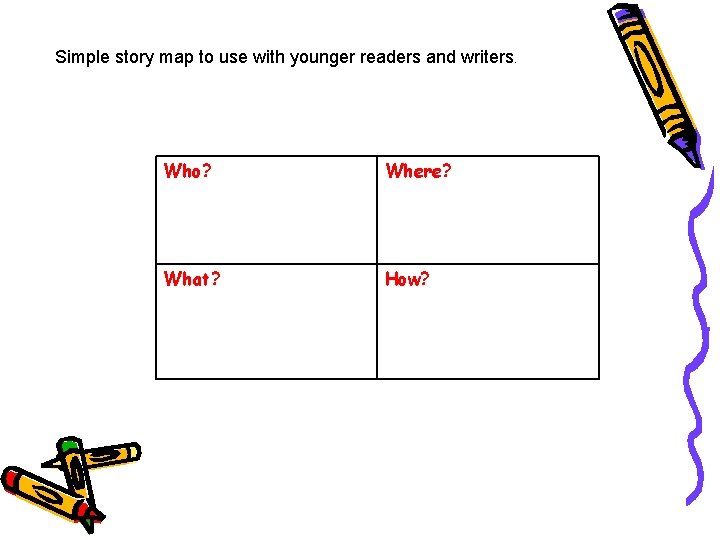
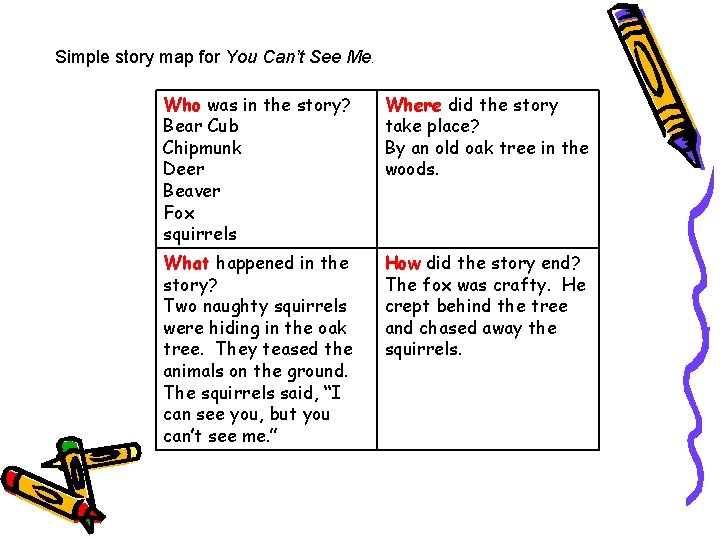
Simple story map to use with younger readers and writers. Who? Where? What? How?
Preparing to Read & Write Teacher Modeling Shared Experiences Peer Collaboration Independent Experiences Constructing Meaning Reviewing & Reflecting Teacher reads Elbert’s Bad Word to students Teacher and students make predictions about events in Elbert’s Bad Word Teacher and students complete story map of Elbert’s Bad Word In library students review and discuss book/In writing center students complete story map
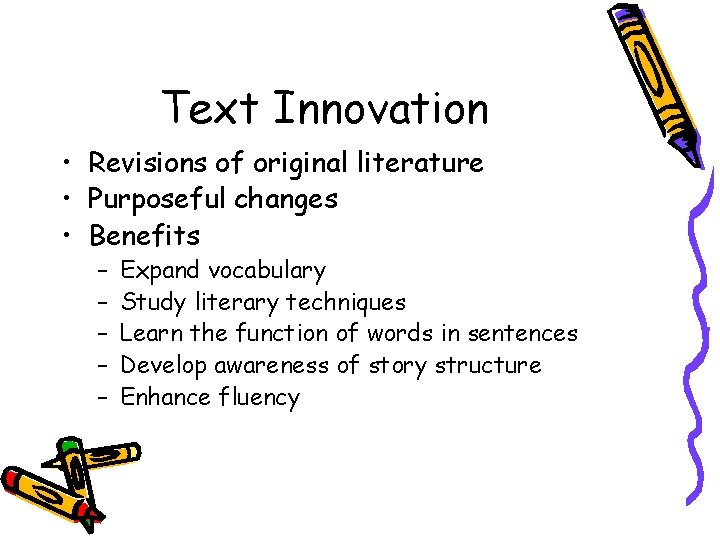
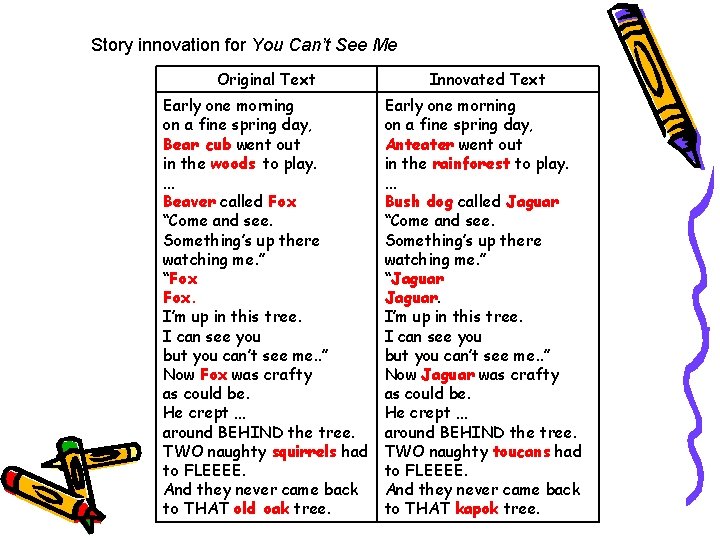
Text Innovation • Revisions of original literature • Purposeful changes • Benefits – – – Expand vocabulary Study literary techniques Learn the function of words in sentences Develop awareness of story structure Enhance fluency
It involves a tight interface between word knowledge and oral reading fluency, and it allows readers at all levels to feel successful.
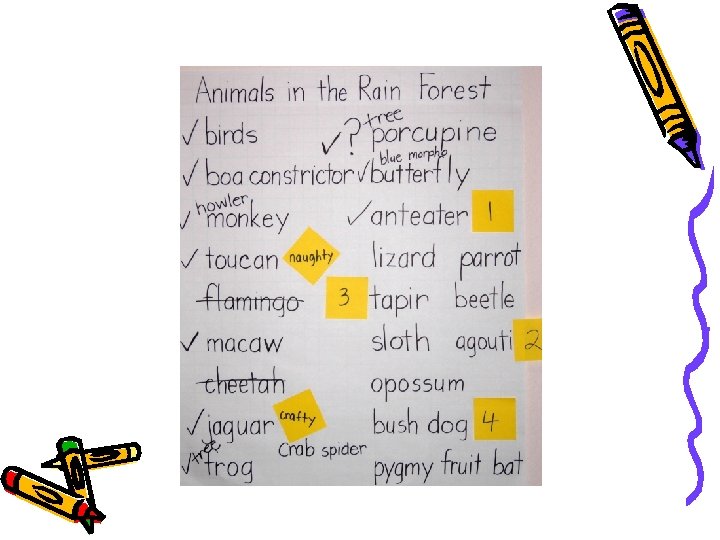
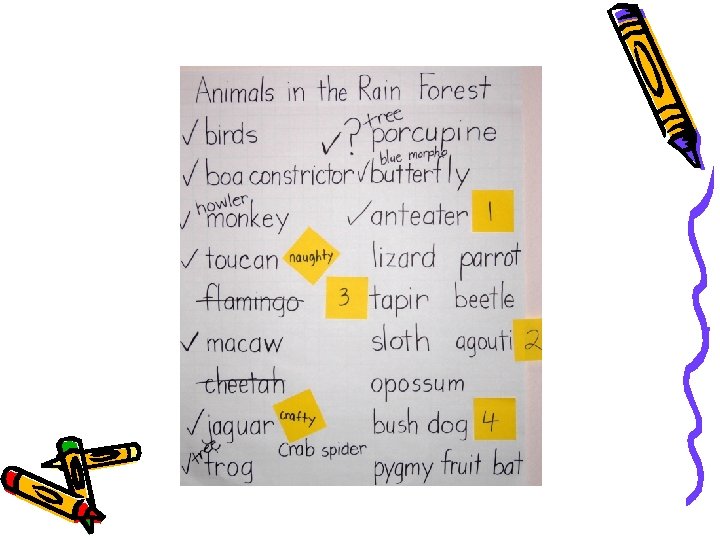
Story innovation for You Can’t See Me Original Text Innovated Text Early one morning on a fine spring day, Bear cub went out in the woods to play. … Beaver called Fox “Come and see. Something’s up there watching me. ” “Fox Fox. I’m up in this tree. I can see you but you can’t see me. . ” Now Fox was crafty as could be. He crept … around BEHIND the tree. TWO naughty squirrels had to FLEEEE. And they never came back to THAT old oak tree. Early one morning on a fine spring day, Anteater went out in the rainforest to play. … Bush dog called Jaguar “Come and see. Something’s up there watching me. ” “Jaguar. I’m up in this tree. I can see you but you can’t see me. . ” Now Jaguar was crafty as could be. He crept … around BEHIND the tree. TWO naughty toucans had to FLEEEE. And they never came back to THAT kapok tree.
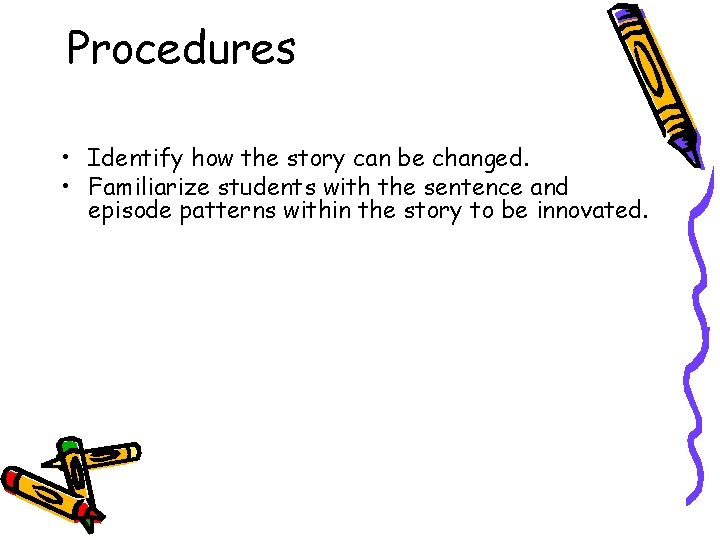
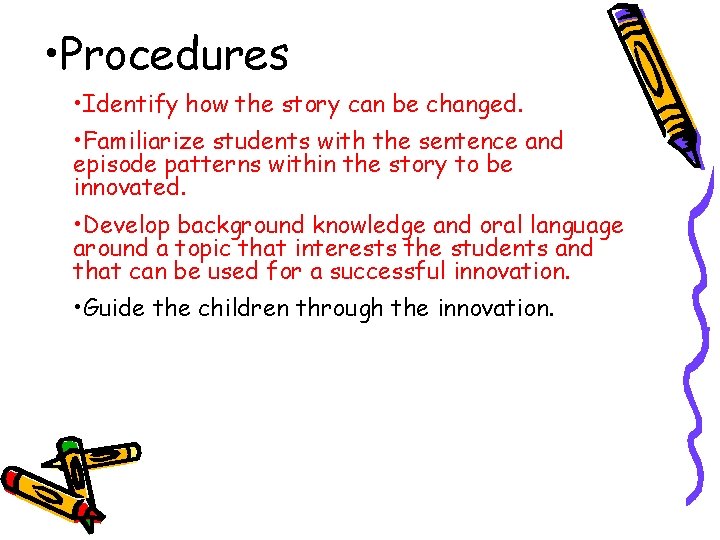
Procedures • Identify how the story can be changed. • Familiarize students with the sentence and episode patterns within the story to be innovated.
Simple story map for You Can’t See Me. Who was in the story? Bear Cub Chipmunk Deer Beaver Fox squirrels Where did the story take place? By an old oak tree in the woods. What happened in the story? Two naughty squirrels were hiding in the oak tree. They teased the animals on the ground. The squirrels said, “I can see you, but you can’t see me. ” How did the story end? The fox was crafty. He crept behind the tree and chased away the squirrels.
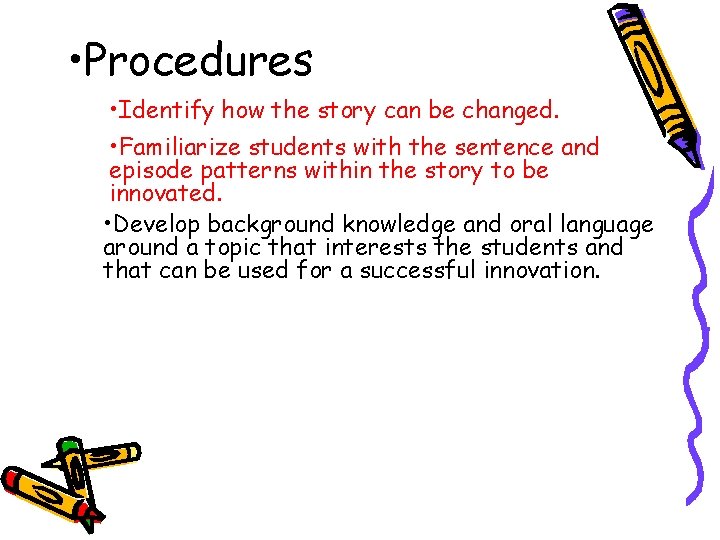
• Procedures • Identify how the story can be changed. • Familiarize students with the sentence and episode patterns within the story to be innovated. • Develop background knowledge and oral language around a topic that interests the students and that can be used for a successful innovation.
• Procedures • Identify how the story can be changed. • Familiarize students with the sentence and episode patterns within the story to be innovated. • Develop background knowledge and oral language around a topic that interests the students and that can be used for a successful innovation. • Guide the children through the innovation.
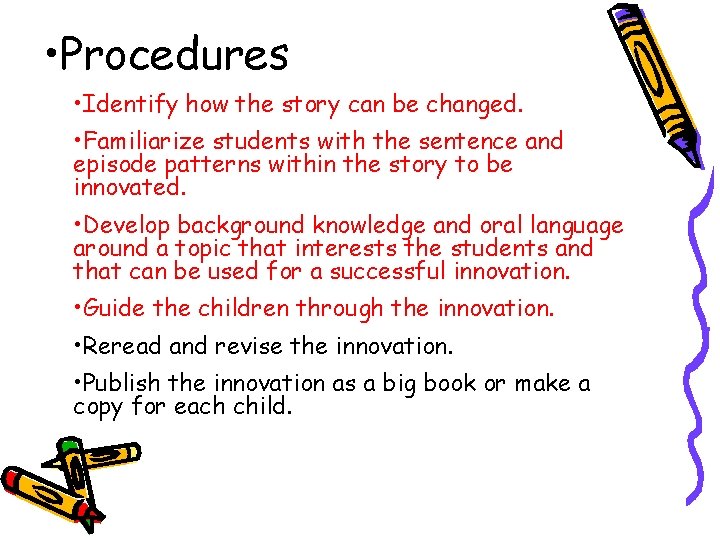
• Procedures • Identify how the story can be changed. • Familiarize students with the sentence and episode patterns within the story to be innovated. • Develop background knowledge and oral language around a topic that interests the students and that can be used for a successful innovation. • Guide the children through the innovation. • Reread and revise the innovation. • Publish the innovation as a big book or make a copy for each child.
It involves a tight interface between word knowledge and oral reading fluency, and it allows readers at all levels to feel successful. • Children have to completely understand the context in which particular words are used and make wording changes that allow the new text to still be meaningful and enjoyable • To read fluently, students need to achieve high accuracy, adequate speed, and appropriate prosody. Familiar text structure and language patterns in the innovated text provide necessary scaffold for the practice of fluency. • The innovated story matches the students’ reading level, a critical consideration when selecting texts for fluency instruction • Innovated text is comprehensible input and provides opportunities for repeated practice of reading the text, both of which are critical factors that can help ESL learners become successful readers. Griffith & Ruan, in press
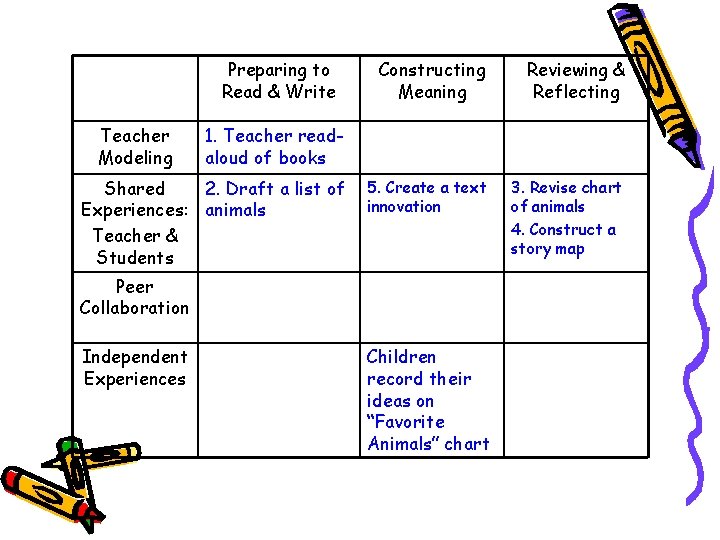
Preparing to Read & Write Teacher Modeling Constructing Meaning Reviewing & Reflecting 5. Create a text innovation 3. Revise chart of animals 4. Construct a story map 1. Teacher readaloud of books Shared 2. Draft a list of Experiences: animals Teacher & Students Peer Collaboration Independent Experiences Children record their ideas on “Favorite Animals” chart