
SBLAG Report MARCH 14 Time spent sharing out
SBLAG Report MARCH 14
Time spent sharing out PLC Discussions
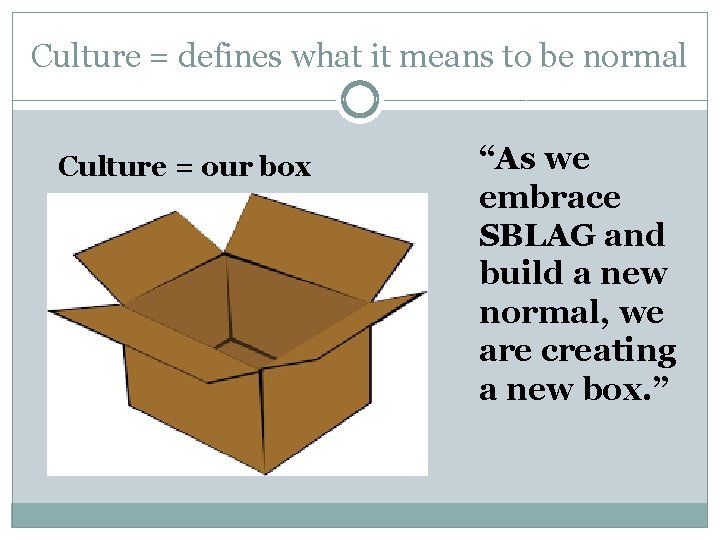
Culture = defines what it means to be normal Culture = our box “As we embrace SBLAG and build a new normal, we are creating a new box. ”
Strong Box = Healthy Culture Changing culture = fundamental change Not just changing WHAT we do, but changing WHY WE DO IT. Let’s build a strong box!
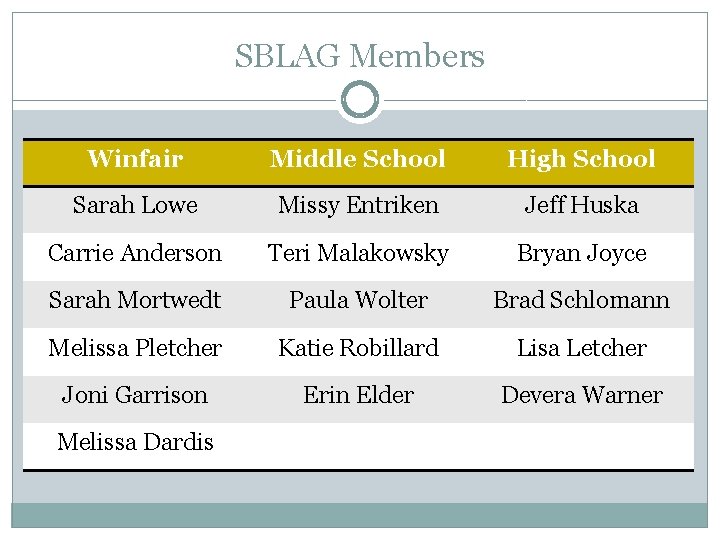
SBLAG Members Winfair Middle School High School Sarah Lowe Missy Entriken Jeff Huska Carrie Anderson Teri Malakowsky Bryan Joyce Sarah Mortwedt Paula Wolter Brad Schlomann Melissa Pletcher Katie Robillard Lisa Letcher Joni Garrison Erin Elder Devera Warner Melissa Dardis
Why do we grade? �To reward? To report? Grades are not about what students earn, they are about what students learn.
Grading Purpose Statement �The purpose of grading at Windom Area Schools is to communicate to students, parents, teachers, and administrators what each student knows and is able to do on grade and content level standards while separately assessing behavioral expectations.

When it comes to school culture… …always trump the written rules.
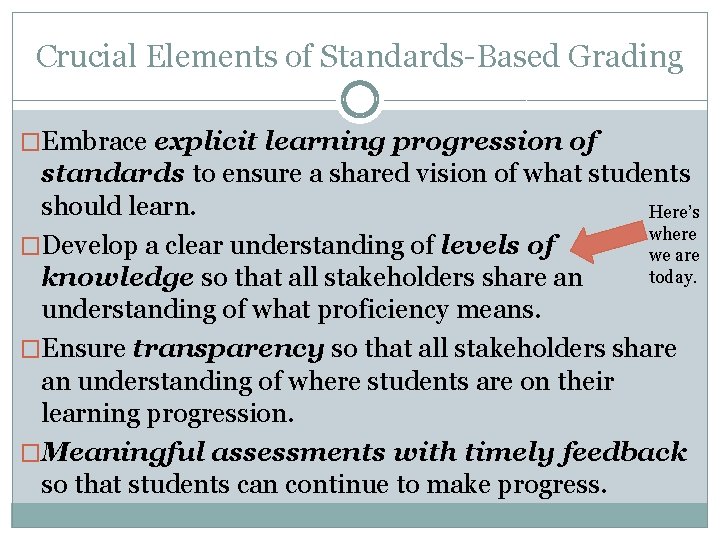
Crucial Elements of Standards-Based Grading �Embrace explicit learning progression of standards to ensure a shared vision of what students should learn. Here’s where �Develop a clear understanding of levels of we are today. knowledge so that all stakeholders share an understanding of what proficiency means. �Ensure transparency so that all stakeholders share an understanding of where students are on their learning progression. �Meaningful assessments with timely feedback so that students can continue to make progress.
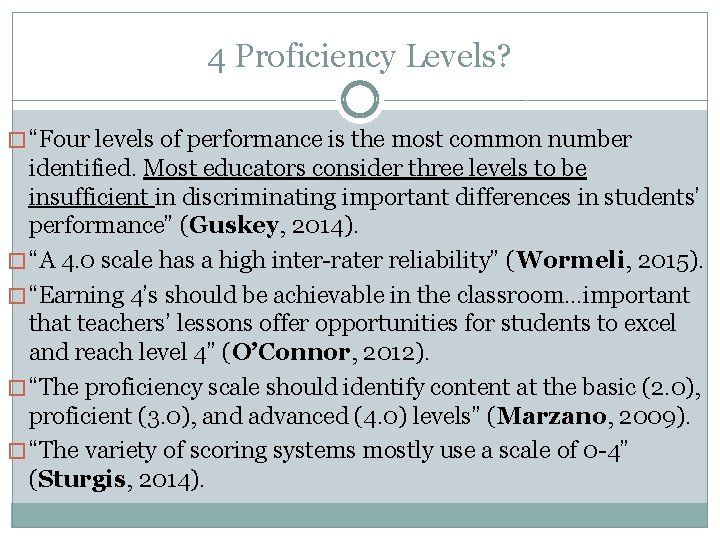
4 Proficiency Levels? � “Four levels of performance is the most common number identified. Most educators consider three levels to be insufficient in discriminating important differences in students’ performance” (Guskey, 2014). � “A 4. 0 scale has a high inter-rater reliability” (Wormeli, 2015). � “Earning 4’s should be achievable in the classroom…important that teachers’ lessons offer opportunities for students to excel and reach level 4” (O’Connor, 2012). � “The proficiency scale should identify content at the basic (2. 0), proficient (3. 0), and advanced (4. 0) levels” (Marzano, 2009). � “The variety of scoring systems mostly use a scale of 0 -4” (Sturgis, 2014).
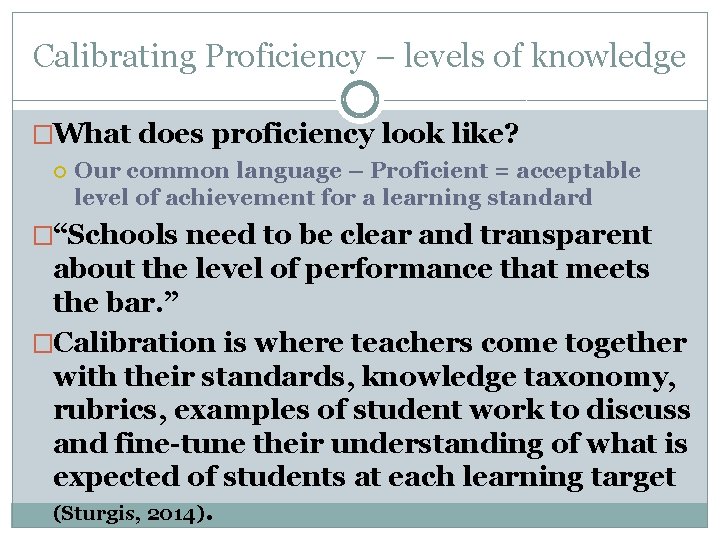
Calibrating Proficiency – levels of knowledge �What does proficiency look like? Our common language – Proficient = acceptable level of achievement for a learning standard �“Schools need to be clear and transparent about the level of performance that meets the bar. ” �Calibration is where teachers come together with their standards, knowledge taxonomy, rubrics, examples of student work to discuss and fine-tune their understanding of what is expected of students at each learning target (Sturgis, 2014).
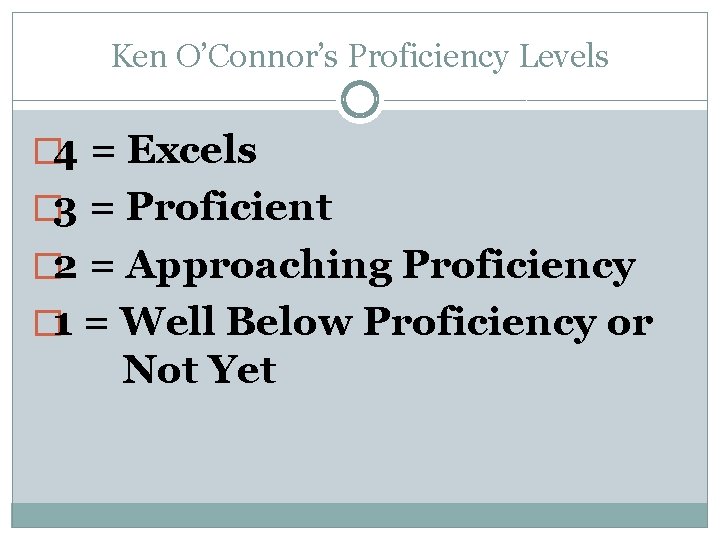
Ken O’Connor’s Proficiency Levels � 4 = Excels � 3 = Proficient � 2 = Approaching Proficiency � 1 = Well Below Proficiency or Not Yet
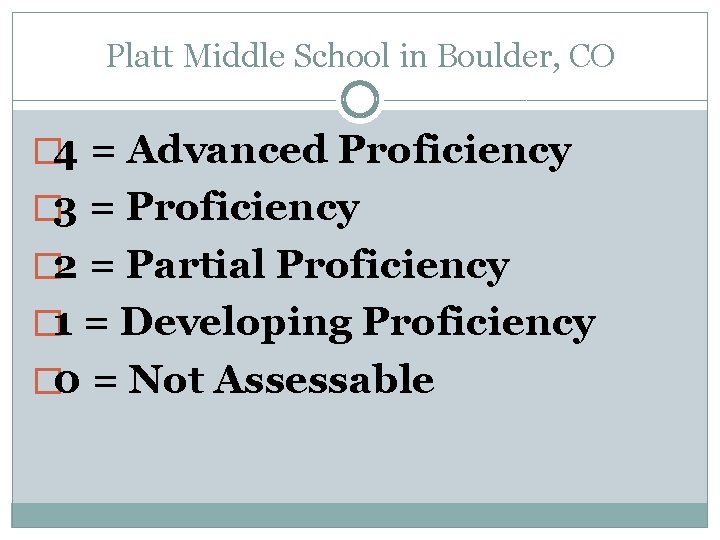
Platt Middle School in Boulder, CO � 4 = Advanced Proficiency � 3 = Proficiency � 2 = Partial Proficiency � 1 = Developing Proficiency � 0 = Not Assessable
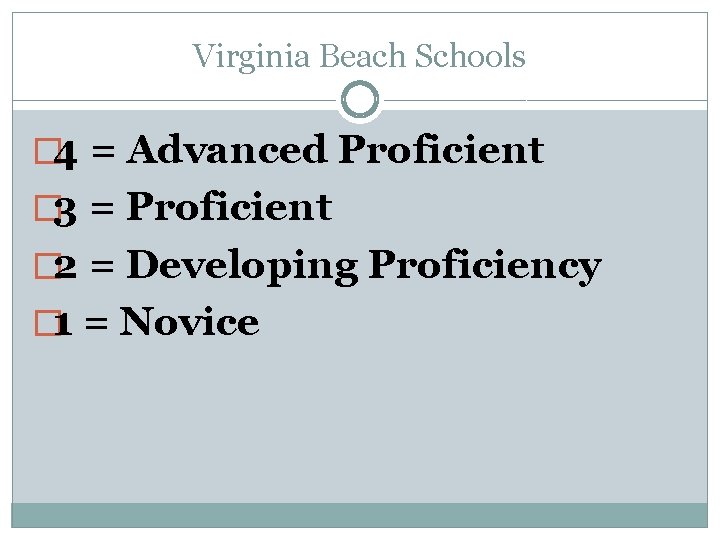
Virginia Beach Schools � 4 = Advanced Proficient � 3 = Proficient � 2 = Developing Proficiency � 1 = Novice
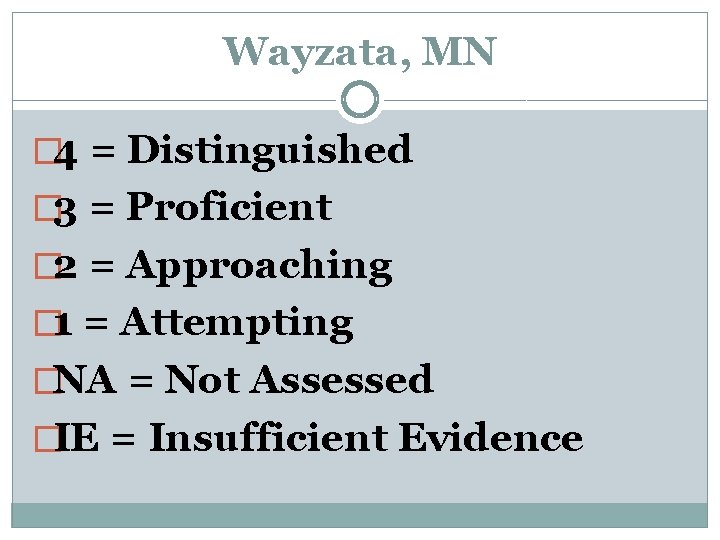
Wayzata, MN � 4 = Distinguished � 3 = Proficient � 2 = Approaching � 1 = Attempting �NA = Not Assessed �IE = Insufficient Evidence
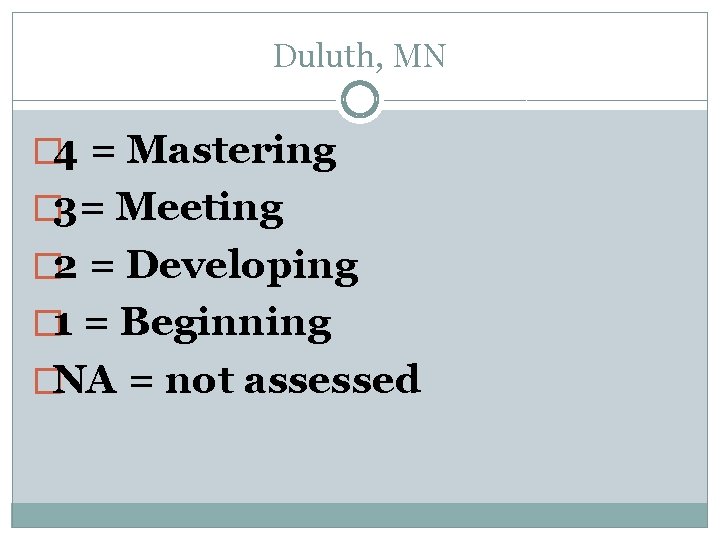
Duluth, MN � 4 = Mastering � 3= Meeting � 2 = Developing � 1 = Beginning �NA = not assessed
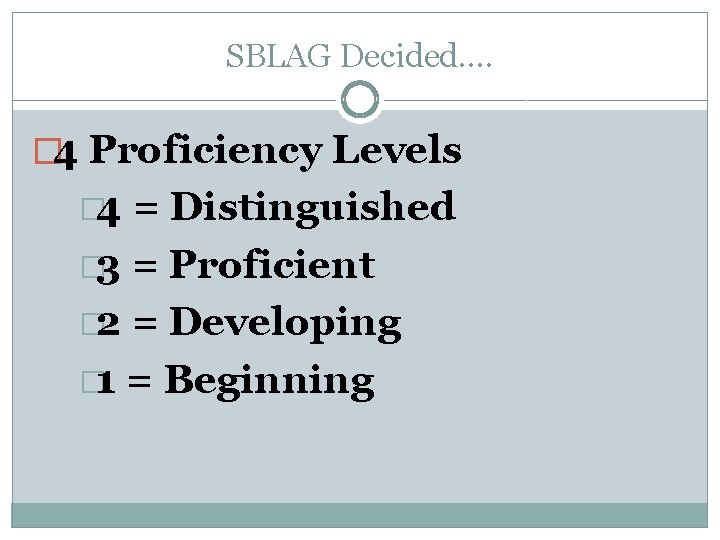
SBLAG Decided…. � 4 Proficiency Levels � 4 = Distinguished � 3 = Proficient � 2 = Developing � 1 = Beginning
IMPORTANT! 4 = DISTINGUISHED Meeting the standard at a higher quality level
A 4 is NOT: Not “EXCEEDS” Not “ABOVE & BEYOND”
Time to calibrate… �What does proficiency look like? �Remember our common language: Proficient = acceptable level of achievement for a learning standard (Entry Level Quality) Proficiency is generally not linear and not specific to a moment in time = gray area Professional Judgment
Time to calibrate… �Calibrating knowledge levels = parceling out the degree of the standard’s verb �Gradations of the skill level: degree of competence; degree of mastery; the degree of proficiency; Level of consistency Amount of acceptable error �Remember: We can MEET the standard at different quality levels.
Calibrating Verbs �Calculate – consistency; acceptable error �Analyze – quality differences of analyses �Infer – depth and quality differences
As you work to define these levels and terms…
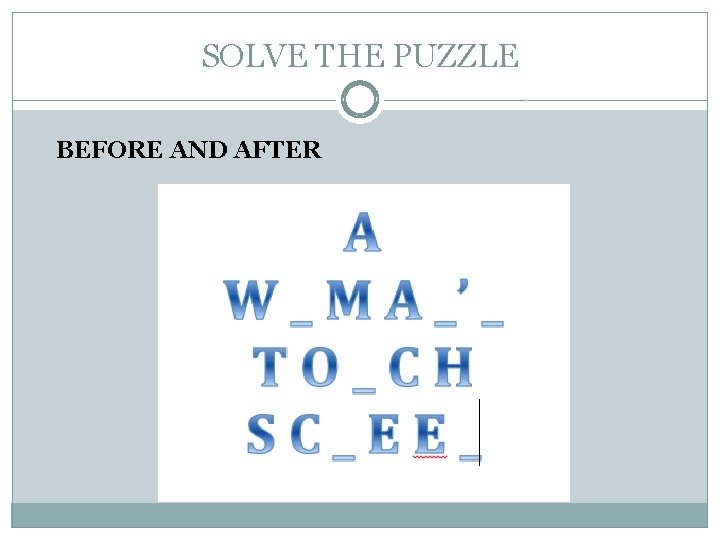
SOLVE THE PUZZLE BEFORE AND AFTER
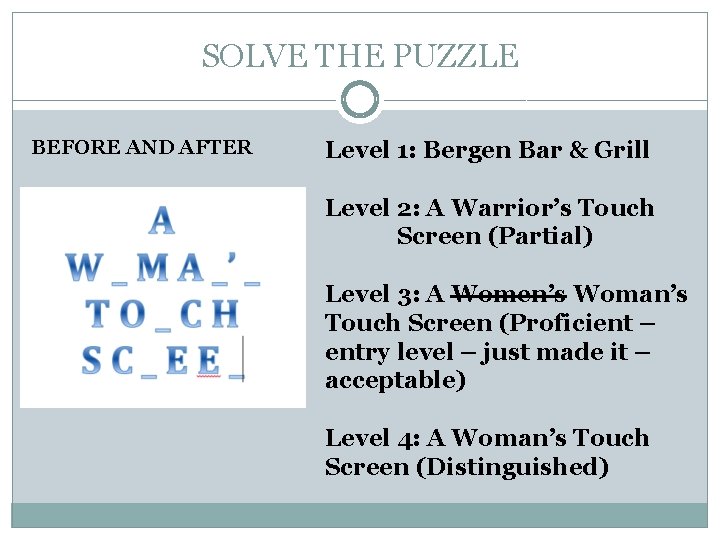
SOLVE THE PUZZLE BEFORE AND AFTER Level 1: Bergen Bar & Grill Level 2: A Warrior’s Touch Screen (Partial) Level 3: A Women’s Woman’s Touch Screen (Proficient – entry level – just made it – acceptable) Level 4: A Woman’s Touch Screen (Distinguished)
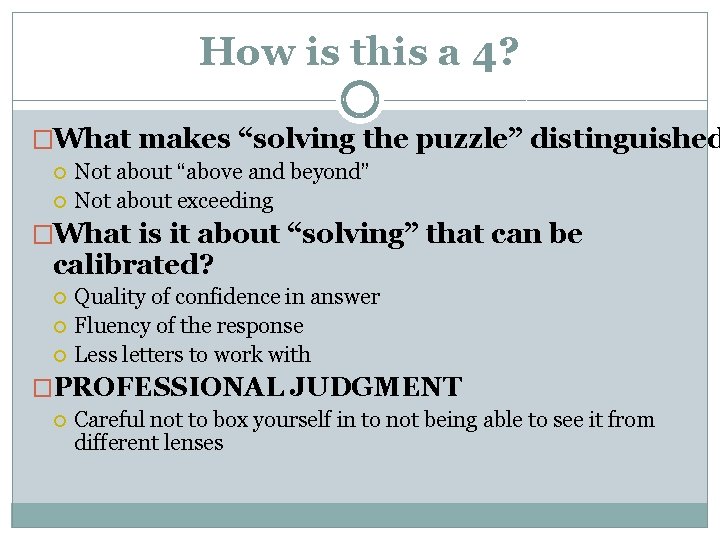
How is this a 4? �What makes “solving the puzzle” distinguished Not about “above and beyond” Not about exceeding �What is it about “solving” that can be calibrated? Quality of confidence in answer Fluency of the response Less letters to work with �PROFESSIONAL JUDGMENT Careful not to box yourself in to not being able to see it from different lenses
March 7 th with Garnet: Behaviors �Brainstorm behaviors you want to “report out” apart from the standards-based achievement of a student. �Group those behaviors to alleviate the quantity of grades
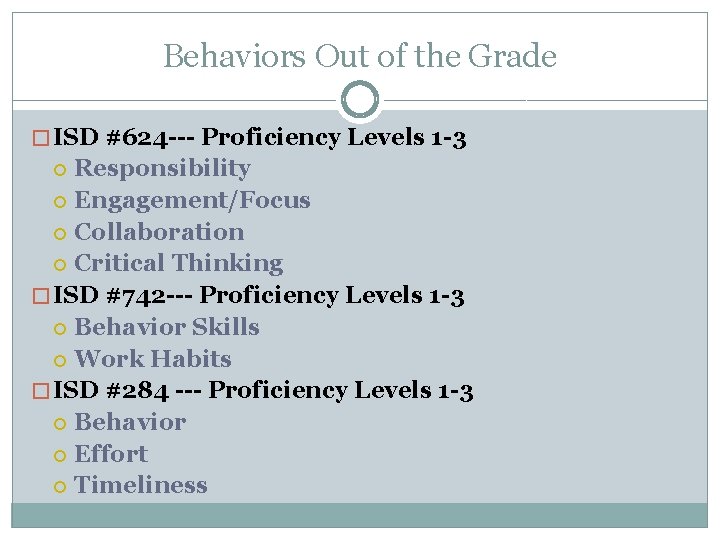
Behaviors Out of the Grade � ISD #624 --- Proficiency Levels 1 -3 Responsibility Engagement/Focus Collaboration Critical Thinking � ISD #742 --- Proficiency Levels 1 -3 Behavior Skills Work Habits � ISD #284 --- Proficiency Levels 1 -3 Behavior Effort Timeliness
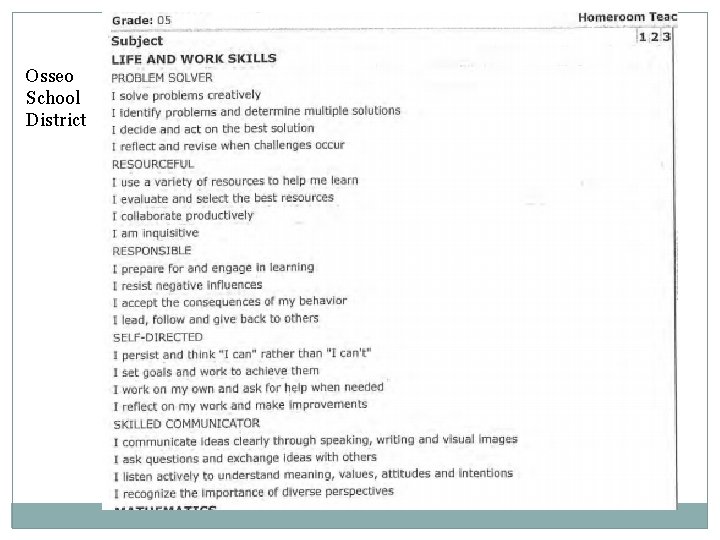
Osseo School District
Garnet Hillman on March 7 th: Behaviors � 3 = Consistently (not perfect) � 2 = Sometimes (back & forth around halfway mark) � 1 = Seldom �Eagle Pride Grades: Respect and Responsibility �Skyward: comments -- Bryan
EAGLE PRIDE GRADES PBIS MODEL Respect for Self Respect for Others Respect for Environment Be Responsible
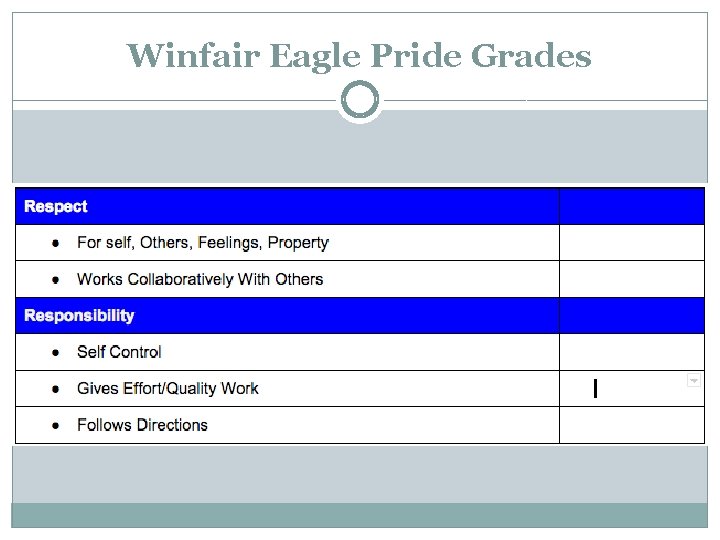
Winfair Eagle Pride Grades
MSHS Eagle Pride Grades Respect_____ Responsibility_____
Garnet’s 6 Steps to Reach Our Goal 1. Analysis/Removal of behaviors/non- academics from grade 2. Determine Standards 3. Deconstruct Standards into Learning Targets 4. Standards Based Learning Experiences 1. 2. Activities/projects Formatives/Summatives = Practice/Game Time 5. Proficiency Scales 6. Communication and Reporting
Non-Negotiables of SBLAG �Criterion Referenced = bar �Evidence Based �Academic Achievement Process (behaviors) Progress = SEPARATED (growth) �Shortened Scale of Proficiency (4 -6 levels) �More Feedback; Less Grading �Natural process of learning is honored
Fourth Quarter �Comment box – comment on behaviors as you see fit �Sometime soon, PLCs will do an activity about what behaviors are sometimes included in a grade that we don’t want reflected in our achievement grade
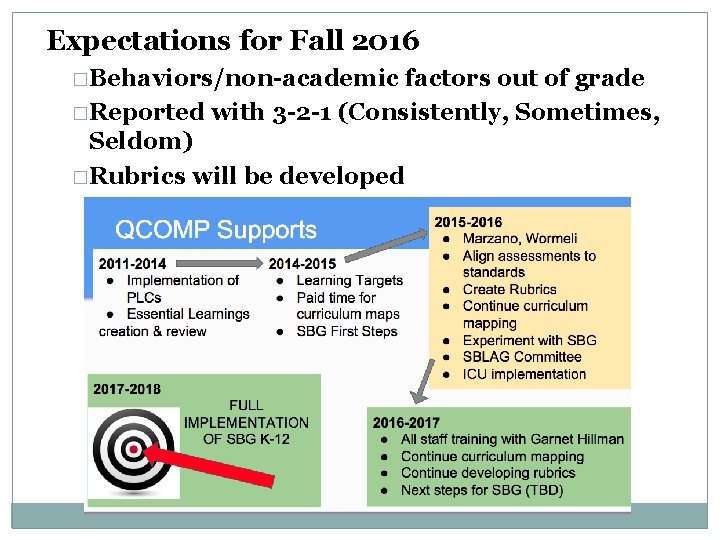
Expectations for Fall 2016 �Behaviors/non-academic factors out of grade �Reported with 3 -2 -1 (Consistently, Sometimes, Seldom) �Rubrics will be developed
- Slides: 38