
SBG 101 An Introduction to StandardsBased Grading Leadership
SBG 101 An Introduction to Standards-Based Grading Leadership Summit October 2018
OVERVIEW • • • SBG definition SBG instruction and assessment SBG principles SBG vs traditional grading Implications to practice Insights on adapting the practice
SBG Definition Standards-Based Grading is a system of assessing and reporting a student’s progress directly in relation to standards. A standards-based reporting approach offers a more comprehensive assessment of a student’s actual learning.
Standards-Based Instruction Students concentrate on true mastery of a skill. Teachers concentrate on teaching essential standards that every student must learn. Each lesson taught is connected to a standard, and learning targets mark progress toward meeting a standard. Learning goals are clear and opportunities to meet them are varied.

Different pace towards the same target.
Standards-Based Assessment Students know in advance what they will need to learn, and they will have more than one opportunity to show they have met the standard. Teachers will use both formative and summative assessments, to measure progress. Assessments support multiple assessment opportunities for students.

SBG Principles Principle 1: Grades and reports are based on clear and specific learning goals and performance standards. Principle 2: Assessment used to gather evidence of achieving the standard should be valid. Principle 3: Not everything should be recorded as grades.
SBG Principles Principle 4: Avoid reporting final grade based on average (mean). Principle 5: Focus on achievement. Report other factors separately. Principle 6: Develop meaningful formative assessments with timely feedback as practice for mastery of skill without penalty (for at-home or in-class practice).
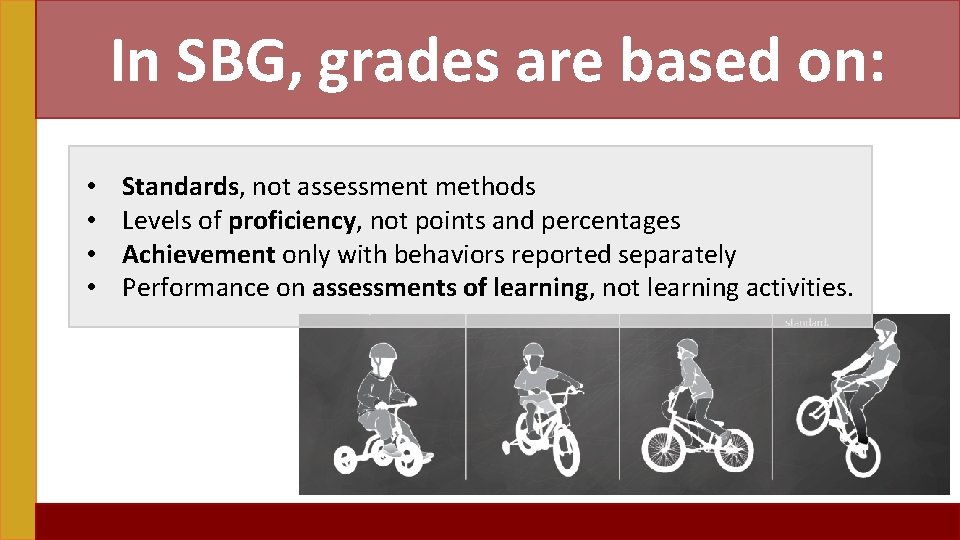
In SBG, grades are based on: • • Standards, not assessment methods Levels of proficiency, not points and percentages Achievement only with behaviors reported separately Performance on assessments of learning, not learning activities.
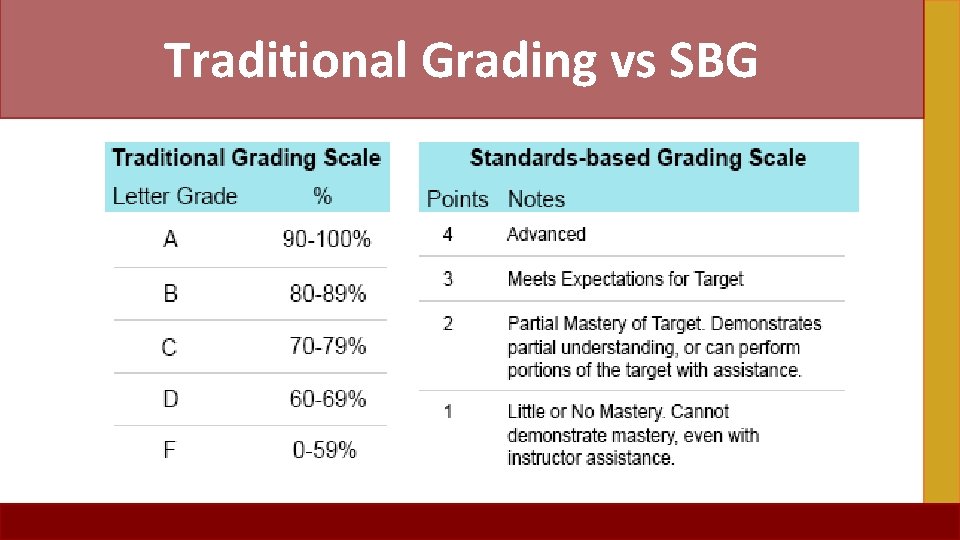
Traditional Grading vs SBG
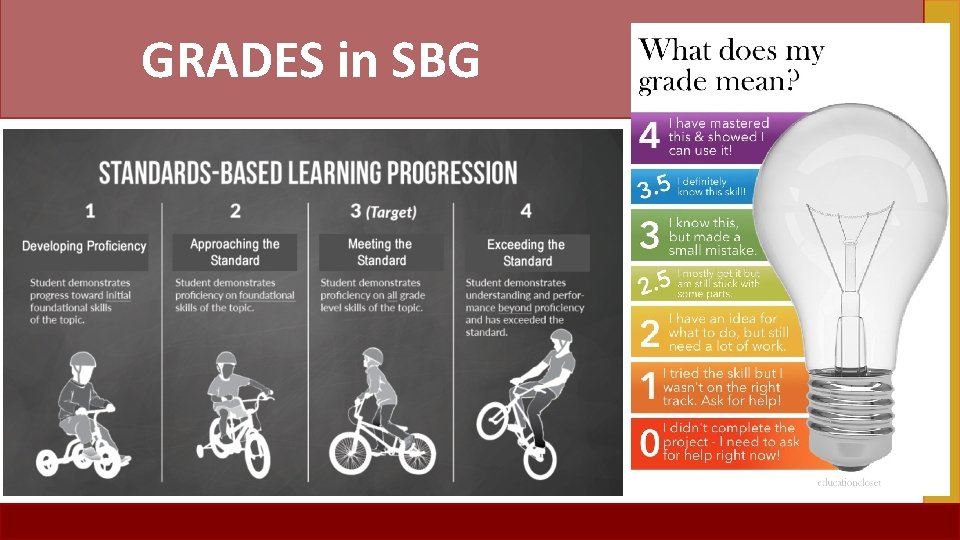
GRADES in SBG

Ineffective grading practices 1. Point penalties for late work, or attendance 2. Extra credit points for things unrelated to standards 3. Assigning group scores when students engage in cooperative learning 4. Curving class scores or grades 5. Averaging student scores 6. Assigning zeros to student work 7. Grading homework

Implications to practice 1. 2. 3. 4. 5. 6. Promotes growth mindset Encourages teacher greater involvement in curriculum Supports clear communication Needs communication to stakeholders “I-can-do-it-again” mentality Requires much contact time


Thank you!
- Slides: 15