
SBAR Improving Patient Safety through Effective Communication Objectives
SBAR Improving Patient Safety through Effective Communication
Objectives n n n Describe factors that contribute to ineffective communication Identify the components of the SBAR communication model Utilize SBAR in the expected communication situations
Why should we be communicating effectively? n n The overwhelming majority of untoward events involve communication failure Per JCAHO – Communication breakdowns remain the primary root cause of more than 60% of the 2, 034 sentinel events analyzed.
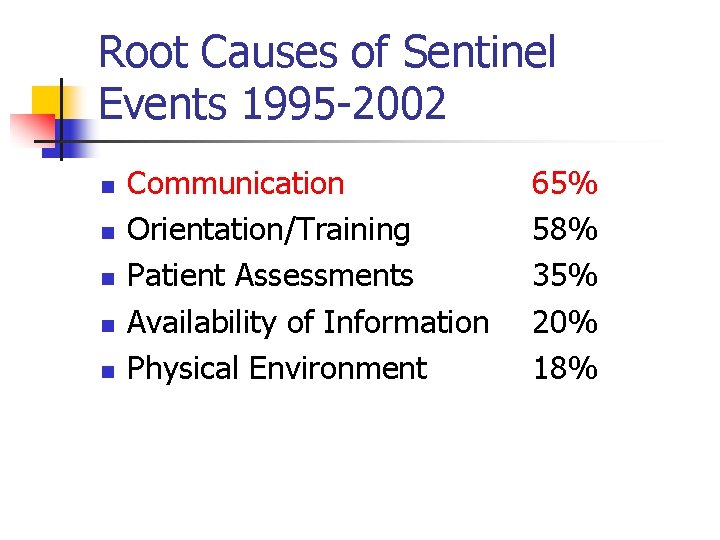
Root Causes of Sentinel Events 1995 -2002 n n n Communication Orientation/Training Patient Assessments Availability of Information Physical Environment 65% 58% 35% 20% 18%
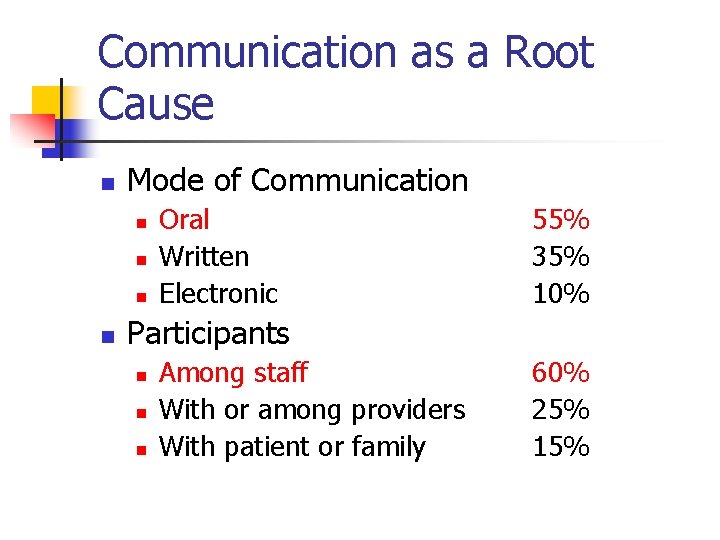
Communication as a Root Cause n Mode of Communication n n Oral Written Electronic 55% 35% 10% Participants n n n Among staff With or among providers With patient or family 60% 25% 15%
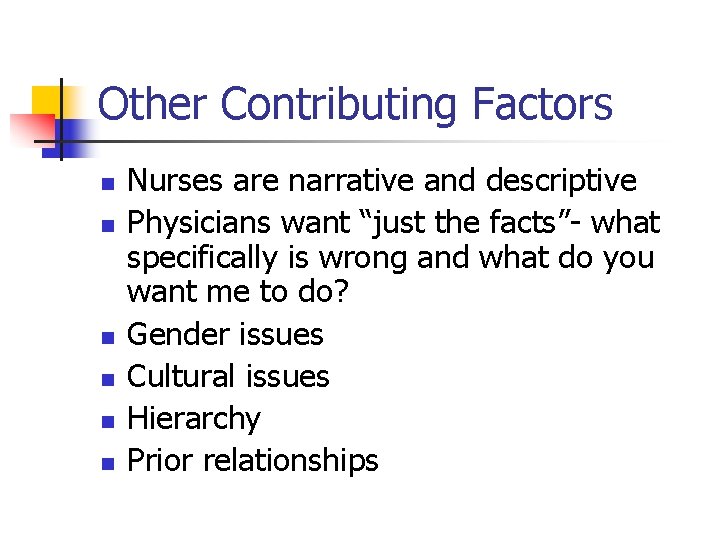
Other Contributing Factors n n n Nurses are narrative and descriptive Physicians want “just the facts”- what specifically is wrong and what do you want me to do? Gender issues Cultural issues Hierarchy Prior relationships
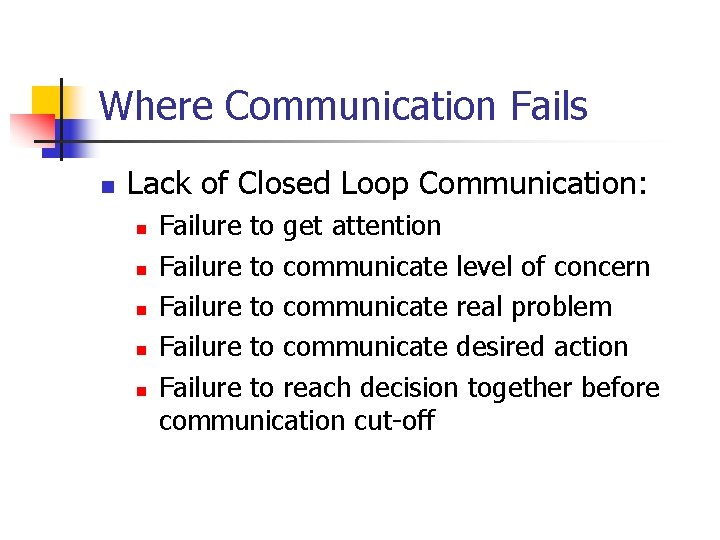
Where Communication Fails n Lack of Closed Loop Communication: n n n Failure to get attention Failure to communicate level of concern Failure to communicate real problem Failure to communicate desired action Failure to reach decision together before communication cut-off
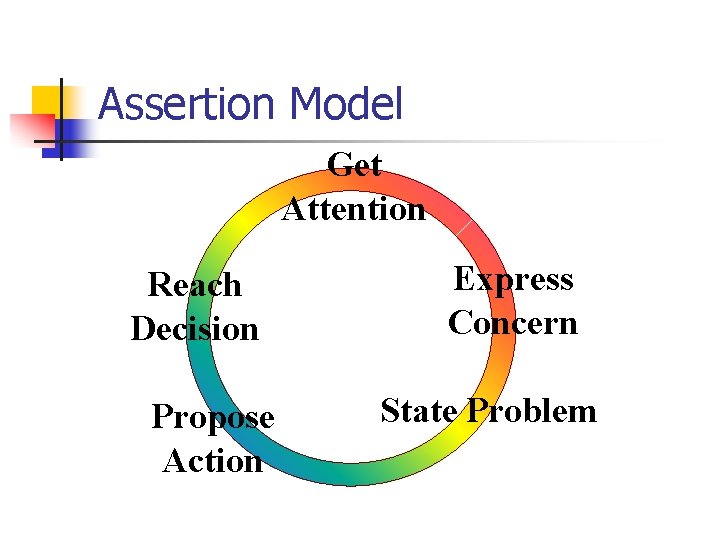
Assertion Model Get Attention Reach Decision Propose Action Express Concern State Problem
Strategies for Improved Closed Loop Communication n n Read Back Critical Language Second Challenge SBAR
SBAR – What is it? n n Communication tool Originated from the U. S. Navy
SBAR – What does it stand for? n Situation - What is happening now, chief complaint, acute change? n Background – What factors led up to this event, pertinent history? n Assessment - What do you see, clinical assessment? n Recommendation - What do you want done? What action do you propose?
SBAR – Why use it? n n Provides standard communication tool – makes communication less random and person dependent Ensures completeness of information Places every clinical person on the same communication level Creates a safe, respectful, organized communication
SBAR – When can it be used? n All ‘hand off’ communications: n n Shift to Shift report Transfers between units/departments Calling physicians with patient problems Each situation uses the same structure with modifications to content in each section of the acronym.
SBAR for Shift Report n Situation: n n n Patient’s name, physician, room number Admitting diagnosis Brief statement of main concern
SBAR for Shift Report n Background: n n n n Brief history of hospital course Vital signs Clinical assessment (include only abnormal) Abnormal lab, imaging tests, telemetry Status of IV Gait/fall precautions Diet Discharge plan
SBAR for Shift Report n Assessment: n n Let incoming nurse know what you think is going on Do you have concerns? If so, what are they? Is there a problem that could be life threatening? Did you start anything that could not be finished on this shift?
SBAR for Shift Report n Recommendation: n n n What would you like the incoming nurse to attend to? What have the physicians been told? Not yet told? Has anything been left undone?
SBAR for Unit Transfers n Situation: n n n Patient’s name, physician, background Admitting diagnosis DNR status
SBAR for Unit Transfers n Background: n n n Brief history of hospital course Priorities/plan of care/pt. problem list Reason for transfer (if applicable) Medical interventions (chest tube, drains, lines, etc. ) Gait/fall precautions Isolation precautions
SBAR for Unit Transfers n Assessment: n n n n n Patient assessment data Critical, pertinent diagnostic results Vital signs Medication changes Respiratory status Mental status Restraint status Pain management Diabetes management (if applicable)
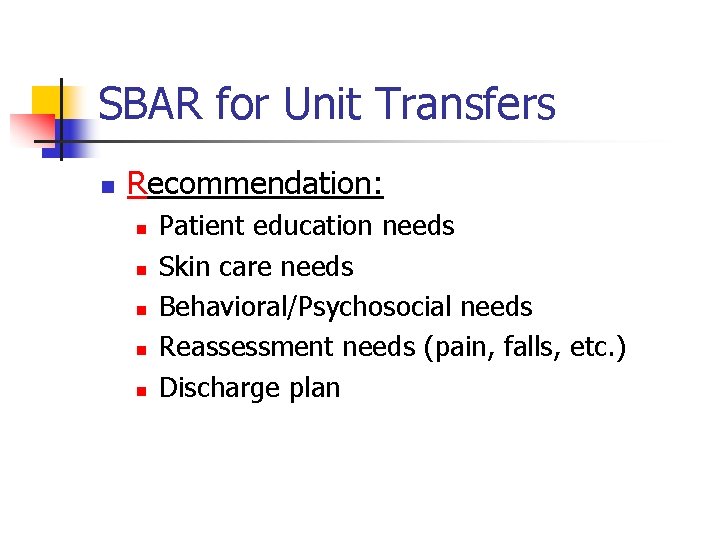
SBAR for Unit Transfers n Recommendation: n n n Patient education needs Skin care needs Behavioral/Psychosocial needs Reassessment needs (pain, falls, etc. ) Discharge plan
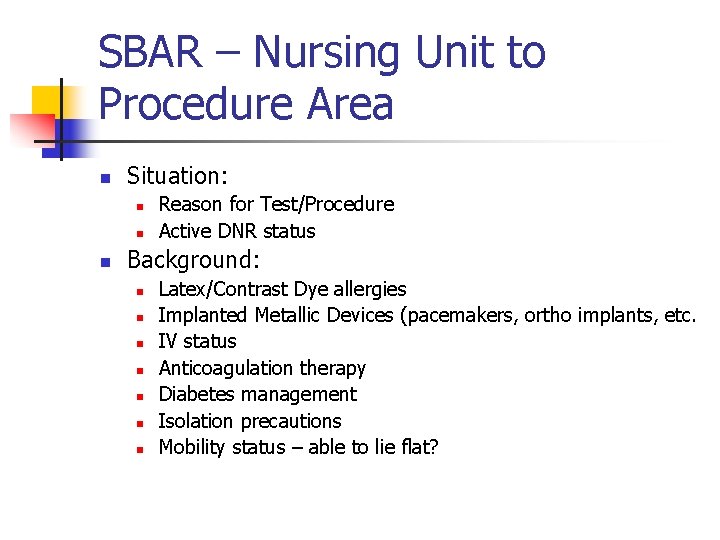
SBAR – Nursing Unit to Procedure Area n Situation: n n n Reason for Test/Procedure Active DNR status Background: n n n n Latex/Contrast Dye allergies Implanted Metallic Devices (pacemakers, ortho implants, etc. IV status Anticoagulation therapy Diabetes management Isolation precautions Mobility status – able to lie flat?
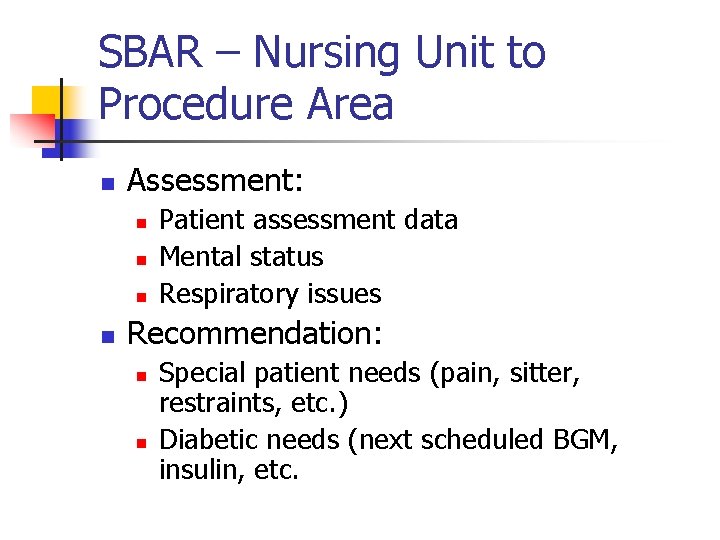
SBAR – Nursing Unit to Procedure Area n Assessment: n n Patient assessment data Mental status Respiratory issues Recommendation: n n Special patient needs (pain, sitter, restraints, etc. ) Diabetic needs (next scheduled BGM, insulin, etc.
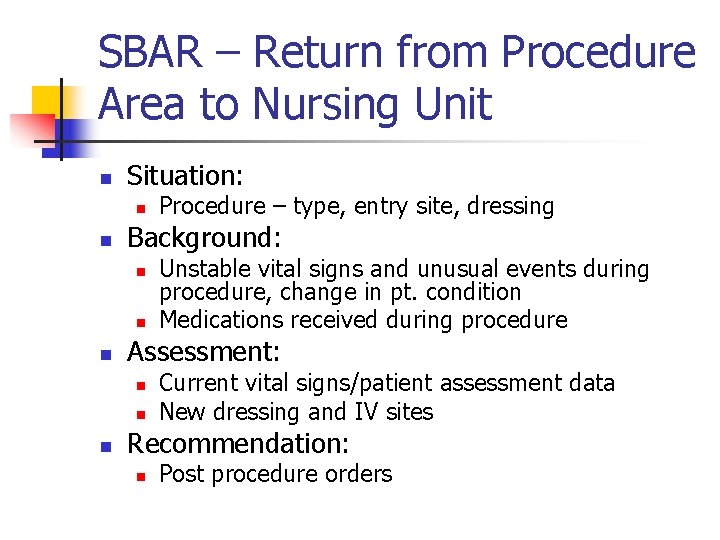
SBAR – Return from Procedure Area to Nursing Unit n Situation: n n Background: n n n Unstable vital signs and unusual events during procedure, change in pt. condition Medications received during procedure Assessment: n n n Procedure – type, entry site, dressing Current vital signs/patient assessment data New dressing and IV sites Recommendation: n Post procedure orders
SBAR – Physician Communication n Situation: n n n State your name/unit “I am calling you about…. ” “I have just assessed the patient and I am concerned about…
SBAR – Physician Communication n Background n n n State the admission diagnosis and date of admission State the pertinent medical history Provide a brief synopsis of the treatment/procedures to date Provide name of admitting/consulting physicians DNR status
SBAR – Physician Communication n Assessment n n Vital signs Assessments of the following systems: n n Neuro, Musculoskeletal, Respiratory, C-V, GI/GU, Skin Pertinent diagnostic test results Wound (drainage? ) Change from prior assessments *IDENTIFY problems, concern, or decline in condition
SBAR – Physician Communication n Recommendations n What would you like to see done? n n n Transfer the patient Come to see the patient at this time Have a House Officer/Resident see the patient Change the treatment Order lab or other diagnostic test Other suggestions…
Resistance…. n n n n We don’t need this I already know how to do this We don’t have a problem It’s just more work to do It’s too ‘soft and fluffy’ Cultural issues – won’t speak up Doesn’t feel safe
Benefits of Using SBAR n n n Clear way to communicate Reduces ambiguity, guesswork, variability for both sender and receiver Saves time for patients, physicians and staff Avoids staff /physician frustration Everyone is on the same ‘wavelength’
Summary n n Remember…in most cases you have already gathered this information Now you are placing that information in an organized, consistent framework
- Slides: 31