
SAXONS ANGLOS JUTES AND PICTS The transformation of
- Slides: 27
SAXONS, ANGLOS, JUTES AND PICTS The transformation of Briton
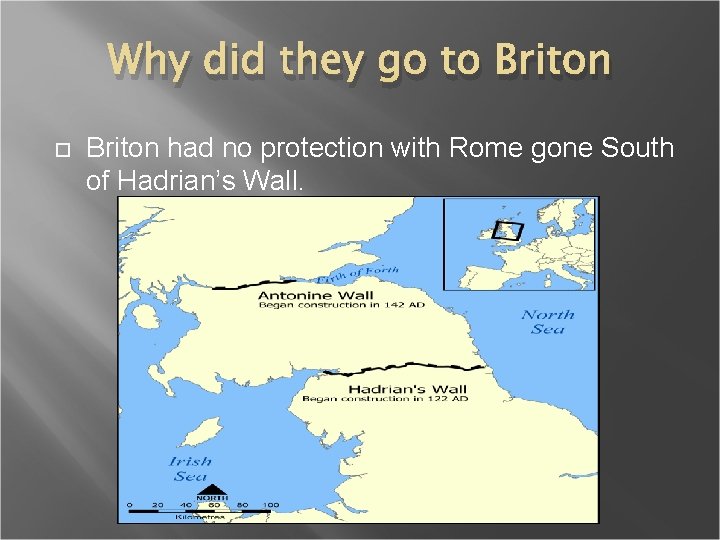
Roman Fall in Briton After 410 CE, Briton was desperate, Rome was gone. Declared independence from Rome Had no central authority Fighting within Roman lifestyle continued, on downward path for 50 years Picts, Scots & Saxons all saw a weak Briton as plunderable Briton defended itself to North against Picts/Scots with the use of Hadrian’s Wall
Briton alone As years went on, Briton was only herself in name. England, Scotland Wales were all their own entity and had sub-divisions within them Very tribal Let’s take a look at why this all happened.
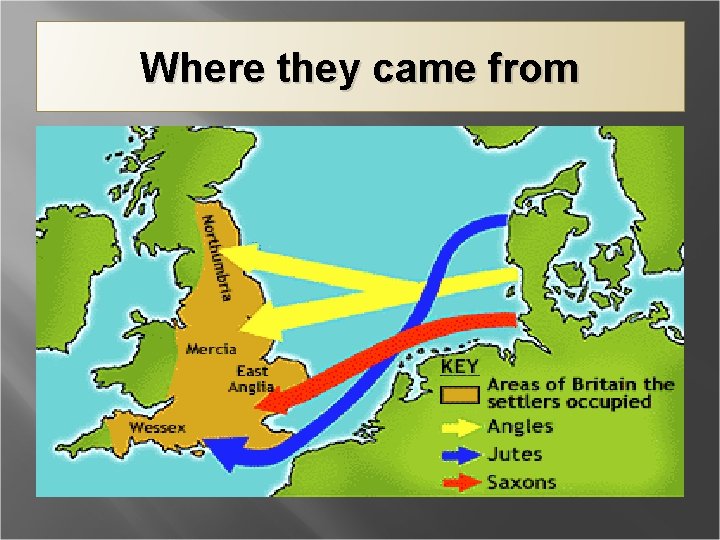
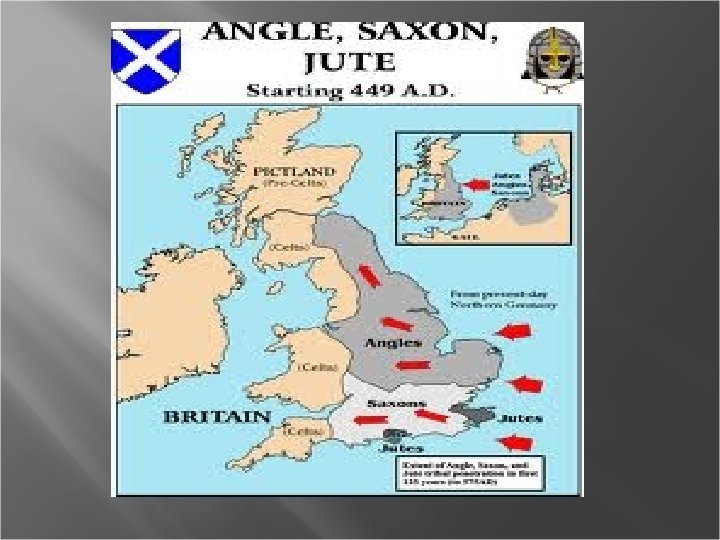
Where they came from
Why did they go to Briton had no protection with Rome gone South of Hadrian’s Wall.
Why did they go to Briton Looked at Briton as an opportunity to pillage. Needed new farming land to support agricultural lifestyle. Briton was an easy target because it was divided. Briton had no one central authority. Briton had fragmented into several tribes and were just as likely to fight each other as an invading barbaric tribe.
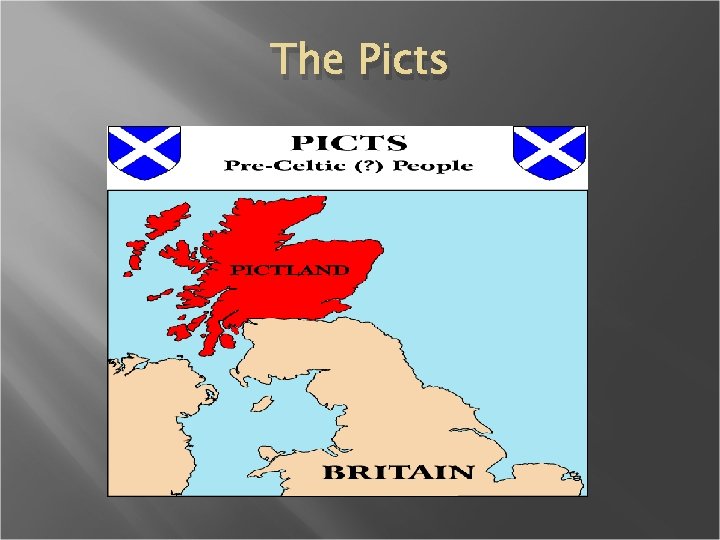
The Picts
The Picts Emperor Honorius took his 5000 troops out of England to protect homeland from barbaric tribes. Briton left to fend for itself. First group to invade Briton was a Sea-going people (like Vikings). 449 CE King Vortigern fought against the Picts.
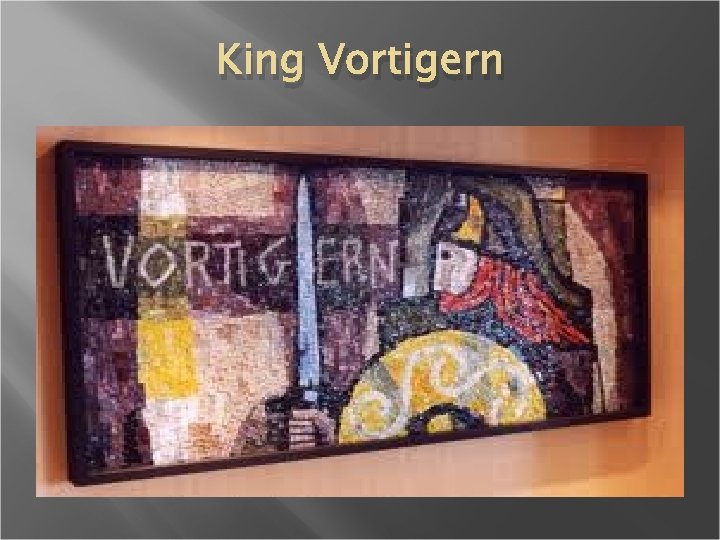
King Vortigern
King Vortigern King Vortigern legend Fought the Picts. Invited Saxons (rulers were Hengist and Horsa) to Briton. Actually gave them what is today the County of Kent in Briton in exchange for a Saxon wife, Rowena Kent County, England Story of King Arthur loosely based on this. Not confirmed that any of this story is true. Based simply on legend. Hence the Legend of King Arthur.
The Saxons Evolution of the Saxon then Anglo-Saxon Britain and demise of the British people happened during the rule of Honorius. REMEMBER: HONORIUS WOULDN’T SIGN TREATY WITH KING ALARIC AND HAD ISSUES WITH THE VANDALS IN AFRICA AND COUNT BONIFACE. The name Saxon comes from the sword they used, the Sax.
The Saxons Originally from Northwest Germany nad parts of Denmark. Term Saxons means several groups of people from Northern Germany and Southern Denmark. Germanic people. The Anglo-Saxon people took over part of Briton and named it England, means “Land of the Angles” Moved on the British island during the Dark Ages.
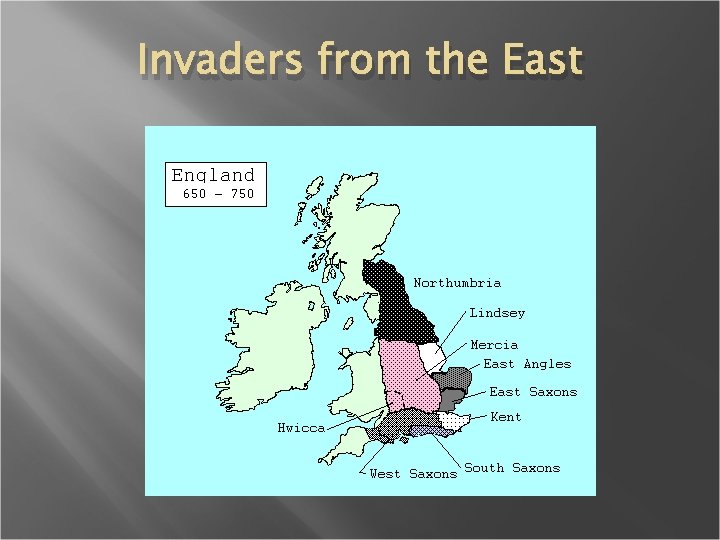
Invaders from the East
Who were these people? Tall, fair-haired people. Soldiers were armed with swords, spears and round shield. Very good warriors Skills include hunting, farming, textile (cloth) productions and leather working. Adopted the Anglo-Saxon Christian Church as state religion.
Saxon Women Women were near equals in Anglo-Saxon world. (based solely on social class) This was very unusual for this time period Women were soldiers as well. This stood as the norm until the Norman Conquest of 1066 Although women could possess property and money, they were property of their husband’s. Women did not have to marry a man she did not like. Women also had the choice to join the convent and become a nun.
What they did for fun Horse racing, hunting, feasting and music making. Played dice and board games. Known as gamblers Played chess During a feast, listen to the Harp, watched jugglers and marksmen throw knives at targets. Storytelling was very prominent in the Saxon culture.
Legacy of the Anglo-Saxons 3 main kingdoms came out of Saxon rule. Essex, Sussex and Wessex. i. e. East, South and West Saxon lands. Three independent kingdoms, which would not last.
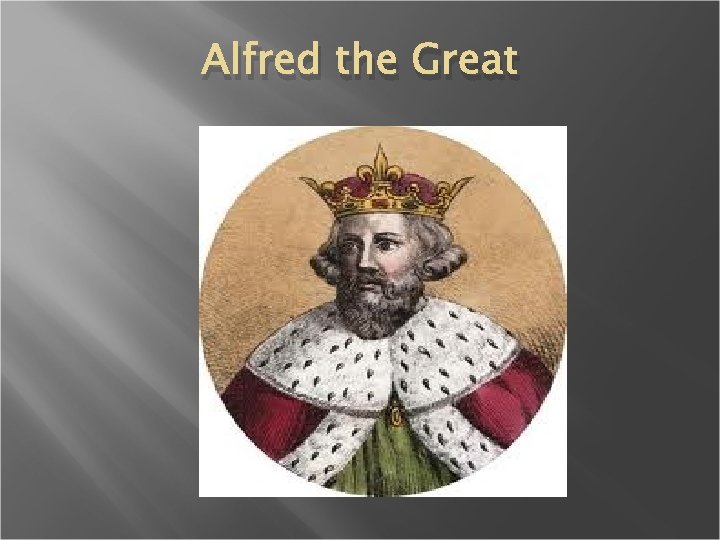
Alfred the Great
Alfred the Great Born in 849 CE, in Wantage Berkshire; Alfred was the 5 th son of Aethelwulf, King of West Saxon. Time when Alfred was born, great danger was brought about by raiding Vikings. Aethelwulf decided that brothers would take throne after his passing on the basis of age. Legend says Alfred at age 4 was sent by his father to Rome where Pope Leo IV annointed him King. This story is likely untrue.
Alfred the Great Proved himself worthy in battles against invading Viking tribes in the late 860’s and early 870’s. Really the first great leader of Britain. He was a man of vision, learning, and a great statesman. These qualities saved a nation and earned for Alfred the lasting title 'The Great' despite having only a relatively minor role in the long play of history. Alfred's Legacy
Alfred the Great Very Smart man Won a book contest set up my his mother to read an entire poetic text well beyond his age. He was 6 years old. He was bilingual, translating Roman text and laws into his Saxon tongue. (This is most likely a version of Old English which was brought over by Saxons, Anglos and Jutes. Old English was the accepted language during the time of Alfred. Old English lasted from circa 450 CE – 1100 CE
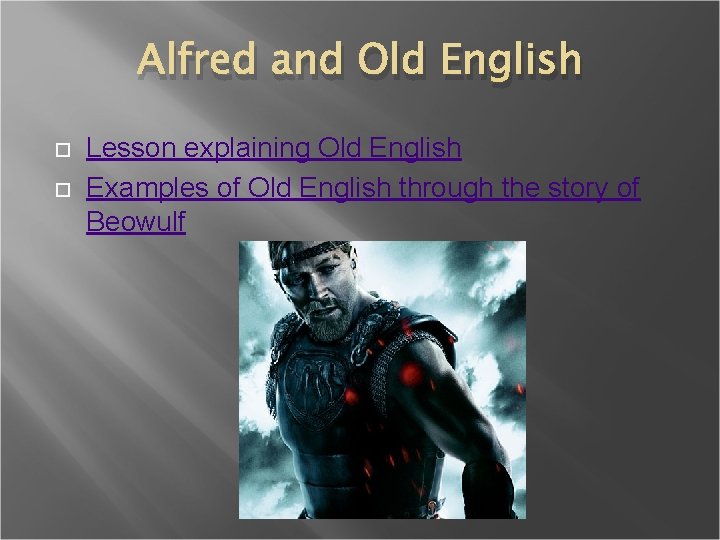
Alfred and Old English Lesson explaining Old English Examples of Old English through the story of Beowulf
Legend of Beowulf Click here for the story of Beowulf
Alfred the Great Why did he get the name “The Great” Won battles against marauding Vikings and Danes thought to be unwinnable. Won a battle against the Great Army of King Gunthrum, a Dane. Alfred was able to maintain an army that historically was more interested in farming than fighting. (Far cry from their ancestors who invaded Briton. ) By the 890’s, other provinces referred to Alfred as the King of the English. He was the first to have this title.
Alfred’s Legacy Click here to read about how Alfred the Great was able to bring a measure of peace to England Alfred saw the importance of: Education Law & Order Military Preparedness A reserve component to the army. Building a Navy Fortifying areas within England
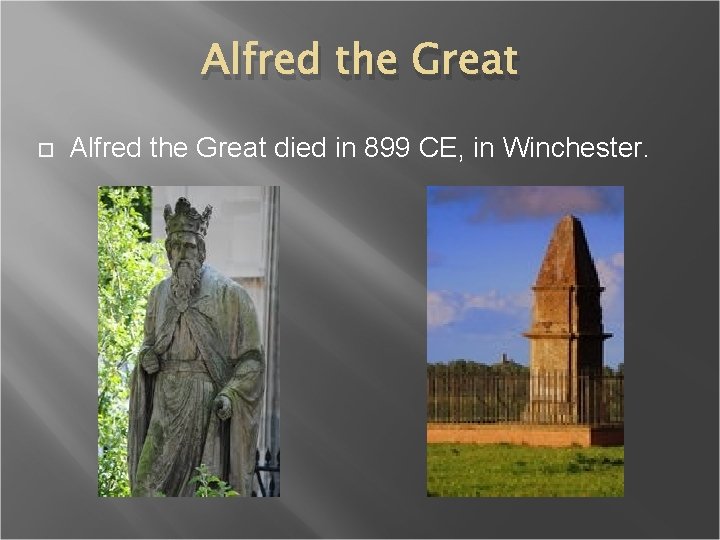
Alfred the Great died in 899 CE, in Winchester.