
Saving Endangered Historic Buildings Rocky Mountain Region USDA
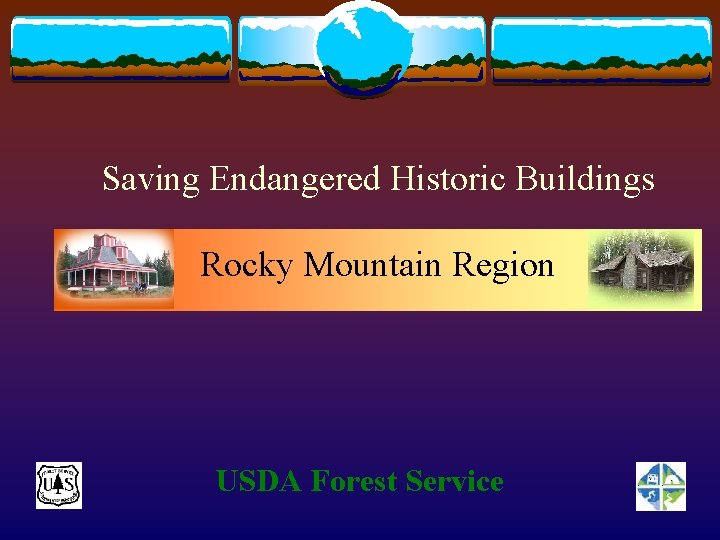
Saving Endangered Historic Buildings Rocky Mountain Region USDA Forest Service
Investing in Our Heritage; Working Together v. Preserve important historic buildings v. Develop business opportunities v. Promote intelligent management of unique and endangered structures
The National Recreation Agenda v Adopted agency-wide December 2000 v Emphasizes partnering with non-government organizations, other agencies, private sector v Social science plus market-based research = better decisions v Conservation education through heritage recreation v Collaboratively planning with communities
The Project v Identifies our best historic structures v Explores partnership opportunities for new and different uses v Strengthens local communities by supporting tourism and recreation v Links historic preservation with sustainable business practices v Uses principles of an “outcome-based” business model
Some Potential Outcomes v Historic preservation v Improved public access to agency resources v Enhanced recreation experiences v Long-term plans for maintaining buildings v Strong local economies through sustainable tourism v Positive image building v Financial return on investments v Tax benefits for partners
The Tools v Recreation Fee Demonstration Authority v Conventional special use permits v Unconventional special use permits v A centralized property management system for Historic Structures v Models for Public-Private Ventures
What’s a Public-Private Venture? v. A private and public investment in recreation opportunities v A long-term partnership v Brings private sector expertise and capital to work for public benefits v Allows for Profitability for partners
Partnerships v Work together to develop a project v May include a 20 -30 year commitment v Mutually shared expertise and investments v Fees go back into the investment, not to Treasury v NGO strengths enhanced by minimizing agency “red tape”
The Bottom Line FS Contributions Partner Contributions Historic Properties Appropriate Building Uses Great settings Possibly Capital Improvement Regulatory Assistance Property Management Modest Cash Matches Long Term O & M ______________________ EVERYBODY WINS!!!
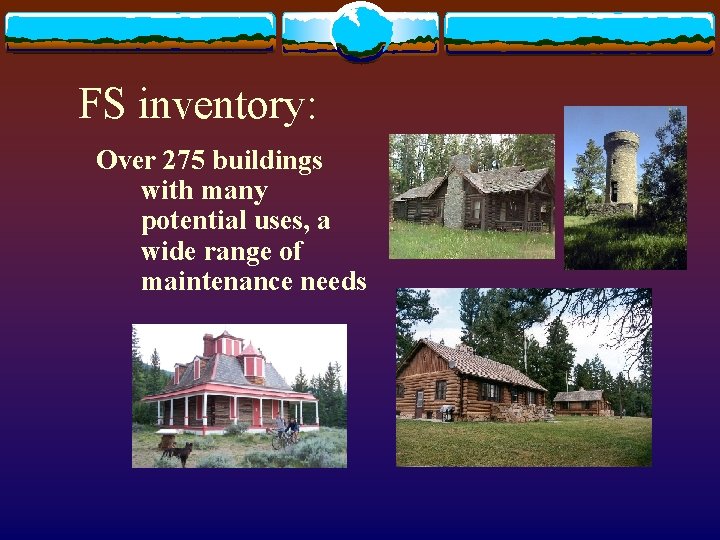
FS inventory: Over 275 buildings with many potential uses, a wide range of maintenance needs
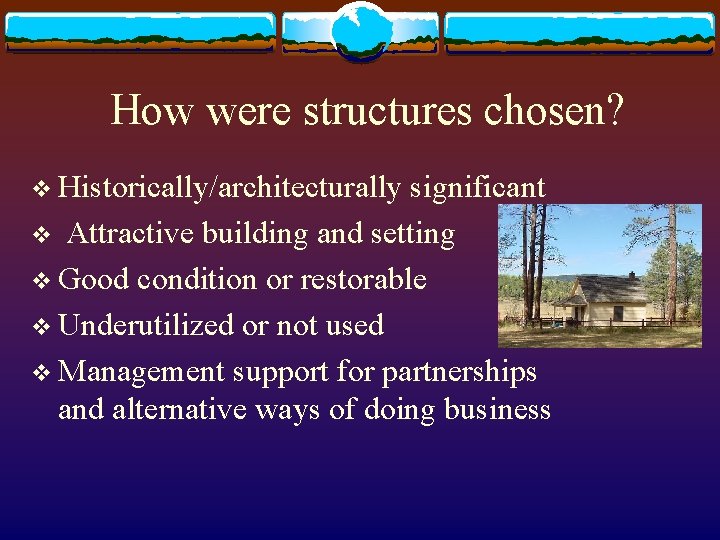
How were structures chosen? v Historically/architecturally significant v Attractive building and setting v Good condition or restorable v Underutilized or not used v Management support for partnerships and alternative ways of doing business
Building Types v Bunkhouses v Cabins v Fire Lookouts v Houses v Lodges v Ranger Stations v Special places
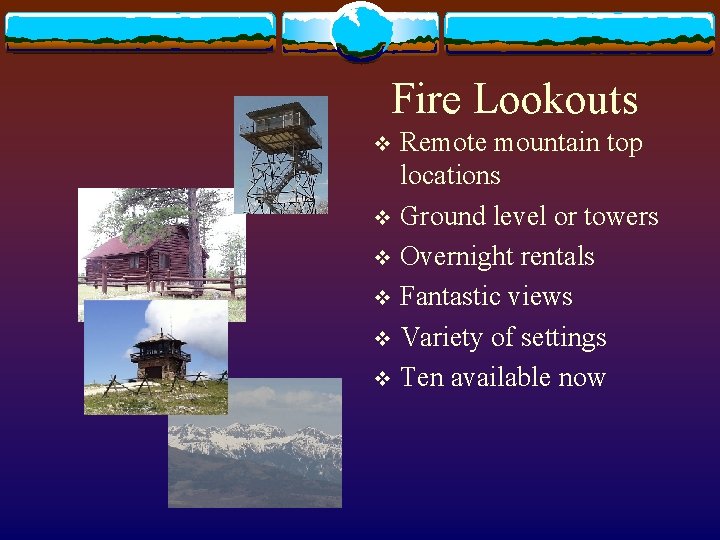
Fire Lookouts Remote mountain top locations v Ground level or towers v Overnight rentals v Fantastic views v Variety of settings v Ten available now v
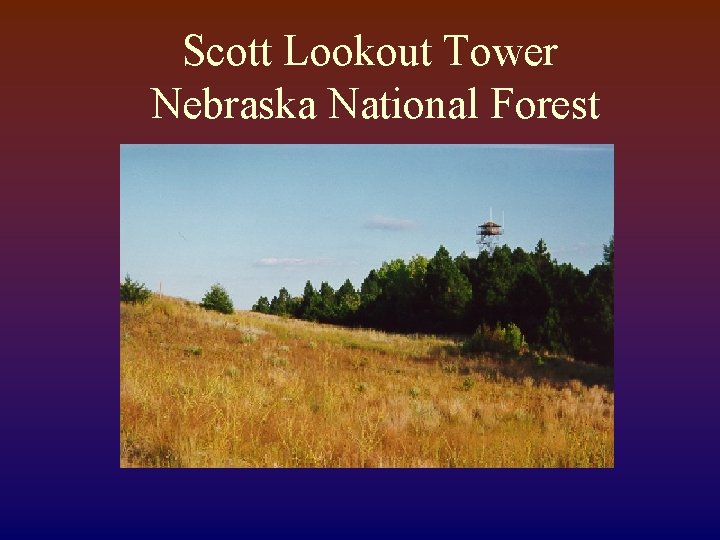
Scott Lookout Tower Nebraska National Forest
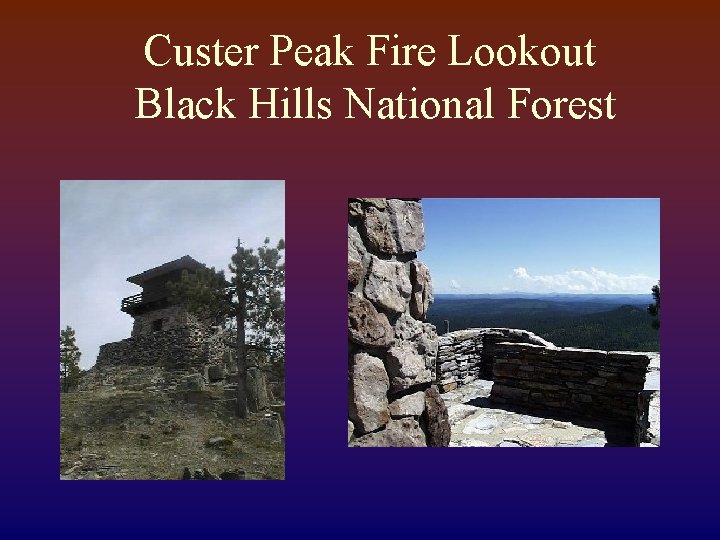
Custer Peak Fire Lookout Black Hills National Forest
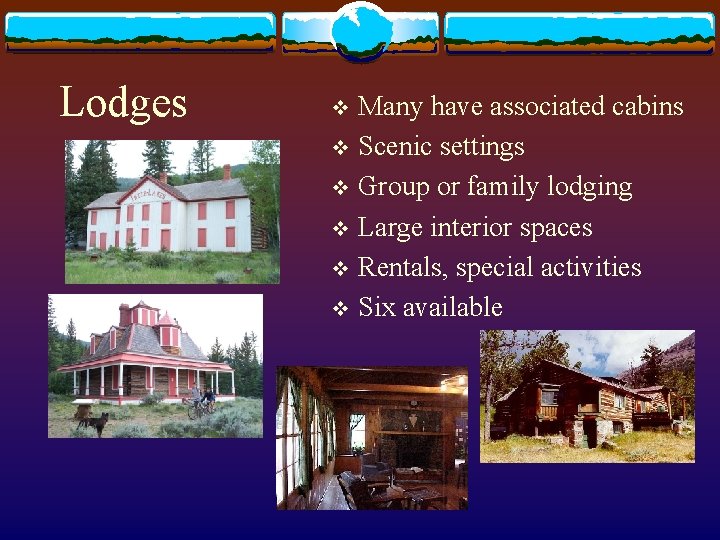
Lodges Many have associated cabins v Scenic settings v Group or family lodging v Large interior spaces v Rentals, special activities v Six available v
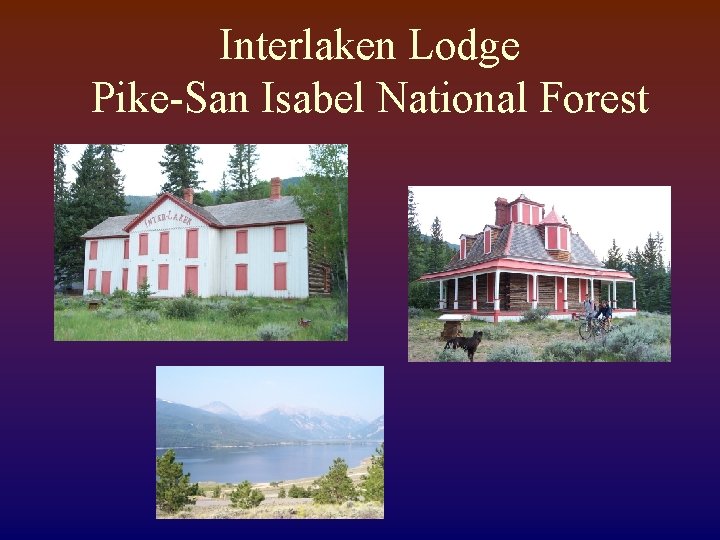
Interlaken Lodge Pike-San Isabel National Forest
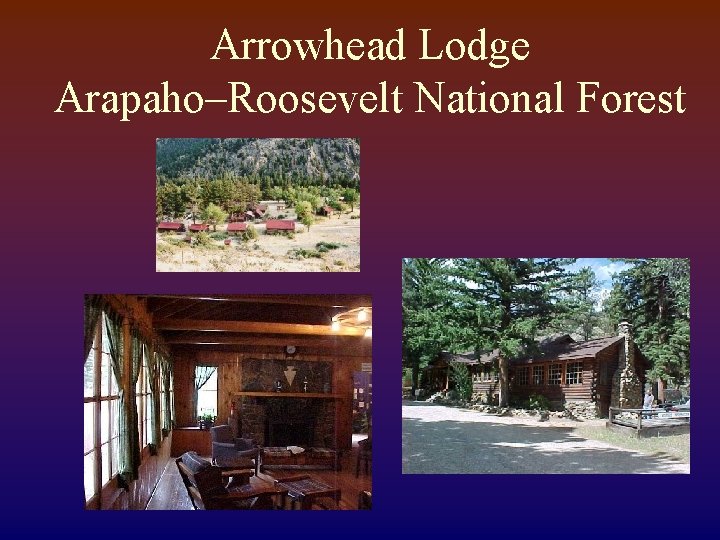
Arrowhead Lodge Arapaho–Roosevelt National Forest
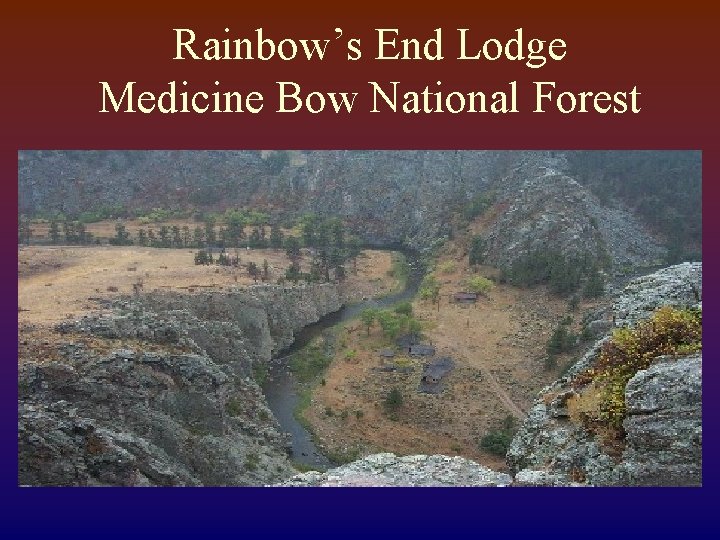
Rainbow’s End Lodge Medicine Bow National Forest
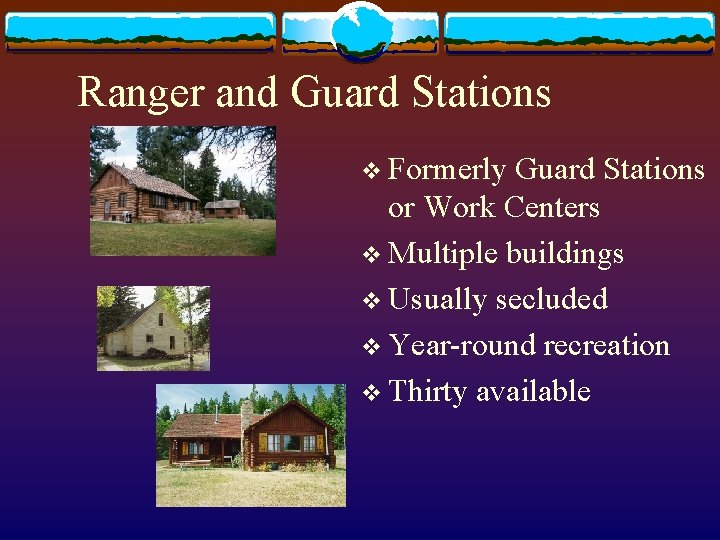
Ranger and Guard Stations v Formerly Guard Stations or Work Centers v Multiple buildings v Usually secluded v Year-round recreation v Thirty available
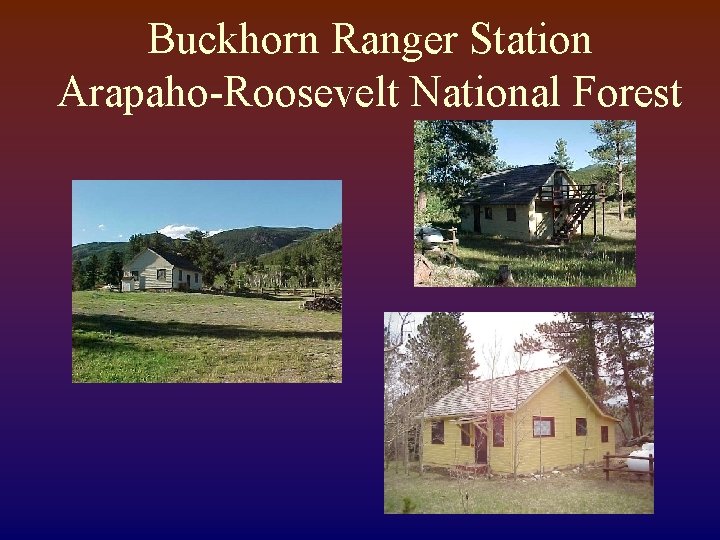
Buckhorn Ranger Station Arapaho-Roosevelt National Forest
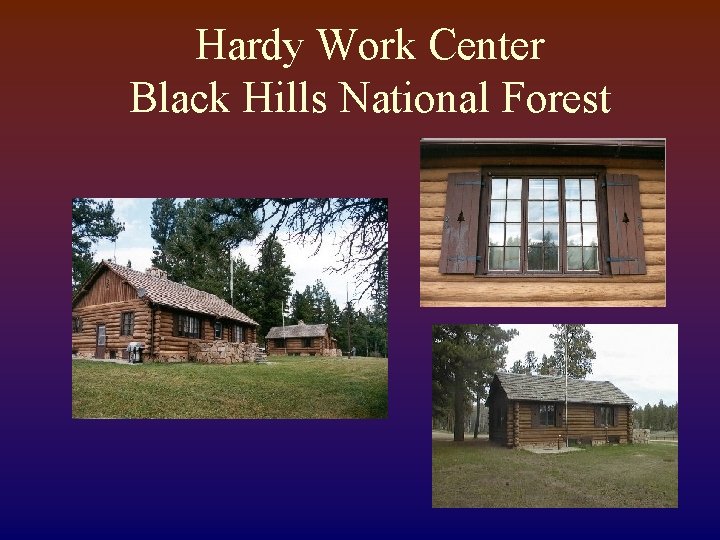
Hardy Work Center Black Hills National Forest
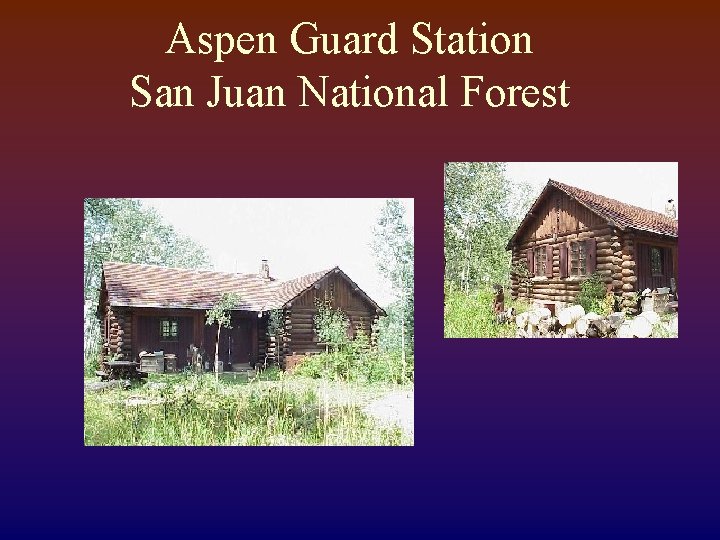
Aspen Guard Station San Juan National Forest
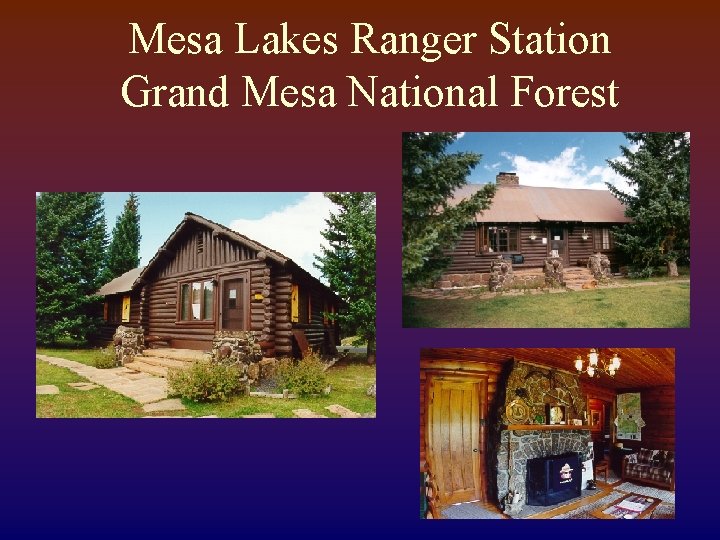
Mesa Lakes Ranger Station Grand Mesa National Forest
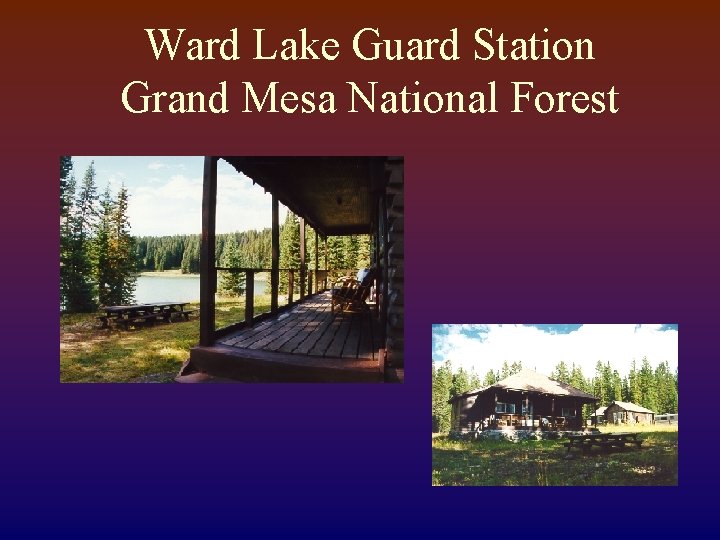
Ward Lake Guard Station Grand Mesa National Forest
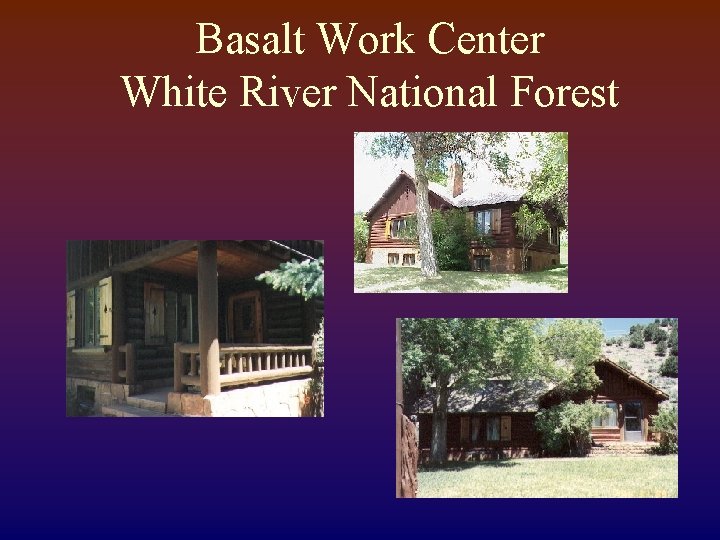
Basalt Work Center White River National Forest
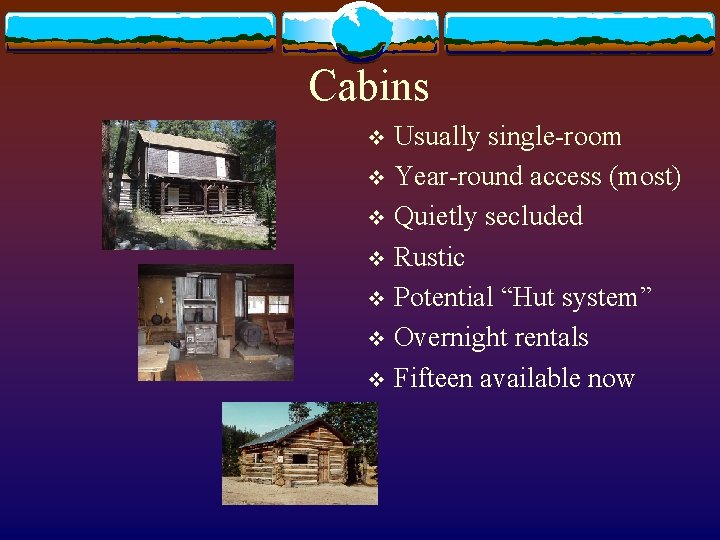
Cabins Usually single-room v Year-round access (most) v Quietly secluded v Rustic v Potential “Hut system” v Overnight rentals v Fifteen available now v
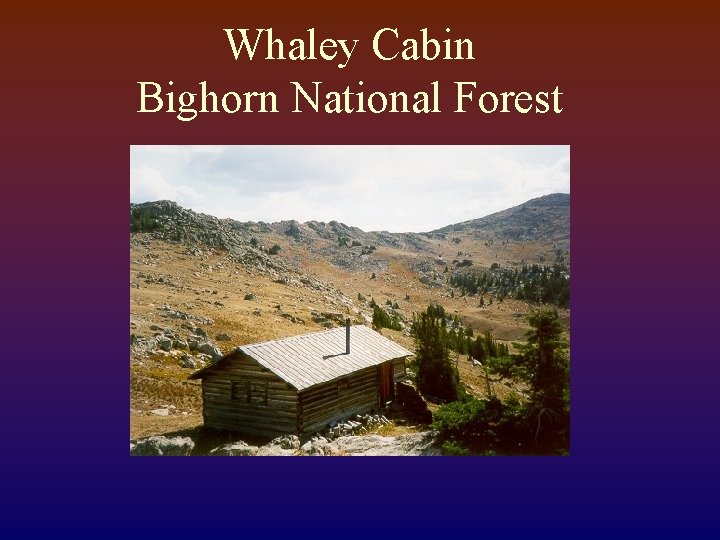
Whaley Cabin Bighorn National Forest
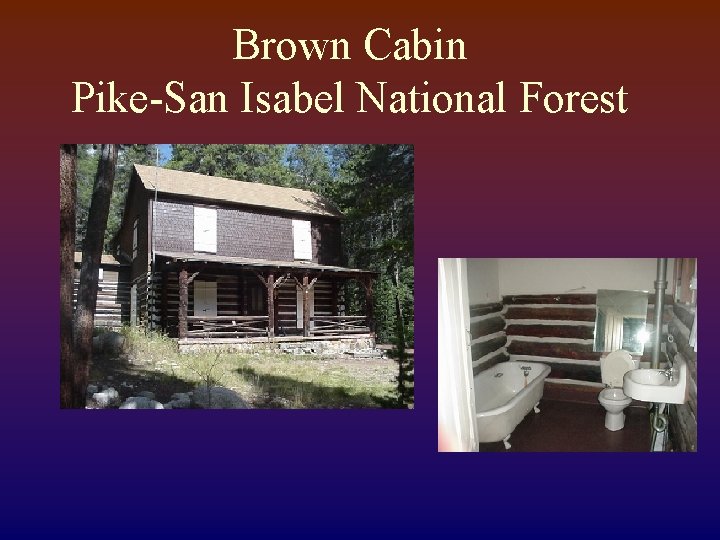
Brown Cabin Pike-San Isabel National Forest
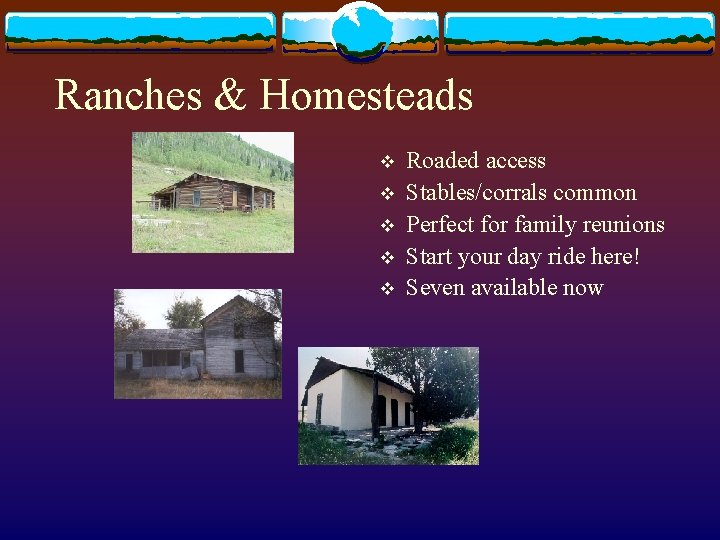
Ranches & Homesteads v v v Roaded access Stables/corrals common Perfect for family reunions Start your day ride here! Seven available now
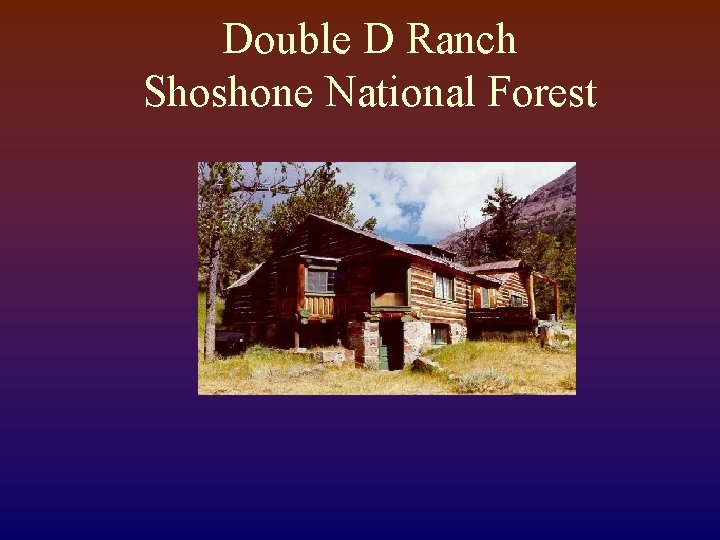
Double D Ranch Shoshone National Forest
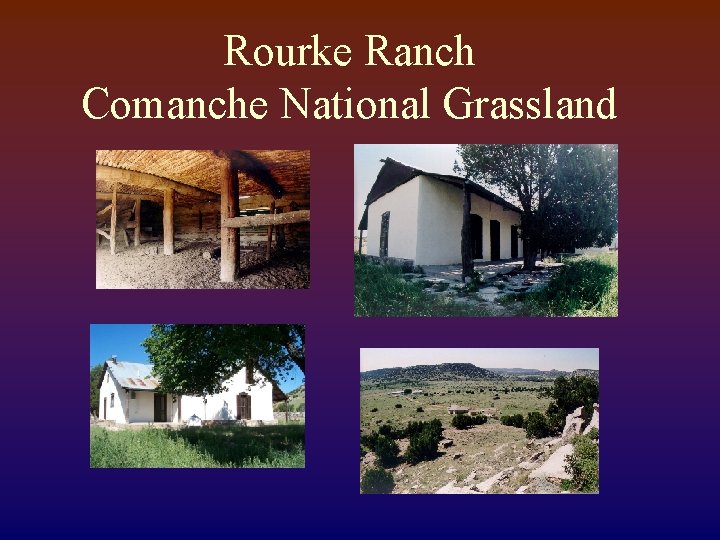
Rourke Ranch Comanche National Grassland
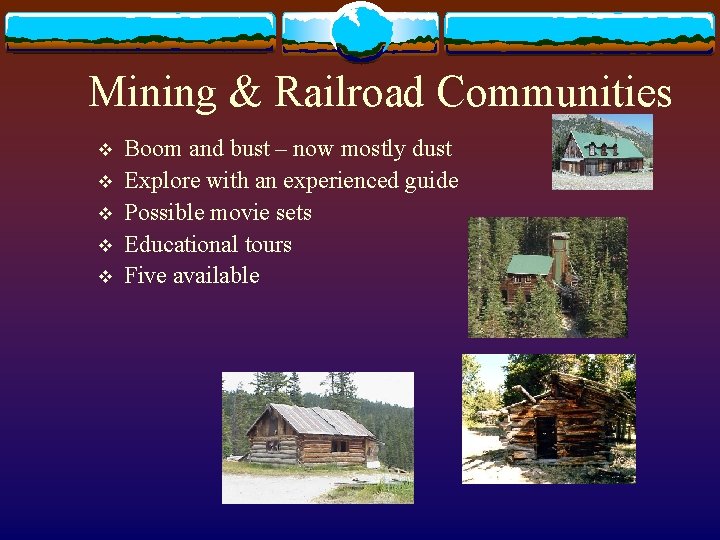
Mining & Railroad Communities v v v Boom and bust – now mostly dust Explore with an experienced guide Possible movie sets Educational tours Five available
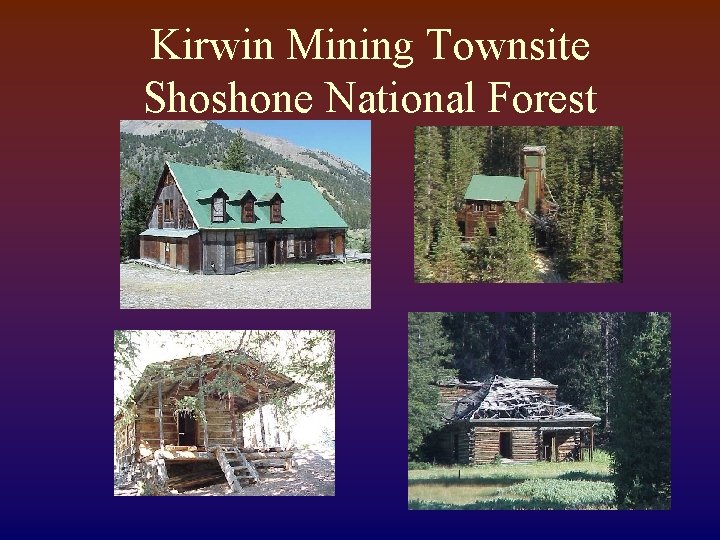
Kirwin Mining Townsite Shoshone National Forest
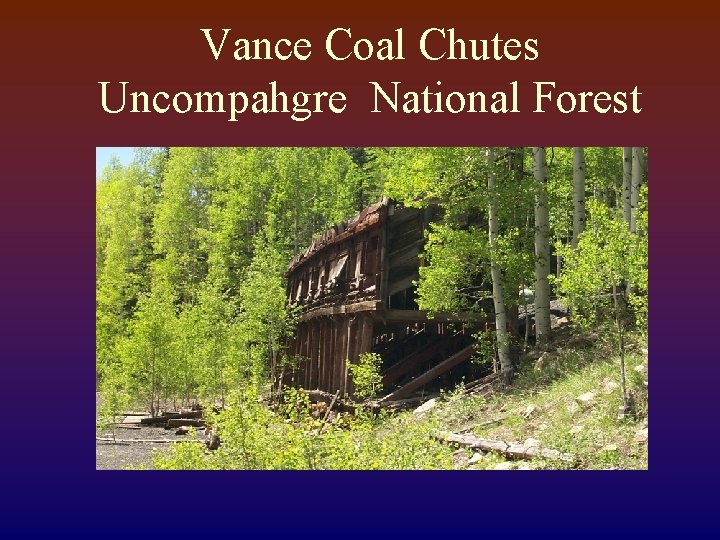
Vance Coal Chutes Uncompahgre National Forest
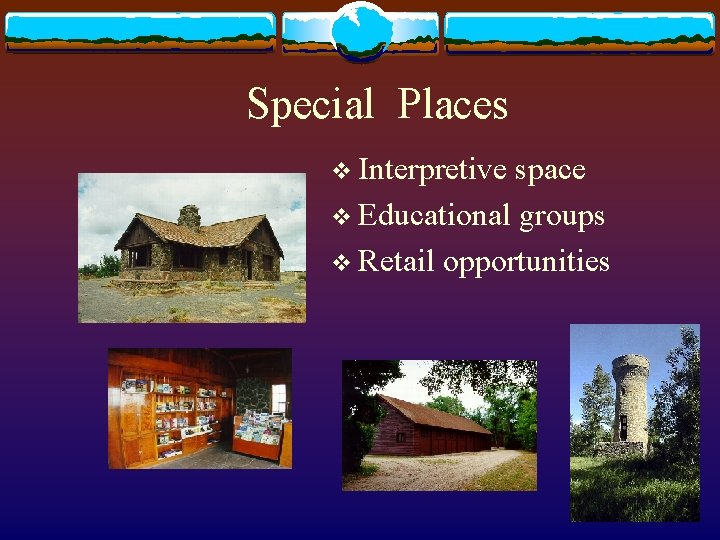
Special Places v Interpretive space v Educational groups v Retail opportunities
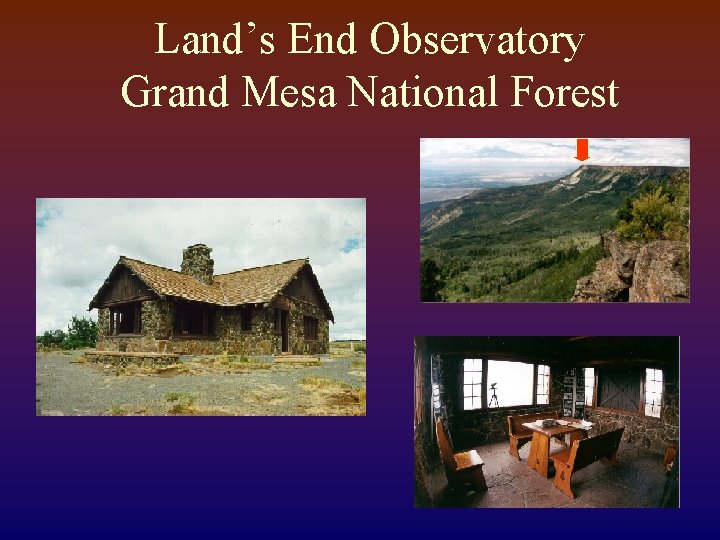
Land’s End Observatory Grand Mesa National Forest
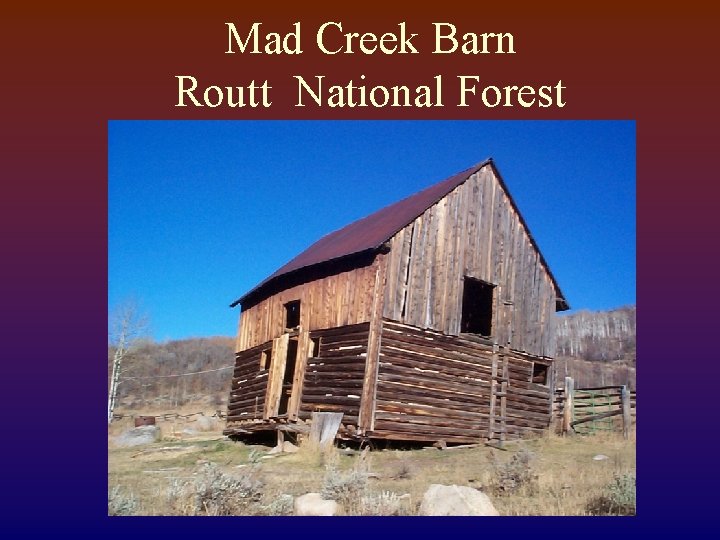
Mad Creek Barn Routt National Forest
For more information: Terri Liestman 303 -275 -5051 tliestman@fs. fed. us Doug Stephens 308 -432 -0333 dstephens 01@fs. fed. us Jerry Wylie 801 -625 -5172 jwylie@fs. fed. us
MARKETING STUDY Current Uses of Historic Bldgs v Visitor Center/Tourist Information v Shop v Restaurant v Historic attraction v Training facility v Government office v Environmental education center v Overnight accommodations
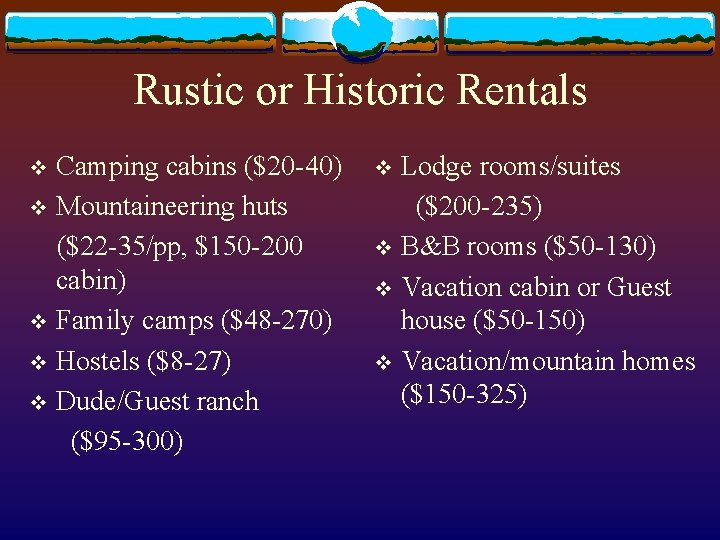
Rustic or Historic Rentals Camping cabins ($20 -40) v Mountaineering huts ($22 -35/pp, $150 -200 cabin) v Family camps ($48 -270) v Hostels ($8 -27) v Dude/Guest ranch ($95 -300) v Lodge rooms/suites ($200 -235) v B&B rooms ($50 -130) v Vacation cabin or Guest house ($50 -150) v Vacation/mountain homes ($150 -325) v
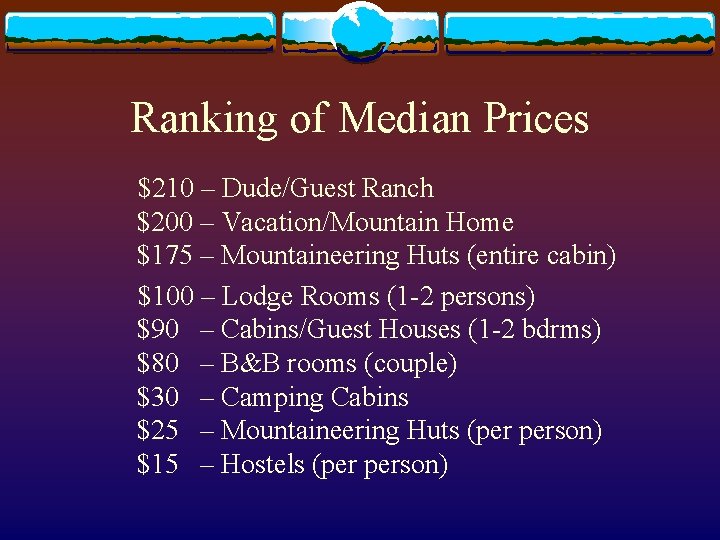
Ranking of Median Prices $210 – Dude/Guest Ranch $200 – Vacation/Mountain Home $175 – Mountaineering Huts (entire cabin) $100 – Lodge Rooms (1 -2 persons) $90 – Cabins/Guest Houses (1 -2 bdrms) $80 – B&B rooms (couple) $30 – Camping Cabins $25 – Mountaineering Huts (per person) $15 – Hostels (per person)
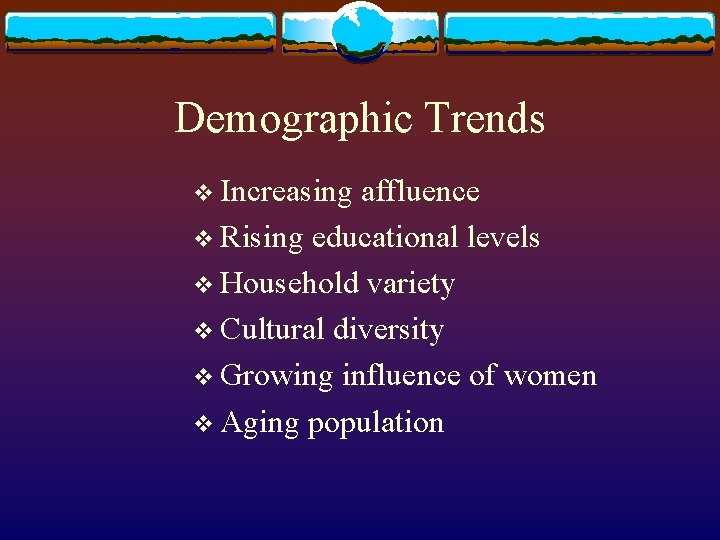
Demographic Trends v Increasing affluence v Rising educational levels v Household variety v Cultural diversity v Growing influence of women v Aging population
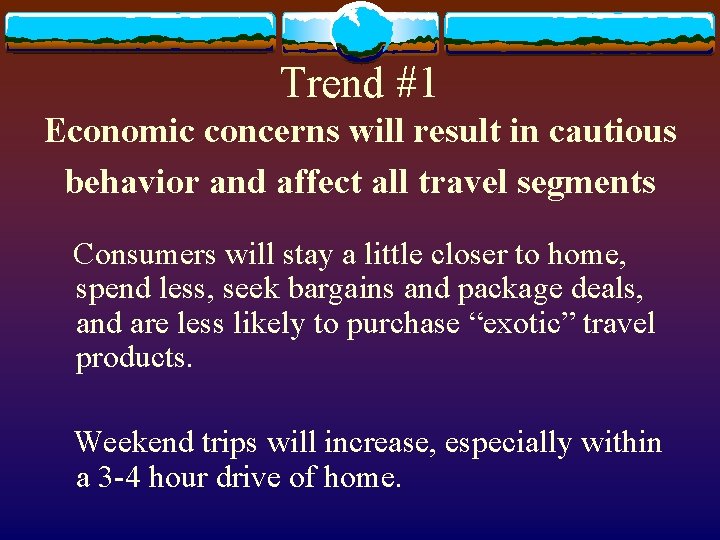
Trend #1 Economic concerns will result in cautious behavior and affect all travel segments Consumers will stay a little closer to home, spend less, seek bargains and package deals, and are less likely to purchase “exotic” travel products. Weekend trips will increase, especially within a 3 -4 hour drive of home.
Trend #2 Internet technology use will increase significantly Fast, accurate, user-friendly planning technology is in demand by the consumer and will be the main travel marketing tools.
Trend #3 Leisure travel will increase Weekend trips provide more than half of all U. S. leisure travel. Most have one long, 5 -9 day trip plus 4 or 5 short “getaways” each year. Family reunions and vacations are important, especially for Generation X (25 -35 yrs).
Trend #4 Business travel will decrease The current economic environment will force businesses to reduce all unnecessary travel. (No known effect on USFS historic properties)
Trend #5 Top attractions in 2001 match USFS sites and settings v Ocean/Beach v Mountains v Historic Sites v Outdoor Recreation Areas v Lakes USFS historic properties match this trend perfectly!
Trend #6 Off-season travel will increase v The 1999 travel pattern was 20% winter, 24% spring, 33% summer, and 24% fall. v Don’t overlook the growing spring and fall market.
Trend #7 Group Travel is Changing v General decline in group travel. v Baby Boomers are unlikely to participate. v Cost is no longer a critical decision factor. v Fun and unique sells. v Look for an increase in group travel by Generation Xers (25 -35 yrs) looking for deals and family experiences.
Trend #8 Expect an Increase in “Mature” Travel v Be prepared for an explosive growth in over-50 Baby Boomers. v Visiting friends and family is important. v Associated activities include shopping, historic sites, cultural events/festivals, gambling, outdoor activities, parks, and beaches.
Trend #9 Growing Focus on 3 Adventure, Heritage and Nature Niches v Adventure and unique experiences increasing among over-50 and women travelers. v Heritage tourism and “authentic” places appeal to travelers interested in connecting to the past and understanding other cultures. v Nature-based tourism continues to grow.
Trend #10 Restoration of Freedom and Spontaneity Hectic lives and increasing frustration and hassle of travel has taken the fun and spontaneity out of travel. v Realize the consumer is buying an experience, not just a ticket or a room. v Consumers will respond to packages and itineraries that “do the thinking for them” and include: v Scenic beauty, unique dining & shopping, excitement, fun, unique activities, quality, convenience, and enjoyment. v
What Do These Trends Suggest for the USFS? With strategic partnerships, we can develop our authentic, rustic properties as key components of tourism packages that provide unique accommodations in beautiful settings, combined with a wide range of outdoor recreation and opportunities to connect with nature and history.
The “USFS Brand” Many suppliers have rustic or historic cabins. Our unique products are authentic Forest Service “Ranger Stations” and Fire Lookouts. No one else has these and no one has better access to agency experts, information and programs that add value to the experience and attract certain types of customers.
- Slides: 55