
Save the Children Lei Tapang READY GLOBAL READINESS
Save the Children / Lei Tapang READY: GLOBAL READINESS FOR MAJOR DISEASE OUTBREAK RESPONSE INTRODUCTION TO EPIDEMICS & PANDEMICS
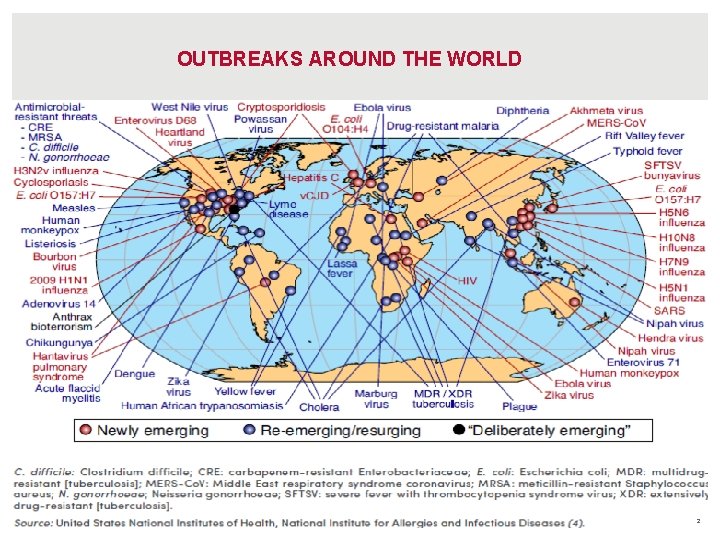
OUTBREAKS AROUND THE WORLD 2
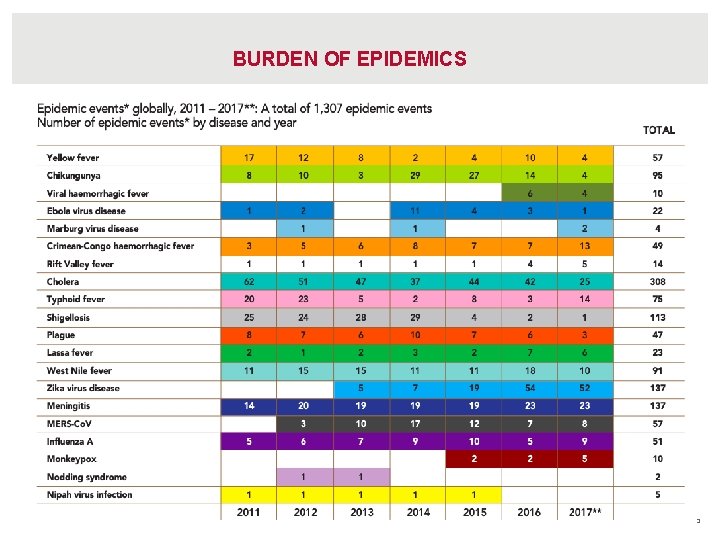
BURDEN OF EPIDEMICS 3
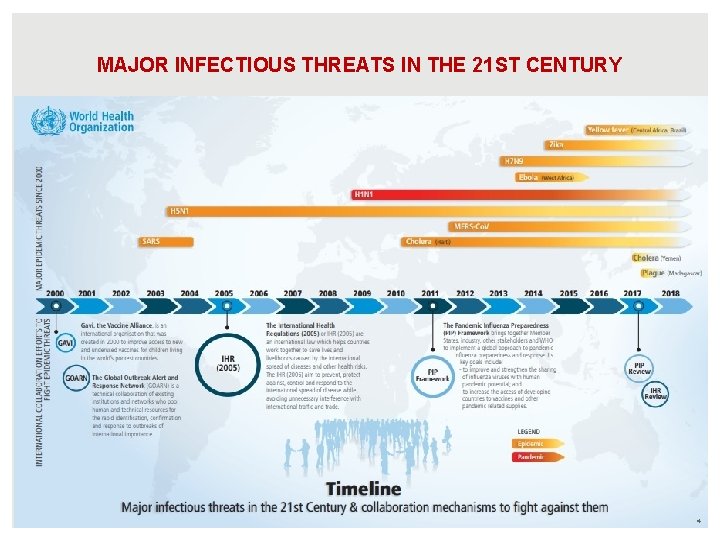
MAJOR INFECTIOUS THREATS IN THE 21 ST CENTURY 4
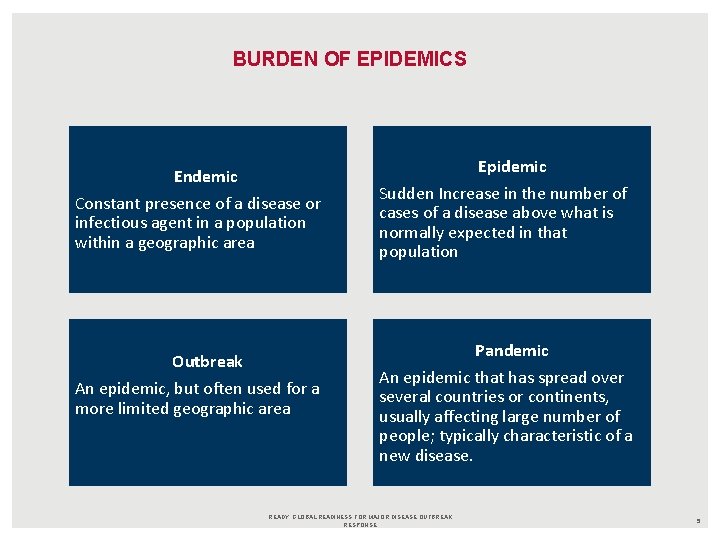
BURDEN OF EPIDEMICS Endemic Constant presence of a disease or infectious agent in a population within a geographic area Outbreak An epidemic, but often used for a more limited geographic area Epidemic Sudden Increase in the number of cases of a disease above what is normally expected in that population Pandemic An epidemic that has spread over several countries or continents, usually affecting large number of people; typically characteristic of a new disease. READY: GLOBAL READINESS FOR MAJOR DISEASE OUTBREAK RESPONSE 5
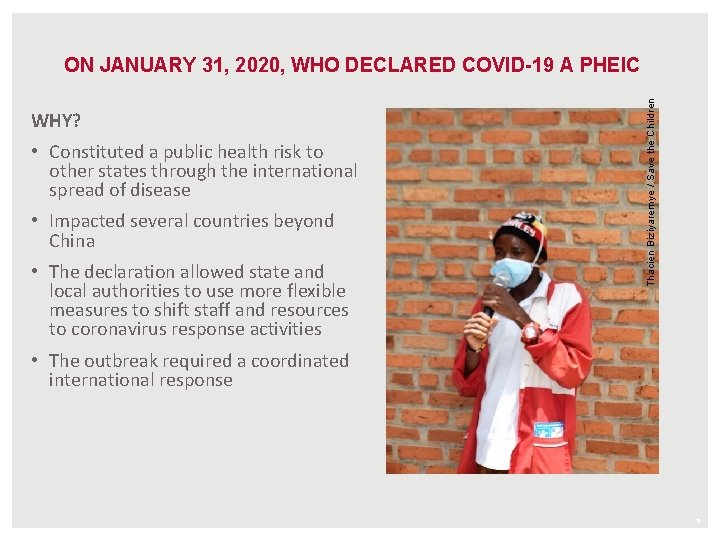
WHY? • Constituted a public health risk to other states through the international spread of disease • Impacted several countries beyond China • The declaration allowed state and local authorities to use more flexible measures to shift staff and resources to coronavirus response activities Thacien Biziyaremye / Save the Children ON JANUARY 31, 2020, WHO DECLARED COVID-19 A PHEIC • The outbreak required a coordinated international response 6
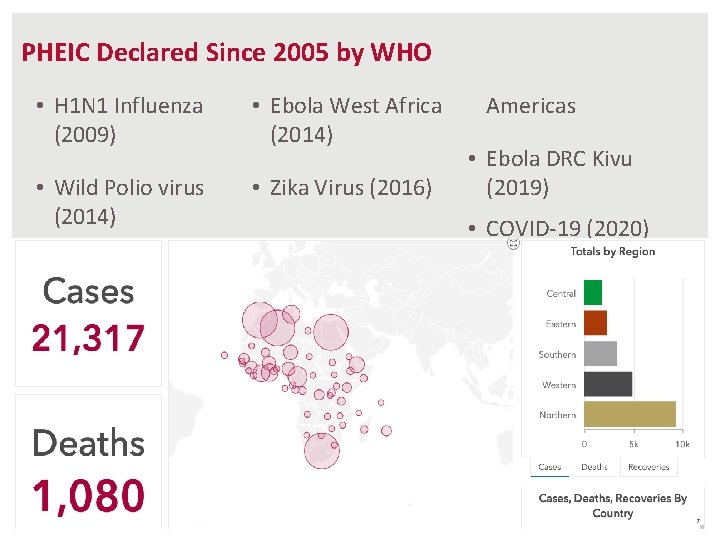
PHEIC Declared Since 2005 by WHO • H 1 N 1 Influenza (2009) • Ebola West Africa (2014) • Wild Polio virus (2014) • Zika Virus (2016) Americas • Ebola DRC Kivu (2019) • COVID-19 (2020) Hugh Kinsella Cunningham / Save the Children READY: GLOBAL READINESS FOR MAJOR DISEASE OUTBREAK RESPONSE 7
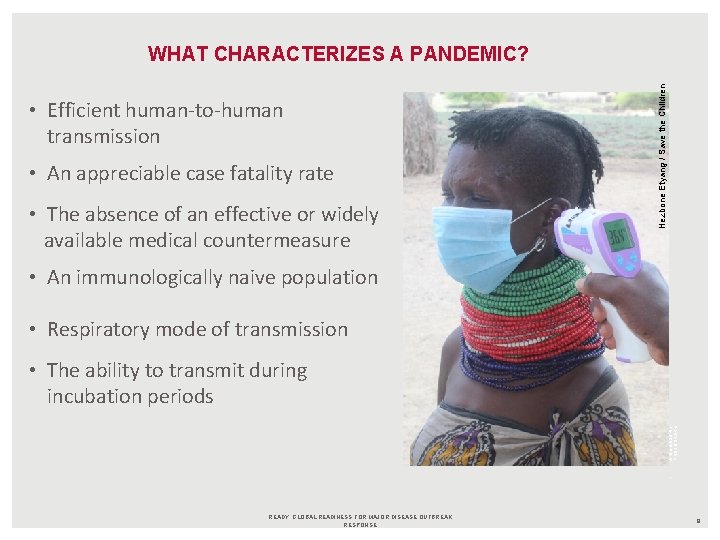
• Efficient human-to-human transmission • An appreciable case fatality rate • The absence of an effective or widely available medical countermeasure Hezbone Etyang / Save the Children WHAT CHARACTERIZES A PANDEMIC? • An immunologically naive population • Respiratory mode of transmission • ARIE BASUKI / PHOTOSHARE • The ability to transmit during incubation periods READY: GLOBAL READINESS FOR MAJOR DISEASE OUTBREAK RESPONSE 8
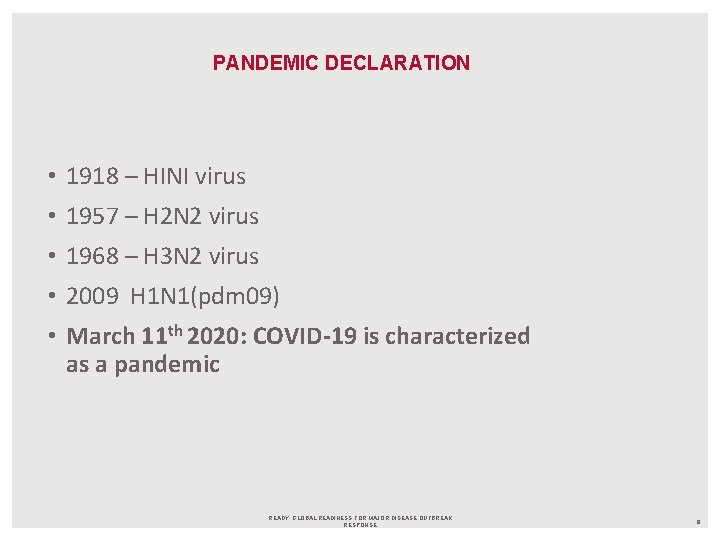
PANDEMIC DECLARATION • 1918 – HINI virus • 1957 – H 2 N 2 virus • 1968 – H 3 N 2 virus • 2009 H 1 N 1(pdm 09) • March 11 th 2020: COVID-19 is characterized as a pandemic READY: GLOBAL READINESS FOR MAJOR DISEASE OUTBREAK RESPONSE 9
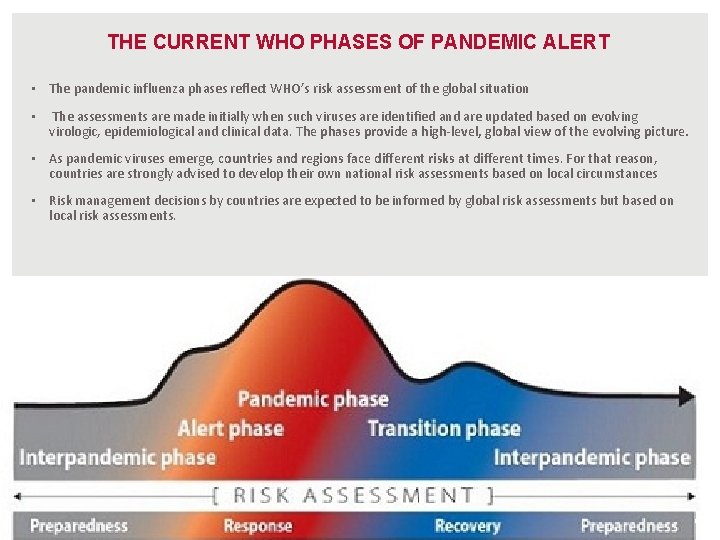
THE CURRENT WHO PHASES OF PANDEMIC ALERT • The pandemic influenza phases reflect WHO’s risk assessment of the global situation • The assessments are made initially when such viruses are identified and are updated based on evolving virologic, epidemiological and clinical data. The phases provide a high-level, global view of the evolving picture. • As pandemic viruses emerge, countries and regions face different risks at different times. For that reason, countries are strongly advised to develop their own national risk assessments based on local circumstances • Risk management decisions by countries are expected to be informed by global risk assessments but based on local risk assessments. 10
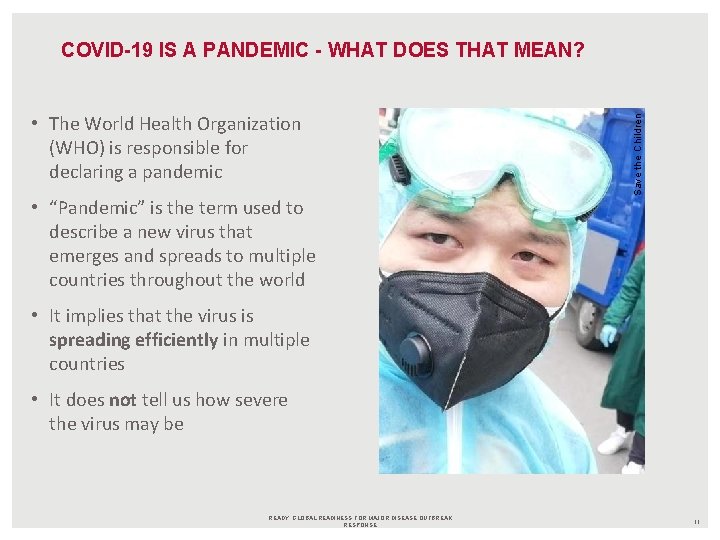
• The World Health Organization (WHO) is responsible for declaring a pandemic • “Pandemic” is the term used to describe a new virus that emerges and spreads to multiple countries throughout the world Save the Children COVID-19 IS A PANDEMIC - WHAT DOES THAT MEAN? • It implies that the virus is spreading efficiently in multiple countries • It does not tell us how severe the virus may be READY: GLOBAL READINESS FOR MAJOR DISEASE OUTBREAK RESPONSE 11
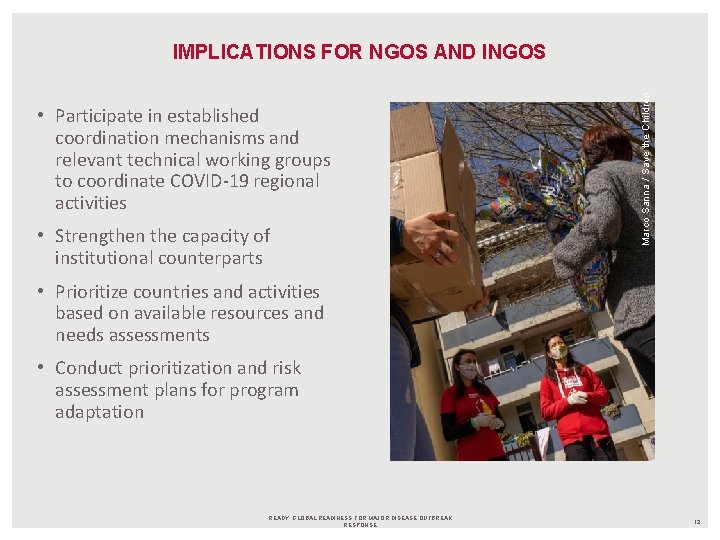
• Participate in established coordination mechanisms and relevant technical working groups to coordinate COVID-19 regional activities • Strengthen the capacity of institutional counterparts Marco Sanna / Save the Children IMPLICATIONS FOR NGOS AND INGOS • Prioritize countries and activities based on available resources and needs assessments • Conduct prioritization and risk assessment plans for program adaptation READY: GLOBAL READINESS FOR MAJOR DISEASE OUTBREAK RESPONSE 12

FUNDING MECHANISMS FOR COVID-19 • Pandemic Emergency Financing (PEF): Designed to “save millions of lives and entire economies” by speedily funneling money to nations facing pandemics. It has not been activated yet for COVID-19 because of the complex criteria including outbreak size, growth rate, deadlines and death tolls. • Over the Easter weekend, DFID announced it would be contributing £ 200 million to fight COVID-19 in low-income countries, with £ 130 million going toward United Nations agencies, £ 50 million to the International Red Cross and Red Crescent Movement, and just £ 20 million for other NGOs have voiced that DFID should multiply the amount by four or five times. £ 20 million would not be enough to reach the most vulnerable communities given the global scale of the response. • A new multi-partner trust fund (MPTF) has been set up by the UN Secretariat to support low- and middle- income countries in overcoming the health and development crisis caused by the COVID-19 pandemic. The first round of funding has just been launched for some USD 40 M. READY: GLOBAL READINESS FOR MAJOR DISEASE OUTBREAK RESPONSE 13
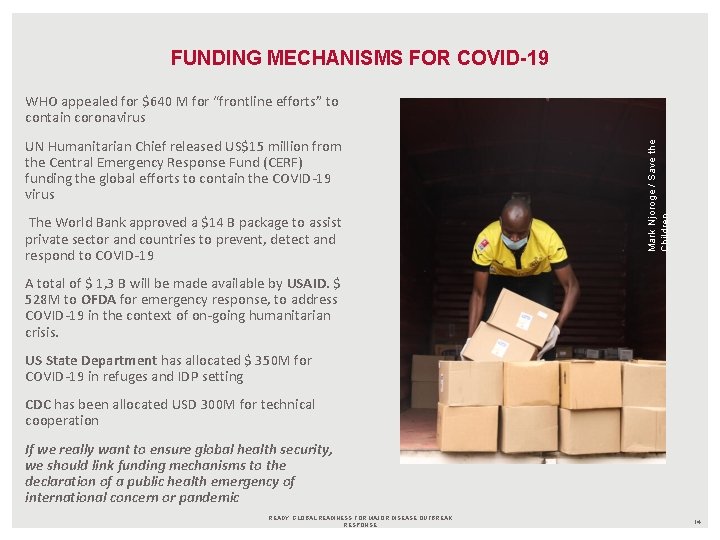
FUNDING MECHANISMS FOR COVID-19 UN Humanitarian Chief released US$15 million from the Central Emergency Response Fund (CERF) funding the global efforts to contain the COVID-19 virus The World Bank approved a $14 B package to assist private sector and countries to prevent, detect and respond to COVID-19 Mark Njoroge / Save the Children WHO appealed for $640 M for “frontline efforts” to contain coronavirus A total of $ 1, 3 B will be made available by USAID. $ 528 M to OFDA for emergency response, to address COVID-19 in the context of on-going humanitarian crisis. US State Department has allocated $ 350 M for COVID-19 in refuges and IDP setting CDC has been allocated USD 300 M for technical cooperation If we really want to ensure global health security, we should link funding mechanisms to the declaration of a public health emergency of international concern or pandemic READY: GLOBAL READINESS FOR MAJOR DISEASE OUTBREAK RESPONSE 14
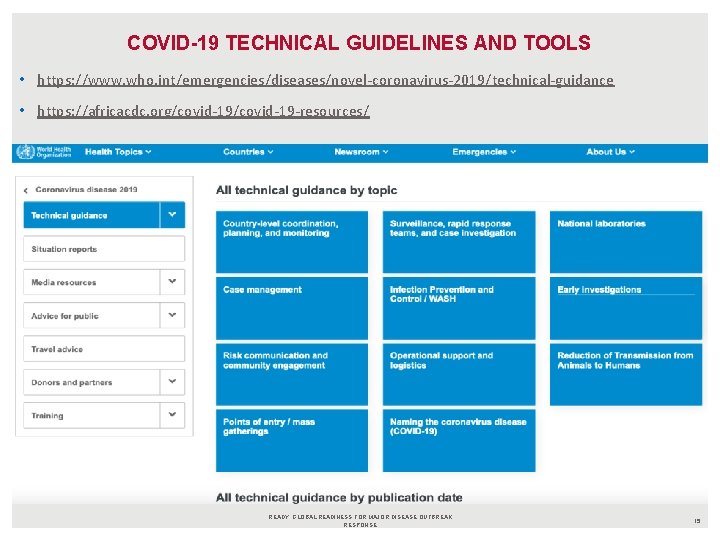
COVID-19 TECHNICAL GUIDELINES AND TOOLS • https: //www. who. int/emergencies/diseases/novel-coronavirus-2019/technical-guidance • https: //africacdc. org/covid-19 -resources/ READY: GLOBAL READINESS FOR MAJOR DISEASE OUTBREAK RESPONSE 15
WHO COURSES AND TRAINING https: //openwho. org/courses/introduction-to-ncov • Emerging respiratory viruses, including COVID-19: Introduction: This brief introduction provides an overview of emerging respiratory viruses, including COVID-19. • Module A: Introduction to Emerging respiratory viruses, including COVID 19: Overall learning objective: To be able to explain why a emerging respiratory viruses, including COVID-19, are a global threat to human health • Module B: Detecting Emerging respiratory viruses, including COVID-19: Surveillance and Laboratory investigation: Overall learning objective: To describe how to detect and assess an emerging respiratory virus outbreak • Module C: Risk Communication and Community Engagement: Overall learning objective: To describe what strategies should be used to communicate risk and engage communities to detect, prevent and respond to COVID-19 • Module D: Preventing and Responding to an emerging respiratory virus, including COVID-19: Overall learning objective: To describe strategies for preventing and controlling emerging respiratory pathogens, including coronavirus outbreaks. READY: GLOBAL READINESS FOR MAJOR DISEASE OUTBREAK RESPONSE 16
QUESTIONS • What has been the immediate impact of the PHEIC and pandemic declarations in your region? • What are the immediate impacts on your current operations, if different from above? • How have you been developing your program adaption plan? READY: GLOBAL READINESS FOR MAJOR DISEASE OUTBREAK RESPONSE 17
- Slides: 17