
Save a Life with Rectal Diazepam Diastat Rachel

- Slides: 25
Save a Life with Rectal Diazepam – Diastat® Rachel Gallagher, RN, CPNP, NCSN DPI School Nurse Consultant (608) 266 -8857 Rachel. gallagher@dpi. wi. gov
Audio difficulties…… Make sure the volume is turned up (volume button beneath the speaker’s picture) Make sure the volume on the computer is turned up (volume icon located on the right hand side of your computer taskbar) Contact your IT department If audio and visual is lost during the program, go back to: http: //media 2. wi. gov/dpi/catalog/, and click on the Student Services Prevention and Wellness Team link on the left, then when the SSPW Team page of archived programs appears, select the program link desired. If problem persists contact Rachel Gallagher (608) 266 -8857.
Training Knowledge training - webcast Competency checklists are available at: http: //dpi. wi. gov/sspw/schlnurse. html
Outline What is a seizure, status epilepticus, and acute repetitive seizures? What is the prevalence of epilepsy? What are the goals of seizure management?
Outline What are the school responsibilities for management of student with epilepsy? What are the steps in the administration of rectal diazepam - Diastat®? What are the side effects of rectal diazepem - Diastat®?
What is a seizure? An abnormality resulting in a sudden episode of uncontrolled electrical activity in the brain. If the abnormal activity remains confined to one area, the person may experience tingling or twitching of only a small area of the body, such as the face or an extremity. If the electrical activity spreads throughout the brain, consciousness is lost and a tonic clonic or generalized seizure results. Recurrent seizures are called epilepsy. Causes of seizures may be many, including: neurological or medical problems including head injury, infection, stroke, brain tumor, metabolic or alcohol.
What is status epilepticus and acute repetitive seizures? Status Epilepticus Continuous seizure activity Seizure activity lasting >5 minutes (Lowenstein, 1999; De. Lorenzo, 1999) Delays in treatment (5 -10 minutes) dictates outcome of SE emergencies. Acute Repetitive Seizures Intermittent seizure activity lasting 30 minutes or more with a return to consciousness (Bleck, 2002).
What is the prevalence of epilepsy? 1. 5 million Americans – active epilepsy 325, 000 children (up to age 14) have active epilepsy (EPA, 2006) 300, 000 per year – newly recognized seizure
More data 90% of seizures last less than 2 minutes The longer the seizure, increases the likelihood of long term complications and mortality 126, 000 to 195, 000 estimated cases per year of status epilepticus; 42, 000 death each year in U. S.
What are the goals of seizure management? The time of seizure onset to initial treatment is critical in attaining seizure control and timely administration of effective seizure treatment is essential to preventing neuronal damage and permanent cerebral injury (Bleck, 1999). Prompt treatment of prolonged seizures prevents status epilepticus and decreases mortality or death (Pellock, 2004).
What are the school responsibilities for management of student with epilepsy? Identification of students with epilepsy. Develop school policy and procedure for epilepsy management. Emergency and Individual Health Care Plan Training of staff on first aid, medications, and emergency action plan. Minimize impact to the student’s education. Obtain medical provider and parent authorization. Verification of dosage.
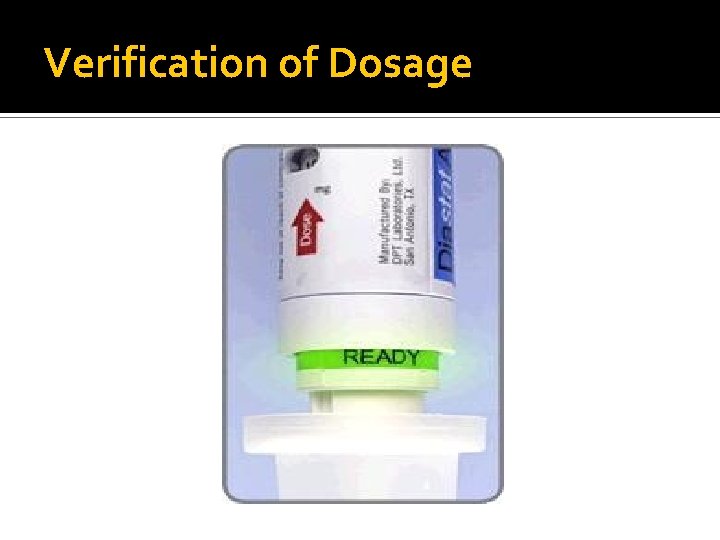
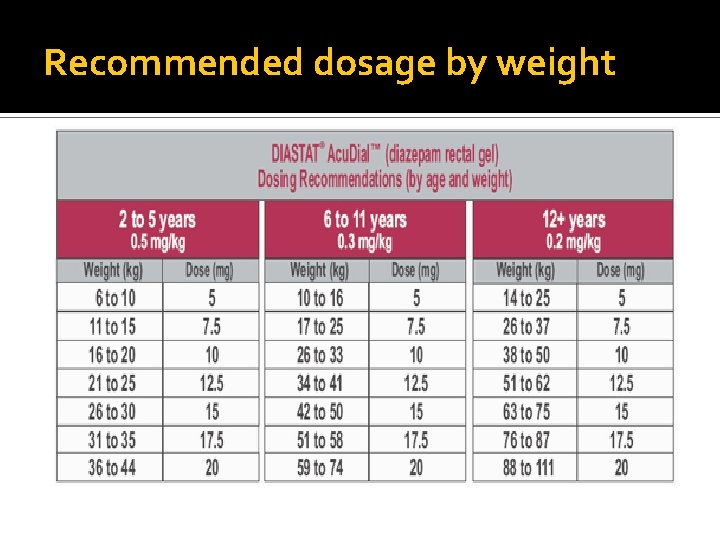
Verification of Dosage
Recommended dosage by weight
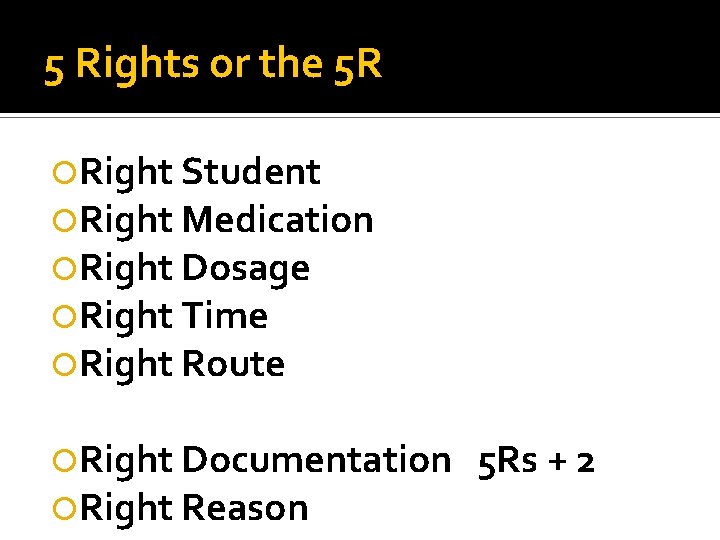
5 Rights or the 5 R Right Student Right Medication Right Dosage Right Time Right Route Right Documentation Right Reason 5 Rs + 2
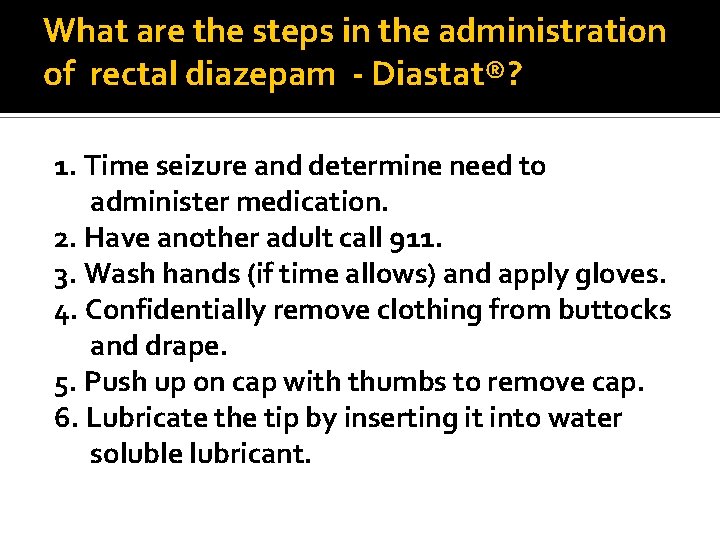
What are the steps in the administration of rectal diazepam - Diastat®? 1. Time seizure and determine need to administer medication. 2. Have another adult call 911. 3. Wash hands (if time allows) and apply gloves. 4. Confidentially remove clothing from buttocks and drape. 5. Push up on cap with thumbs to remove cap. 6. Lubricate the tip by inserting it into water soluble lubricant.
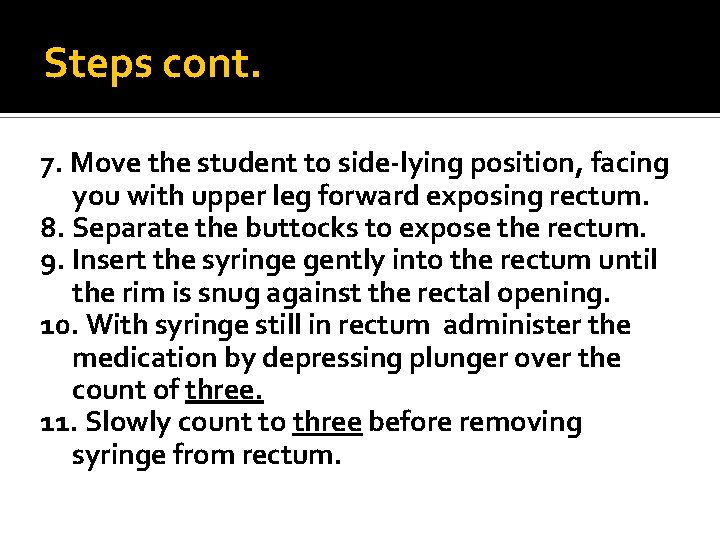
Steps cont. 7. Move the student to side-lying position, facing you with upper leg forward exposing rectum. 8. Separate the buttocks to expose the rectum. 9. Insert the syringe gently into the rectum until the rim is snug against the rectal opening. 10. With syringe still in rectum administer the medication by depressing plunger over the count of three. 11. Slowly count to three before removing syringe from rectum.
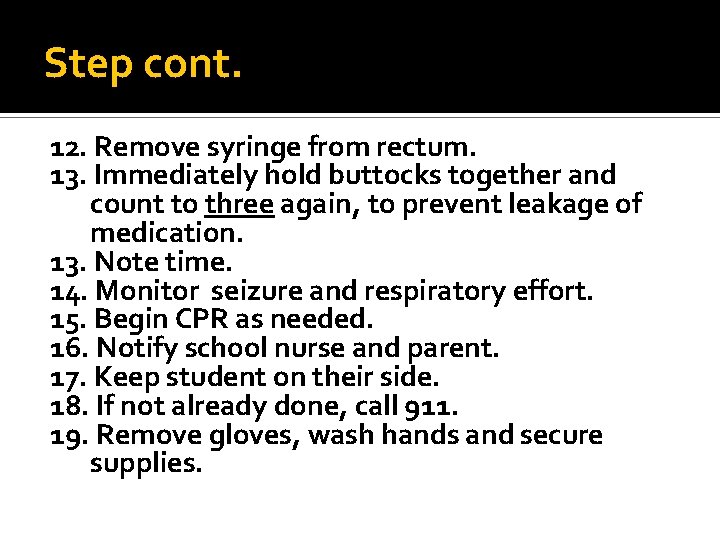
Step cont. 12. Remove syringe from rectum. 13. Immediately hold buttocks together and count to three again, to prevent leakage of medication. 13. Note time. 14. Monitor seizure and respiratory effort. 15. Begin CPR as needed. 16. Notify school nurse and parent. 17. Keep student on their side. 18. If not already done, call 911. 19. Remove gloves, wash hands and secure supplies.
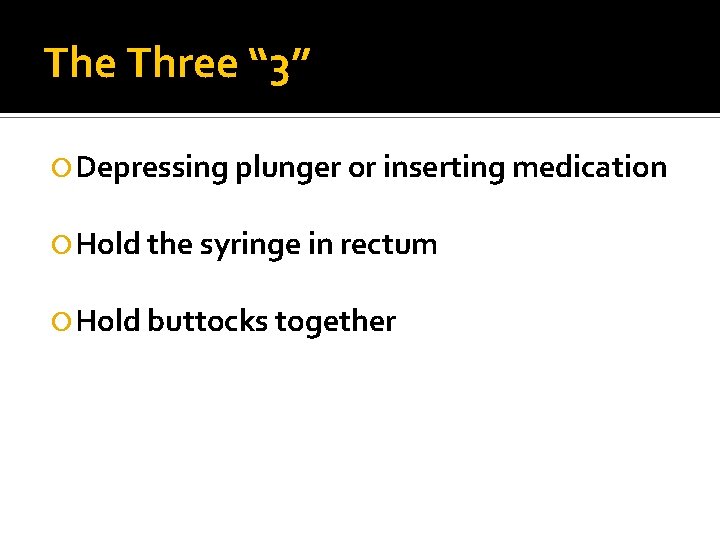
The Three “ 3” Depressing plunger or inserting medication Hold the syringe in rectum Hold buttocks together
Demonstration “The threes”
Emergency Medical Services or 911 School District Decision – Local Control School Districts Are Responsible for Emergency Nursing Services Medical Provider and Parent Directives
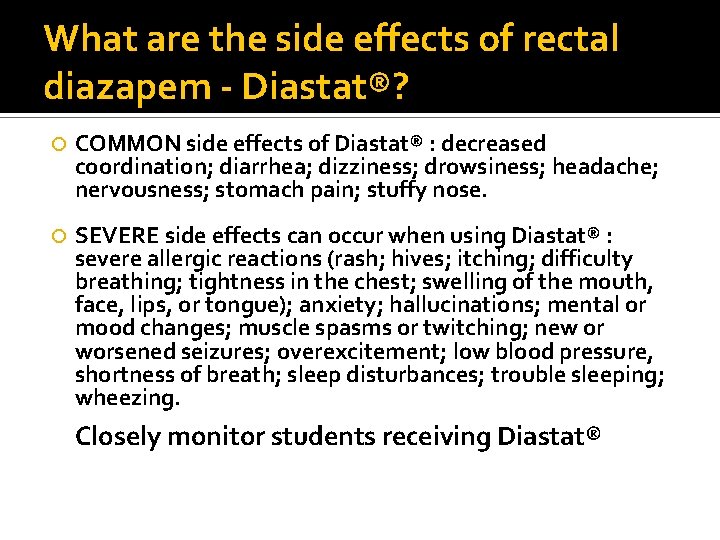
What are the side effects of rectal diazapem - Diastat®? COMMON side effects of Diastat® : decreased coordination; diarrhea; dizziness; drowsiness; headache; nervousness; stomach pain; stuffy nose. SEVERE side effects can occur when using Diastat® : severe allergic reactions (rash; hives; itching; difficulty breathing; tightness in the chest; swelling of the mouth, face, lips, or tongue); anxiety; hallucinations; mental or mood changes; muscle spasms or twitching; new or worsened seizures; overexcitement; low blood pressure, shortness of breath; sleep disturbances; trouble sleeping; wheezing. Closely monitor students receiving Diastat®
Documentation Follow your school district’s procedures for documentation.
Questions!!! School Nurse Medical Provider Parent
Contact Any comments regarding this webcast? Any suggestions on future school nursing topics? Contact: Rachel Gallagher (608) 266 -8857 E-mail: rachel. gallagher@dpi. wi. gov
Take Test. Upon Completion, take test to nurse or administrator for scoring.