
Satire A literary device in which people customs
- Slides: 13
Satire • A literary device in which people, customs, or institutions are ridiculed for the purpose of improving society
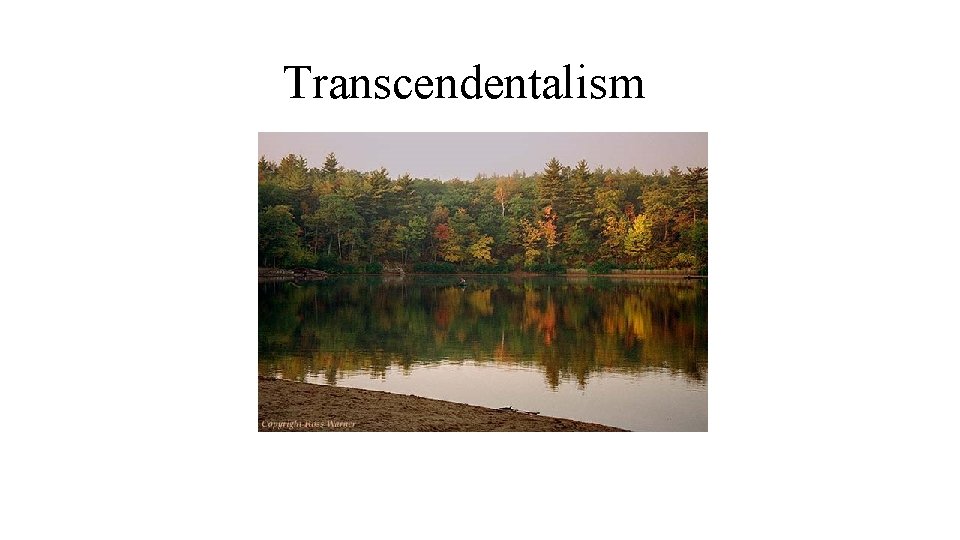
Transcendentalism
What does “transcendentalism” mean? • There is an ideal spiritual state which “transcends” the physical and empirical. • A loose collection of eclectic ideas about literature, philosophy, religion, social reform, and the general state of American culture. • Transcendentalism had different meanings for each person involved in the movement.
Where did it come from? • It began as a reform movement in the Unitarian church. • It is not a religion—more accurately, it is a philosophy or form of spirituality. • It centered around Boston and Concord, MA. in the mid-1800’s. • Emerson first expressed his philosophy of transcendentalism in his essay Nature.
What did Transcendentalists believe? The intuitive faculty, instead of the rational or sensual, became the means for a conscious union of the individual psyche (known in Sanskrit as Atman) with the world psyche also known as the Oversoul, life-force, prime mover and God (known in Sanskrit as Brahma). In Other Words:
In Other Words: • Intuition – NOT rationalizing – is how you connect to the world/God/Creator/Nature.
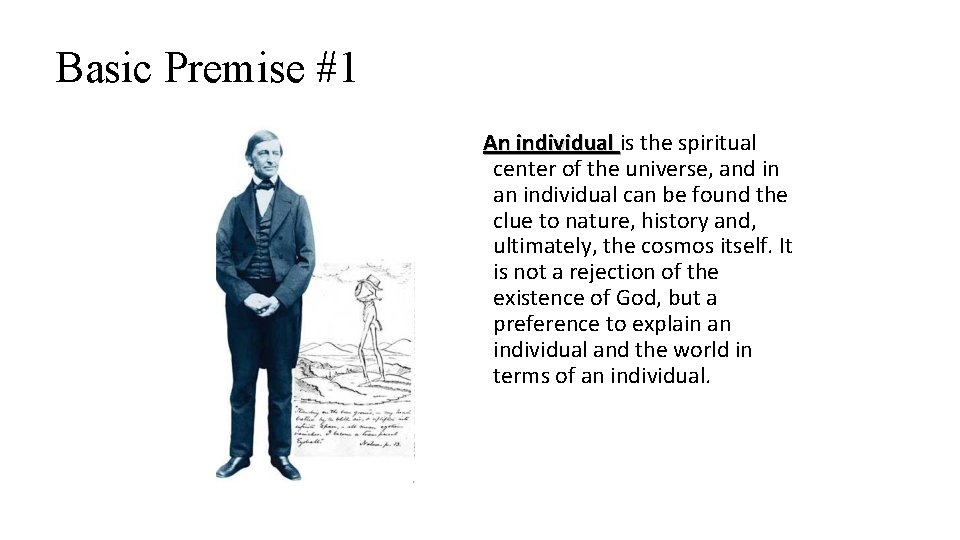
Basic Premise #1 An individual is the spiritual center of the universe, and in an individual can be found the clue to nature, history and, ultimately, the cosmos itself. It is not a rejection of the existence of God, but a preference to explain an individual and the world in terms of an individual.
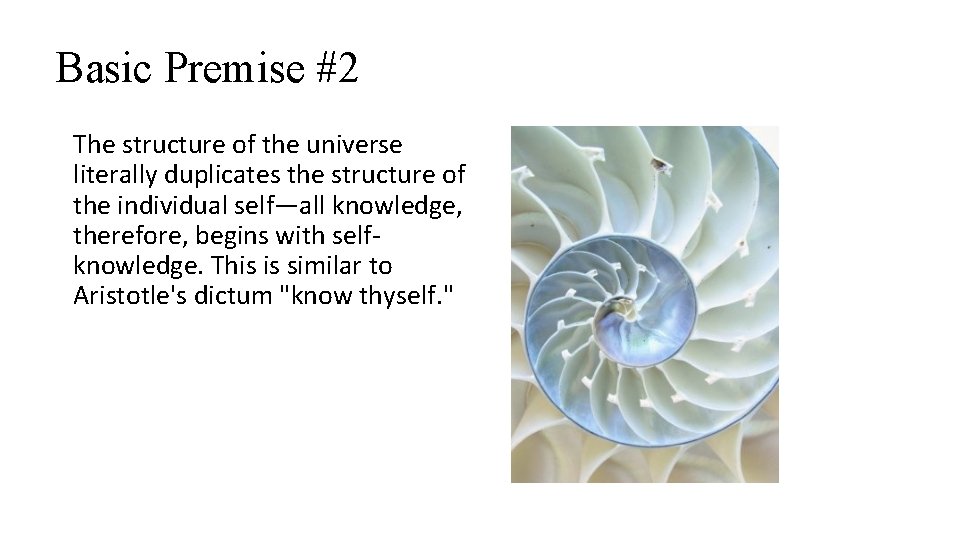
Basic Premise #2 The structure of the universe literally duplicates the structure of the individual self—all knowledge, therefore, begins with selfknowledge. This is similar to Aristotle's dictum "know thyself. "
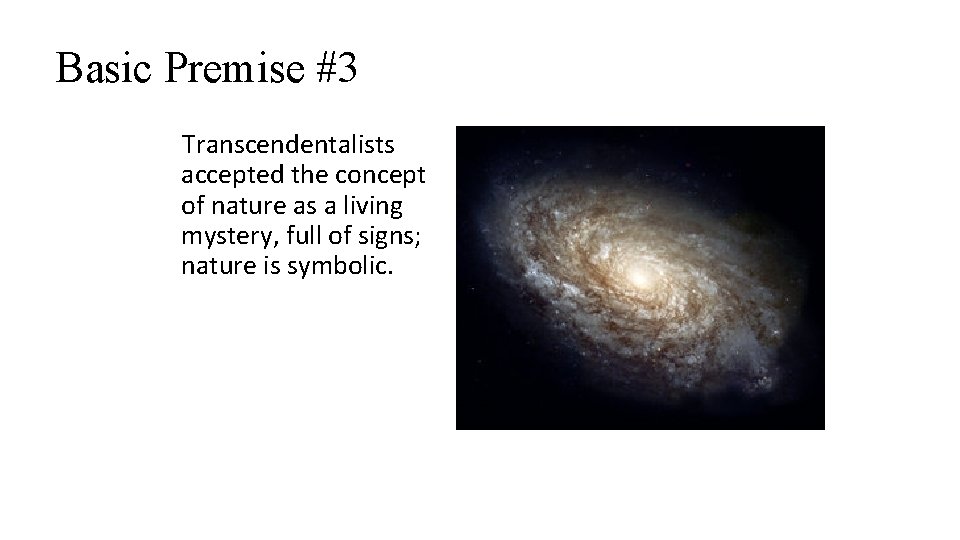
Basic Premise #3 Transcendentalists accepted the concept of nature as a living mystery, full of signs; nature is symbolic.
Basic Premise #4 The belief that individual virtue and happiness depend upon selfrealization—this depends upon the reconciliation of two universal psychological tendencies: 1. The desire to embrace the whole world—to know and become one with the world. 2. The desire to withdraw, remain unique and separate—an egotistical existence. In Other Words:
• True happiness comes from finding a balance between two opposing contradictory statements: • People have a desire to fit in • People have a desire to be unique
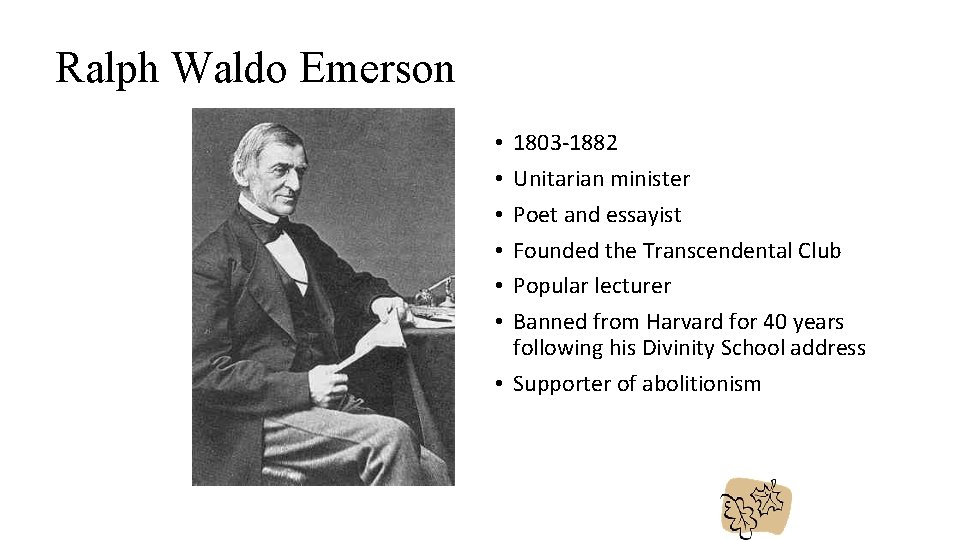
Ralph Waldo Emerson 1803 -1882 Unitarian minister Poet and essayist Founded the Transcendental Club Popular lecturer Banned from Harvard for 40 years following his Divinity School address • Supporter of abolitionism • • •
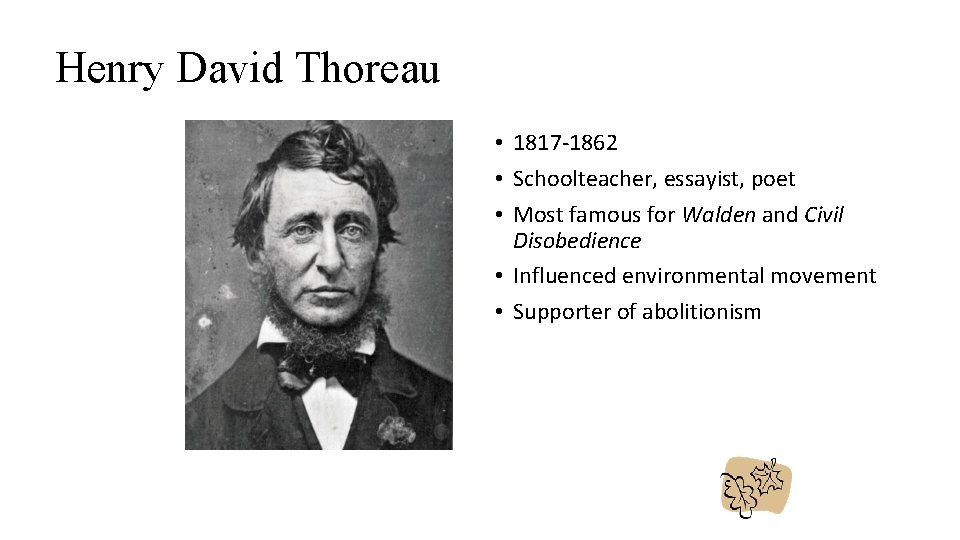
Henry David Thoreau • 1817 -1862 • Schoolteacher, essayist, poet • Most famous for Walden and Civil Disobedience • Influenced environmental movement • Supporter of abolitionism