
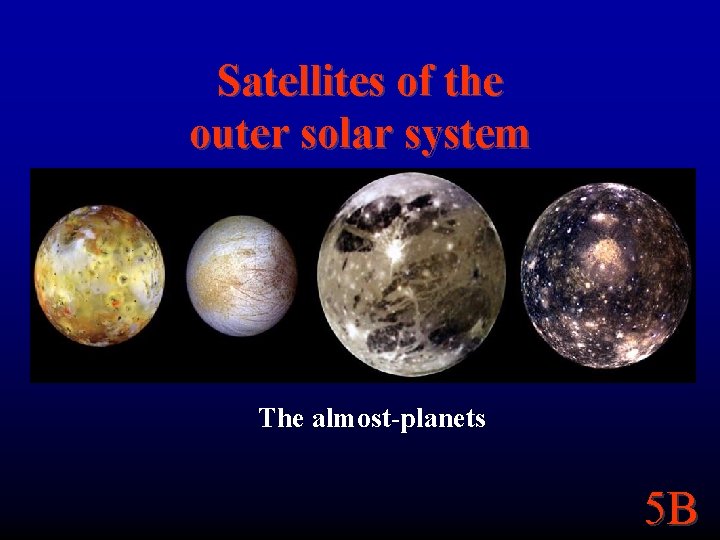
Satellites of the outer solar system The almostplanets
- Slides: 31
Satellites of the outer solar system The almost-planets 5 B
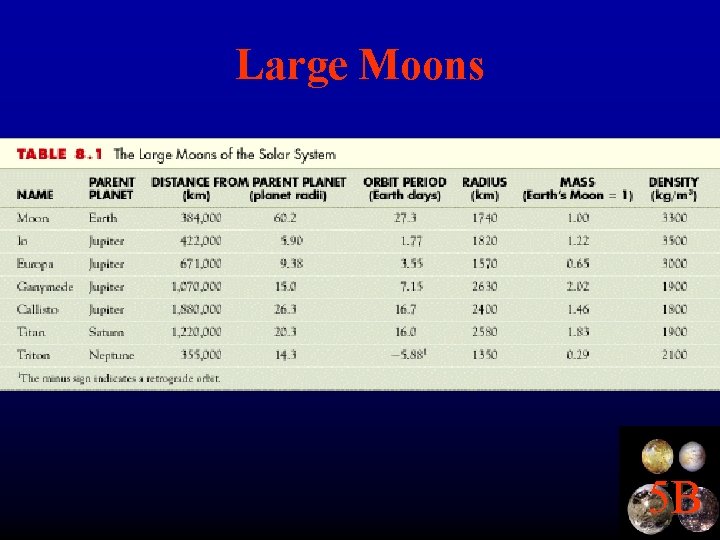
Large Moons 5 B
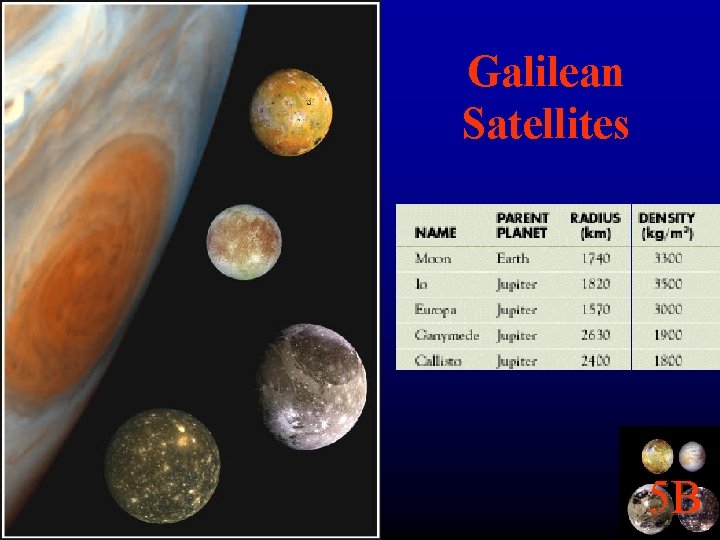
Galilean Satellites 5 B
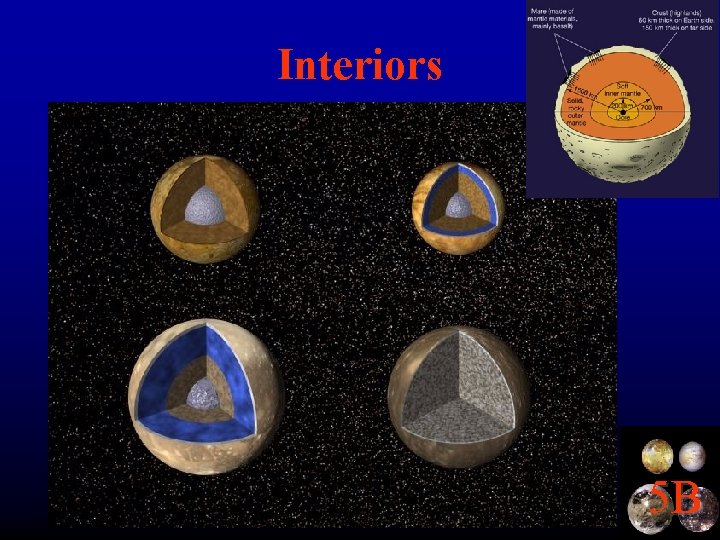
Interiors 5 B
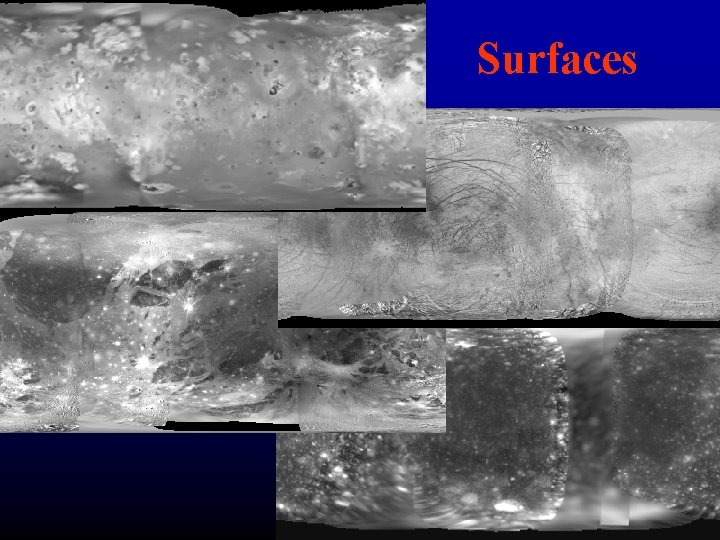
Surfaces 5 B
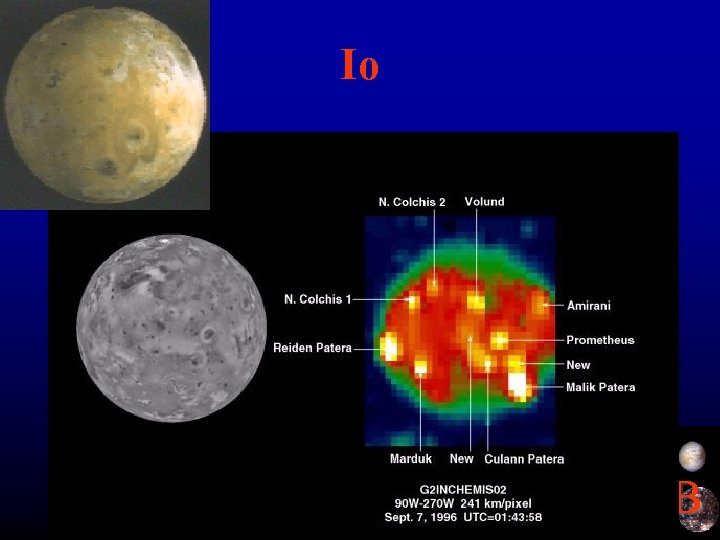
Io 5 B
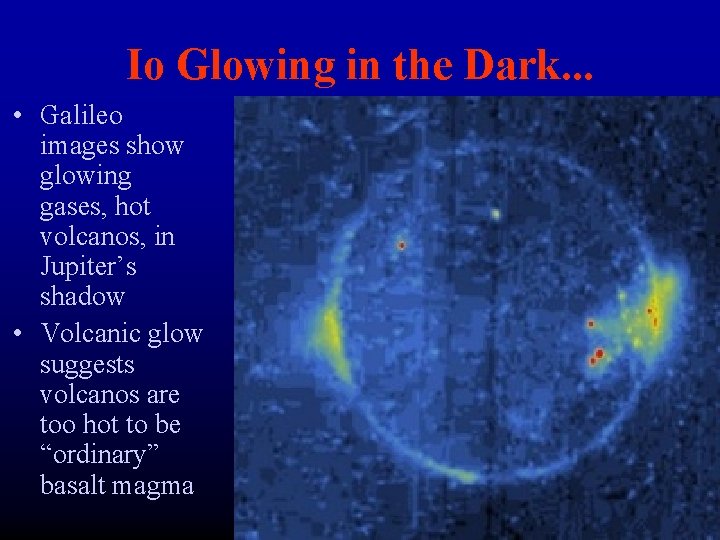
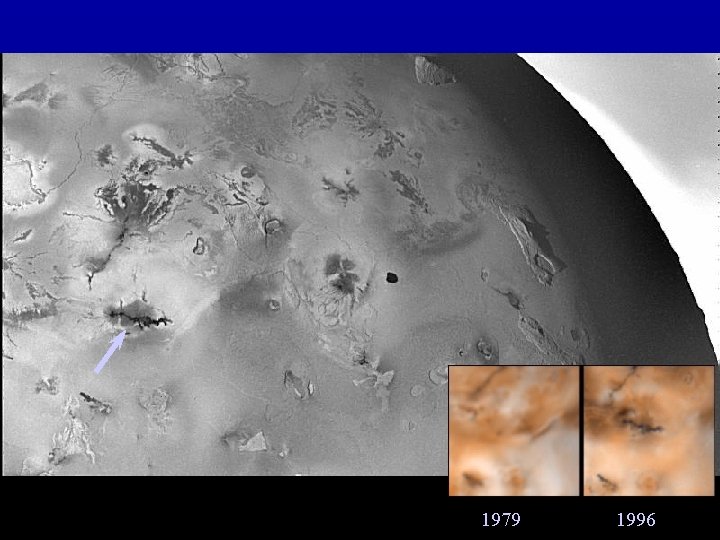
Io Glowing in the Dark. . . • Galileo images show glowing gases, hot volcanos, in Jupiter’s shadow • Volcanic glow suggests volcanos are too hot to be “ordinary” basalt magma 5 B
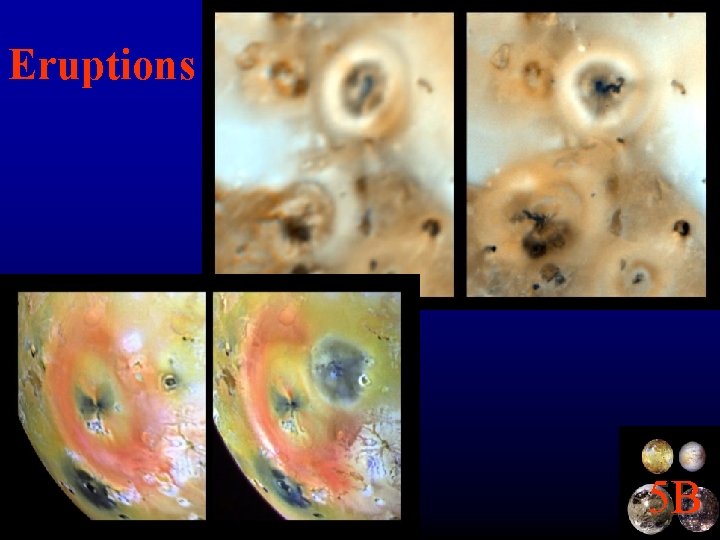
Eruptions 5 B
1979 5 B 1996
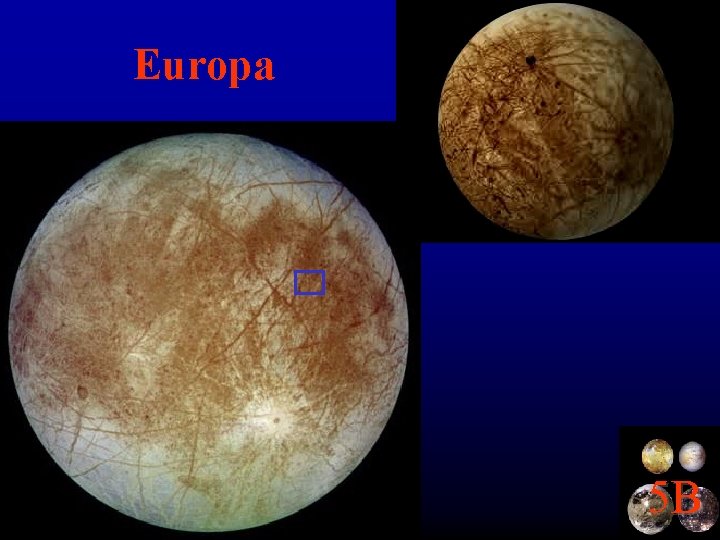
Europa 5 B
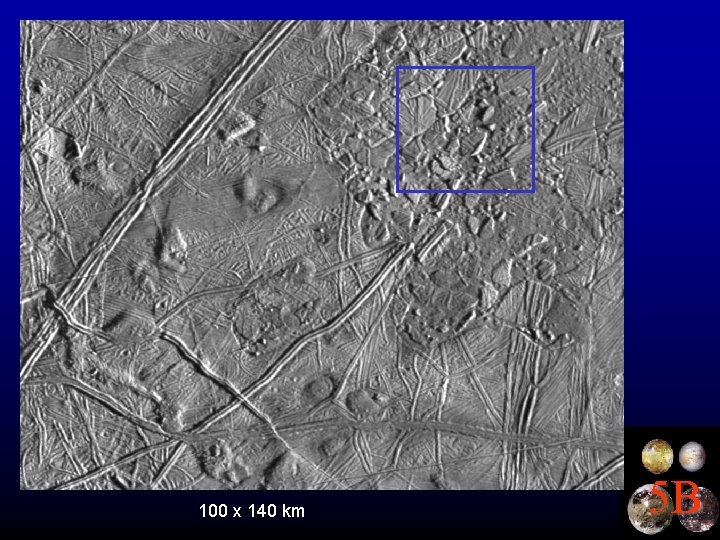
100 x 140 km 5 B
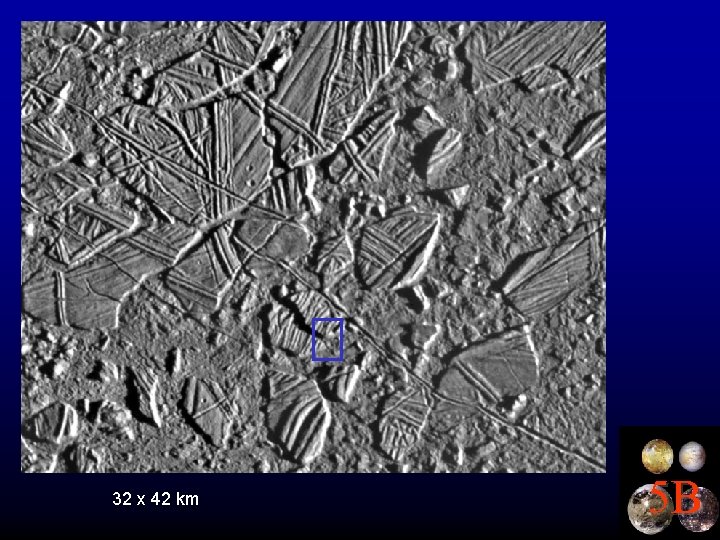
32 x 42 km 5 B
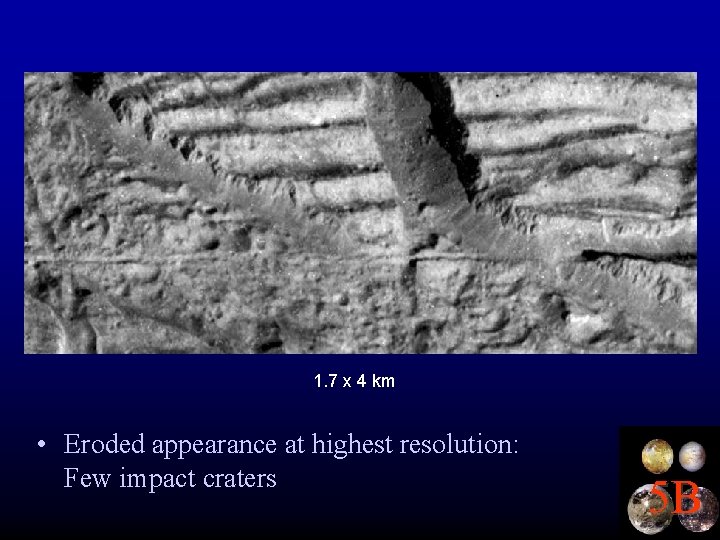
1. 7 x 4 km • Eroded appearance at highest resolution: Few impact craters 5 B
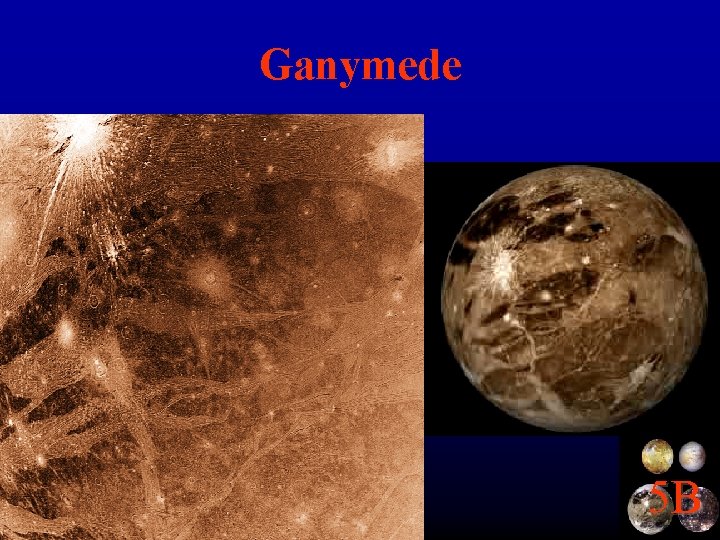
Ganymede 5 B
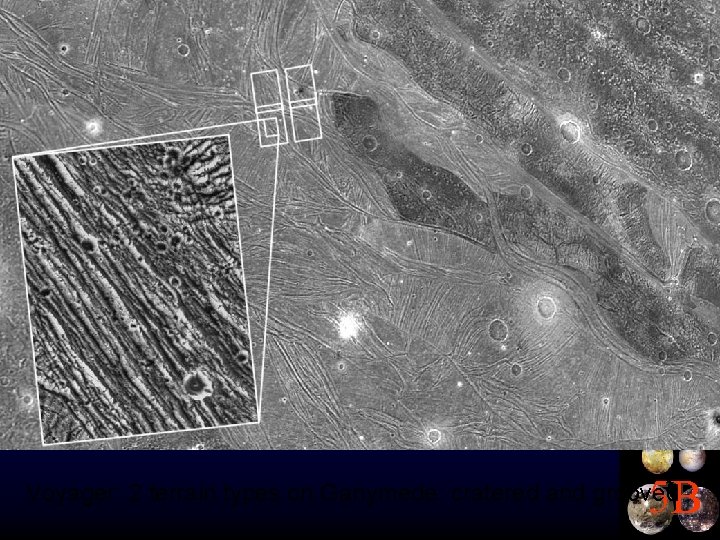
5 B Voyager: 2 terrain types on Ganymede: cratered and grooved
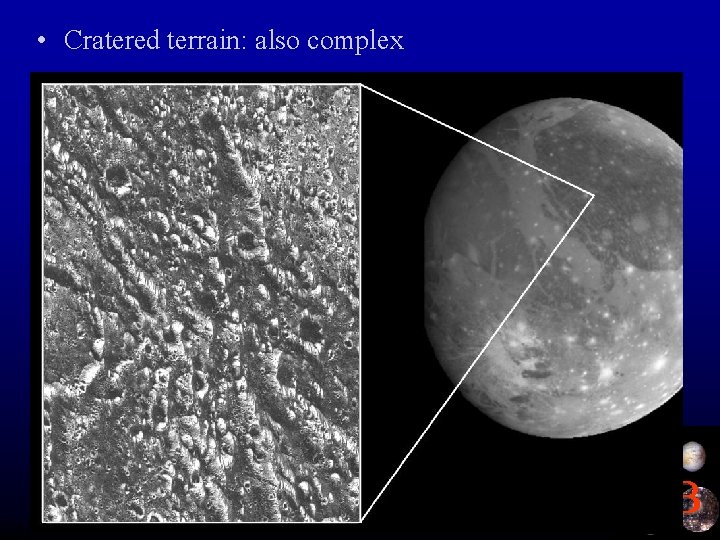
• Cratered terrain: also complex 5 B
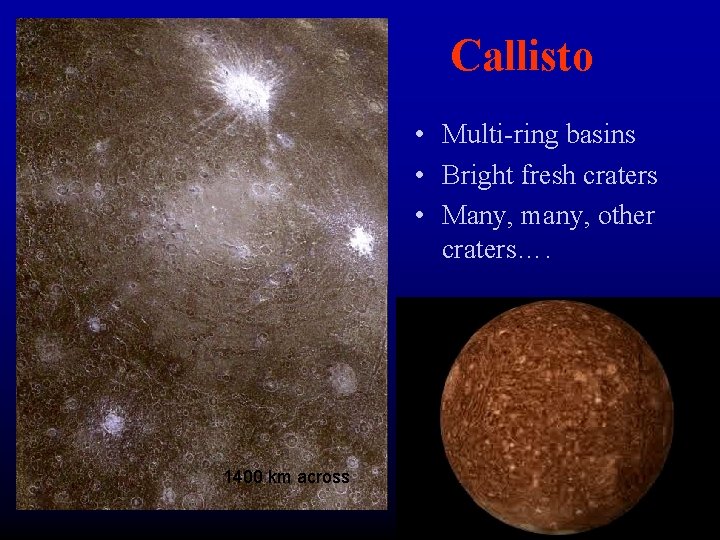
Callisto • Multi-ring basins • Bright fresh craters • Many, many, other craters…. 1400 km across 5 B
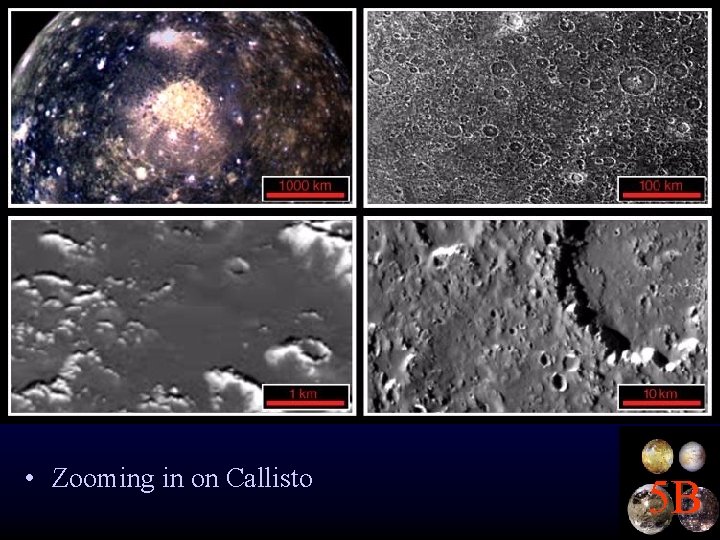
• Zooming in on Callisto 5 B
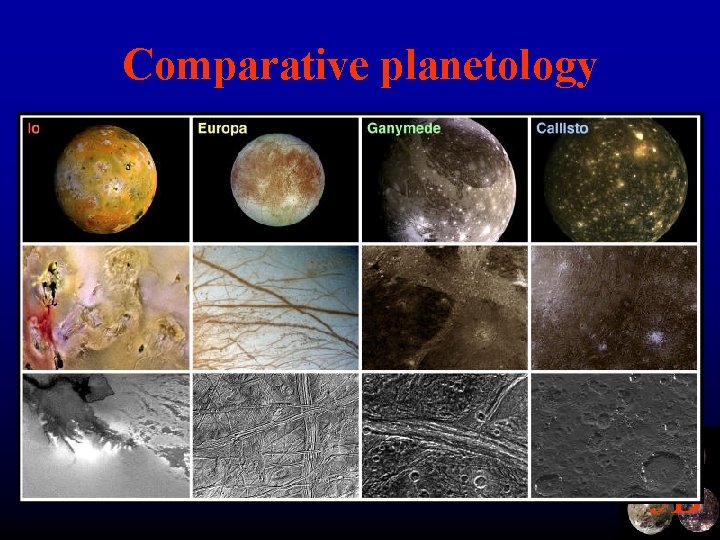
Comparative planetology 5 B
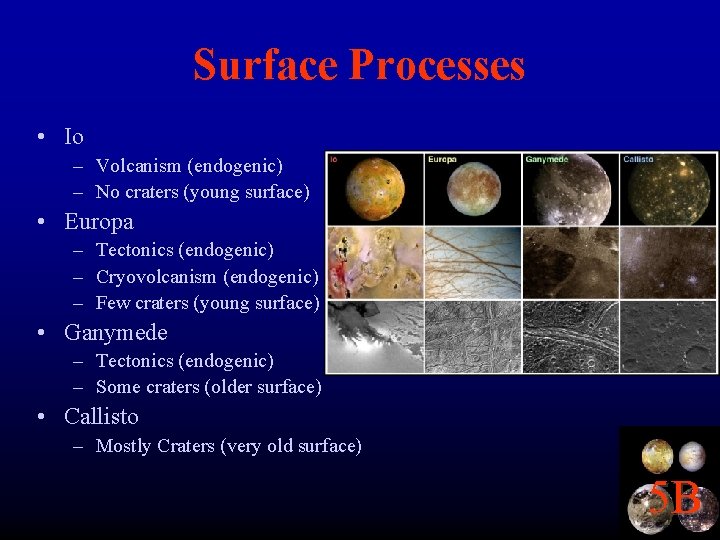
Surface Processes • Io – Volcanism (endogenic) – No craters (young surface) • Europa – Tectonics (endogenic) – Cryovolcanism (endogenic) – Few craters (young surface) • Ganymede – Tectonics (endogenic) – Some craters (older surface) • Callisto – Mostly Craters (very old surface) 5 B
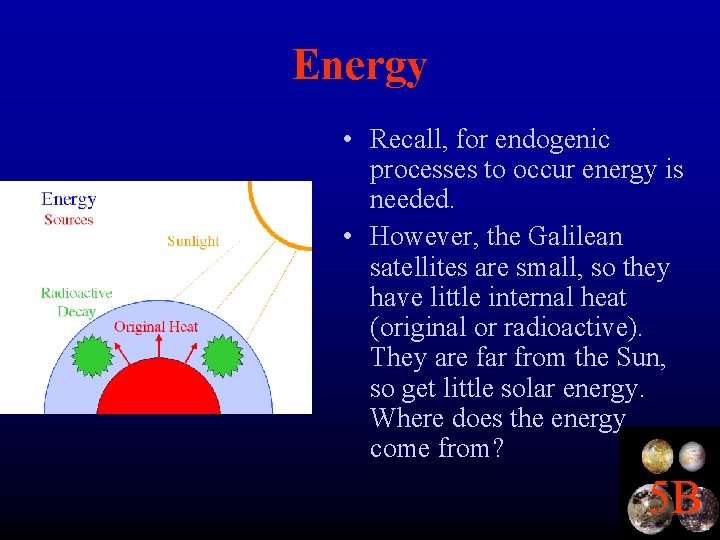
Energy • Recall, for endogenic processes to occur energy is needed. • However, the Galilean satellites are small, so they have little internal heat (original or radioactive). They are far from the Sun, so get little solar energy. Where does the energy come from? 5 B
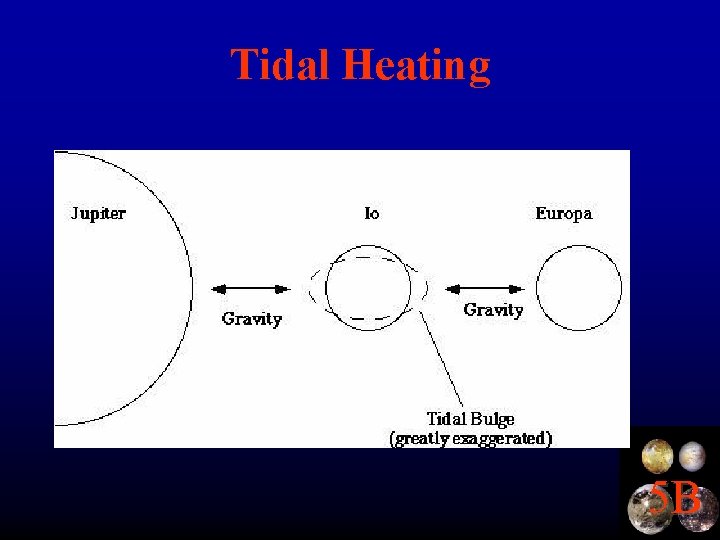
Tidal Heating 5 B
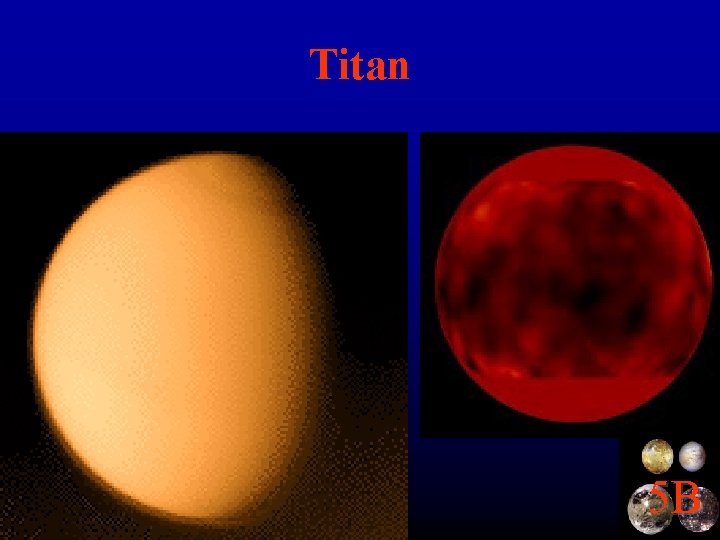
Titan 5 B
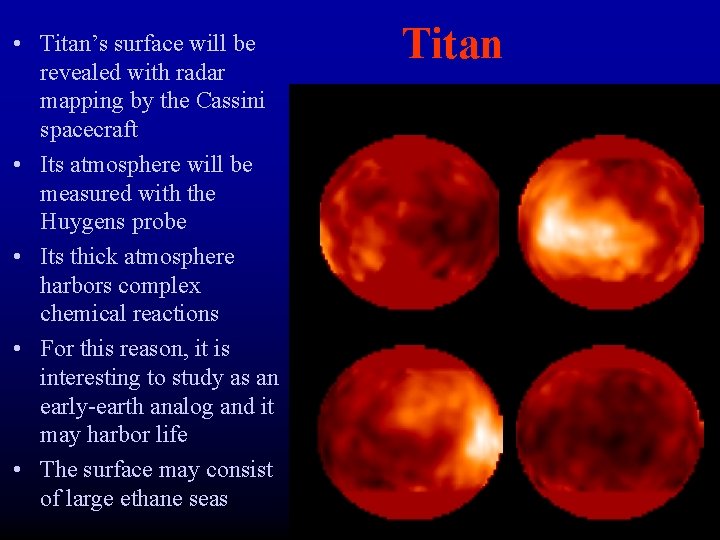
• Titan’s surface will be revealed with radar mapping by the Cassini spacecraft • Its atmosphere will be measured with the Huygens probe • Its thick atmosphere harbors complex chemical reactions • For this reason, it is interesting to study as an early-earth analog and it may harbor life • The surface may consist of large ethane seas Titan 5 B
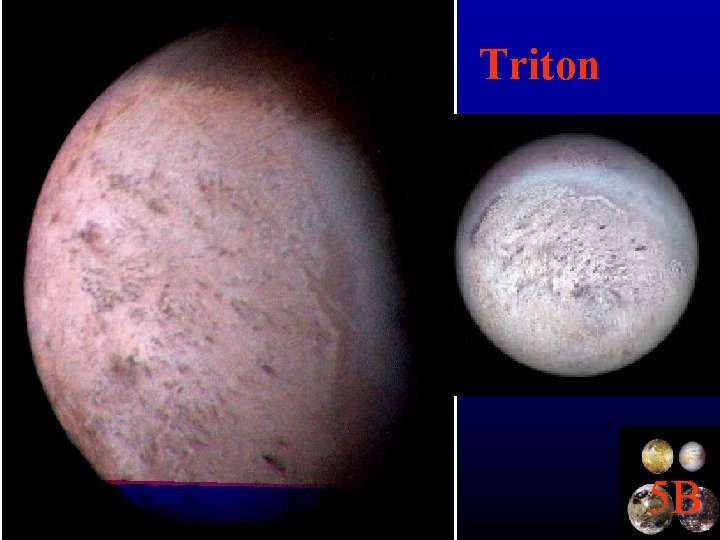
Triton 5 B
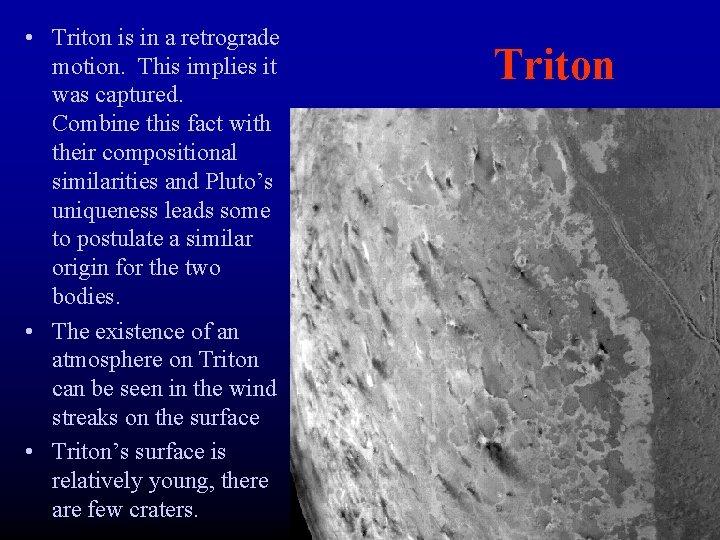
• Triton is in a retrograde motion. This implies it was captured. Combine this fact with their compositional similarities and Pluto’s uniqueness leads some to postulate a similar origin for the two bodies. • The existence of an atmosphere on Triton can be seen in the wind streaks on the surface • Triton’s surface is relatively young, there are few craters. Triton 5 B
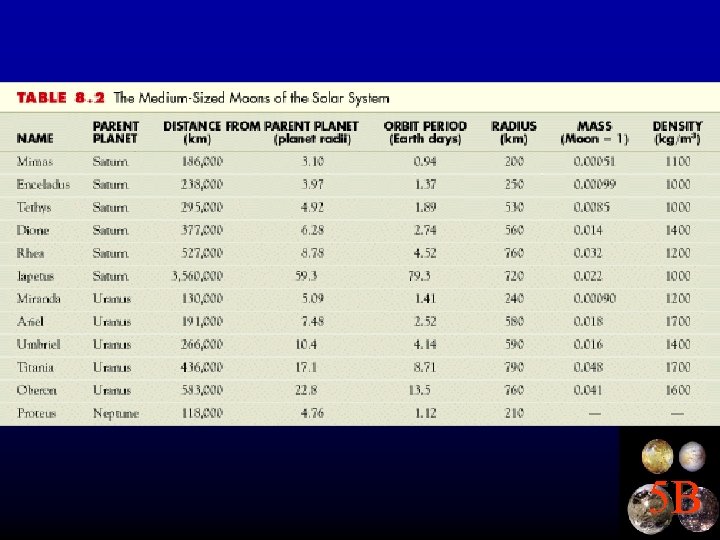
5 B
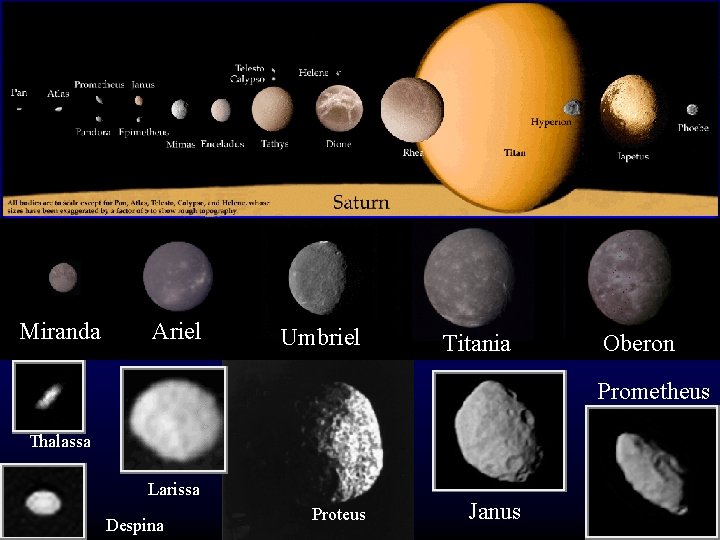
Miranda Ariel Umbriel Titania Oberon Prometheus Thalassa Larissa Despina Proteus Janus 5 B
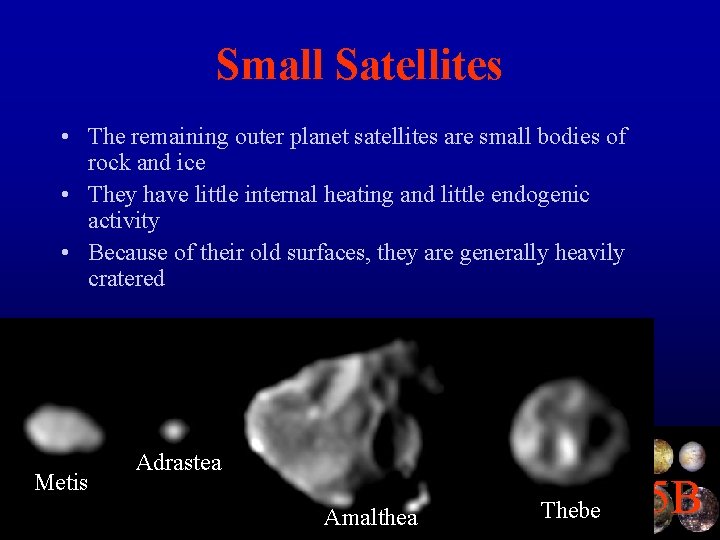
Small Satellites • The remaining outer planet satellites are small bodies of rock and ice • They have little internal heating and little endogenic activity • Because of their old surfaces, they are generally heavily cratered Metis Adrastea Amalthea Thebe 5 B
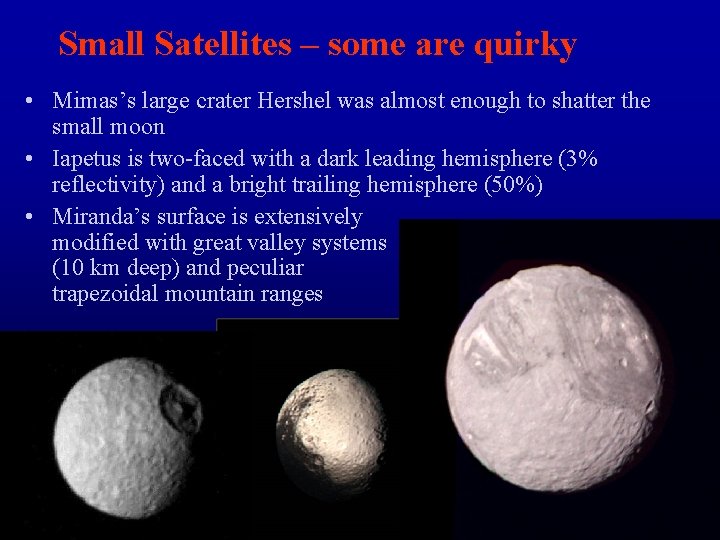
Small Satellites – some are quirky • Mimas’s large crater Hershel was almost enough to shatter the small moon • Iapetus is two-faced with a dark leading hemisphere (3% reflectivity) and a bright trailing hemisphere (50%) • Miranda’s surface is extensively modified with great valley systems (10 km deep) and peculiar trapezoidal mountain ranges 5 B
Comparative Planetology 2 • In general, the bigger a planetary body is, the more energy is available to modify it – Small bodies are irregularly shaped and covered only with craters (exogenic) – Slightly bigger bodies are spherical – Bigger bodies are spherical and differentiated – The largest bodies are spherical, differentiated, and have endogenic processes which modify their surfaces 5 B