
Satellite Workshop Information Processing in the Biological Organism
Satellite Workshop: Information Processing in the Biological Organism (A Systems Biology Approach) Fred S. Roberts Rutgers University
We are all well aware by now that many fundamental biological processes involve the flow of information. TTAGGCCCCAATGTGTCCCGATTGAA The potential for dramatic new biological knowledge arises from investigating the complex interactions of many different levels of biological information.
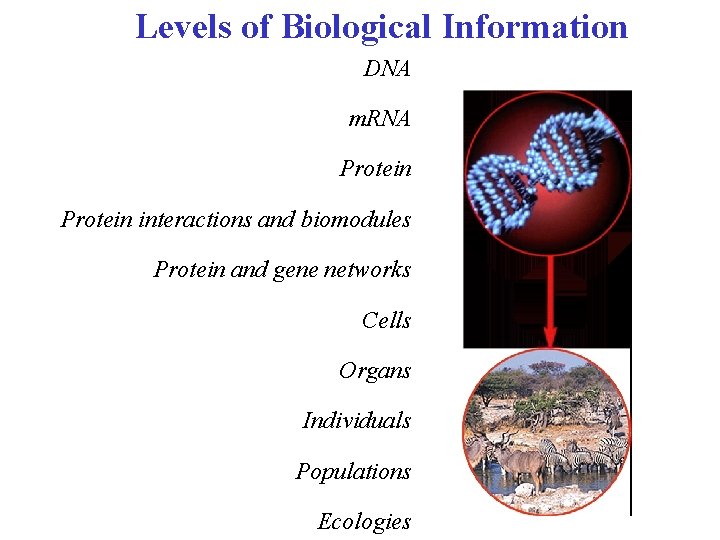
Levels of Biological Information DNA m. RNA Protein interactions and biomodules Protein and gene networks Cells Organs Individuals Populations Ecologies
The workshop investigated information processing in biological organisms from a systems point of view.
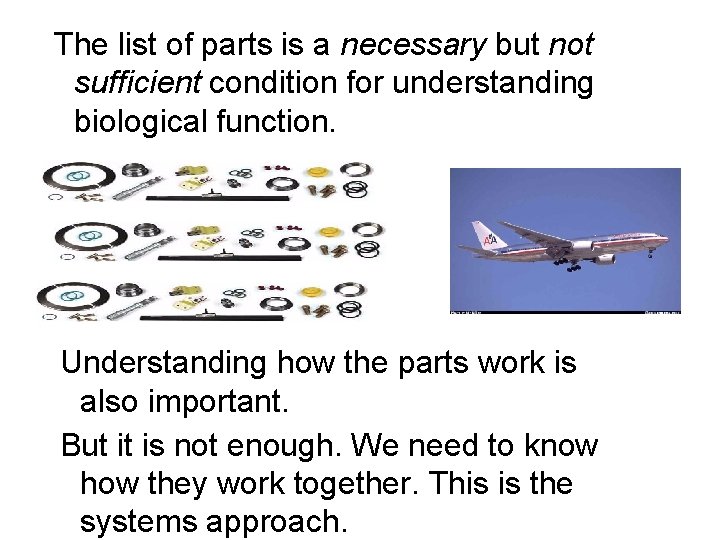
The list of parts is a necessary but not sufficient condition for understanding biological function. Understanding how the parts work is also important. But it is not enough. We need to know how they work together. This is the systems approach.
Understanding biological systems from this point of view can be greatly aided by the use of powerful mathematical and computer models.
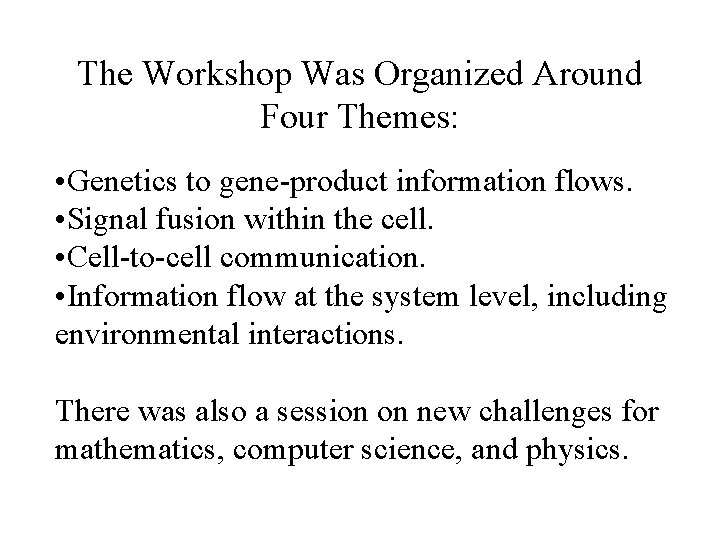
The Workshop Was Organized Around Four Themes: • Genetics to gene-product information flows. • Signal fusion within the cell. • Cell-to-cell communication. • Information flow at the system level, including environmental interactions. There was also a session on new challenges for mathematics, computer science, and physics.
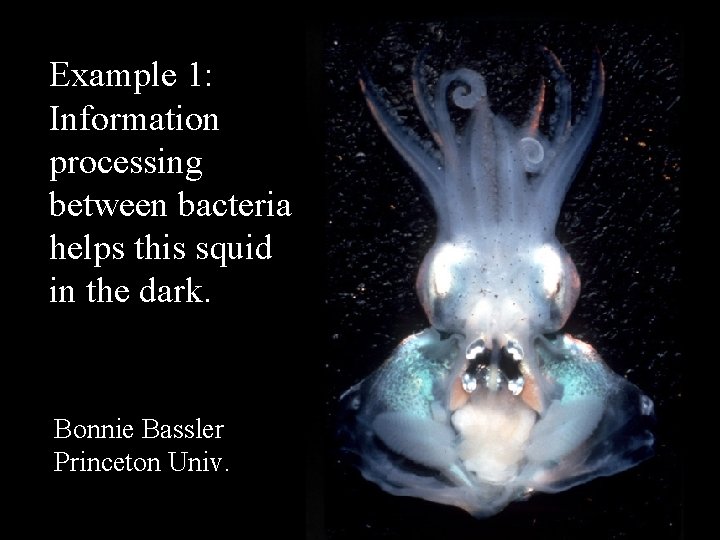
Example 1: Information processing between bacteria helps this squid in the dark. Bonnie Bassler Princeton Univ.
Bacteria process the information about the local density of other bacteria. They use this to produce luminescence. The process involved can be modeled by a mathematical model involving quorum sensing. Similar quorum sensing has been observed in over 70 species
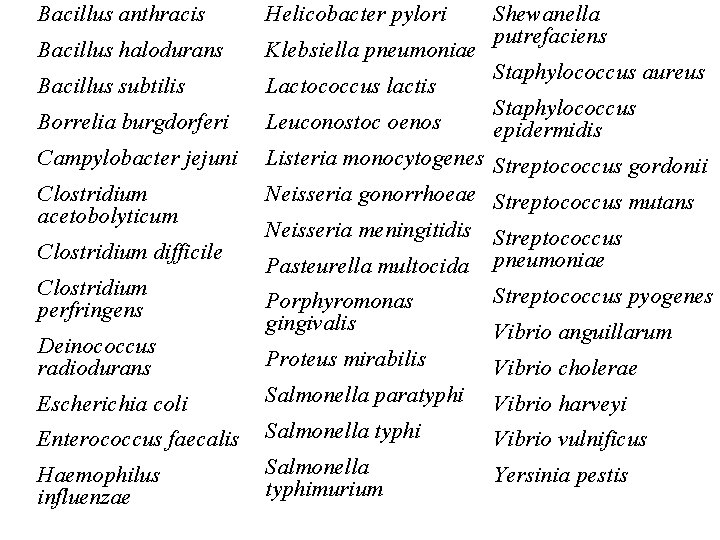
Bacillus anthracis Helicobacter pylori Bacillus halodurans Klebsiella pneumoniae Bacillus subtilis Lactococcus lactis Borrelia burgdorferi Leuconostoc oenos Campylobacter jejuni Listeria monocytogenes Streptococcus gordonii Neisseria gonorrhoeae Streptococcus mutans Clostridium acetobolyticum Clostridium difficile Clostridium perfringens Deinococcus radiodurans Shewanella putrefaciens Staphylococcus aureus Staphylococcus epidermidis Neisseria meningitidis Streptococcus Pasteurella multocida pneumoniae Streptococcus pyogenes Porphyromonas gingivalis Vibrio anguillarum Proteus mirabilis Vibrio cholerae Escherichia coli Salmonella paratyphi Vibrio harveyi Enterococcus faecalis Salmonella typhi Vibrio vulnificus Haemophilus influenzae Salmonella typhimurium Yersinia pestis
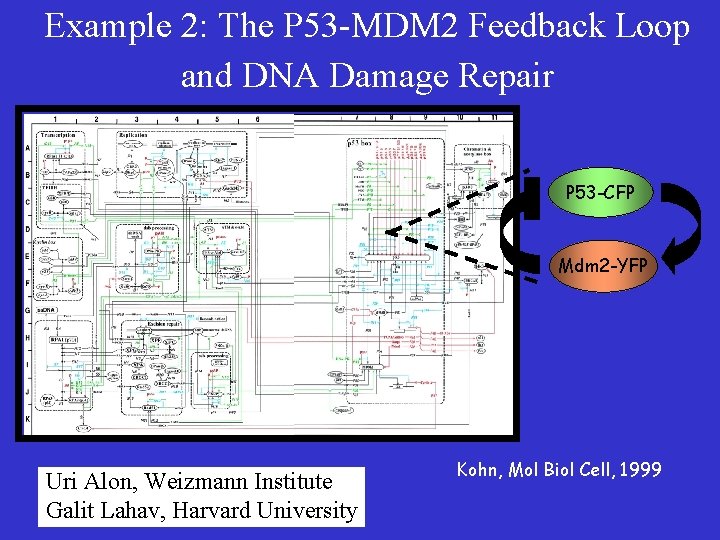
Example 2: The P 53 -MDM 2 Feedback Loop and DNA Damage Repair P 53 -CFP Mdm 2 -YFP Uri Alon, Weizmann Institute Galit Lahav, Harvard University Kohn, Mol Biol Cell, 1999
Network motifs are conceptual units that are dynamic and larger than single components such as genes or proteins. Such motifs have helped to understand the nonlinear dynamics of the process by which the P 53 - MDM 2 feedback loop contributes to the regulation of DNA damage repair.
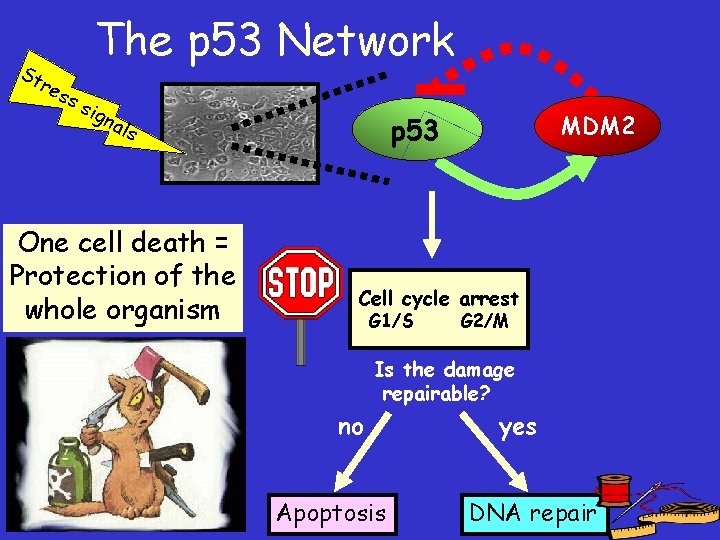
St The p 53 Network res ss ign als One cell death = Protection of the whole organism MDM 2 p 53 Cell cycle arrest G 1/S G 2/M Is the damage repairable? no Apoptosis yes DNA repair
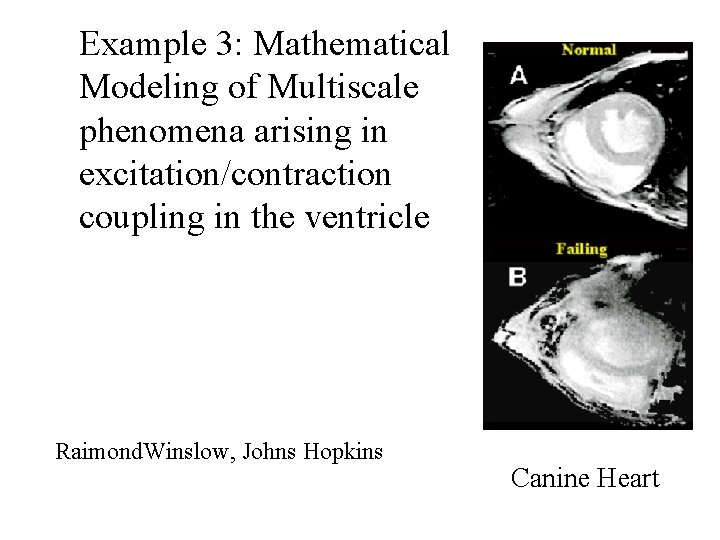
Example 3: Mathematical Modeling of Multiscale phenomena arising in excitation/contraction coupling in the ventricle Raimond. Winslow, Johns Hopkins Canine Heart
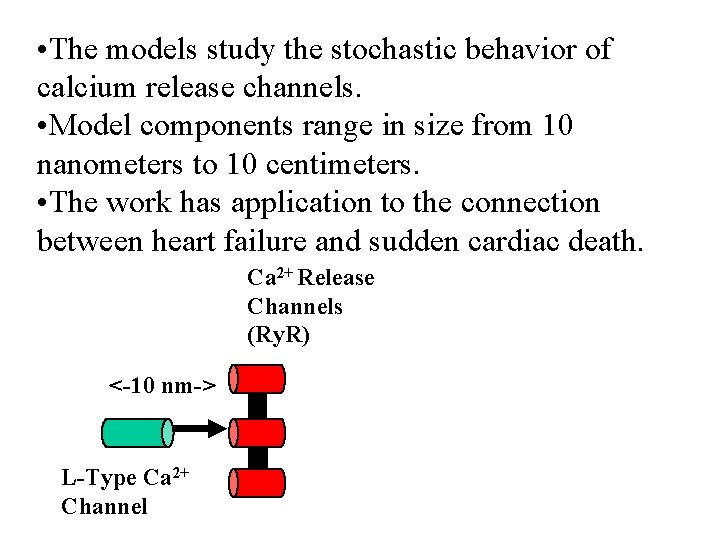
• The models study the stochastic behavior of calcium release channels. • Model components range in size from 10 nanometers to 10 centimeters. • The work has application to the connection between heart failure and sudden cardiac death. Ca 2+ Release Channels (Ry. R) <-10 nm-> L-Type Ca 2+ Channel
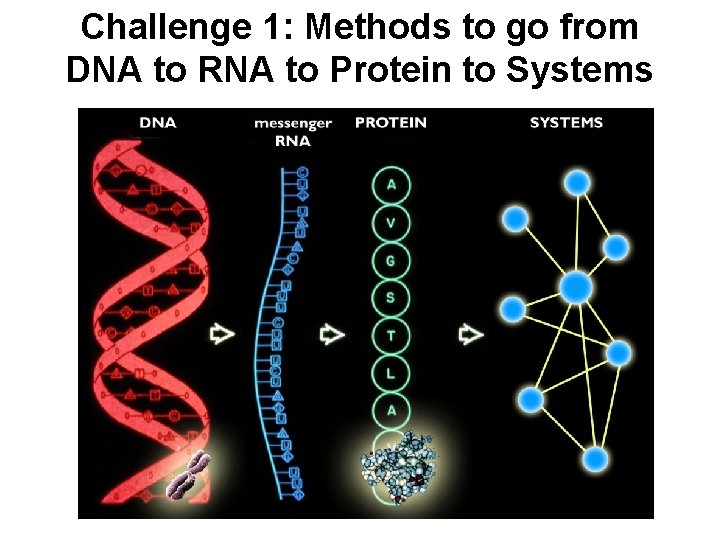
Challenge 1: Methods to go from DNA to RNA to Protein to Systems
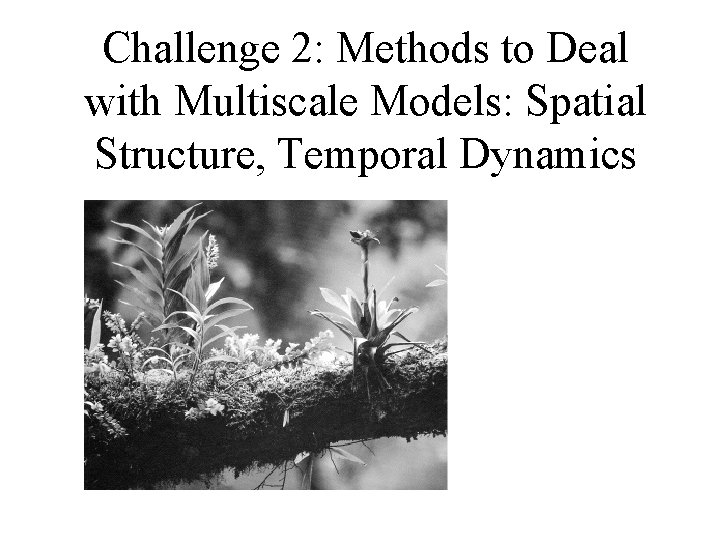
Challenge 2: Methods to Deal with Multiscale Models: Spatial Structure, Temporal Dynamics
Challenge 3: Develop Models that are “Reusable”, Portable, Transportable
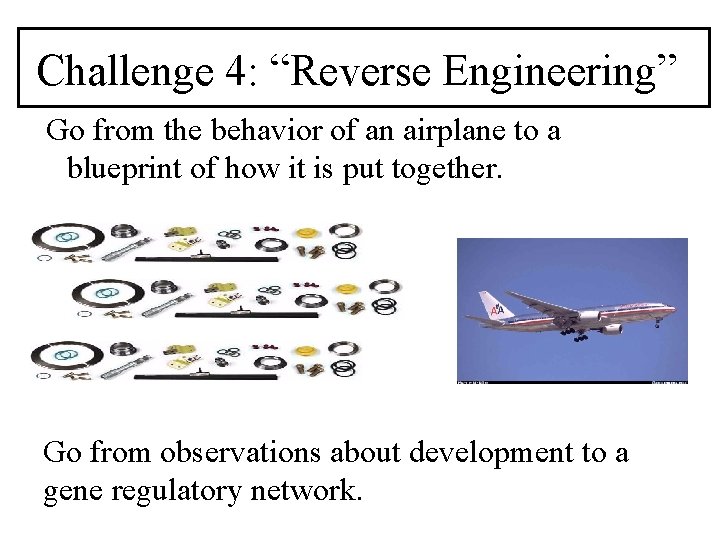
Challenge 4: “Reverse Engineering” Go from the behavior of an airplane to a blueprint of how it is put together. Go from observations about development to a gene regulatory network.
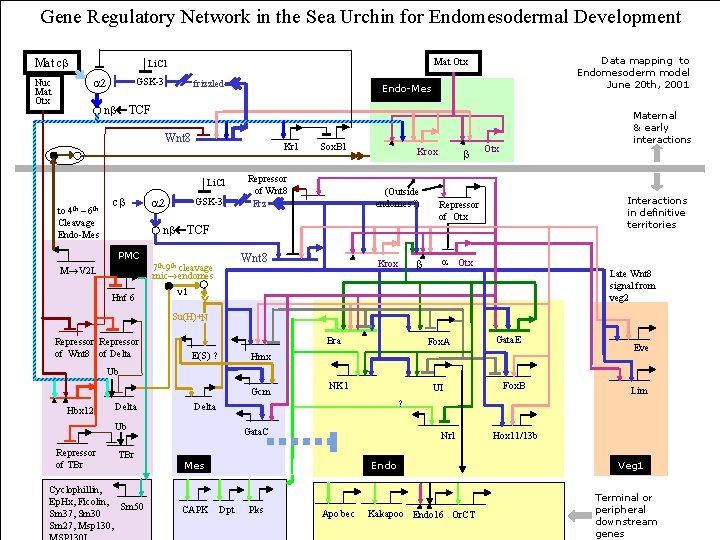
Preliminary Regulatory Network in the Urchin Endomesodermal Development Gene Regulatory Network in the Sea Urchin for Endomesodermal Development Mat cb Nuc Mat Otx a 2 Data mapping to Endomesoderm model June 20 th, 2001 Mat Otx Li. Cl GSK-3 frizzled Endo-Mes nb TCF Wnt 8 to 4 th – 6 th Cleavage Endo-Mes M V 2 L cb cb a 2 Krl Li. Cl GSK-3 Sox. B 1 Repressor of Wnt 8 Frz Krox (Outside endomes? ) nb TCF PMC Hnf 6 Wnt 8 7 th -9 th cleavage th-9 th cleavage 7 mic endomes n 1 Y Krox b b Maternal & early interactions Otx Interactions in definitive territories Repressor of Otx a Otx Late Wnt 8 Late signal. Wnt 8 from signal veg 2 from veg 2 Y Su(H)+N Repressor of Wnt 8 Hbx 12 Repressor of TBr Repressor of Delta Ub Ub TBr Cyclophillin, Ep. Hx, Ficolin, Sm 50 Sm 37, Sm 30 Sm 27, Msp 130, MSP 130 L E(S) ? Hmx Gcm Delta Bra Fox. A NK 1 ? ? Gata. C Nrl Mes CAPK UI UI Endo Dpt Pks Apo bec Kakapoo Endo 16 Or. CT Gata. E Fox. B Eve Lim Hox 11/13 b Veg 1 Terminal or Terminal peripheralor peripheral downstream genes
Support of Research: Databases • Databases of Data • Databases of Models • There are Major accompanying research challenges
Data Cleaning
Data Visualization
Data Mining
“Curation” of Databases • Error correction • Validation of Data • Updating • Interoperability The Development of Methods to Handle Large, Heterogeneous Data Sets
The Developing Partnership between the Biological and Mathematical Sciences • Math/CS help Bio: New algorithms, new numerical methods for simulation, etc. • Biology problems stimulate Math/CS research.
The Developing Partnership between the Biological and Mathematical Sciences • Biological research leads to new paradigms in Math/CS: • Biological architectures suggest new computer architectures • The exquisite sensitivity and dynamic range of biological sensors aid in the design of new sensors • Biological computing
• National Science Foundation • Co-Chair: Eduardo Sontag • Moderators: • Tom Deisboeck, Harvard • Leslie Loew, UConn • Stas Shvartsman, Princeton • Joel Stiles, CMU • Gustavo Stolovitsky, IBM
- Slides: 28