
Satellite Communication Kazi Zakia Sultana Components A microwave
- Slides: 20
Satellite Communication Kazi Zakia Sultana
Components �A microwave repeater in the sky consisting of transmitter, receiver, amplifier, regenerator, mux, demux, antenna, and so on. � Space segment �The transponder � Earth segment �The Ground Station � Transmitting station � Receiving station � An interface between space and earth segment for transmission and reception of terrestrial communication traffic
History � In 1962, the American telecommunications giant AT&T launched the world's first true communications satellite, called Telstar. � Since then, countless communications satellites have been placed into earth orbit, and the technology being applied to them is forever growing in sophistication.
How do Satellites Work �Two Stations on Earth want to communicate through radio broadcast but are too far away to use conventional means. �The two stations can use a satellite as a relay station for their communication �One Earth Station sends a transmission to the satellite. This is called a Uplink. �The satellite Transponder converts the signal and sends it down to the second earth station. This is called a Downlink.
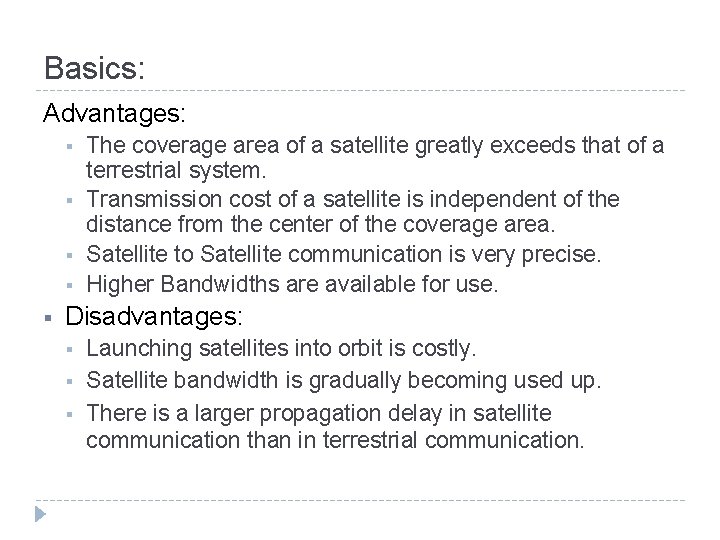
Basics: Advantages: § § § The coverage area of a satellite greatly exceeds that of a terrestrial system. Transmission cost of a satellite is independent of the distance from the center of the coverage area. Satellite to Satellite communication is very precise. Higher Bandwidths are available for use. Disadvantages: § § § Launching satellites into orbit is costly. Satellite bandwidth is gradually becoming used up. There is a larger propagation delay in satellite communication than in terrestrial communication.
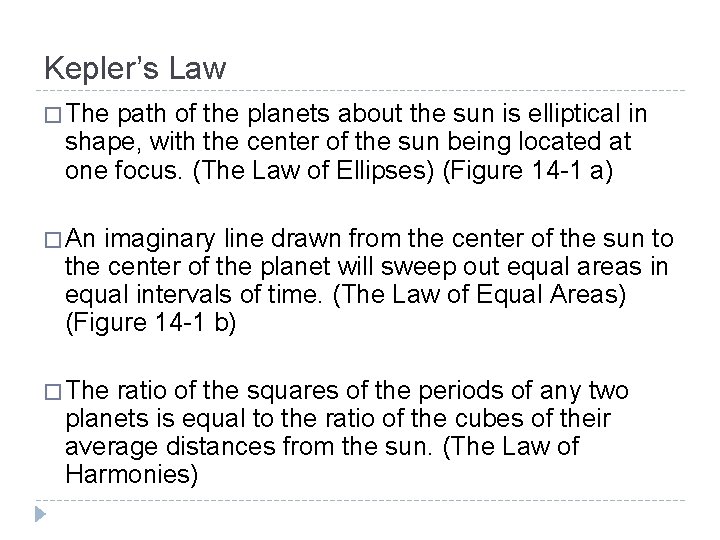
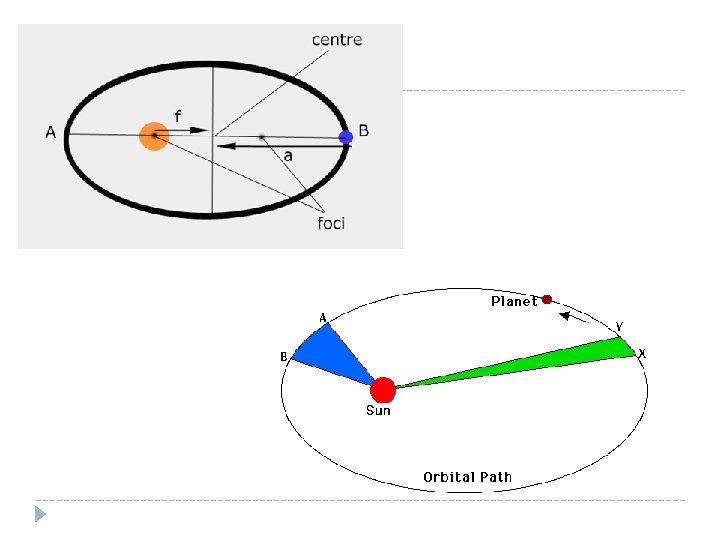
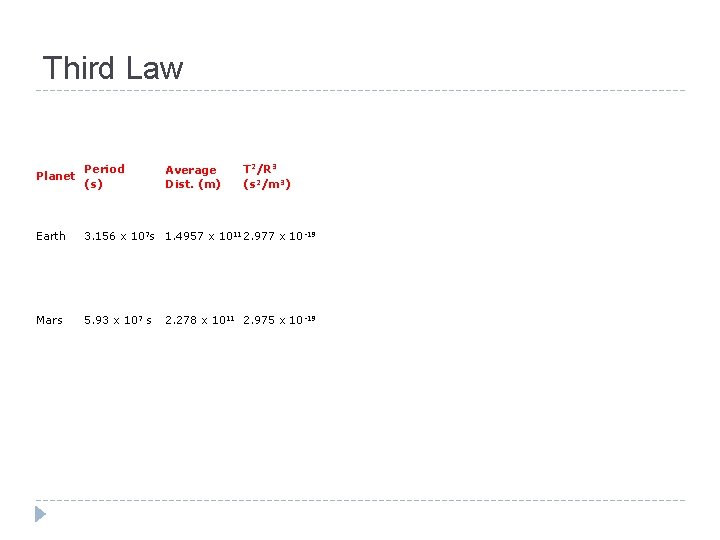
Kepler’s Law � The path of the planets about the sun is elliptical in shape, with the center of the sun being located at one focus. (The Law of Ellipses) (Figure 14 -1 a) � An imaginary line drawn from the center of the sun to the center of the planet will sweep out equal areas in equal intervals of time. (The Law of Equal Areas) (Figure 14 -1 b) � The ratio of the squares of the periods of any two planets is equal to the ratio of the cubes of their average distances from the sun. (The Law of Harmonies)
Third Law Planet Period (s) Earth 3. 156 x 107 s 1. 4957 x 1011 2. 977 x 10 -19 Mars 5. 93 x 107 s Average Dist. (m) T 2/R 3 (s 2/m 3) 2. 278 x 1011 2. 975 x 10 -19
� Pro. Grade Orbit � Satellite orbits at the same direction of the earth’s and at more angular speed than earth’s. � Retrograde � Satellite Orbit orbits at the opposite direction of the earth’s and at less angular speed than earth’s.
Types of Satellites � Satellite § § § GEO LEO MEO Orbits
Geostationary Earth Orbit (GEO) � These satellites are in orbit 35, 863 km above the earth’s surface along the equator. � Objects in Geostationary orbit revolve around the earth at the same speed as the earth rotates. This means GEO satellites remain in the same position relative to the surface of earth.
� Advantages § § § A GEO satellite’s distance from earth gives it a large coverage area, almost a fourth of the earth’s surface. No expensive tracking equipment is required These factors make it ideal for satellite broadcast and other multipoint applications. � Disadvantages § § A GEO satellite’s distance also cause it to have both a comparatively weak signal and a time delay in the signal, which is bad for point to point communication. GEO satellites, centered above the equator, have difficulty broadcasting signals to near polar regions Require higher transmit power and sensitive receivers High precision spacemanship is required to place
Low Earth Orbit (LEO) � LEO satellites are much closer to the earth than GEO satellites, ranging from 500 to 1, 500 km above the surface. � LEO satellites don’t stay in fixed position relative to the surface.
LEO (cont. ) � Advantages § A LEO satellite’s proximity to earth compared to a GEO satellite gives it a better signal strength and less of a time delay, which makes it better for point to point communication. � Disadvantages § § Relatively costly Atmospheric drag effects LEO satellites, causing gradual orbital deterioration.
Medium Earth Orbit (MEO) �A MEO satellite is in orbit somewhere between 8, 000 km and 18, 000 km above the earth’s surface. � MEO satellites are similar to LEO satellites in functionality. � MEO satellites are visible for much longer periods of time than LEO satellites, usually between 2 to 8 hours. � MEO satellites have a larger coverage area than LEO satellites.
MEO (cont. ) � Advantage § A MEO satellite’s longer duration of visibility fewer satellites are needed in a MEO network than a LEO network. � Disadvantage § A MEO satellite’s distance gives it a longer time delay and weaker signal than a LEO satellite, though not as bad as a GEO satellite.
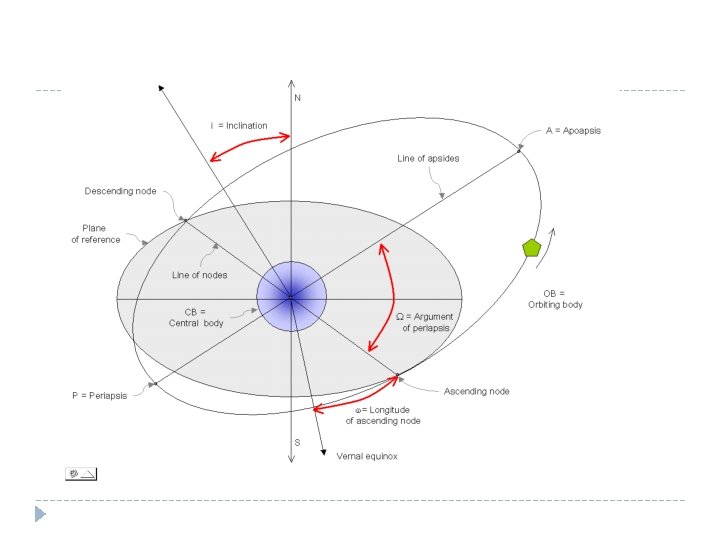
Several Terms � Ascending Node � Descending Node � Line of Nodes � Orbits � Inclined � Equatorial � Angle of inclination is 0 � No ascending or descending node � No line of nodes � Polar � Angle of inclination is 90 � 100% coverage area
Basics: Factors in satellite communication � Elevation Angle: The angle of the horizontal of the earth surface to the center line of the satellite transmission beam. § § This effects the satellites coverage area. Ideally, you want a elevation angle of 0 degrees, so the transmission beam reaches the horizon visible to the satellite in all directions. However, because of environmental factors like objects blocking the transmission, atmospheric attenuation, and the earth electrical background noise, there is a minimum elevation angle of earth stations. � Coverage Angle: A measure of the portion of the earth surface visible to a satellite taking the minimum elevation angle into account.
Geosynchronous Satellites � No special antenna tracking equipment is necessary � Completes one revolution around the earth in 24 hours � Orbits are circular, so speed of rotation is constant throughout the orbit � Follow equatorial orbit, angle of inclination must be 0 � Same angular speed and same direction as that of the earth � Orbital Velocity