
SAT Solvers Lecture 2a Sriram Rajamani some parts

- Slides: 20
SAT Solvers Lecture 2(a) Sriram Rajamani (some parts adapted from notes/slides by Emina Torlak, Vijay Ganesh and Leo De Moura)
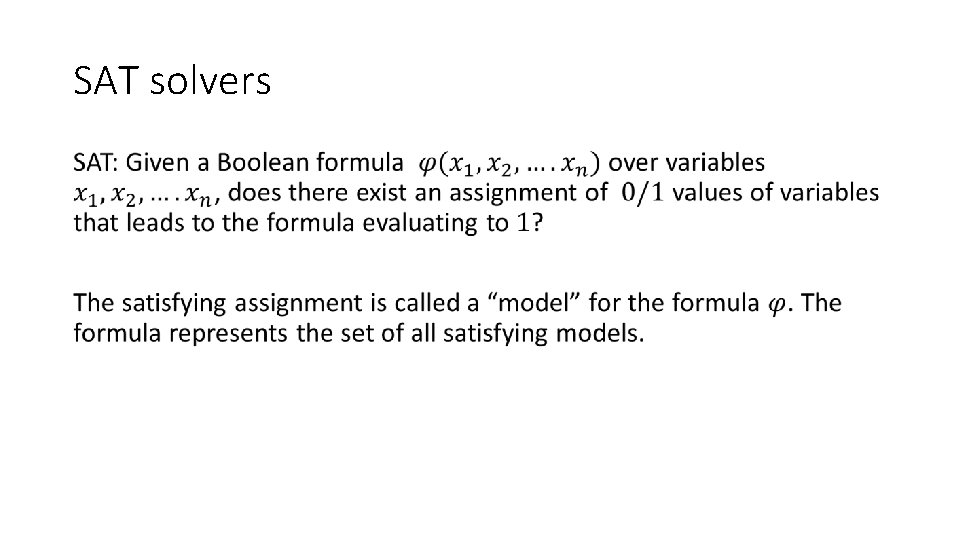
SAT solvers •
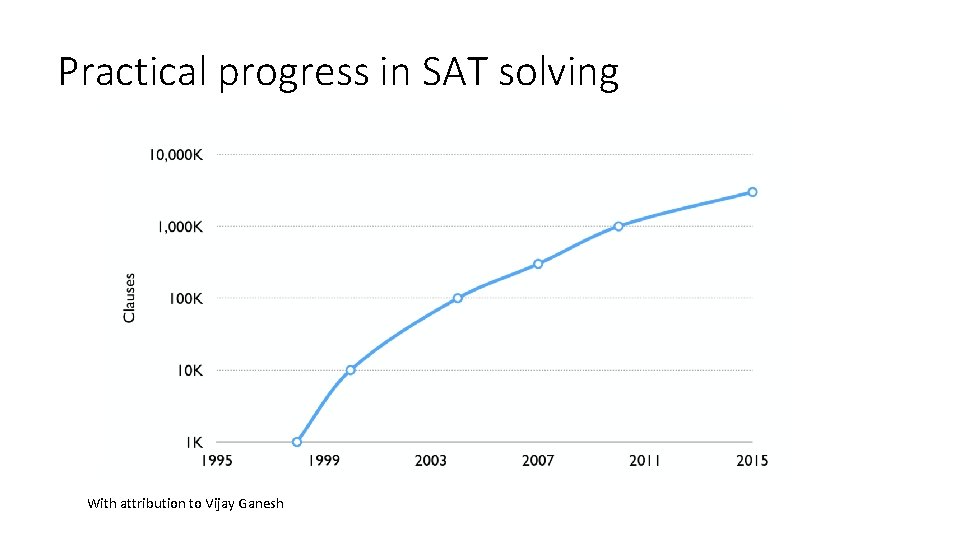
Practical progress in SAT solving With attribution to Vijay Ganesh
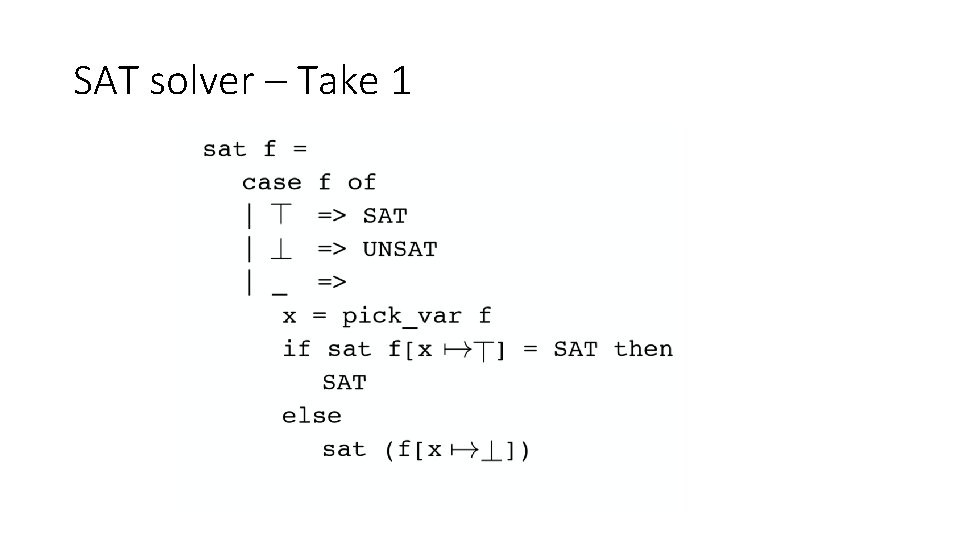
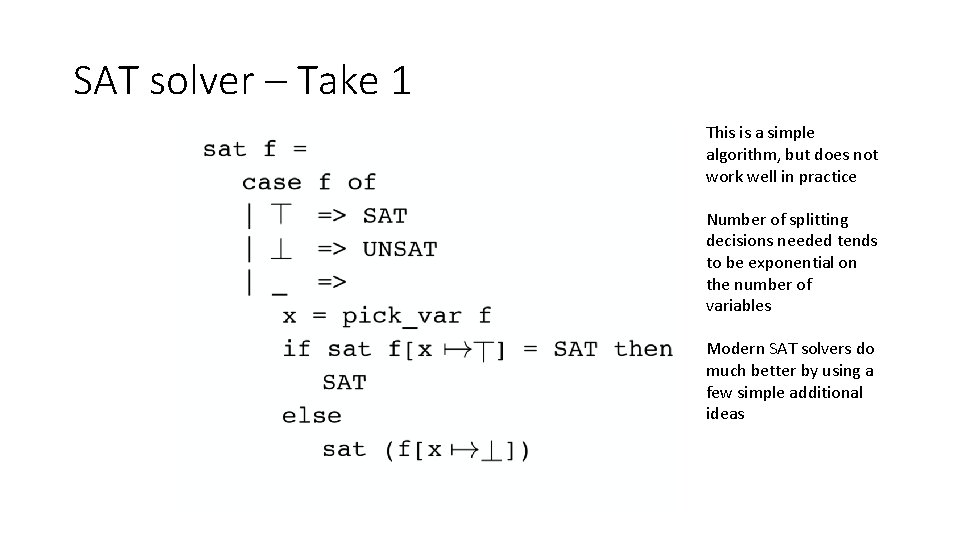
SAT solver – Take 1
SAT solver – Take 1 This is a simple algorithm, but does not work well in practice Number of splitting decisions needed tends to be exponential on the number of variables Modern SAT solvers do much better by using a few simple additional ideas
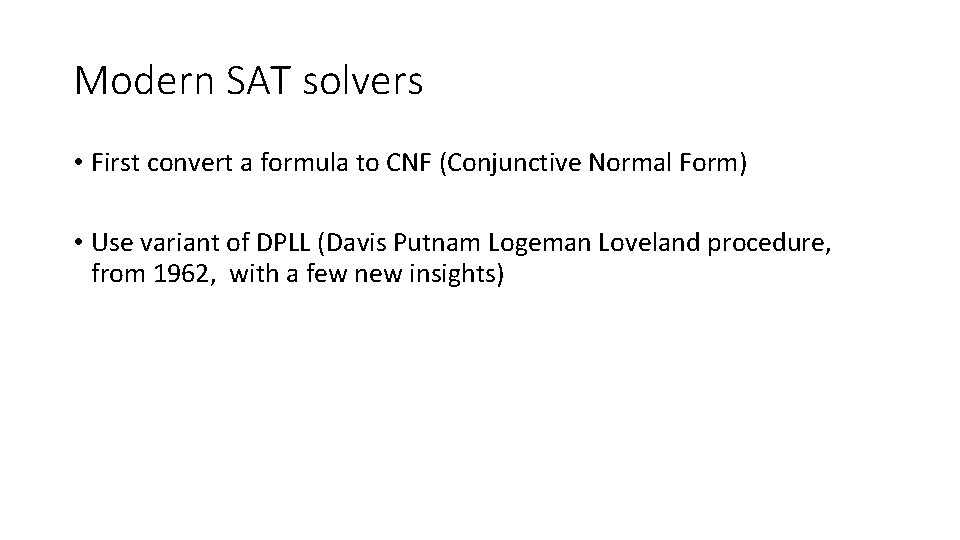
Modern SAT solvers • First convert a formula to CNF (Conjunctive Normal Form) • Use variant of DPLL (Davis Putnam Logeman Loveland procedure, from 1962, with a few new insights)
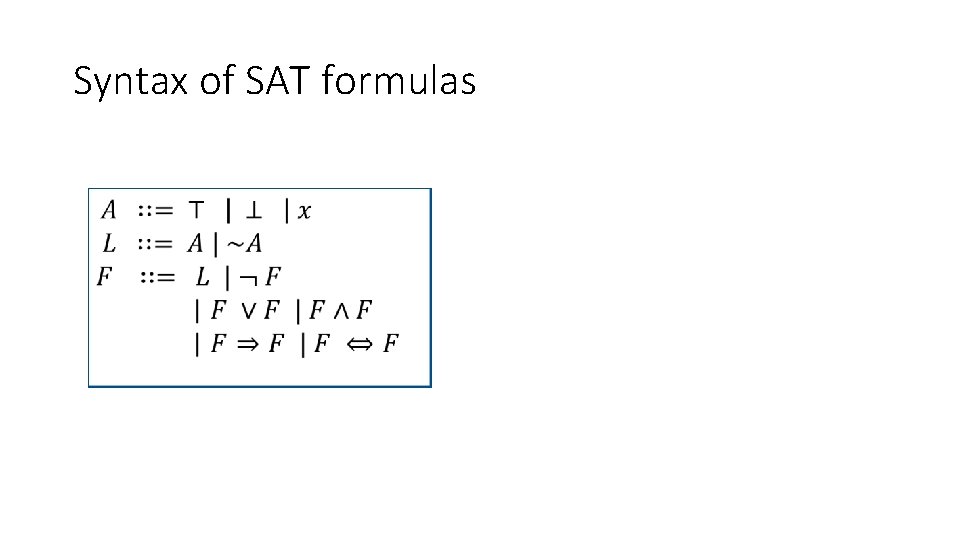
Syntax of SAT formulas
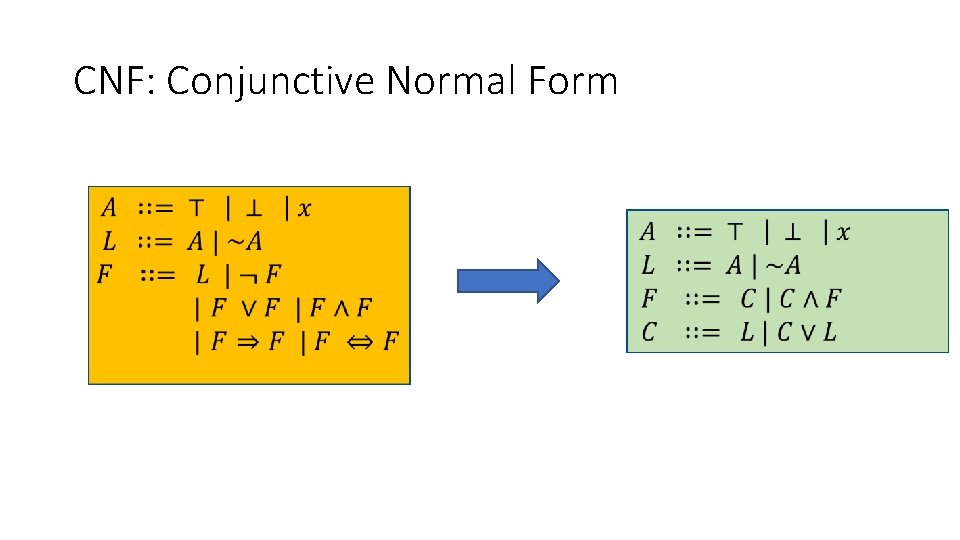
CNF: Conjunctive Normal Form
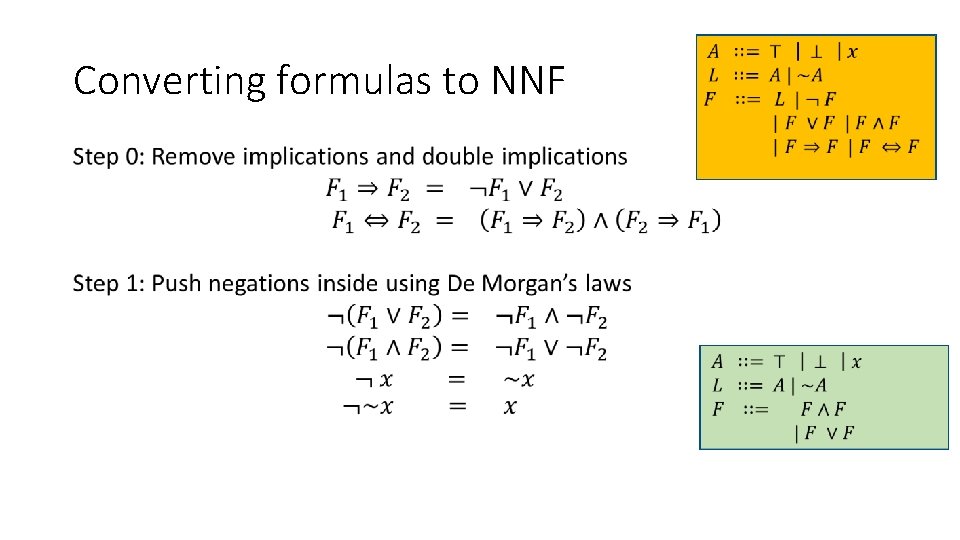
Converting formulas to NNF •
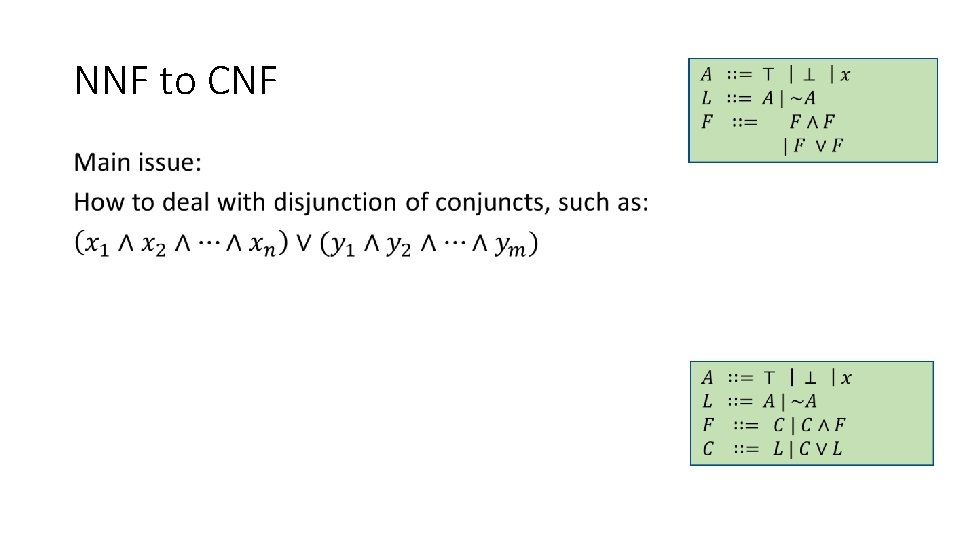
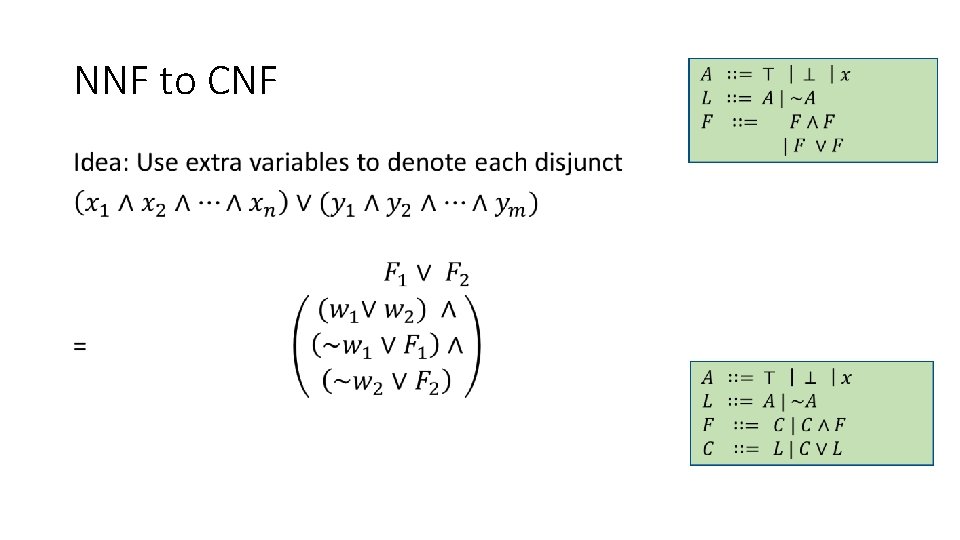
NNF to CNF •
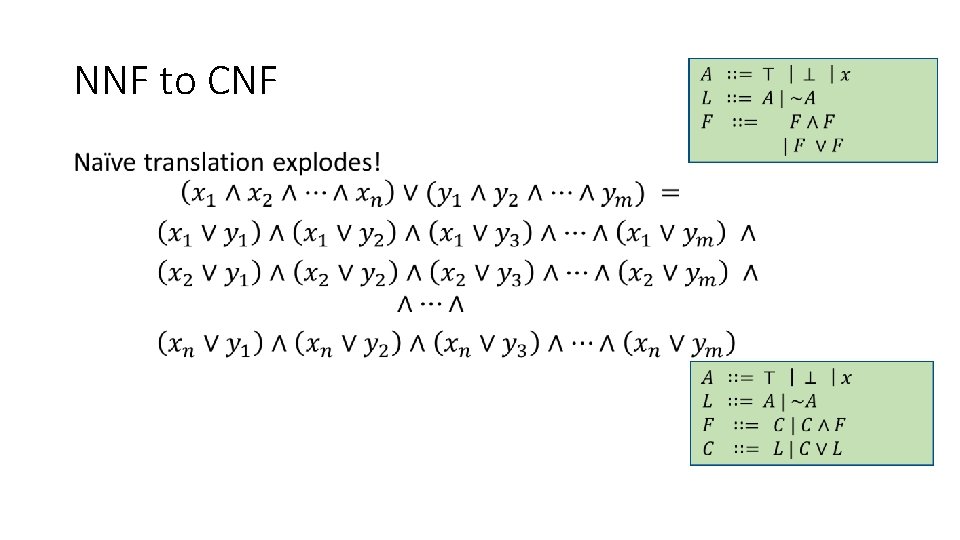
NNF to CNF •
NNF to CNF •
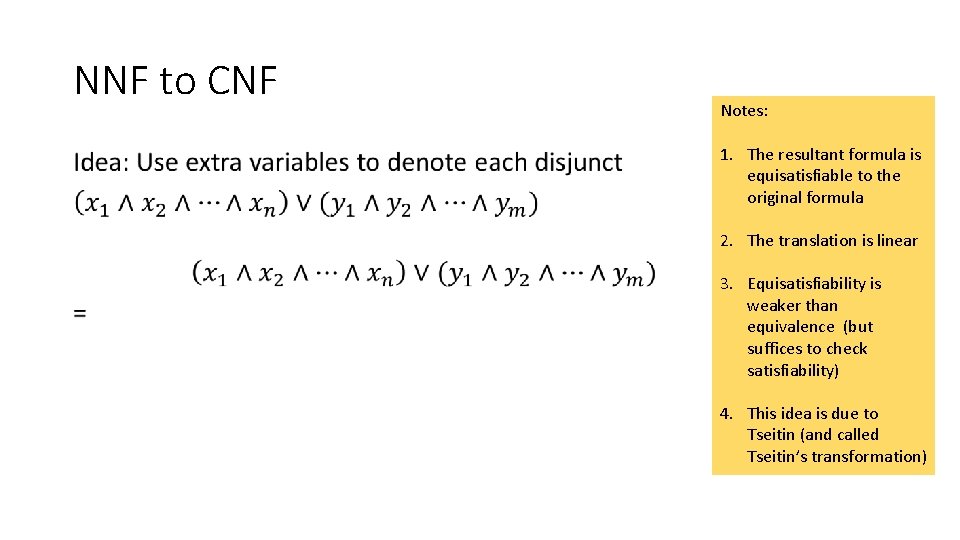
NNF to CNF • Notes: 1. The resultant formula is equisatisfiable to the original formula 2. The translation is linear 3. Equisatisfiability is weaker than equivalence (but suffices to check satisfiability) 4. This idea is due to Tseitin (and called Tseitin’s transformation)
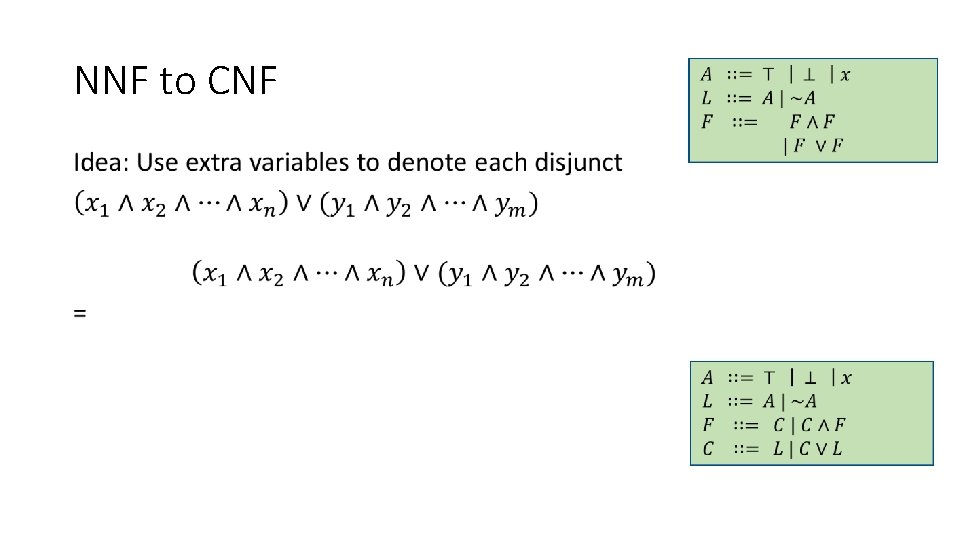
NNF to CNF •
With CNF, we can do resolution!
Special case of resolution: unit resolution or BCP (binary constraint propagation)
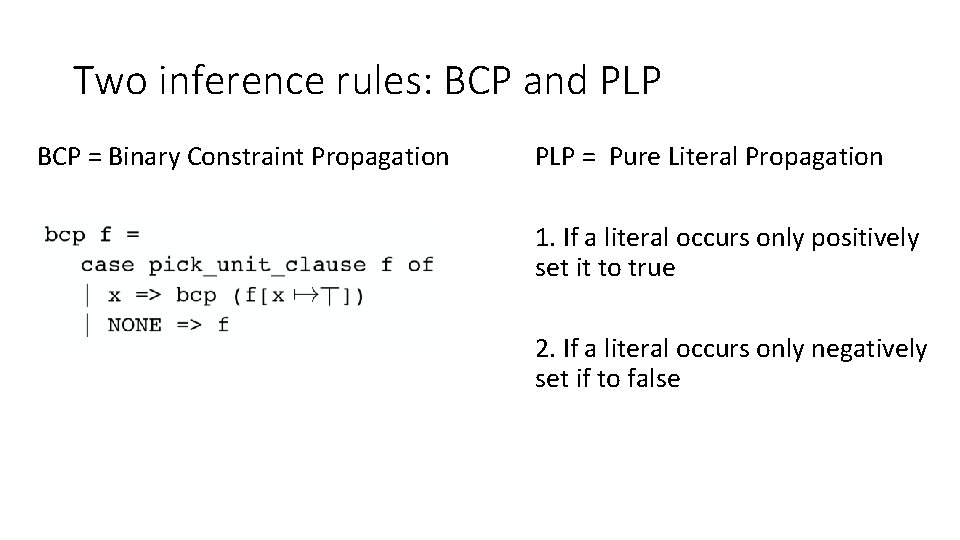
Two inference rules: BCP and PLP BCP = Binary Constraint Propagation PLP = Pure Literal Propagation 1. If a literal occurs only positively set it to true 2. If a literal occurs only negatively set if to false
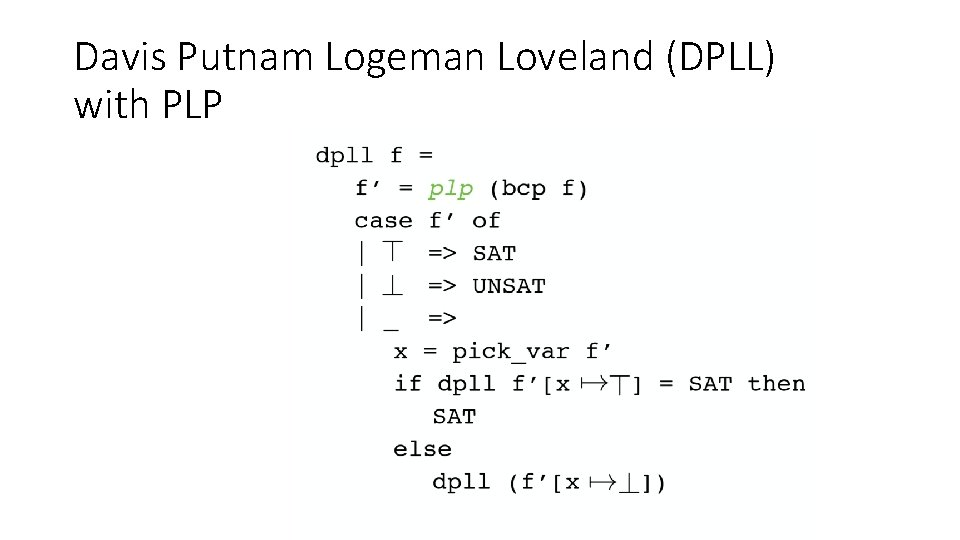
Davis Putnam Logeman Loveland (DPLL) with PLP