
Saskatchewan Reads for Middle Years Modelled Reading Module





- Slides: 17
Saskatchewan Reads for Middle Years Modelled Reading Module utilizes “Regina Public Schools Reads for Middle Years: Big Ideas of Reading” document
Saskatchewan Reads Background • A support for teachers in meeting the provincial outcome “ 80% of students will be reading at grade level by 2020. ” • The work of the Provincial Learning Team – teachers, administrators, directors and First Nations authorities • A research-based companion document to the ELA curriculum
Big Ideas of Reading What are your beliefs about learning to read and teaching reading? • Turn and talk • Share out
Big Ideas of Reading • Skim the section “Overarching Principles” from Saskatchewan Reads (p. 2 -3) – Check the bullets that concur with your beliefs about learning to read and teaching reading – Which statements were new? – Share out
Goals of Proficient Reading • Read page 4 • Proficient readers incorporate all three goals when reading – Engaged readers – Comprehension – Fluency
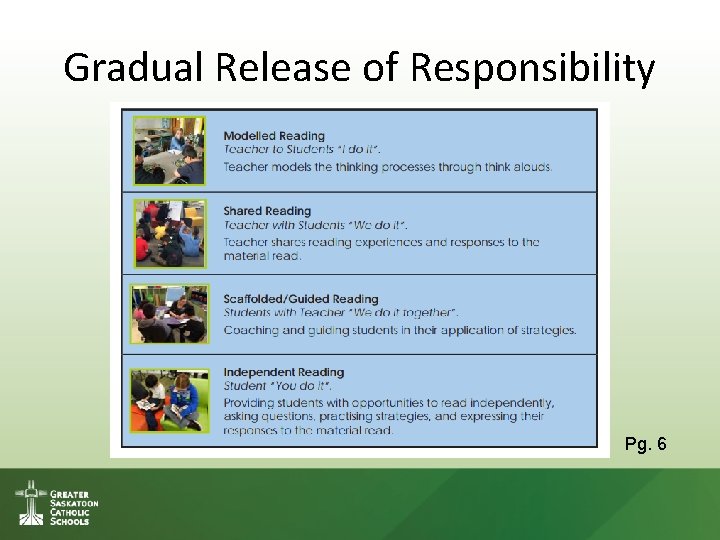
Gradual Release of Responsibility Pg. 6
Gradual Release of Responsibility Teacher models making connections to whole class Teacher and students practice making connections together Teacher works with students who require support for making connections Students practice making connections with independent reading selections
Modelled Reading TASK: Thumbs up if you agree with the following statements: Modelled reading is…. 1) Simply reading a story aloud with no intentional purpose. 2) Verbalizing thinking and explaining what proficient readers do as they process text. 3) Brief and purposeful. 4) Confined to English Language Arts instruction.
Modelled Reading TABLE TASK: • Review the table on pg. 9 • Discuss ‘KNEW’ (what you already knew) • Discuss ‘NEW’ (what you learned)
Modelled Reading • Choosing Passages from Texts – Inclusive and culturally responsive – Strong examples of teaching focus/strategy – Align with students’ individual needs based on formative assessment and curriculum expectations • Purpose – To model B-D-A reading strategies, fluency, effective reading behaviors – To develop motivation, appreciation, content/genre/structure knowledge, oral language, vocabulary Pg. 8
Video “Students benefit when they see how we select texts to read, hear us read fluently, observe us struggle to figure out words and meanings, hear us reread and slow down for clarification, and listen as we think aloud and grapple with challenging concepts. ” (Routman, 2014, p. 22) The following video demonstrates and explains the “think-aloud” strategy during modelled reading: Think Aloud Demonstration and Explanation
Management and Assessment • Sample Schedule • Assessment • Record keeping
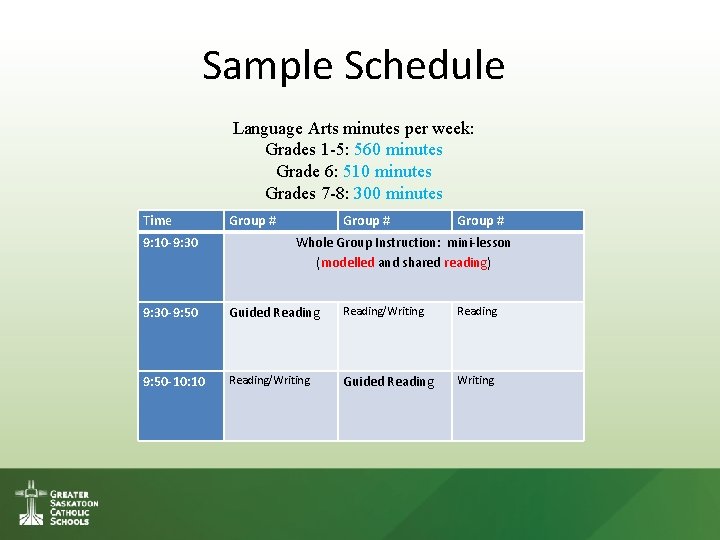
Sample Schedule Language Arts minutes per week: Grades 1 -5: 560 minutes Grade 6: 510 minutes Grades 7 -8: 300 minutes Time 9: 10 -9: 30 Group # Whole Group Instruction: mini-lesson (modelled and shared reading) 9: 30 -9: 50 Guided Reading/Writing Reading 9: 50 -10: 10 Reading/Writing Guided Reading Writing
Assessment • Formative assessment of a student’s application of the skills and strategies explicitly demonstrated in a modelled read can be assessed through teacher observations, conversations with students, and student products. Pg. 9
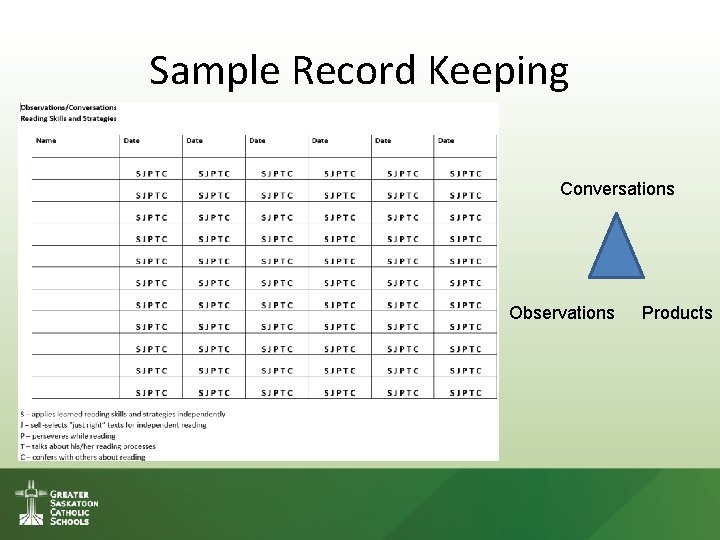
Sample Record Keeping Conversations Observations Products
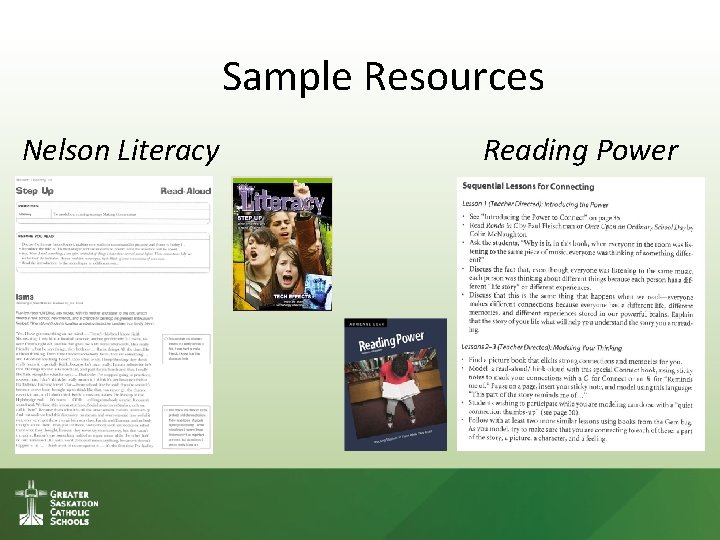
Sample Resources Nelson Literacy Reading Power
Reflection Questions • What evidence do I have that modelled reading is making a difference in student learning outcomes? (conversation, observation and products) • How do I collect evidence that students are applying the skills and strategies demonstrated in modelled reading? Pg. 9