
SAS Standards Aligned System Standards Curriculum Framework Assessment

- Slides: 29
SAS Standards Aligned System Standards – Curriculum Framework - Assessment Pennsylvania Department of Education Essential Question: How are the resources in the SAS organized to support educators?
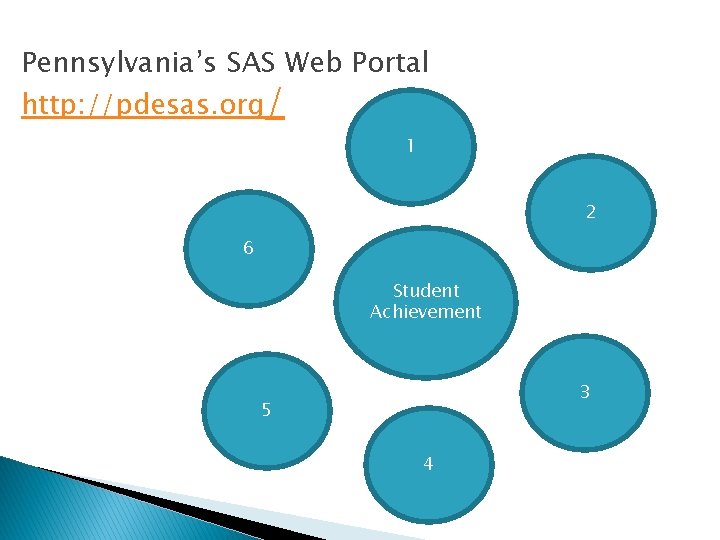
Pennsylvania’s SAS Web Portal http: //pdesas. org/ 1 2 6 Student Achievement 3 5 4
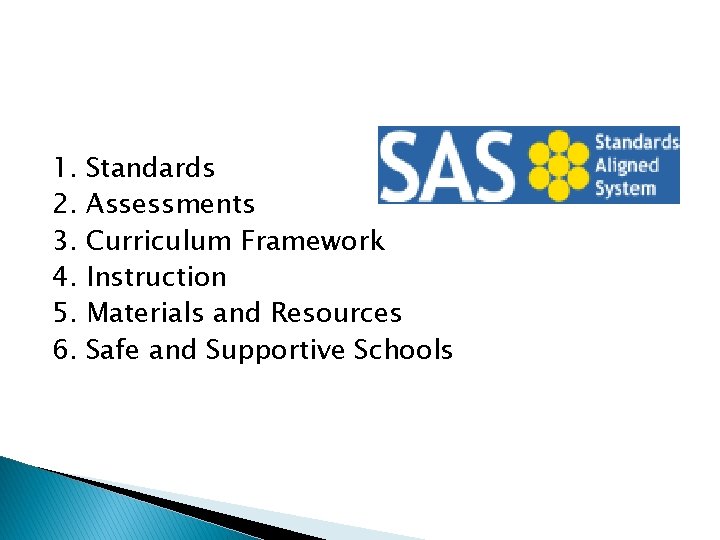
1. 2. 3. 4. 5. 6. Standards Assessments Curriculum Framework Instruction Materials and Resources Safe and Supportive Schools
Extended Thinking Strategies Abstracting Comparing/Contrasting Classifying/Categorizing Constructing Support Analyzing Perspective Inductive Reasoning Deductive Reasoning Error Analysis
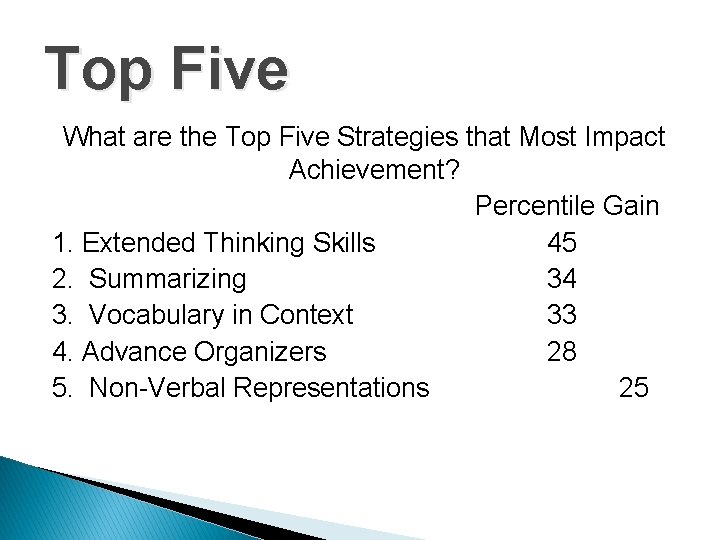
Top Five What are the Top Five Strategies that Most Impact Achievement? Percentile Gain 1. Extended Thinking Skills 45 2. Summarizing 34 3. Vocabulary in Context 33 4. Advance Organizers 28 5. Non-Verbal Representations 25
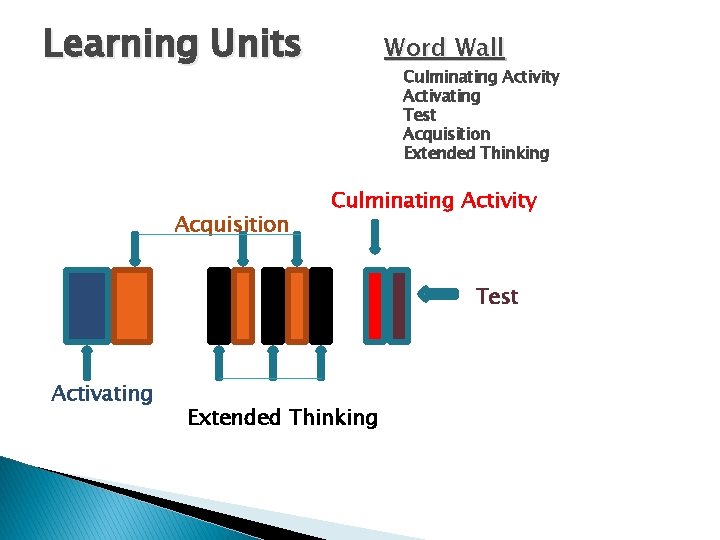
Learning Units Acquisition Word Wall Culminating Activity Activating Test Acquisition Extended Thinking Culminating Activity Test Activating Extended Thinking
Standards
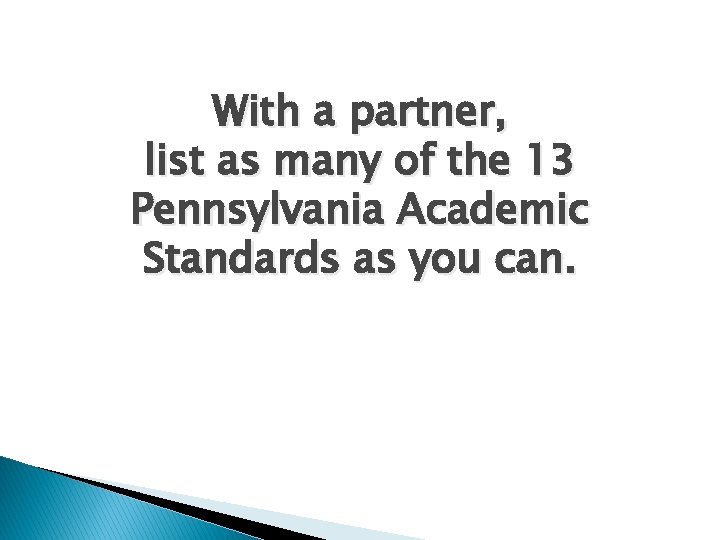
With a partner, list as many of the 13 Pennsylvania Academic Standards as you can.
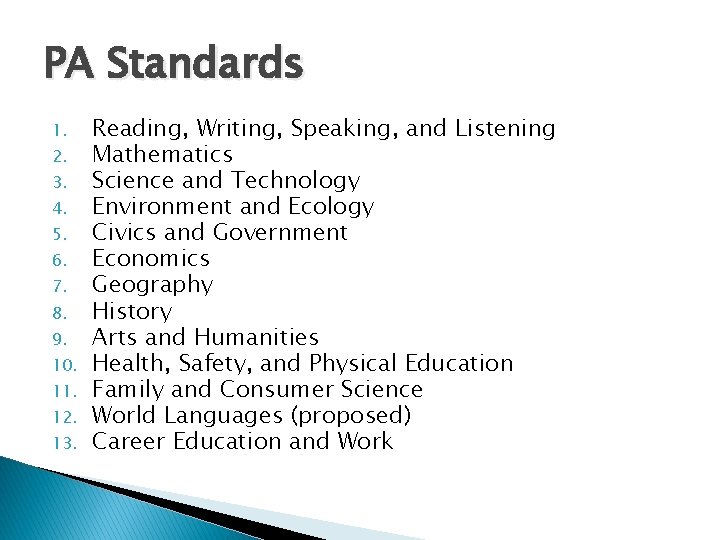
PA Standards 1. 2. 3. 4. 5. 6. 7. 8. 9. 10. 11. 12. 13. Reading, Writing, Speaking, and Listening Mathematics Science and Technology Environment and Ecology Civics and Government Economics Geography History Arts and Humanities Health, Safety, and Physical Education Family and Consumer Science World Languages (proposed) Career Education and Work
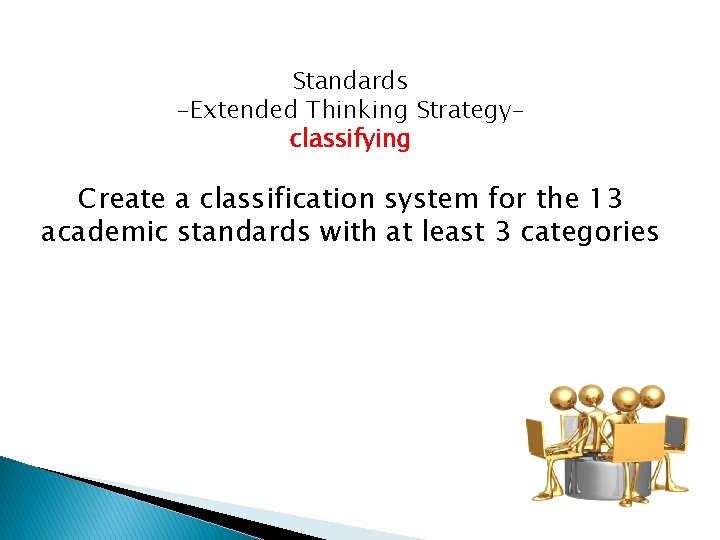
Standards -Extended Thinking Strategyclassifying Create a classification system for the 13 academic standards with at least 3 categories
How will the Standards Change for PA as we move toward 2012 -13? PA Common Core will be the resource for PA Educators. What will this mean for Lower Dauphin?
Curriculum Framework
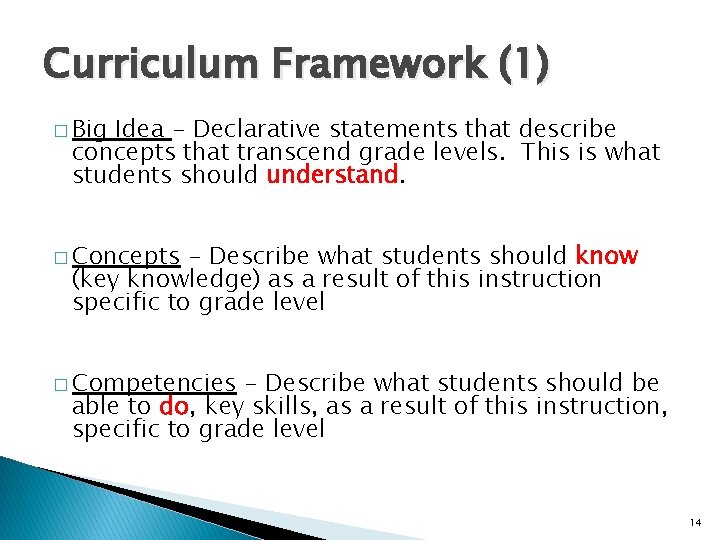
Curriculum Framework (1) � Big Idea - Declarative statements that describe concepts that transcend grade levels. This is what students should understand. � Concepts - Describe what students should know (key knowledge) as a result of this instruction specific to grade level � Competencies - Describe what students should be able to do, key skills, as a result of this instruction, specific to grade level 14
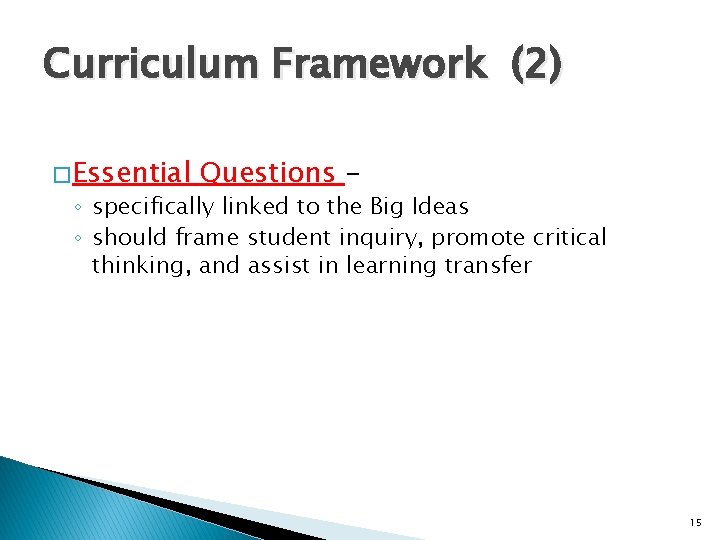
Curriculum Framework (2) � Essential Questions - ◦ specifically linked to the Big Ideas ◦ should frame student inquiry, promote critical thinking, and assist in learning transfer 15
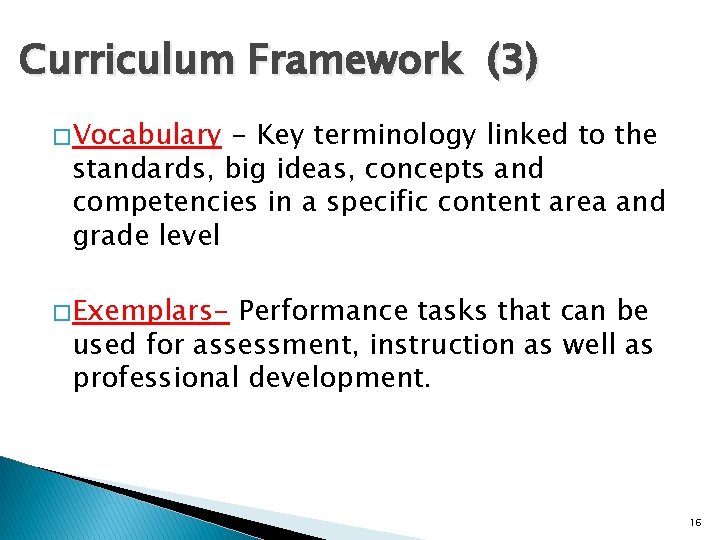
Curriculum Framework (3) � Vocabulary - Key terminology linked to the standards, big ideas, concepts and competencies in a specific content area and grade level � Exemplars- Performance tasks that can be used for assessment, instruction as well as professional development. 16
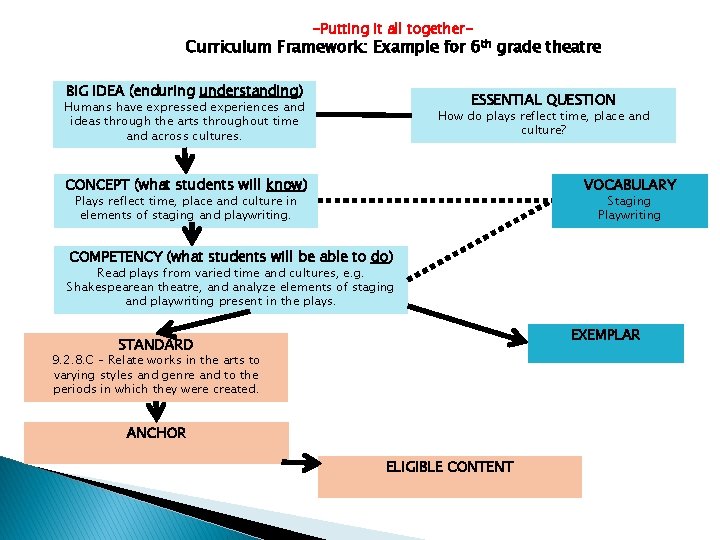
-Putting it all together- Curriculum Framework: Example for 6 th grade theatre BIG IDEA (enduring understanding) ESSENTIAL QUESTION Humans have expressed experiences and ideas through the arts throughout time and across cultures. How do plays reflect time, place and culture? CONCEPT (what students will know) VOCABULARY Plays reflect time, place and culture in elements of staging and playwriting. Staging Playwriting COMPETENCY (what students will be able to do) Read plays from varied time and cultures, e. g. Shakespearean theatre, and analyze elements of staging and playwriting present in the plays. EXEMPLAR STANDARD 9. 2. 8. C – Relate works in the arts to varying styles and genre and to the periods in which they were created. ANCHOR ELIGIBLE CONTENT
Extended Thinking - Constructing Support. With your partner select which of the three main components of the curriculum framework is the most important: Big Idea Concepts Competencies construct support for your selection.
Assessments
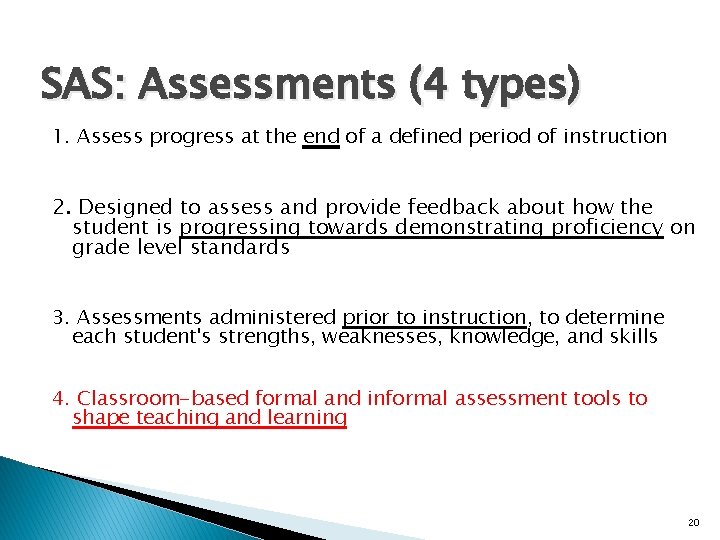
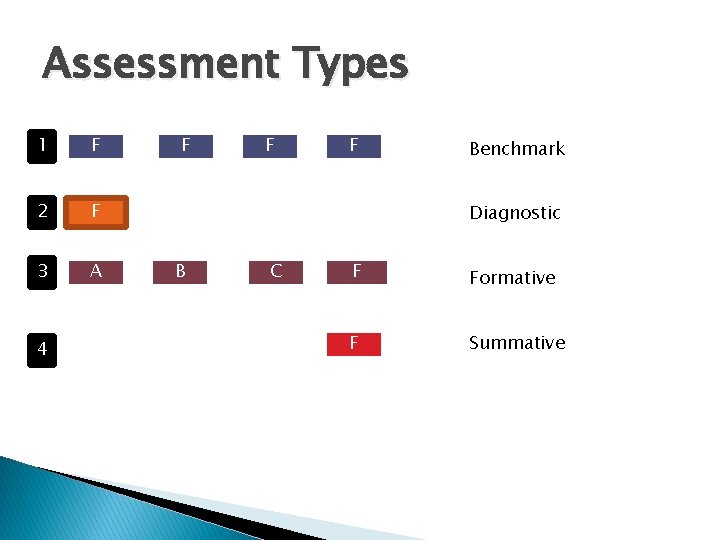
SAS: Assessments (4 types) 1. Assess progress at the end of a defined period of instruction 2. Designed to assess and provide feedback about how the student is progressing towards demonstrating proficiency on grade level standards 3. Assessments administered prior to instruction, to determine each student's strengths, weaknesses, knowledge, and skills 4. Classroom-based formal and informal assessment tools to shape teaching and learning 20
Assessment Types 1 F 2 F 3 A 4 F F F Benchmark Diagnostic B C F Formative F Summative
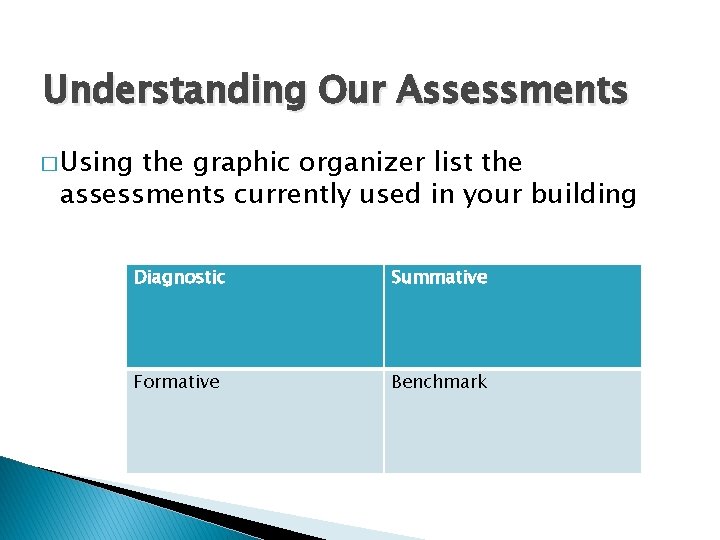
Understanding Our Assessments � Using the graphic organizer list the assessments currently used in your building Diagnostic Summative Formative Benchmark
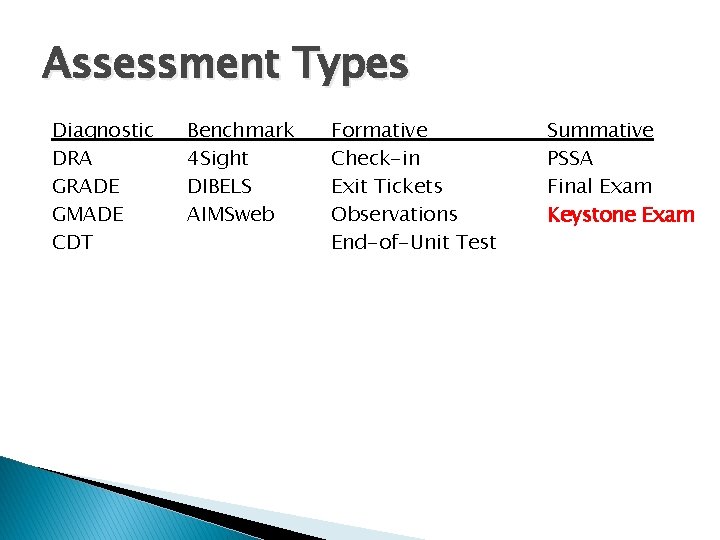
Assessment Types Diagnostic DRA GRADE GMADE CDT Benchmark 4 Sight DIBELS AIMSweb Formative Check-in Exit Tickets Observations End-of-Unit Test Summative PSSA Final Exam Keystone Exam
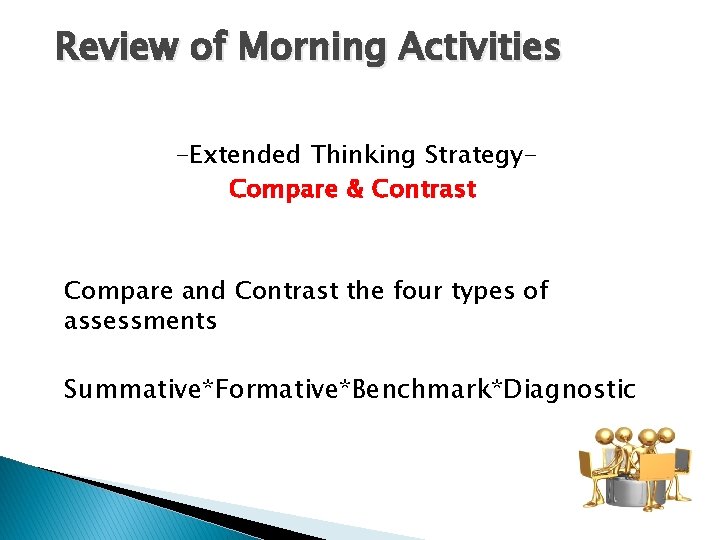
Review of Morning Activities -Extended Thinking Strategy. Compare & Contrast Compare and Contrast the four types of assessments Summative*Formative*Benchmark*Diagnostic 24
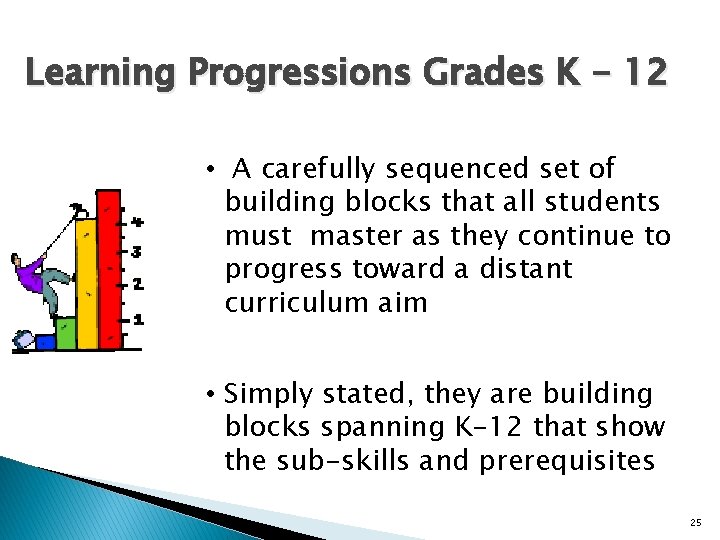
Learning Progressions Grades K - 12 • A carefully sequenced set of building blocks that all students must master as they continue to progress toward a distant curriculum aim • Simply stated, they are building blocks spanning K-12 that show the sub-skills and prerequisites 25
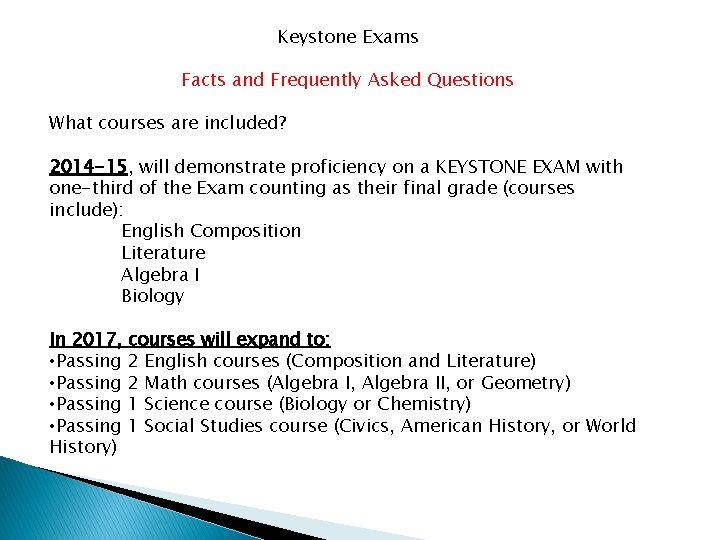
Keystone Exams Facts and Frequently Asked Questions What courses are included? 2014 -15, will demonstrate proficiency on a KEYSTONE EXAM with one-third of the Exam counting as their final grade (courses include): English Composition Literature Algebra I Biology In 2017, courses will expand to: • Passing 2 English courses (Composition and Literature) • Passing 2 Math courses (Algebra I, Algebra II, or Geometry) • Passing 1 Science course (Biology or Chemistry) • Passing 1 Social Studies course (Civics, American History, or World History)
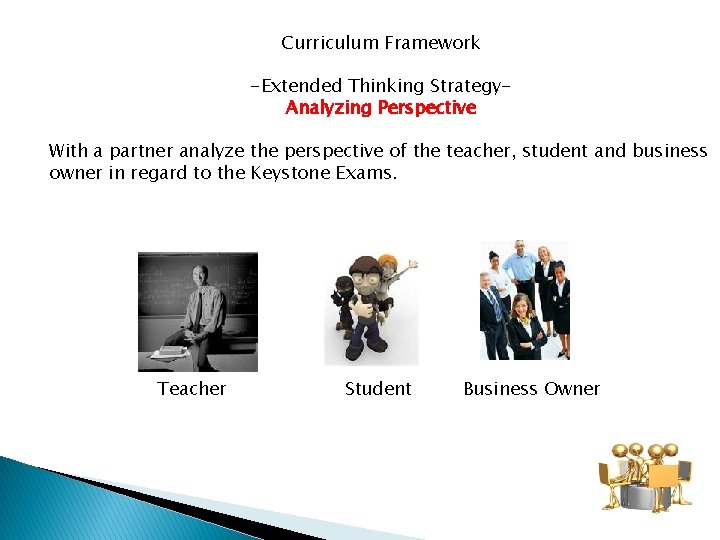
Curriculum Framework -Extended Thinking Strategy. Analyzing Perspective With a partner analyze the perspective of the teacher, student and business owner in regard to the Keystone Exams. Teacher Student Business Owner
Questions
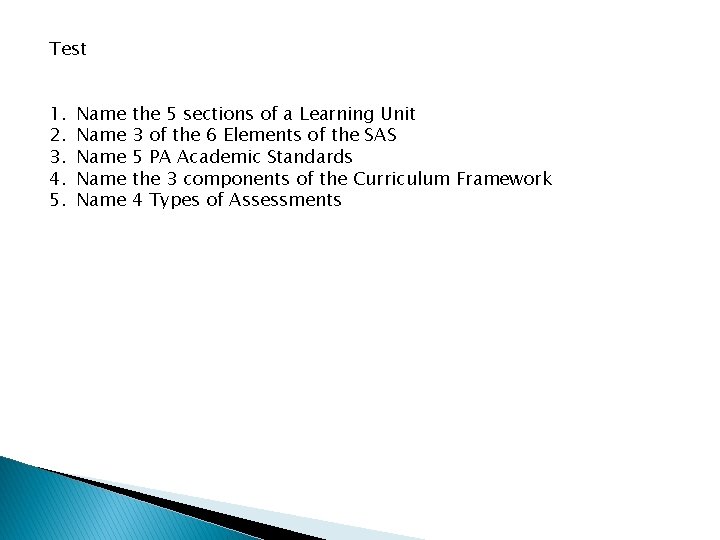
Test 1. 2. 3. 4. 5. Name Name the 5 sections of a Learning Unit 3 of the 6 Elements of the SAS 5 PA Academic Standards the 3 components of the Curriculum Framework 4 Types of Assessments