
SARI Information System Data Dashboard Suriname Dr Jubithana

SARI Information System & Data Dashboard Suriname Dr. Jubithana (MOH) Dr. Mohamed PAHO/SUR
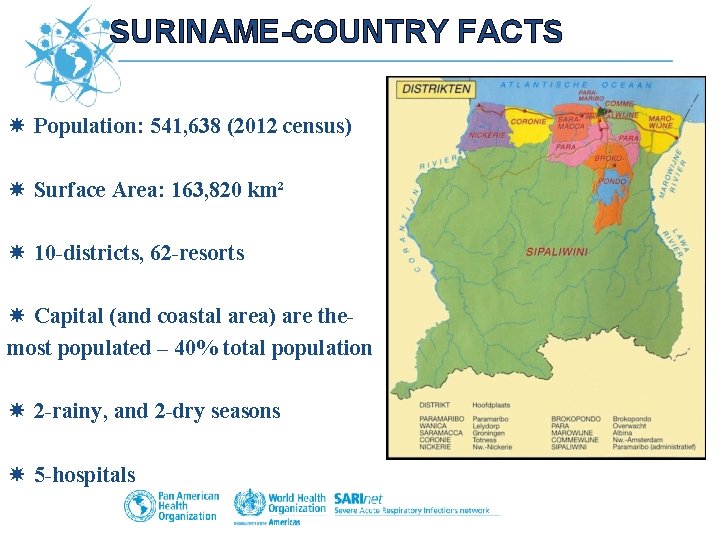
SURINAME-COUNTRY FACTS Population: 541, 638 (2012 census) Surface Area: 163, 820 km² 10 -districts, 62 -resorts Capital (and coastal area) are themost populated – 40% total population 2 -rainy, and 2 -dry seasons 5 -hospitals
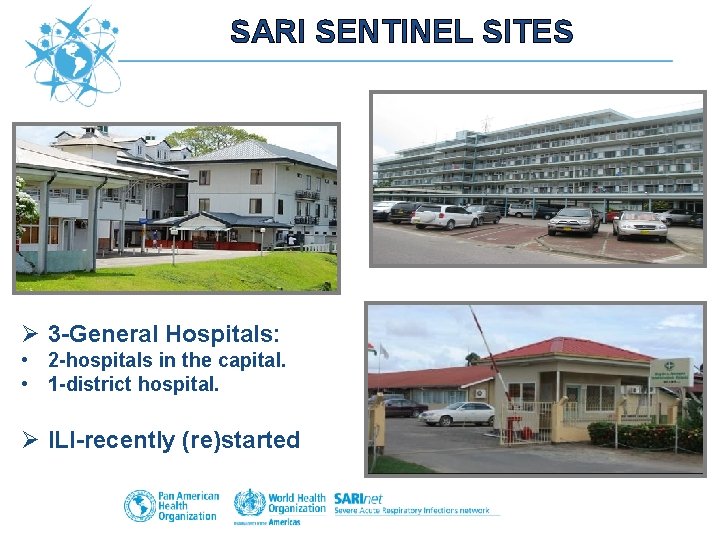
SARI SENTINEL SITES Ø 3 -General Hospitals: • 2 -hospitals in the capital. • 1 -district hospital. Ø ILI-recently (re)started
SARI CASE DEFINITION (SURINAME) Ø An acute respiratory infection, with: ü history of fever or measured fever of ≥ 38º ü and cough ü and onset within the last 10 days ü and that requires hospitalization
ILI CASE DEFINITION (SURINAME) Ø An acute respiratory infection with: ü measured fever of ≥ 38º. ü and cough. ü and onset within the last 10 days.
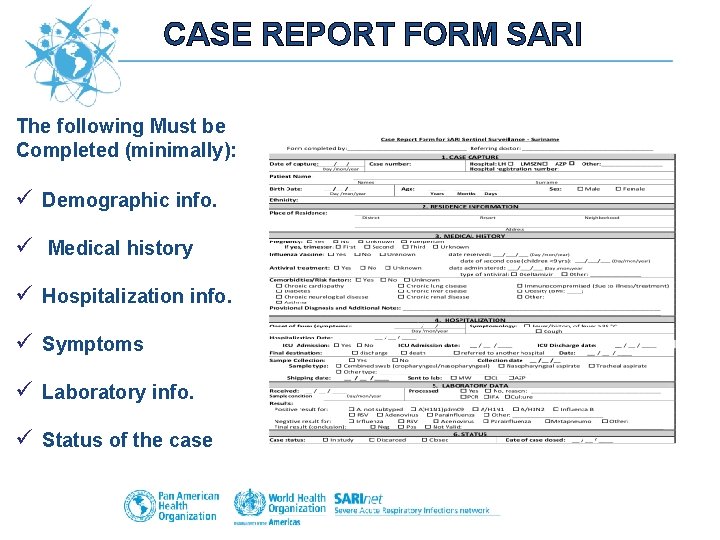
CASE REPORT FORM SARI The following Must be Completed (minimally): ü Demographic info. ü Medical history ü Hospitalization info. ü Symptoms ü Laboratory info. ü Status of the case
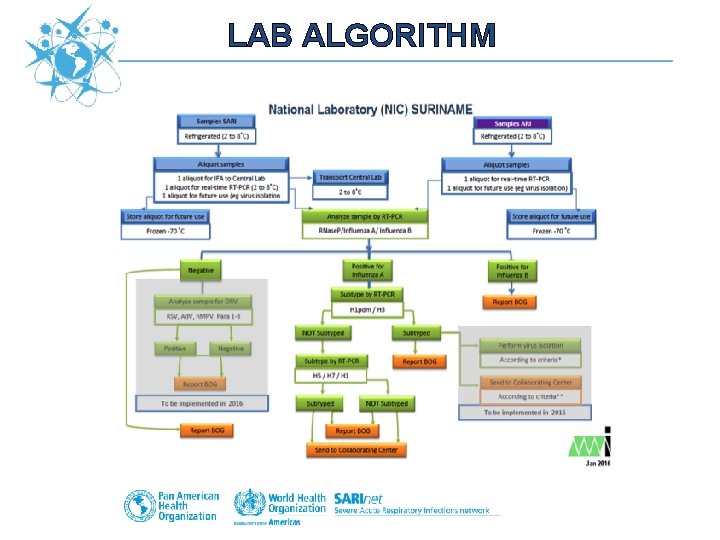
LAB ALGORITHM
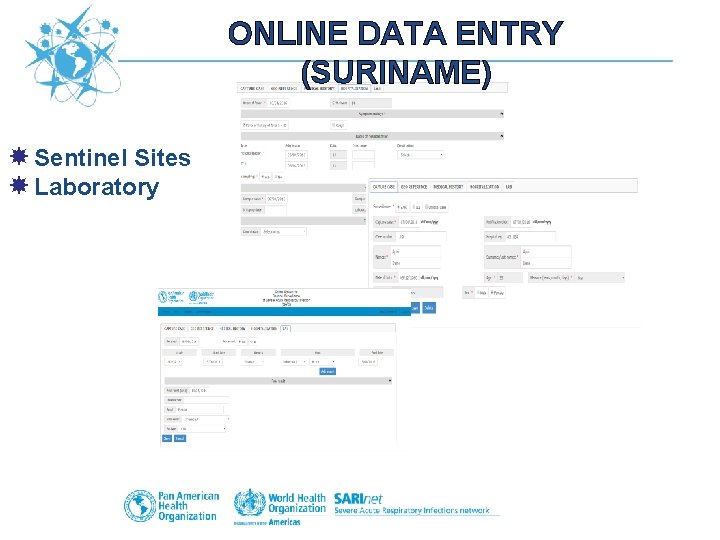
ONLINE DATA ENTRY (SURINAME) Sentinel Sites Laboratory
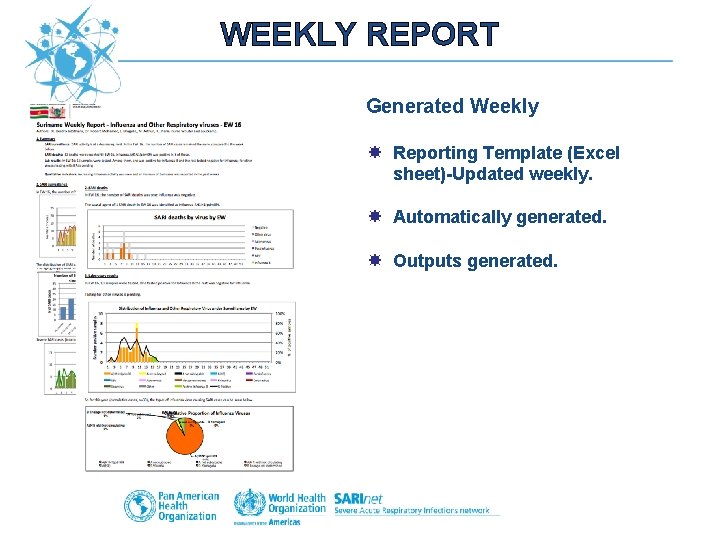
WEEKLY REPORT Generated Weekly Reporting Template (Excel sheet)-Updated weekly. Automatically generated. Outputs generated.
SENTINEL SITE PERFORMANCE MONITORING Performance Monitoring System Dashboard -monitoring of reporting: Assess the different steps associated with the surveillance process Assess the time taken to complete each task. Visualizes results Quality of data and percentage of errors in data entry
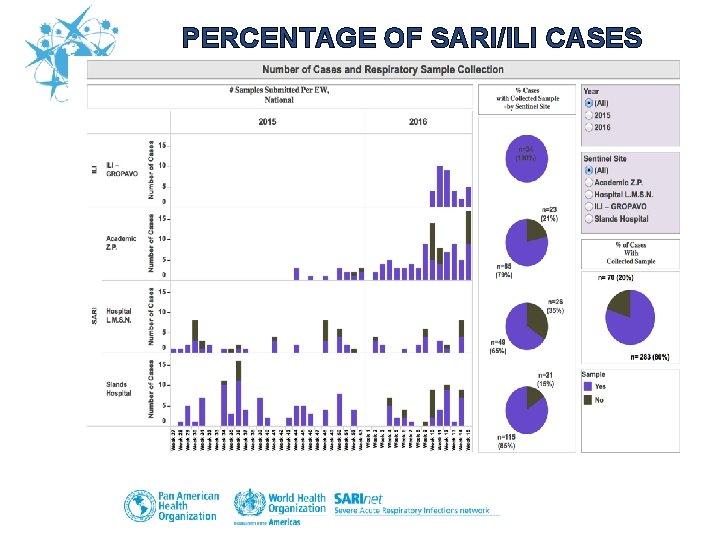
PERCENTAGE OF SARI/ILI CASES SAMPLED
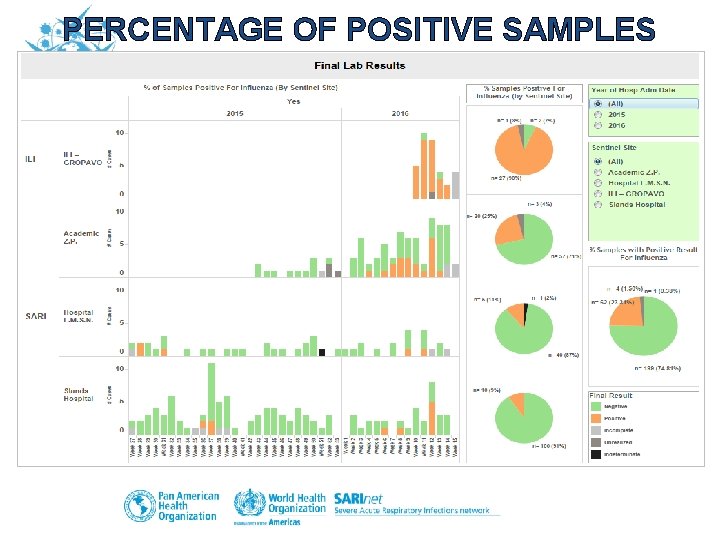
PERCENTAGE OF POSITIVE SAMPLES
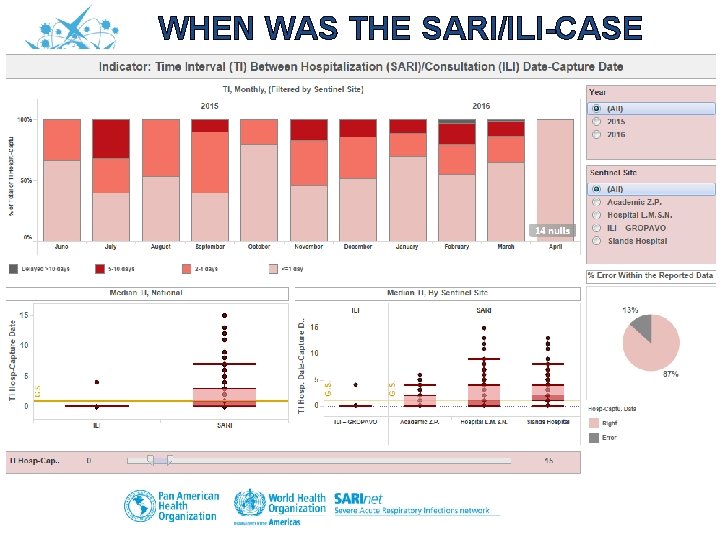
WHEN WAS THE SARI/ILI-CASE CAPTURED?
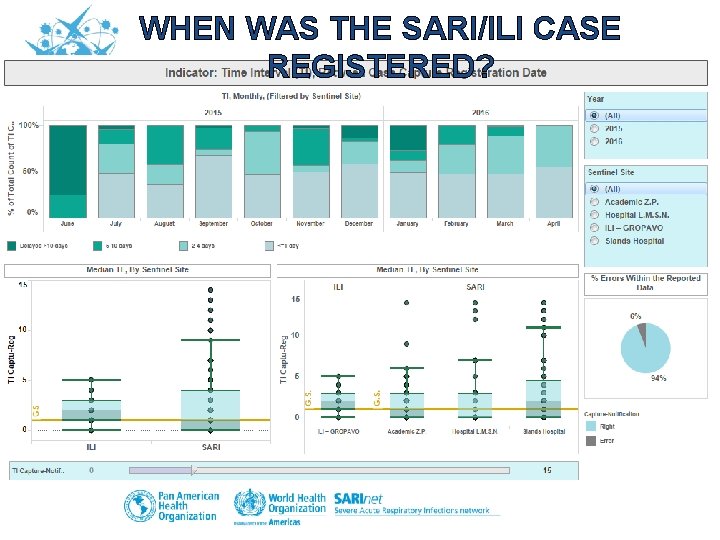
WHEN WAS THE SARI/ILI CASE REGISTERED?
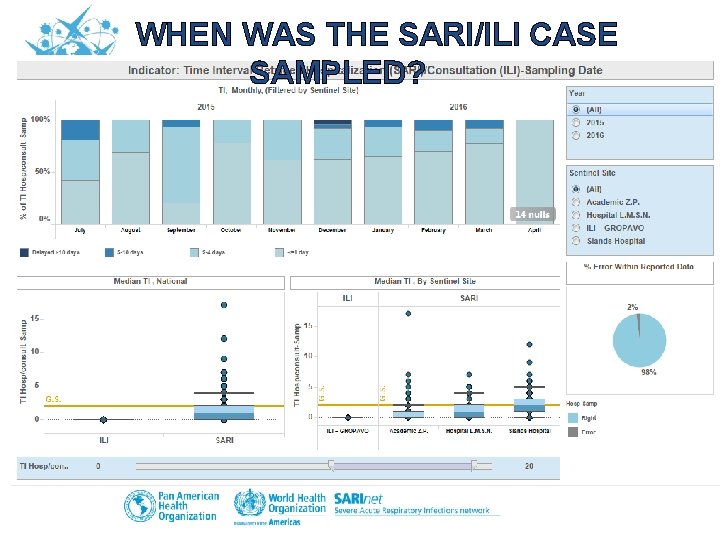
WHEN WAS THE SARI/ILI CASE SAMPLED?
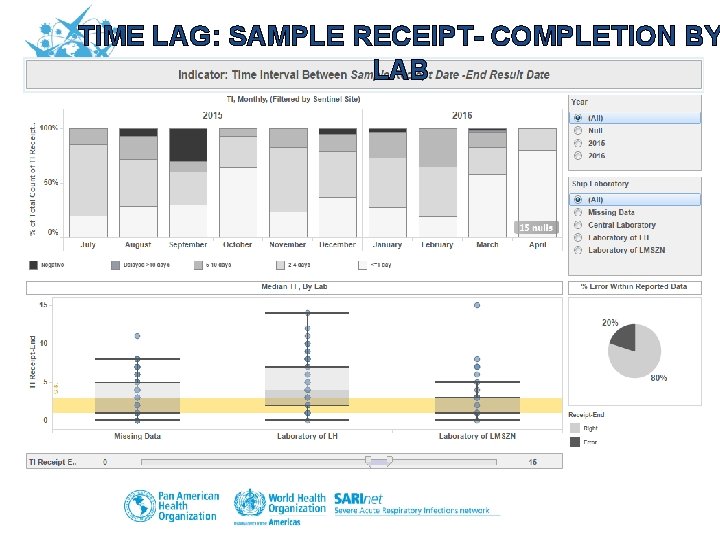
TIME LAG: SAMPLE RECEIPT- COMPLETION BY LAB
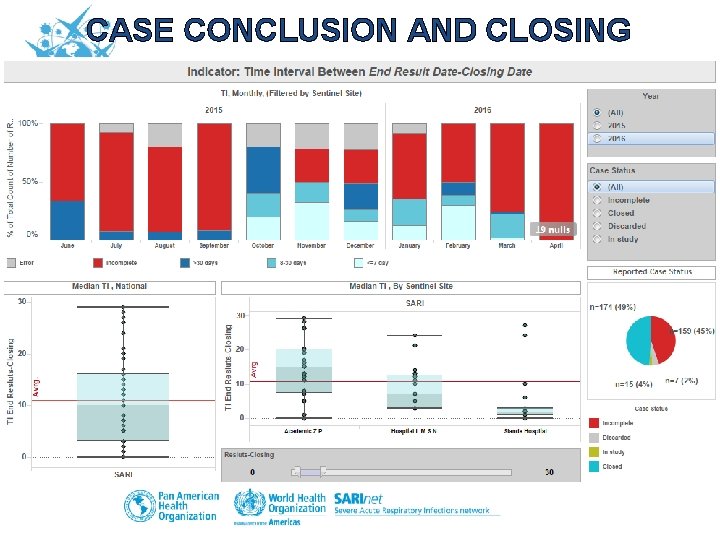
CASE CONCLUSION AND CLOSING
CHALLENGES Ø Timeliness of data entry, Sampling. Ø Data quality. Ø Feedback to sentinel sites, and sentinel providers. Ø Use of the data for policy changes: information to risk groups/ HCW Ø Sustainability
FUTURE PLANS / NEXT STEPS Ø Improve data quality and monitoring Ø Improve feedback to data providers Ø Mapping Ø Use of the data: – In depth studies: cost effectiveness, burden of disease – Info to the relevant groups
THANK YOU!
- Slides: 20