
SAP HYBRIS ERP Integration Part 1 By Solution
SAP HYBRIS – ERP Integration Part -1 By
Solution Integration
Integration Landscape
Integration Landscape
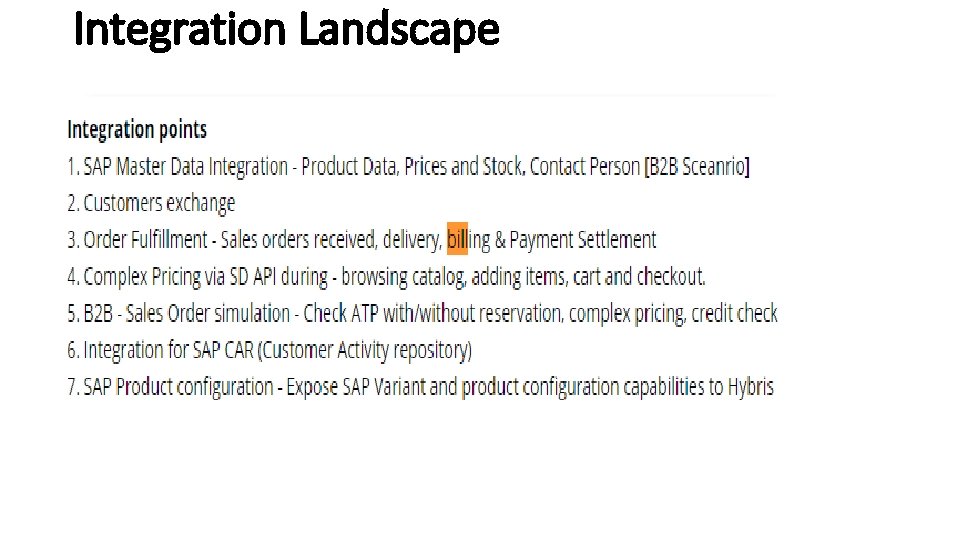
Integration Landscape
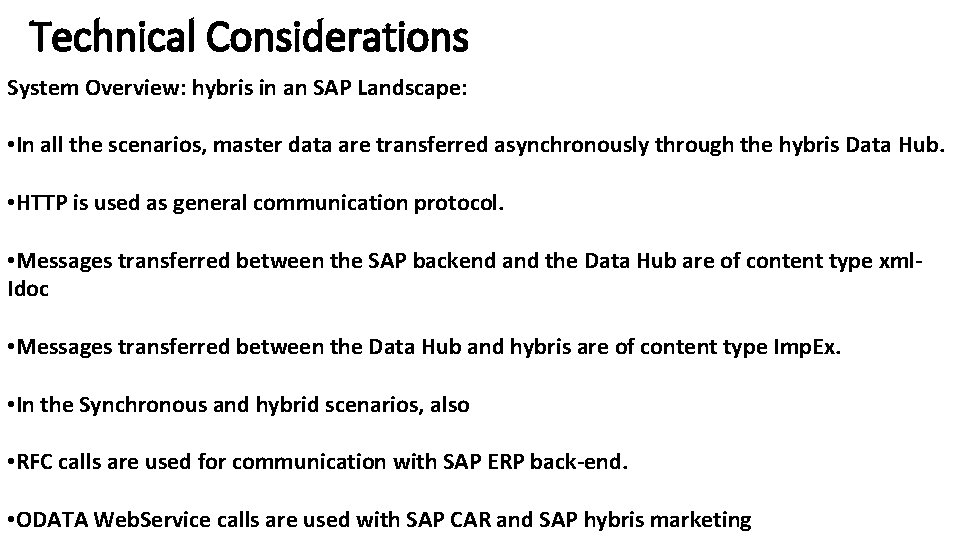
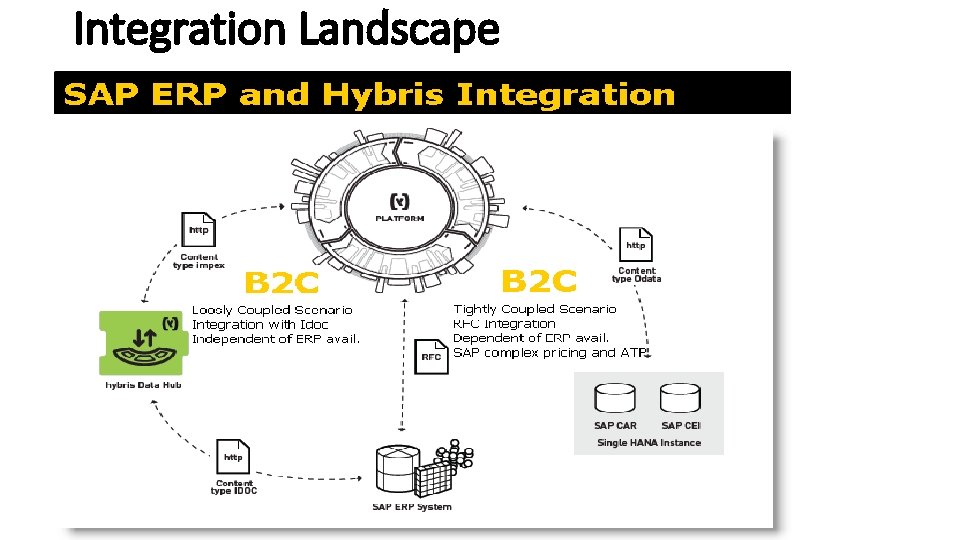
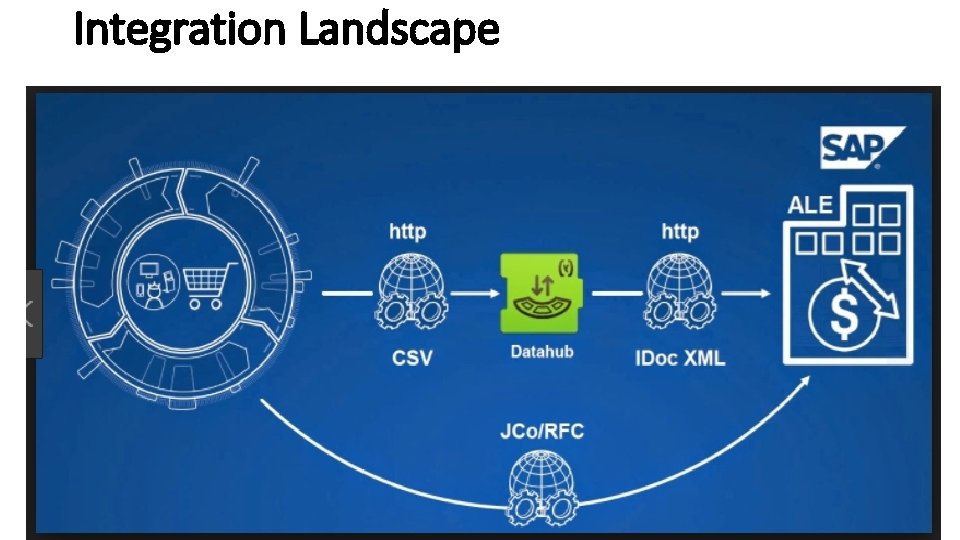
Technical Considerations System Overview: hybris in an SAP Landscape: • In all the scenarios, master data are transferred asynchronously through the hybris Data Hub. • HTTP is used as general communication protocol. • Messages transferred between the SAP backend and the Data Hub are of content type xml. Idoc • Messages transferred between the Data Hub and hybris are of content type Imp. Ex. • In the Synchronous and hybrid scenarios, also • RFC calls are used for communication with SAP ERP back-end. • ODATA Web. Service calls are used with SAP CAR and SAP hybris marketing
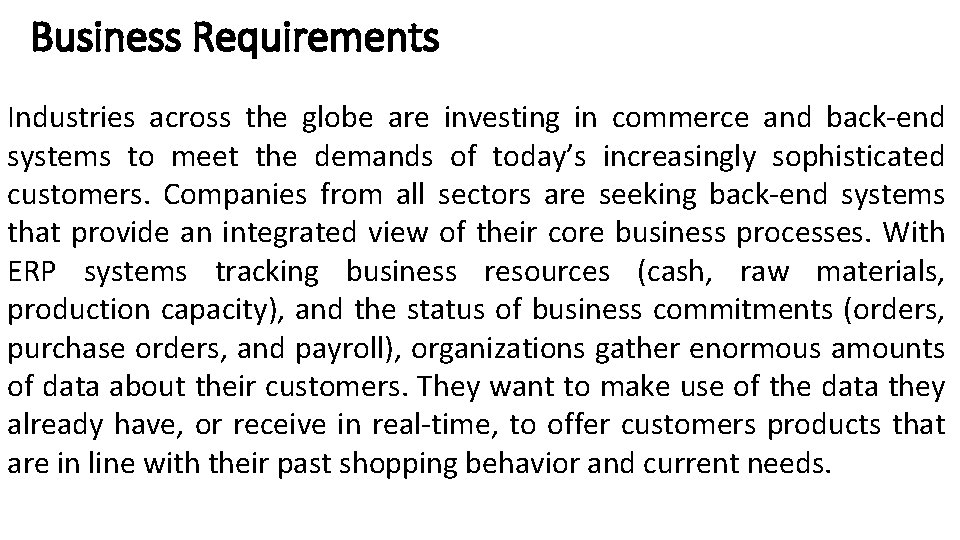
Business Requirements Industries across the globe are investing in commerce and back-end systems to meet the demands of today’s increasingly sophisticated customers. Companies from all sectors are seeking back-end systems that provide an integrated view of their core business processes. With ERP systems tracking business resources (cash, raw materials, production capacity), and the status of business commitments (orders, purchase orders, and payroll), organizations gather enormous amounts of data about their customers. They want to make use of the data they already have, or receive in real-time, to offer customers products that are in line with their past shopping behavior and current needs.
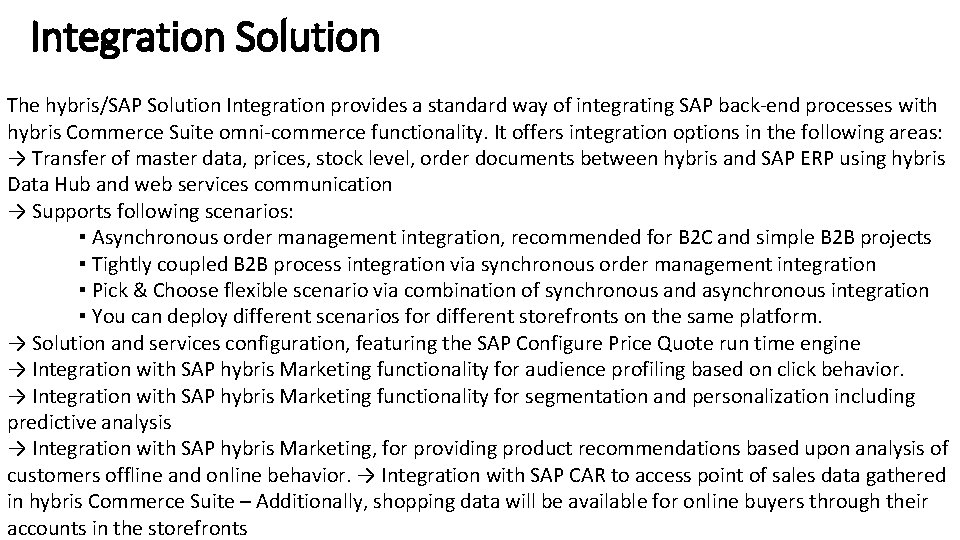
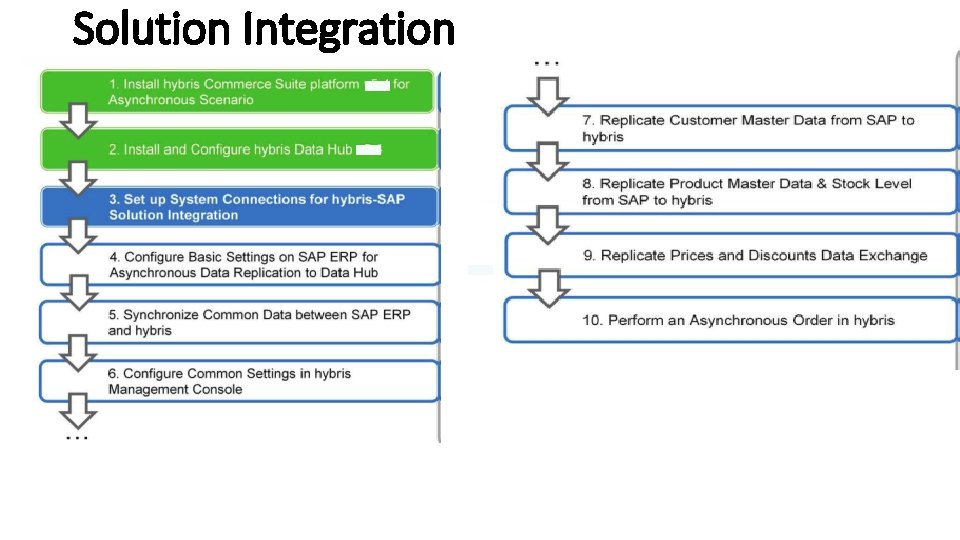
Integration Solution The hybris/SAP Solution Integration provides a standard way of integrating SAP back-end processes with hybris Commerce Suite omni-commerce functionality. It offers integration options in the following areas: → Transfer of master data, prices, stock level, order documents between hybris and SAP ERP using hybris Data Hub and web services communication → Supports following scenarios: ▪ Asynchronous order management integration, recommended for B 2 C and simple B 2 B projects ▪ Tightly coupled B 2 B process integration via synchronous order management integration ▪ Pick & Choose flexible scenario via combination of synchronous and asynchronous integration ▪ You can deploy different scenarios for different storefronts on the same platform. → Solution and services configuration, featuring the SAP Configure Price Quote run time engine → Integration with SAP hybris Marketing functionality for audience profiling based on click behavior. → Integration with SAP hybris Marketing functionality for segmentation and personalization including predictive analysis → Integration with SAP hybris Marketing, for providing product recommendations based upon analysis of customers offline and online behavior. → Integration with SAP CAR to access point of sales data gathered in hybris Commerce Suite – Additionally, shopping data will be available for online buyers through their accounts in the storefronts
Integration Solution Features → Standard, ready-to-use, integration to SAP back-end products → Asynchronous or synchronous information exchange between systems → Support for both legacy and latest versions of SAP products → Assured best possible response time to end customers → Supported in ready-to-use B 2 B and B 2 C Accelerator storefronts → Support for complex pricing, availability information, credit limit utilizing existing investment in the SAP ERP → Complex configuration of products, services and solutions → Integration with hybris WCMS Module for customer targeting and product configuration features → Real-time data analysis via powerful HANA Enterprise Cloud applications (on premise version available as well) → Data aggregation between shopping data (POS transactions) in addition to the shopping data from hybris Commerce Suite storefronts
Integration Solution Benefits → Reduced total cost of ownership due to: ▪ Less effort for systems integration and initial data migration through fully integrated toolset and pre-built data mappings ▪ Lower cost of maintenance through standardization, effective execution, monitoring and escalation of recurring data import and export operations ▪ Increased resource availability and simplified training of IT staff → Faster time to market through ready-to-use integrations → Predictive, experience-driven commerce strategies with accuracy and consistency for a successful, future-ready customer engagement platform → Access to ERP and other back-office tools for a modern customer experience → Better ability meet the demands of the market and industry with one best-of-breed system architecture → Leverage the power of SAP hybris Marketing to provide context relevant recommendations to consumers in real time.
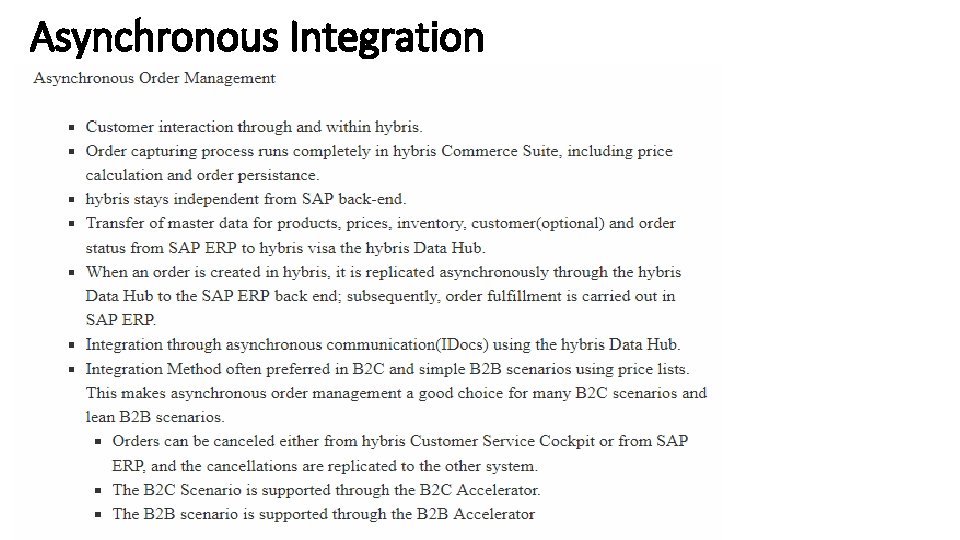
Asynchronous Integration
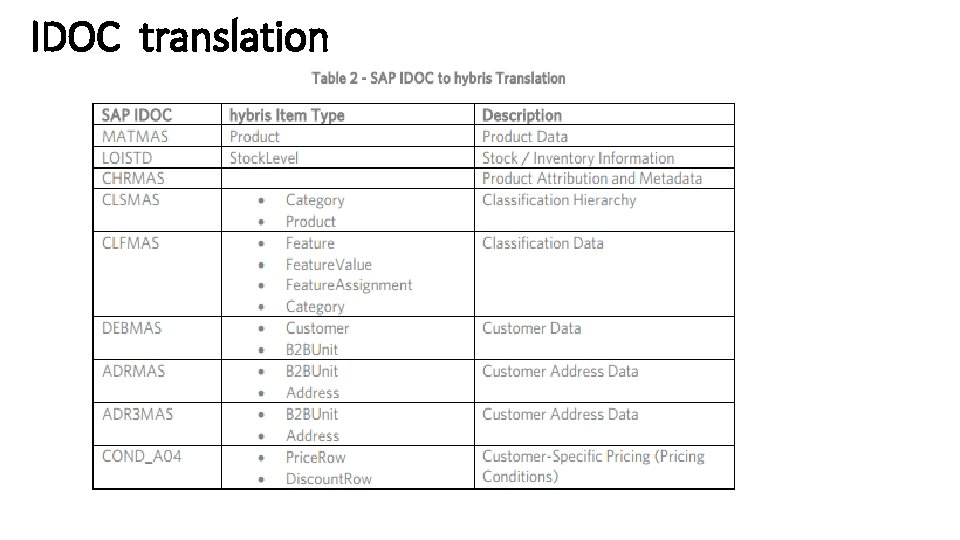
IDOC translation
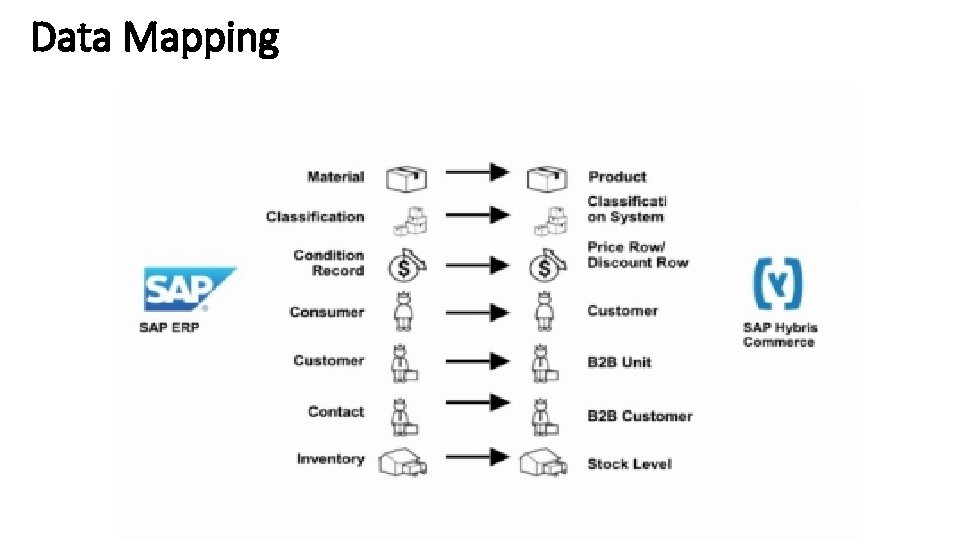
Data Mapping
- Slides: 13