
Sano Centre for Computational Medicine after one year

- Slides: 24
Sano Centre for Computational Medicine after one year of operation Marian Bubak Scientific Affairs Director Sano Centre for Computational Personalised Medicine – International Research Foundation Krakow, Poland http: //sano. science; m. bubak@sano. science
Sano Centre project is funded by • H 2020 -WIDESPREAD-2016 -2017 TEAMING PHASE 2 program (grant 857533) (15 MEur) • International Research Agendas program (IRAP) of the Foundation for Polish Science, co-funded by the European Union in the scope of the European Regional Development Fund (10 MEur) • Polish Ministry of Science and Higher Education (after 2023, 5 MEur) Special thanks to the NCBi. R, FNP, KPK and MNi. Sz. W teams as well as AGH and CMUJ for their strong support
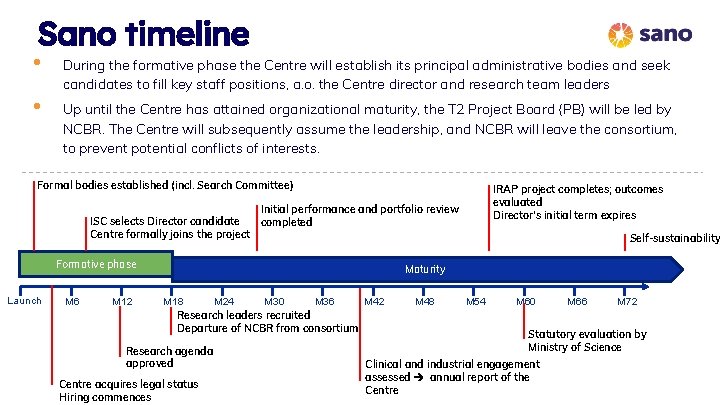
Sano timeline • • During the formative phase the Centre will establish its principal administrative bodies and seek candidates to fill key staff positions, a. o. the Centre director and research team leaders Up until the Centre has attained organizational maturity, the T 2 Project Board (PB) will be led by NCBR. The Centre will subsequently assume the leadership, and NCBR will leave the consortium, to prevent potential conflicts of interests. Formal bodies established (incl. Search Committee) IRAP project completes; outcomes evaluated Director’s initial term expires Initial performance and portfolio review ISC selects Director candidate completed Centre formally joins the project Formative phase Launch M 6 M 12 Self-sustainability Maturity M 18 M 36 M 24 M 30 M 42 Research leaders recruited Departure of NCBR from consortium Research agenda approved Centre acquires legal status Hiring commences M 48 M 54 M 60 M 66 M 72 Statutory evaluation by Ministry of Science Clinical and industrial engagement assessed annual report of the Centre
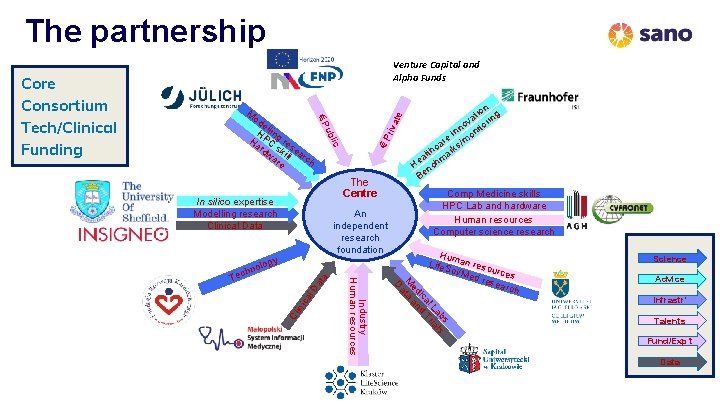
The partnership M ub e HPlling Ha C re rd sk sea wa ill rc h re riva €P od lic €P Core Consortium Tech/Clinical Funding te Venture Capital and Alpha Funds The Centre In silico expertise Modelling research Clinical Data An independent research foundation ta Da ca l ini Cl Comp Medicine skills HPC Lab and hardware Human resources Computer science research Hum Life. S an reso u ci/M ed r rces esea rch s ab ls l L Tria ica d ed an M ta Da Tec Industry Human resources logy hno n tio ng a v ri no nito n I o e ar ks/m c r h alt ma e h H nc Be Science Advice Infrastr’ Talents Fund/Exp’t Data
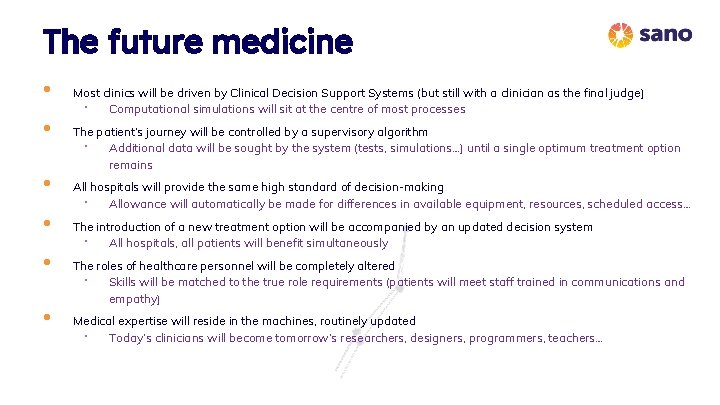
The future medicine • • • Most clinics will be driven by Clinical Decision Support Systems (but still with a clinician as the final judge) Computational simulations will sit at the centre of most processes ∙ The patient’s journey will be controlled by a supervisory algorithm Additional data will be sought by the system (tests, simulations…) until a single optimum treatment option remains ∙ All hospitals will provide the same high standard of decision-making Allowance will automatically be made for differences in available equipment, resources, scheduled access… ∙ The introduction of a new treatment option will be accompanied by an updated decision system All hospitals, all patients will benefit simultaneously ∙ The roles of healthcare personnel will be completely altered Skills will be matched to the true role requirements (patients will meet staff trained in communications and empathy) ∙ Medical expertise will reside in the machines, routinely updated Today’s clinicians will become tomorrow’s researchers, designers, programmers, teachers… ∙
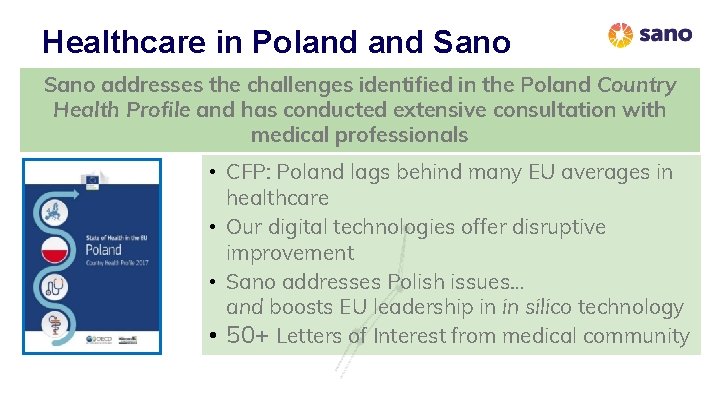
Healthcare in Poland Sano addresses the challenges identified in the Poland Country Health Profile and has conducted extensive consultation with medical professionals • CFP: Poland lags behind many EU averages in healthcare • Our digital technologies offer disruptive improvement • Sano addresses Polish issues… and boosts EU leadership in in silico technology • 50+ Letters of Interest from medical community
Main objectives of Sano • Strong advancement of data science, models, algorithms, and technologies involved in personalised medicine, including design of holistic, replicable, generic framework for simulation-based Decision Support Systems creation • Development of new computation-based solutions for diagnostics and therapy in daily healthcare • Systematic involvement of regional biomed businesses, specialising in technologies and services for personalised medicine, in high-profile research projects and clinical adoption of their outcomes • Education initiatives to train knowledge workers with skills in data analytics, simulation, and HPC/Big Data, to respond to the growing demand for skilled workforce in bio-engineering and medical devices
Main research directions / teams • Clinical data • Computer vision • Personal health • Health informatics • Modelling and simulation • Extreme-scale data and computing 8
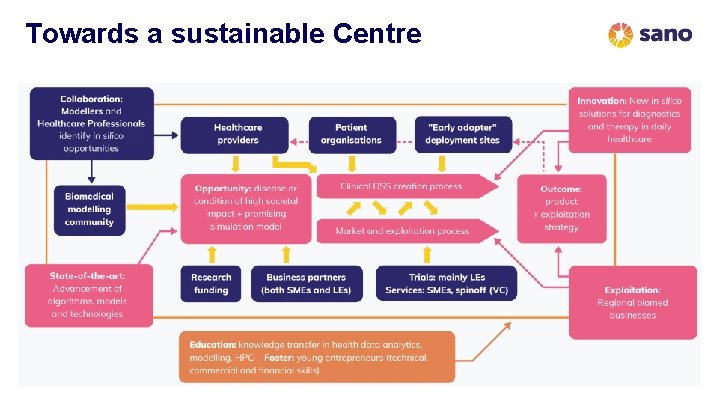
Towards a sustainable Centre
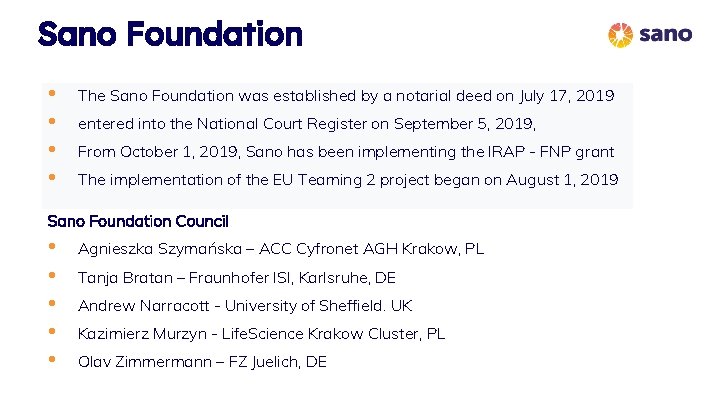
Sano Foundation • • The Sano Foundation was established by a notarial deed on July 17, 2019 entered into the National Court Register on September 5, 2019, From October 1, 2019, Sano has been implementing the IRAP - FNP grant The implementation of the EU Teaming 2 project began on August 1, 2019 Sano Foundation Council • • • Agnieszka Szymańska – ACC Cyfronet AGH Krakow, PL Tanja Bratan – Fraunhofer ISI, Karlsruhe, DE Andrew Narracott - University of Sheffield. UK Kazimierz Murzyn - Life. Science Krakow Cluster, PL Olav Zimmermann – FZ Juelich, DE
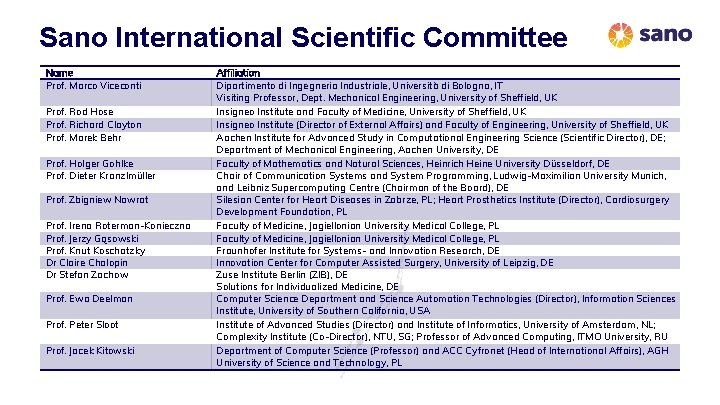
Sano International Scientific Committee Name Prof. Marco Viceconti Prof. Rod Hose Prof. Richard Clayton Prof. Marek Behr Prof. Holger Gohlke Prof. Dieter Kranzlmüller Prof. Zbigniew Nawrat Prof. Irena Roterman-Konieczna Prof. Jerzy Gąsowski Prof. Knut Koschatzky Dr Claire Chalopin Dr Stefan Zachow Prof. Ewa Deelman Prof. Peter Sloot Prof. Jacek Kitowski Affiliation Dipartimento di Ingegneria Industriale, Università di Bologna, IT Visiting Professor, Dept. Mechanical Engineering, University of Sheffield, UK Insigneo Institute and Faculty of Medicine, University of Sheffield, UK Insigneo Institute (Director of External Affairs) and Faculty of Engineering, University of Sheffield, UK Aachen Institute for Advanced Study in Computational Engineering Science (Scientific Director), DE; Department of Mechanical Engineering, Aachen University, DE Faculty of Mathematics and Natural Sciences, Heinrich Heine University Düsseldorf, DE Chair of Communication Systems and System Programming, Ludwig-Maximilian University Munich, and Leibniz Supercomputing Centre (Chairman of the Board), DE Silesian Center for Heart Diseases in Zabrze, PL; Heart Prosthetics Institute (Director), Cardiosurgery Development Foundation, PL Faculty of Medicine, Jagiellonian University Medical College, PL Fraunhofer Institute for Systems- and Innovation Research, DE Innovation Center for Computer Assisted Surgery, University of Leipzig, DE Zuse Institute Berlin (ZIB), DE Solutions for Individualized Medicine, DE Computer Science Department and Science Automation Technologies (Director), Information Sciences Institute, University of Southern California, USA Institute of Advanced Studies (Director) and Institute of Informatics, University of Amsterdam, NL; Complexity Institute (Co-Director), NTU, SG; Professor of Advanced Computing, ITMO University, RU Department of Computer Science (Professor) and ACC Cyfronet (Head of International Affairs), AGH University of Science and Technology, PL
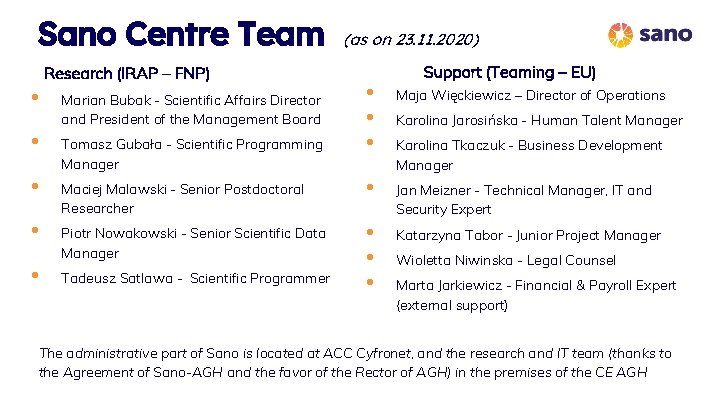
Sano Centre Team • • • Research (IRAP – FNP) (as on 23. 11. 2020) Support (Teaming – EU) • • • Maja Więckiewicz – Director of Operations Maciej Malawski - Senior Postdoctoral Researcher • Piotr Nowakowski - Senior Scientific Data Manager • • • Jan Meizner - Technical Manager, IT and Security Expert Marian Bubak - Scientific Affairs Director and President of the Management Board Tomasz Gubała - Scientific Programming Manager Tadeusz Satlawa - Scientific Programmer Karolina Jarosińska - Human Talent Manager Karolina Tkaczuk - Business Development Manager Katarzyna Tabor - Junior Project Manager Wioletta Niwinska - Legal Counsel Marta Jarkiewicz - Financial & Payroll Expert (external support) The administrative part of Sano is located at ACC Cyfronet, and the research and IT team (thanks to the Agreement of Sano-AGH and the favor of the Rector of AGH) in the premises of the CE AGH
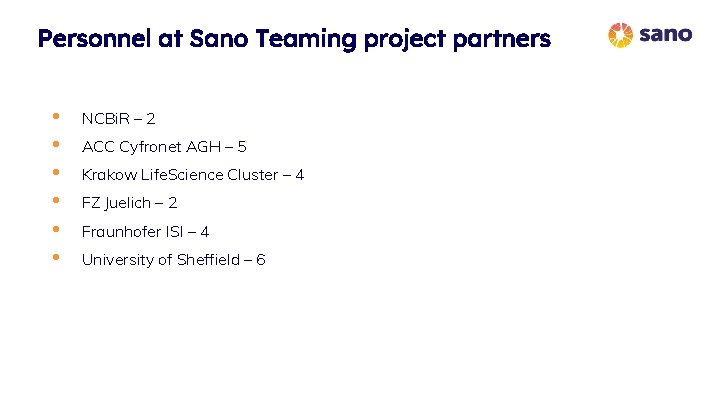
Personnel at Sano Teaming project partners • • • NCBi. R – 2 ACC Cyfronet AGH – 5 Krakow Life. Science Cluster – 4 FZ Juelich – 2 Fraunhofer ISI – 4 University of Sheffield – 6
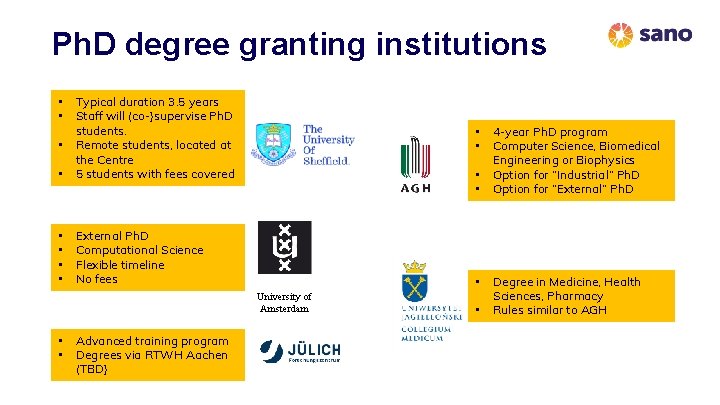
Ph. D degree granting institutions • Typical duration 3. 5 years Staff will (co-)supervise Ph. D students. Remote students, located at the Centre 5 students with fees covered • • External Ph. D Computational Science Flexible timeline No fees • • University of Amsterdam • • Advanced training program Degrees via RTWH Aachen (TBD) • 4 -year Ph. D program Computer Science, Biomedical Engineering or Biophysics Option for “Industrial” Ph. D Option for “External” Ph. D Degree in Medicine, Health Sciences, Pharmacy Rules similar to AGH
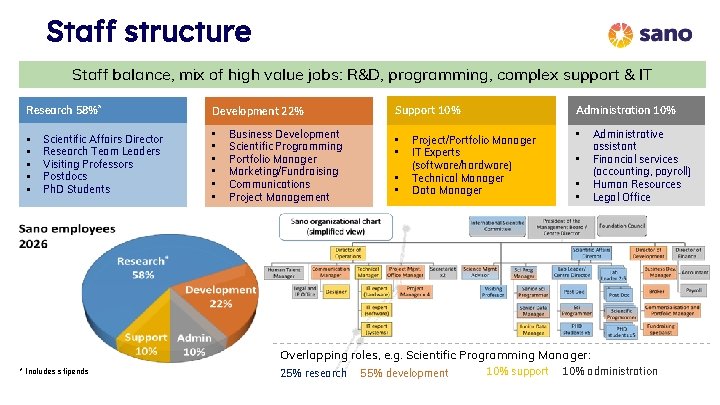
Staff structure Staff balance, mix of high value jobs: R&D, programming, complex support & IT Research 58%* § § § Scientific Affairs Director Research Team Leaders Visiting Professors Postdocs Ph. D Students Development 22% • • • Business Development Scientific Programming Portfolio Manager Marketing/Fundraising Communications Project Management Support 10% • • Administration 10% Project/Portfolio Manager IT Experts (software/hardware) Technical Manager Data Manager • • Administrative assistant Financial services (accounting, payroll) Human Resources Legal Office Overlapping roles, e. g. Scientific Programming Manager: * Includes stipends 25% research 55% development 10% support 10% administration
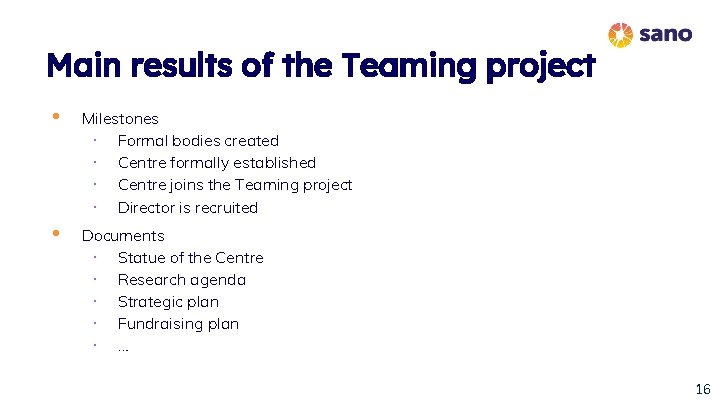
Main results of the Teaming project • • Milestones ∙ Formal bodies created ∙ Centre formally established ∙ Centre joins the Teaming project ∙ Director is recruited Documents ∙ Statue of the Centre ∙ Research agenda ∙ Strategic plan ∙ Fundraising plan ∙ … 16
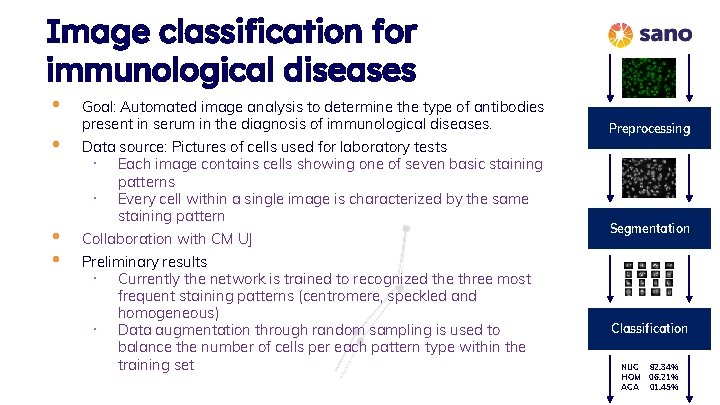
Image classification for immunological diseases • • Goal: Automated image analysis to determine the type of antibodies present in serum in the diagnosis of immunological diseases. Data source: Pictures of cells used for laboratory tests Each image contains cells showing one of seven basic staining patterns Every cell within a single image is characterized by the same staining pattern Preprocessing ∙ ∙ Collaboration with CM UJ Preliminary results Currently the network is trained to recognized the three most frequent staining patterns (centromere, speckled and homogeneous) Data augmentation through random sampling is used to balance the number of cells per each pattern type within the training set Segmentation ∙ ∙ Classification NUC HOM ACA 92. 34% 06. 21% 01. 45%
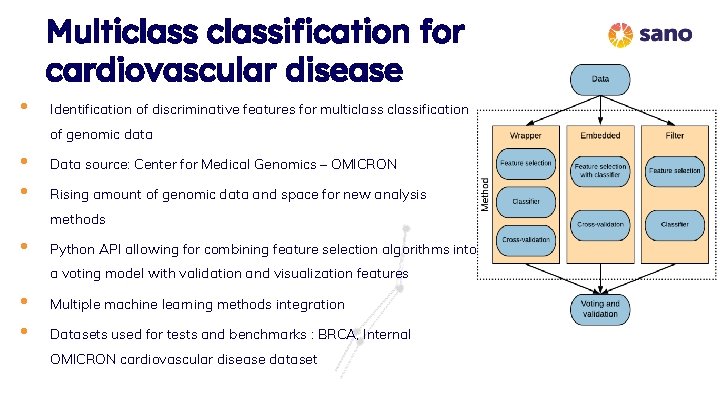
• Multiclassification for cardiovascular disease Identification of discriminative features for multiclassification of genomic data • • Data source: Center for Medical Genomics – OMICRON Rising amount of genomic data and space for new analysis methods • Python API allowing for combining feature selection algorithms into a voting model with validation and visualization features • • Multiple machine learning methods integration Datasets used for tests and benchmarks : BRCA, Internal OMICRON cardiovascular disease dataset
Analysis COVID-19 patient data • Goal: ∙ ∙ ∙ Creating a COVID-19 time series analysis toolbox Use regular blood sample tests to find correlatons with COVID-19 progression Provide support for clinicians in terms of treatment prognostics • Data sources under discussion: • Collaborations: ∙ ∙ University Hospital Krakow Brazilian hospital via USFD University of Sheffield (internal grant) CM UJ
Sano as Associate Partner of Comp. Bio. Med 2 • Scientific program – many common topics and complementary ones, hence a unique opportunity for synergy as well as for collaboration, and for competition • • Common workshops, schools, etc. • Sano – a way for sustainability of methods, procedures, and software tools elaborated by Comp. Bio. Med 2 partners • Sano – an attractive place for advancement of scientific carriers, not just for young researchers involved in Comp. Bio. Med 2 Sano – a “testbed” for Comp. Bio. Med methods, procedures, and software tools in the process of their development
Sano and PRIMAGE project • Scientific program – many common and complementary topics, an opportunity for collaboration • • • Common workshops, schools… • Sano – an attractive place for advancement of scientific carriers not just for only young researchers involved in PRIMAGE Sano – a “testbed” for PRIMAGE methods, procedures and tools Sano – a way for sustainability of methods, procedures, and software tools elaborated by PRIMAGE
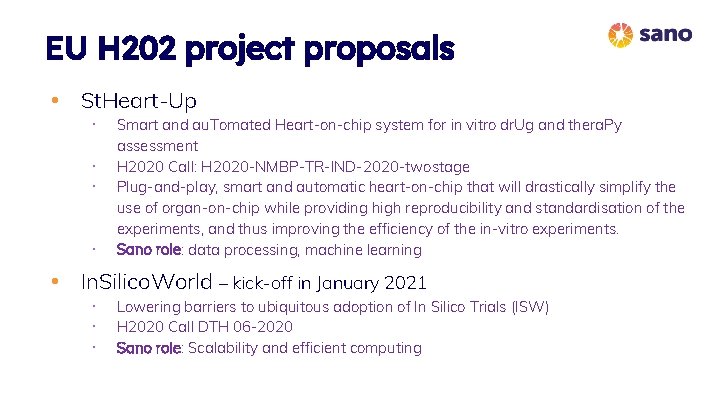
EU H 202 project proposals • St. Heart-Up ∙ Smart and au. Tomated Heart-on-chip system for in vitro dr. Ug and thera. Py ∙ ∙ ∙ assessment H 2020 Call: H 2020 -NMBP-TR-IND-2020 -twostage Plug-and-play, smart and automatic heart-on-chip that will drastically simplify the use of organ-on-chip while providing high reproducibility and standardisation of the experiments, and thus improving the efficiency of the in-vitro experiments. Sano role: data processing, machine learning • In. Silico. World – kick-off in January 2021 ∙ Lowering barriers to ubiquitous adoption of In Silico Trials (ISW) ∙ H 2020 Call DTH 06 -2020 ∙ Sano role: Scalability and efficient computing
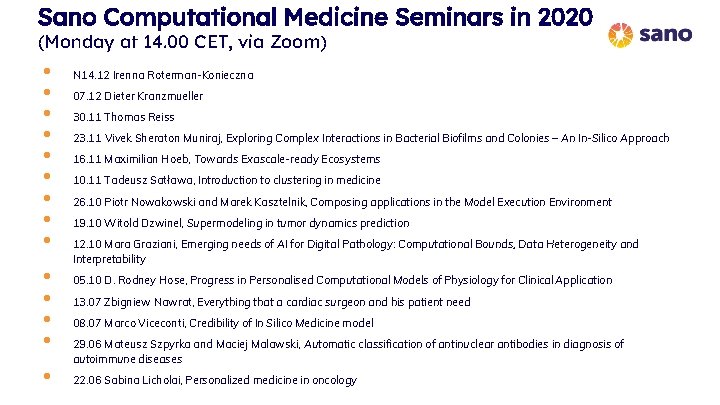
Sano Computational Medicine Seminars in 2020 (Monday at 14. 00 CET, via Zoom) • • • • N 14. 12 Irenna Roterman-Konieczna 07. 12 Dieter Kranzmueller 30. 11 Thomas Reiss 23. 11 Vivek Sheraton Muniraj, Exploring Complex Interactions in Bacterial Biofilms and Colonies – An In-Silico Approach 16. 11 Maximilian Hoeb, Towards Exascale-ready Ecosystems 10. 11 Tadeusz Satława, Introduction to clustering in medicine 26. 10 Piotr Nowakowski and Marek Kasztelnik, Composing applications in the Model Execution Environment 19. 10 Witold Dzwinel, Supermodeling in tumor dynamics prediction 12. 10 Mara Graziani, Emerging needs of AI for Digital Pathology: Computational Bounds, Data Heterogeneity and Interpretability 05. 10 D. Rodney Hose, Progress in Personalised Computational Models of Physiology for Clinical Application 13. 07 Zbigniew Nawrat, Everything that a cardiac surgeon and his patient need 08. 07 Marco Viceconti, Credibility of In Silico Medicine model 29. 06 Mateusz Szpyrka and Maciej Malawski, Automatic classification of antinuclear antibodies in diagnosis of autoimmune diseases 22. 06 Sabina Licholai, Personalized medicine in oncology
More at http: //sano. science and http: //dice. cyfronet. pl/projects contact: m. bubak@sano. science