
Sanitation Study and wastewater collection system conceptual design










- Slides: 51
ﺑﺴﻢ ﺍﻟﻠﻪ ﺍﻟﺮﺣﻤﻦ ﺍﻟﺮﺣﻴﻢ Sanitation Study and wastewater collection system conceptual design for Beita Town by Hamadalla Alsayyed Shehada Dweikat under the direction of Dr. Sameer Shadeed 2011 -2012
INTRODUCTION
Introduction � Sanitation situation reflects the development of communities. � Health of people is also related to the sanitation situation. � Existing of sewerage system consider an indication of a good sanitation situation. � Beita is not served by a sewerage system.
Project Objectives � Identify the existing sanitation situation. � Identify the water supply system and sanitation problems. � Conceptual system. design of wastewater collection
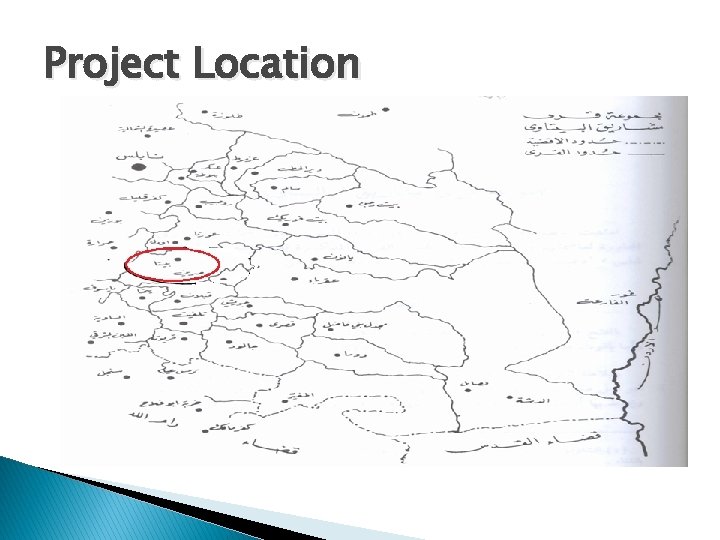
Project Location
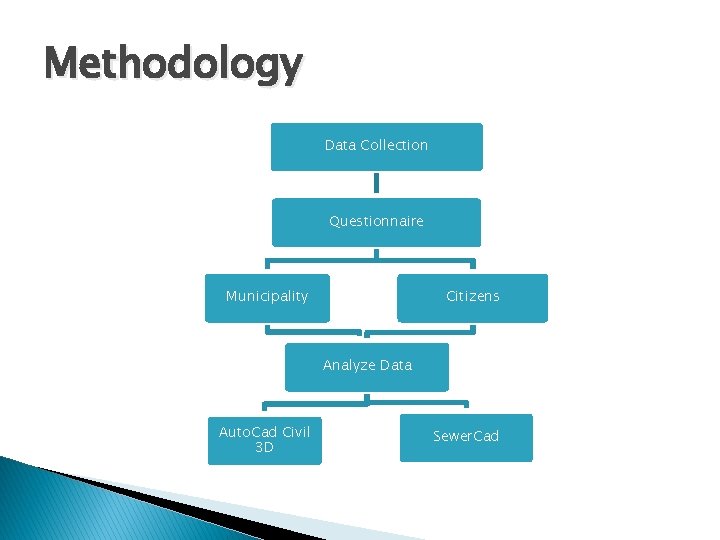
Methodology Data Collection Questionnaire Municipality Citizens Analyze Data Auto. Cad Civil 3 D Sewer. Cad
STUDY AREA
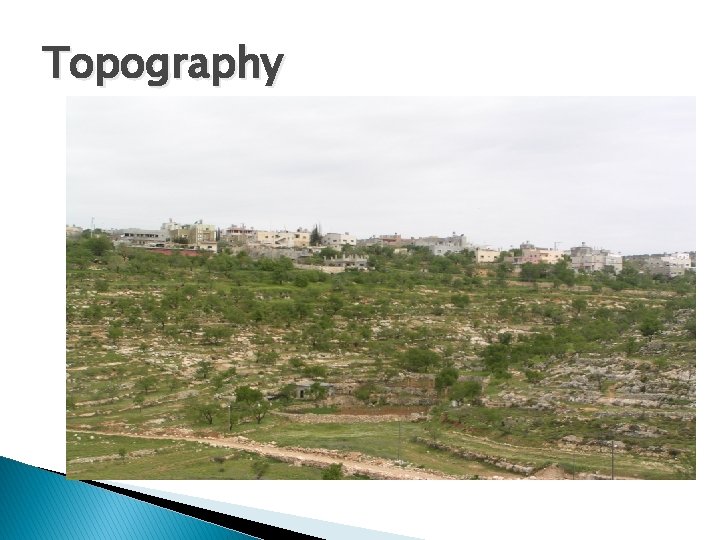
Topography
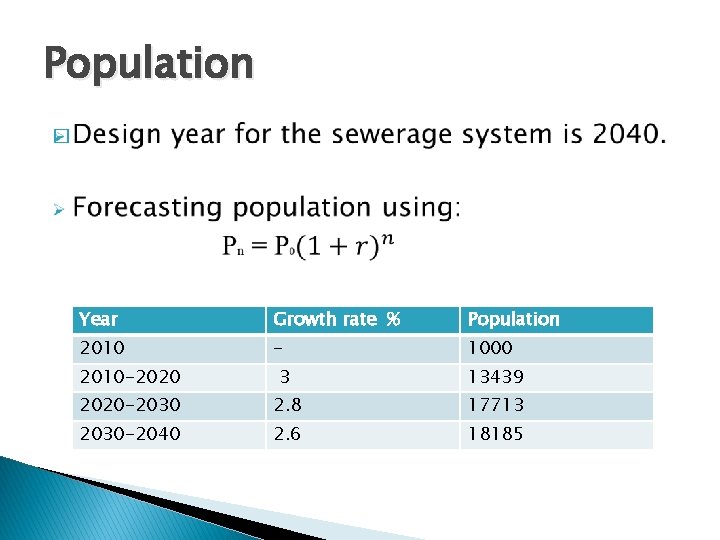
Population � Year Growth rate % Population 2010 - 1000 2010 -2020 3 13439 2020 -2030 2. 8 17713 2030 -2040 2. 6 18185
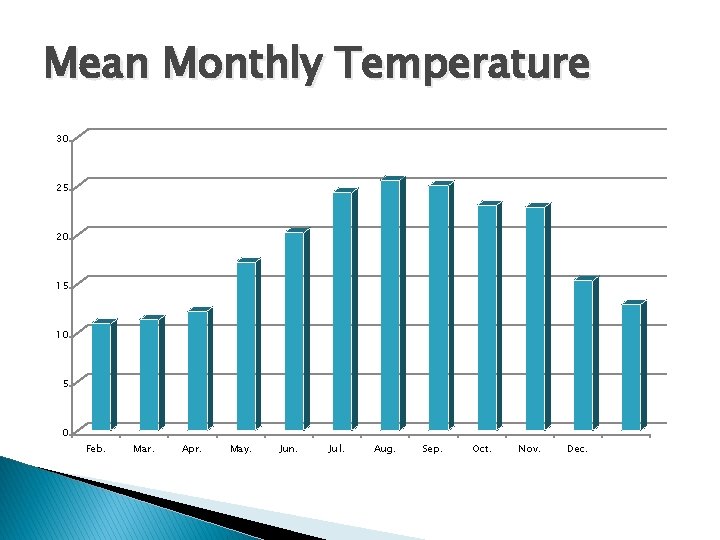
Mean Monthly Temperature 30 25 20 15 10 5 0 Feb. Mar. Apr. May. Jun. Jul. Aug. Sep. Oct. Nov. Dec.
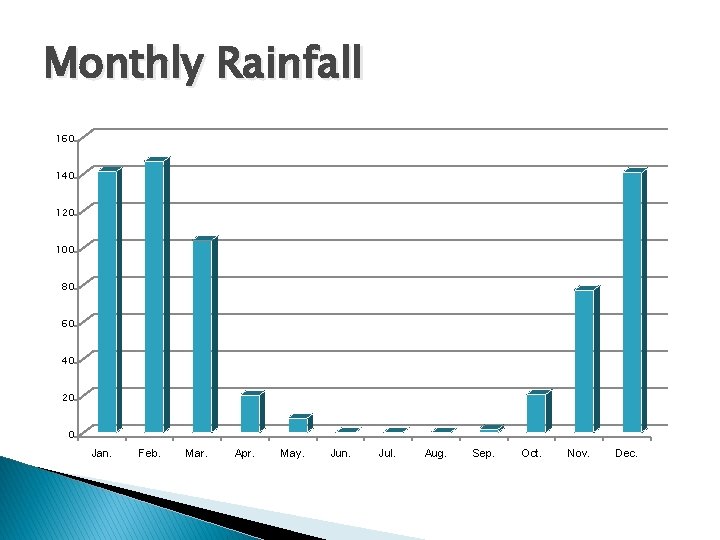
Monthly Rainfall 160 140 120 100 80 60 40 20 0 Jan. Feb. Mar. Apr. May. Jun. Jul. Aug. Sep. Oct. Nov. Dec.
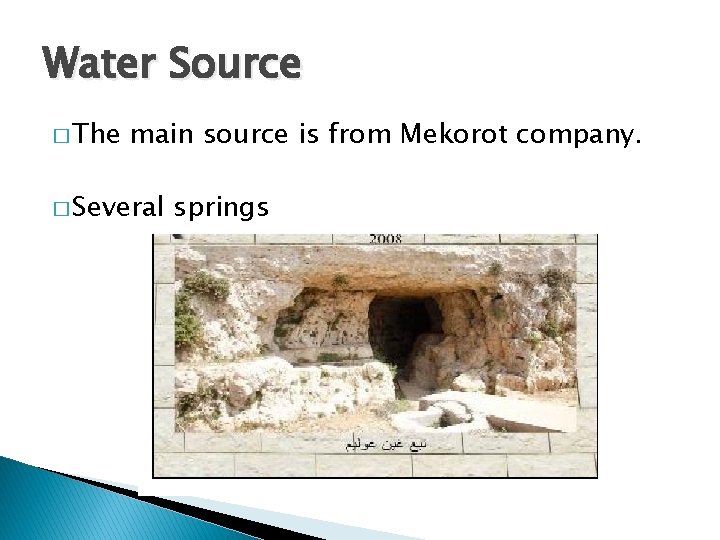
Water Source � The main source is from Mekorot company. � Several springs
QUESTIONNAIRE
Questionnaire � Questionnaire was developed to collect information needed. � It • • • was include: Household information water consumption waste water Solid waste General health and hygiene
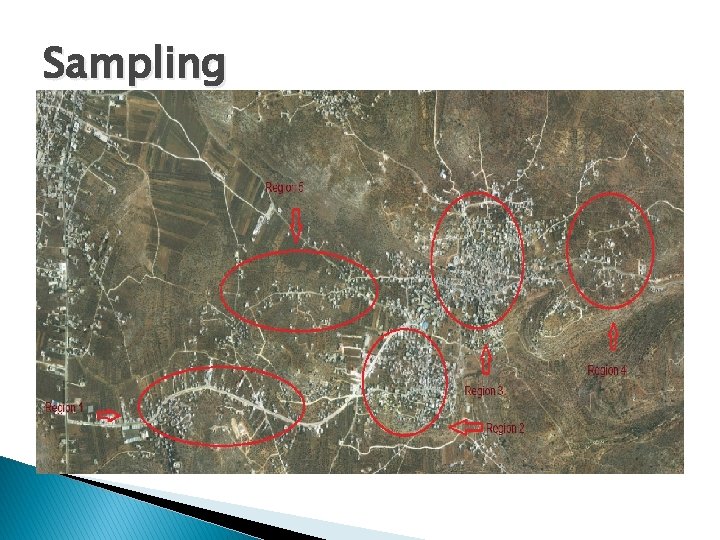
Sampling
Data Analysis � Sample size is 70. � Average number of family members is 7. � Average size of cesspit is 32. 5 m³. � Average volume of solid waste is 5 kg/day. � 60% have a cistern, while 40% does not.
WATER DISTRIBUTION SYSTEM
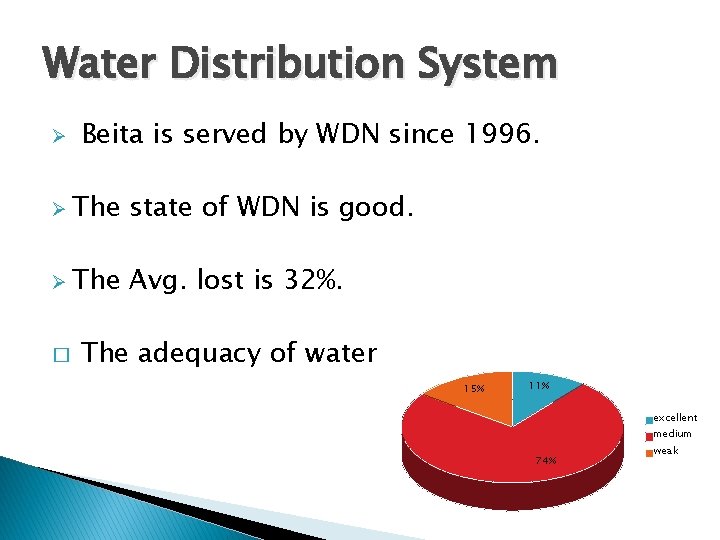
Water Distribution System Ø Beita is served by WDN since 1996. Ø The state of WDN is good. Ø The Avg. lost is 32%. � The adequacy of water 15% 11% excellent medium 74% weak
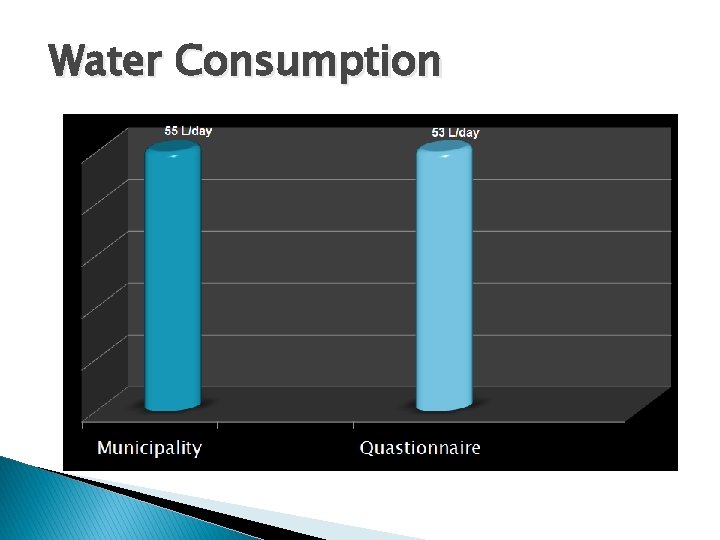
Water Consumption
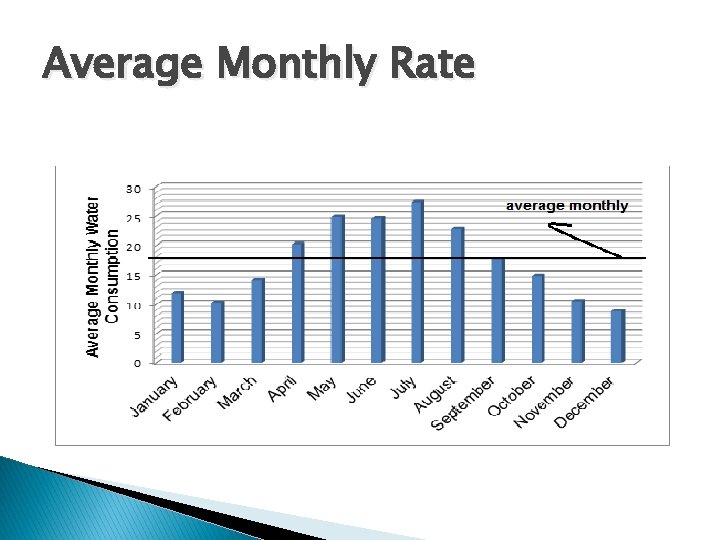
Average Monthly Rate
GENERAL HYGIENE SITUATION
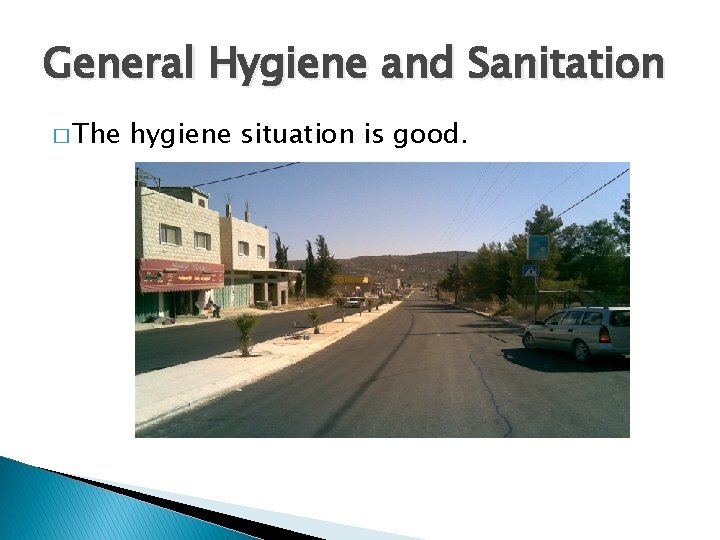
General Hygiene and Sanitation � The hygiene situation is good.
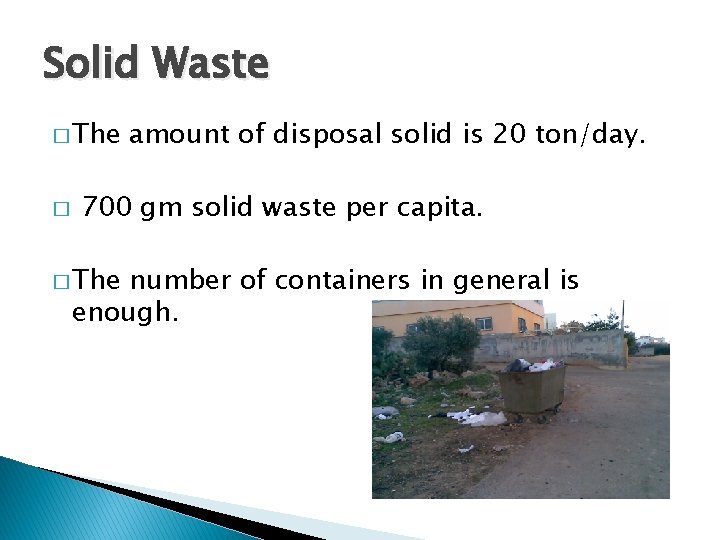
Solid Waste � The � amount of disposal solid is 20 ton/day. 700 gm solid waste per capita. � The number of containers in general is enough.
Landfill � Landfill pits. � Status � The ground is rocky and contains large of landfill is very bad. waste is burn in unhealthy way.
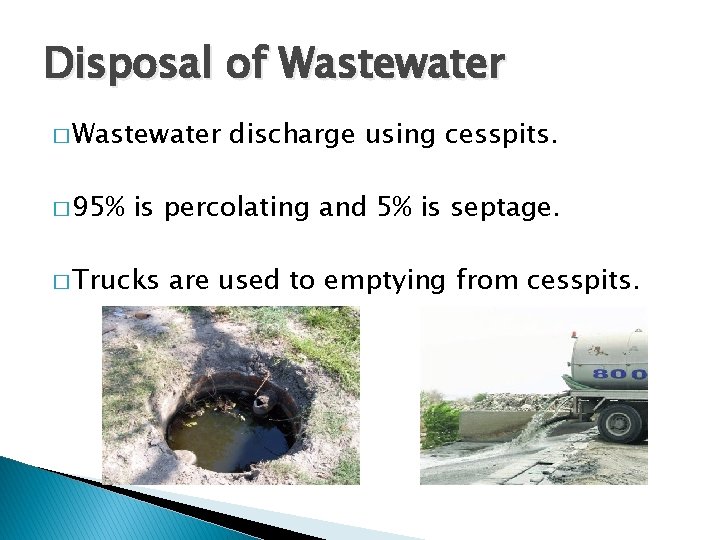
Disposal of Wastewater � 95% discharge using cesspits. is percolating and 5% is septage. � Trucks are used to emptying from cesspits.
Sewerage Collection System
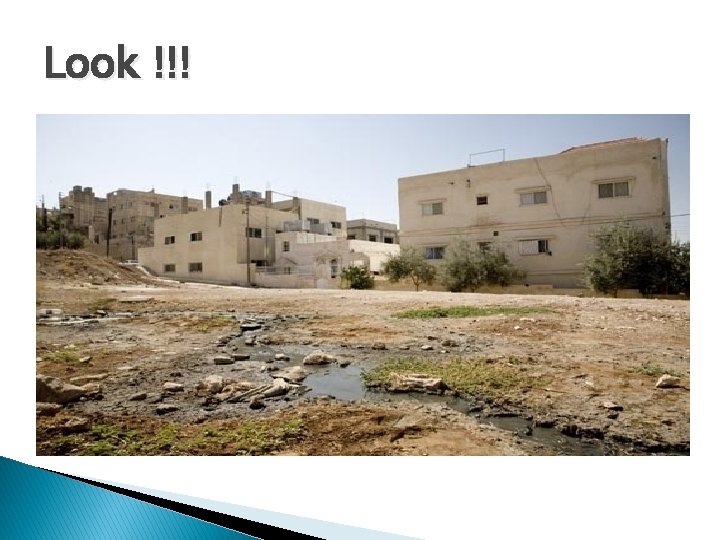
Look !!!
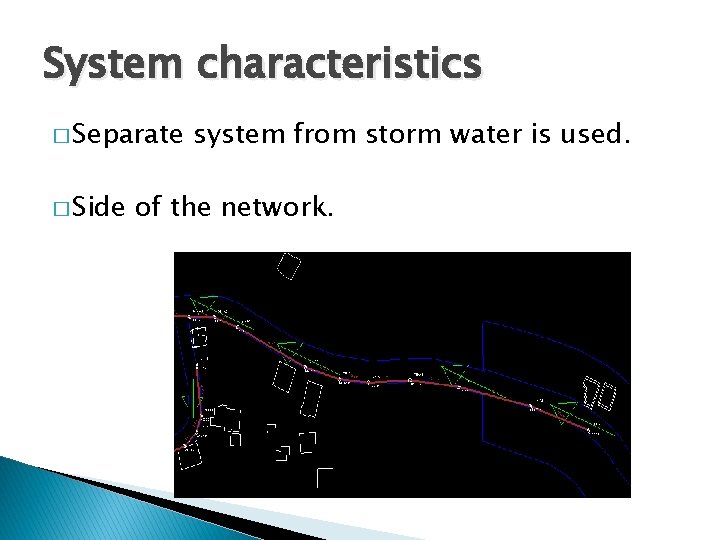
System characteristics � Separate � Side system from storm water is used. of the network.
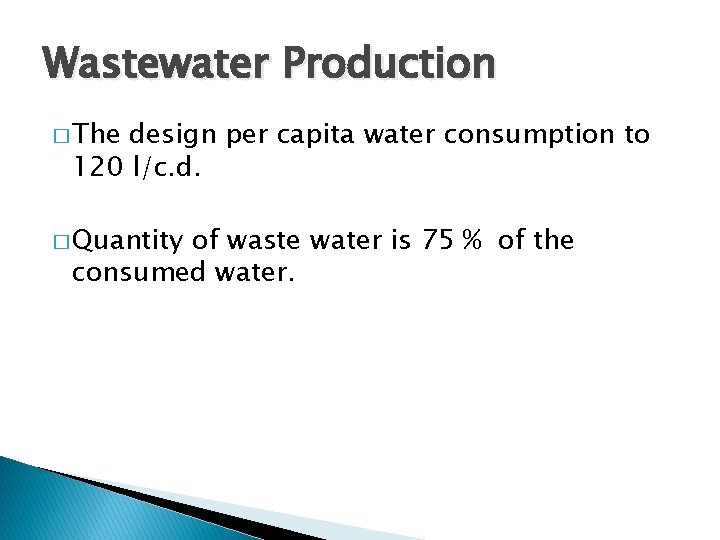
Wastewater Production � The design per capita water consumption to 120 l/c. d. � Quantity of waste water is 75 % of the consumed water.
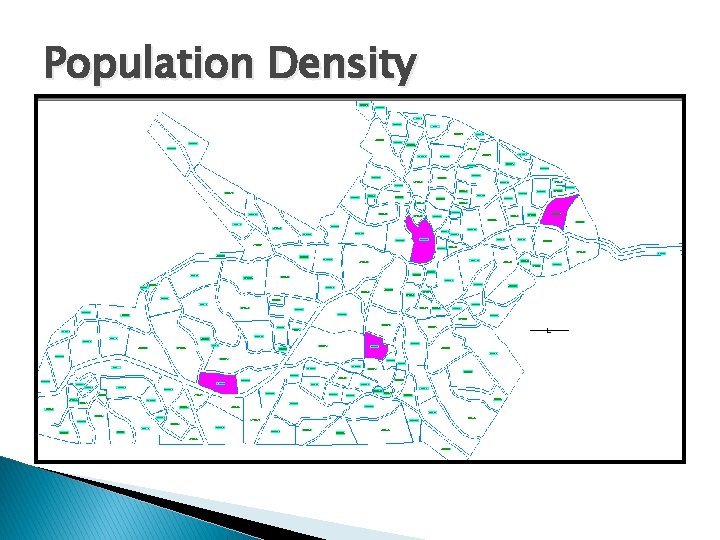
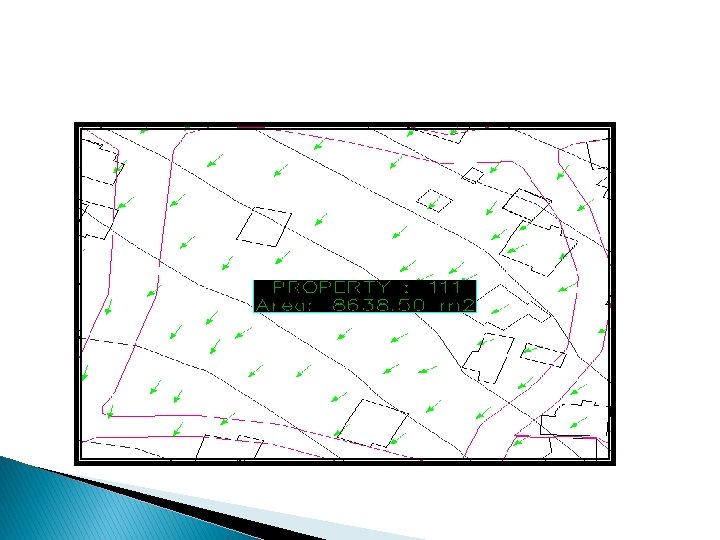
Population Density
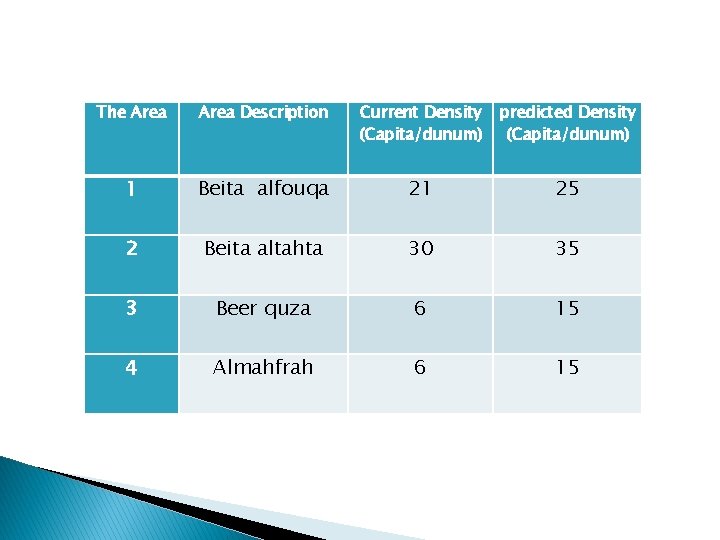
The Area Description Current Density (Capita/dunum) predicted Density (Capita/dunum) 1 Beita alfouqa 21 25 2 Beita altahta 30 35 3 Beer quza 6 15 4 Almahfrah 6 15
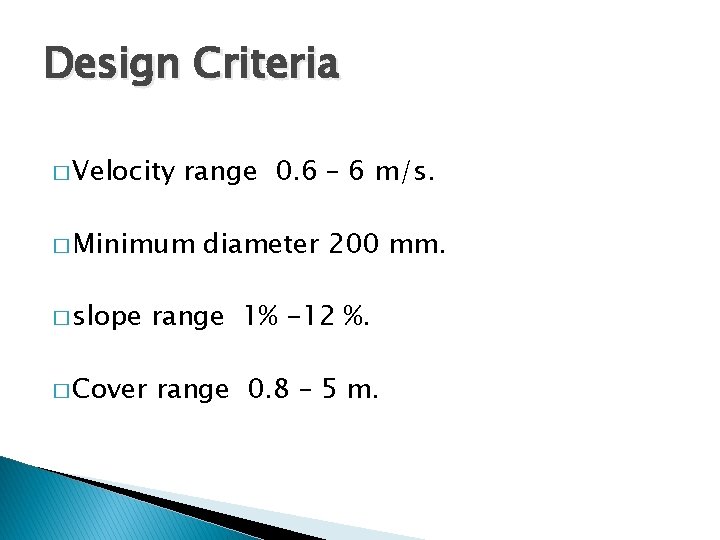
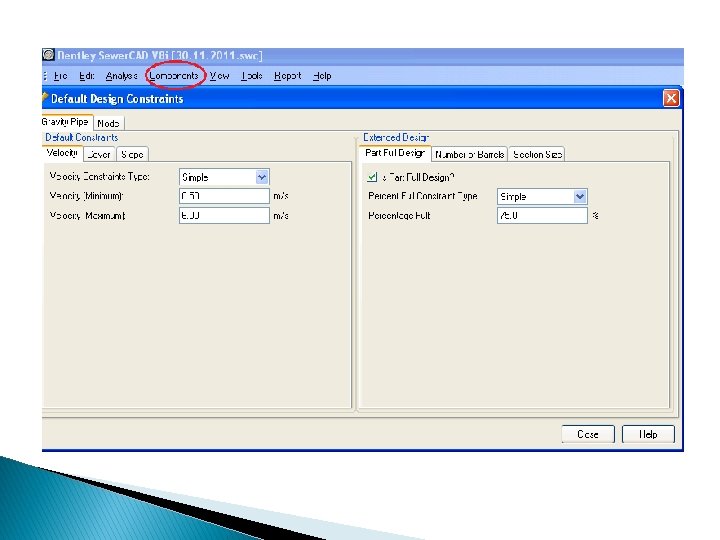
Design Criteria � Velocity range 0. 6 – 6 m/s. � Minimum diameter 200 mm. � slope range 1% -12 %. � Cover range 0. 8 – 5 m.
Design of Sewerage System
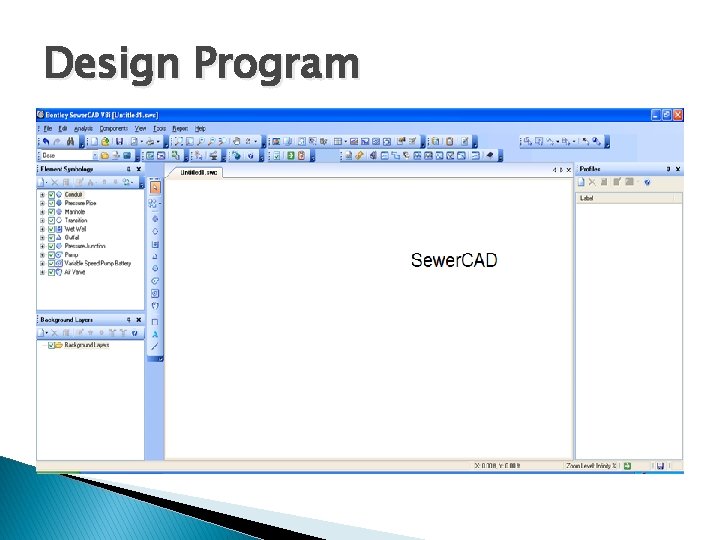
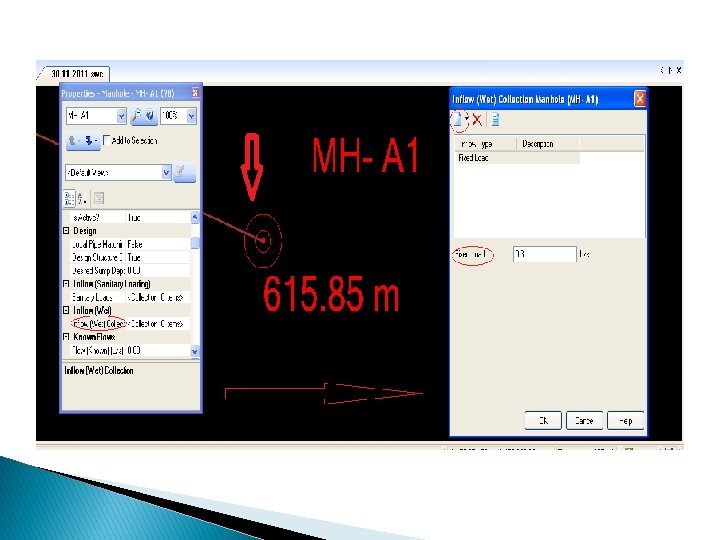
Design Program
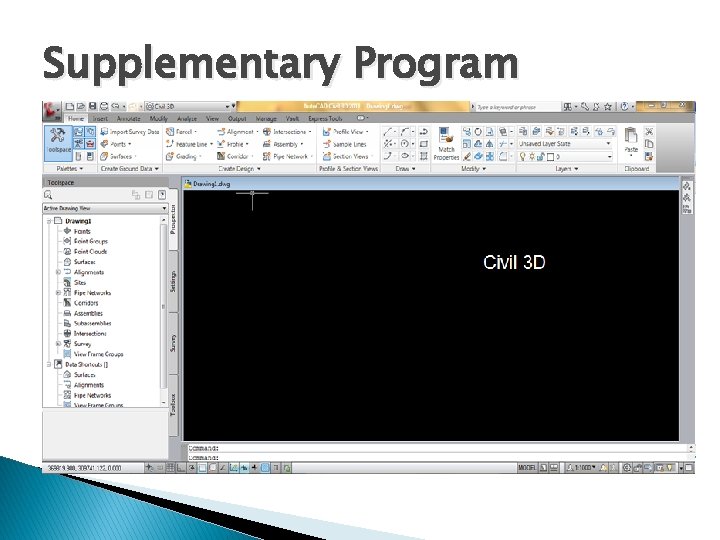
Supplementary Program
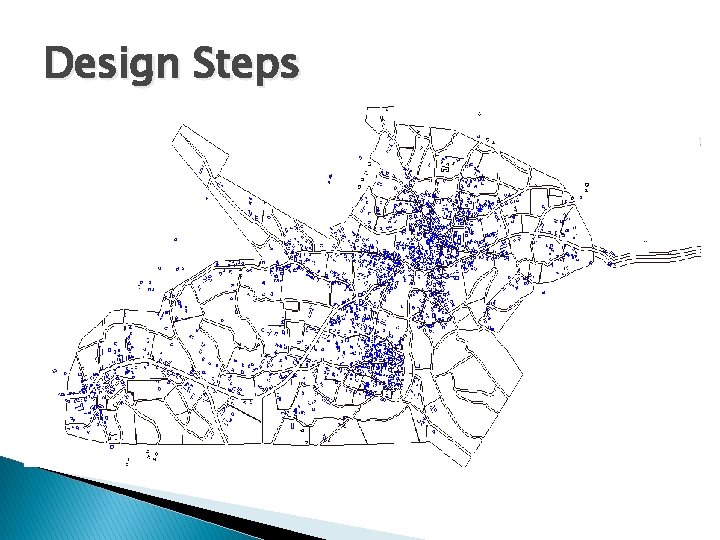
Design Steps
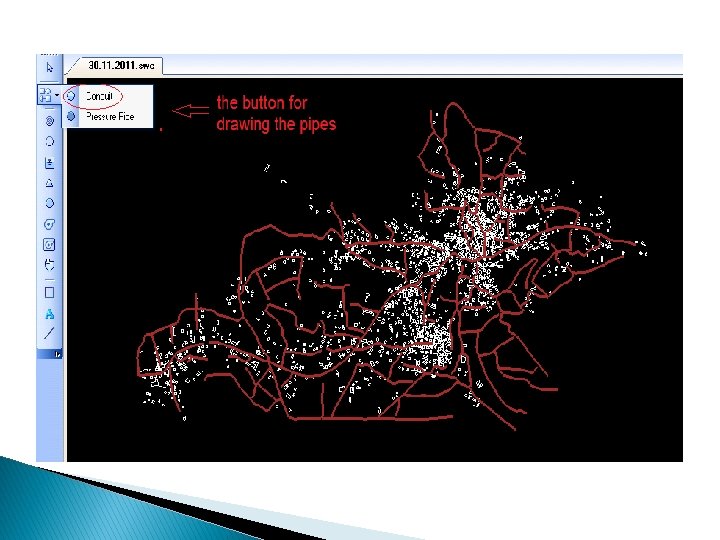
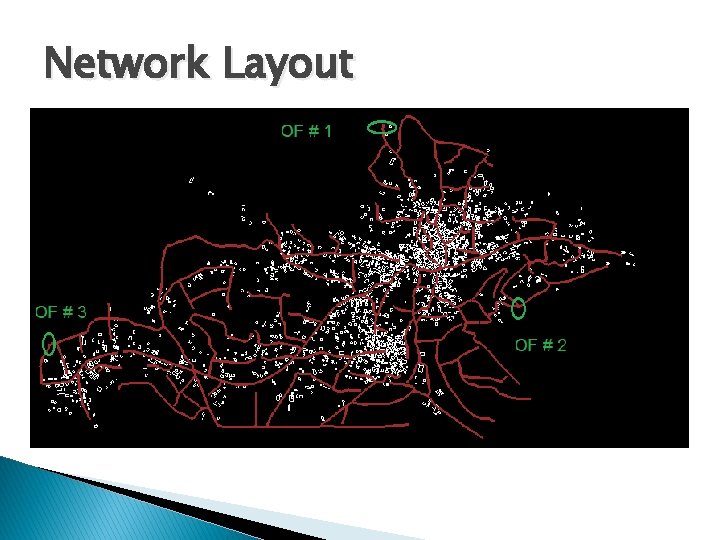
Network Layout
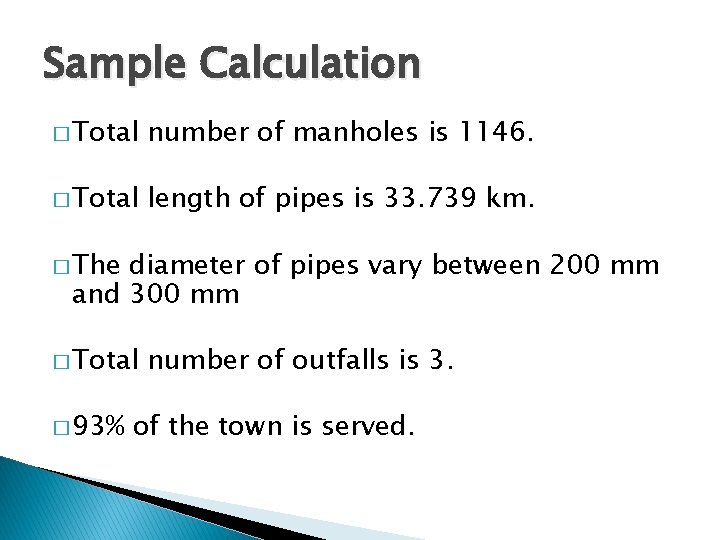
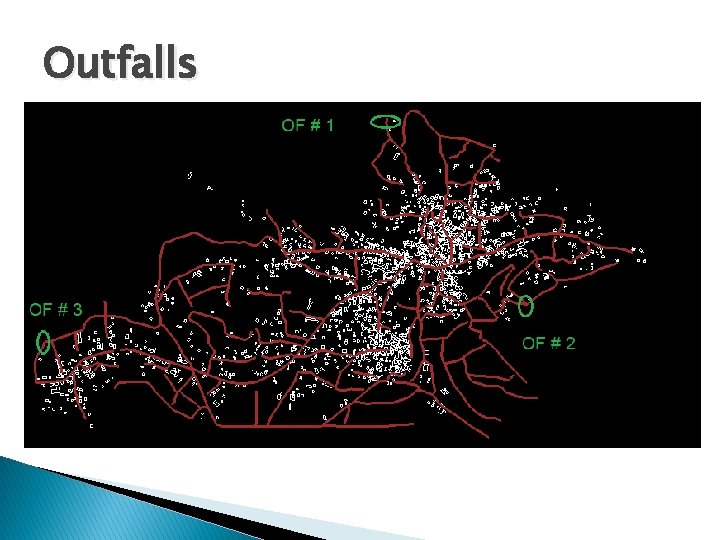
Sample Calculation � Total number of manholes is 1146. � Total length of pipes is 33. 739 km. � The diameter of pipes vary between 200 mm and 300 mm � Total � 93% number of outfalls is 3. of the town is served.
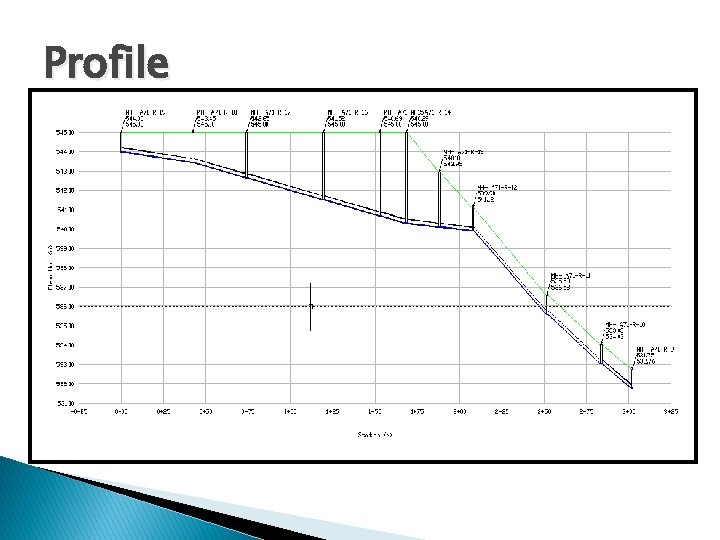
Profile
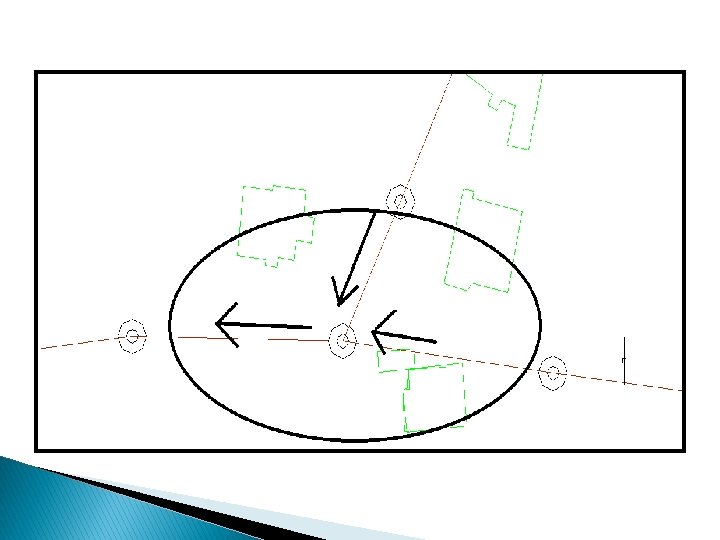
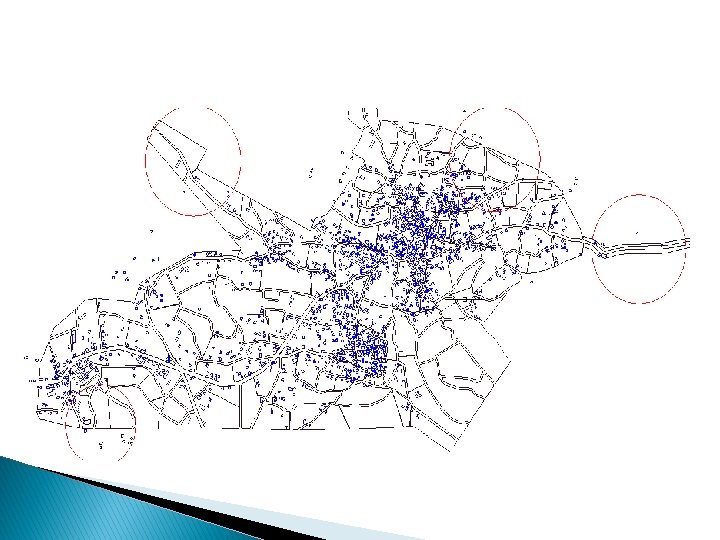
Outfalls
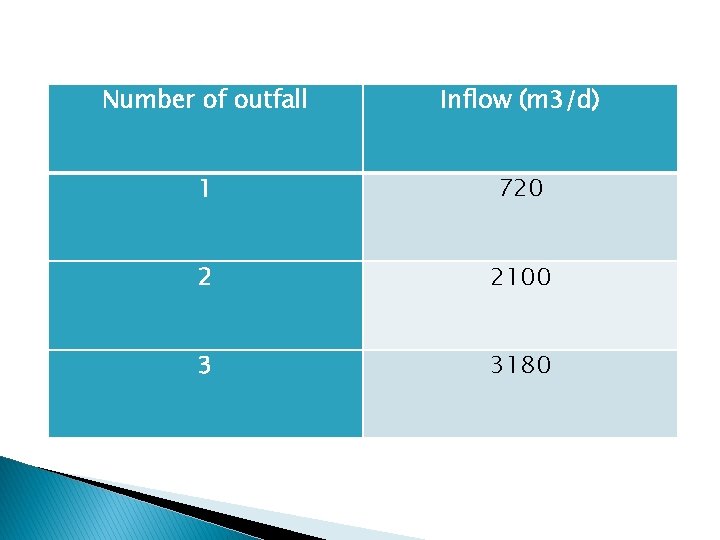
Number of outfall Inflow (m 3/d) 1 720 2 2100 3 3180
CONCLUSION & RECOMMENDATION
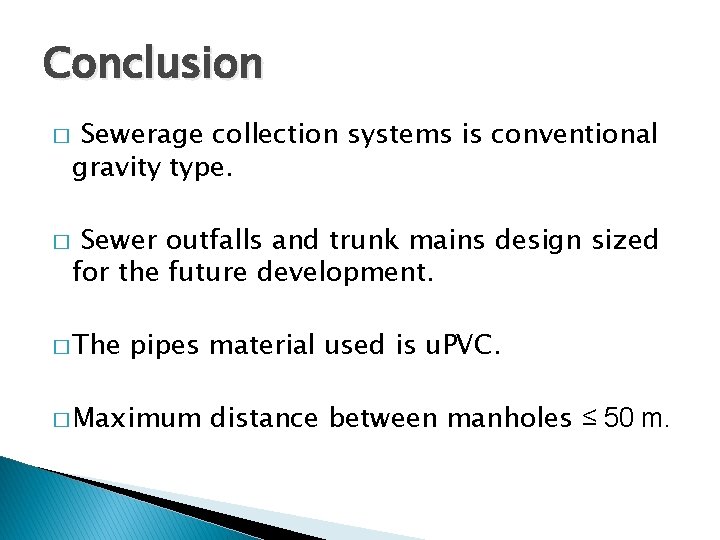
Conclusion � � Sewerage collection systems is conventional gravity type. Sewer outfalls and trunk mains design sized for the future development. � The pipes material used is u. PVC. � Maximum distance between manholes ≤ 50 m.
Recommendation � Surveying map. points for roads instead of contour � Areas not served may use individual house connection. � Use pumps to transfer the wastewater to WWTP.
Thank you