
Sanitation Examples of Common Challenges and Deficiencies Karl
- Slides: 54
Sanitation: Examples of Common Challenges and Deficiencies Karl Thorson Food Safety and Sanitation Manager Sanitation Center of Excellence 1 1
Why Sanitation? • At your table discuss the question: “Why Focus on Sanitation & Sanitary Design? ” • Be prepared to discuss. 2
Benefits Of Sanitation & Sanitary Design • Allergen control • Micro control • Foreign material control • Pest control • Regulatory compliance • Life cycle cost reduction 3 • Quick changeover execution • Product quality • Human safety • Housekeeping • Equipment reliability • Dietary compliance (Kosher, Halal, organic, gluten free)
Objectives • Communicate the risks being managed • Describe the 6 critical steps in risk management • Identify deficiencies and remediation options • Review case studies • Identify key learnings 4
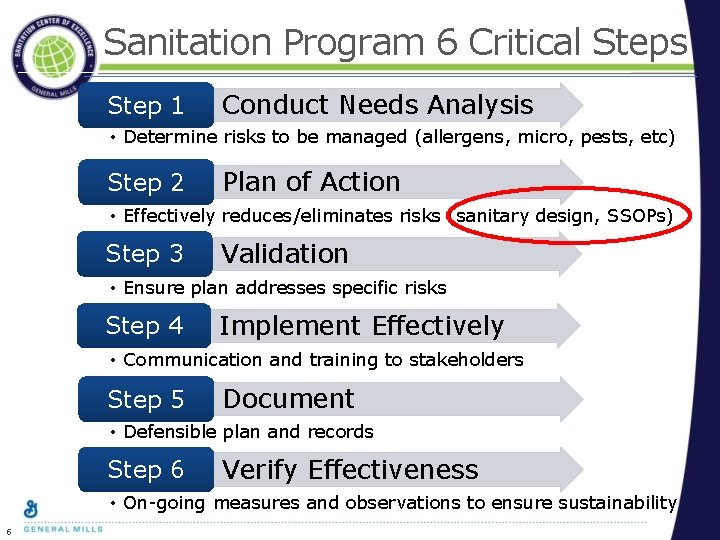
Sanitation Program 6 Critical Steps Step 1 Conduct Needs Analysis • Determine risks to be managed (allergens, micro, pests, etc) Step 2 Plan of Action • Effectively reduces/eliminates risks (sanitary design, SSOPs) Step 3 Validation • Ensure plan addresses specific risks Step 4 Implement Effectively • Communication and training to stakeholders Step 5 Document • Defensible plan and records Step 6 Verify Effectiveness • On-going measures and observations to ensure sustainability 5
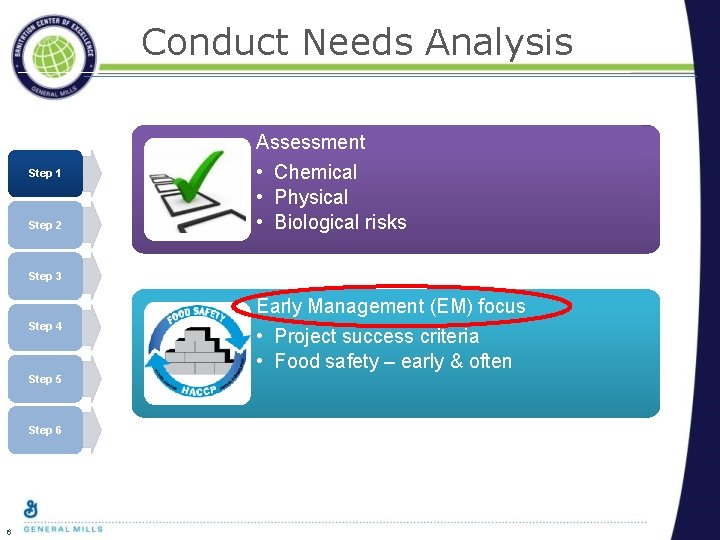
Conduct Needs Analysis Step 1 Step 2 Assessment • Chemical • Physical • Biological risks Step 3 Step 4 Step 5 Step 6 6 Early Management (EM) focus • Project success criteria • Food safety – early & often
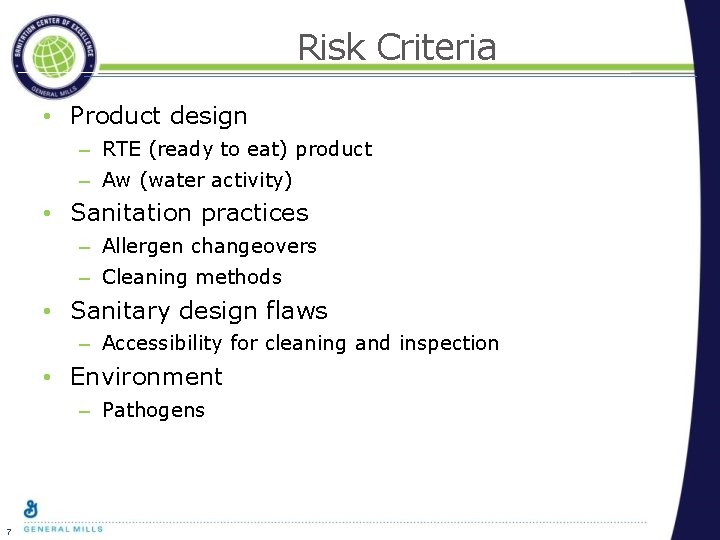
Risk Criteria • Product design – RTE (ready to eat) product – Aw (water activity) • Sanitation practices – Allergen changeovers – Cleaning methods • Sanitary design flaws – Accessibility for cleaning and inspection • Environment – Pathogens 7
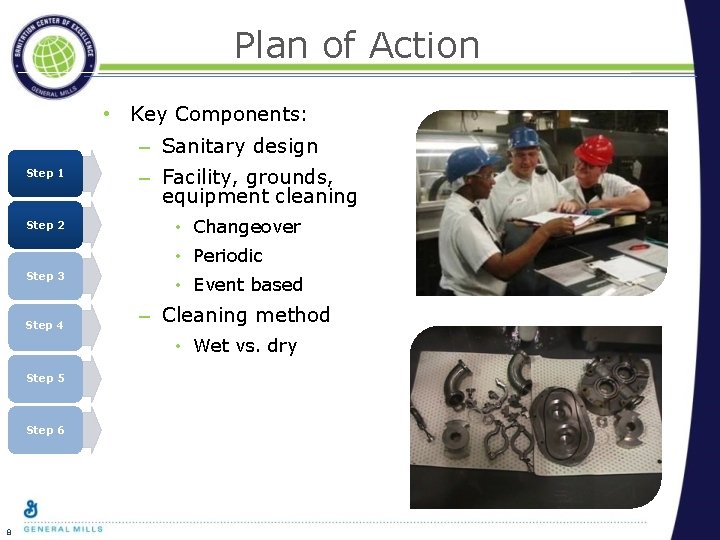
Plan of Action • Key Components: – Sanitary design Step 1 Step 2 – Facility, grounds, equipment cleaning • Changeover • Periodic Step 3 Step 4 • Event based – Cleaning method • Wet vs. dry Step 5 Step 6 8
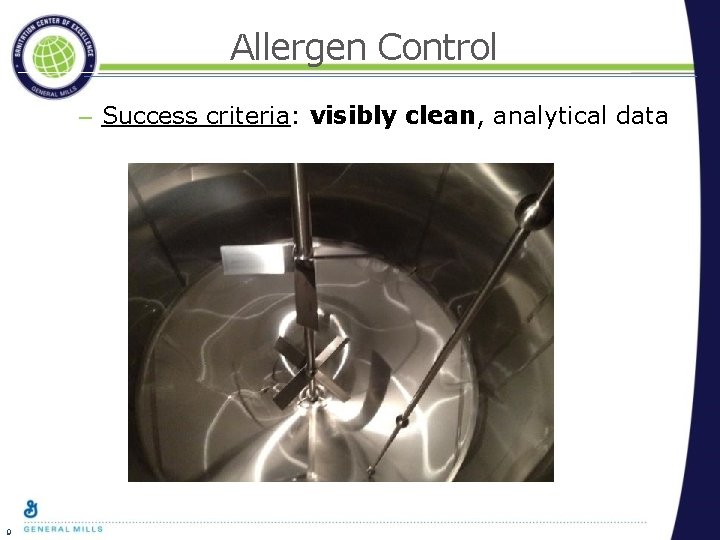
Allergen Control – Success criteria: visibly clean, analytical data 9
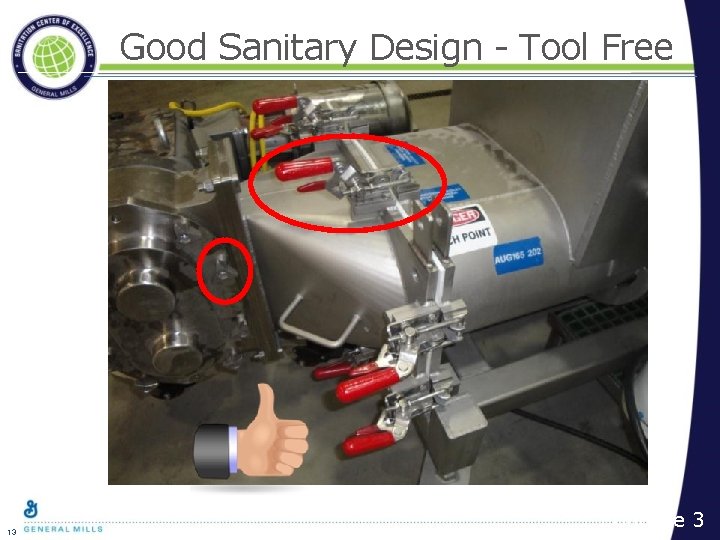
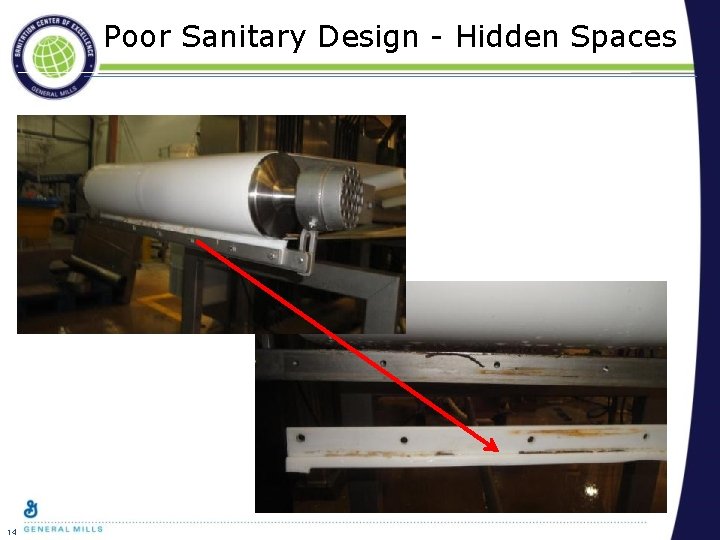
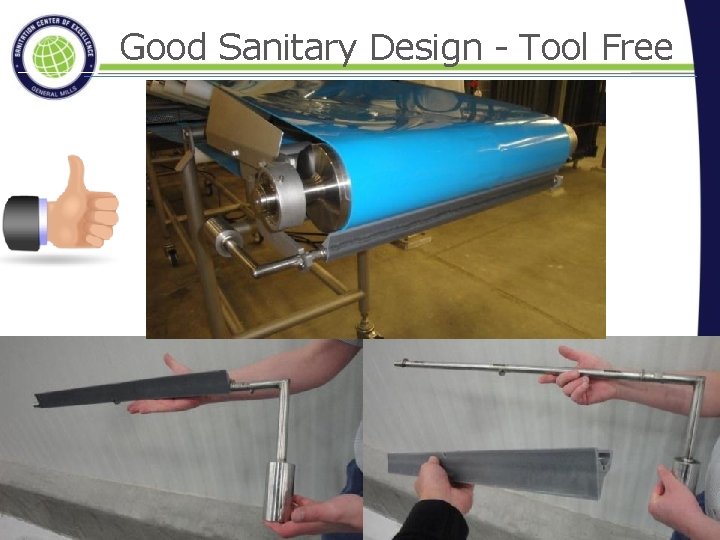
Common Deficiencies – Allergens • Poor sanitary design – Limited or no access for maintenance, disassembly, cleaning and inspection • Solution – Utilize sanitary design checklists • GMA, AMI • Use 3 A, EHEDG, BISSC for proper design 10
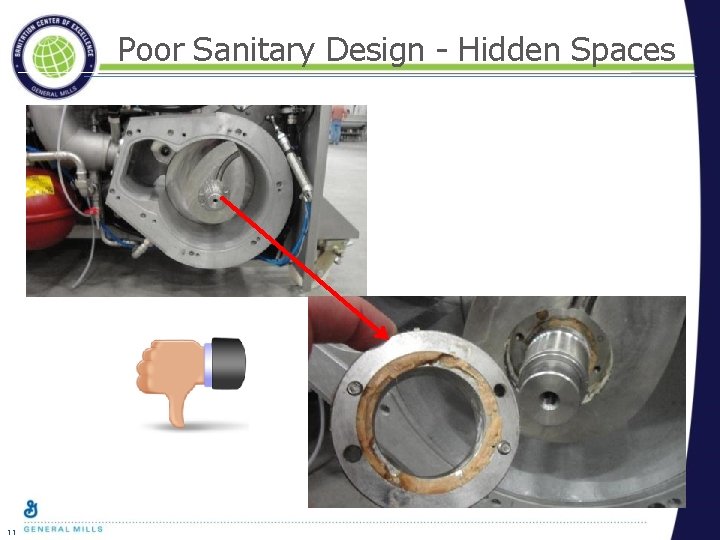
Poor Sanitary Design - Hidden Spaces 11
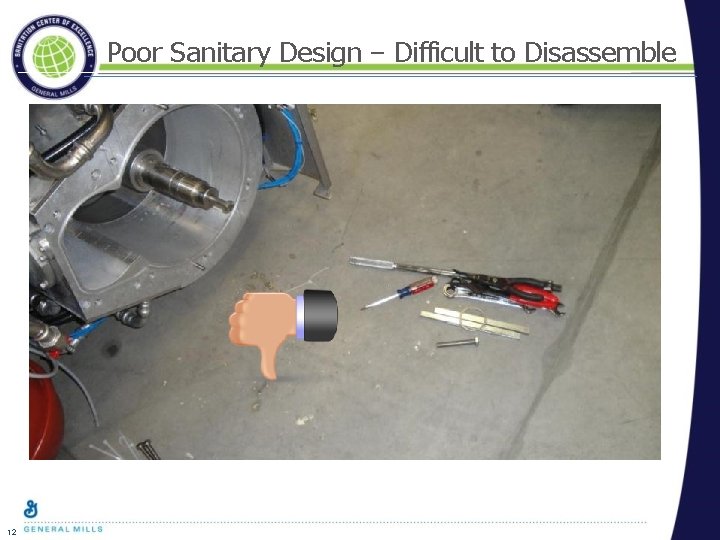
Poor Sanitary Design – Difficult to Disassemble 12
Good Sanitary Design - Tool Free 13 Principle 3
Poor Sanitary Design - Hidden Spaces 14
Good Sanitary Design - Tool Free 15
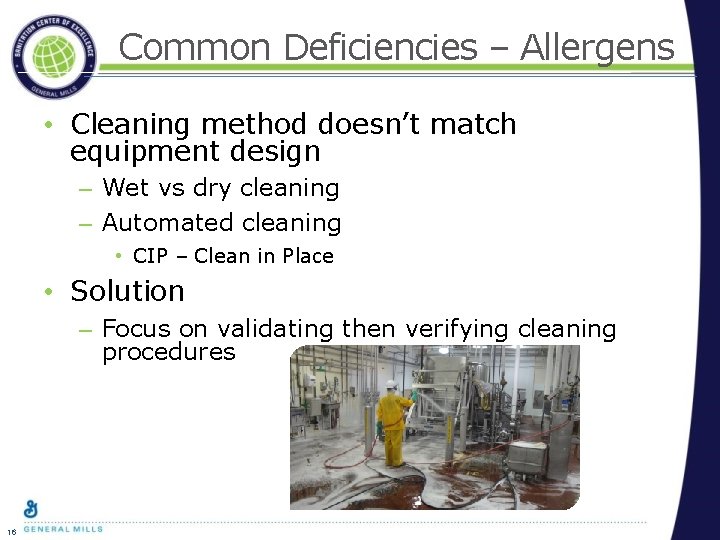
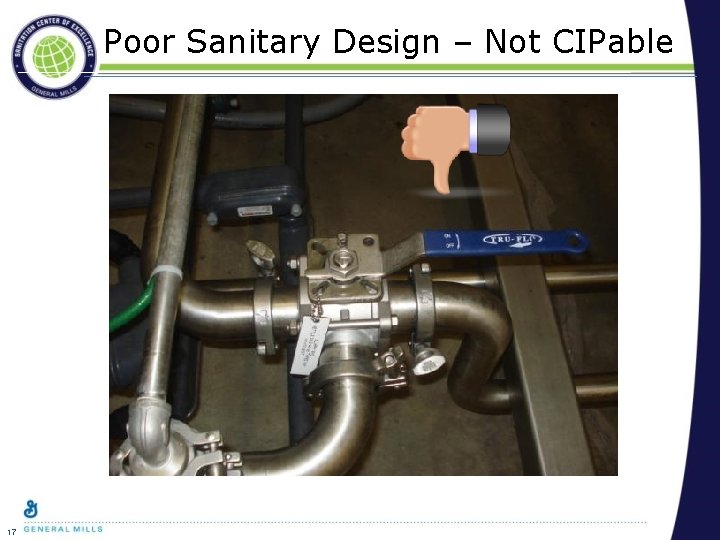
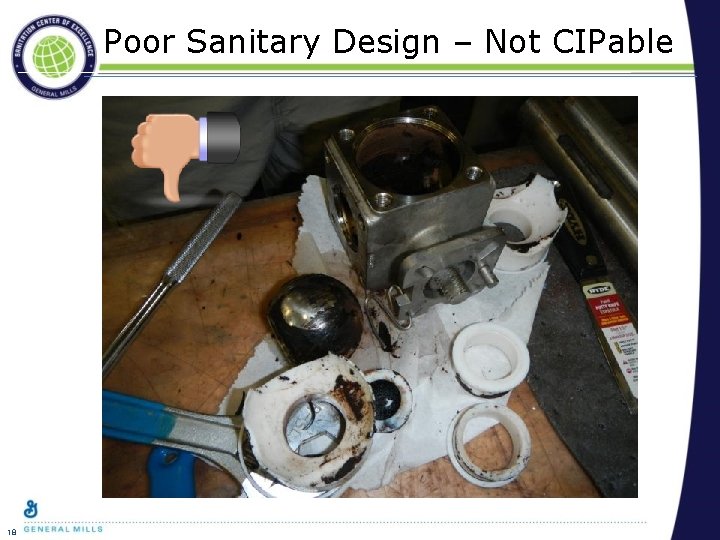
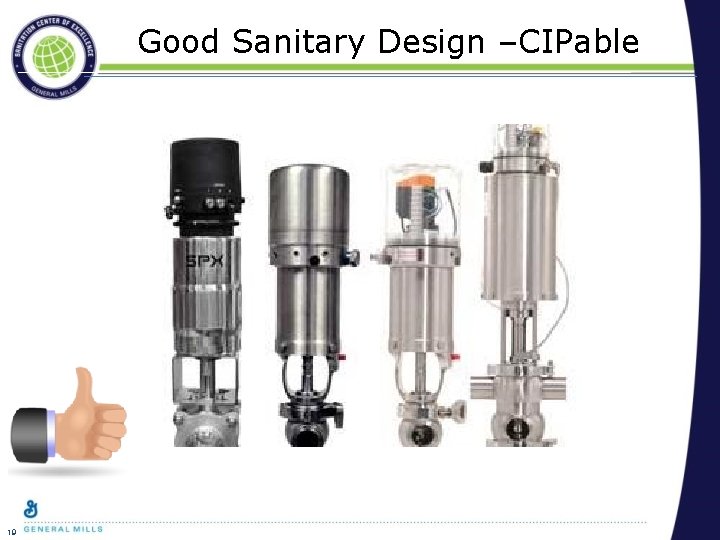
Common Deficiencies – Allergens • Cleaning method doesn’t match equipment design – Wet vs dry cleaning – Automated cleaning • CIP – Clean in Place • Solution – Focus on validating then verifying cleaning procedures 16
Poor Sanitary Design – Not CIPable 17
Poor Sanitary Design – Not CIPable 18
Good Sanitary Design –CIPable 19
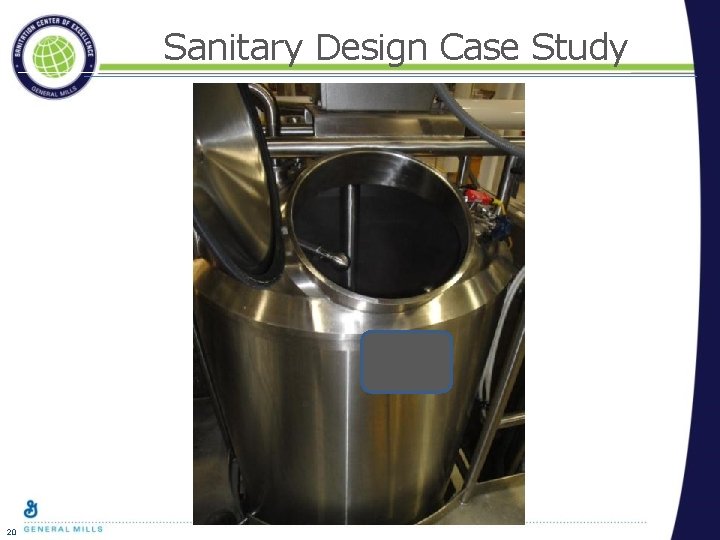
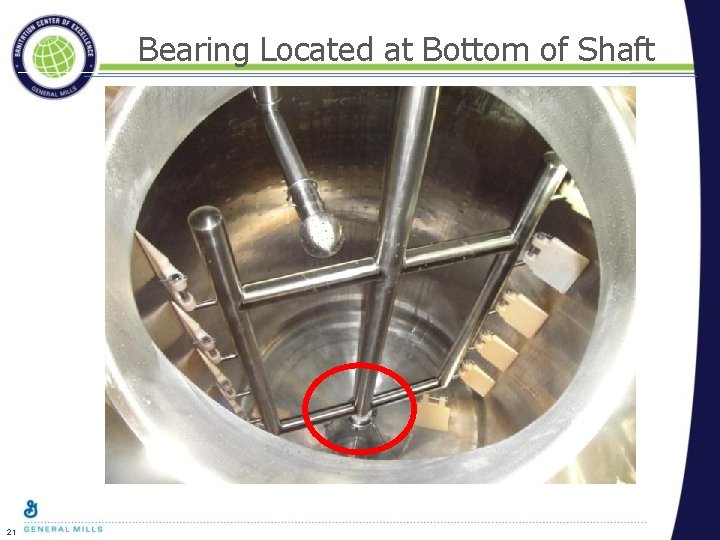
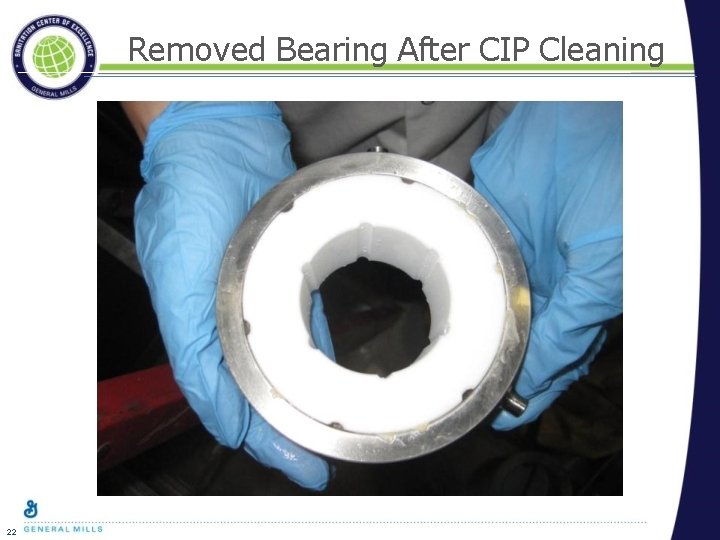
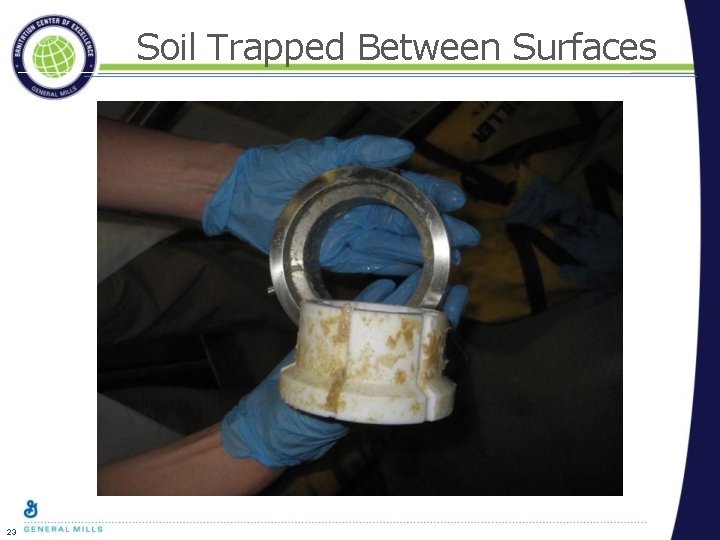
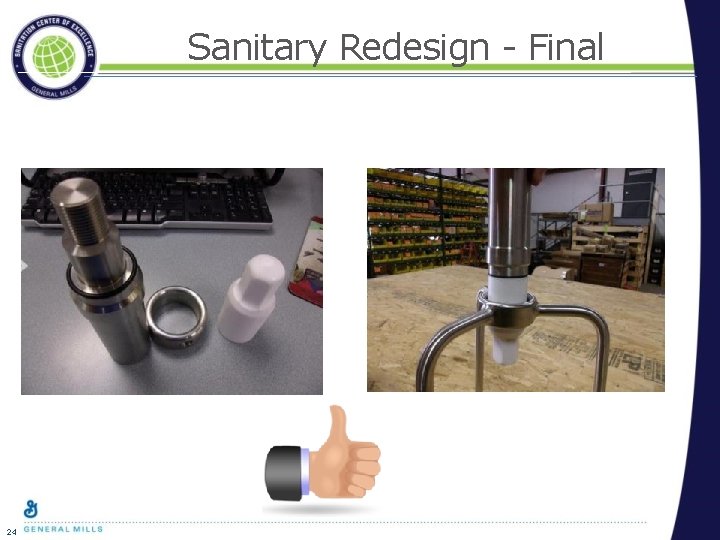
Sanitary Design Case Study 20
Bearing Located at Bottom of Shaft 21
Removed Bearing After CIP Cleaning 22
Soil Trapped Between Surfaces 23
Sanitary Redesign - Final 24
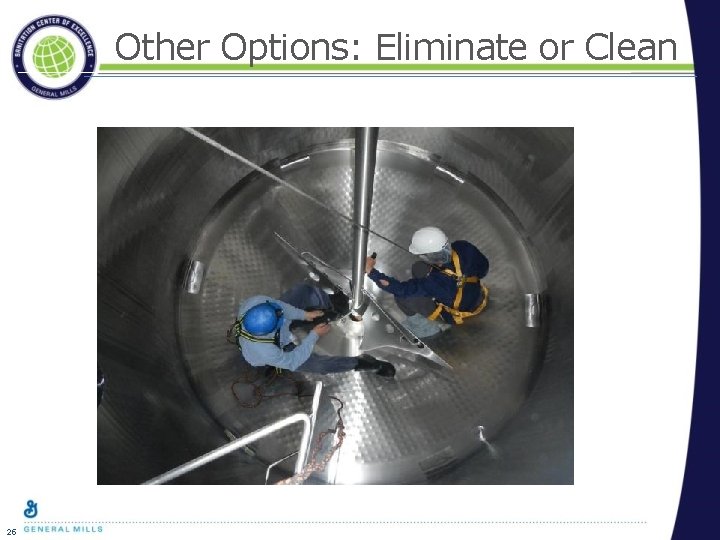
Other Options: Eliminate or Clean 25
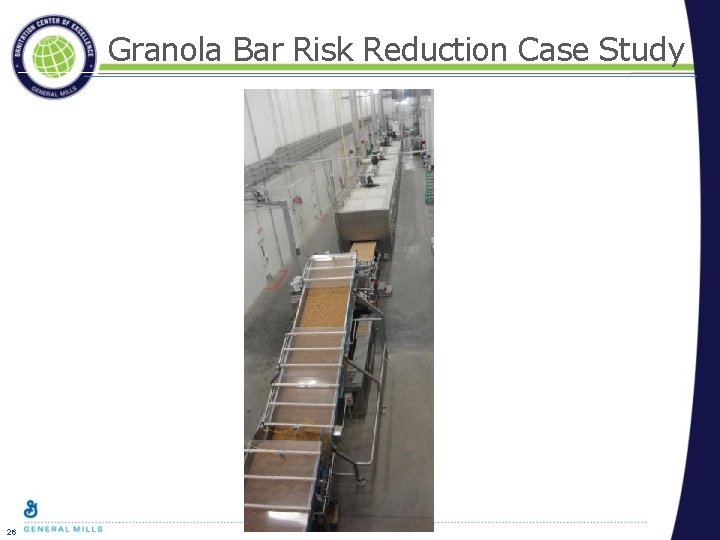
Granola Bar Risk Reduction Case Study 26
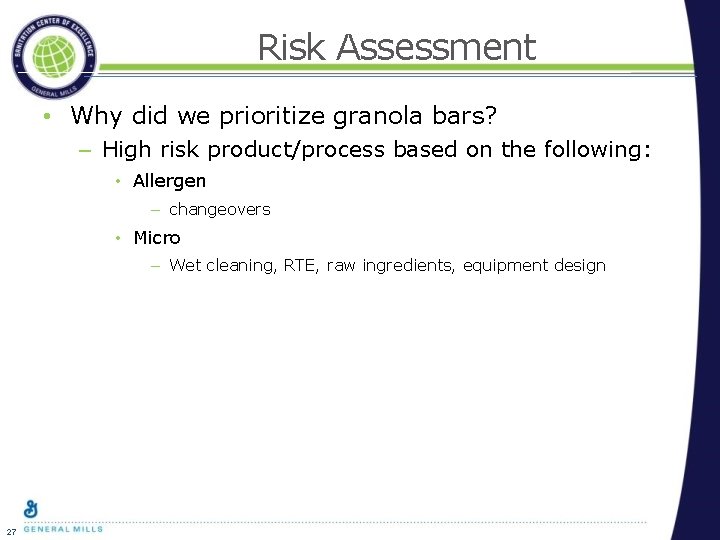
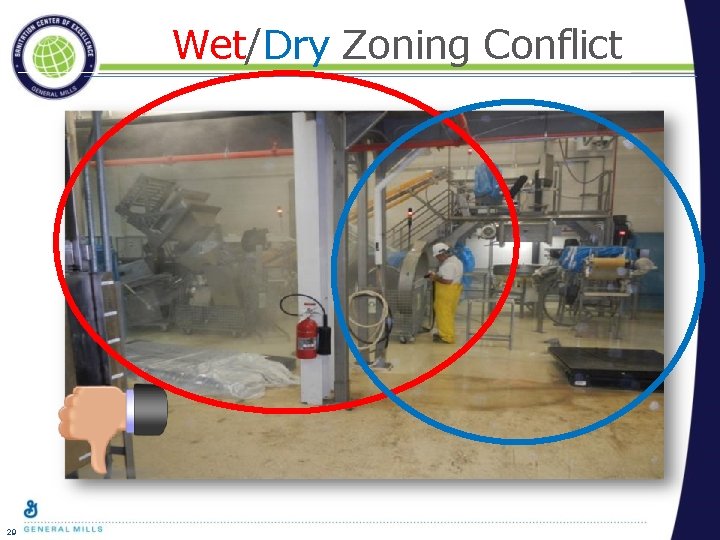
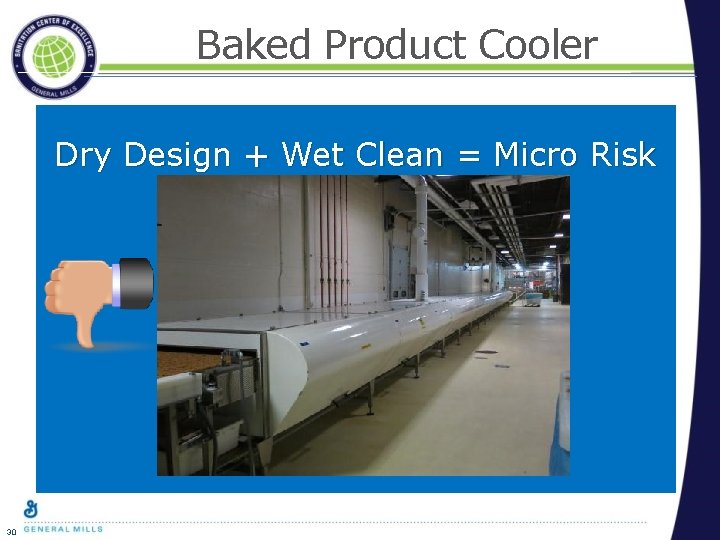
Risk Assessment • Why did we prioritize granola bars? – High risk product/process based on the following: • Allergen – changeovers • Micro – Wet cleaning, RTE, raw ingredients, equipment design 27
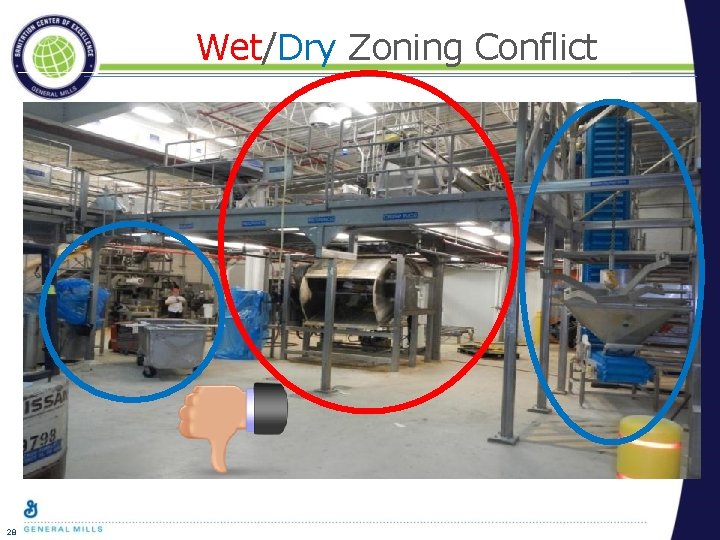
Wet/Dry Zoning Conflict • 28
Wet/Dry Zoning Conflict 29
Baked Product Cooler Dry Design + Wet Clean = Micro Risk 30
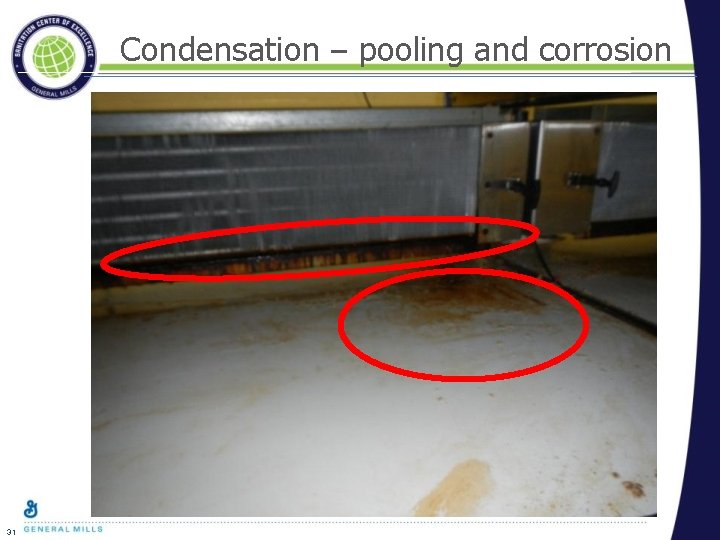
Condensation – pooling and corrosion 31
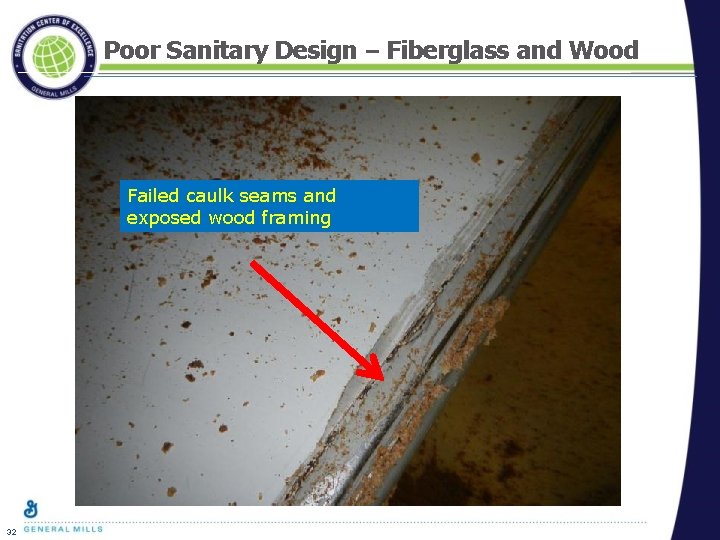
Poor Sanitary Design – Fiberglass and Wood Failed caulk seams and exposed wood framing 32
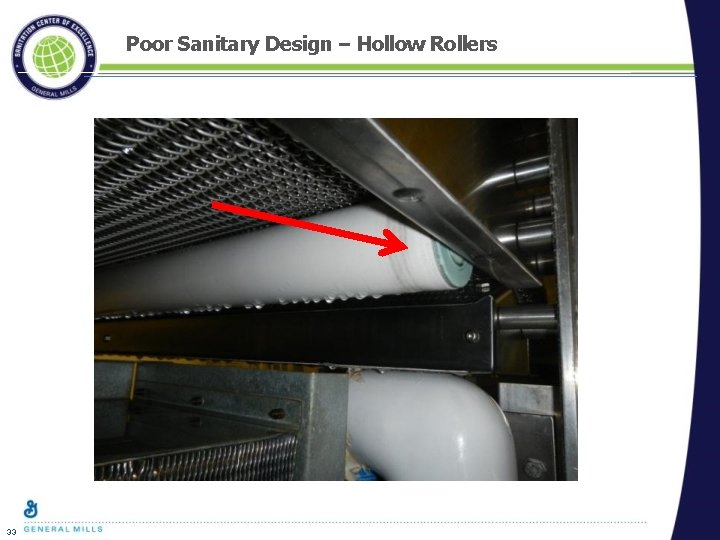
Poor Sanitary Design – Hollow Rollers 33
Corrective Action Plan • Short Term: – Re-caulked seams above product zone – Enhanced environmental sampling • Confirmed no pathogens 34
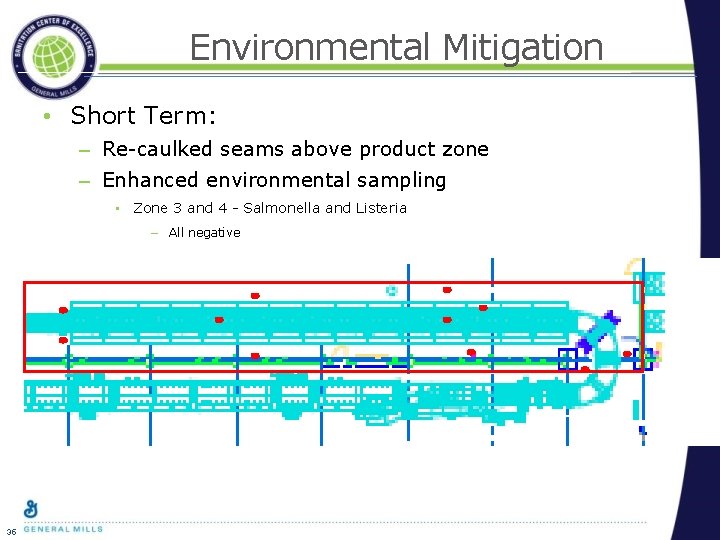
Environmental Mitigation • Short Term: – Re-caulked seams above product zone – Enhanced environmental sampling • Zone 3 and 4 - Salmonella and Listeria – All negative 35
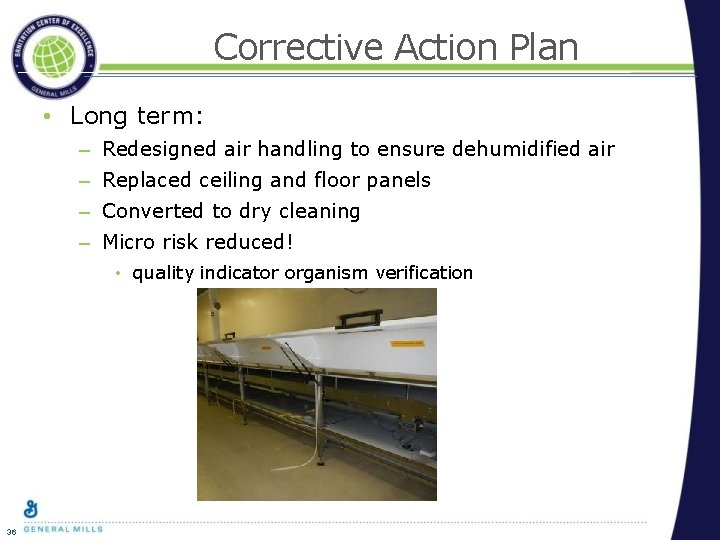
Corrective Action Plan • Long term: – Redesigned air handling to ensure dehumidified air – Replaced ceiling and floor panels – Converted to dry cleaning – Micro risk reduced! • quality indicator organism verification 36
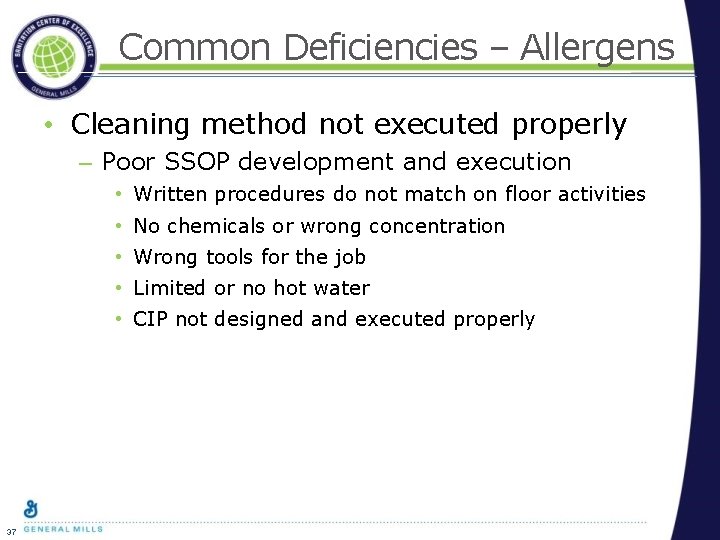
Common Deficiencies – Allergens • Cleaning method not executed properly – Poor SSOP development and execution • Written procedures do not match on floor activities • No chemicals or wrong concentration • Wrong tools for the job • Limited or no hot water • CIP not designed and executed properly 37
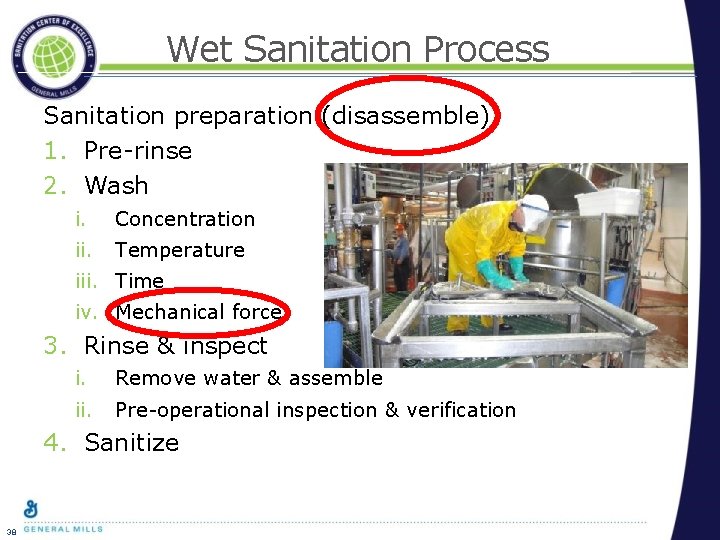
Wet Sanitation Process Sanitation preparation (disassemble) 1. Pre-rinse 2. Wash i. Concentration ii. Temperature iii. Time iv. Mechanical force 3. Rinse & inspect i. Remove water & assemble ii. Pre-operational inspection & verification 4. Sanitize 38
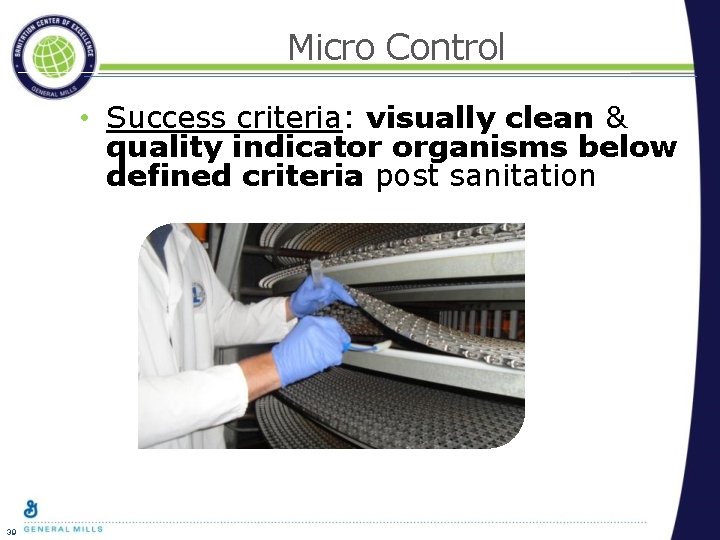
Micro Control • Success criteria: visually clean & quality indicator organisms below defined criteria post sanitation 39
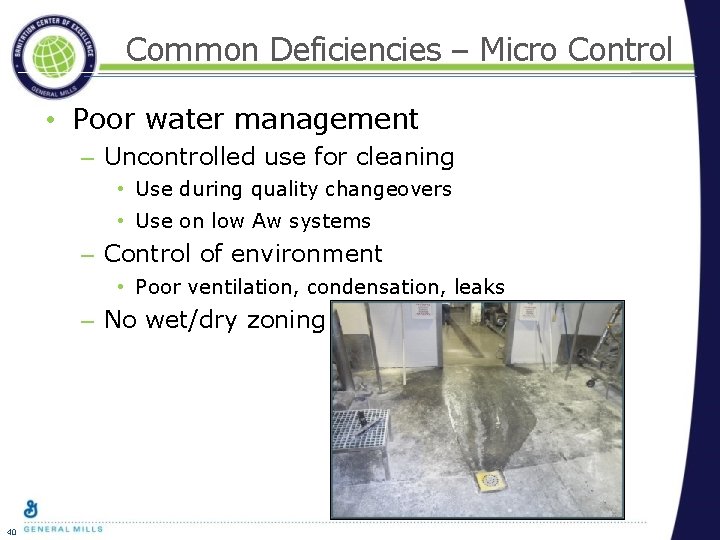
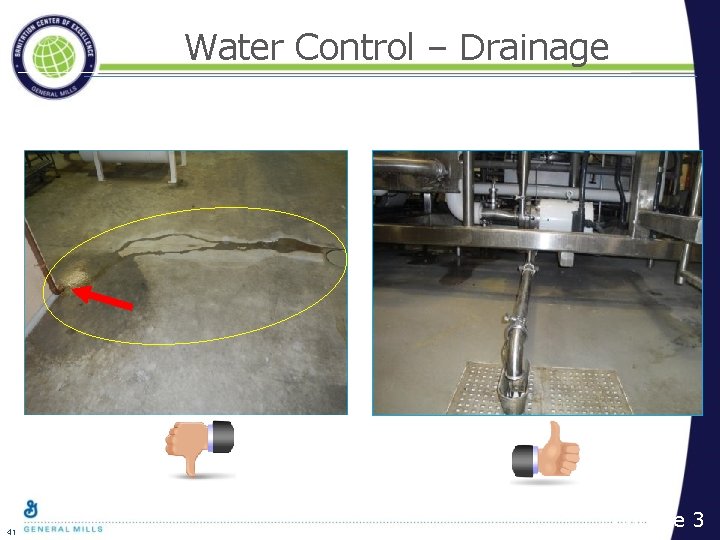
Common Deficiencies – Micro Control • Poor water management – Uncontrolled use for cleaning • Use during quality changeovers • Use on low Aw systems – Control of environment • Poor ventilation, condensation, leaks – No wet/dry zoning 40
Water Control – Drainage 41 Principle 3
Keys to Success • Good Sanitary Design • Risk Assessment/Management – Training & Education – Prioritization processes • Clearly defined success criteria • Robust sanitation programs that are validated, verified and monitored • Special event planning • Visual inspection: it is everyone's best sanitation tool! 42
Objectives Met? • Communicate the risks being managed • Describe the 6 critical steps in risk management • Identify deficiencies and remediation options • Review case studies • Identify key learnings 43
Thank You! Questions? 44 44
Resources • GMA Sanitary Design Checklists – Equipment Design Checklist for Low Moisture Foods – Facility Design Checklist 45
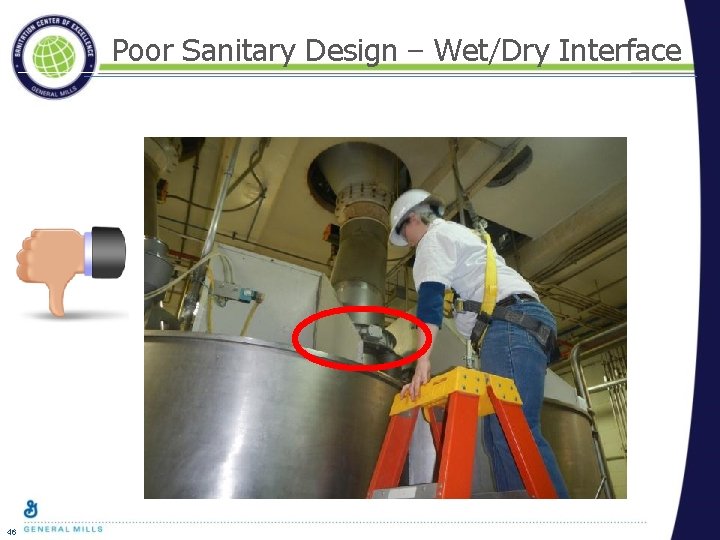
Poor Sanitary Design – Wet/Dry Interface 46
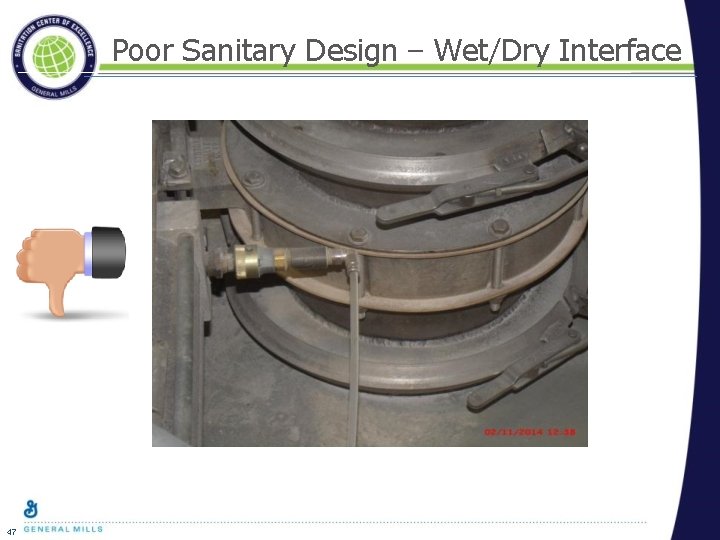
Poor Sanitary Design – Wet/Dry Interface 47
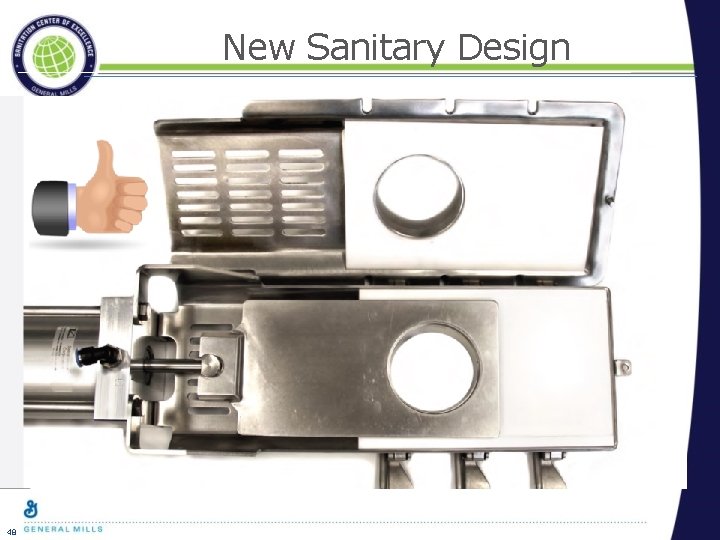
New Sanitary Design 48
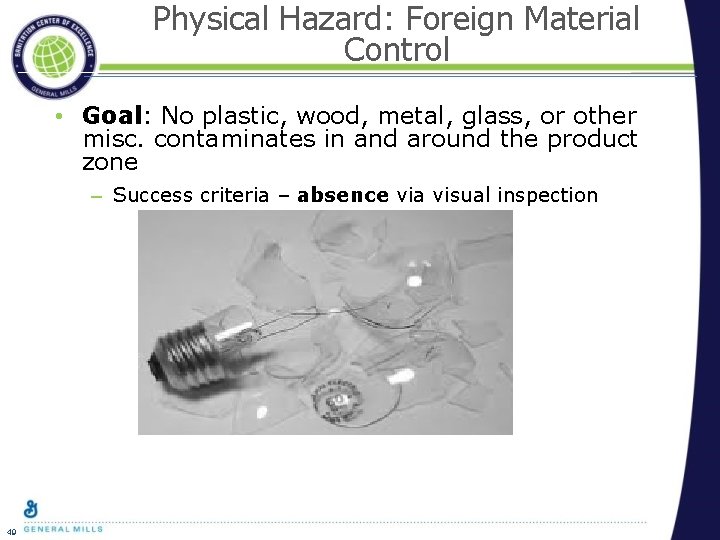
Physical Hazard: Foreign Material Control • Goal: No plastic, wood, metal, glass, or other misc. contaminates in and around the product zone – Success criteria – absence via visual inspection 49
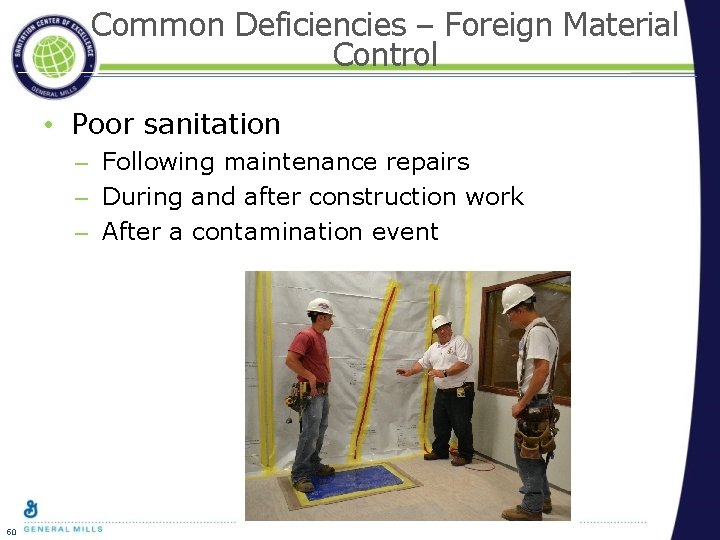
Common Deficiencies – Foreign Material Control • Poor sanitation – Following maintenance repairs – During and after construction work – After a contamination event 50
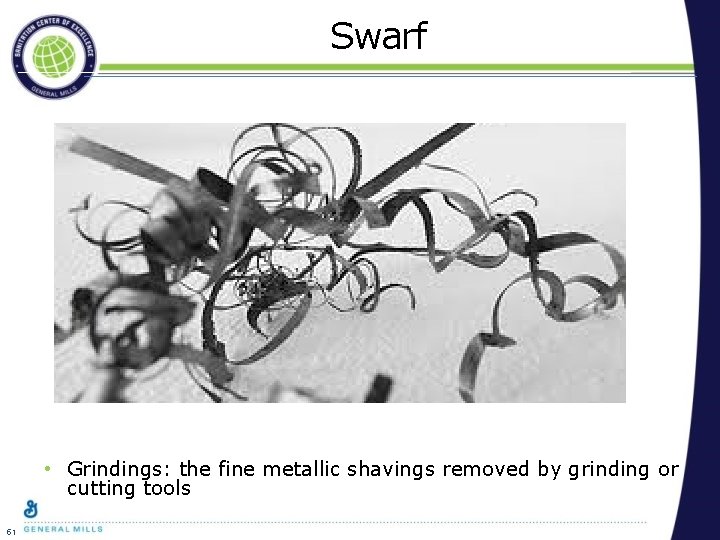
Swarf • Grindings: the fine metallic shavings removed by grinding or cutting tools 51
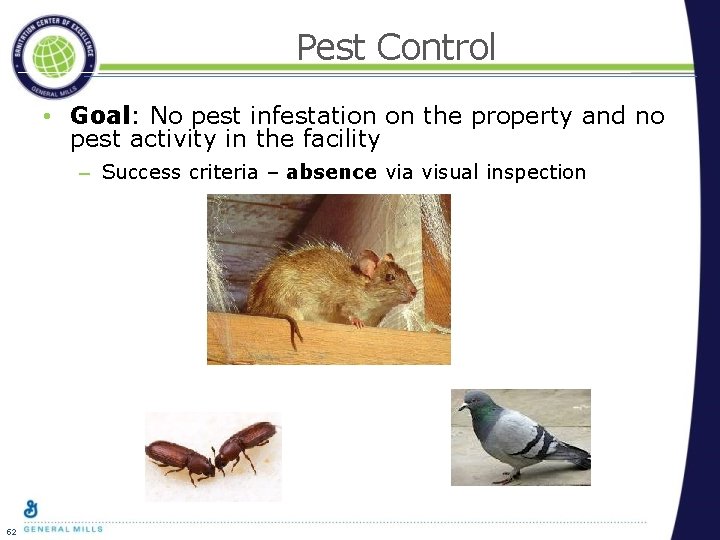
Pest Control • Goal: No pest infestation on the property and no pest activity in the facility – Success criteria – absence via visual inspection 52
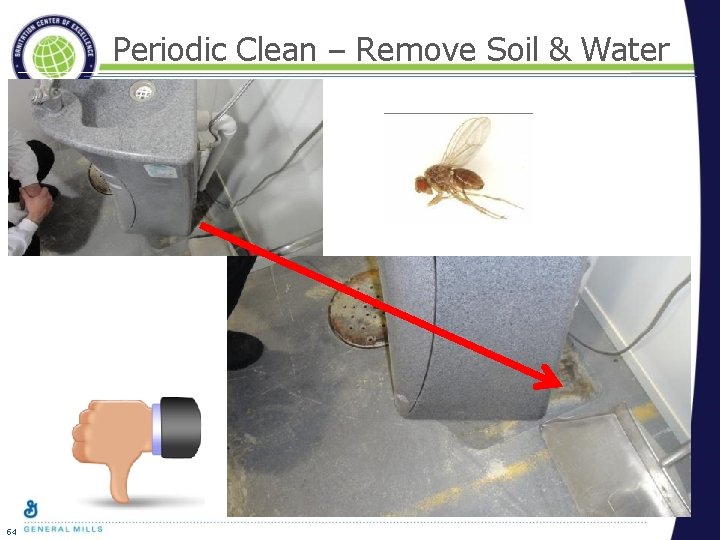
Common Deficiencies – Pest Control • Poor design to prevent harborage – Voids difficult to access, clean and inspect • Lack of deep cleaning – Wet, dirty stagnate areas 53
Periodic Clean – Remove Soil & Water 54