
Sand Geology Lab Chapter 5 Measuring Grain Size
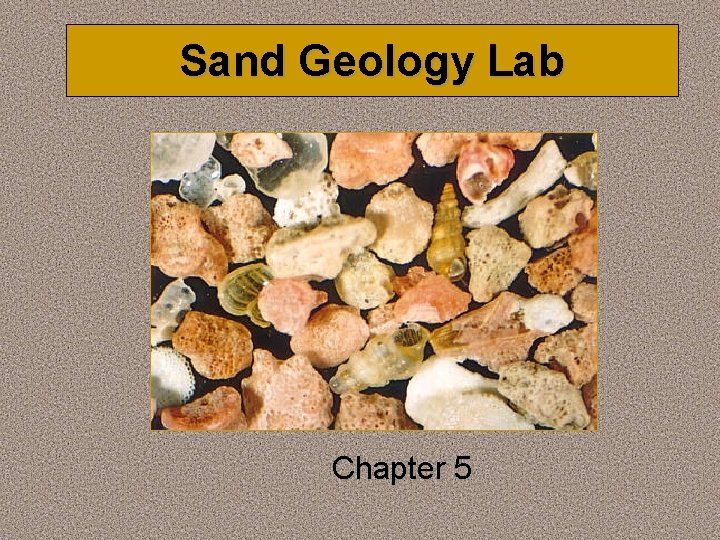
Sand Geology Lab Chapter 5
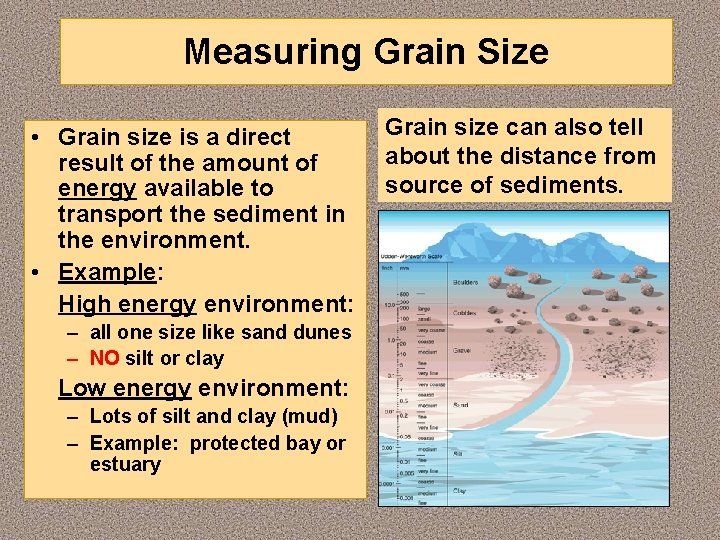
Measuring Grain Size • Grain size is a direct result of the amount of energy available to transport the sediment in the environment. • Example: High energy environment: – all one size like sand dunes – NO silt or clay Low energy environment: – Lots of silt and clay (mud) – Example: protected bay or estuary Grain size can also tell about the distance from source of sediments.
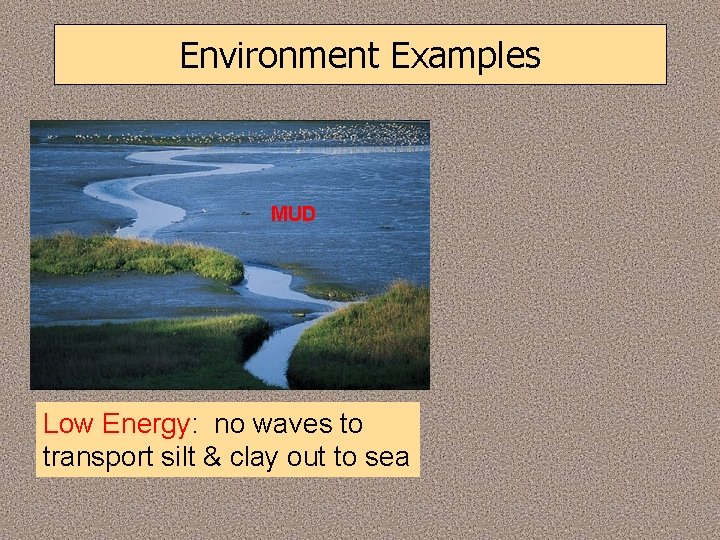
Environment Examples MUD Low Energy: no waves to transport silt & clay out to sea
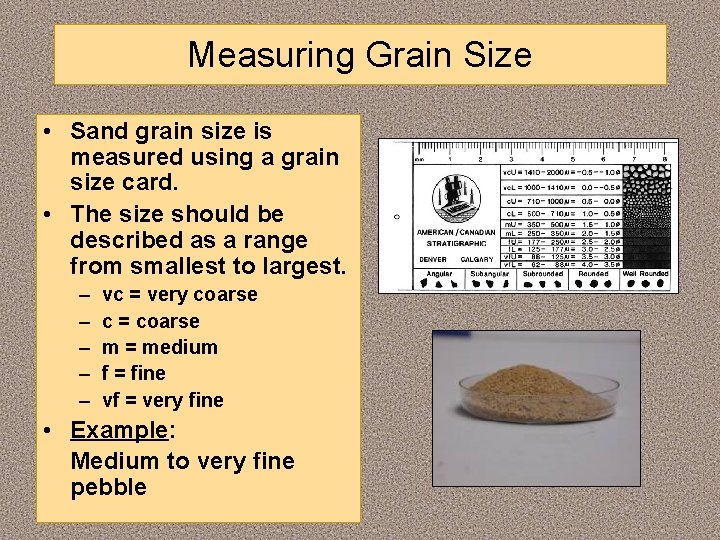
Measuring Grain Size • Sand grain size is measured using a grain size card. • The size should be described as a range from smallest to largest. – – – vc = very coarse c = coarse m = medium f = fine vf = very fine • Example: Medium to very fine pebble

Degree of Sorting Record the degree of sorting for each sample. Sorting is a qualitative description of the range of grain sizes found in the environment. Sorting gives information about the consistency of an energy source. For example, poorly sorted sediments have a fluctuating energy source.
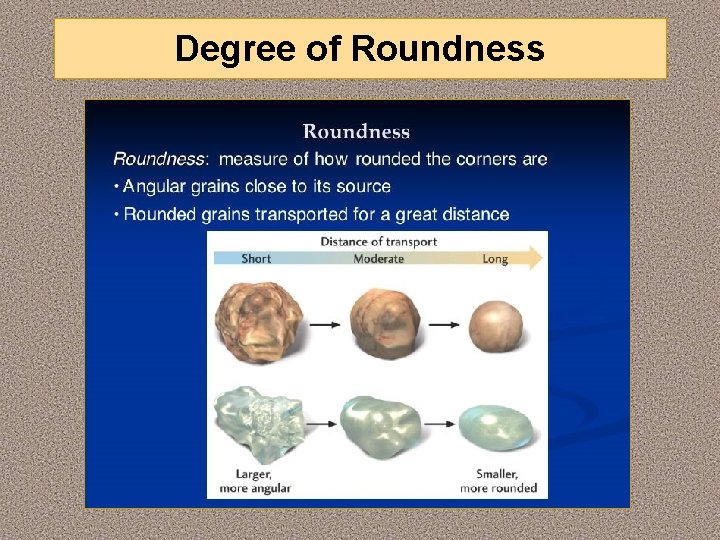
Degree of Roundness

Terrigenous Sand (abiotic) – Non Living Sediments Examples of terrigenous sand Obsidian Garnet Olivine or Peridot
Granite Derived Sand • Associated with continental crust in temperate (30 - 60 ) and polar (> 60 ) climate zones. • Quartz is the most common sediment. Feldspar minerals break down into clays. • Minerals such as micas (glittery), garnet (ruby red), and magnetite (black & magnetic) are also common in granite derived sands. • Use photo cards and handouts to assist in identifying these materials.

Granite Derived Sand Quartz – colorless, translucent, glassy. Feldspar – pink, white, opaque, striated; feldspar tends to chemically weather to clay minerals. Most common mineral. Mica – black, coppery, flat, shiny.
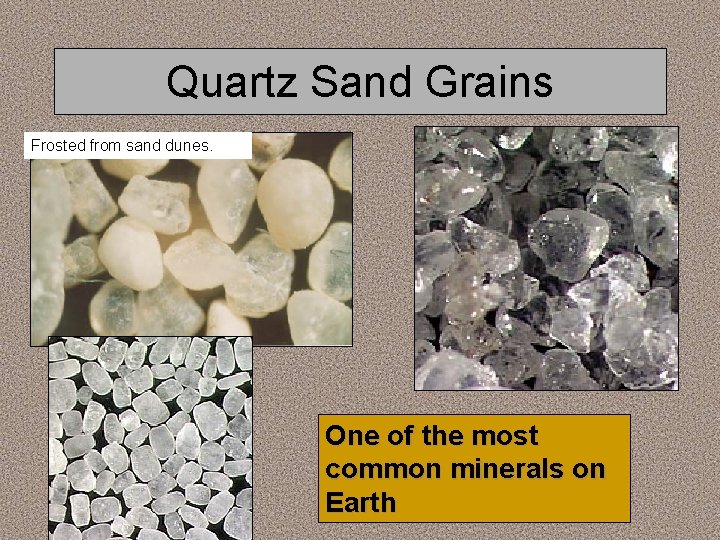
Quartz Sand Grains Frosted from sand dunes. One of the most common minerals on Earth
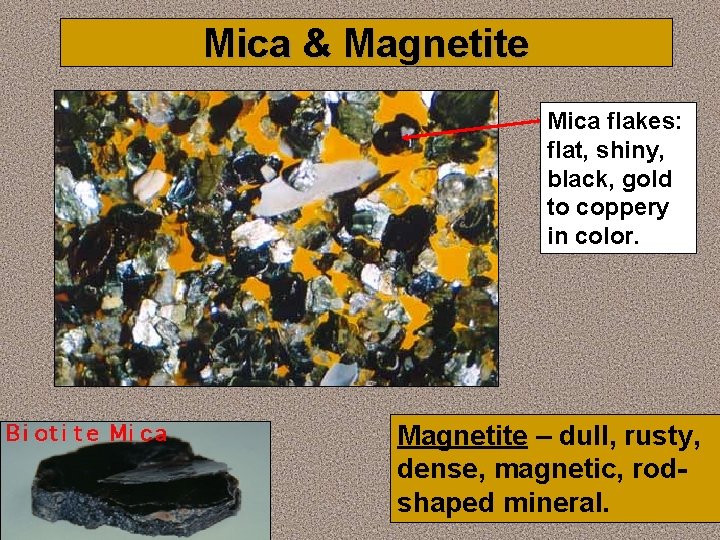
Mica & Magnetite Mica flakes: flat, shiny, black, gold to coppery in color. Magnetite – dull, rusty, dense, magnetic, rodshaped mineral.
Volcanic Derived Sand • Associated with active volcanism at hotspots and some volcanic island arcs. Can be either tropical or temperate climate. • Basalt volcanism – – Rocks – cinders (red), basalt (black), obsidian (volcanic glass) – Minerals – olivine (green to rusty green)

Volcanic Derived Sand Active volcanic eruptions. More basalt = more recent eruption Pitted, dull, black sediments
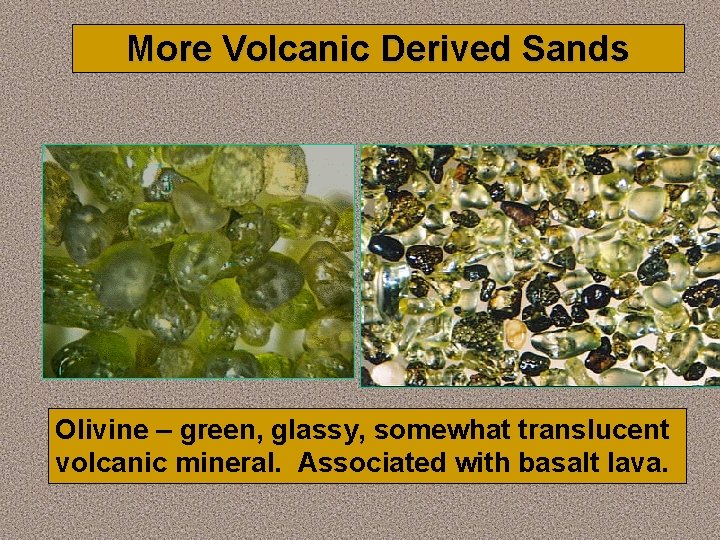
More Volcanic Derived Sands Olivine – green, glassy, somewhat translucent volcanic mineral. Associated with basalt lava.
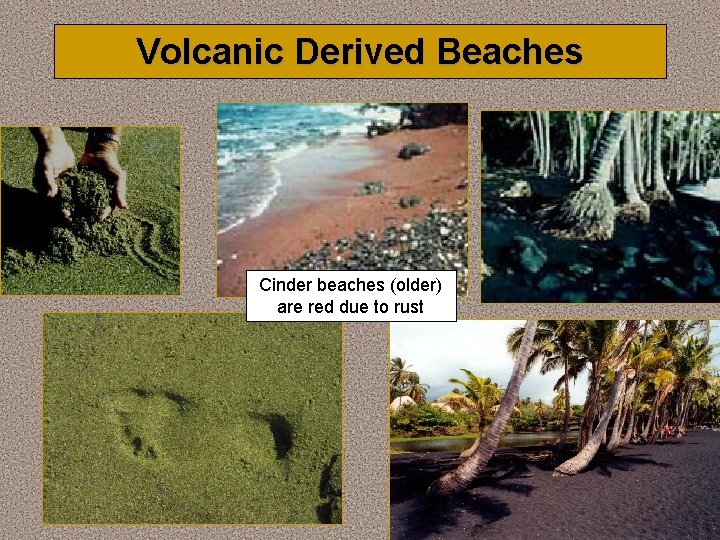
Volcanic Derived Beaches Cinder beaches (older) are red due to rust
Combination of Granite & Volcanic Sand • Could represent: – Continental volcanism that is inland from the coast. – Remains of an extinct volcano – Volcanic arc system due to subduction
Beach Slope • Beach slope is how steep the beach is (i. e. do you have to walk down a berm to the water or is it flat? ) • Coarse sediments (pebbles, gravel) = steep beach slope • Fine sediments (fine sands, mud) = gentle beach slope
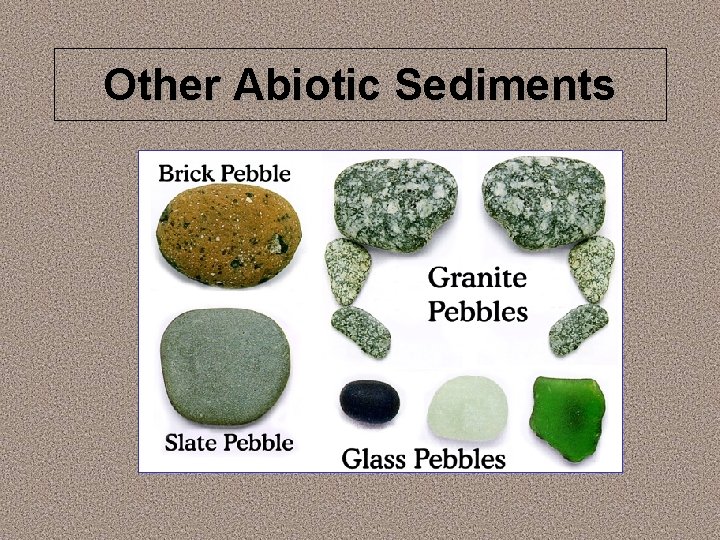
Other Abiotic Sediments
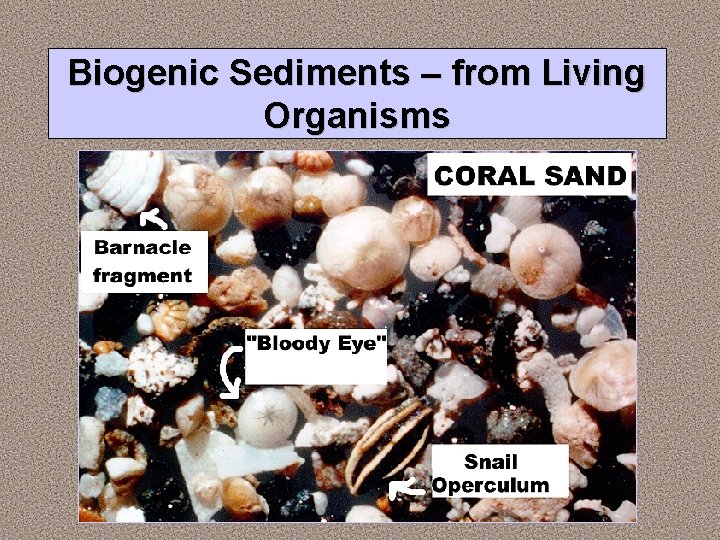
Biogenic Sediments – from Living Organisms
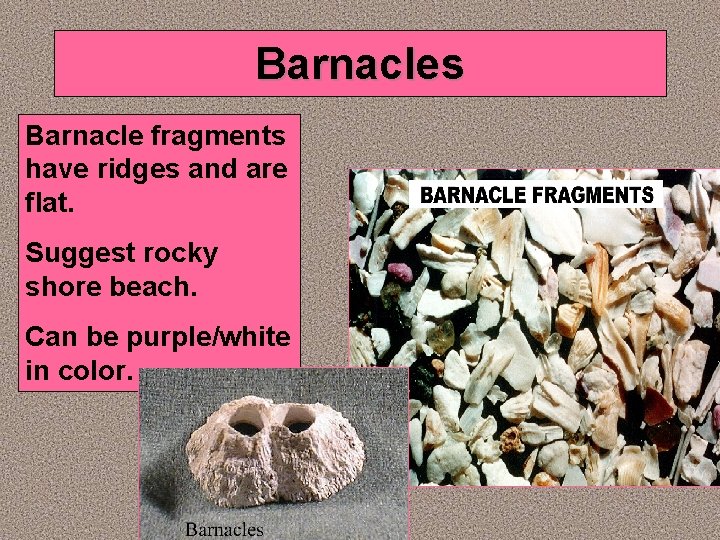
Barnacles Barnacle fragments have ridges and are flat. Suggest rocky shore beach. Can be purple/white in color.
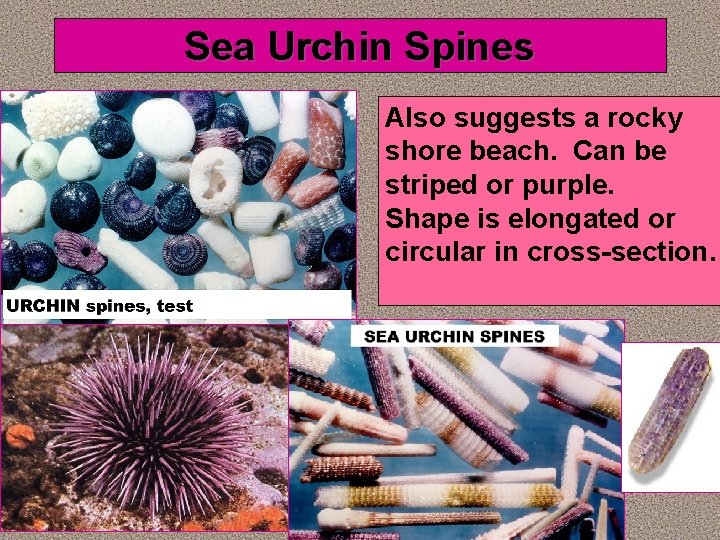
Sea Urchin Spines Also suggests a rocky shore beach. Can be striped or purple. Shape is elongated or circular in cross-section.
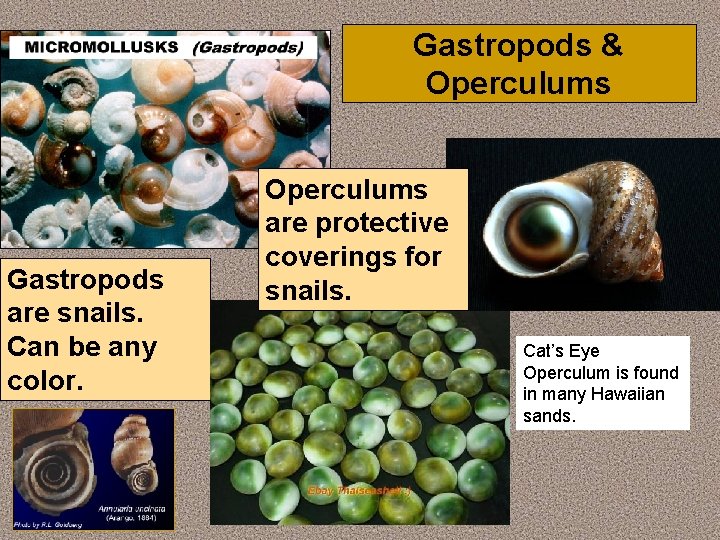
Gastropods & Operculums Gastropods are snails. Can be any color. Operculums are protective coverings for snails. Cat’s Eye Operculum is found in many Hawaiian sands.
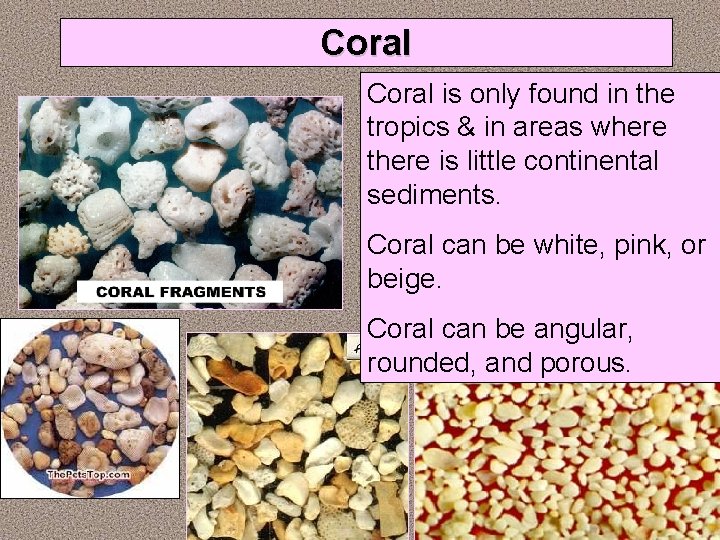
Coral is only found in the tropics & in areas where there is little continental sediments. Coral can be white, pink, or beige. Coral can be angular, rounded, and porous.
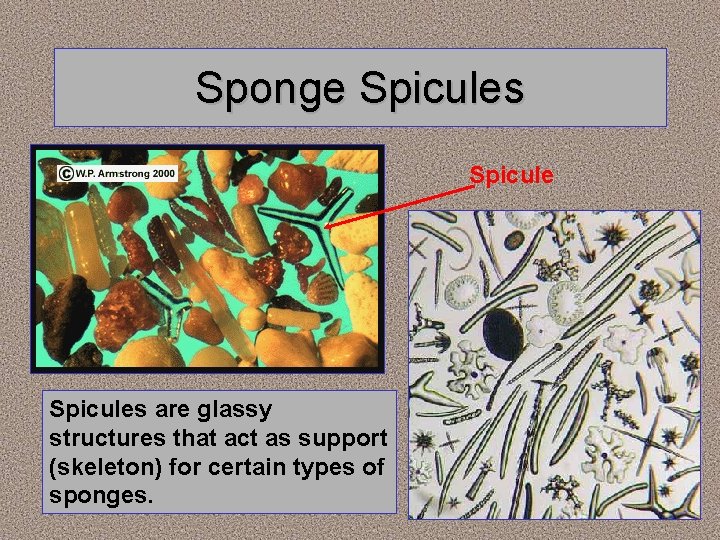
Sponge Spicules are glassy structures that act as support (skeleton) for certain types of sponges.

Foraminifera-Plankton Shells Tiny shell-like sediments that can be found anywhere. Operculum Foraminifera
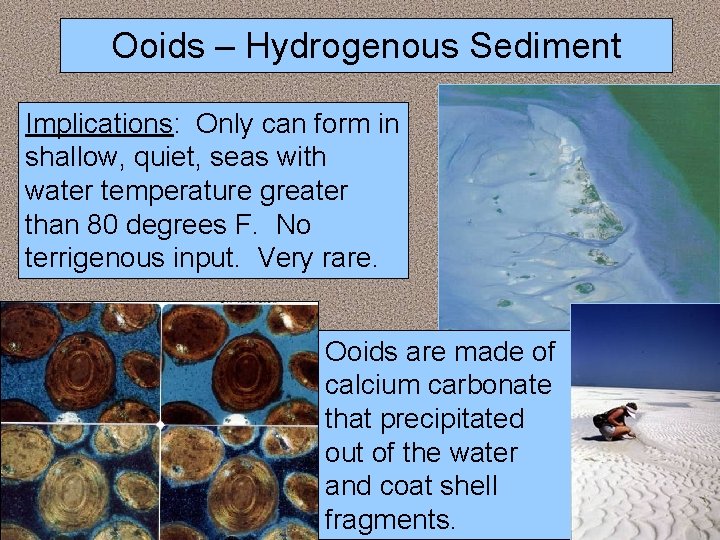
Ooids – Hydrogenous Sediment Implications: Only can form in shallow, quiet, seas with water temperature greater than 80 degrees F. No terrigenous input. Very rare. Ooids are made of calcium carbonate that precipitated out of the water and coat shell fragments.

How to Make Inferences Sand Sample #1 • Well sorted, coarse sand size • Rounded to well rounded • 100% Biogenic – 25 % Coral frags (golden) – 10% shell frags (white) – 65% cat’s eye (round disks)
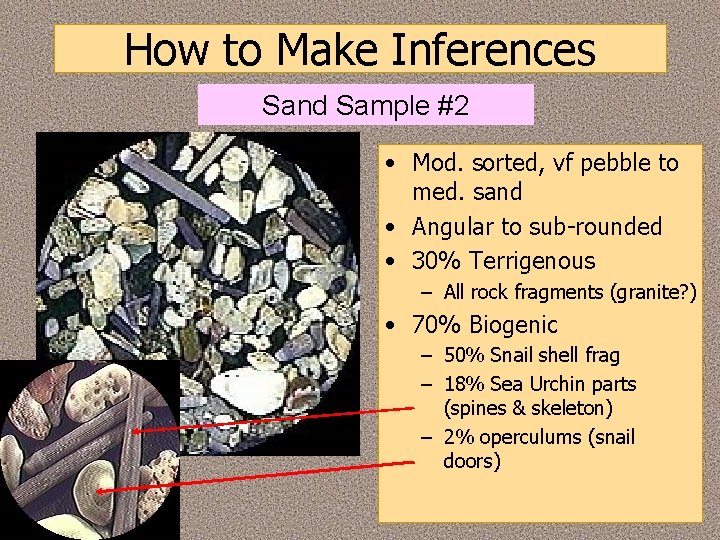
How to Make Inferences Sand Sample #2 • Mod. sorted, vf pebble to med. sand • Angular to sub-rounded • 30% Terrigenous – All rock fragments (granite? ) • 70% Biogenic – 50% Snail shell frag – 18% Sea Urchin parts (spines & skeleton) – 2% operculums (snail doors)
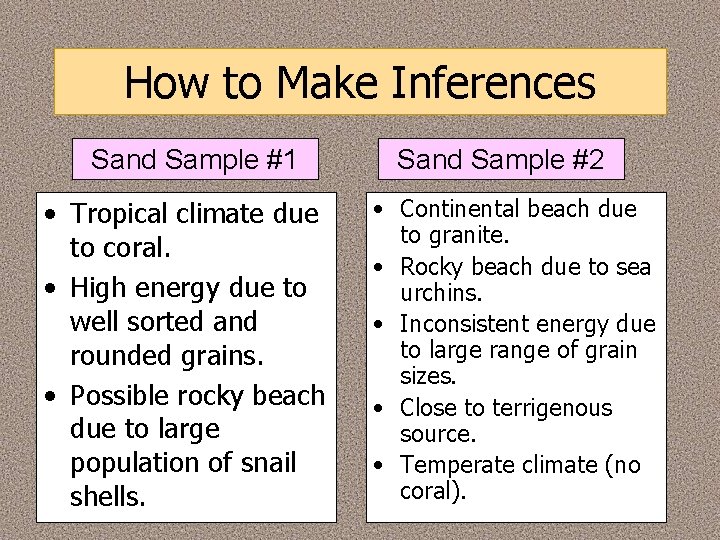
How to Make Inferences Sand Sample #1 • Tropical climate due to coral. • High energy due to well sorted and rounded grains. • Possible rocky beach due to large population of snail shells. Sand Sample #2 • Continental beach due to granite. • Rocky beach due to sea urchins. • Inconsistent energy due to large range of grain sizes. • Close to terrigenous source. • Temperate climate (no coral).
- Slides: 29