
Sand Formations Unit Standards 5 E 3 B
Sand Formations
Unit Standards 5. E. 3 B. 2 Develop and use models to explain the effect of the movement of ocean water (including waves, currents, and tides) on the ocean shore zone (including beaches, barrier islands, estuaries, and inlets). 5. E. 3 B. 3 Construct scientific arguments to support claims that human activities (such as conservation efforts or pollution) affect the land oceans of Earth. 5. E. 3 B. 4 Define problems caused by natural processes or human activities and test possible solutions to reduce the impact on landforms and the ocean shore zone.
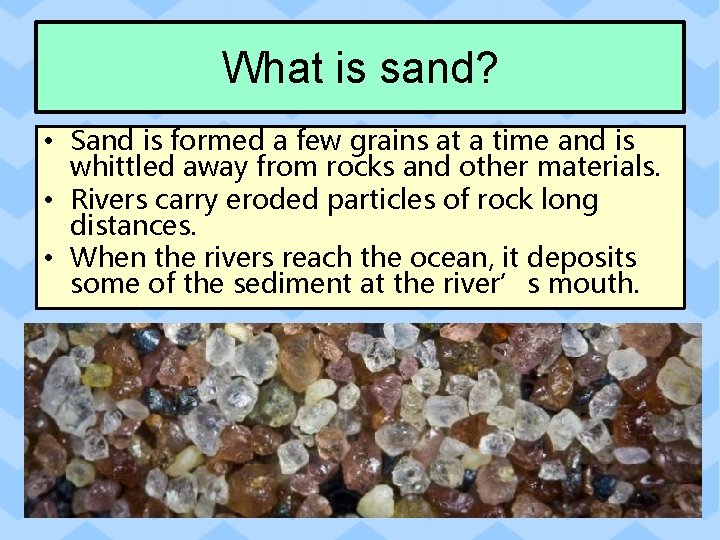
What is sand? • Sand is formed a few grains at a time and is whittled away from rocks and other materials. • Rivers carry eroded particles of rock long distances. • When the rivers reach the ocean, it deposits some of the sediment at the river’s mouth.

What is sand? • Beach drift and ocean currents carry the small particles into the ocean and along the coast. • Without the sediment that erodes from land the beach would be nearly sand-less.

What is sand? • Most sand is weathered rock, made from the same material as the rock it comes from. • The composition of beach sand can tell you its origin.

What is sand? • On the beaches of continents such as North America, sand grains vary in color, because they are formed from various types of rocks. • This mix of colors makes the sand appear beige or brown.
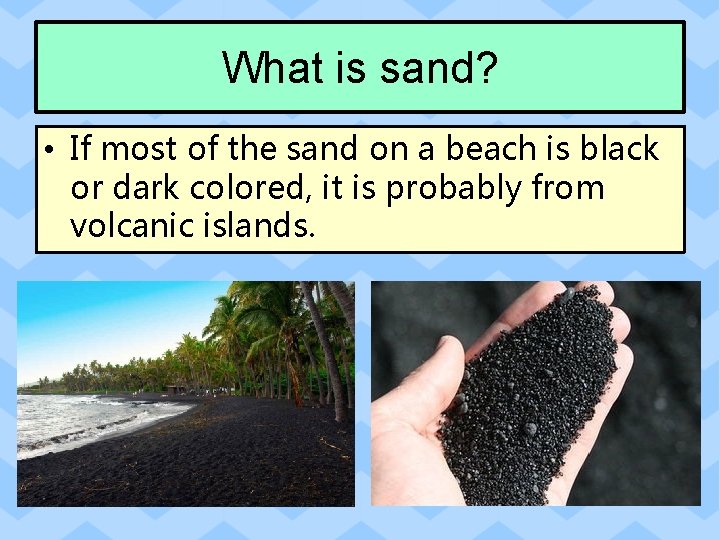
What is sand? • If most of the sand on a beach is black or dark colored, it is probably from volcanic islands.

What is sand? • Some volcanic islands have green-sand beaches, and get their color from olivine, a substance found in volcanic rock.
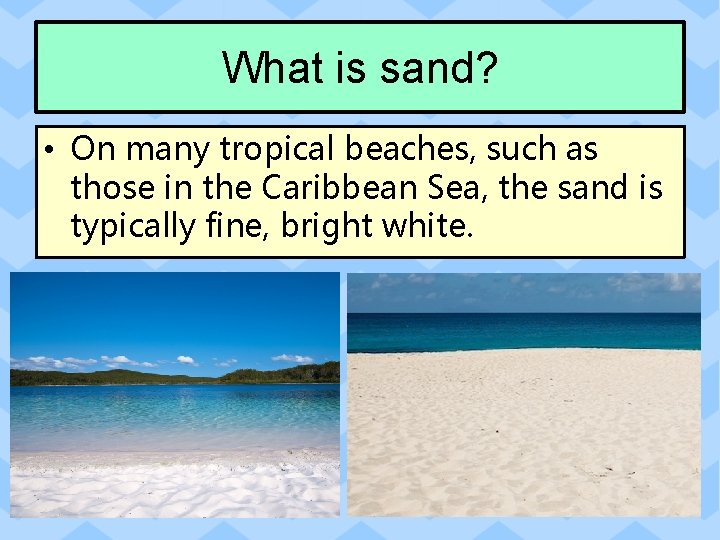
What is sand? • On many tropical beaches, such as those in the Caribbean Sea, the sand is typically fine, bright white.
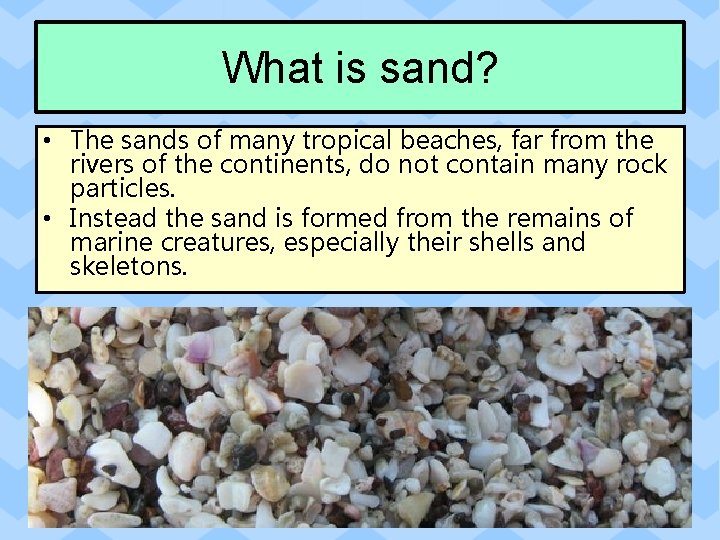
What is sand? • The sands of many tropical beaches, far from the rivers of the continents, do not contain many rock particles. • Instead the sand is formed from the remains of marine creatures, especially their shells and skeletons.
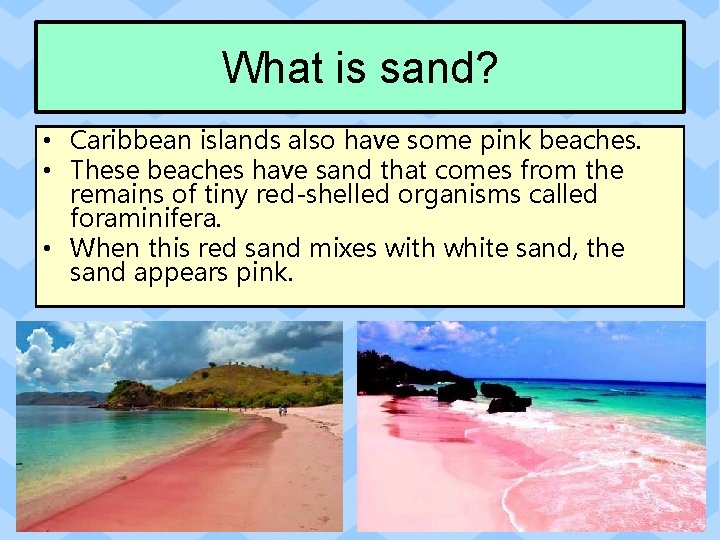
What is sand? • Caribbean islands also have some pink beaches. • These beaches have sand that comes from the remains of tiny red-shelled organisms called foraminifera. • When this red sand mixes with white sand, the sand appears pink.
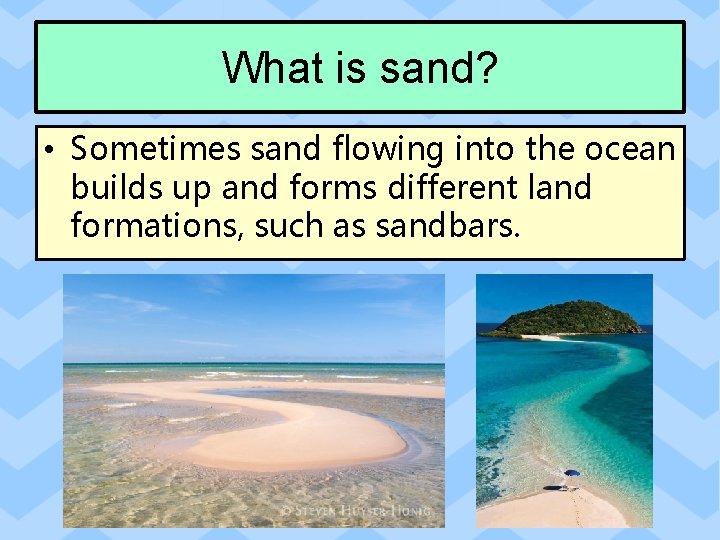
What is sand? • Sometimes sand flowing into the ocean builds up and forms different land formations, such as sandbars.
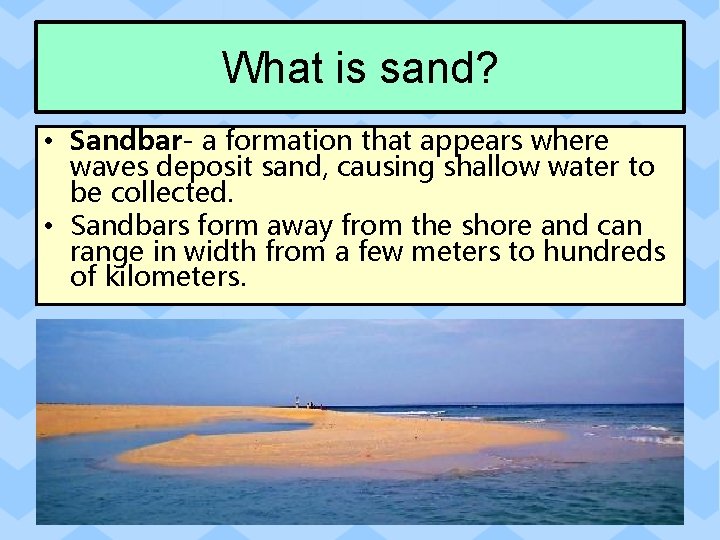
What is sand? • Sandbar- a formation that appears where waves deposit sand, causing shallow water to be collected. • Sandbars form away from the shore and can range in width from a few meters to hundreds of kilometers.
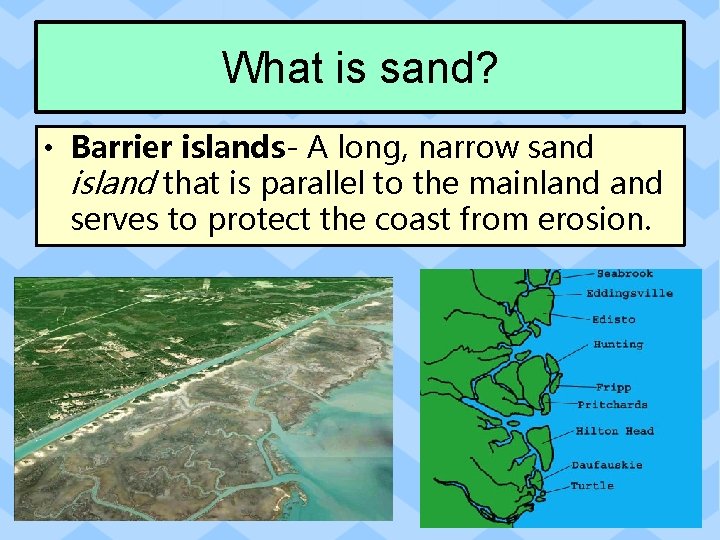
What is sand? • Barrier islands- A long, narrow sand island that is parallel to the mainland serves to protect the coast from erosion.
- Slides: 14