
Sand Dune Formation How are they formed Working
- Slides: 15
Sand Dune Formation
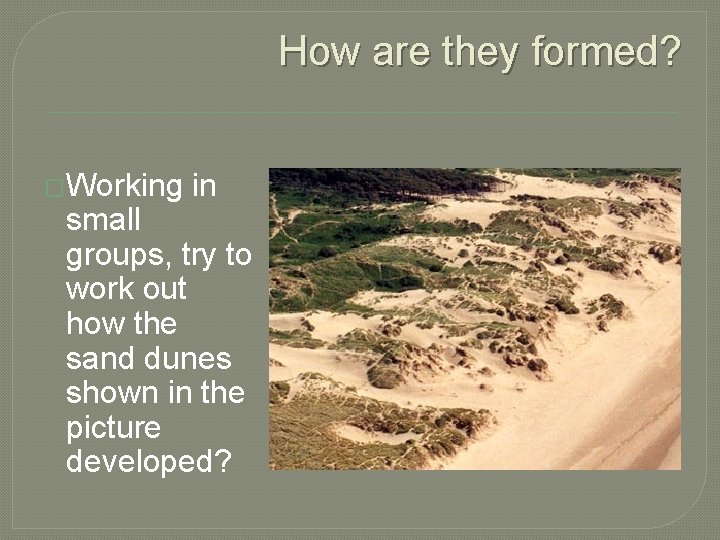
How are they formed? �Working in small groups, try to work out how the sand dunes shown in the picture developed?
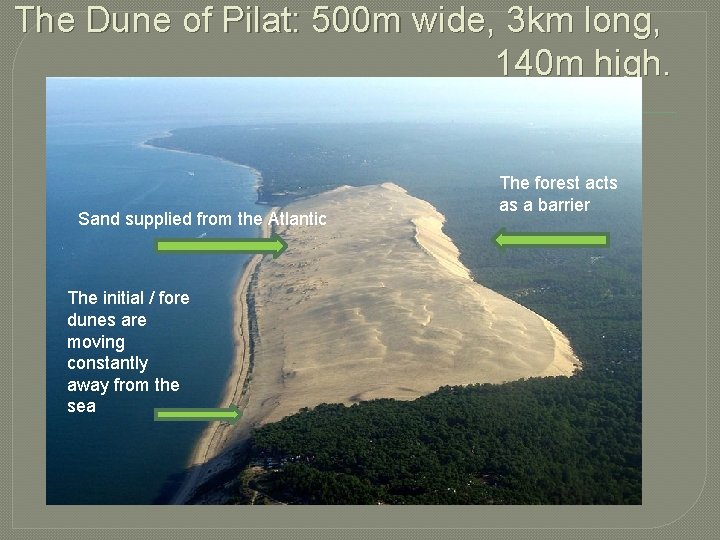
TV Clip: BBC Learning Zone Sand dune formation and movement - the Dune of Pilat Duration: 05: 29 The Dune of Pilat in France is the highest sand dune in Europe. The loose sand constantly moves and the dune migrates away from the sea until it meets a pine forest inland.
The Dune of Pilat: 500 m wide, 3 km long, 140 m high. Sand supplied from the Atlantic The initial / fore dunes are moving constantly away from the sea The forest acts as a barrier
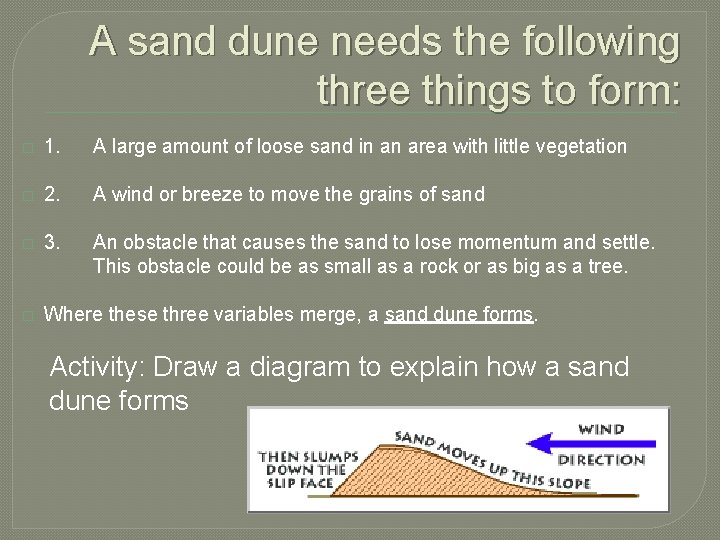
A sand dune needs the following three things to form: � 1. A large amount of loose sand in an area with little vegetation � 2. A wind or breeze to move the grains of sand � 3. An obstacle that causes the sand to lose momentum and settle. This obstacle could be as small as a rock or as big as a tree. � Where these three variables merge, a sand dune forms. Activity: Draw a diagram to explain how a sand dune forms
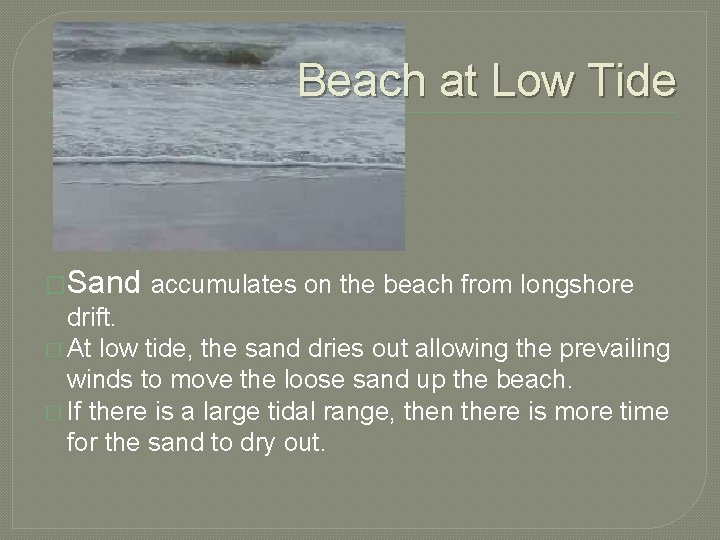
Beach at Low Tide �Sand accumulates on the beach from longshore drift. � At low tide, the sand dries out allowing the prevailing winds to move the loose sand up the beach. � If there is a large tidal range, then there is more time for the sand to dry out.
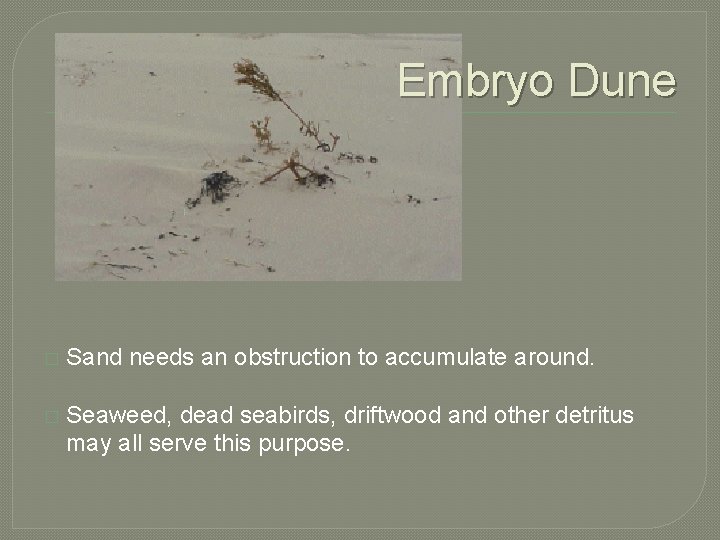
Embryo Dune � Sand needs an obstruction to accumulate around. � Seaweed, dead seabirds, driftwood and other detritus may all serve this purpose.
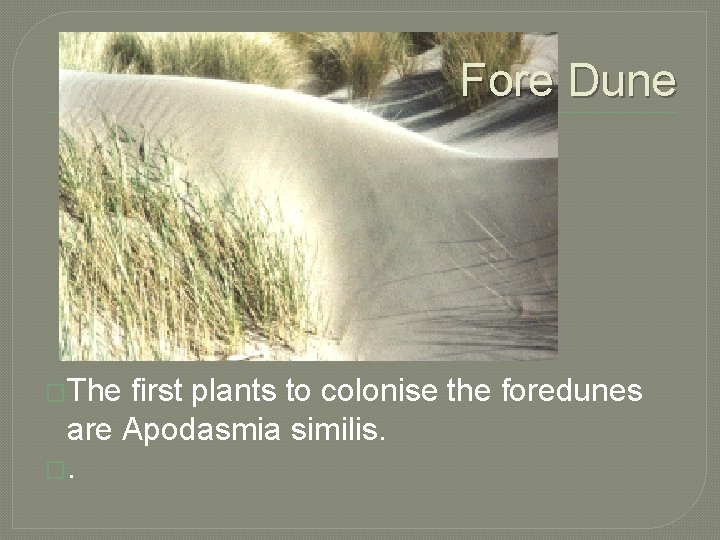
Fore Dune �The first plants to colonise the foredunes are Apodasmia similis. �.
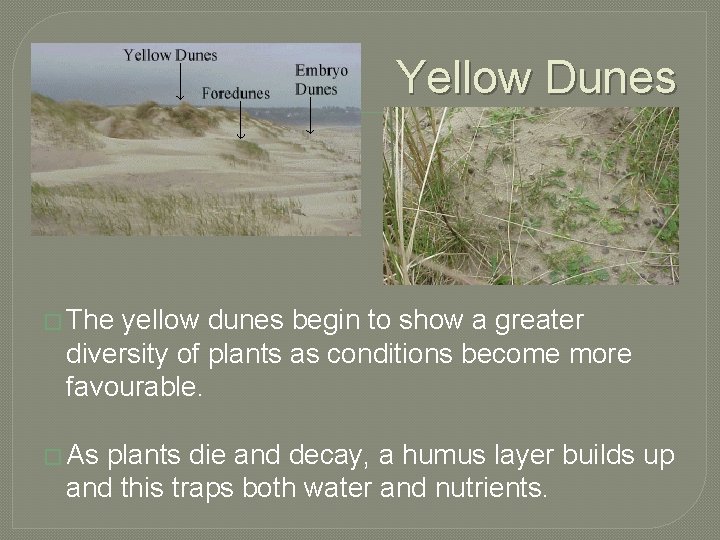
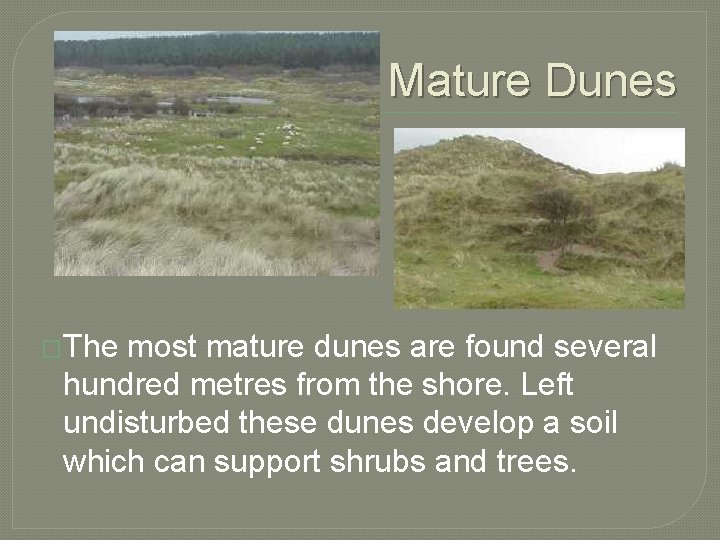
Yellow Dunes � The yellow dunes begin to show a greater diversity of plants as conditions become more favourable. � As plants die and decay, a humus layer builds up and this traps both water and nutrients.
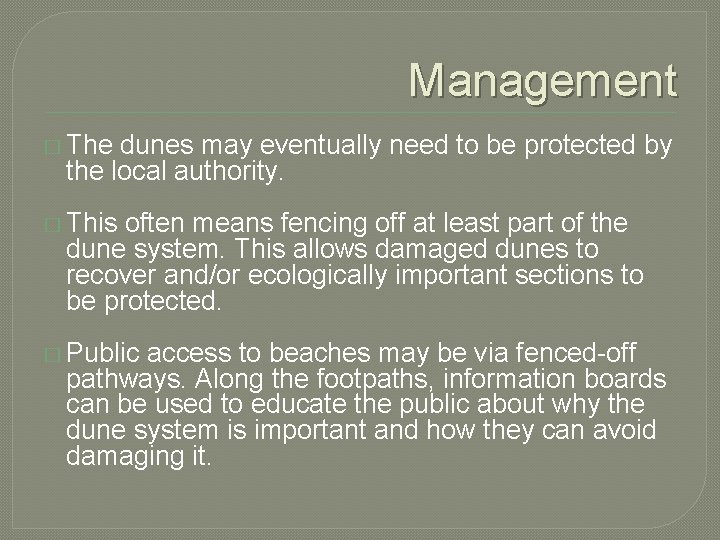
Mature Dunes �The most mature dunes are found several hundred metres from the shore. Left undisturbed these dunes develop a soil which can support shrubs and trees.
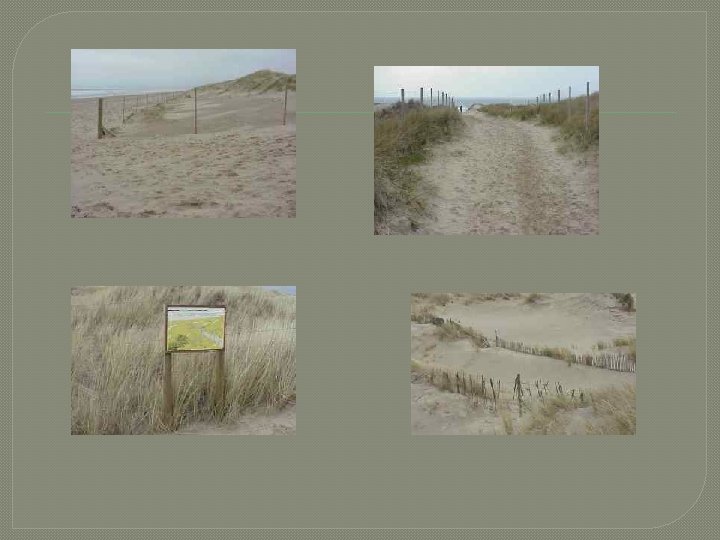
Management � The dunes may eventually need to be protected by the local authority. � This often means fencing off at least part of the dune system. This allows damaged dunes to recover and/or ecologically important sections to be protected. � Public access to beaches may be via fenced-off pathways. Along the footpaths, information boards can be used to educate the public about why the dune system is important and how they can avoid damaging it.
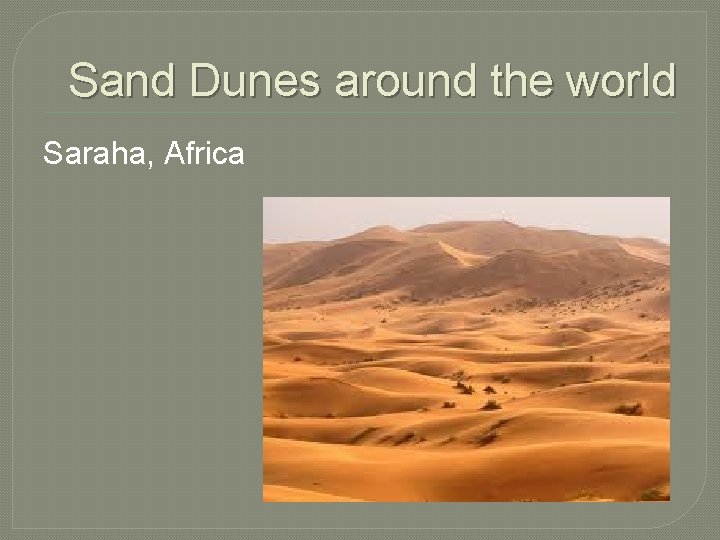
Sand Dunes around the world Saraha, Africa
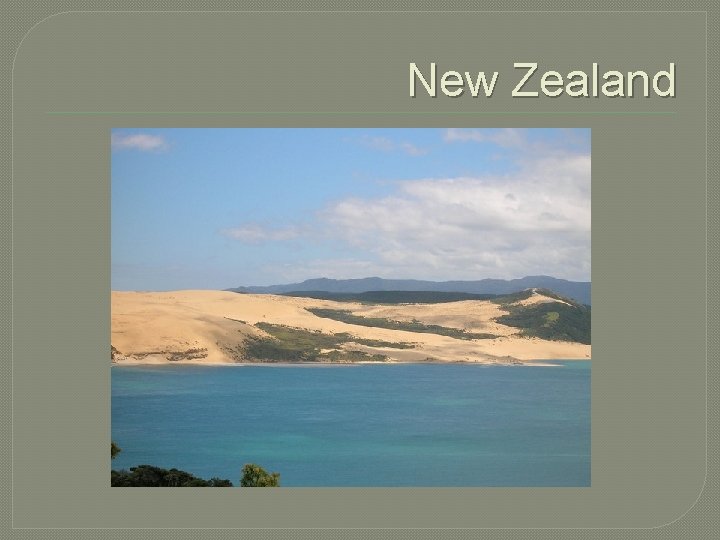
New Zealand