
San Ramon Penal Colony Presentation by Andrei F
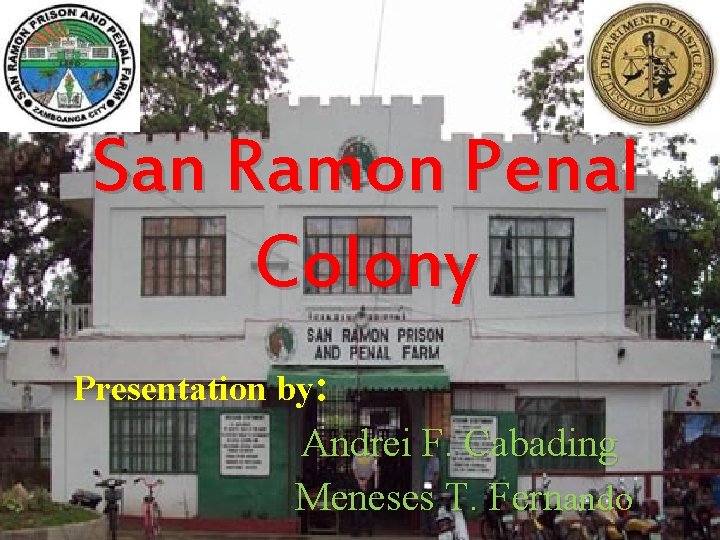
San Ramon Penal Colony Presentation by: Andrei F. Cabading Meneses T. Fernando
INTRODUCTIO N • San Ramon Penal Farm was established in Southern Zamboanga on August 2, 1870 through a royal decree promulgated in 1869. It was establish during the tenure of Governor General Ramon Blanco (whose patron saint the prison was named after) the facility was originally established for persons convicted of political crimes.
History • Considered the oldest facility in the country, prisoners in San Ramon were required to do agricultural works. • During Spanish-American in 1898, the prisoners in San Ramon was hastily released and the buildings destroyed. In 1907, the American administration re-established the prison farm. • In 1912 Gen. John Pershing, chief executive of the Department of Mindanao and Sulu, classified the institution as a prison and penal colony and therein confined people sentenced by the courts under his jurisdiction.
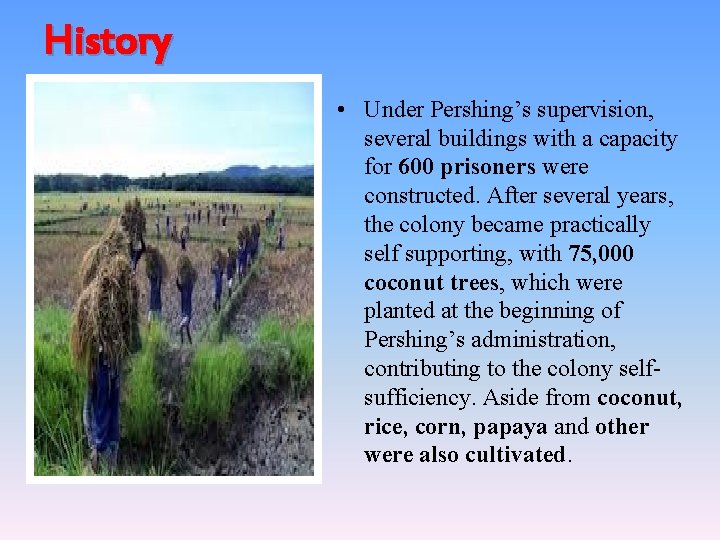
History • Under Pershing’s supervision, several buildings with a capacity for 600 prisoners were constructed. After several years, the colony became practically self supporting, with 75, 000 coconut trees, which were planted at the beginning of Pershing’s administration, contributing to the colony selfsufficiency. Aside from coconut, rice, corn, papaya and other were also cultivated.
History • In November 1, 1905, Reorganization Act No. 1407 was approved creating the Bureau of Prison under the Department of Commerce and police, integrating the Old Bilibid Prison, San Ramon penal colony and Iwahig penal colony. The Philippine Coconut Authority took over management of the coconut farm from San Ramon. In 1995, Congresswoman Maria Clara L. Lobregat proposed the transfer of San Ramon prison in Bongiao town, in the mountainous area of Zamboanga, to give way to a special economic zone.
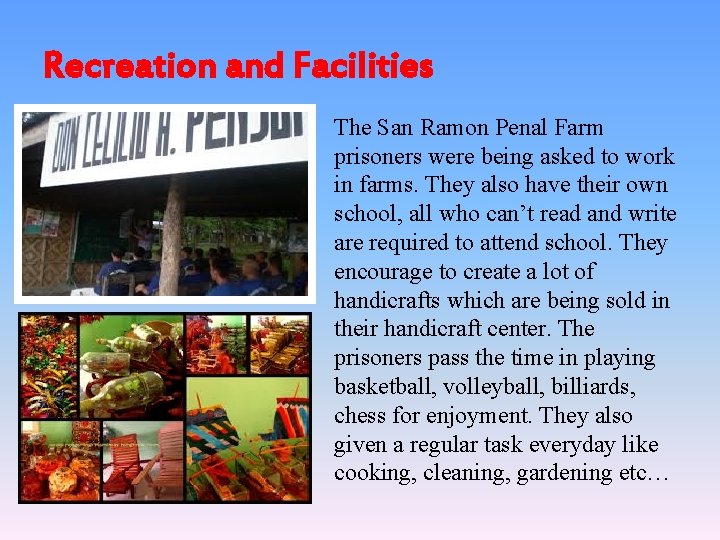
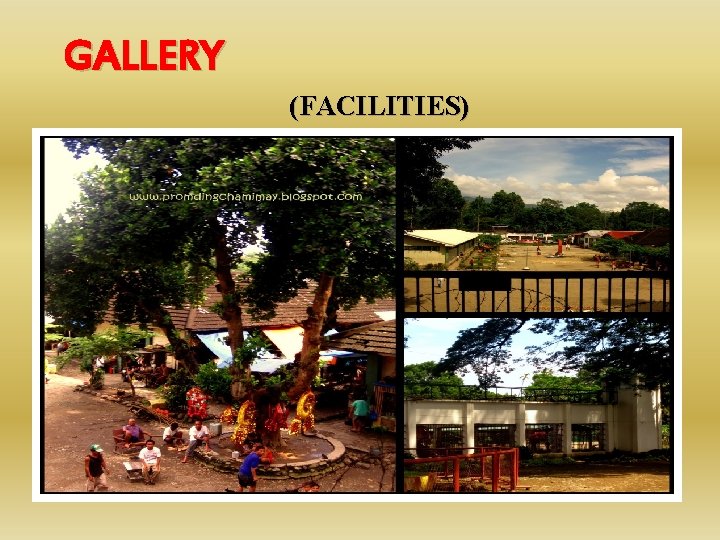
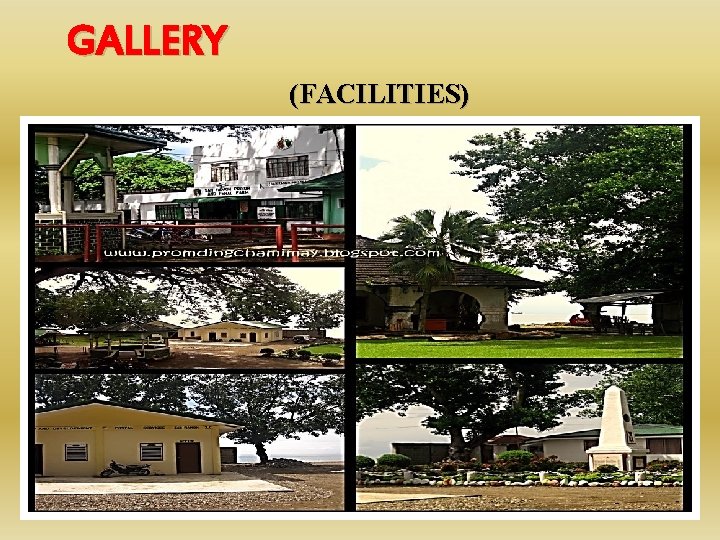
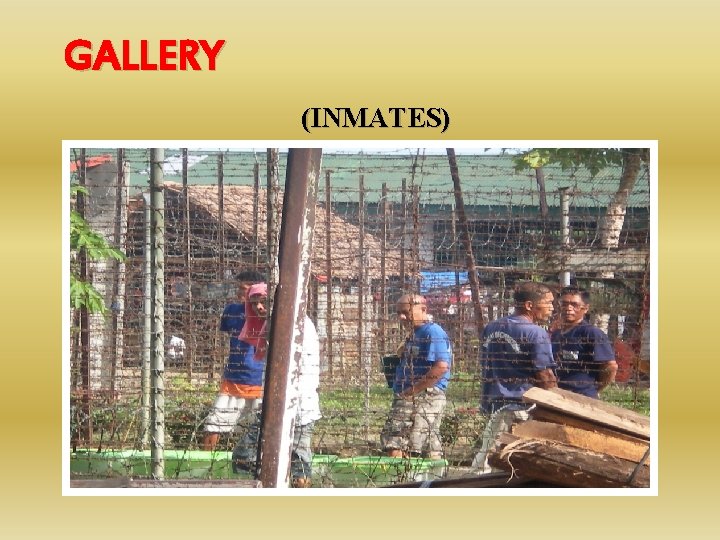
Recreation and Facilities • The San Ramon Penal Farm prisoners were being asked to work in farms. They also have their own school, all who can’t read and write are required to attend school. They encourage to create a lot of handicrafts which are being sold in their handicraft center. The prisoners pass the time in playing basketball, volleyball, billiards, chess for enjoyment. They also given a regular task everyday like cooking, cleaning, gardening etc…
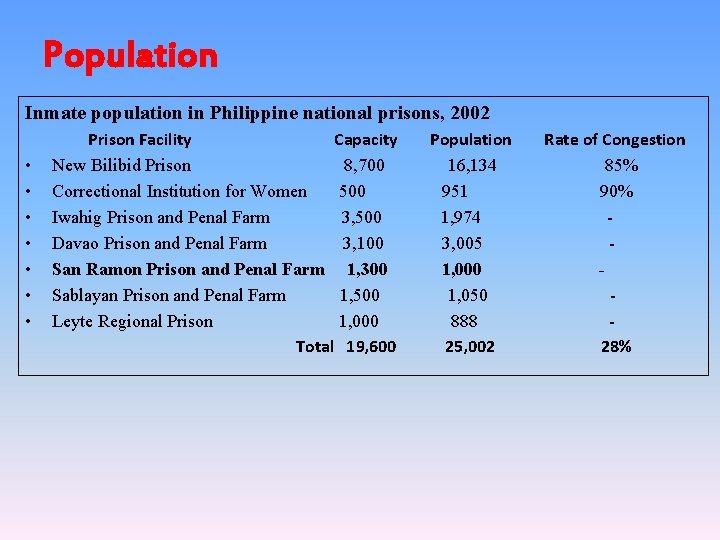
Population Inmate population in Philippine national prisons, 2002 • • Prison Facility Capacity Population Rate of Congestion New Bilibid Prison 8, 700 16, 134 85% Correctional Institution for Women 500 951 90% Iwahig Prison and Penal Farm 3, 500 1, 974 Davao Prison and Penal Farm 3, 100 3, 005 San Ramon Prison and Penal Farm 1, 300 1, 000 Sablayan Prison and Penal Farm 1, 500 1, 050 Leyte Regional Prison 1, 000 888 Total 19, 600 25, 002 28%
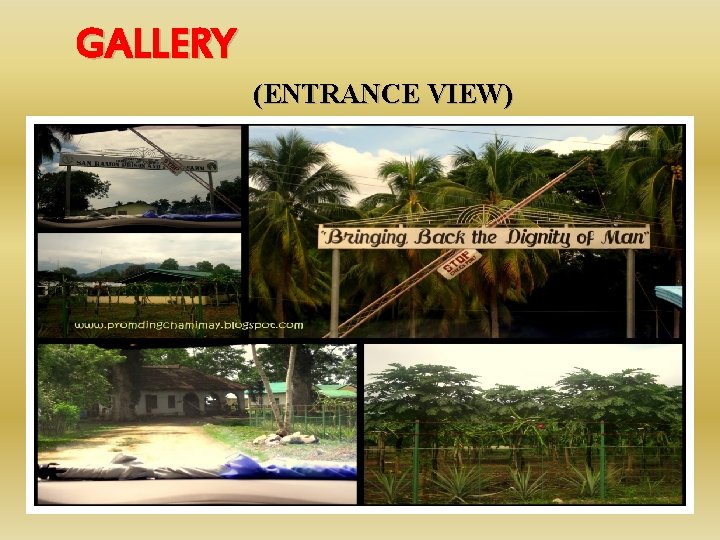
GALLERY (ENTRANCE VIEW)
GALLERY (FACILITIES)
GALLERY (FACILITIES)
GALLERY (FRONT VIEW)
GALLERY (INMATES)
Point Of View • This 136 year old institution, still functioning today dating back to the late Spanish regime will soon be a thing of the past. Its misfortune, if we can call it that way , is that it stands in the way of an ambitious project of government to invite investors to Zamboanga. • I think it will not be as difficult to the marketing and promotions department of the Zamboanga Economic Zone (Zambo. Eco. Zone) here to invite investors to be a locator even the penal colony is adjacent to the economic zone in San Ramon. • The Zamboanga Ecozone, whose top officials are Zamboangueños were the ones who initiated for the transfer of the penitentiary from San Ramon to the hills of Curuan. None of them probably thought of the historical significance of the institution to the people of Zamboanga. As a result the Department of Justice turned over the site to the Ecozone. So then the Ecozone will shoulder the cost of the transfer but in turn they get this choice property of earth for their use.
Point Of View Why can this happen in Zamboanga that prides on its Spanish and American heritage? • How can an insensitive populace or bureaucracy allow this “desecration” of a historical site. To make matters worse, the National Historical Commission has failed to declare the San Ramon Prison and Penal Farm as a historical site that should be preserved, untampered for the future generation. • I just also imagine that the people of Zamboanga are about to lost one of the last few remaining relics and link with the past. Once lost, this institution will be lost forever. And nobody seems to care.

Reference • Bureau of Correction. website • Department of Justice. website • Bureau of Jail Management and Penology. website • Googlesearch. com • Zamboanga. com News
- Slides: 15