
SAN ANTONIO COLLEGE STUDENT ADVOCACY CENTER Addressing Poverty

- Slides: 20
SAN ANTONIO COLLEGE STUDENT ADVOCACY CENTER Addressing Poverty to Improve Student Retention Lisa Black, LMSW, Associate Professor Dr. David Rodriguez, Ed. D. , L. P. C. , Assistant Professor
Assessing Student Need San Antonio is among the most economically segregated cities in the United States • Downtown San Antonio and South Bexar County have the highest percentage of families living below the poverty line • • Particularly negative impact on inner-city schools • TEA data demonstrate an inverse relationship between poverty and SAT achievement in school districts across San Antonio
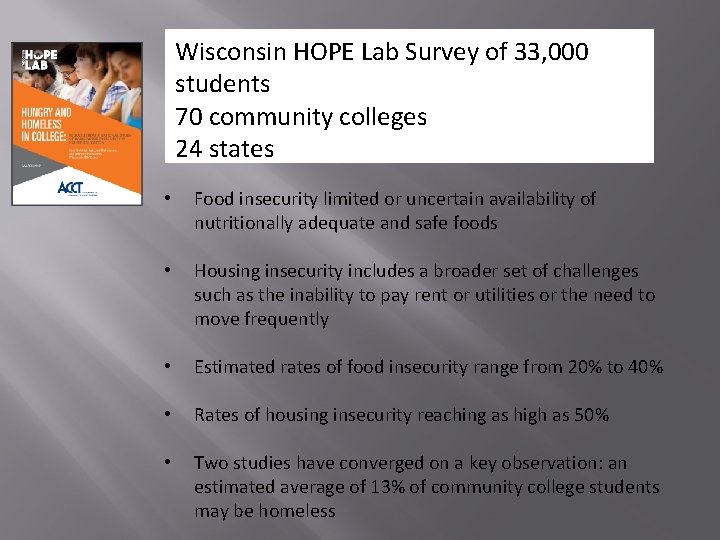
Wisconsin HOPE Lab Survey of 33, 000 students 70 community colleges 24 states • Food insecurity limited or uncertain availability of nutritionally adequate and safe foods • Housing insecurity includes a broader set of challenges such as the inability to pay rent or utilities or the need to move frequently • Estimated rates of food insecurity range from 20% to 40% • Rates of housing insecurity reaching as high as 50% • Two studies have converged on a key observation: an estimated average of 13% of community college students may be homeless
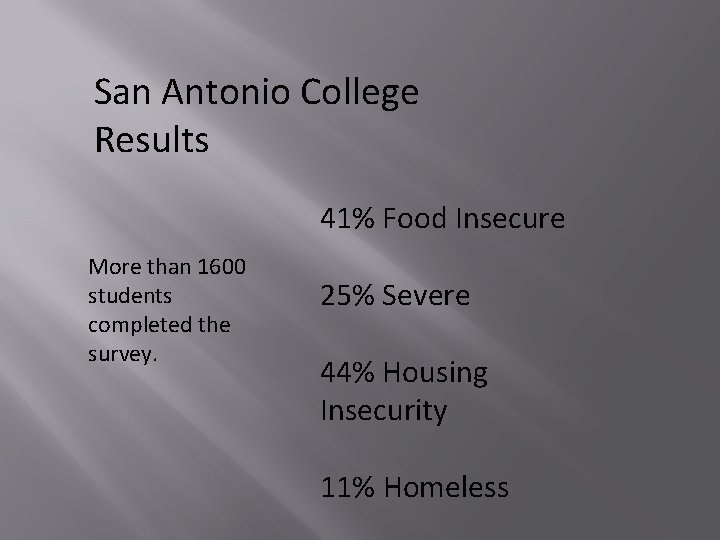
San Antonio College Results 41% Food Insecure More than 1600 students completed the survey. 25% Severe 44% Housing Insecurity 11% Homeless
“The difference in graduation rates between the top and bottom income groups has widened by nearly 50% over two decades. ” http: //money. cnn. com/2011/11/21/news/economy/income_college/index. htm
$300. 00 The average amount that would trigger a withdrawal from school.
Student Advocacy Center Established Spring 2017 � Mission � Launch a holistic, campus-wide, anti-poverty initiative to serve SAC students by meeting their immediate socio-economic deficits and increasing faculty and staff awareness of the effects of poverty on education.
GOALS 1. Improve student retention by providing robust case management and social service support. 2. Provide opportunities for student engagement in active learning to support academic pathways, completion, and transfer 3. Expand faculty awareness of perception of the impact of poverty on student retention and academic performance.
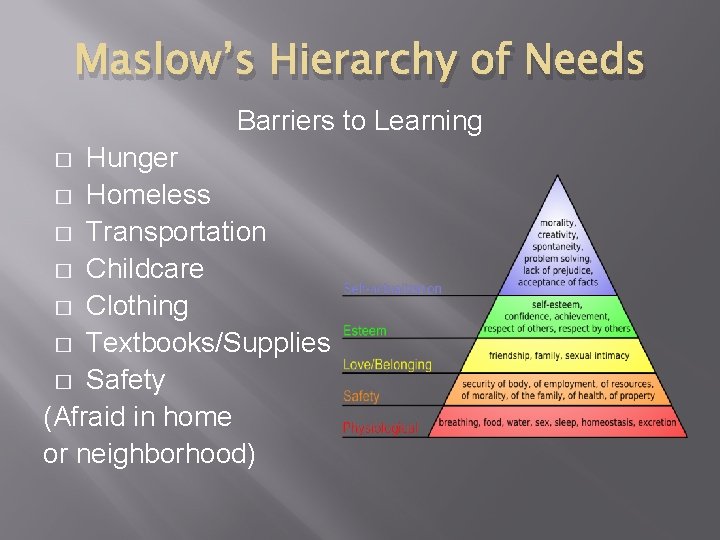
Maslow’s Hierarchy of Needs Barriers to Learning Hunger � Homeless � Transportation � Childcare � Clothing � Textbooks/Supplies � Safety (Afraid in home or neighborhood) �
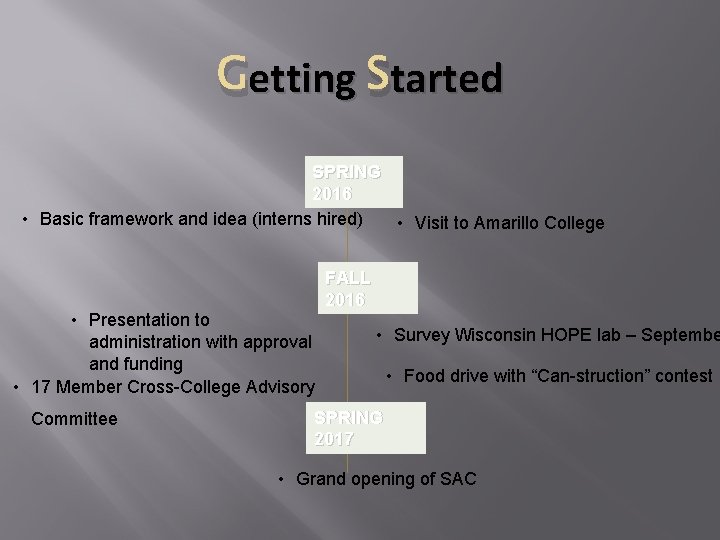
etting Started Getting SPRING 2016 • Basic framework and idea (interns hired) • Visit to Amarillo College • Presentation to administration with approval and funding • 17 Member Cross-College Advisory Committee FALL 2016 • Survey Wisconsin HOPE lab – Septembe • Food drive with “Can-struction” contest SPRING 2017 • Grand opening of SAC
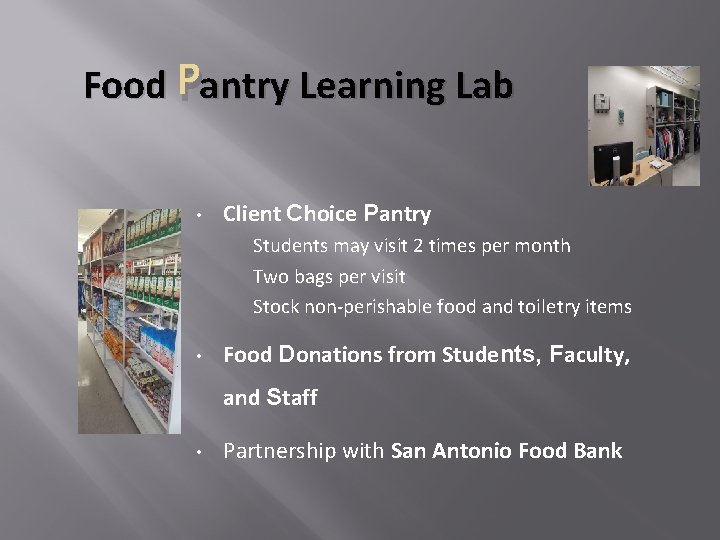
Food Pantry Learning Lab • Client Choice Pantry Students may visit 2 times per month Two bags per visit Stock non-perishable food and toiletry items • Food Donations from Students, Faculty, and Staff • Partnership with San Antonio Food Bank
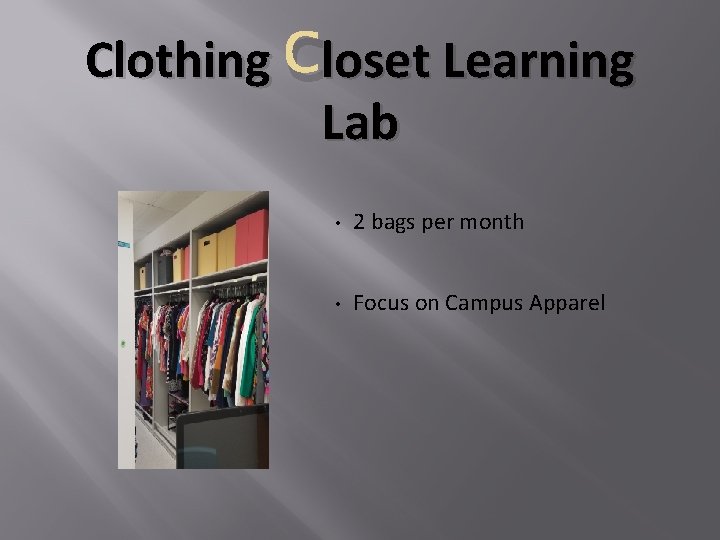
Clothing Closet Learning Lab • 2 bags per month • Focus on Campus Apparel
Counseling Services • Personal Counseling- Brief, solution-focused � Support Groups � D. A. C. A. � LGBTQ � Veterans � Non-Traditional Student (male) � Stress Management
Emergency Assistance � � Support for students in emergency situations typically related to basic needs (housing, utility assistance, clothes, transportation) Most common need in San Antonio: Rent and Utility Assistance
Case Management • Holistic • Includes assessment • Relational vs. transactional • Advocacy orientation • Manage referrals
ACCOMPLISHMENTS To Date � � � Fully functioning agency created in 8 months Successful Internship results: MSW, BSW, MA, LPC-I 3 MOUs with University Partners 5 MOUs with Agency or Foundations Agreements $19, 000 in donations from Area Foundations and HEB Educate Tomorrow approved 16 additional scholarships for Fall 2017 and has expanded eligibility criteria to include poverty
Sustainability • Interns are a must to maintain case management model • Connection to academic discipline • Relationships with university partners • Food budget and food drives • Space considerations
� In the month of April, we served 64 new students in the food pantry alone. � The 64 individual students had families. All together, there were 177 individuals impacted by the food taken.
� A problem shared is already half solved
REFERENCES � � http: //www. mysanantonio. com/news/local/article/San-Antonio-s-high-poverty-ZIPcodes-fall-5980210. php#photo-7317682 http: //www. russellsage. org/research/social-inequality/working-papers/mayersegregation http: //www. texasmonthly. com/articles/where-are-the-nations-most-economicallysegregated-cities http: //money. cnn. com/2011/11/21/news/economy/income_college/index. htm