
SAMPLING METHODS Zulkarnain Lubis Sampling Methods The Need
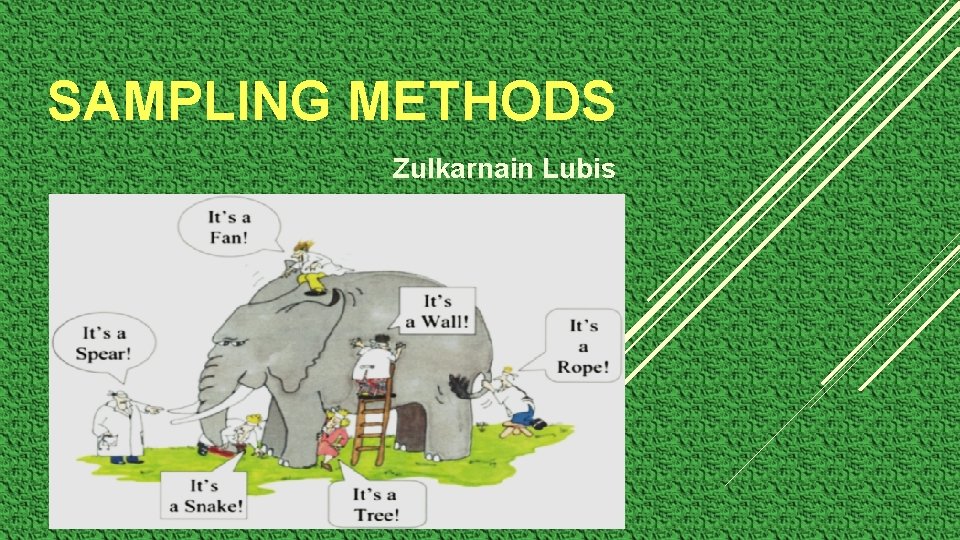
SAMPLING METHODS Zulkarnain Lubis
Sampling Methods The Need to Sample Sampling, Statistical terms and tests Identify Sampling design The size of the sample The sampling methods probability sampling (Simple random, Systematic, Stratified random, Cluster, Multistage non probability sampling (Accidental Sampling. Purposive Sampling, Expert Sampling, Quota sampling, Self-selection Sampling)

RESEARCH PROCESS Identify and Define Research Problem â Theory / Practice â Hypotheses / Conceptualization â Research Design â Data collection â Data Analysis â Findings
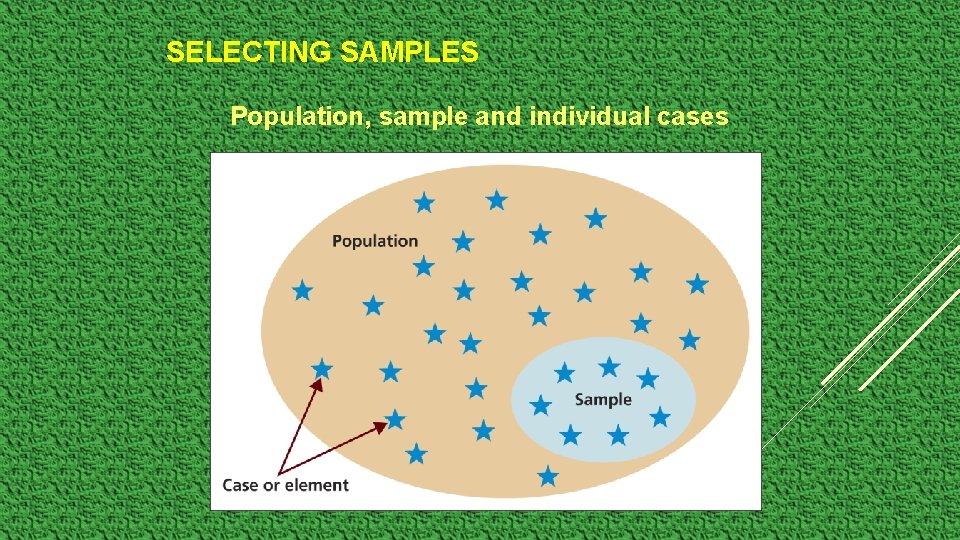
SELECTING SAMPLES Population, sample and individual cases
THE NEED TO SAMPLE Sampling- a valid alternative to a census when A survey of the entire population is impracticable Budget constraints restrict data collection Time constraints restrict data collection Results from data collection are needed quickly
PRACTICAL SAMPLING CONCEPTS Defining the Target Population • What is the relevant population? • Whom do we want to talk to? Population is operationally defined by specific and explicit tangible characteristics. The Sampling Frame • A list of elements from which a sample may be drawn; also called working population. • Sampling Frame Error Occurs when certain sample elements are not listed or are not accurately represented in a sampling frame.
PRACTICAL SAMPLING CONCEPTS (CONT’D) Sampling services (list brokers) • Provide lists or databases of the names, addresses, phone numbers, and e-mail addresses of specific populations. • Reverse directory A directory similar to a telephone directory except that listings are by city and street address or by phone number rather than alphabetical by last name. International Research • Availability of sampling frames varies dramatically around the world.
SAMPLING UNITS Sampling Unit A single element or group of elements subject to selection in the sample. Primary Sampling Unit (PSU) A unit selected in the first stage of sampling. Secondary Sampling Unit A unit selected in the second stage of sampling. Tertiary Sampling Unit A unit selected in the third stage of sampling.
RANDOM SAMPLING AND NON SAMPLING ERRORS Random Sampling Error • The difference between the sample result and the result of a census conducted using identical procedures. • A statistical fluctuation that occurs because of chance variations in the elements selected for a sample. Systematic Sampling Error • Systematic (nonsampling) error results from nonsampling factors, primarily the nature of a study’s design and the correctness of execution. It is not due to chance fluctuation.
RANDOM SAMPLING AND NONSAMPLING ERRORS (CONT’D) Less than Perfectly Representative Samples Random sampling errors and systematic errors associated with the sampling process may combine to yield a sample that is less than perfectly representative of the population.
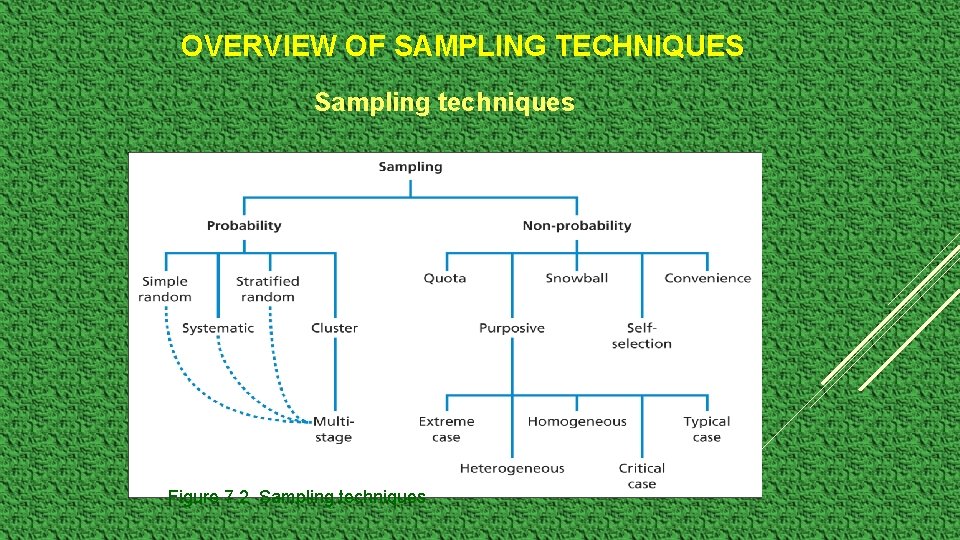
OVERVIEW OF SAMPLING TECHNIQUES Sampling techniques Figure 7. 2 Sampling techniques
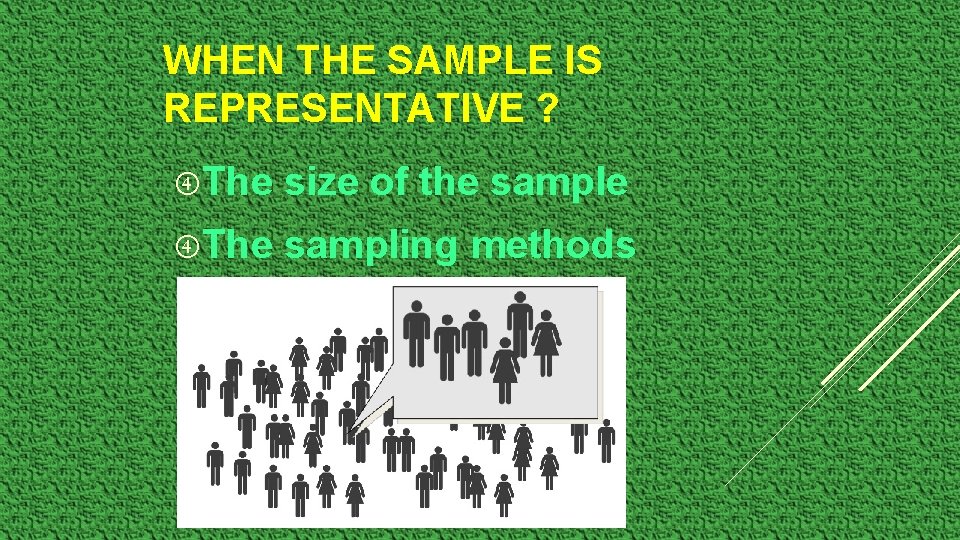
WHEN THE SAMPLE IS REPRESENTATIVE ? The size of the sample The sampling methods
SAMPLE SIZE Random Error and Sample Size Random sampling error varies with samples of different sizes. Increases in sample size reduce sampling error at a decreasing rate. Diminishing returns - random sampling error is inversely proportional to the square root of n.
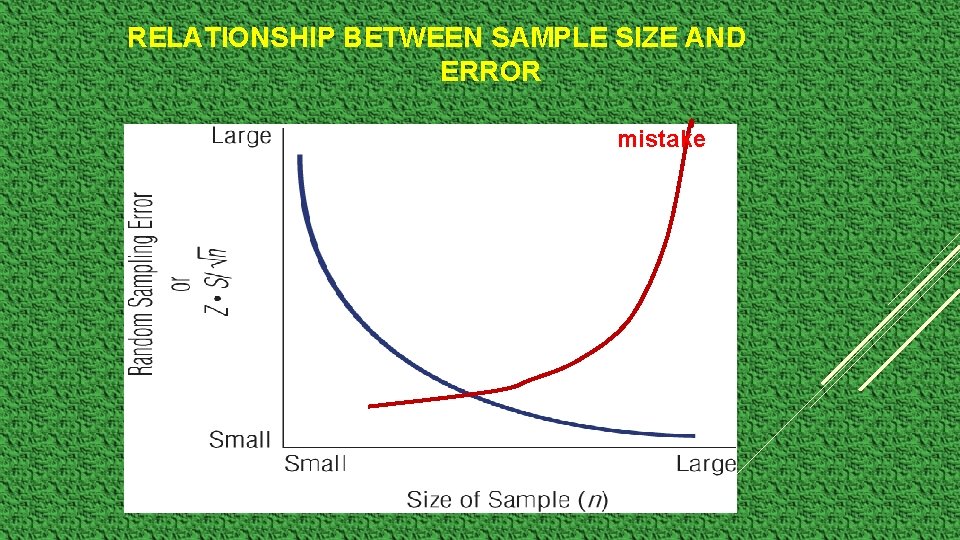
RELATIONSHIP BETWEEN SAMPLE SIZE AND ERROR mistake
THE SAMPLE SIZE the sample size is determined based on • the comparison of sample size to the population size • the level of homogeneity or uniformity of the population • the sampling method used • the level of precision desired • the purpose of the research • the availability of budget and time
FACTORS OF CONCERN IN CHOOSING SAMPLE SIZE Variance (or Heterogeneity) • A heterogeneous population has more variance (a larger standard deviation) which will require a larger sample. • A homogeneous population has less variance (a smaller standard deviation) which permits a smaller sample. Magnitude of Error (Confidence Interval) • How precise must the estimate be? Confidence Level • How much error will be tolerated?
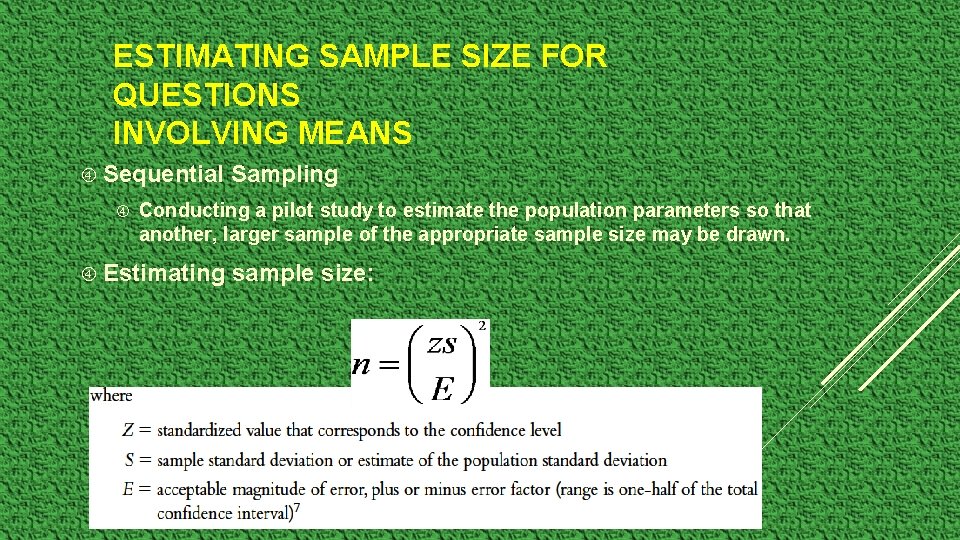
ESTIMATING SAMPLE SIZE FOR QUESTIONS INVOLVING MEANS Sequential Sampling Conducting a pilot study to estimate the population parameters so that another, larger sample of the appropriate sample size may be drawn. Estimating sample size:
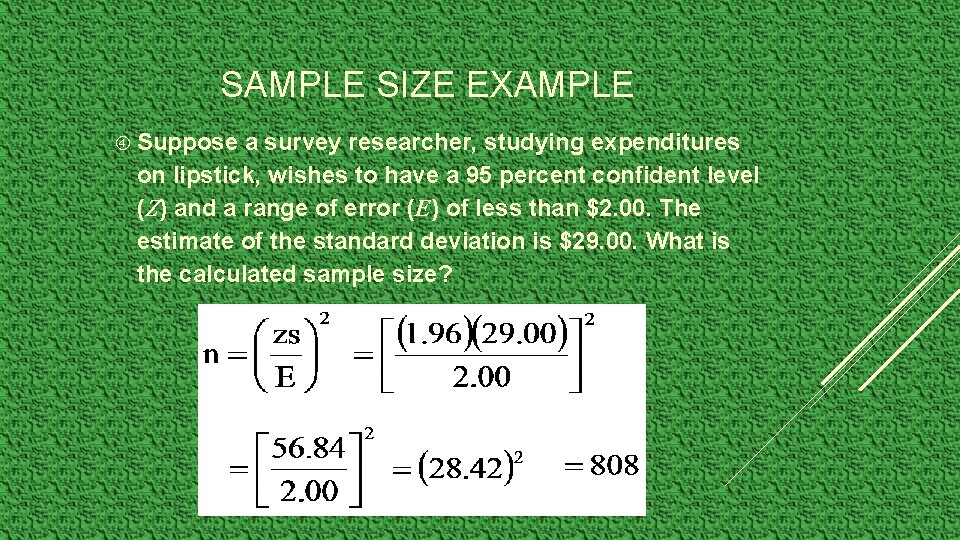
SAMPLE SIZE EXAMPLE Suppose a survey researcher, studying expenditures on lipstick, wishes to have a 95 percent confident level (Z) and a range of error (E) of less than $2. 00. The estimate of the standard deviation is $29. 00. What is the calculated sample size?
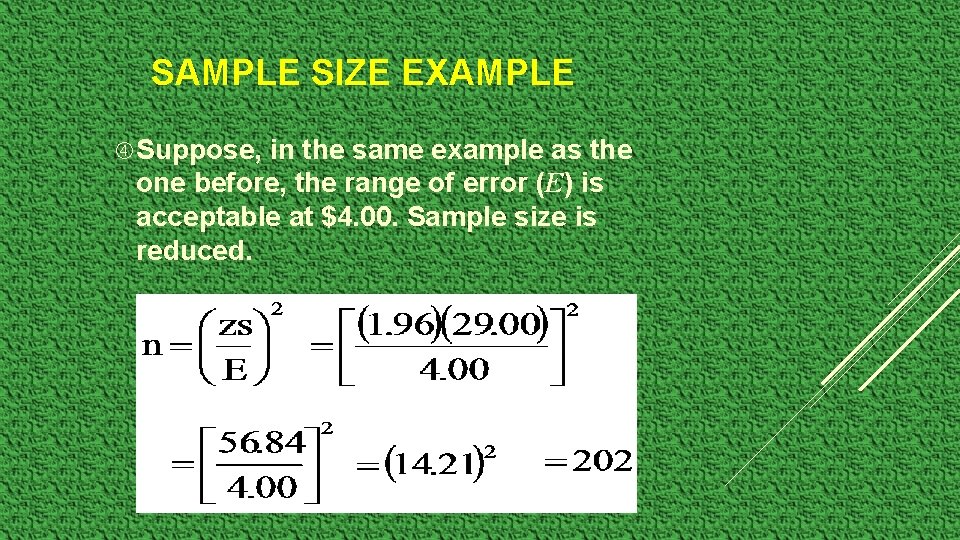
SAMPLE SIZE EXAMPLE Suppose, in the same example as the one before, the range of error (E) is acceptable at $4. 00. Sample size is reduced.
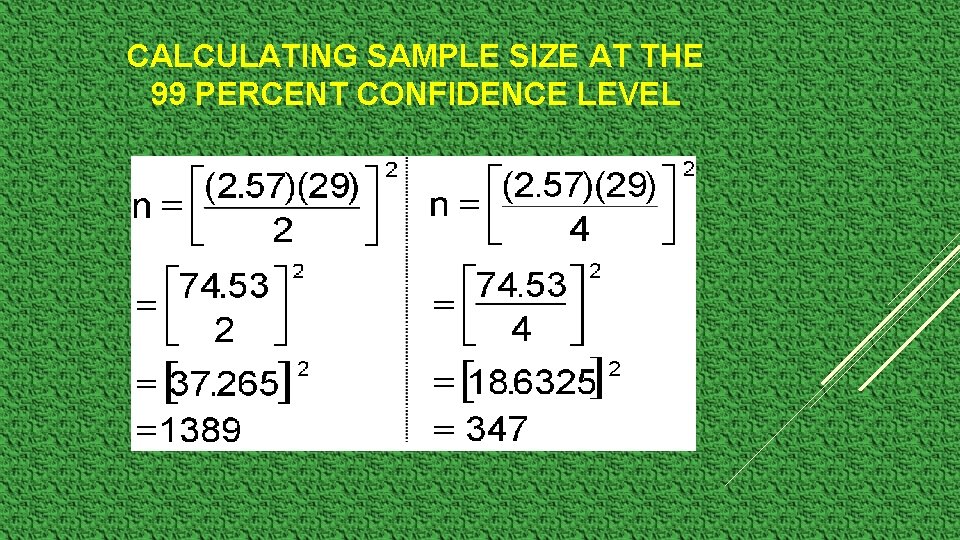
CALCULATING SAMPLE SIZE AT THE 99 PERCENT CONFIDENCE LEVEL
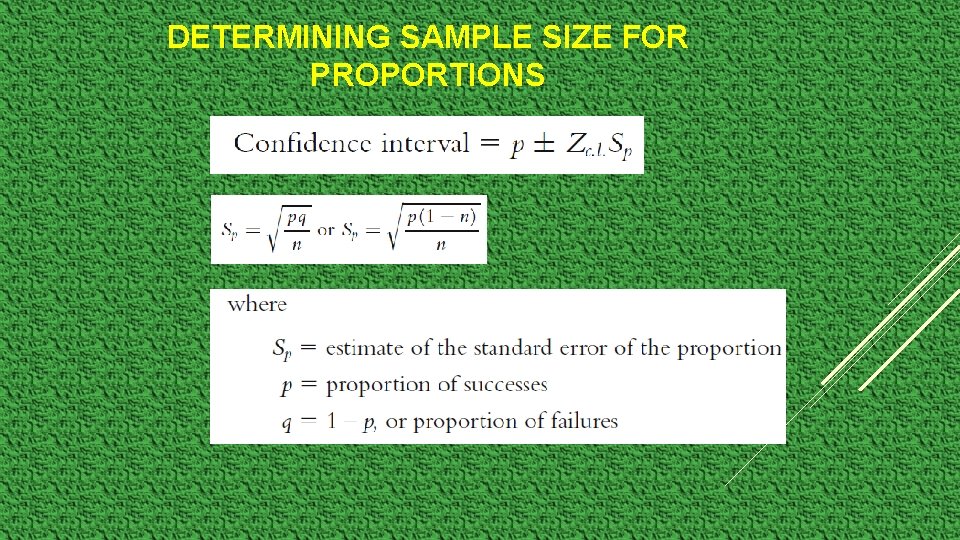
DETERMINING SAMPLE SIZE FOR PROPORTIONS
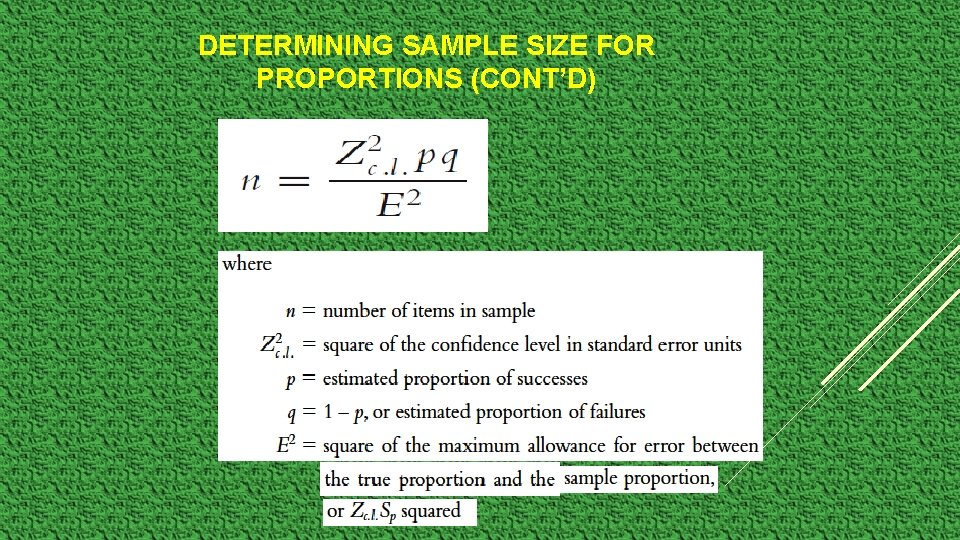
DETERMINING SAMPLE SIZE FOR PROPORTIONS (CONT’D)
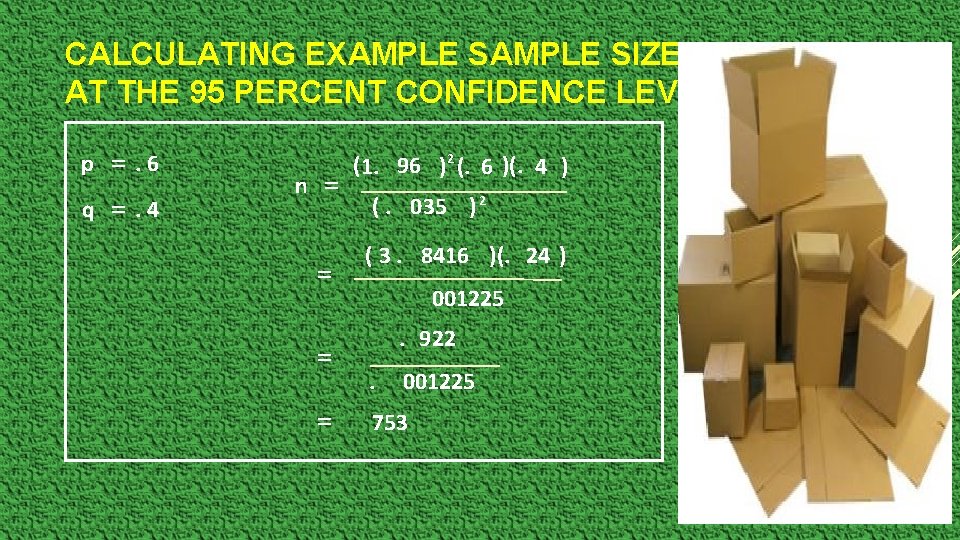
CALCULATING EXAMPLE SIZE AT THE 95 PERCENT CONFIDENCE LEVEL p =. 6 q =. 4 n = = (1. 96 ) 2 (. 6 )(. 4 ) (. 035 ) 2 ( 3. 8416 )(. 24 ) 001225. 922. 001225 753
SAMPLING METHODS probability sampling: Selecting sample is based on the consideration of the probability theory non probability sampling: The sample is selected based on certain considerations, does not use the probability theory approach, and without random Probability sampling is better to use in selecting sample, but in reality it is often not possible. If so, then non probability sampling can be used as an alternative
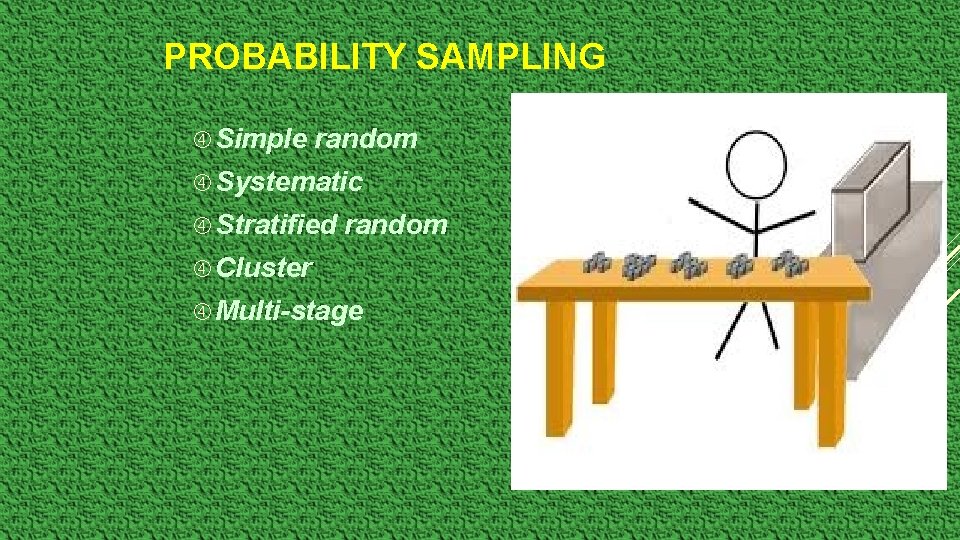
PROBABILITY SAMPLING Simple random Systematic Stratified random Cluster Multi-stage
• Simple Random Sampling • Assures each element in the population of an equal chance of being included in the sample. • Systematic Sampling • A starting point is selected by a random process and then every nth number on the list is selected. • Stratified Sampling • Simple random subsamples that are more or less equal on some characteristic are drawn from within each stratum of the population.
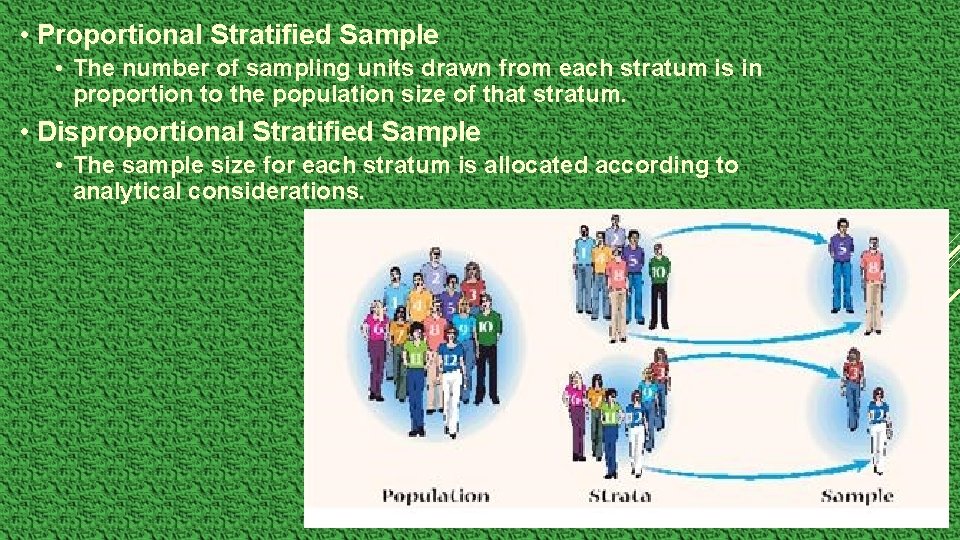
• Proportional Stratified Sample • The number of sampling units drawn from each stratum is in proportion to the population size of that stratum. • Disproportional Stratified Sample • The sample size for each stratum is allocated according to analytical considerations.
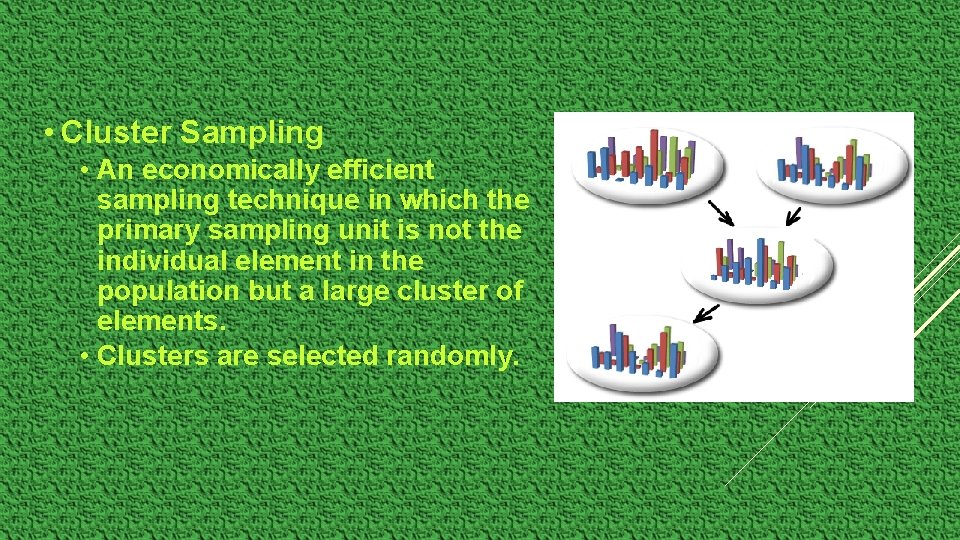
• Cluster Sampling • An economically efficient sampling technique in which the primary sampling unit is not the individual element in the population but a large cluster of elements. • Clusters are selected randomly.
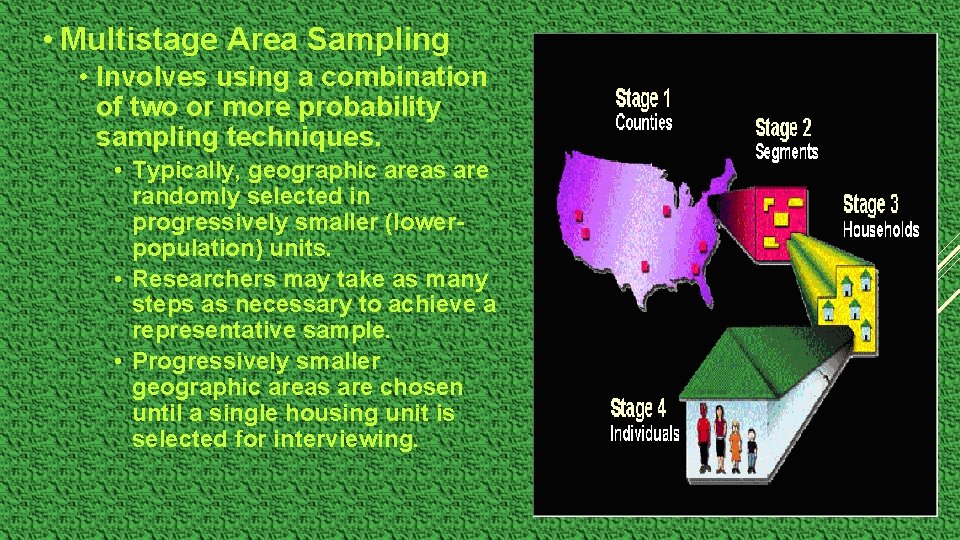
• Multistage Area Sampling • Involves using a combination of two or more probability sampling techniques. • Typically, geographic areas are randomly selected in progressively smaller (lowerpopulation) units. • Researchers may take as many steps as necessary to achieve a representative sample. • Progressively smaller geographic areas are chosen until a single housing unit is selected for interviewing.
NON- PROBABILITY SAMPLING Accidental Sampling. It is also called as Convenience Sampling Opportunity Sampling, or Haphazard Sampling Purposive Sampling Expert Sampling Quota sampling: Proportionate Quota Sampling, Non-proportionate Quota Sampling, and Snowball Sampling Self-selection Sampling
• Convenience Sampling • Obtaining those people or units that are most conveniently available. • Judgment (Purposive) Sampling • An experienced individual selects the sample based on personal judgment about some appropriate characteristic of the sample member. • Quota Sampling • Ensures that various subgroups of a population will be represented on pertinent characteristics to the exact extent that the investigator desires.
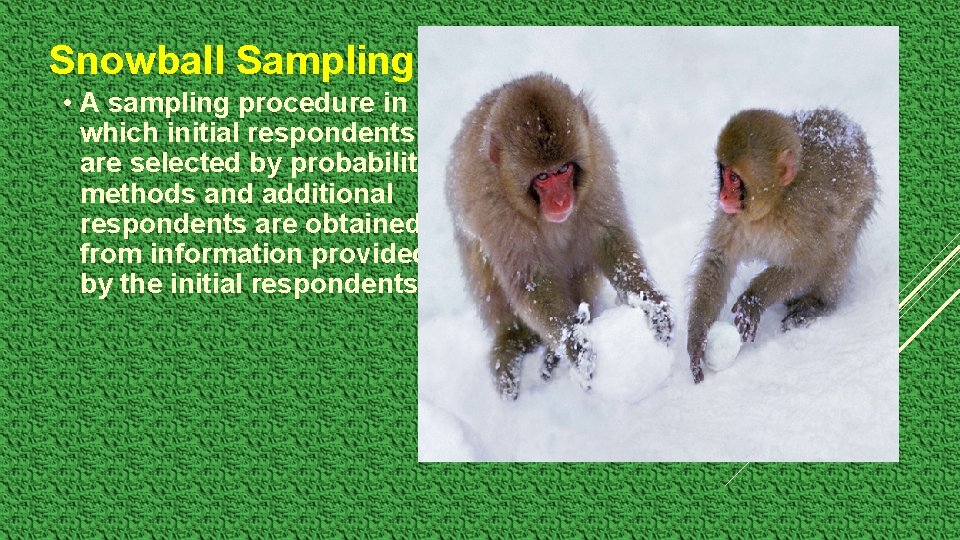
Snowball Sampling • A sampling procedure in which initial respondents are selected by probability methods and additional respondents are obtained from information provided by the initial respondents.
SUMMARY Choice of sampling techniques depends upon the research question(s) and their objectives Factors affecting sample size include: - confidence needed in the findings - accuracy required - likely categories for analysis
SUMMARY Probability sampling requires a sampling frame and can be more time consuming When a sampling frame is not possible, non- probability sampling is used Many research projects use a combination of sampling techniques
- Slides: 34