
Sampling electron dynamics in atoms in real time

![sub-femtosecond xuv/x-ray pulse generation xuv-filter Intensity [counts] 1000 0 60 70 80 90 100](https://slidetodoc.com/presentation_image_h2/a3e226864491b4e20f4a88086b0672b7/image-11.jpg "sub-femtosecond xuv/x-ray pulse generation xuv-filter Intensity [counts] 1000 0 60 70 80 90 100")








- Slides: 31
Sampling electron dynamics in atoms in real time with sub-femtosecond resolution Matthias Uiberacker Prof. Ferenc Krausz Max-Planck-Institut für Quantenoptik Garching, Germany Dept. f. Physik, Ludwig. Maximilians-Universität München, Germany Institut für Photonik Technische Universität Wien, Austria Brijuni Conference, 31. August 2006, Brijuni Islands, Croatia
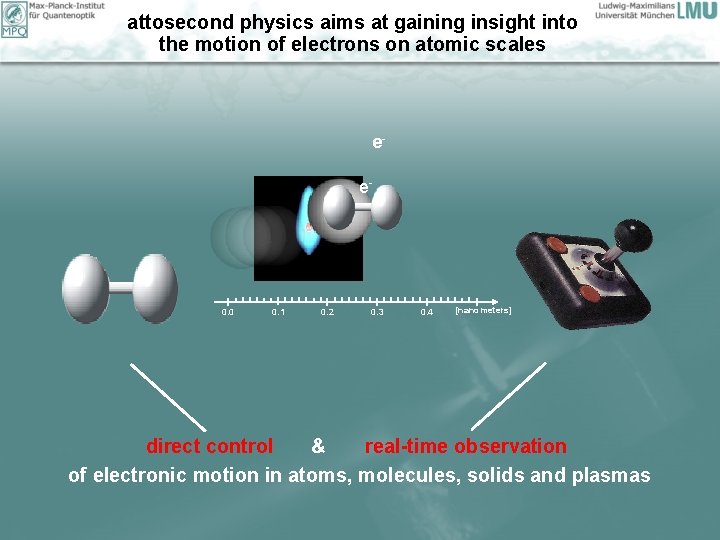
attosecond physics aims at gaining insight into the motion of electrons on atomic scales ee- 0. 0 0. 1 0. 2 0. 3 0. 4 [nanometers] real-time observation direct control & of electronic motion in atoms, molecules, solids and plasmas
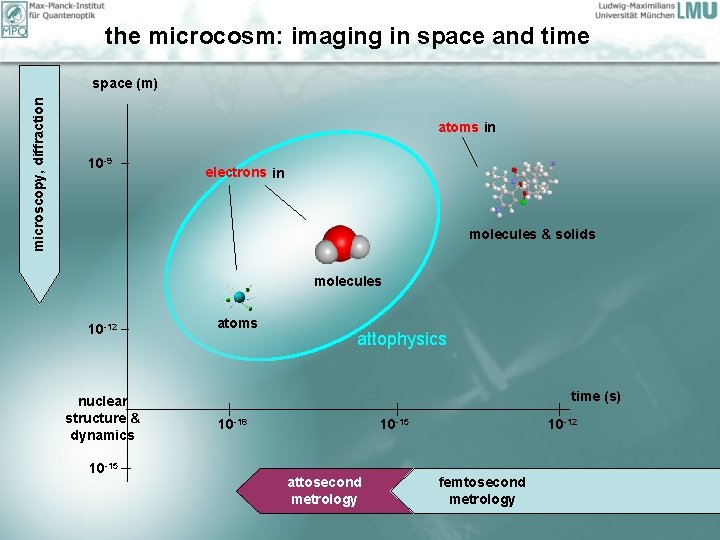
the microcosm: imaging in space and time microscopy, diffraction space (m) atoms in 10 -9 electrons in molecules & solids molecules 10 -12 nuclear structure & dynamics 10 -15 atoms attophysics time (s) 10 -18 10 -15 attosecond metrology 10 -12 femtosecond metrology
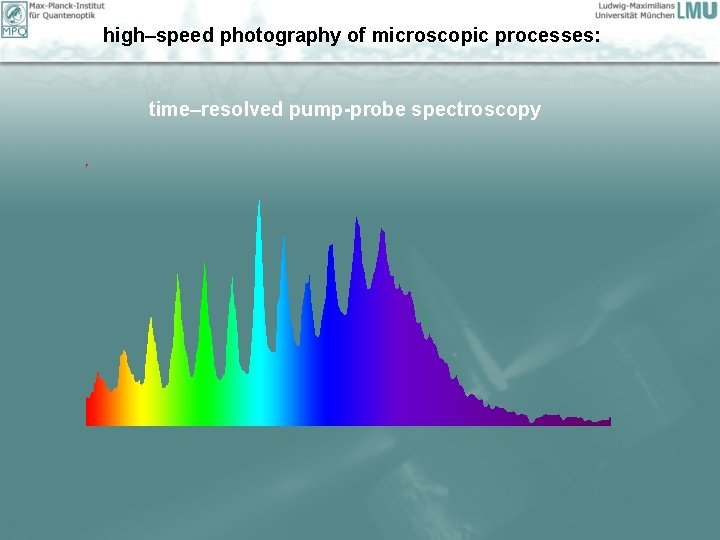
high–speed photography of microscopic processes: time–resolved pump-probe spectroscopy
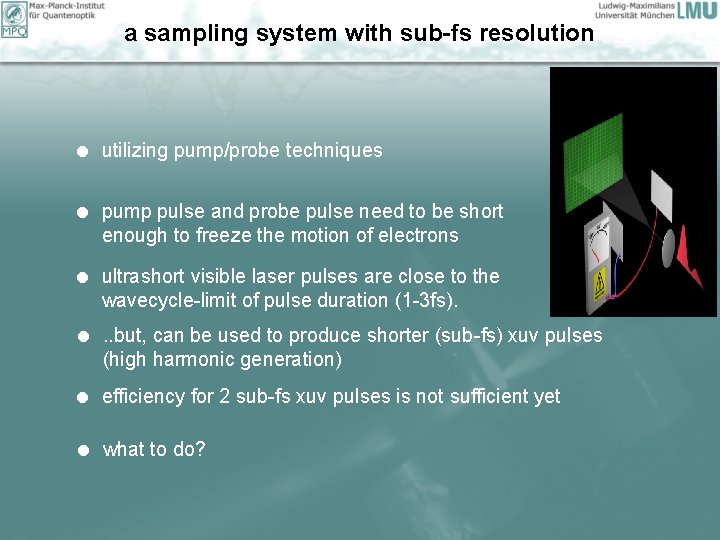
a sampling system with sub-fs resolution = utilizing pump/probe techniques = pump pulse and probe pulse need to be short enough to freeze the motion of electrons = ultrashort visible laser pulses are close to the wavecycle-limit of pulse duration (1 -3 fs). =. . but, can be used to produce shorter (sub-fs) xuv pulses (high harmonic generation) = efficiency for 2 sub-fs xuv pulses is not sufficient yet = what to do?
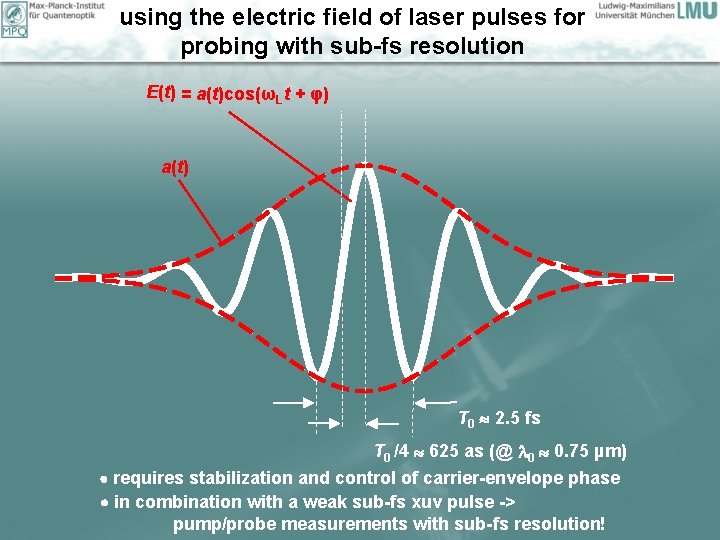
using the electric field of laser pulses for probing with sub-fs resolution E(t) = a(t)cos(ωLt + φ) a(t) T 0 2. 5 fs T 0 /4 625 as (@ 0 0. 75 µm) requires stabilization and control of carrier-envelope phase in combination with a weak sub-fs xuv pulse -> pump/probe measurements with sub-fs resolution!
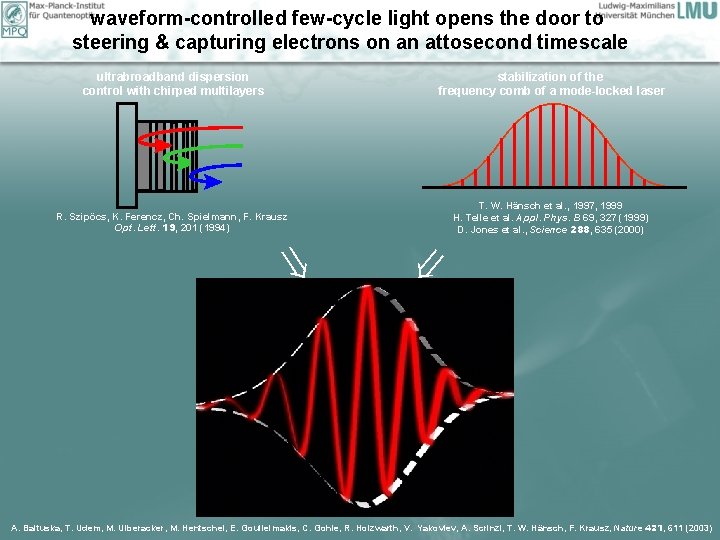
waveform-controlled few-cycle light opens the door to steering & capturing electrons on an attosecond timescale ultrabroadband dispersion control with chirped multilayers stabilization of the frequency comb of a mode-locked laser R. Szipöcs, K. Ferencz, Ch. Spielmann, F. Krausz Opt. Lett. 19, 201 (1994) T. W. Hänsch et al. , 1997, 1999 H. Telle et al. Appl. Phys. B 69, 327 (1999) D. Jones et al. , Science 288, 635 (2000) Þ Þ A. Baltuska, T. Udem, M. Uiberacker, M. Hentschel, E. Goulielmakis, C. Gohle, R. Holzwarth, V. Yakovlev, A. Scrinzi, T. W. Hänsch, F. Krausz, Nature 421, 611 (2003)
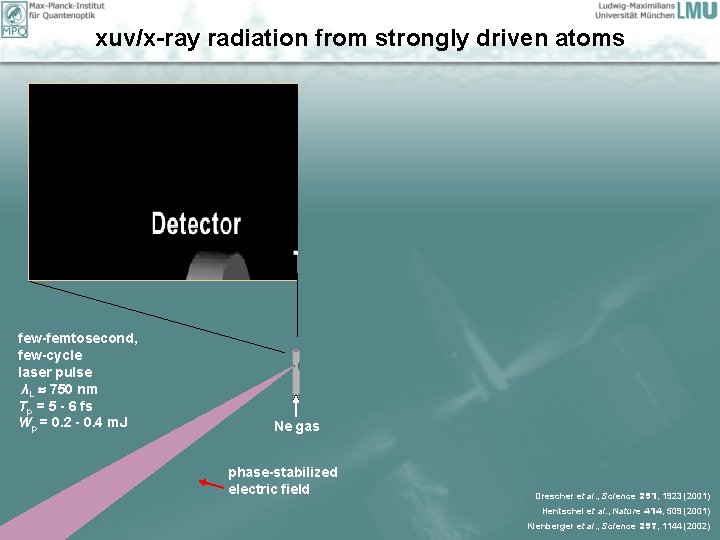
xuv/x-ray radiation from strongly driven atoms few-femtosecond, few-cycle laser pulse λL 750 nm Tp = 5 - 6 fs Wp = 0. 2 - 0. 4 m. J Ne gas phase-stabilized electric field Drescher et al. , Science 291, 1923 (2001) Hentschel et al. , Nature 414, 509 (2001) Kienberger et al. , Science 297, 1144 (2002)
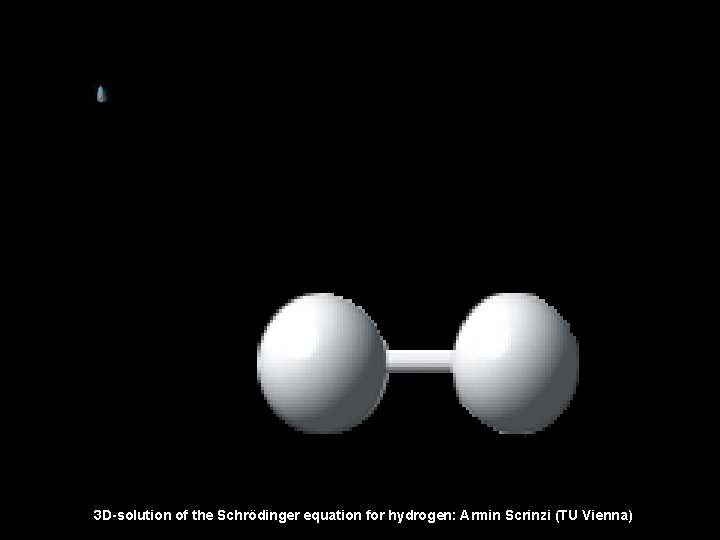
steering bound electrons with controlled light fields: the generation of a sub-femtosecond pulse 3 D-solution of the Schrödinger equation for hydrogen: Armin Scrinzi (TU Vienna)
xuv/x-ray radiation from strongly driven atoms EL(t) x(t)
sub-femtosecond xuv/x-ray pulse generation xuv-filter Intensity [counts] 1000 0 60 70 80 90 100 Photon energy [e. V] 110
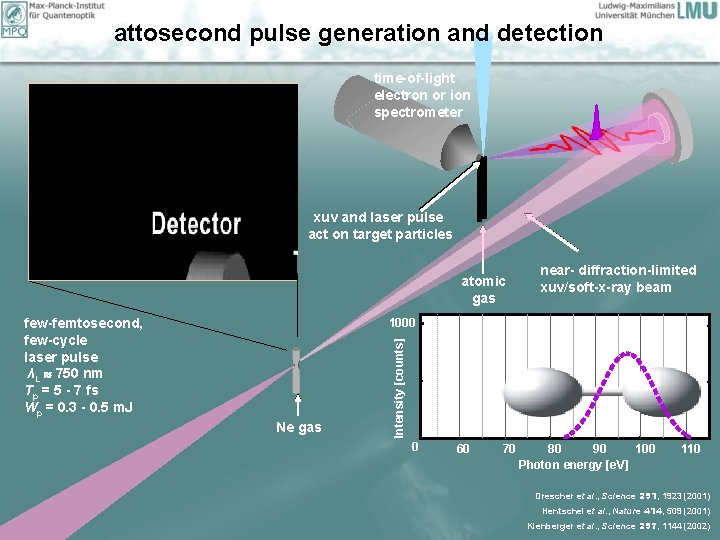
attosecond pulse generation and detection time-of-light electron or ion spectrometer xuv and laser pulse act on target particles atomic gas few-femtosecond, few-cycle laser pulse λL 750 nm Tp = 5 - 7 fs Wp = 0. 3 - 0. 5 m. J near- diffraction-limited xuv/soft-x-ray beam Ne gas Intensity [counts] 1000 0 60 70 80 90 100 Photon energy [e. V] 110 Drescher et al. , Science 291, 1923 (2001) Hentschel et al. , Nature 414, 509 (2001) Kienberger et al. , Science 297, 1144 (2002)
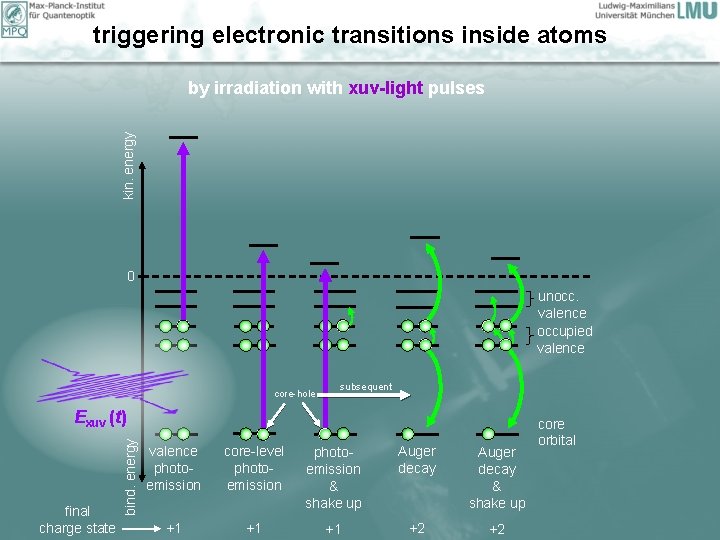
triggering electronic transitions inside atoms kin. energy by irradiation with xuv-light pulses 0 unocc. valence occupied valence core-hole subsequent final charge state bind. energy Exuv (t) valence photoemission core-level photoemission & shake up Auger decay & shake up +1 +1 +1 +2 +2 core orbital
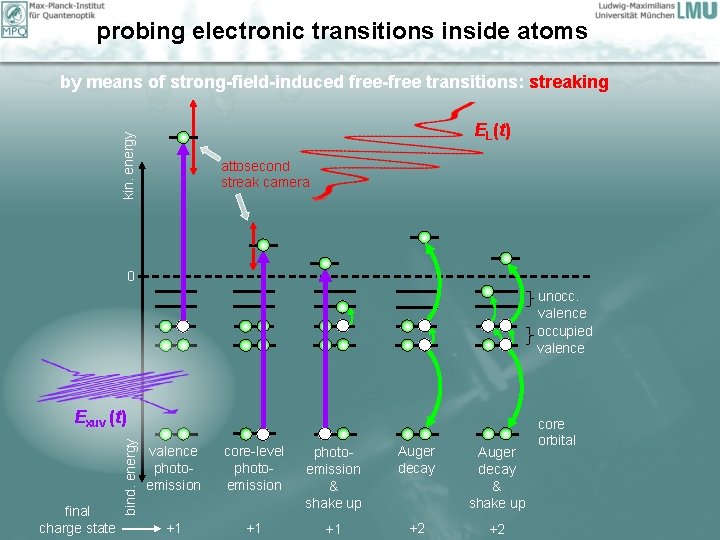
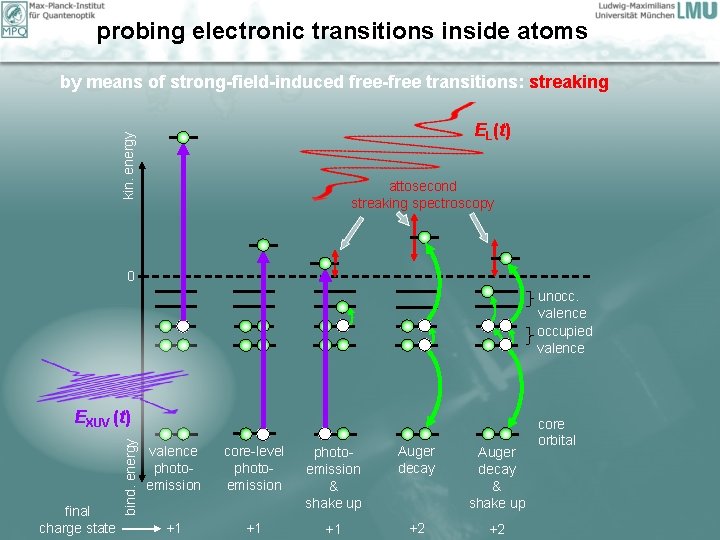
probing electronic transitions inside atoms by means of strong-field-induced free-free transitions: streaking kin. energy EL(t) attosecond streak camera 0 unocc. valence occupied valence final charge state bind. energy Exuv (t) valence photoemission core-level photoemission & shake up Auger decay & shake up +1 +1 +1 +2 +2 core orbital
electron-optical streak camera resolution ~ 100 femtoseconds D. J. Bradley et al. , Opt. Commun. 2, 391 (1971) M. Y. Schelev et al. , Appl. Phys. Lett. 18, 354 (1971)
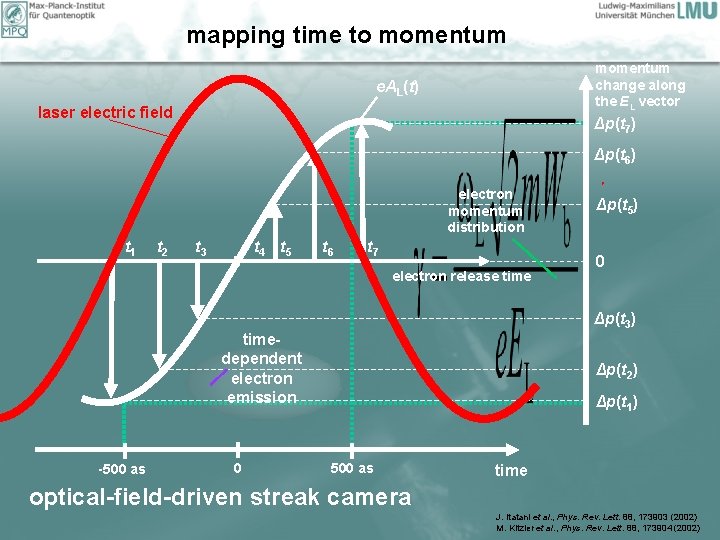
mapping time to momentum change along the EL vector e. AL(t) laser electric field Δp(t 7) Δp(t 6) electron momentum distribution t 1 t 2 t 3 t 4 t 5 t 6 t 7 electron release time Δp(t 5) 0 Δp(t 3) timedependent electron emission -500 as 0 Δp(t 2) Δp(t 1) 500 as time optical-field-driven streak camera J. Itatani et al. , Phys. Rev. Lett. 88, 173903 (2002) M. Kitzler et al. , Phys. Rev. Lett. 88, 173904 (2002)
85 20 10 75 0 -10 65 -20 xuv pulse 0 4 8 6 3 0 -3 -6 delay [fs] measurement simulation In the absence of the laser field 100 0 70 80 single 250 -attosecond xuv pulse @ 95 e. V 90 100 60 70 80 90 100 final electron energy, Wf [e. V] 97 1 96 xuv 95 = 250 as 94 93 0 -0. 4 -0. 2 0. 0 time [fs] 0. 2 -0. 4 92 instantaneous energy shift [e. V] 60 intensity [arb. u. ] electron counts /bin -4 light electric field, EL(t) [107 V/cm] electron kinetic energy [e. V] ∆W(t) e. AL(t) vector potential, -AL(t) [fs. MV/cm] attosecond streak camera: complete measurement of a few-cycle light wave and a sub-fs xuv pulse E. Goulielmakis et al. , Science 305, (2004)
probing electronic transitions inside atoms by means of strong-field-induced free-free transitions: streaking kin. energy EL(t) attosecond streaking spectroscopy 0 unocc. valence occupied valence final charge state bind. energy EXUV (t) valence photoemission core-level photoemission & shake up Auger decay & shake up +1 +1 +1 +2 +2 core orbital
streaked electron spectra following core-hole excitation in krypton by a sub-fs xuv pulse tracing core-hole decay directly in time lifetime of M-shell (3 d) vacancy in Krypton: h = 7. 9 1 fs M. Drescher et al. , Nature 419, 803 (2002)
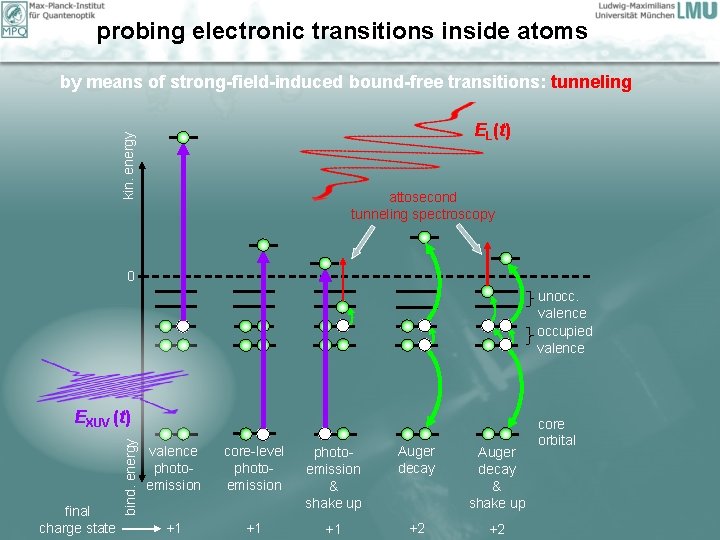
probing electronic transitions inside atoms by means of strong-field-induced bound-free transitions: tunneling kin. energy EL(t) attosecond tunneling spectroscopy 0 unocc. valence occupied valence final charge state bind. energy EXUV (t) valence photoemission core-level photoemission & shake up Auger decay & shake up +1 +1 +1 +2 +2 core orbital
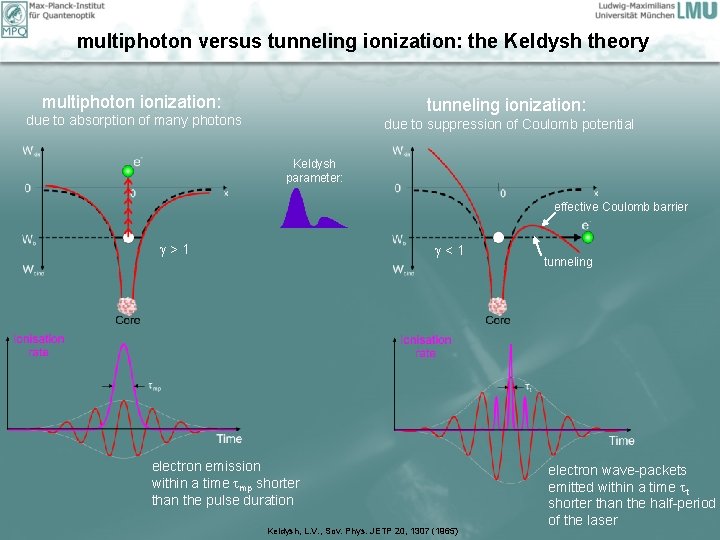
multiphoton versus tunneling ionization: the Keldysh theory multiphoton ionization: tunneling ionization: due to absorption of many photons due to suppression of Coulomb potential Keldysh parameter: effective Coulomb barrier g>1 g<1 electron emission within a time tmp shorter than the pulse duration Keldysh, L. V. , Sov. Phys. JETP 20, 1307 (1965) tunneling electron wave-packets emitted within a time tt shorter than the half-period of the laser
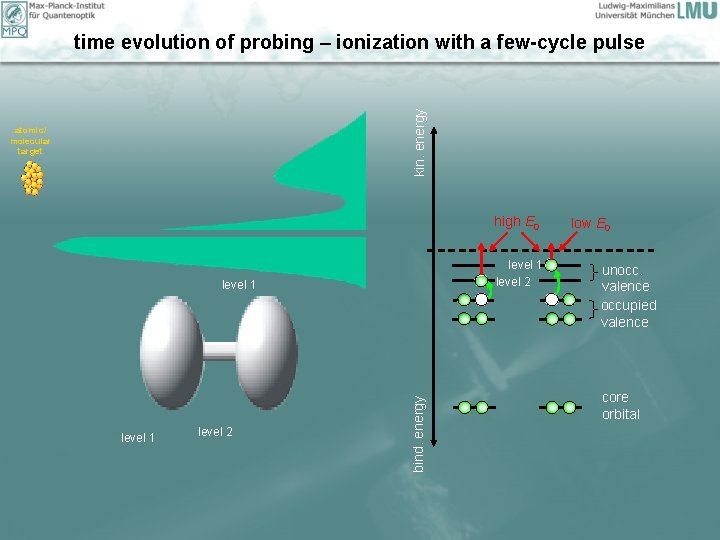
kin. energy time evolution of probing – ionization with a few-cycle pulse atomic/ molecular target high E 0 level 1 level 2 bind. energy level 1 low E 0 unocc. valence occupied valence core orbital
attosecond tunneling spectroscopy first experiments in neon and xenon
testing the sub-fs resolution with neon Ne 2+ versus delay time A. Kikas et al. , J. of Electr. Spectr. and Rel. Phen. 77, 241 -266 (1996). 2. 4 % NIR pulse XUV pulse 2. 4 % 92. 8 % 95. 2 % 7. 2 % 4. 8 % steps are visible -> sub-fs resolution is valid (signal/noise has to be improved). . to be published
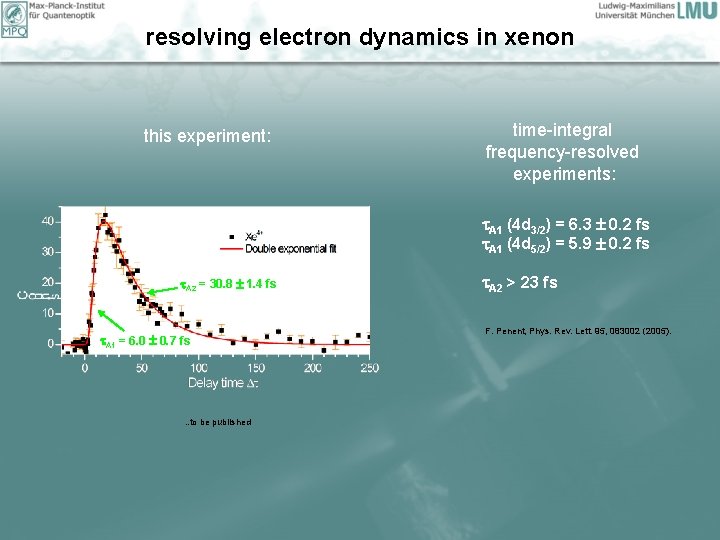
xenon energy levels – illustration of dynamics Xe 4+ versus time NIR-DI A 2 = 30. 8 1. 4 fs Auger 1 Auger 2 A 1 = 6. 0 0. 7 fs 8. 9 % NIR-I 78 % A 1 F. Penent et al. , Phys. Rev. Lett. 95, 083002 (2005). NIR pulse 3. 3 % 9. 7 % XUV pulse Xe 3+ versus time
resolving electron dynamics in xenon this experiment: time-integral frequency-resolved experiments: A 1 (4 d 3/2) = 6. 3 0. 2 fs A 1 (4 d 5/2) = 5. 9 0. 2 fs A 2 = 30. 8 1. 4 fs A 1 = 6. 0 0. 7 fs . . to be published A 2 > 23 fs F. Penent, Phys. Rev. Lett. 95, 083002 (2005).
coworkers & collaborators postdoctoral: A. Apolonski A. Baltuska A. Cavalieri T. Fuji E. Goulielmakis R. Kienberger J. Seres M. Uiberacker V. Yakovlev Ph. D candidates: N. Ishii T. Metzger J. Rauschenberger M. Schultze C. Theisset A. Verhoef xuv optics & atomic spectroscopy: Th. Uphues, U. Kleineberg, U. Heinzmann Univ. Bielefeld, Germany M. Drescher Univ. Hamburg, DESY, Germany light phase control: Ch. Gole, R. Holzwarth, T. Udem, T. W. Hänsch Univ. Munich - MPQ Garching, Germany & measurement: G. Paulus, H. Walther A&M Univ. Texas, USA / MPQ Garching Ch. Lemell, J. Burgdörfer, A. Scrinzi Vienna Univ. Techn. , Austria metrology: P. B. Corkum, M. Yu. Ivanov NRC Canada, Ottawa, Canada molecular spectroscopy: M. Kling, M. Vrakking AMOLF, Amsterdam, Netherlands M. Lezius, K. Kompa MPQ Garching, Germany graphics: Barbara Ferus
End
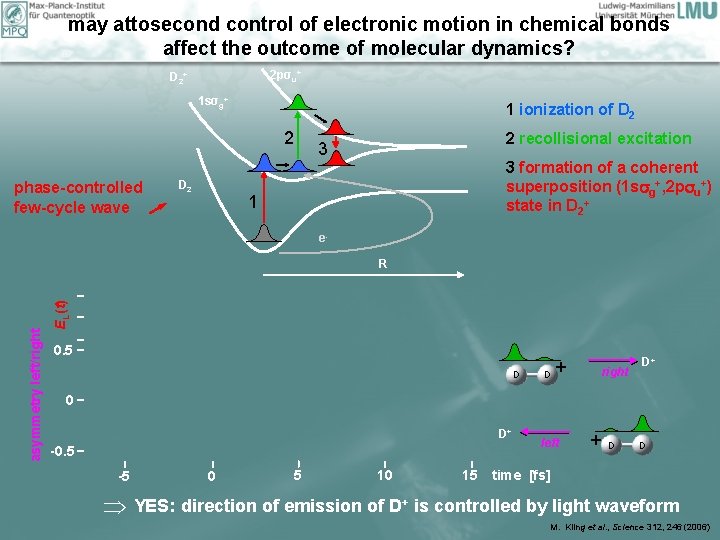
may attosecond control of electronic motion in chemical bonds affect the outcome of molecular dynamics? 2 pσu+ D 2+ 1 sσg+ 1 ionization of D 2 2 phase-controlled few-cycle wave D 2 2 recollisional excitation 3 3 formation of a coherent superposition (1 ssg+, 2 psu+) state in D 2+ 1 e- EL(t) asymmetry left/right R 0. 5 D + D right D+ 0 D+ -0. 5 -5 0 5 10 15 left + D D time [fs] Þ YES: direction of emission of D+ is controlled by light waveform M. Kling et al. , Science 312, 246 (2006)
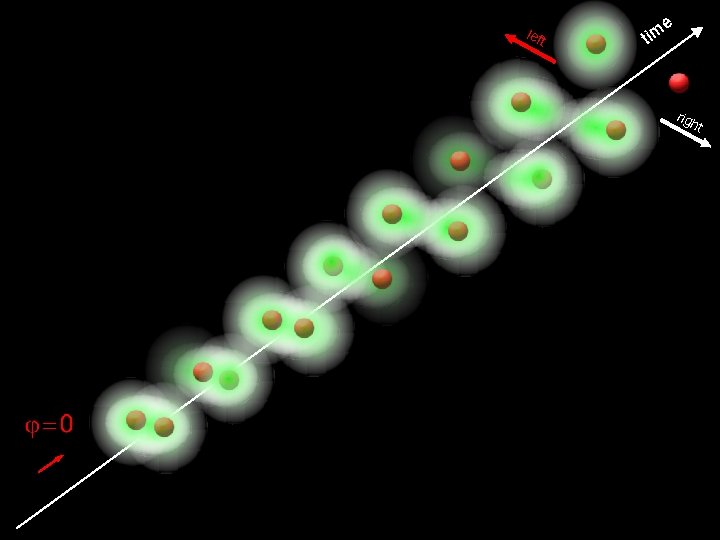
left e it m rig ht M. Kling et al. , Science 312, 246 (2006)
left e it m rig ht M. Kling et al. , Science 312, 246 (2006)