
Sampling and Reconstruction of Visual Appearance CSE 274
- Slides: 41
Sampling and Reconstruction of Visual Appearance CSE 274 [Winter 2018], Lecture 2 Ravi Ramamoorthi http: //www. cs. ucsd. edu/~ravir
Motivation: BRDFs, Radiometry § Basics of Illumination, Reflection § Formal radiometric analysis (not ad-hoc) § Reflection Equation § Monte Carlo Rendering next week § Appreciate formal analysis in a graduate course, even if not absolutely essential in practice
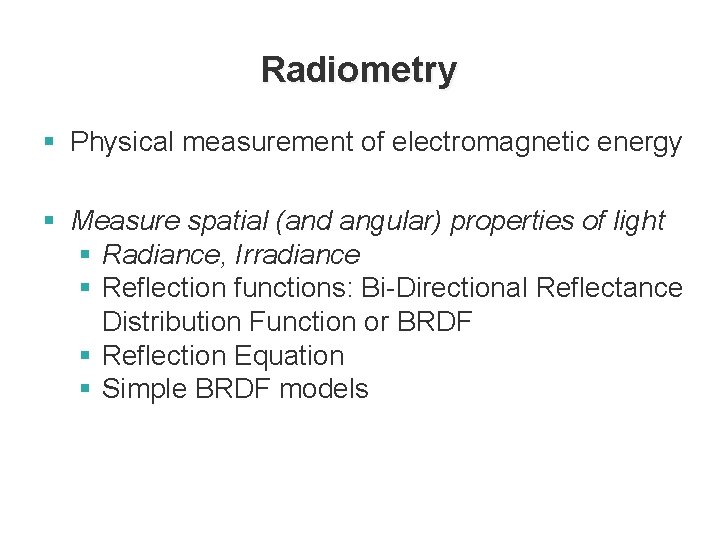
Radiometry § Physical measurement of electromagnetic energy § Measure spatial (and angular) properties of light § Radiance, Irradiance § Reflection functions: Bi-Directional Reflectance Distribution Function or BRDF § Reflection Equation § Simple BRDF models
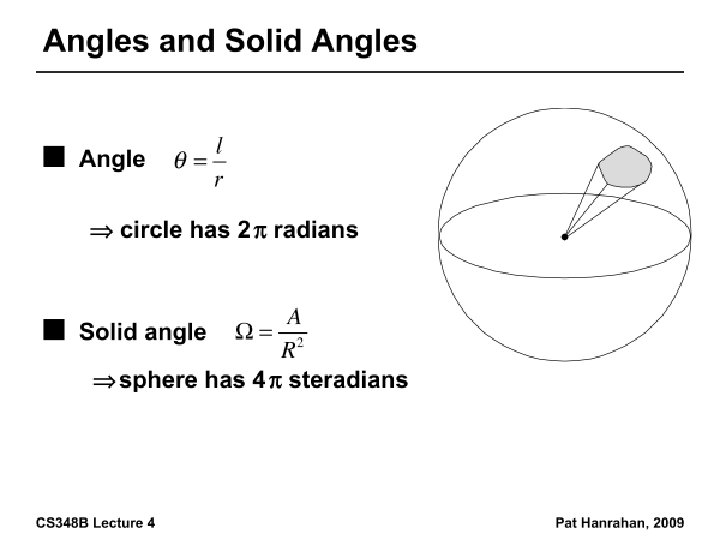
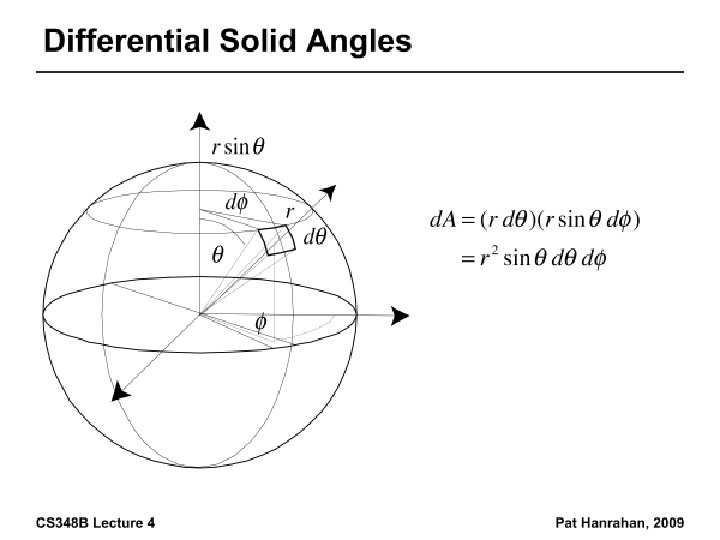
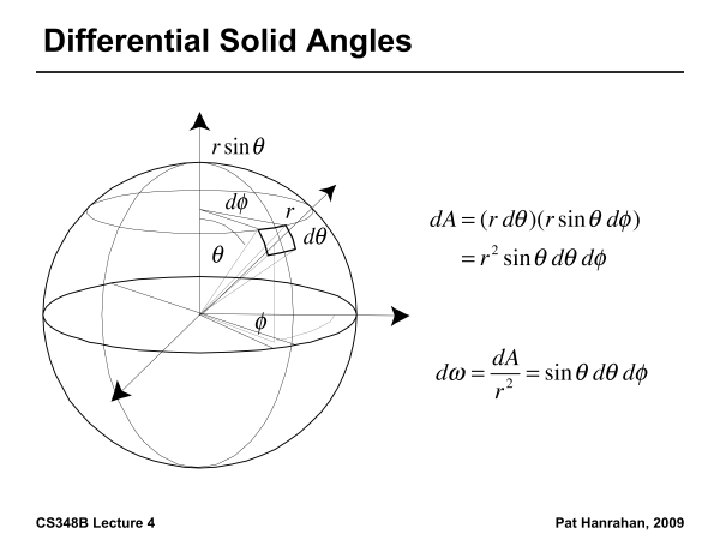
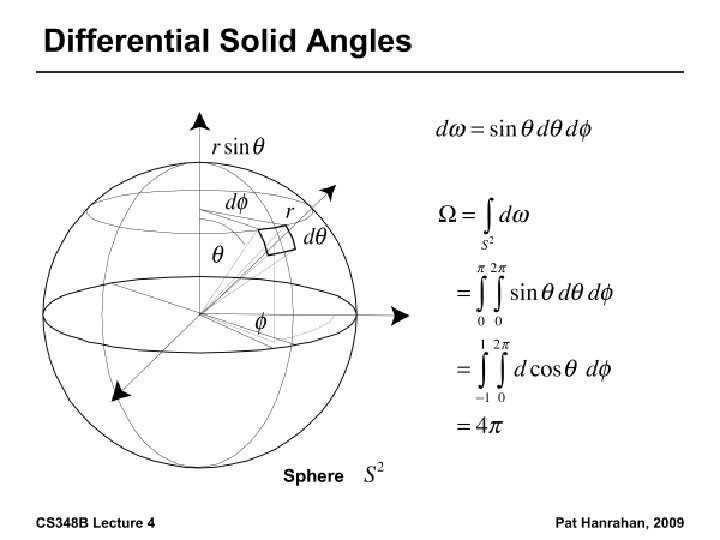
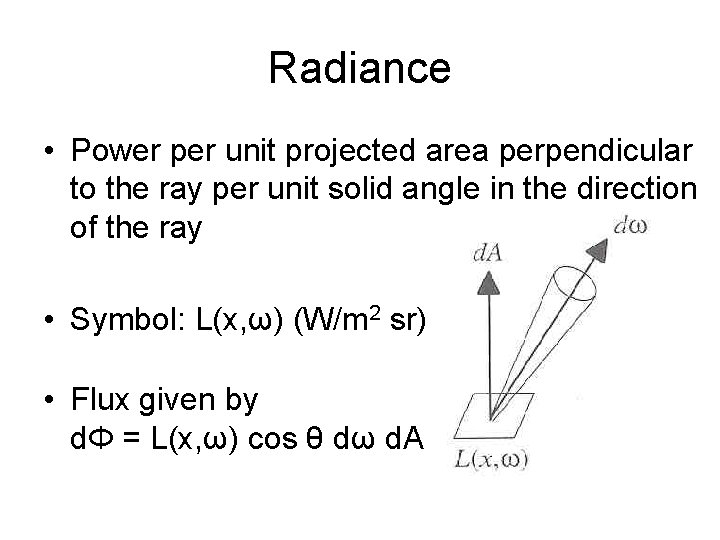
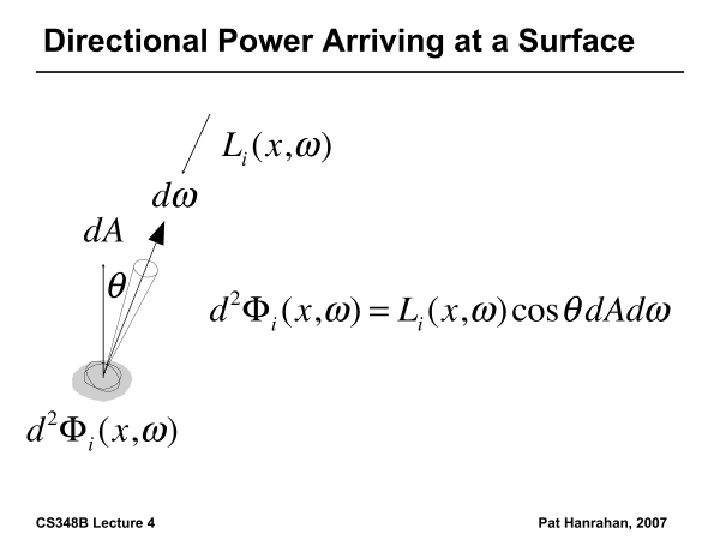
Radiance • Power per unit projected area perpendicular to the ray per unit solid angle in the direction of the ray • Symbol: L(x, ω) (W/m 2 sr) • Flux given by dΦ = L(x, ω) cos θ dω d. A
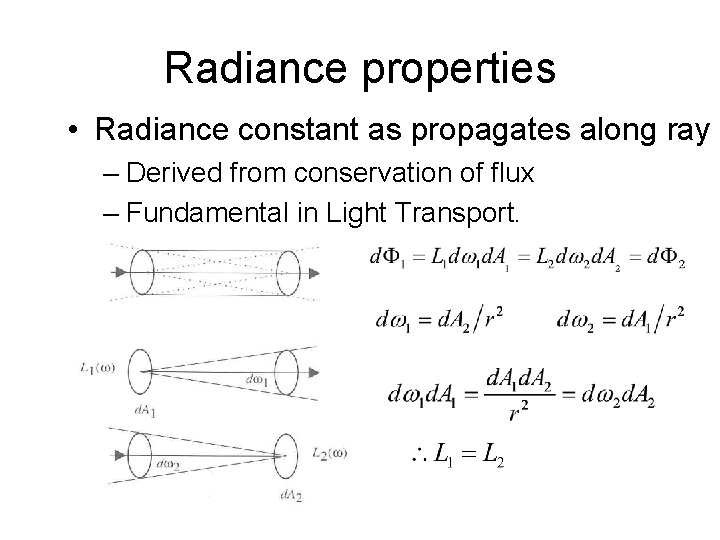
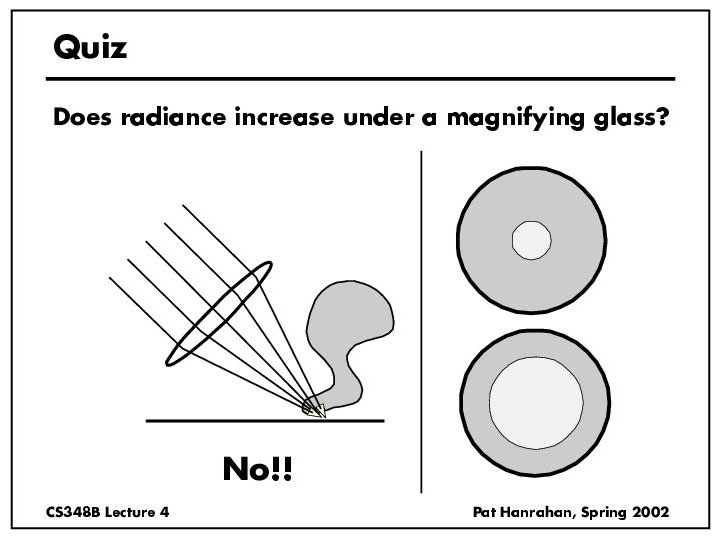
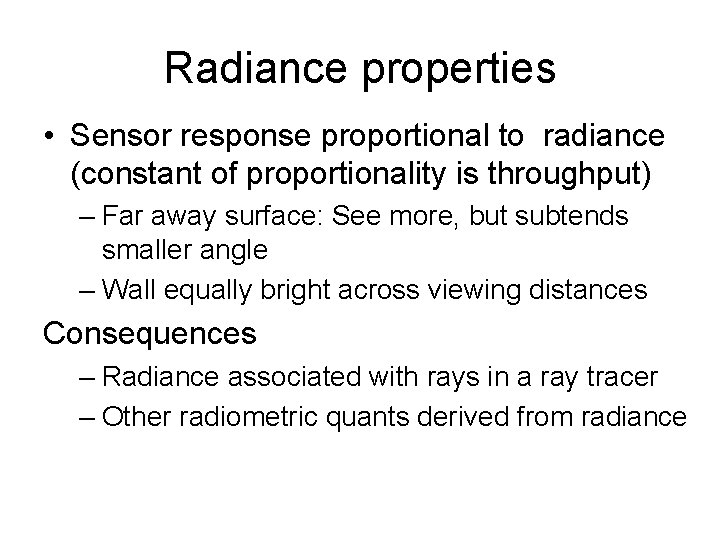
Radiance properties • Radiance constant as propagates along ray – Derived from conservation of flux – Fundamental in Light Transport.
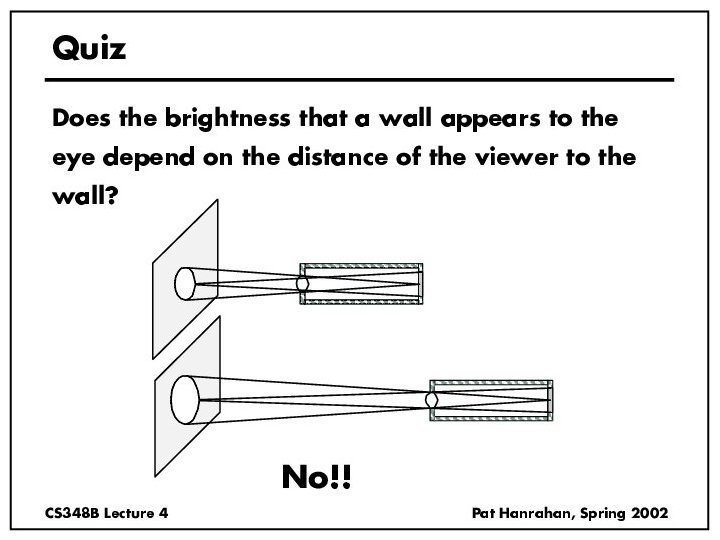
Radiance properties • Sensor response proportional to radiance (constant of proportionality is throughput) – Far away surface: See more, but subtends smaller angle – Wall equally bright across viewing distances Consequences – Radiance associated with rays in a ray tracer – Other radiometric quants derived from radiance
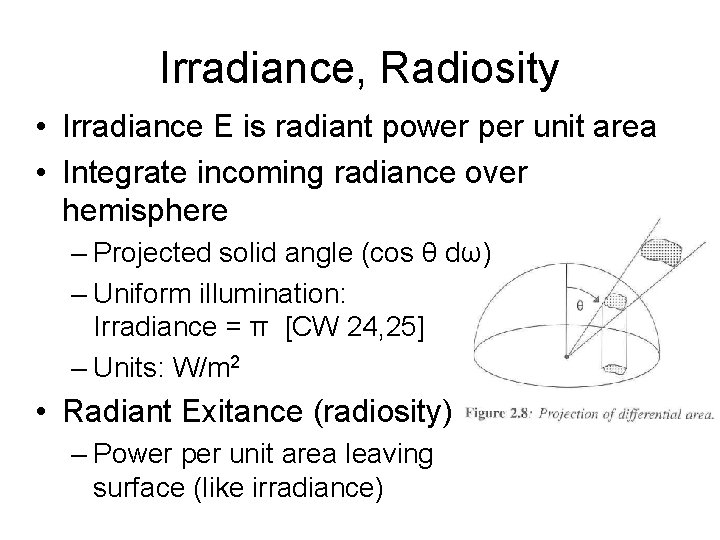
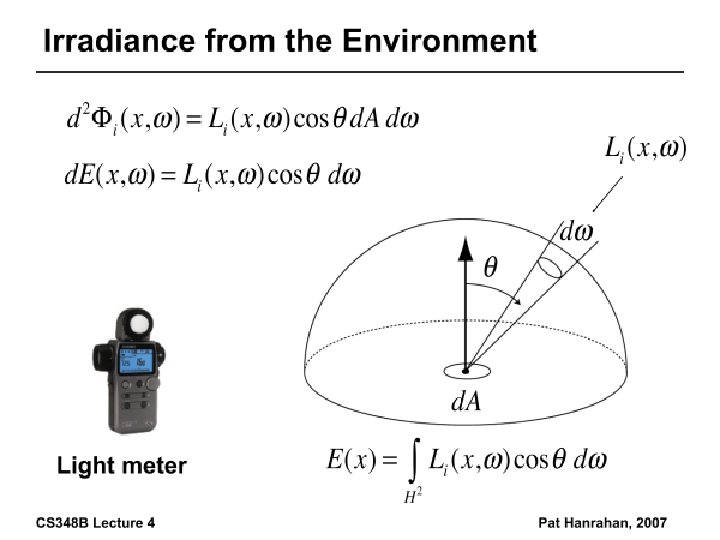
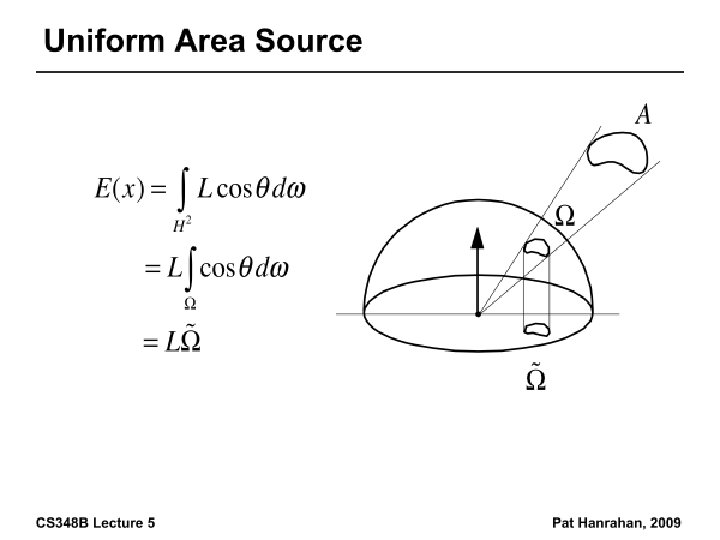
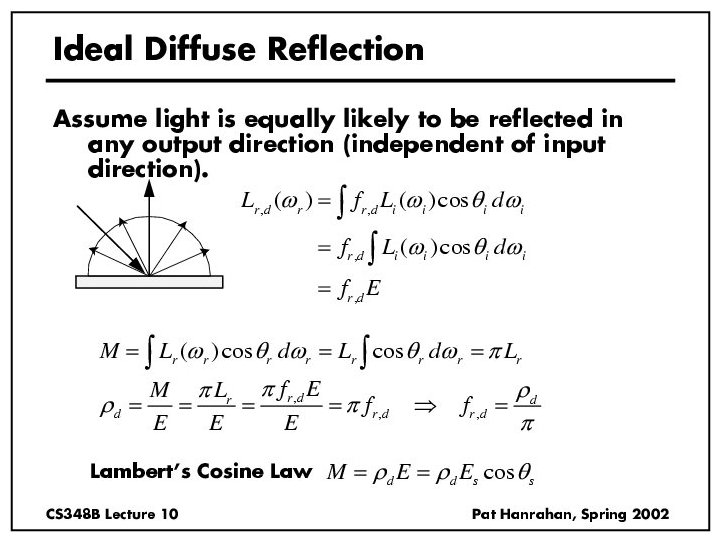
Irradiance, Radiosity • Irradiance E is radiant power per unit area • Integrate incoming radiance over hemisphere – Projected solid angle (cos θ dω) – Uniform illumination: Irradiance = π [CW 24, 25] – Units: W/m 2 • Radiant Exitance (radiosity) – Power per unit area leaving surface (like irradiance)
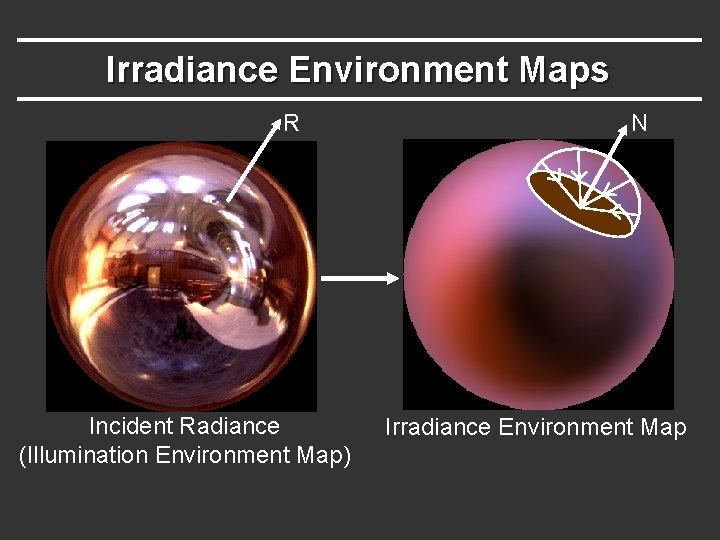
Irradiance Environment Maps R Incident Radiance (Illumination Environment Map) N Irradiance Environment Map
Radiometry § Physical measurement of electromagnetic energy § Measure spatial (and angular) properties of light § Radiance, Irradiance § Reflection functions: Bi-Directional Reflectance Distribution Function or BRDF § Reflection Equation § Simple BRDF models
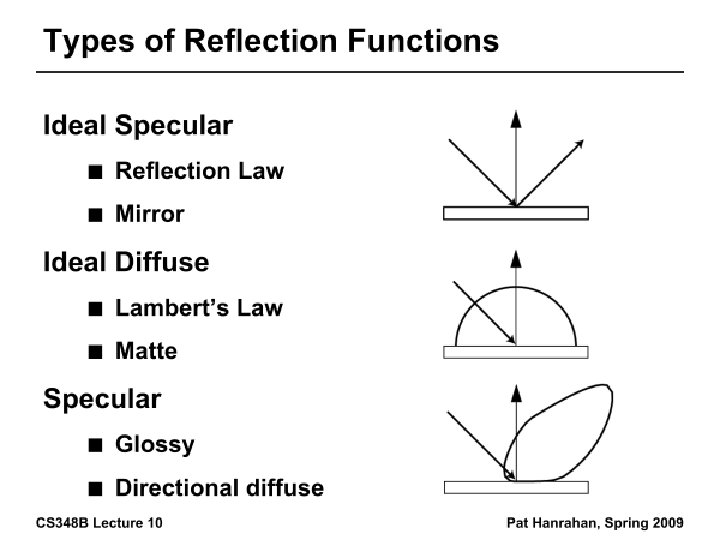
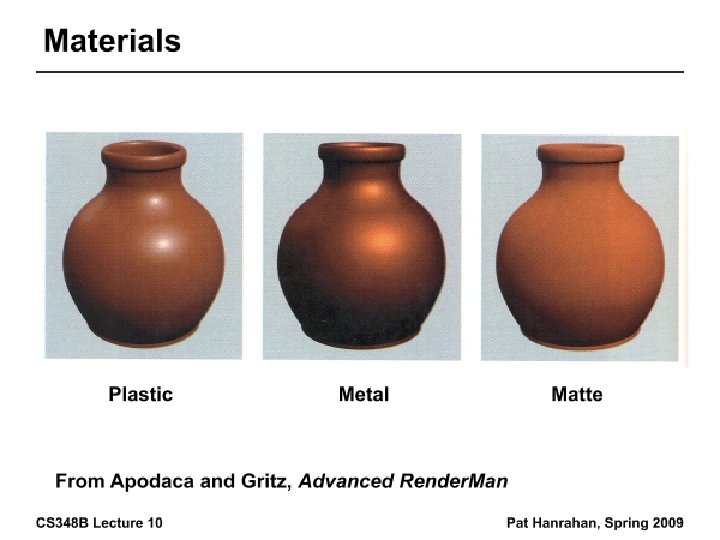
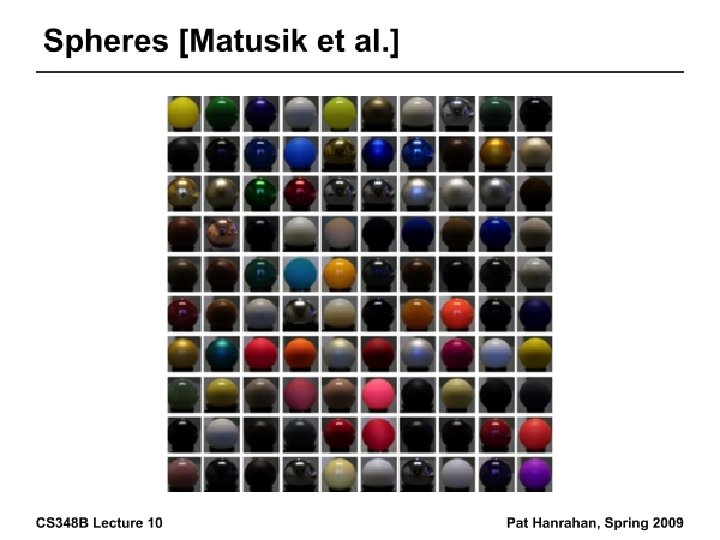
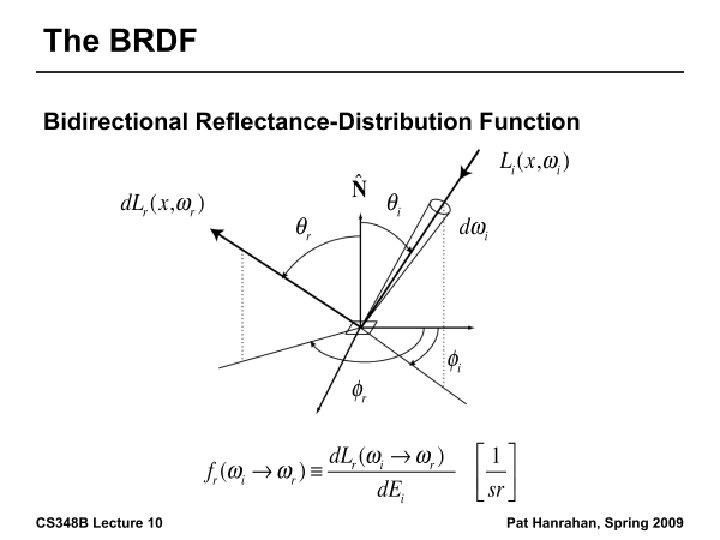
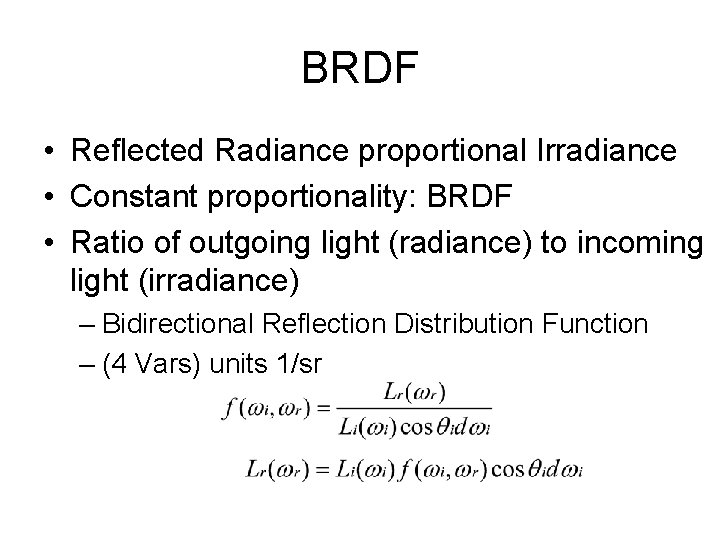
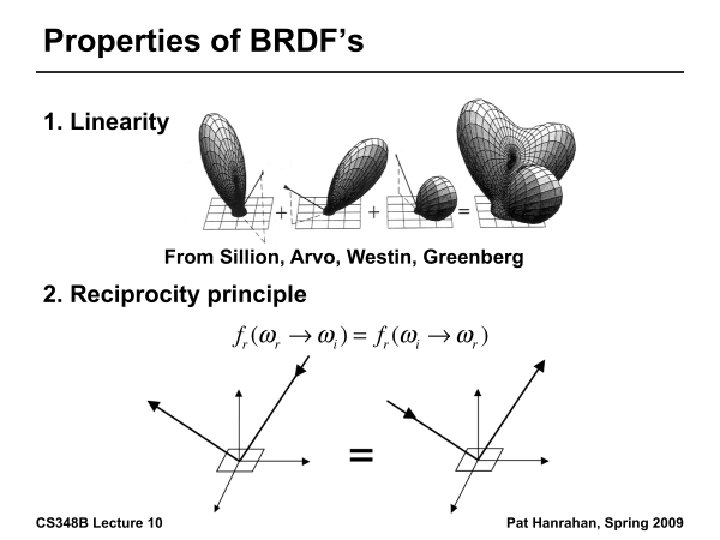
Building up the BRDF • Bi-Directional Reflectance Distribution Function [Nicodemus 77] • Function based on incident, view direction • Relates incoming light energy to outgoing • Unifying framework for many materials
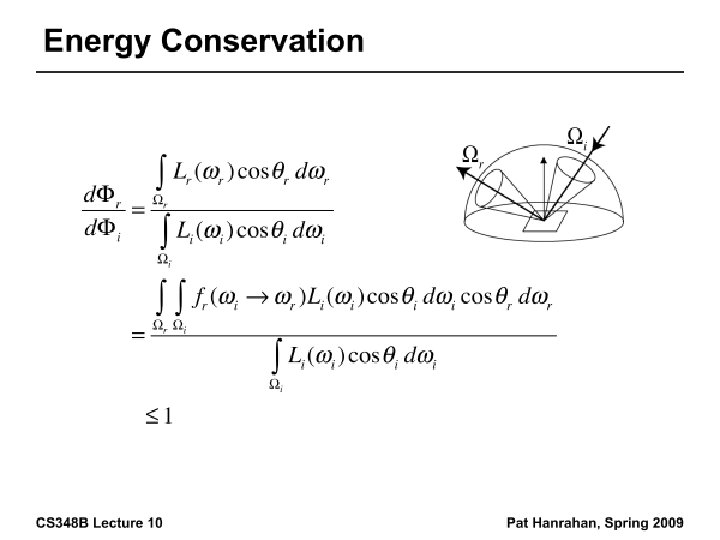
BRDF • Reflected Radiance proportional Irradiance • Constant proportionality: BRDF • Ratio of outgoing light (radiance) to incoming light (irradiance) – Bidirectional Reflection Distribution Function – (4 Vars) units 1/sr
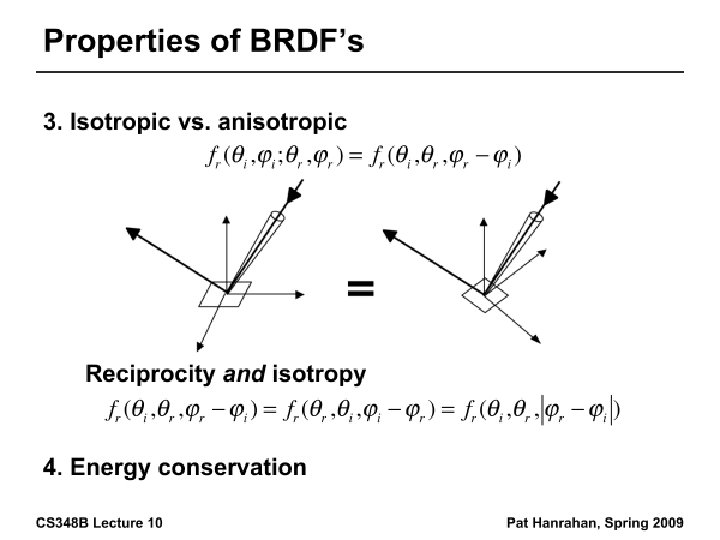
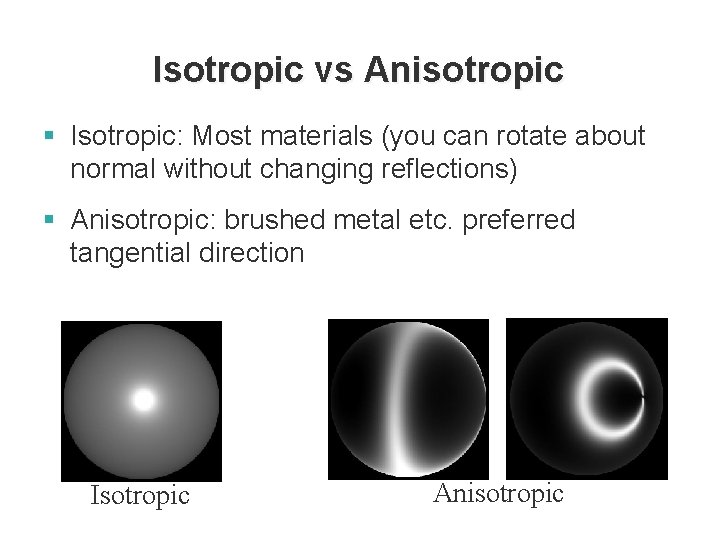
Isotropic vs Anisotropic § Isotropic: Most materials (you can rotate about normal without changing reflections) § Anisotropic: brushed metal etc. preferred tangential direction Isotropic Anisotropic
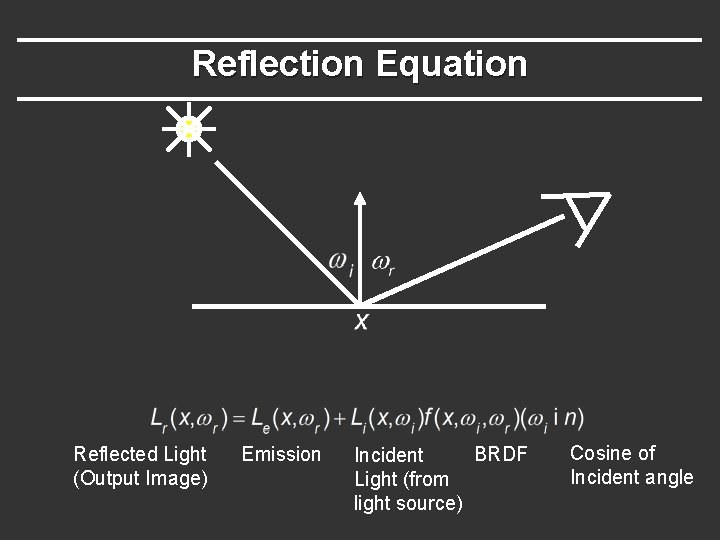
Reflection Equation Reflected Light (Output Image) Emission BRDF Incident Light (from light source) Cosine of Incident angle
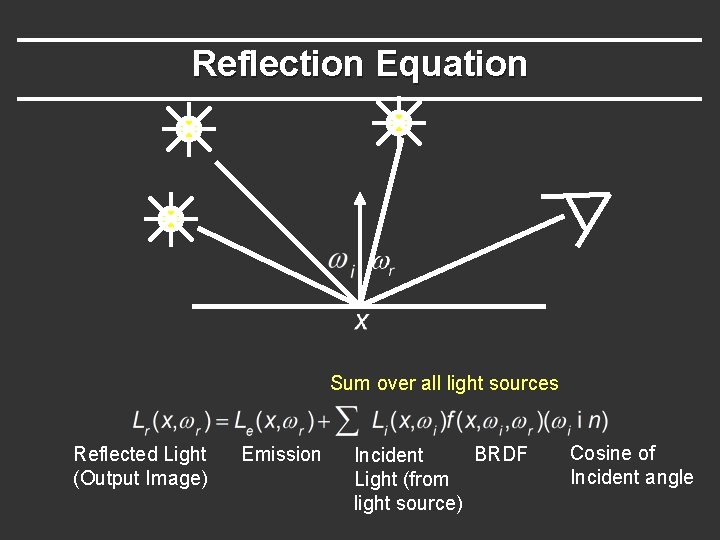
Reflection Equation Sum over all light sources Reflected Light (Output Image) Emission BRDF Incident Light (from light source) Cosine of Incident angle
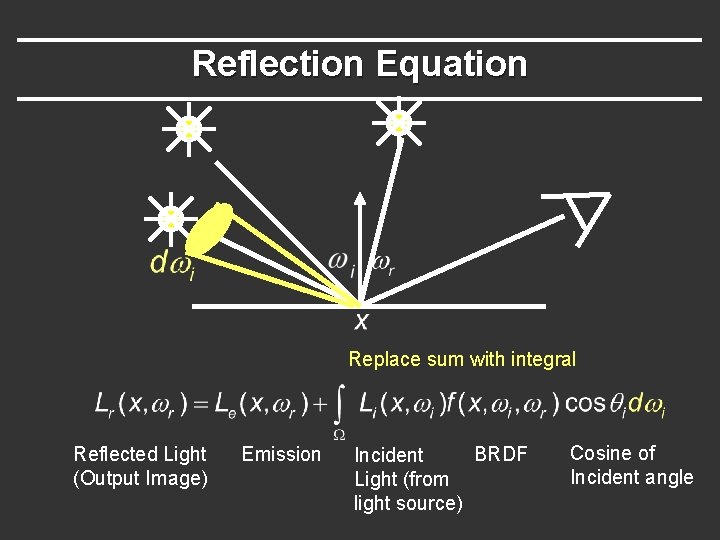
Reflection Equation Replace sum with integral Reflected Light (Output Image) Emission BRDF Incident Light (from light source) Cosine of Incident angle
Radiometry § Physical measurement of electromagnetic energy § Measure spatial (and angular) properties of light § Radiance, Irradiance § Reflection functions: Bi-Directional Reflectance Distribution Function or BRDF § Reflection Equation § Simple BRDF models
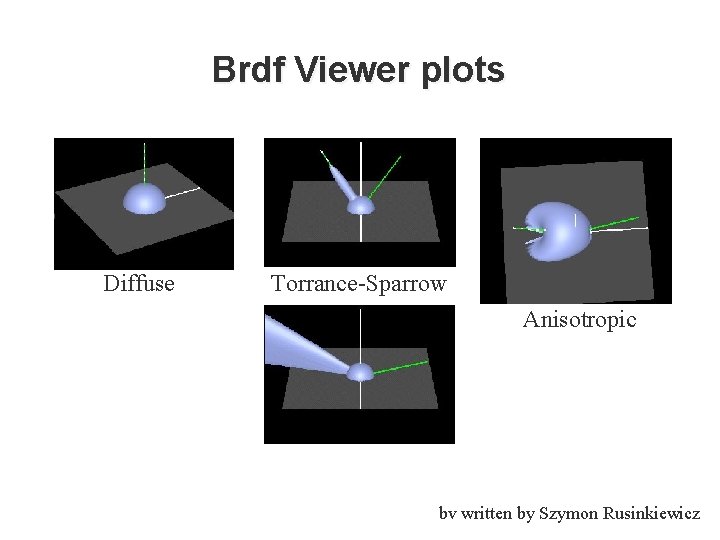
Brdf Viewer plots Diffuse Torrance-Sparrow Anisotropic bv written by Szymon Rusinkiewicz
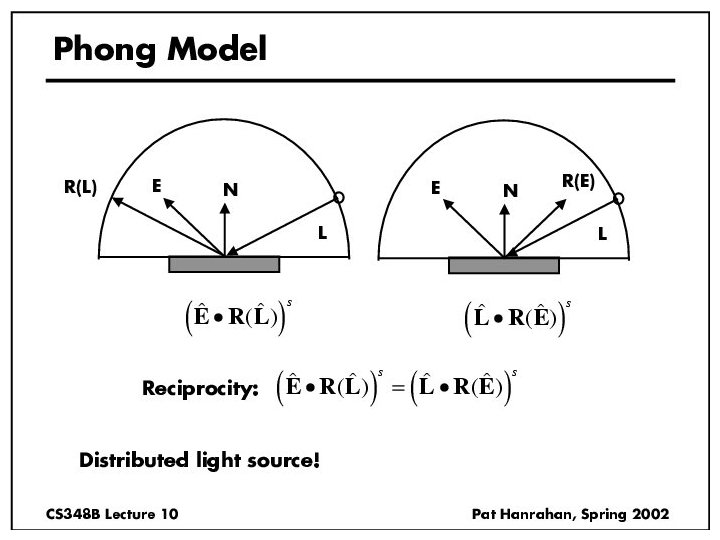
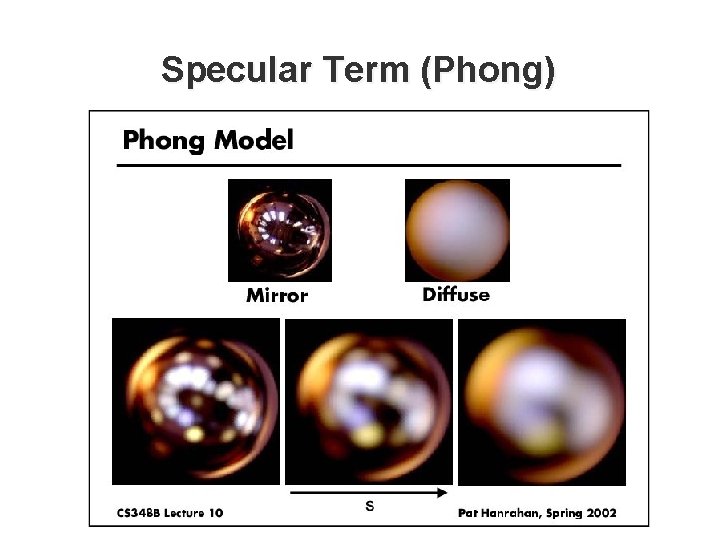
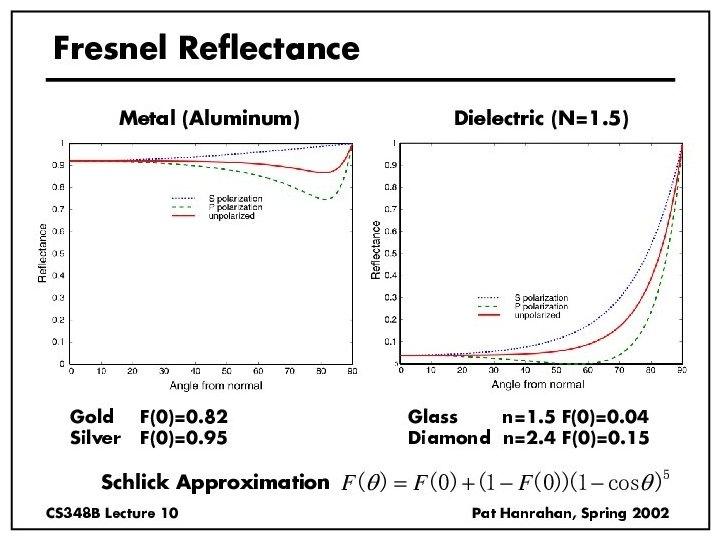
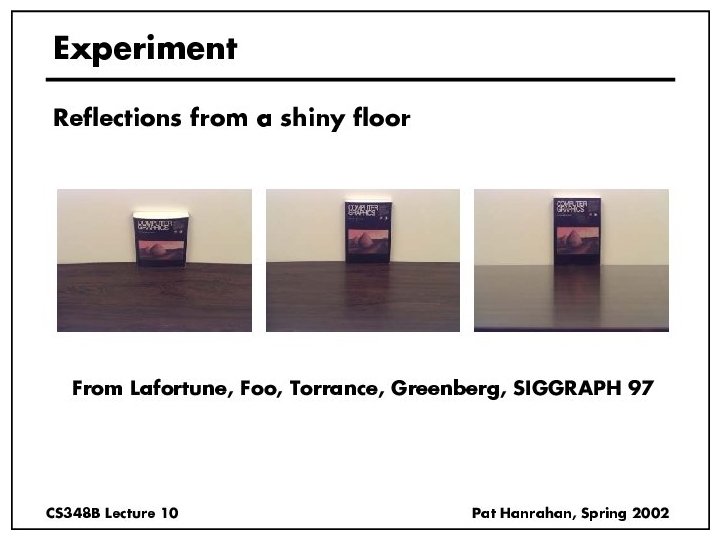
Specular Term (Phong)
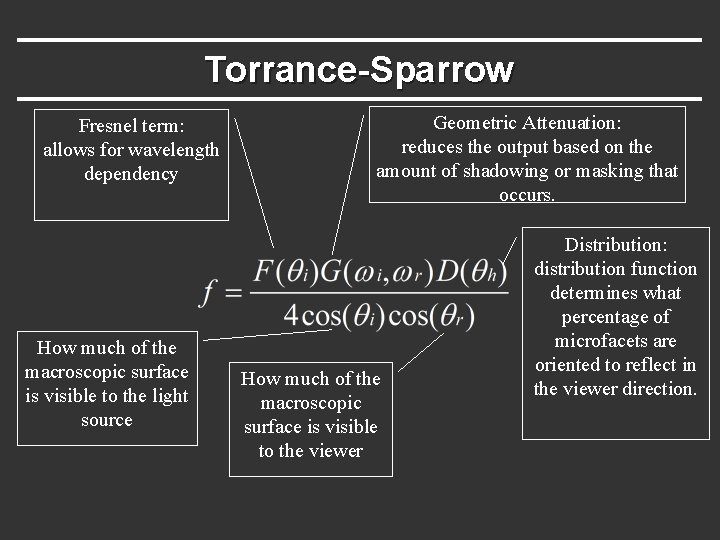
Torrance-Sparrow Fresnel term: allows for wavelength dependency How much of the macroscopic surface is visible to the light source Geometric Attenuation: reduces the output based on the amount of shadowing or masking that occurs. How much of the macroscopic surface is visible to the viewer Distribution: distribution function determines what percentage of microfacets are oriented to reflect in the viewer direction.
Other BRDF models § Empirical: Measure and build a 4 D table § Anisotropic models for hair, brushed steel § Cartoon shaders, funky BRDFs § Capturing spatial variation § Very active area of research