
Sampling and Monitoring at Mining Sites HARDROCK MINE
- Slides: 19
Sampling and Monitoring at Mining Sites HARDROCK MINE GEOCHEMISTRY AND HYDROLOGY March 5, 2013 – Clu-in Carol Russell US EPA Region 8 1
Outline Definitions Mining Life Cycle Sampling and Monitoring Handbook for Mining Influenced Water Planning Process Questions (Data Quality Objectives – DQOs) Conceptual Model Water Balance Risk Assessment More Information 2
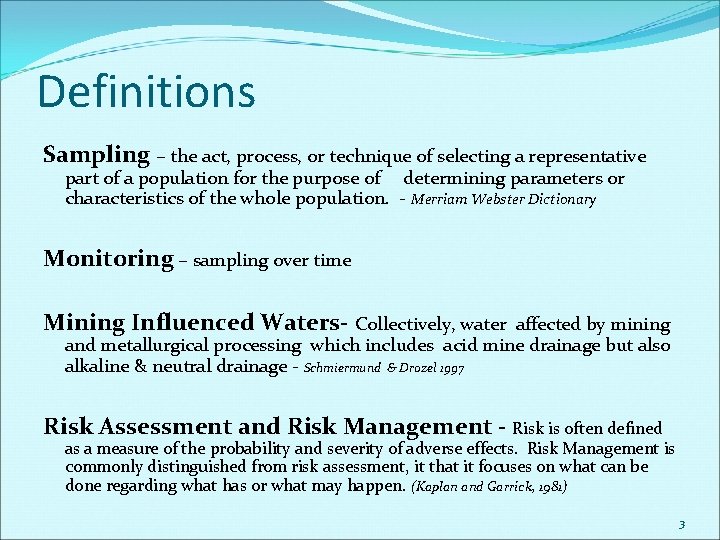
Definitions Sampling – the act, process, or technique of selecting a representative part of a population for the purpose of determining parameters or characteristics of the whole population. - Merriam Webster Dictionary Monitoring – sampling over time Mining Influenced Waters- Collectively, water affected by mining and metallurgical processing which includes acid mine drainage but also alkaline & neutral drainage - Schmiermund & Drozel 1997 Risk Assessment and Risk Management - Risk is often defined as a measure of the probability and severity of adverse effects. Risk Management is commonly distinguished from risk assessment, it that it focuses on what can be done regarding what has or what may happen. (Kaplan and Garrick, 1981) 3
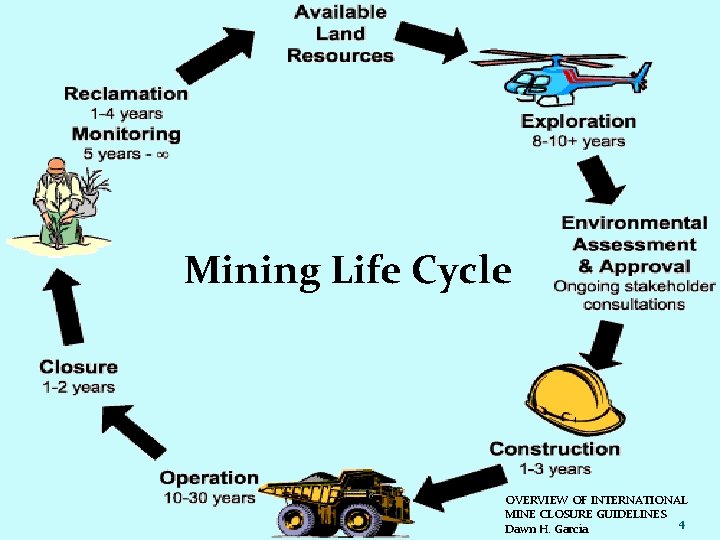
Mining Life Cycle OVERVIEW OF INTERNATIONAL MINE CLOSURE GUIDELINES 4 Dawn H. Garcia
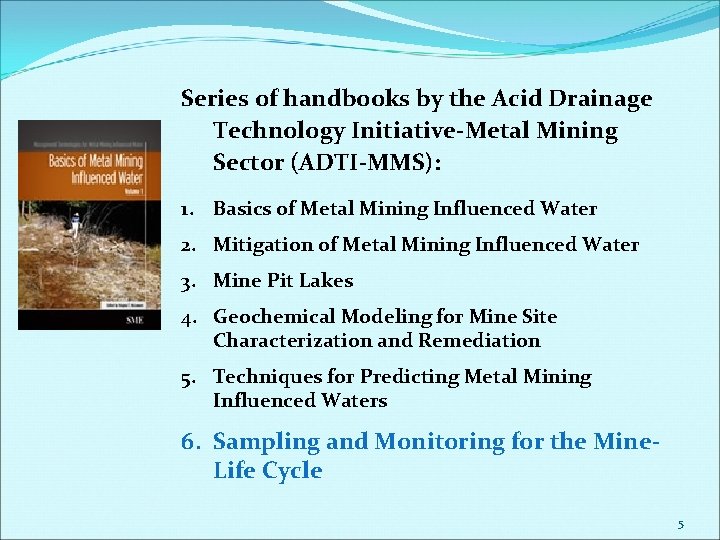
Series of handbooks by the Acid Drainage Technology Initiative-Metal Mining Sector (ADTI-MMS): 1. Basics of Metal Mining Influenced Water 2. Mitigation of Metal Mining Influenced Water 3. Mine Pit Lakes 4. Geochemical Modeling for Mine Site Characterization and Remediation 5. Techniques for Predicting Metal Mining Influenced Waters 6. Sampling and Monitoring for the Mine. Life Cycle 5
“Sampling and Monitoring for Mining Influenced Waters” 1 – Introduction 2 – Guidance Documents 3 – Overview of Sampling and Monitoring during the Phases of Mining 4 – The Planning Process 5 – Sampling Considerations in the Mining Environment 6 – Program Implementation 7 – Data Analysis and Management for Decision Making 8 – Key Issues and Research Needs/ Mc. Lemore, Smith and Russell eds (in preparation) 6
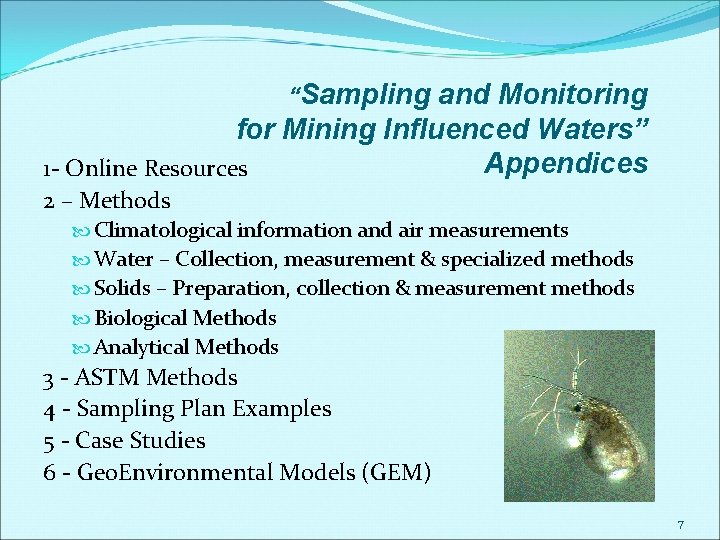
“Sampling and Monitoring for Mining Influenced Waters” Appendices 1 - Online Resources 2 – Methods Climatological information and air measurements Water – Collection, measurement & specialized methods Solids – Preparation, collection & measurement methods Biological Methods Analytical Methods 3 - ASTM Methods 4 - Sampling Plan Examples 5 - Case Studies 6 - Geo. Environmental Models (GEM) 7
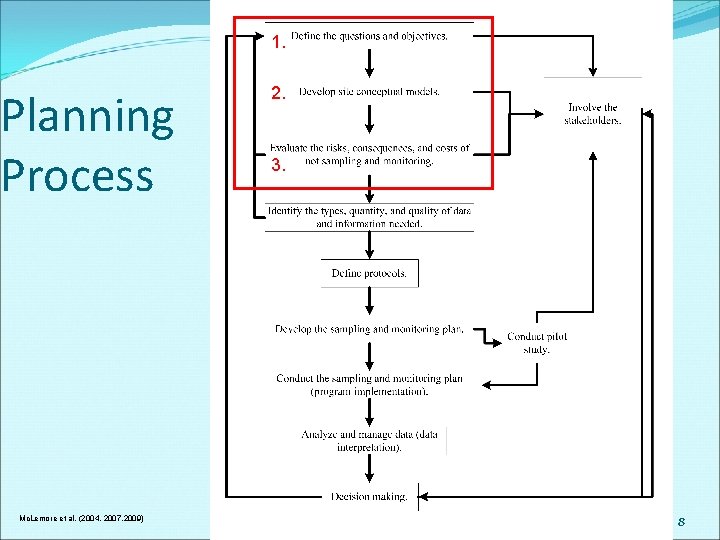
1. Planning Process Mc. Lemore et al. (2004, 2007. 2009) 2. 3. 8
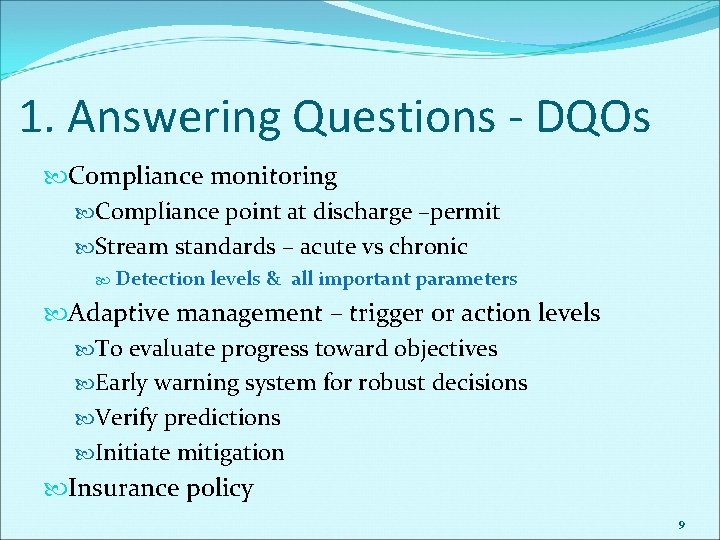
1. Answering Questions - DQOs Compliance monitoring Compliance point at discharge –permit Stream standards – acute vs chronic Detection levels & all important parameters Adaptive management – trigger or action levels To evaluate progress toward objectives Early warning system for robust decisions Verify predictions Initiate mitigation Insurance policy 9
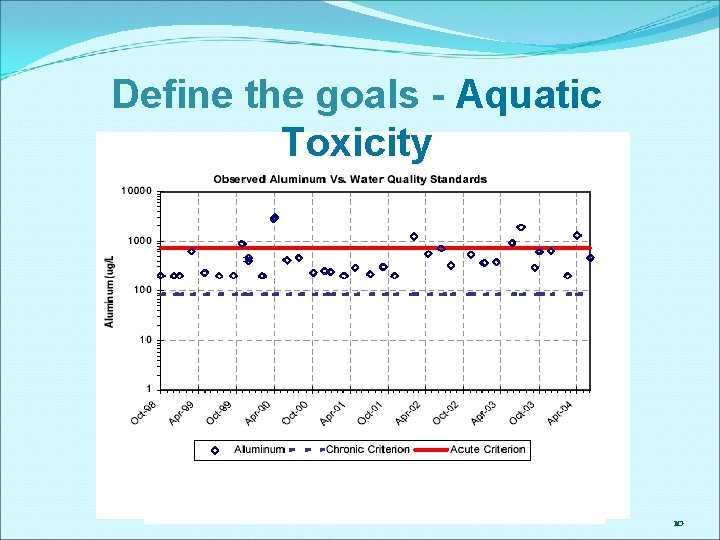
Define the goals - Aquatic Toxicity 10
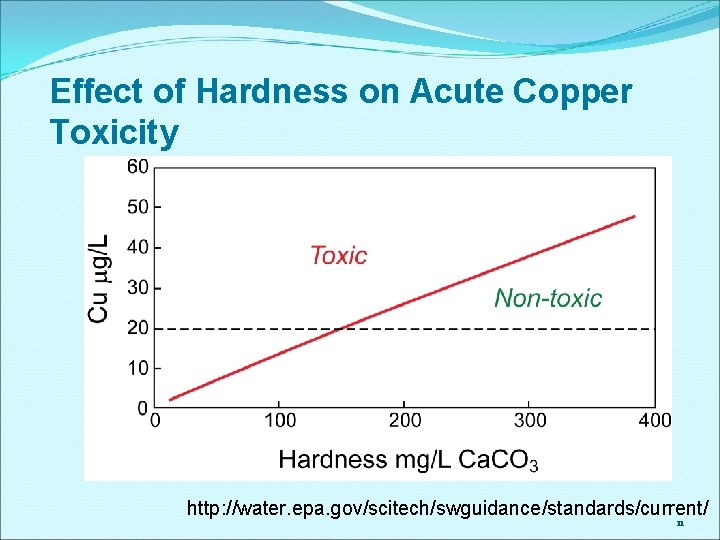
Effect of Hardness on Acute Copper Toxicity http: //water. epa. gov/scitech/swguidance/standards/current/ 11
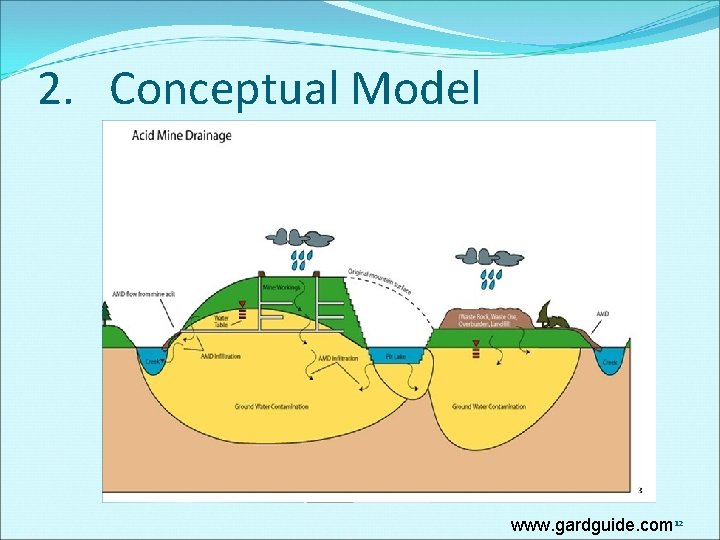
2. Conceptual Model www. gardguide. com 12
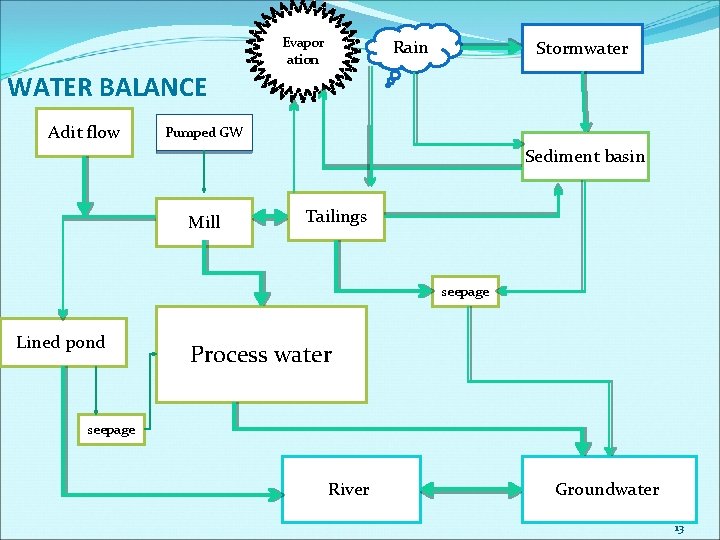
Evapor ation Rain Stormwater WATER BALANCE Adit flow Pumped GW Sediment basin Mill Tailings seepage Lined pond Process water seepage River Groundwater 13
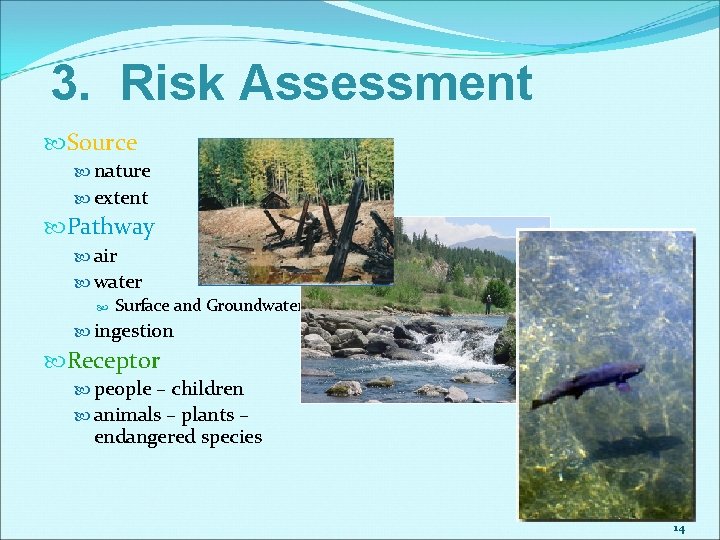
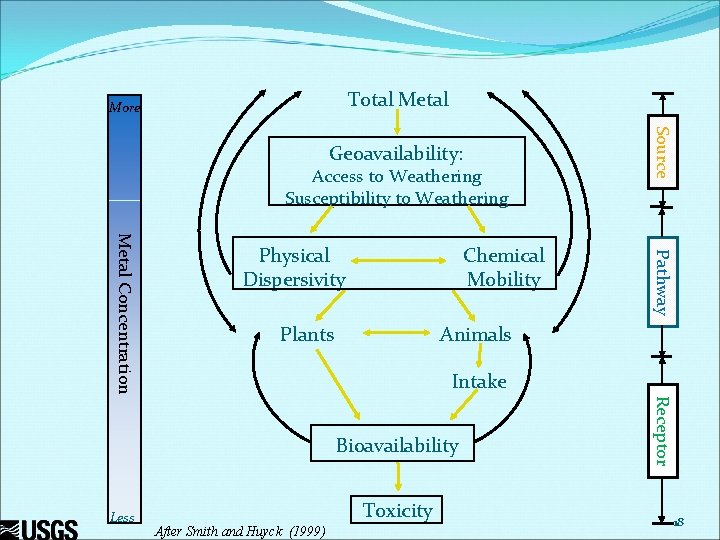
3. Risk Assessment Source nature extent Pathway air water Surface and Groundwater ingestion Receptor people – children animals – plants – endangered species 14
Sources What is the site? number, name, location, owner, mine name, features What was mined? ore, waste minerology How was it processed? milling, amalgam, or CN Where? what features can be seen/mapped? How big or how much? volume of mine waste, processed waste, or waste water When? when was it mined/processed and when did problems start? 15
Pathways Climate (water, air, or soil) Amount of rainfall, wind Seasonal changes, temperature extremes Elevation Rain or Snow, when does it occur? Topography Relief Geology Mineralogy Faulting and fracturing Relationship of waste to water/hydrology 16
Receptors Proximity of people (homes – recreation, drinking water) Number of receptors and susceptibility Protected areas or species Location of water bodies Ameliorating geochemistry 17
Total Metal More Access to Weathering Susceptibility to Weathering Chemical Mobility Animals Plants Intake Toxicity After Smith and Huyck (1999) Receptor Bioavailability Less Pathway Metal Concentration Physical Dispersivity Source Geoavailability: 18
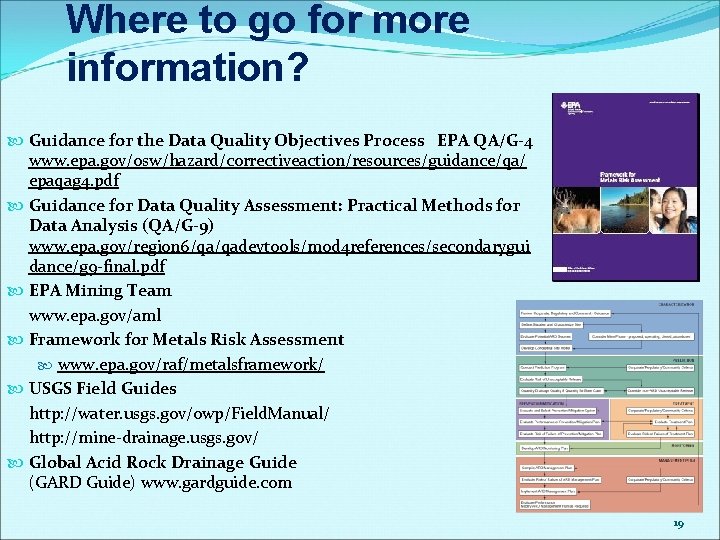
Where to go for more information? Guidance for the Data Quality Objectives Process EPA QA/G-4 www. epa. gov/osw/hazard/correctiveaction/resources/guidance/qa/ epaqag 4. pdf Guidance for Data Quality Assessment: Practical Methods for Data Analysis (QA/G-9) www. epa. gov/region 6/qa/qadevtools/mod 4 references/secondarygui dance/g 9 -final. pdf EPA Mining Team www. epa. gov/aml Framework for Metals Risk Assessment www. epa. gov/raf/metalsframework/ USGS Field Guides http: //water. usgs. gov/owp/Field. Manual/ http: //mine-drainage. usgs. gov/ Global Acid Rock Drainage Guide (GARD Guide) www. gardguide. com 19