
Same State Homeostasis maintaining a constant internal environment
- Slides: 10
Same State Homeostasis maintaining a constant, internal environment within narrow limits, despite changes that take place internally and externally.
• The conditions within cells depend on the conditions within the internal environment (tissue fluid). • Glucose , Carbon dioxide, Water, Salts, etc need to be kept constant within narrow limits.
General sequence of events in a negative feedback mechanism • Step 1: An imbalance is detected. • Step 2: A control centre is stimulated. • Step 3: Control centre responds. • Step 4: Message sent to target organ/s. • Step 5: The target organ responds. • Step 6: It opposes/reverses the imbalance. • Step 7: Balance is restored. Can you use these steps to show regulation of glucose and thyroxin?
The regulation of carbon dioxide levels in the internal environment When the CO 2 level in the blood increases above normal levels: • Step 1 CO 2 levels in the blood increase above normal levels • Step 2 Receptor cells in the carotid artery in the neck are stimulated • Step 3 To send impulses to the medulla oblongata in the brain • Step 4 Medulla oblongata stimulates breathing muscles (intercostal muscles and diaphragm) and heart • Step 5 Breathing muscles contract more actively – increases the rate and depth of breathing. The heart beats faster. • Step 6 More CO 2 is taken to and exhaled from the lungs • Step 7 The CO 2 level in the blood returns to normal
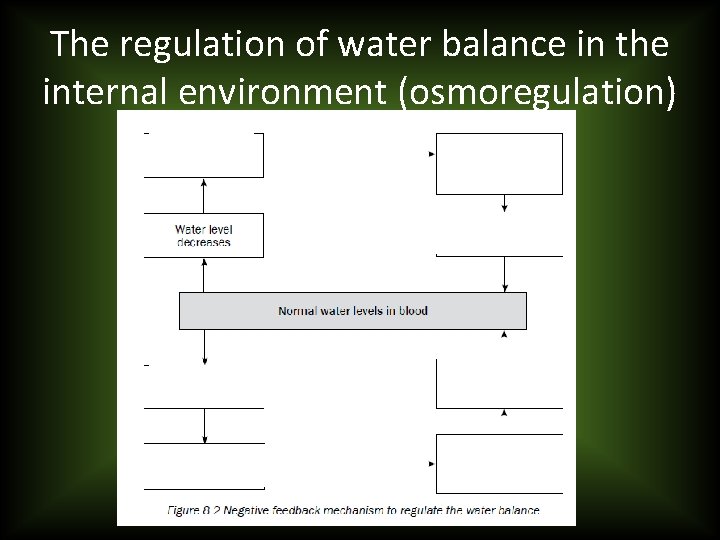
The regulation of water balance in the internal environment (osmoregulation)
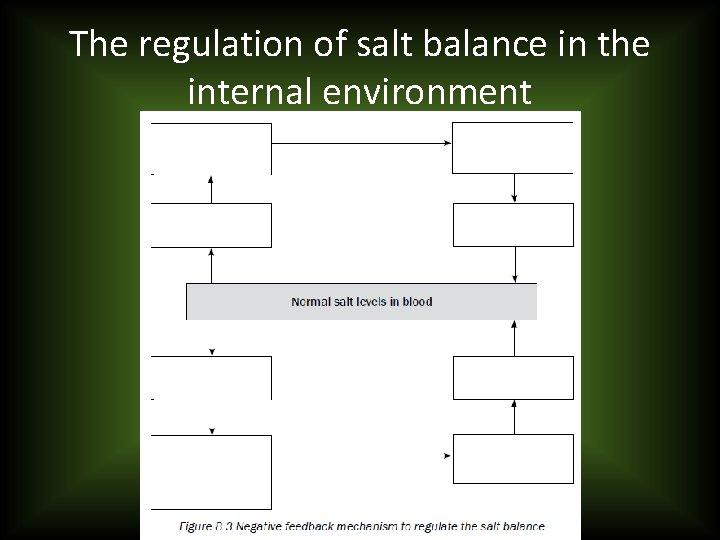
The regulation of salt balance in the internal environment
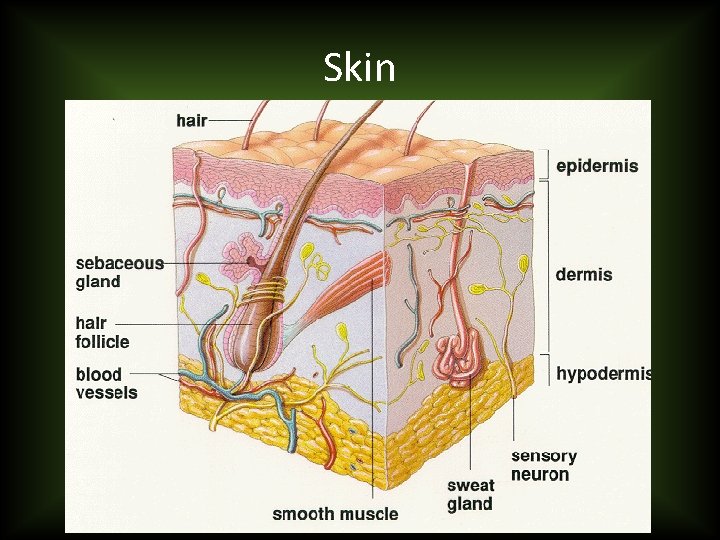
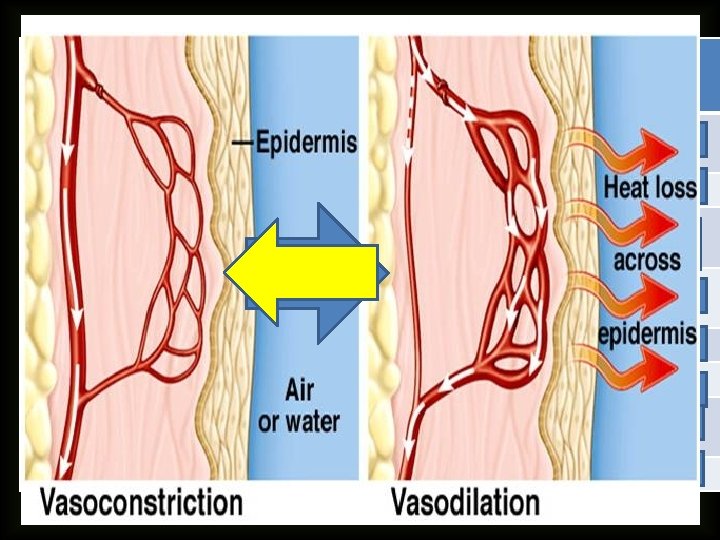
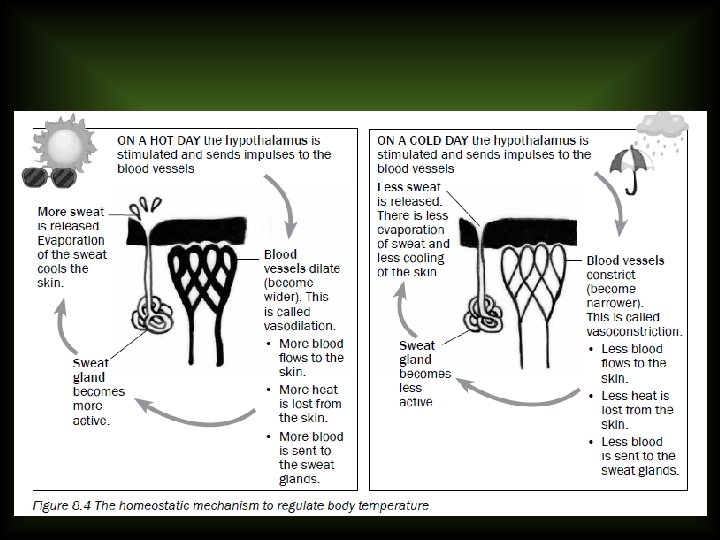
Temperature regulation Keeping body temperature as close to 37 C as possible to enable the body to function normally. Control centre= hypothalamus Target organ= skin (sweat glands and blood vessels)
Skin
Hot day Cold day Control centre stimulated Hypothalamus Target organ Skin skin Blood vessels to surface of skin Dilate (vasodilation) Constrict (vasoconstriction) Blood flow to surface of skin More Less Heat loss More Less Blood to sweat glands More Less Amount of sweat released and evaporated More Less Cooling of skin More Less