
Saltwater Systems oceans seas cover 75 of the

- Slides: 14
Saltwater Systems • oceans & seas cover 75% of the Earth’s surface – and contain 97% of the world’s water • ocean water is saline, with about 3% salt – salinity is the amount of dissolved salt in liquid • seas are smaller than oceans and tend to be surrounded by land
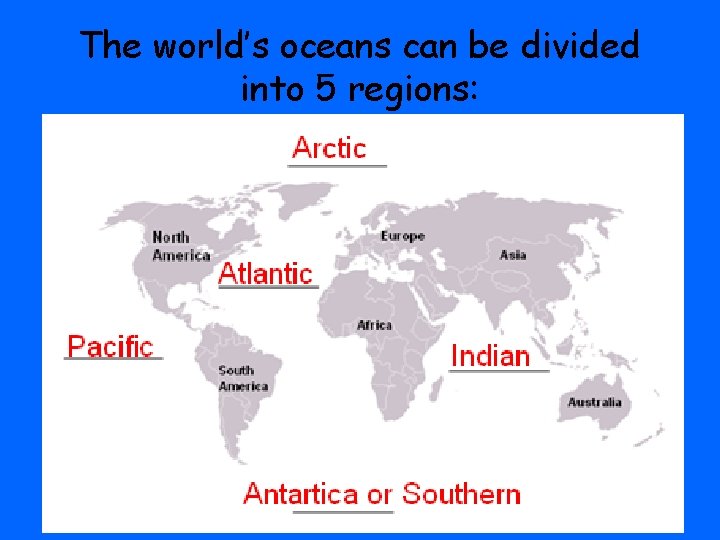
The world’s oceans can be divided into 5 regions:
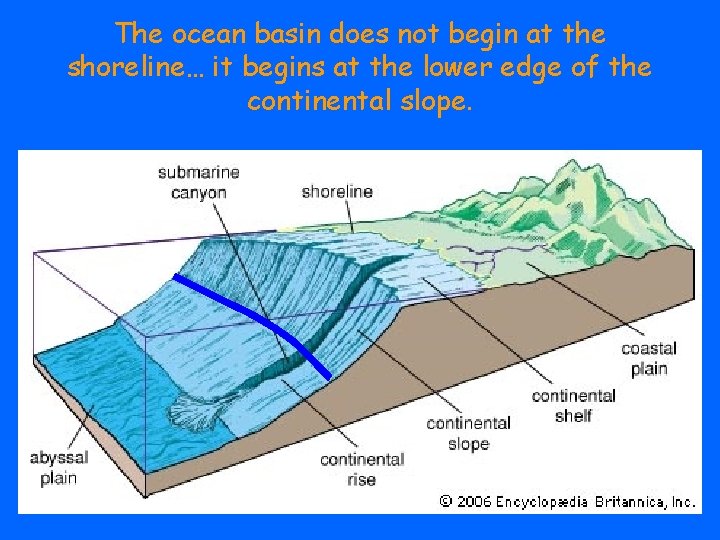
Ocean Basins • ocean basins are huge! – they have mountains, valleys and vast plains • they are formed mainly from movement of tectonic plates – as they move apart ocean basins expand – as they move together ocean basins shrink • the average depth of the oceans is 4, 000 m – the deepest place is Marianas Trench at about 11, 000 m
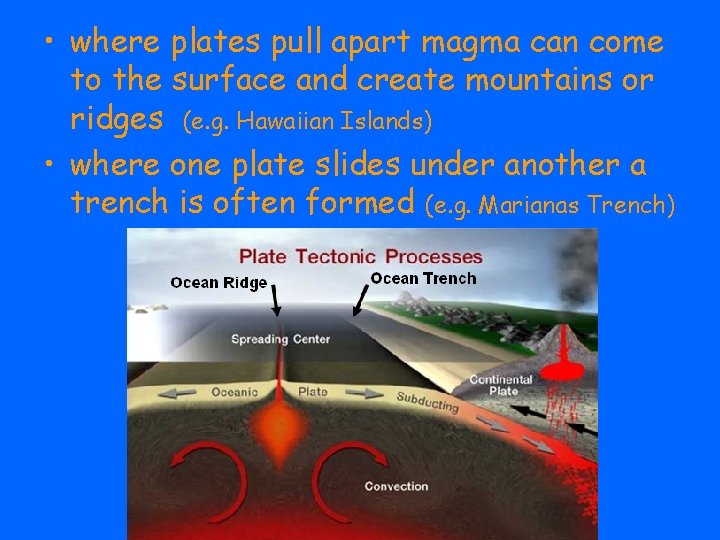
• where plates pull apart magma can come to the surface and create mountains or ridges (e. g. Hawaiian Islands) • where one plate slides under another a trench is often formed (e. g. Marianas Trench)
The ocean basin does not begin at the shoreline… it begins at the lower edge of the continental slope.
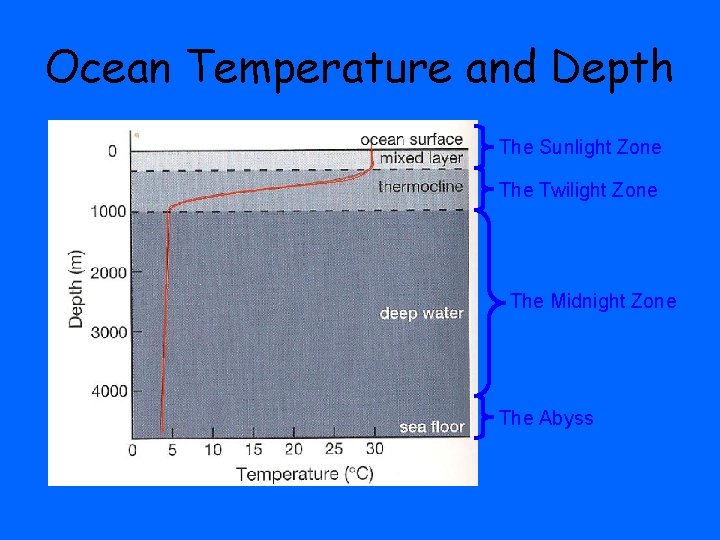
Ocean Temperature and Depth The Sunlight Zone The Twilight Zone The Midnight Zone The Abyss
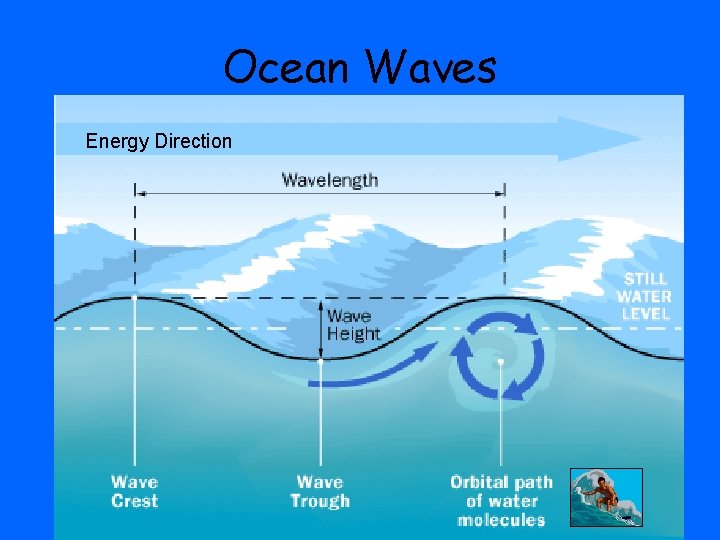
Ocean Waves Energy Direction
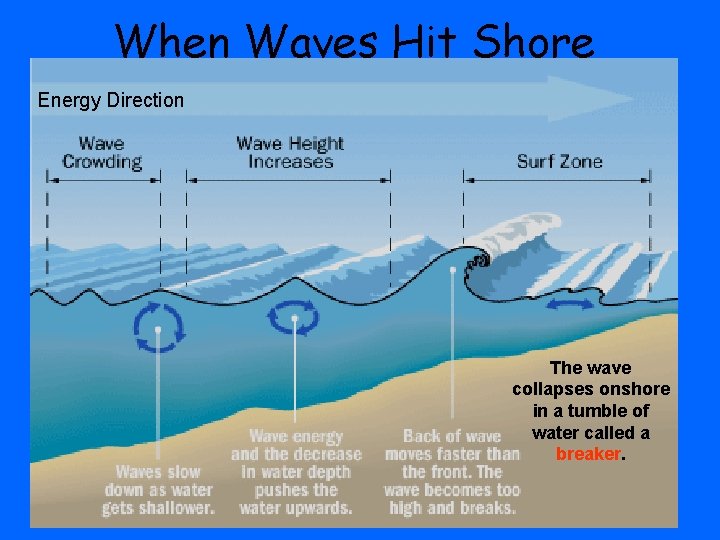
When Waves Hit Shore Energy Direction The wave collapses onshore in a tumble of water called a breaker.
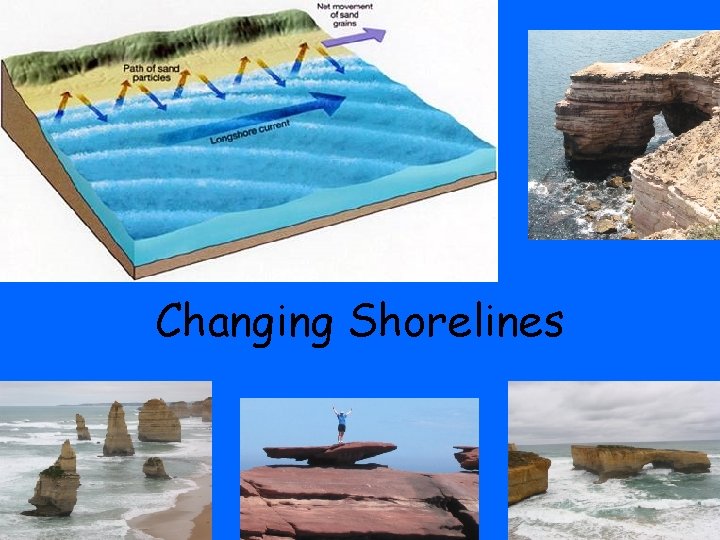
Changing Shorelines
Tides • tides are regular cycles where ocean water levels rise and fall – they are caused by the moon’s (& sun’s) gravitational pull on the water • the moon rotates around the Earth and so its distance from oceans changes in 24 hours – when the moon is closest to the ocean it will have high tide – when the moon is farthest from the ocean it will have low tide
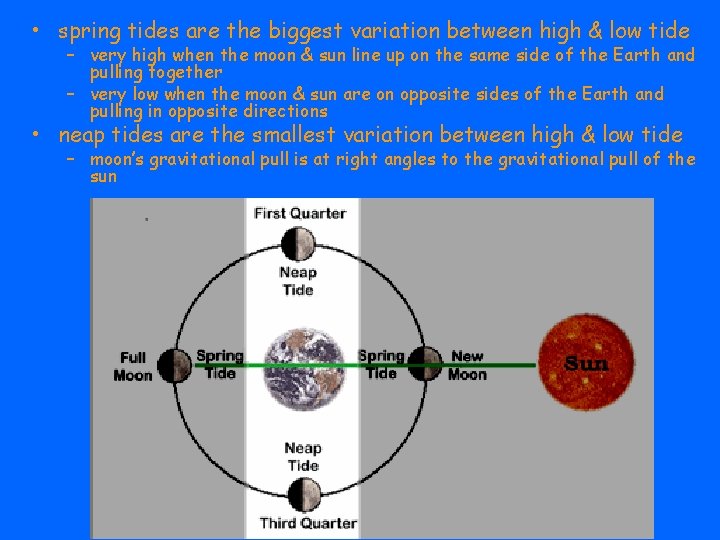
• spring tides are the biggest variation between high & low tide – very high when the moon & sun line up on the same side of the Earth and pulling together – very low when the moon & sun are on opposite sides of the Earth and pulling in opposite directions • neap tides are the smallest variation between high & low tide – moon’s gravitational pull is at right angles to the gravitational pull of the sun
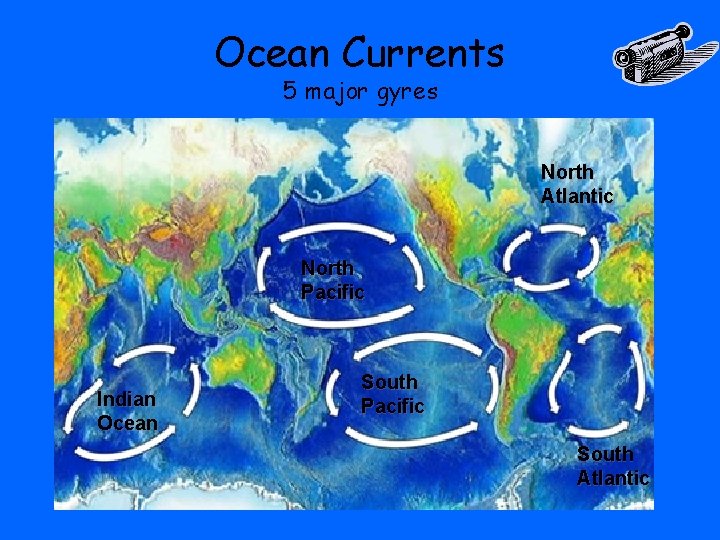
Ocean Currents 5 major gyres North Atlantic North Pacific Indian Ocean South Pacific South Atlantic
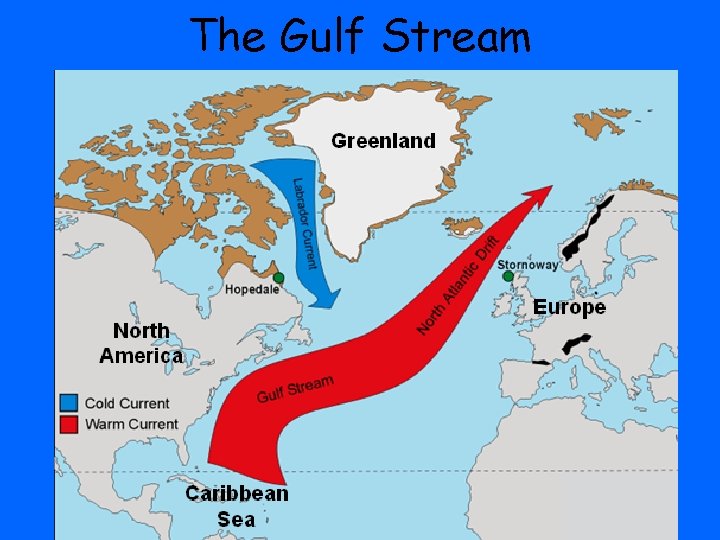
The Gulf Stream