
Saltwater Fish Species Identification Mr Robinson Today We
Saltwater Fish Species Identification Mr. Robinson
Today We Will l Describe saltwater fish habitats l Differentiate between saltwater fish species l Identify locations for successful fishing

What do you need l Reliable radio l Compass l Life jacket l Sea chart l Knowledge
Fish Classification Cartilaginous Sharks, Skates and rays • Skeletons of cartilage rather than bone • Bony fishes Skeletons of bone • Over 95% of known fish species •
Fish Classification Ecological Groupings Inshore (littoral) • Offshore bottom (reef) • Offshore migratory (pelagic) •
Inshore (coastal) Habitat Most marine fishes locate themselves near the edges of continents
Inshore Habitats Estuaries Fresh and salt waters meet and mix l Harsh environment l – Fluctuating salinity and temperature – Fish expend energy by swimming in search of better conditions Exposed Beaches Turbulent environment l Small disoriented invertebrates provide constant food source l
Inshore Habitats Salt Marshes Salt tolerable plants invade mudflats l One of best nutrient producing habitats l Will support large fish and invertebrates l Mudflats A feature that allows sediment to accumulate l Receding tides expose accumulations l Worms, clams and other burrowers are abundant l
Inshore Habitats Seagrass Flats Shallow coastal areas often regress into flats l Highly productive habitat l Large populations of fish can be supported Near-shore Soft Bottoms l Soft, silty featureless bottom l Fish are of commercial importance l
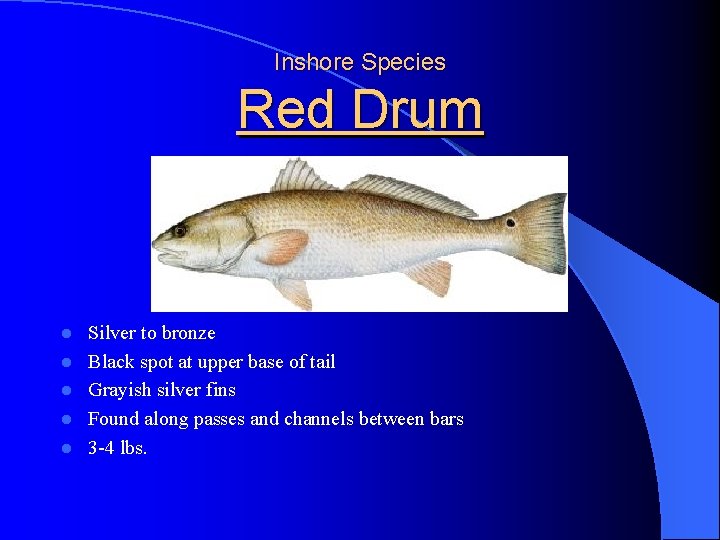
Inshore Species Red Drum l l l Silver to bronze Black spot at upper base of tail Grayish silver fins Found along passes and channels between bars 3 -4 lbs.
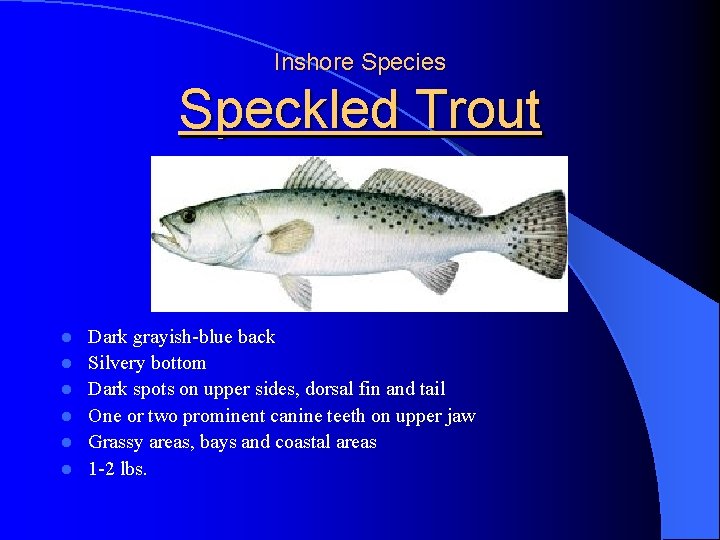
Inshore Species Speckled Trout l l l Dark grayish-blue back Silvery bottom Dark spots on upper sides, dorsal fin and tail One or two prominent canine teeth on upper jaw Grassy areas, bays and coastal areas 1 -2 lbs.
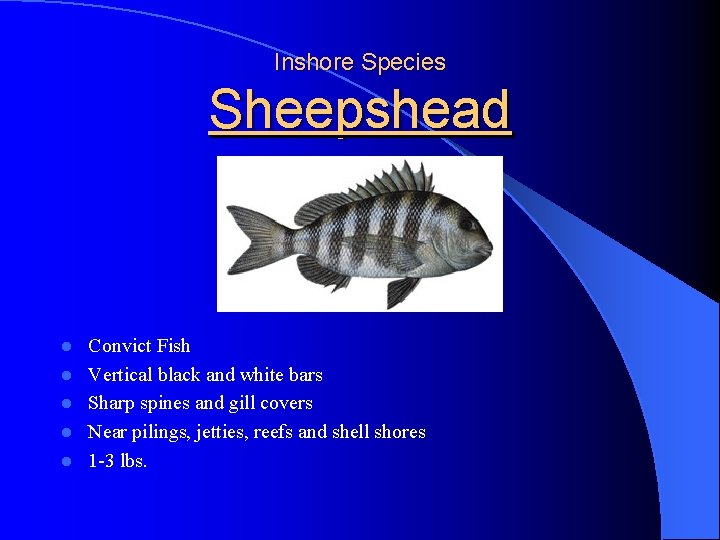
Inshore Species Sheepshead l l l Convict Fish Vertical black and white bars Sharp spines and gill covers Near pilings, jetties, reefs and shell shores 1 -3 lbs.
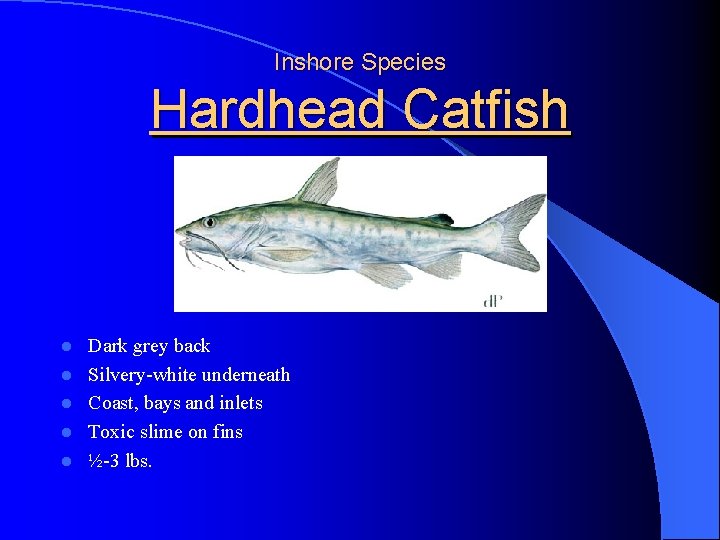
Inshore Species Hardhead Catfish l l l Dark grey back Silvery-white underneath Coast, bays and inlets Toxic slime on fins ½-3 lbs.
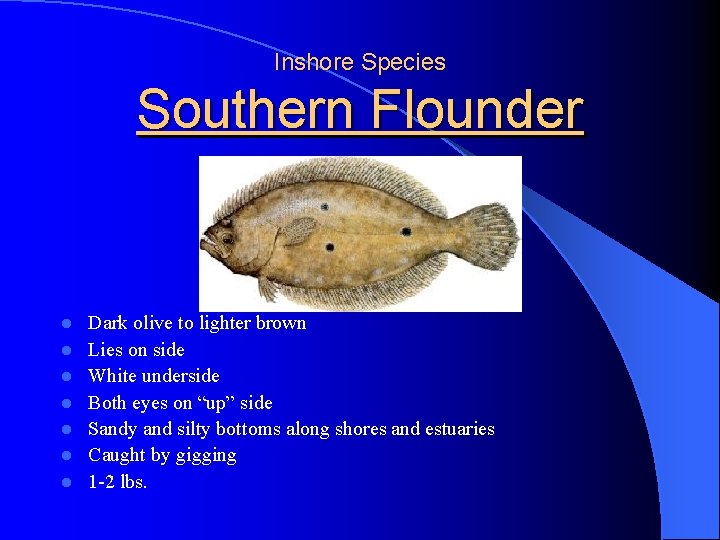
Inshore Species Southern Flounder l l l l Dark olive to lighter brown Lies on side White underside Both eyes on “up” side Sandy and silty bottoms along shores and estuaries Caught by gigging 1 -2 lbs.
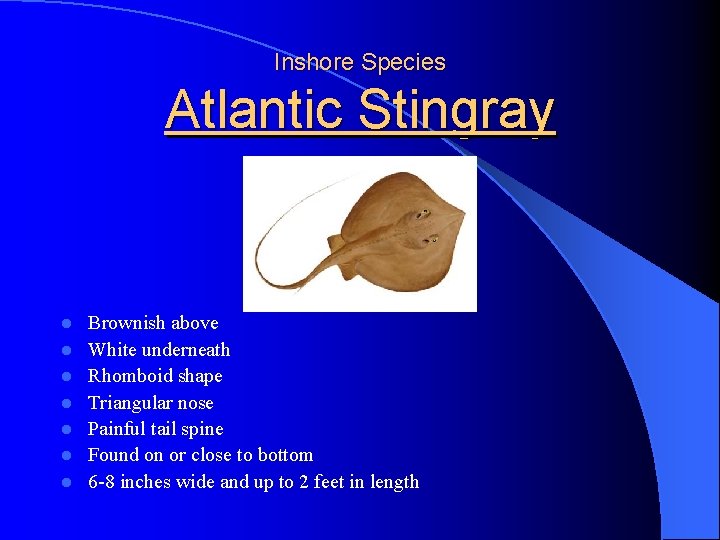
Inshore Species Atlantic Stingray l l l l Brownish above White underneath Rhomboid shape Triangular nose Painful tail spine Found on or close to bottom 6 -8 inches wide and up to 2 feet in length
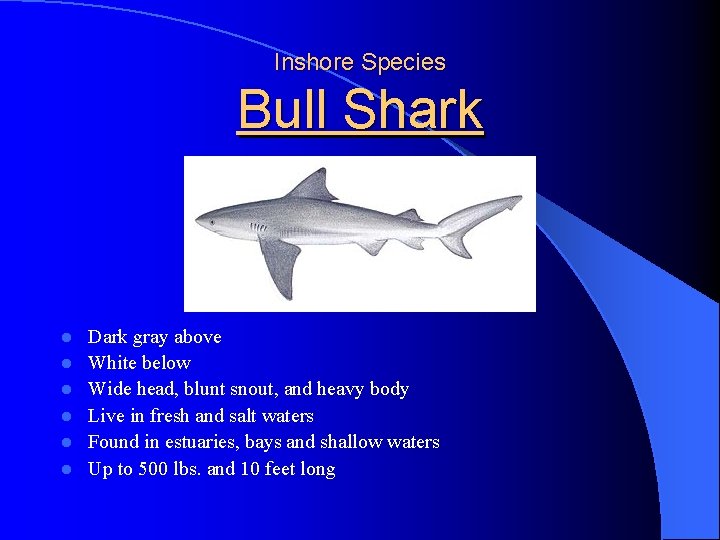
Inshore Species Bull Shark l l l Dark gray above White below Wide head, blunt snout, and heavy body Live in fresh and salt waters Found in estuaries, bays and shallow waters Up to 500 lbs. and 10 feet long
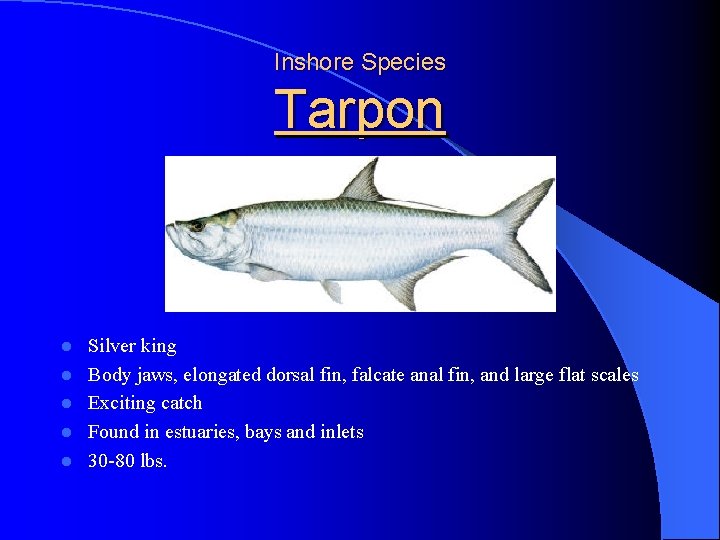
Inshore Species Tarpon l l l Silver king Body jaws, elongated dorsal fin, falcate anal fin, and large flat scales Exciting catch Found in estuaries, bays and inlets 30 -80 lbs.
Deep Sea Habitats Natural Reefs Abundance of food and shelter l Reduced wave activity l “Fish eat fish” world l Artificial Reefs Most costly to incorporate l Many fish seek out for shelter l Sunken objects l – Burned car shells – Bundles of clay and concrete – Pipe – Oyster shells – Sunken ships
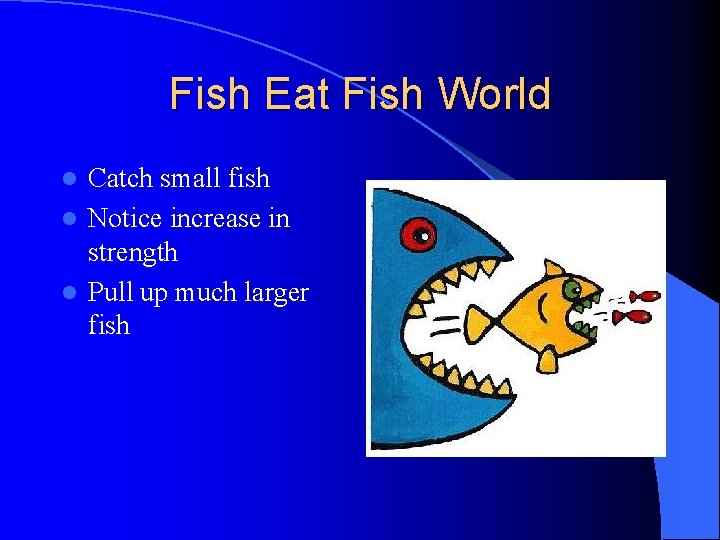
Fish Eat Fish World Catch small fish l Notice increase in strength l Pull up much larger fish l
Deep Sea Habitats Blue Water Line Two currents come in contact l Forms line of sediment and trash l Allows fish to hide from predators l Off-Shore Oil Rigs Supports covered with algae, crustaceans and snails l Trolling l – Avoid close passes for safety l Still fishing – Tie up to support – Attracts fish from depths
Deep Sea Habitats Objects Floating debris l Turtles l Fishing boats l – Smaller fish escape nets – Throw undesirable species overboard
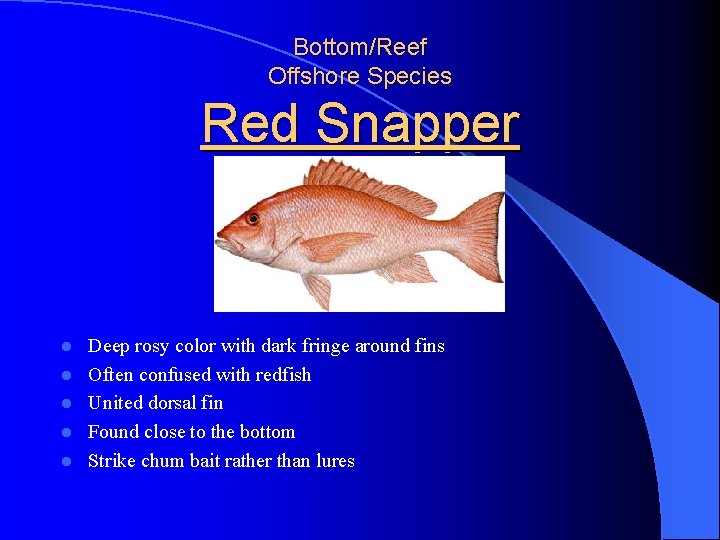
Bottom/Reef Offshore Species Red Snapper l l l Deep rosy color with dark fringe around fins Often confused with redfish United dorsal fin Found close to the bottom Strike chum bait rather than lures
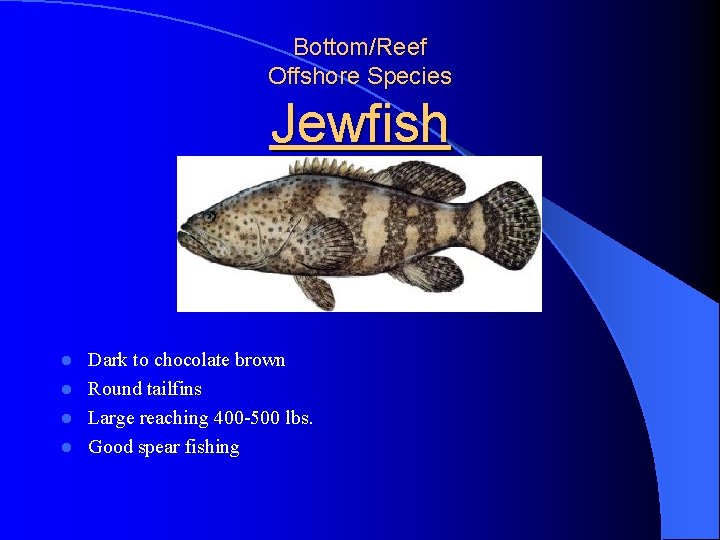
Bottom/Reef Offshore Species Jewfish Dark to chocolate brown l Round tailfins l Large reaching 400 -500 lbs. l Good spear fishing l
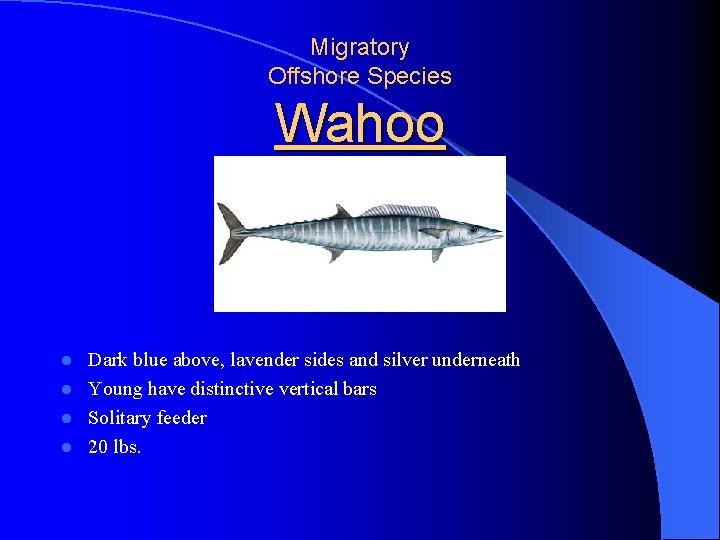
Migratory Offshore Species Wahoo Dark blue above, lavender sides and silver underneath l Young have distinctive vertical bars l Solitary feeder l 20 lbs. l
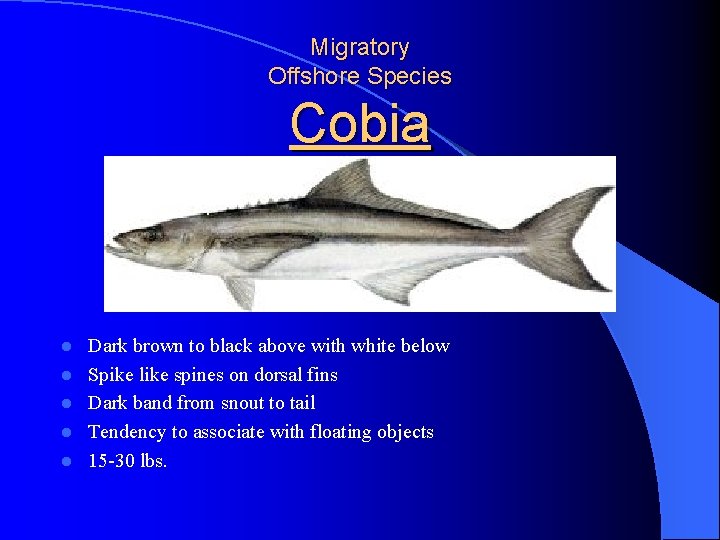
Migratory Offshore Species Cobia l l l Dark brown to black above with white below Spike like spines on dorsal fins Dark band from snout to tail Tendency to associate with floating objects 15 -30 lbs.
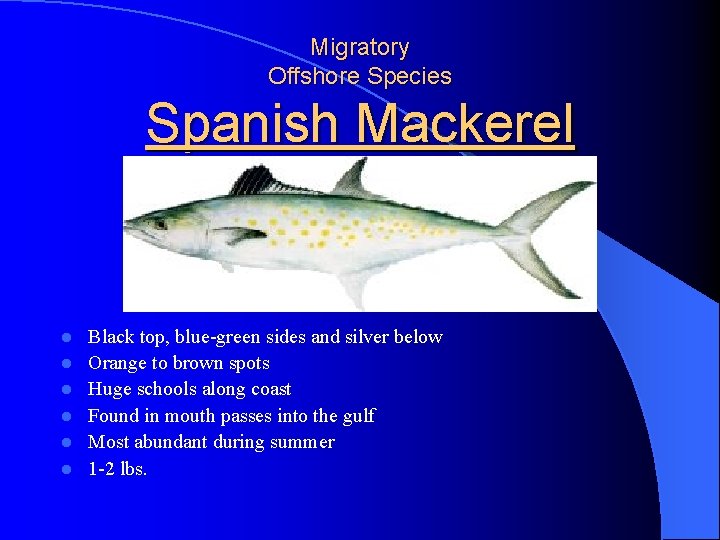
Migratory Offshore Species Spanish Mackerel l l l Black top, blue-green sides and silver below Orange to brown spots Huge schools along coast Found in mouth passes into the gulf Most abundant during summer 1 -2 lbs.
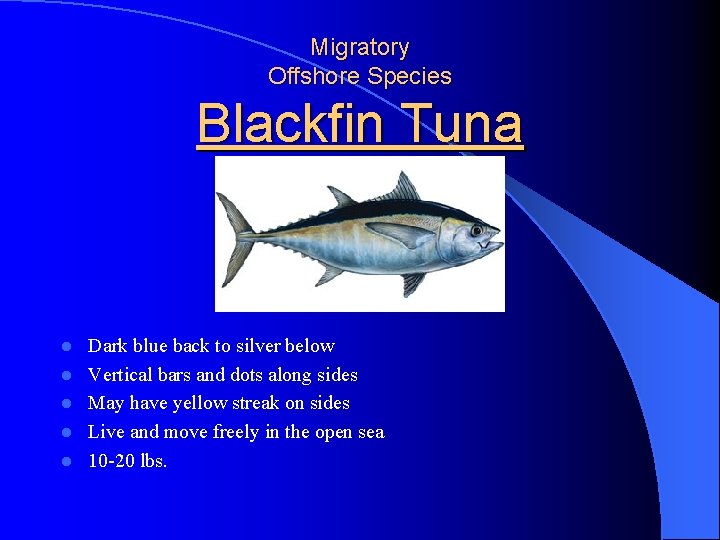
Migratory Offshore Species Blackfin Tuna l l l Dark blue back to silver below Vertical bars and dots along sides May have yellow streak on sides Live and move freely in the open sea 10 -20 lbs.
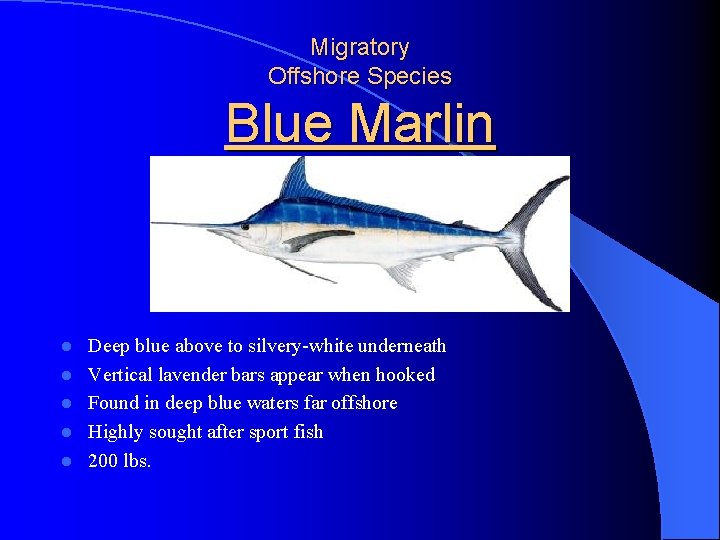
Migratory Offshore Species Blue Marlin l l l Deep blue above to silvery-white underneath Vertical lavender bars appear when hooked Found in deep blue waters far offshore Highly sought after sport fish 200 lbs.

l. What fish swims on it’s side? l. What is the most costly type of habitat? l. What is also known as the “convict fish” l. What fish has two prominent canine teeth? l. What is formed when fresh and salt waters mix?

References l http: //research. myfwc. com/ l http: //www. boat- ed. com/fl/handbook/saltwater_fish. htm l IMS form 8985 -D
- Slides: 34