
Saltwater Ecosystems Aquatic Ecosystems Marisa Boan Saltwater Ecosystems
Saltwater Ecosystems Aquatic Ecosystems Marisa Boan
Saltwater Ecosystems �About 95% of the water on the surface of Earth contains high concentration of various salts �The amount of dissolved water is called salinity �Saltwater ecosystems include oceans, seas, a few lakes, coastal inlets, and estuaries

Open Oceans �There is lots of life in the oceans �Scientists divide the ocean into different life zones based on the depth and how much sunlight penetrates the water.
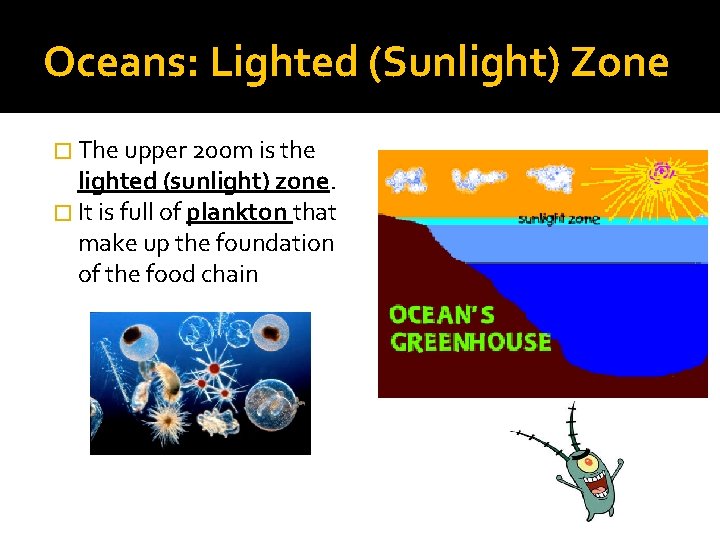
Oceans: Lighted (Sunlight) Zone � The upper 200 m is the lighted (sunlight) zone. � It is full of plankton that make up the foundation of the food chain

Oceans: Dark (Midnight) Zone � Below 200 m is the dark zone of the ocean � Animals living in the dark zone feed on material that floats down form the lighted zone, or they feed on each other! � Very few organism are able to produce their own food.
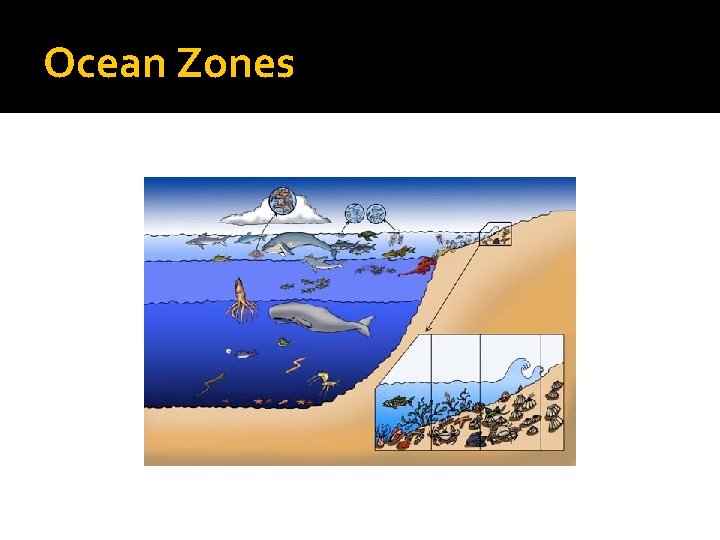
Ocean Zones
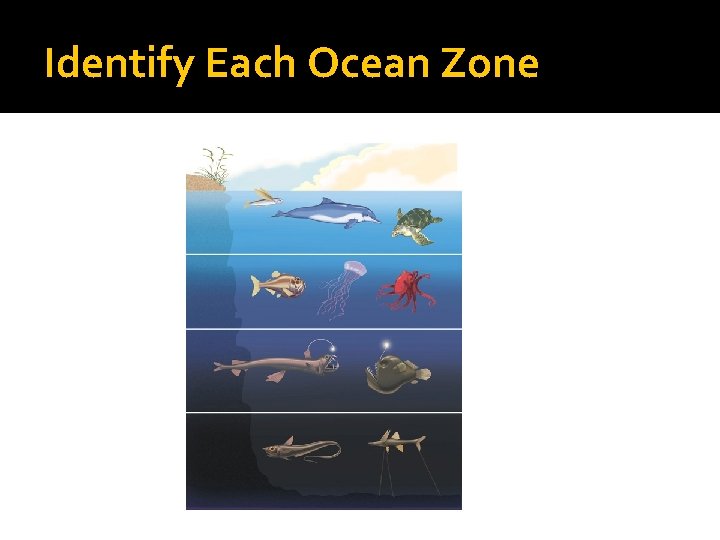
Identify Each Ocean Zone
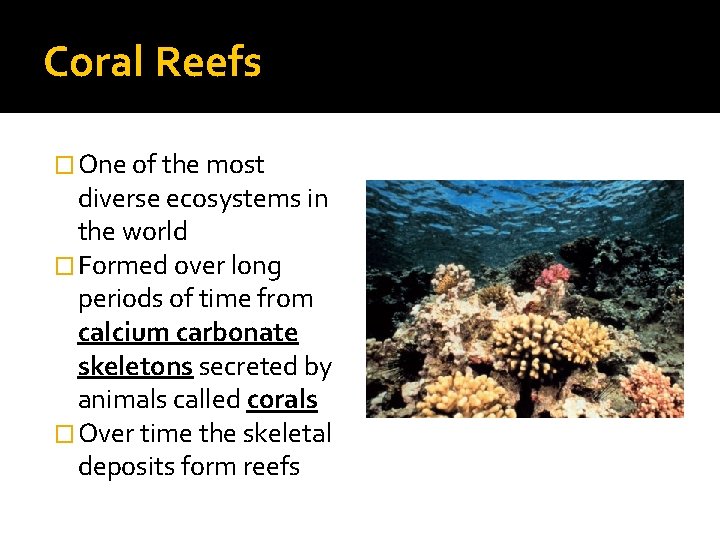
Coral Reefs � One of the most diverse ecosystems in the world � Formed over long periods of time from calcium carbonate skeletons secreted by animals called corals � Over time the skeletal deposits form reefs
Learning Check 1. What does salinity mean? 2. What are two ocean zones? What is the difference between these zones? 3. How are coral reefs formed?
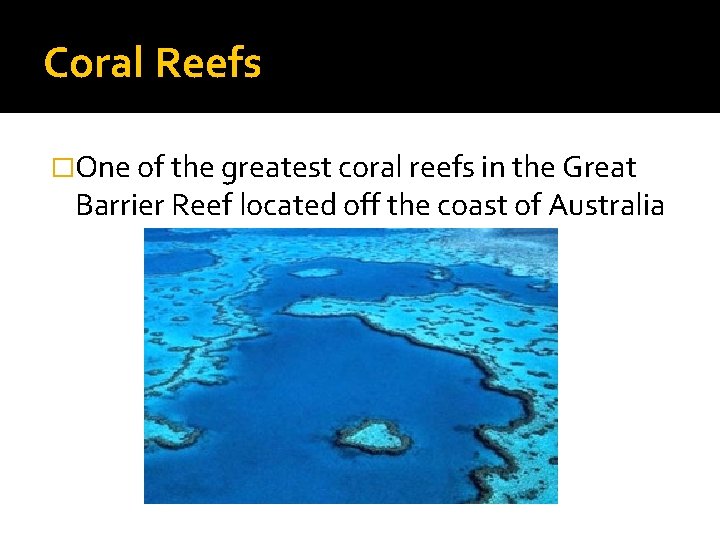
Coral Reefs �One of the greatest coral reefs in the Great Barrier Reef located off the coast of Australia
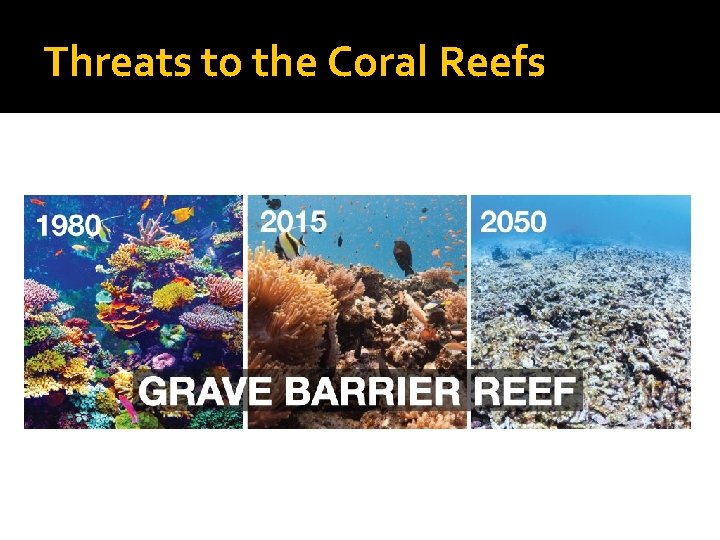
Threats to the Coral Reefs
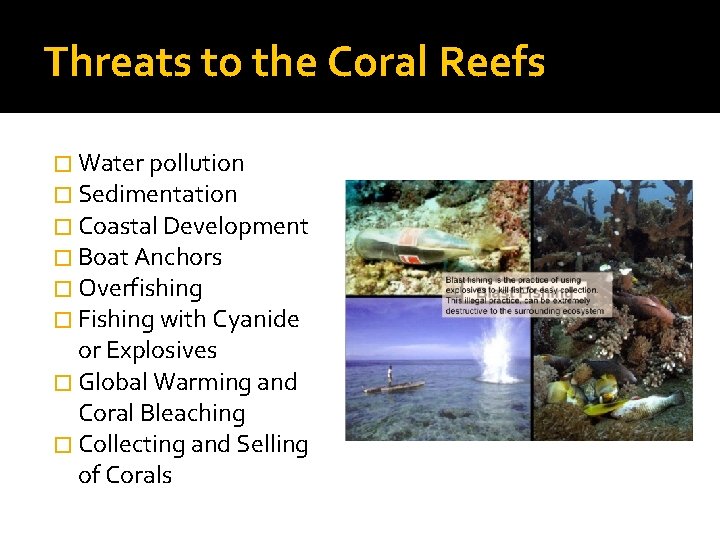
Threats to the Coral Reefs � Water pollution � Sedimentation � Coastal Development � Boat Anchors � Overfishing � Fishing with Cyanide or Explosives � Global Warming and Coral Bleaching � Collecting and Selling of Corals
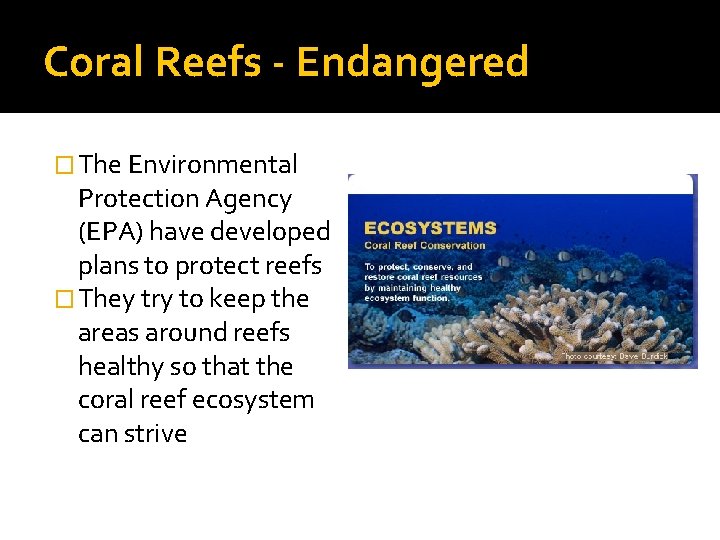
Coral Reefs - Endangered � The Environmental Protection Agency (EPA) have developed plans to protect reefs � They try to keep the areas around reefs healthy so that the coral reef ecosystem can strive
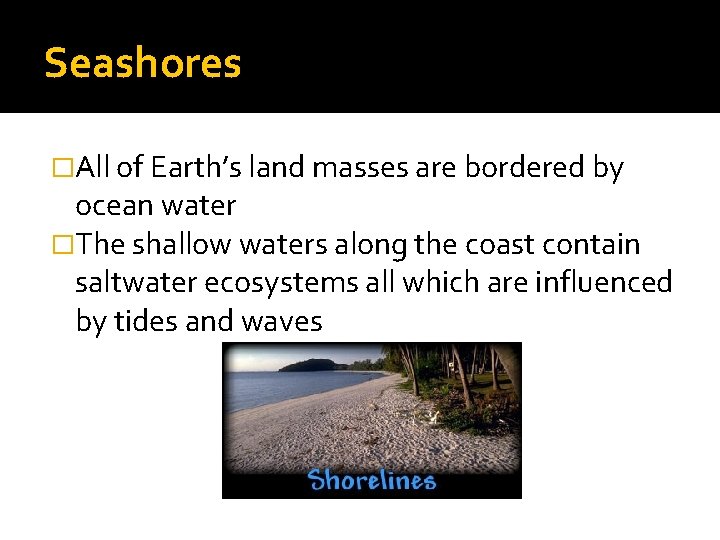
Seashores �All of Earth’s land masses are bordered by ocean water �The shallow waters along the coast contain saltwater ecosystems all which are influenced by tides and waves
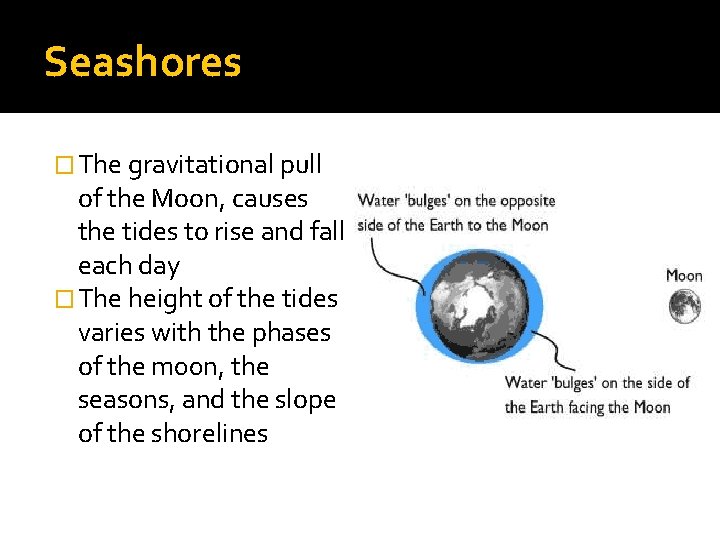
Seashores � The gravitational pull of the Moon, causes the tides to rise and fall each day � The height of the tides varies with the phases of the m 00 n, the seasons, and the slope of the shorelines
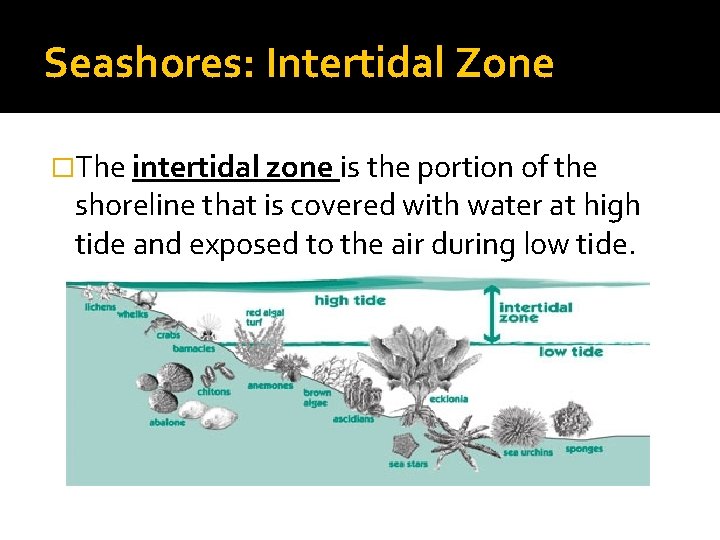
Seashores: Intertidal Zone �The intertidal zone is the portion of the shoreline that is covered with water at high tide and exposed to the air during low tide.
Learning Check �What causes the tides to go up and down at the seashores? �What is the Intertidal zone?
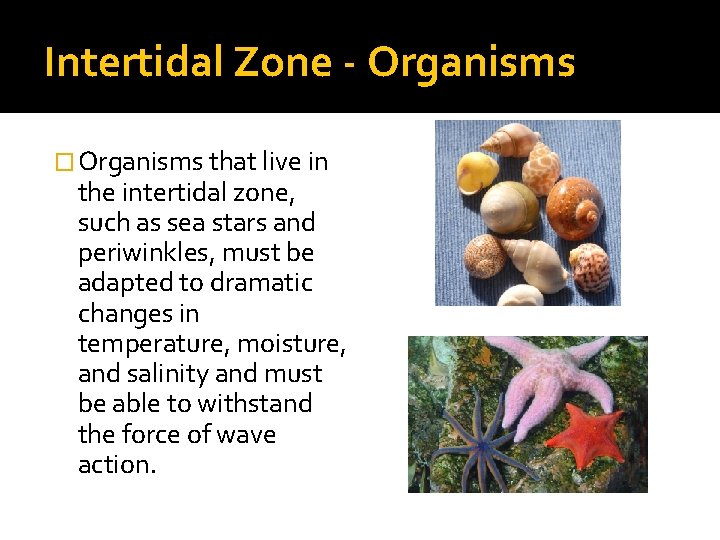
Intertidal Zone - Organisms � Organisms that live in the intertidal zone, such as sea stars and periwinkles, must be adapted to dramatic changes in temperature, moisture, and salinity and must be able to withstand the force of wave action.
Learning Check �What type of organism live in the intertidal zone? �What special adaptations do these organisms need to have?
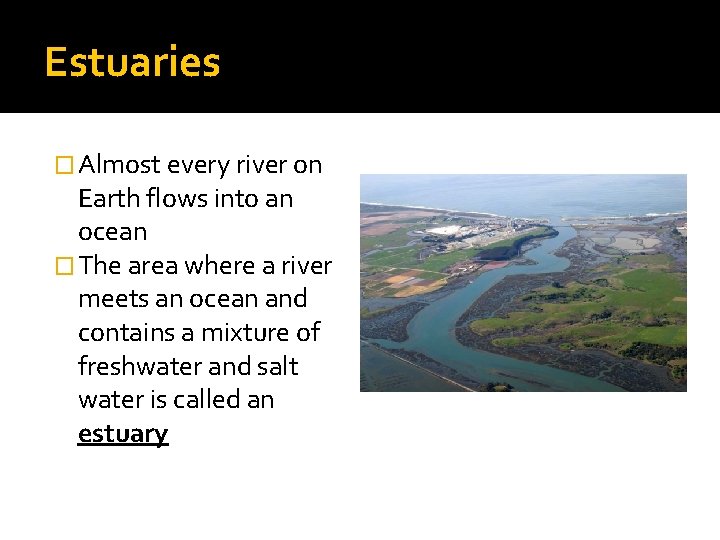
Estuaries � Almost every river on Earth flows into an ocean � The area where a river meets an ocean and contains a mixture of freshwater and salt water is called an estuary
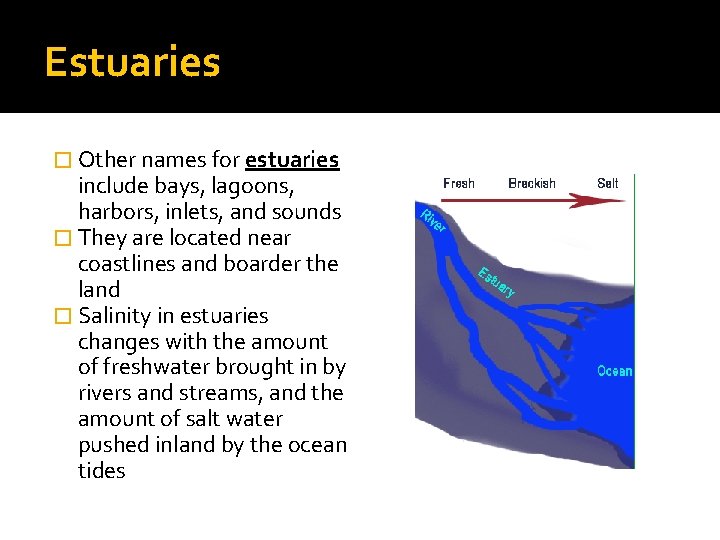
Estuaries � Other names for estuaries include bays, lagoons, harbors, inlets, and sounds � They are located near coastlines and boarder the land � Salinity in estuaries changes with the amount of freshwater brought in by rivers and streams, and the amount of salt water pushed inland by the ocean tides
Learning Check �What are estuaries? �List other names for estuaries.
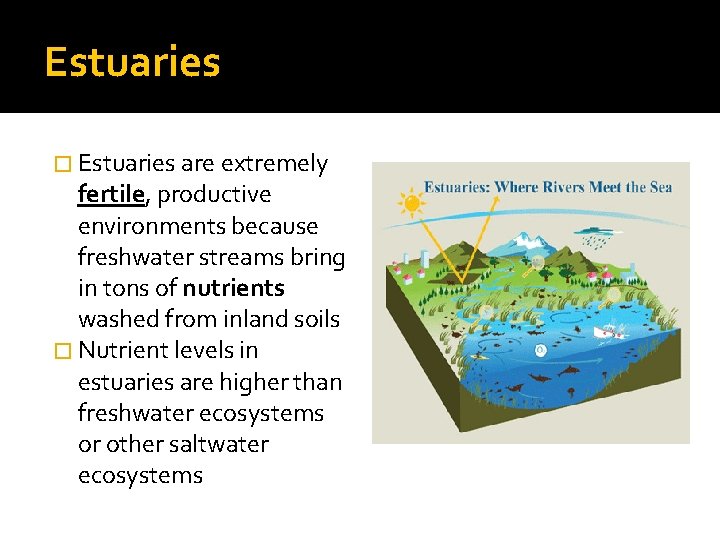
Estuaries � Estuaries are extremely fertile, productive environments because freshwater streams bring in tons of nutrients washed from inland soils � Nutrient levels in estuaries are higher than freshwater ecosystems or other saltwater ecosystems
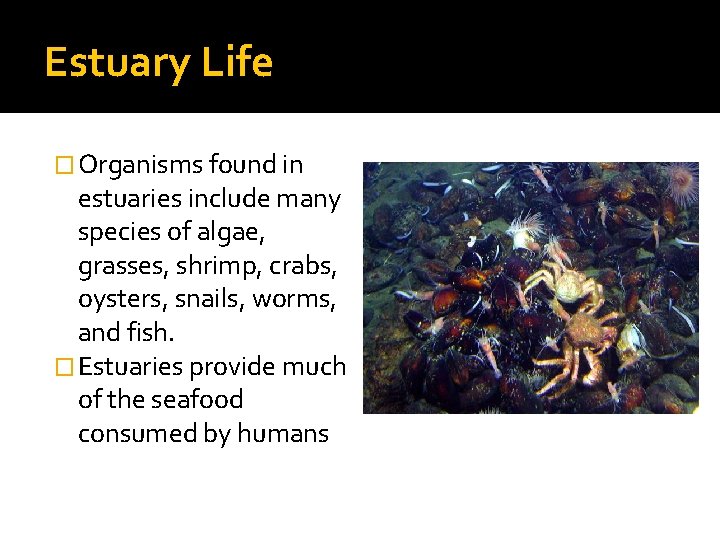
Estuary Life � Organisms found in estuaries include many species of algae, grasses, shrimp, crabs, oysters, snails, worms, and fish. � Estuaries provide much of the seafood consumed by humans
Learning Check �Why are estuaries so rich and fertile? �List the type of organisms that are forund in estuaries.
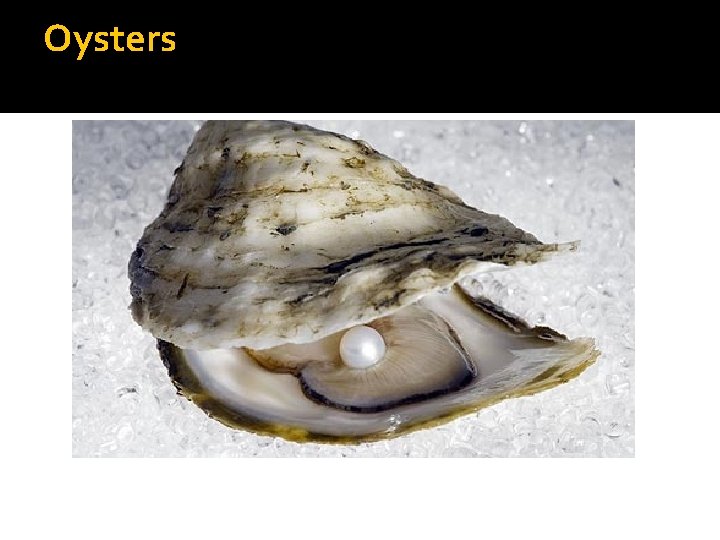
Oysters
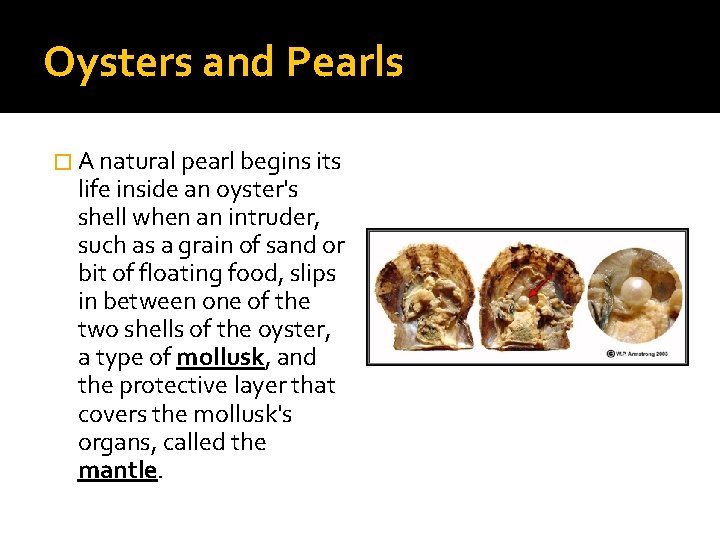
Oysters and Pearls � A natural pearl begins its life inside an oyster's shell when an intruder, such as a grain of sand or bit of floating food, slips in between one of the two shells of the oyster, a type of mollusk, and the protective layer that covers the mollusk's organs, called the mantle.
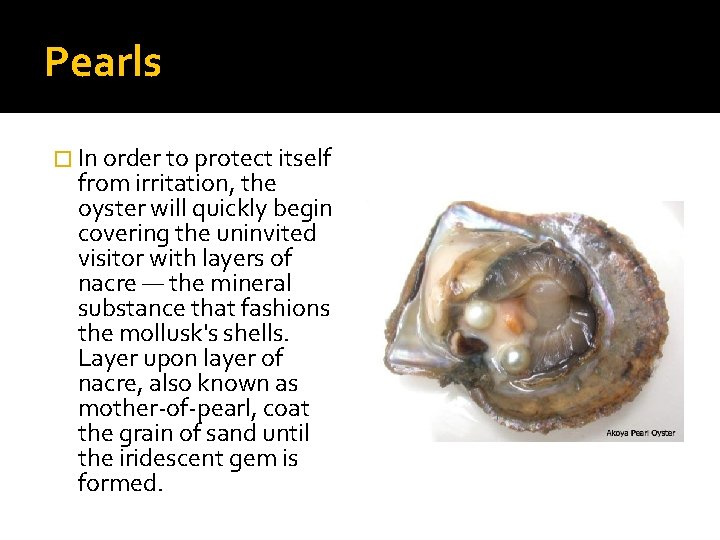
Pearls � In order to protect itself from irritation, the oyster will quickly begin covering the uninvited visitor with layers of nacre — the mineral substance that fashions the mollusk's shells. Layer upon layer of nacre, also known as mother-of-pearl, coat the grain of sand until the iridescent gem is formed.
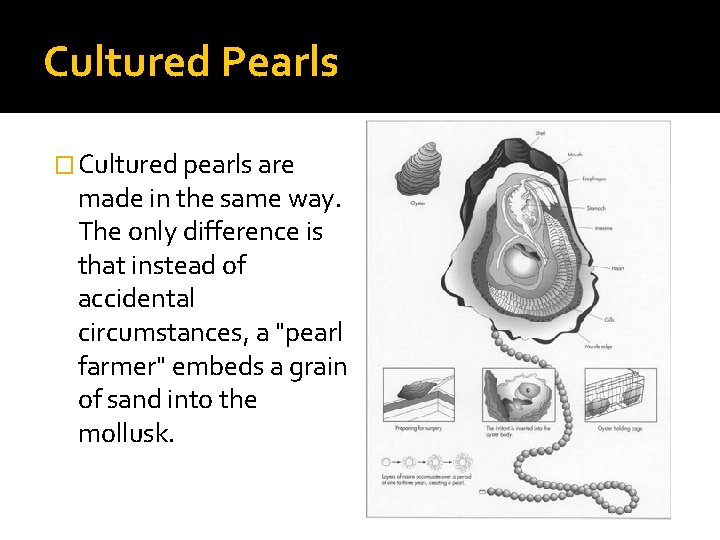
Cultured Pearls � Cultured pearls are made in the same way. The only difference is that instead of accidental circumstances, a "pearl farmer" embeds a grain of sand into the mollusk.
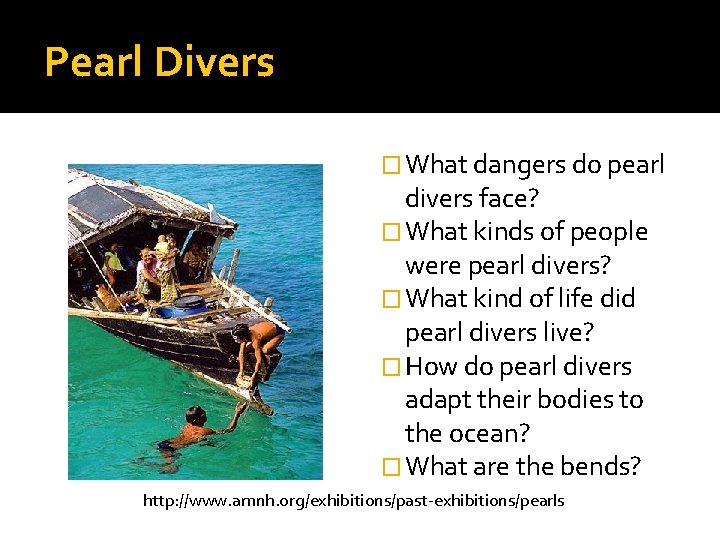
Pearl Divers � What dangers do pearl divers face? � What kinds of people were pearl divers? � What kind of life did pearl divers live? � How do pearl divers adapt their bodies to the ocean? � What are the bends? http: //www. amnh. org/exhibitions/past-exhibitions/pearls
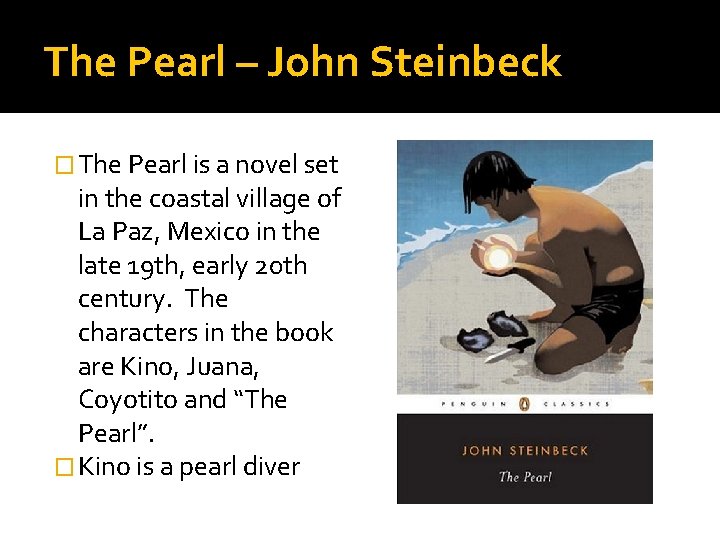
The Pearl – John Steinbeck � The Pearl is a novel set in the coastal village of La Paz, Mexico in the late 19 th, early 20 th century. The characters in the book are Kino, Juana, Coyotito and “The Pearl”. � Kino is a pearl diver

Pearl Exhibit at AMNH �Link to Pearl Exhibit http: //www. marthastewart. com/913065/mus eum-natural-historys-pearl-exhibit
- Slides: 32