
SALMONELLA SHIGELLA GIT BLOCK Prof Ali Somily Prof
SALMONELLA & SHIGELLA GIT BLOCK Prof. Ali Somily & Prof. Hanan Habib Department of Pathology& Laboratory Medicine KSUMC
Objectives 1 -Develop an algorithm using biochemical to identify and classify Salmonella and Shigella 2 - Describe the antigenic structures and virulence factors of Salmonella and Shigella 3 - Compare the pathogenesis of various species of Salmonella and Shigella 4 -Describe the clinical features and risk factors for the infection with the two organisms 5 - Describe the general concepts for the management of gastroenteritis caused by both organisms.

SALMONELLA
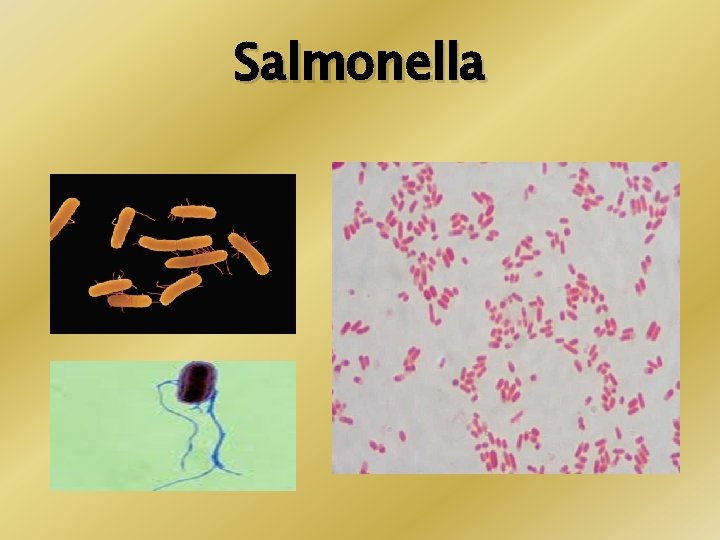
Salmonella
INTRODUCTION Gram negative facultative anaerobic bacilli Ø Non lactose fermenting colonies Ø Motile Ø
CLASSIFICATION Ø Has two species S. enterica (six subspecies -Has two species s. enterica (six I, III, IV, V, VI) S. borgori (rare) subspecies I, III, IV, V, VI) s. borgori (rare) Ø Cold blooded animal, birds, rodents, turtles, snake and fish -Cold blooded animal, birds, rodents, turtles, snake and fish
VIRULENCE FACTORS Fimbriae ( Pili) : for adherence � Enterotoxin �
Antigenic structures � O. Somatic antigen � H. Flagellar antigen � K. Capsular antigen
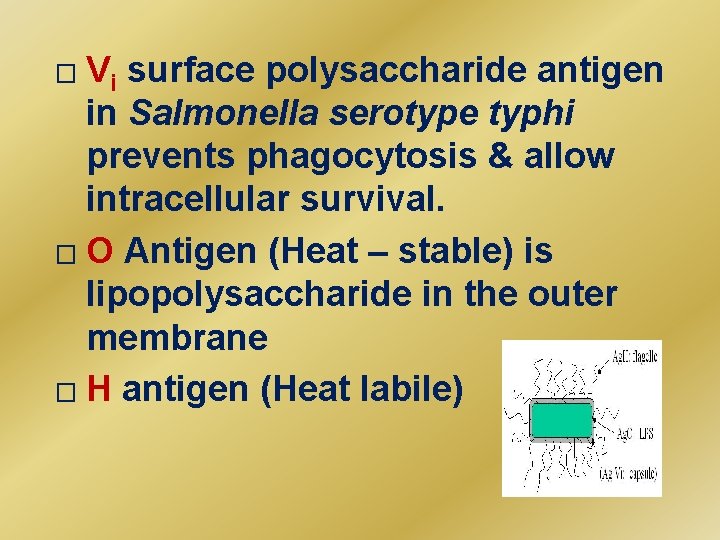
Vi surface polysaccharide antigen in Salmonella serotype typhi prevents phagocytosis & allow intracellular survival. � O Antigen (Heat – stable) is lipopolysaccharide in the outer membrane � H antigen (Heat labile) �
CLINICAL FEATURES � Acute gastroenteritis � Typhoid fever � Nontyphoidal bacteremia � Carrier state following Salmonella infection
Source v Water, food and milk contaminated with human or animal excreta. v Salmonella typhi and S. paratyphi : the source is human.
GASTROENTERITIS v v v v Food poisoning through contaminated food S. enterica subsp. enterica Source : poultry, milk, egg & egg products and handling pets Infective dose: 106 bacteria IP: 8 – 36 hrs. fever, chills, watery diarrhea and abdominal pain. Self limiting. In sickle cell , hemolytic disorder and ulcerative colitis, elderly or very young patients; the infection may be very severe. Patients at high risk for dissemination ; antimicrobial therapy is indicated.
ENTERIC FEVER Ø Ø Ø Ø Prolonged fever Bacteremia Involvement of the reticulo endothelial system (liver, spleen, intestines and mesentery) Dissemination to multiple organs Ingestion of contaminated food by infected or carrier individual Caused by Salmonella serotype typhi or S. paratyphi A, B and C (less severe) Common in tropical , subtropical countries, travelers due to inappropriate sewage disposal and poor sanitation. IP : 9 – 14 days.
First week: fever, malaise, anorexia, myalgia and a continuous dull frontal headache then, v Patient develops constipation v Mesenteric lymph node blood stream liver, spleen and bone marrow v Engulfment of Salmonella by mononuclear phagocytes. v Bacteria released into the blood stream again and can lead to high fever. Positive blood culture at this stage.
2 nd and 3 rd week v Sustained fever & prolonged bacteremia. v Invade gallbladder and Payer's patches v Rose spots 2 nd week of fever v Billiary tract GIT v Organism isolated from stool in large number. �
Management & Treatment � � � Ceftriaxone Ciprofloxacin Trimelhoprim – Sulfamethoxazole Ampicillin Azithromycin or Ceftriaxone for patients from India and SEAsia due to Ciprofloxacin resistance of strains. Ciprofloxacin can be used for patients from other areas. Uncomplicated cases of Salmonella gastroenteritis require fluid and electrolyte replacement only.
COMPLICATIONS � Necrotizing cholecystitis � Bowel hemorrhage and perforation � Pneumonia and thrombophlebitis � Meningitis, osteomyelitis, endocarditis and abscesses.

SHIGELLA
�Non lactose fermenting bacteria �Cause bacillary dysentery ( blood, mucus and pus in the stool)
ANTIGENIC STRUCTURE Has four species and four major O antigen groups � All have O antigens , some serotype has K antigen � Shigella are non motile so lack H antigen �
CLINICAL INFECTION � � � S. sonnei : most predominant in USA. Produce fever & watery diarrhea. S. flexneri : 2 nd common in developing countries Young adult & ( man who have sex with man) S. dysenteriae and S. boydii are most common isolates in developing countries S. dysenteriae type 1 associated with morbidity and mortality. Human is the only reservoir
Ø Ø Ø Person to person through fecal –oral route. Flies, fingers ( have role in spread). Food and water. Young children in daycare, people in crowded area and anal oral sex in developed countries. Low infective dose < 200 bacilli Penetrate epithelial cells , leads to local inflammation, shedding of intestinal lining and ulcer formation.
SYMPTOMS � � � High fever, chill, abdominal cramp and pain accompanied by tenesmus , bloody stool with mucus & leukocytes. IP : 24 - 48 hrs Can lead to rectal prolapsed in children Complications: ileus, obstruction dilatation and toxic mega colon Bacteremia in 4 % of severely ill patient

DYSENTRY STOOL

Lab diagnosis of Salmonella & Shigella in stool -Both are Gram negative bacilli -Culture in selective media -Biochemical tests -Motility test -Serology for serotypes.
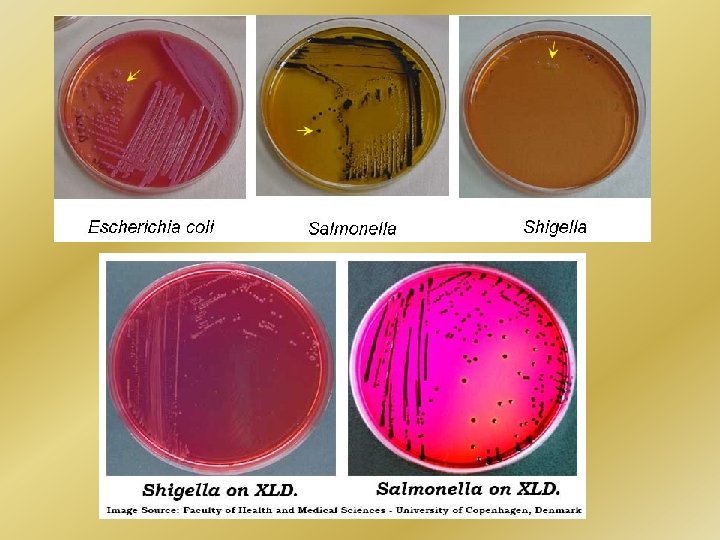

BIOCHEMICAL TESTS

MOTILITY TEST

Treatment of Shigella Dysentery -Antibiotic indicated if symptoms were severe and to reduce duration of illness. -Antimicrobial agents depending on susceptibility testing including : Ampicillin Ceftriaxone TMP-SMX Ciprofloxacin
- Slides: 30