
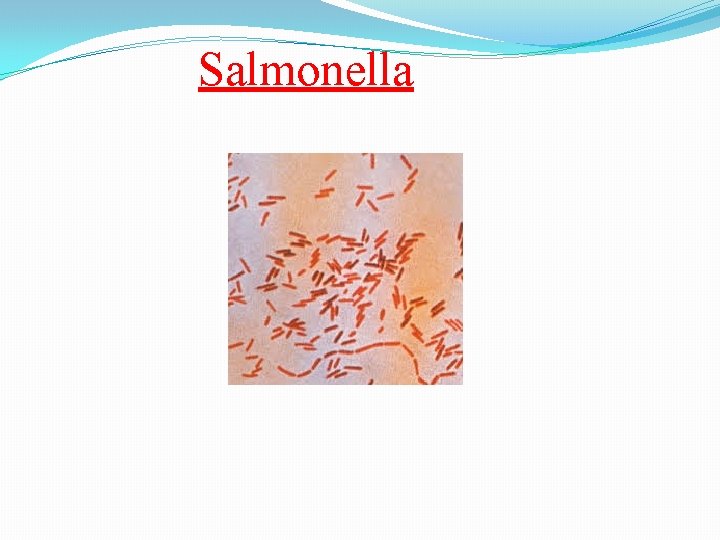
Salmonella General features Rodshaped gramnegative Motile except S
- Slides: 39
Salmonella
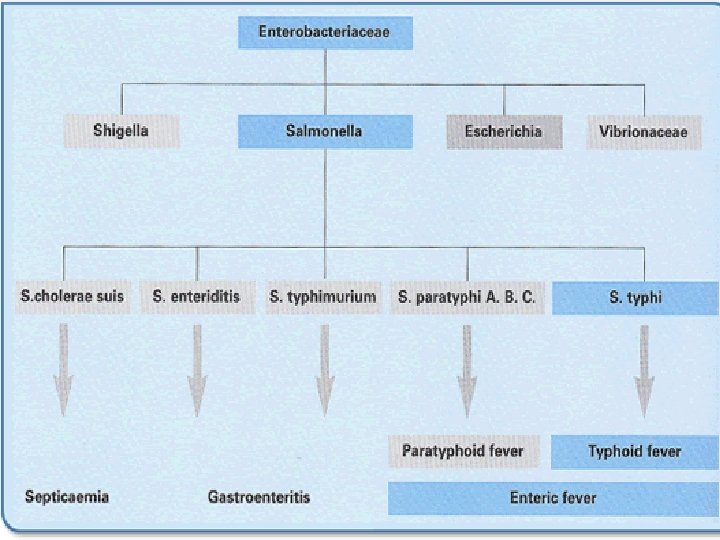
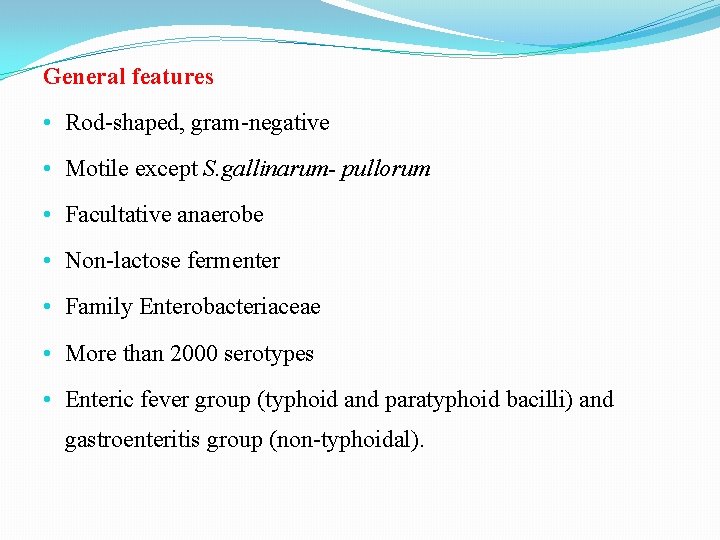
General features • Rod-shaped, gram-negative • Motile except S. gallinarum- pullorum • Facultative anaerobe • Non-lactose fermenter • Family Enterobacteriaceae • More than 2000 serotypes • Enteric fever group (typhoid and paratyphoid bacilli) and gastroenteritis group (non-typhoidal).
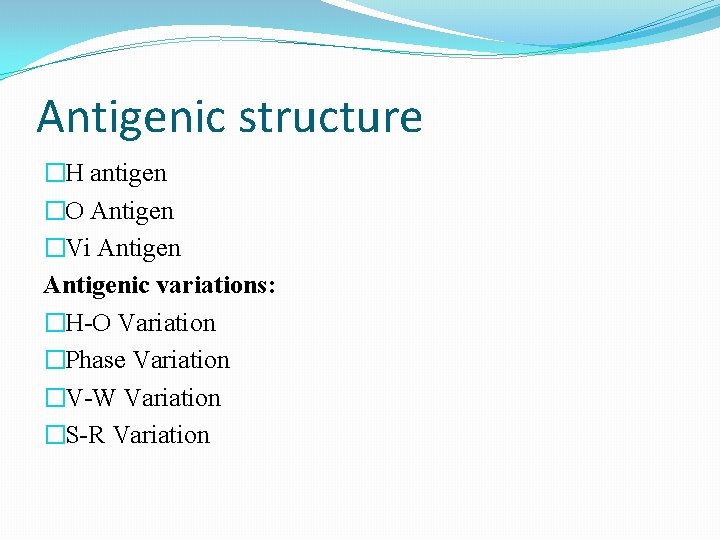
Antigenic structure �H antigen �O Antigen �Vi Antigenic variations: �H-O Variation �Phase Variation �V-W Variation �S-R Variation
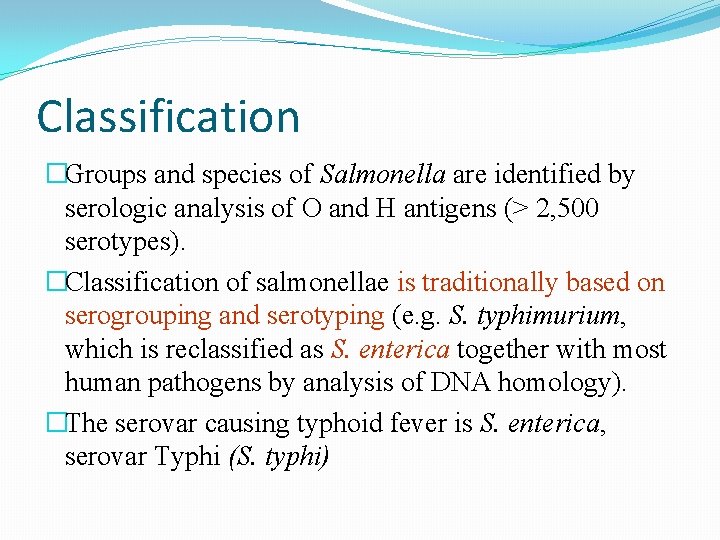
Classification �Groups and species of Salmonella are identified by serologic analysis of O and H antigens (> 2, 500 serotypes). �Classification of salmonellae is traditionally based on serogrouping and serotyping (e. g. S. typhimurium, which is reclassified as S. enterica together with most human pathogens by analysis of DNA homology). �The serovar causing typhoid fever is S. enterica, serovar Typhi (S. typhi)
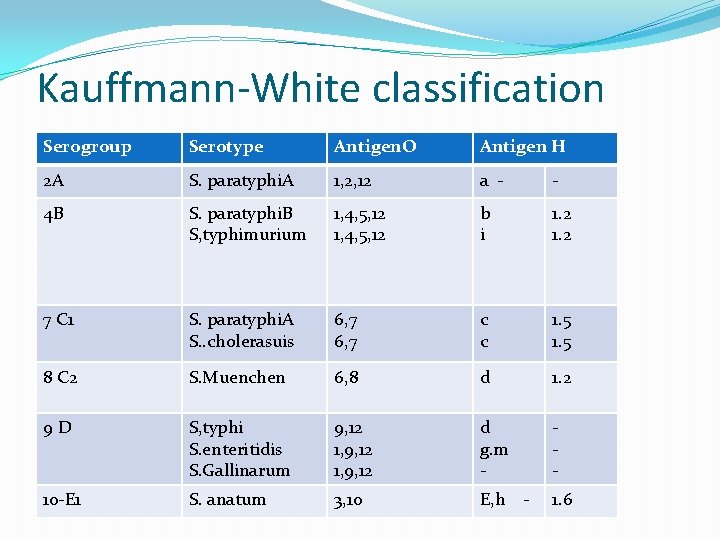
Kauffmann-White classification Serogroup Serotype Antigen. O Antigen H 2 A S. paratyphi. A 1, 2, 12 a - - 4 B S. paratyphi. B S, typhimurium 1, 4, 5, 12 b i 1. 2 7 C 1 S. paratyphi. A S. . cholerasuis 6, 7 c c 1. 5 8 C 2 S. Muenchen 6, 8 d 1. 2 9 D S, typhi S. enteritidis S. Gallinarum 9, 12 1, 9, 12 d g. m - - 10 -E 1 S. anatum 3, 10 E, h - 1. 6
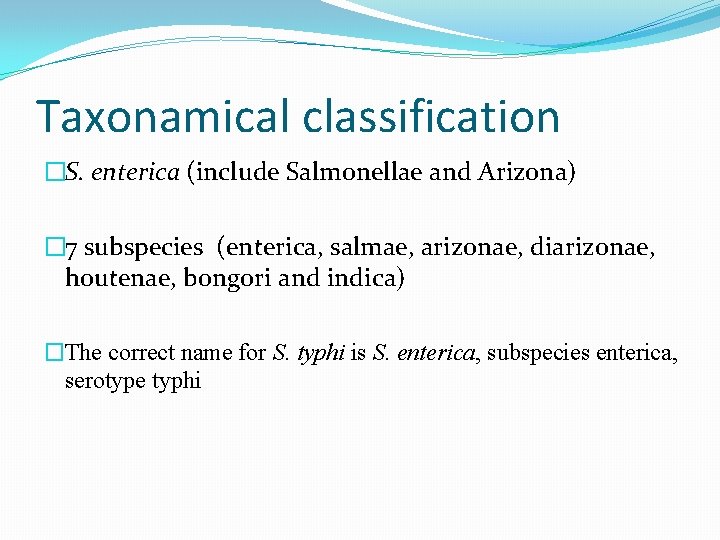
Taxonamical classification �S. enterica (include Salmonellae and Arizona) � 7 subspecies (enterica, salmae, arizonae, diarizonae, houtenae, bongori and indica) �The correct name for S. typhi is S. enterica, subspecies enterica, serotype typhi
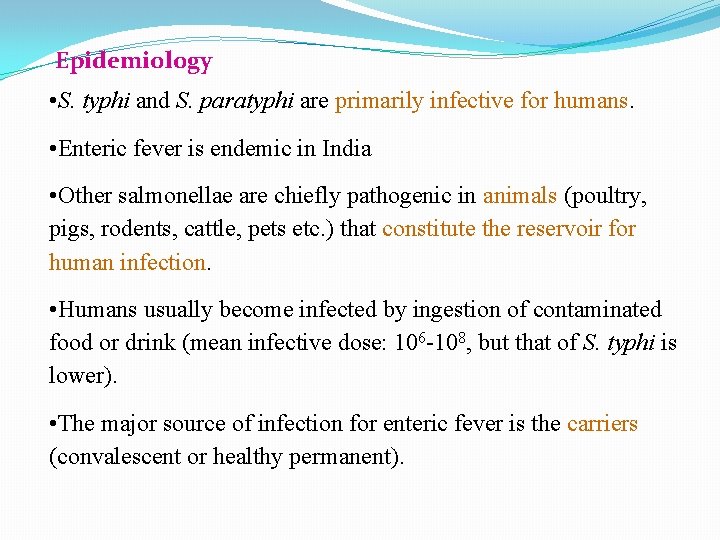
Epidemiology • S. typhi and S. paratyphi are primarily infective for humans. • Enteric fever is endemic in India • Other salmonellae are chiefly pathogenic in animals (poultry, pigs, rodents, cattle, pets etc. ) that constitute the reservoir for human infection. • Humans usually become infected by ingestion of contaminated food or drink (mean infective dose: 106 -108, but that of S. typhi is lower). • The major source of infection for enteric fever is the carriers (convalescent or healthy permanent).
Disease-associated • “Salmonellosis”: Any of several bacterial infections caused by species of Salmonella, ranging from mild to serious infections. • Enteric fever (typhoid and paratyphoid) • Gastroenteritis (non-typhoidal) • Septicemia
Enteric Fever �Include typhoid fever caused by S. typhi and paratyphoid fever caused by S. paratyphi Etiological agents S. typhi S. paratyphi A S. paratyphi B S. paratyphi C
Pathogenesis �Source of infection : �Patients �Carriers (temporary carriers and convalescent carriers) �Convalescent (temporary )carriers usually excrete bacilli up to 6 -8 weeks. By the end of one year, 3 -4 per cent of cases continue to excrete typhoid bacilli. �Persons who excrete the bacilli for more than a year after a clinical attack are called chronic carriers. �Mode of infection: Ingestion �Infective dose = 105 organisms
Virulence factors �Invasion �Acid tolerance response (ATR) gene protects the organism from gastric acid. �Endotoxin �Survival in macrophages�Salmonellae are facultative intracellular pathogen.
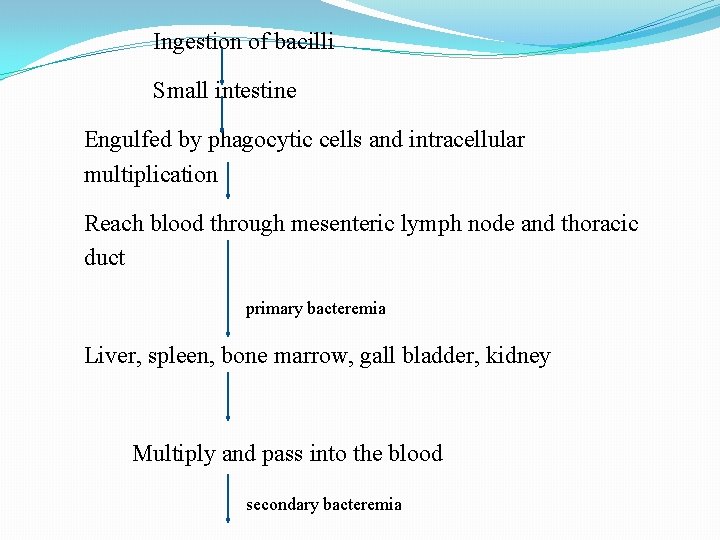
Ingestion of bacilli Small intestine Engulfed by phagocytic cells and intracellular multiplication Reach blood through mesenteric lymph node and thoracic duct primary bacteremia Liver, spleen, bone marrow, gall bladder, kidney Multiply and pass into the blood secondary bacteremia
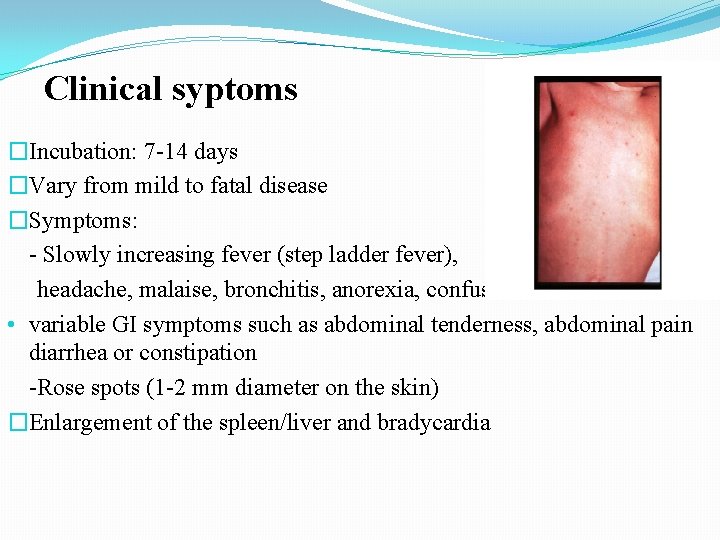
Clinical syptoms �Incubation: 7 -14 days �Vary from mild to fatal disease �Symptoms: - Slowly increasing fever (step ladder fever), headache, malaise, bronchitis, anorexia, confusion • variable GI symptoms such as abdominal tenderness, abdominal pain diarrhea or constipation -Rose spots (1 -2 mm diameter on the skin) �Enlargement of the spleen/liver and bradycardia
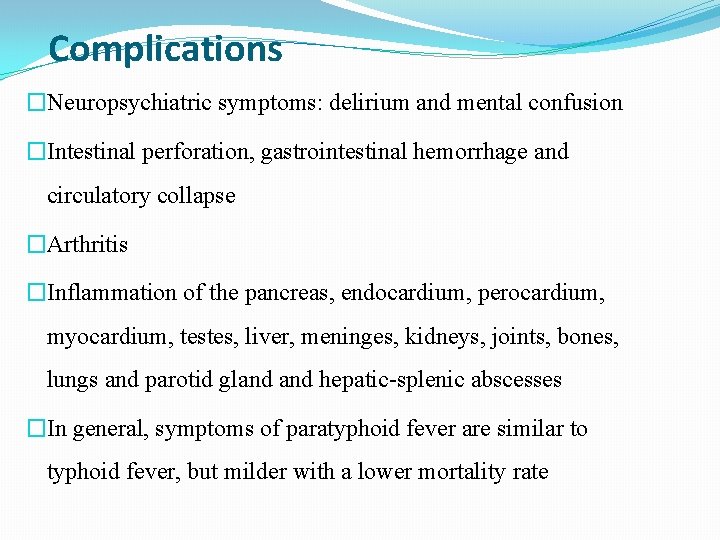
Complications �Neuropsychiatric symptoms: delirium and mental confusion �Intestinal perforation, gastrointestinal hemorrhage and circulatory collapse �Arthritis �Inflammation of the pancreas, endocardium, perocardium, myocardium, testes, liver, meninges, kidneys, joints, bones, lungs and parotid gland hepatic-splenic abscesses �In general, symptoms of paratyphoid fever are similar to typhoid fever, but milder with a lower mortality rate
DIAGNOSIS
�Typhoid should be considered in any patient with prolonged unexplained fever in endemic areas and in those with a history of recent travel to endemic area. �Prolonged fever, rose spots, relative bradycardia and leucopenia make typhoid strongly suggestive.
Methods �Specimen: q Blood q Feces q Urine q Bone marrow q Material from rose spot q Bile q Serum for serological test �Methods: � Isolation of bacilli q Blood q Feces q Urine �Demonstration of antibodies
1. Isolation of bacilli Media used: �Mac. Conkey’s agar �Deoxycholate citrate agar(DCA)- Selective media �Wilson and Blair medium- Selective media �Selenite F broth- Enrichment media �Tetrathionate broth- Enrichment media
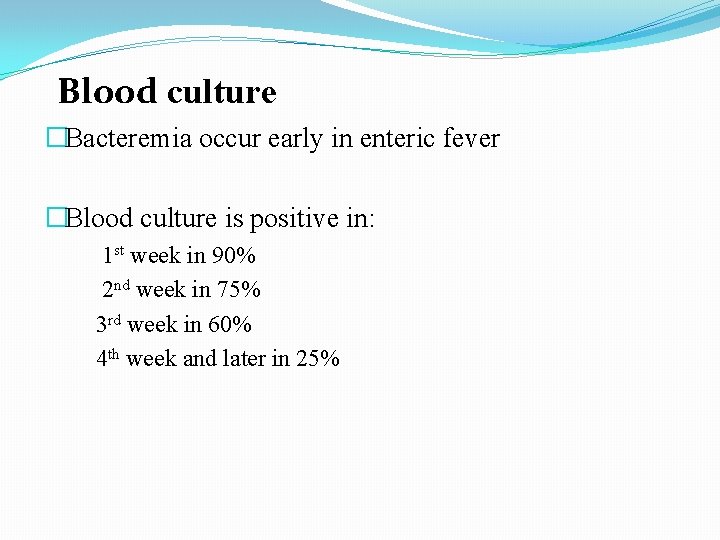
Blood culture �Bacteremia occur early in enteric fever �Blood culture is positive in: 1 st week in 90% 2 nd week in 75% 3 rd week in 60% 4 th week and later in 25%
� 5 -10 ml blood is collected in 50 -100 ml of bile broth �Sodium polyanethol sulpahate is added to neutralise the effect of antibiotics �Subculture to Macconkeys agar after incubation-periodically �Growth is identified by studying cultural characteristics, Gram stain, biochemical reactions and agglutination tests �Castaneda’s biphasic medium also can be used �Clot culture is alternative to blood culture
Feces culture �Useful in case of patients and carriers Urine Culture �Less useful
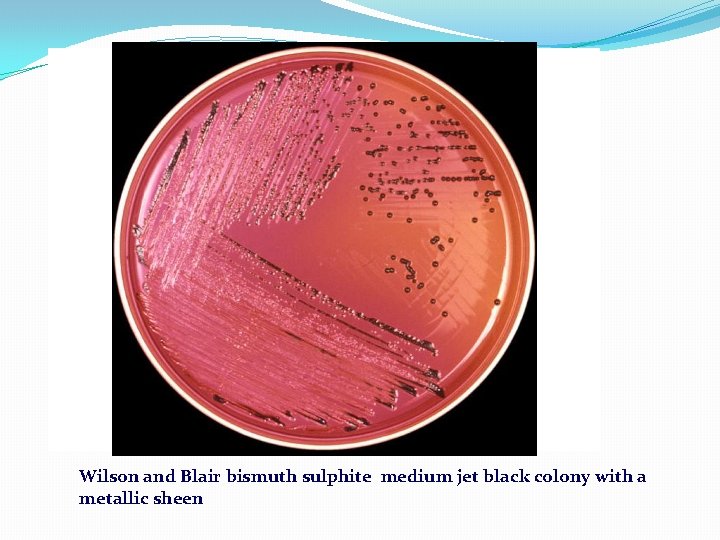
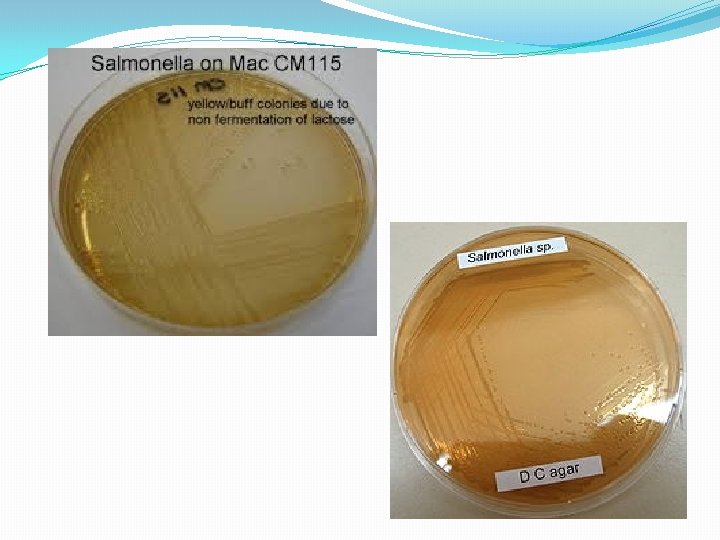
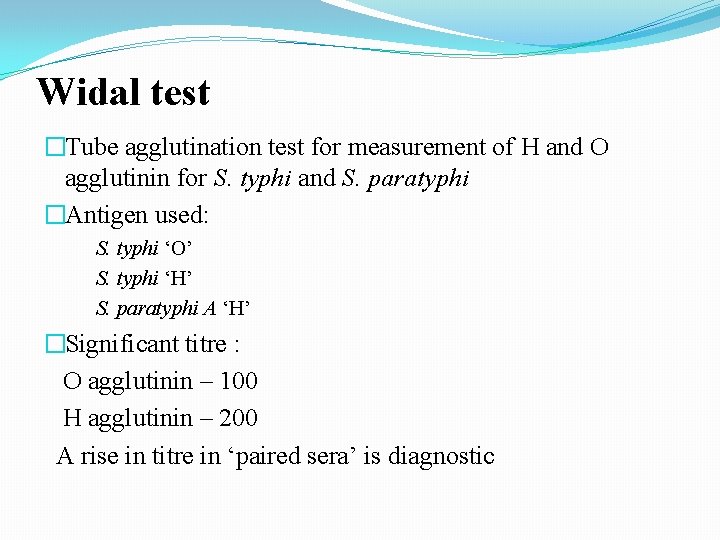
Cultural characteristics: �Mac. Conkey’s agar- Non lactose fermenting colonies �Deoxycholate citrate agar(DCA)- Yellow colonies �Wilson and Blair medium- Black colonies except S. paratyphi A
Wilson and Blair bismuth sulphite medium jet black colony with a metallic sheen
Widal test �Tube agglutination test for measurement of H and O agglutinin for S. typhi and S. paratyphi �Antigen used: S. typhi ‘O’ S. typhi ‘H’ S. paratyphi A ‘H’ �Significant titre : O agglutinin – 100 H agglutinin – 200 A rise in titre in ‘paired sera’ is diagnostic
�Polymerase chain reaction (PCR) �Blood cultures are positive in 70 -80% of cases during the 1 st week. �Stool and urine cultures are usually positive (45 -75%) during the 2 nd-3 rd week. �Bone marrow aspirate cultures give the best confirmation (85 -95%)
Diagnosis of carriers �Isolation of bacilli from feces or bile �Demonstration of vi agglutinin �Tracing of carriers in cities by sewer – swab technique
Rapid tests for diagnosing typhoid �Typhidot test -detects presence of Ig. M and Ig. G in one hour �Typhidot-M -detects Ig. M only �Typhidot rapid - a rapid 15 minute immunochromatographic test to detect Ig. M � Ig. M dipstick test
Treatment �Chloramphenicol , Ampicillin , Amoxicillin , Trimethoprim &Sulphamethoxazole , Fluroquinolones � In case of quinolone resistance – Azithromycin, 3 rd generation MDR Salmonella: �Resistant to Chloramphenicol , Ampicillin, Amoxicillin, Cotrimaxazole
Control of Typhoid fever MEASURES DIRECTED TO RESERVOIR a) Case detection and treatment b) Isolation c) Disinfection of stools and urine d) Detection & treatment of carriers MEASURES AT ROUTES OF TRANSMISSION a) Water sanitation b) Food sanitation c) Excreta disposal d) Fly control MEASURES FOR SUSCEPTIBLES a) Immunoprophylaxis b) Health education
Immunoprophylaxis THREE TYPES OF VACCINES 1. Injectable Typhoid vaccine (TYPHIM –Vi, TYPHIVAX) 2. The live oral vaccine (TYPHORAL) 3. TAB vaccine
Injectable Typhim –Vi vaccine • This single-dose injectable typhoid vaccine, from the bacterial capsule of S. typhi strain of Ty 21 a • Sub-cutaneous or intramuscular injection • Efficacy : 64% -72%
Typhoral vaccine • Live-attenuated vaccine manufactured from the Ty 21 a strain of S. typhi. • The efficacy rate of the oral typhoid vaccine ranges from 50 -80% • Not recommended for use in children younger than 6 years of age • The course consists of one capsule orally, taken an hour before food with a glass of water or milk (1 stday, 3 rd day &5 th day) • No antibiotic should be taken during this period • Immunity starts 2 -3 weeks after administration and lasts for 3 years • A booster dose after 3 years
Indications for Vaccination • Travelers going to endemic areas who will be staying for a prolonged period of time • Persons with intimate exposure to a documented S. typhi carrier • Microbiology laboratory technologists who work frequently with S. typhi • Immigrants • Military personnel
TAB vaccine �Killed vaccine �Polyvalent/monovalent �Given subcutaneously � 2 doses with 4 -6 weeks interval
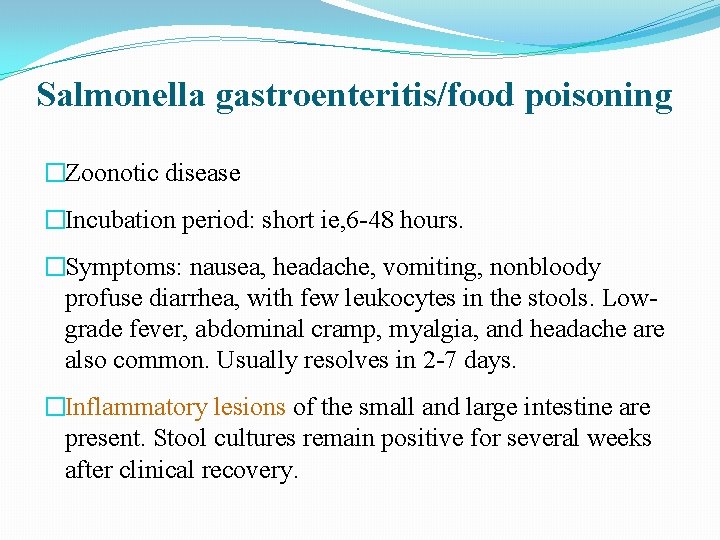
Salmonella gastroenteritis/food poisoning �Zoonotic disease �Incubation period: short ie, 6 -48 hours. �Symptoms: nausea, headache, vomiting, nonbloody profuse diarrhea, with few leukocytes in the stools. Lowgrade fever, abdominal cramp, myalgia, and headache are also common. Usually resolves in 2 -7 days. �Inflammatory lesions of the small and large intestine are present. Stool cultures remain positive for several weeks after clinical recovery.
Etiological agents: �S. typhimurium is most common species. �Other species include S. enteritidis, S. haldar, S. indiana, S. anatum etc.
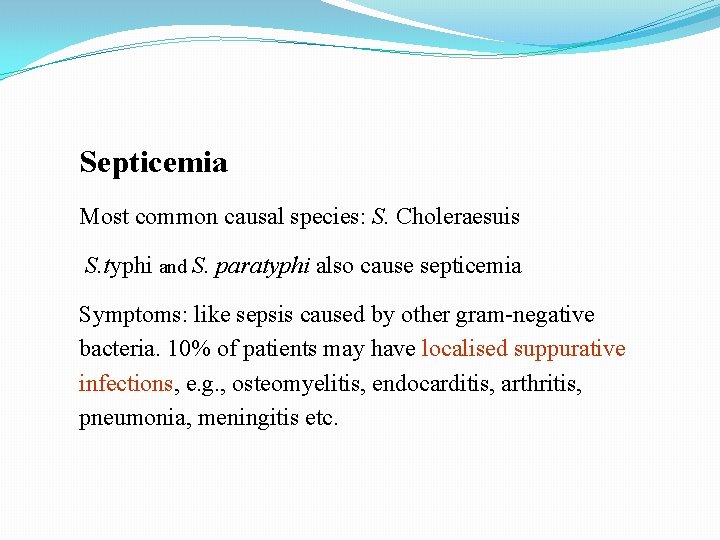
Septicemia Most common causal species: S. Choleraesuis S. typhi and S. paratyphi also cause septicemia Symptoms: like sepsis caused by other gram-negative bacteria. 10% of patients may have localised suppurative infections, e. g. , osteomyelitis, endocarditis, arthritis, pneumonia, meningitis etc.