
Salman Avestimehr Theodoros Dikaliotis Cornell University California Institute

- Slides: 24
Salman Avestimehr Theodoros Dikaliotis Cornell University California Institute of Technology Sidharth Jaggi Chinese University of Hong Kong Tracey Ho California Institute of Technology Hongyi Yao Tsinghua University
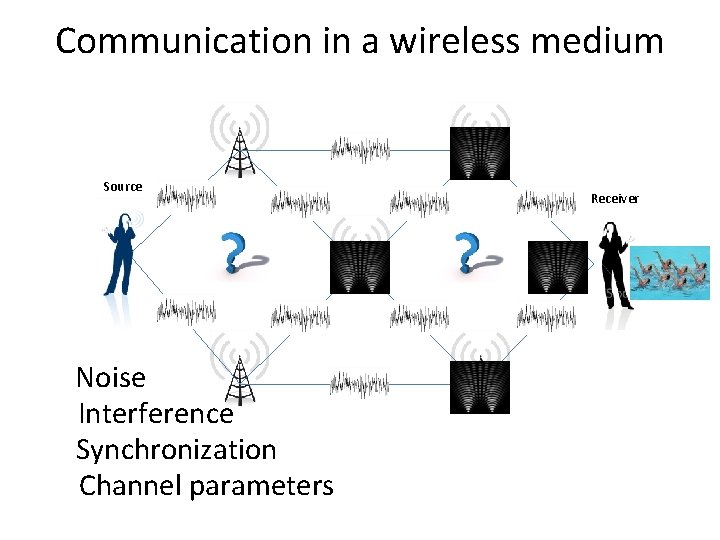
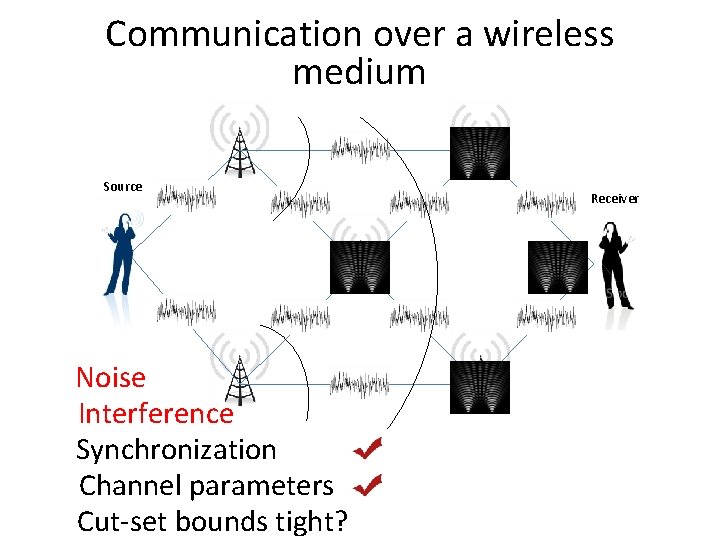
Communication in a wireless medium Source Noise Interference Synchronization Channel parameters Receiver
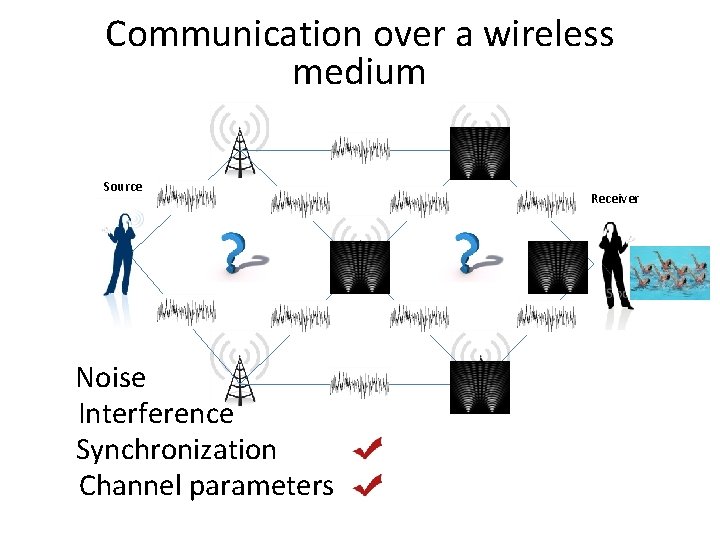
Communication over a wireless medium Source Noise Interference Synchronization Channel parameters Receiver
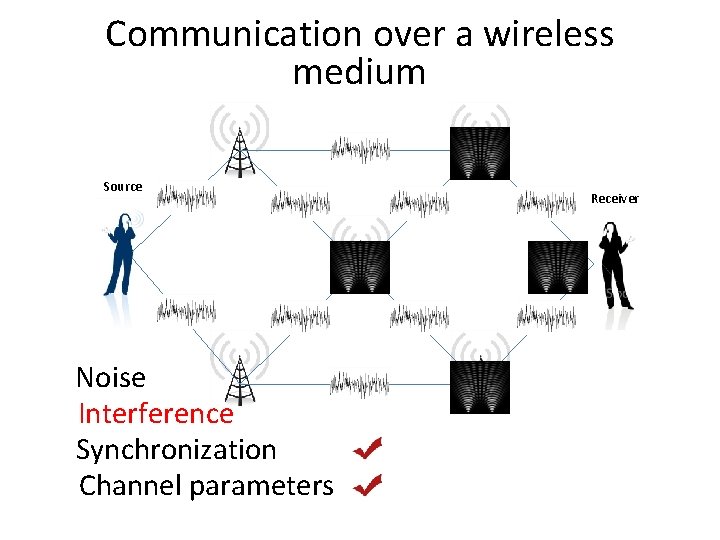
Communication over a wireless medium Source Noise Interference Synchronization Channel parameters Receiver
Communication over a wireless medium Source Noise Interference Synchronization Channel parameters Cut-set bounds tight? Receiver
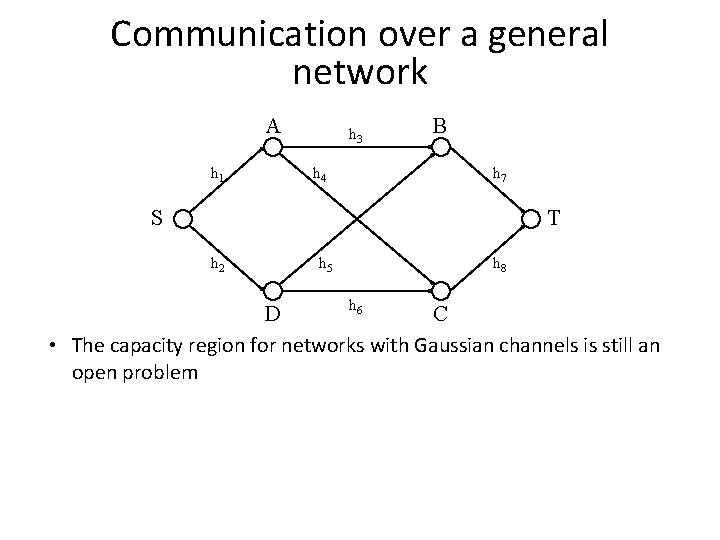
Communication over a general network A h 1 h 3 h 4 B h 7 S T h 2 h 5 h 8 h 6 D C • The capacity region for networks with Gaussian channels is still an open problem
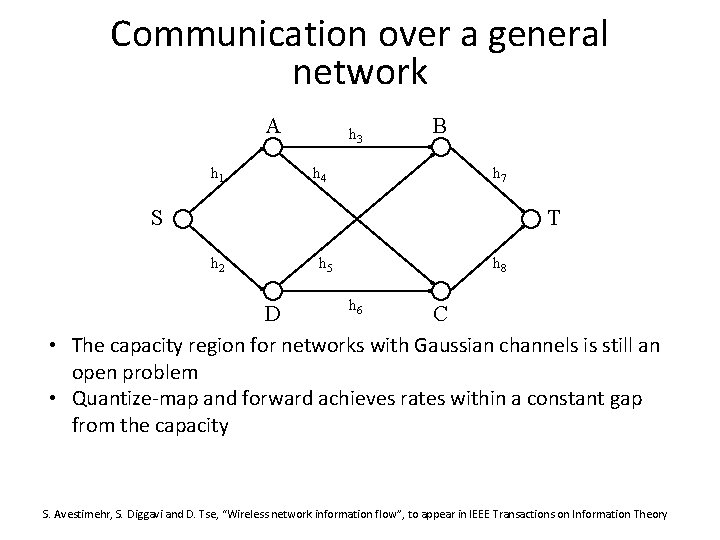
Communication over a general network A h 1 h 3 h 4 B h 7 S T h 2 h 5 h 8 h 6 D C • The capacity region for networks with Gaussian channels is still an open problem • Quantize-map and forward achieves rates within a constant gap from the capacity S. Avestimehr, S. Diggavi and D. Tse, “Wireless network information flow”, to appear in IEEE Transactions on Information Theory
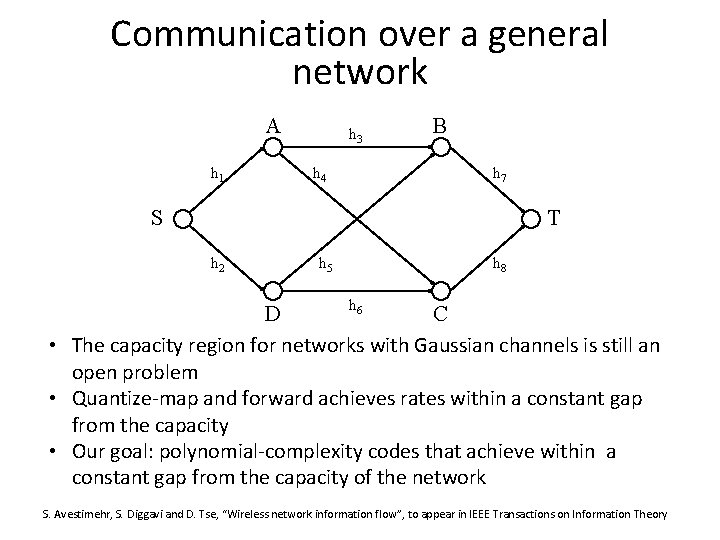
Communication over a general network A h 1 h 3 h 4 B h 7 S T h 2 h 5 h 8 h 6 D C • The capacity region for networks with Gaussian channels is still an open problem • Quantize-map and forward achieves rates within a constant gap from the capacity • Our goal: polynomial-complexity codes that achieve within a constant gap from the capacity of the network S. Avestimehr, S. Diggavi and D. Tse, “Wireless network information flow”, to appear in IEEE Transactions on Information Theory
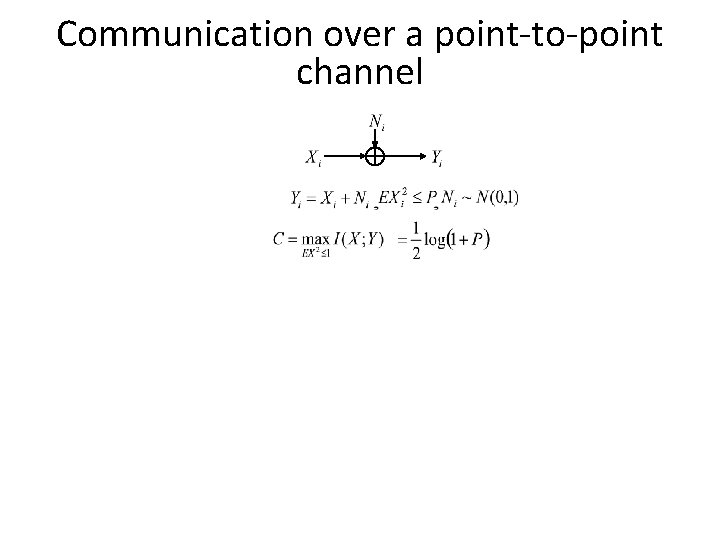
Communication over a point-to-point channel
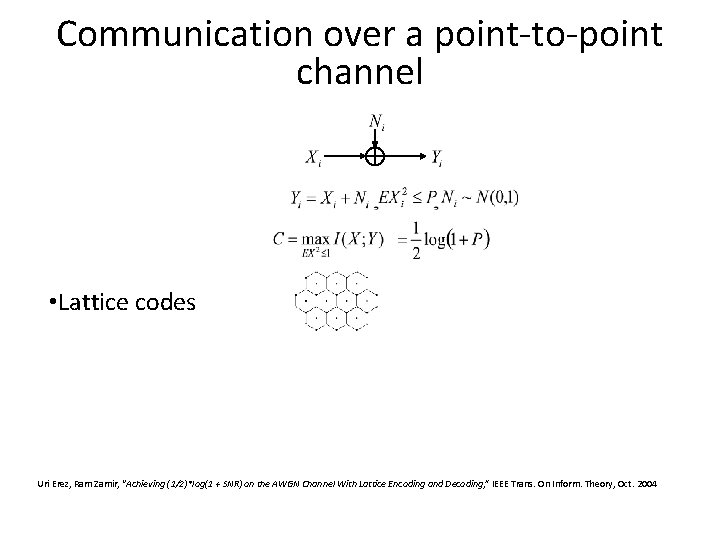
Communication over a point-to-point channel • Lattice codes Uri Erez, Ram Zamir, “Achieving (1/2)*log(1 + SNR) on the AWGN Channel With Lattice Encoding and Decoding, ” IEEE Trans. On Inform. Theory, Oct. 2004
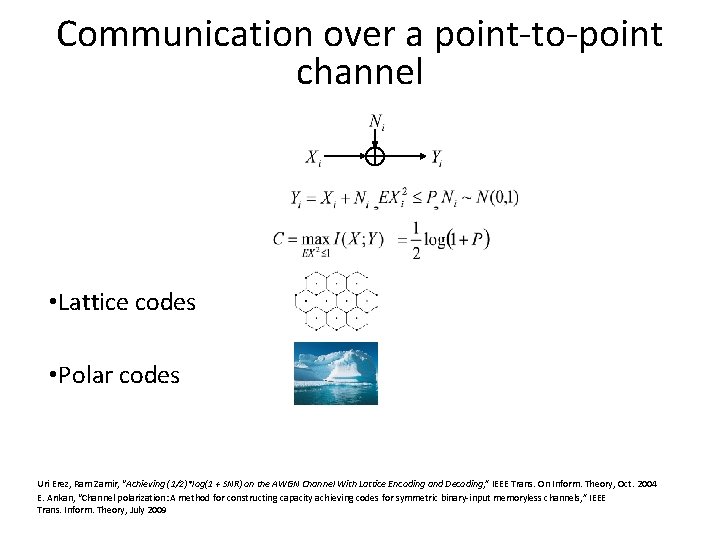
Communication over a point-to-point channel • Lattice codes • Polar codes Uri Erez, Ram Zamir, “Achieving (1/2)*log(1 + SNR) on the AWGN Channel With Lattice Encoding and Decoding, ” IEEE Trans. On Inform. Theory, Oct. 2004 E. Arıkan, “Channel polarization: A method for constructing capacity achieving codes for symmetric binary-input memoryless channels, ” IEEE Trans. Inform. Theory, July 2009
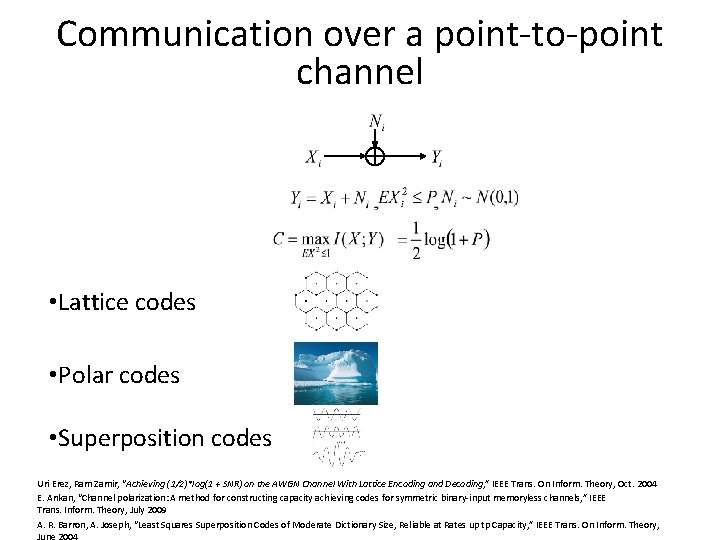
Communication over a point-to-point channel • Lattice codes • Polar codes • Superposition codes Uri Erez, Ram Zamir, “Achieving (1/2)*log(1 + SNR) on the AWGN Channel With Lattice Encoding and Decoding, ” IEEE Trans. On Inform. Theory, Oct. 2004 E. Arıkan, “Channel polarization: A method for constructing capacity achieving codes for symmetric binary-input memoryless channels, ” IEEE Trans. Inform. Theory, July 2009 A. R. Barron, A. Joseph, “Least Squares Superposition Codes of Moderate Dictionary Size, Reliable at Rates up tp Capacity, ” IEEE Trans. On Inform. Theory, June 2004
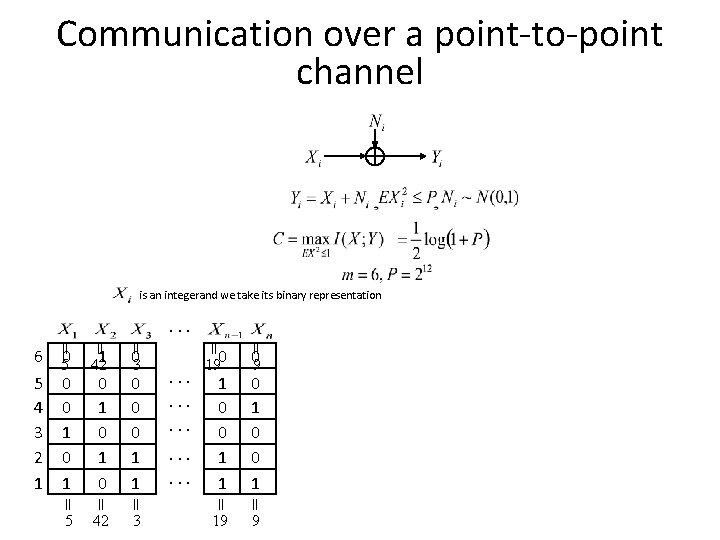
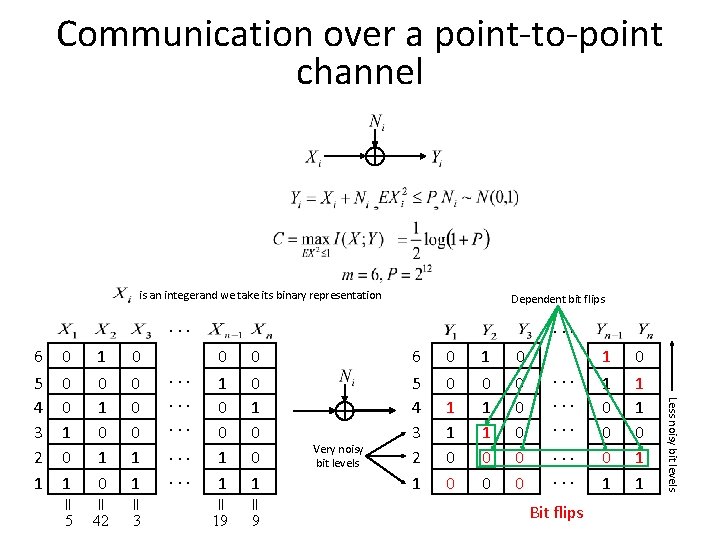
Communication over a point-to-point channel is an integerand we take its binary representation . . . = 42 3 19 9 . . . . 190 = = 5 = 1 0 0 1 1 09 0 1 0 0 1 = 1 42 = = = 0 1 0 03 0 0 0 1 1 = = 6 50 5 0 4 0 3 1 2 0 1 1
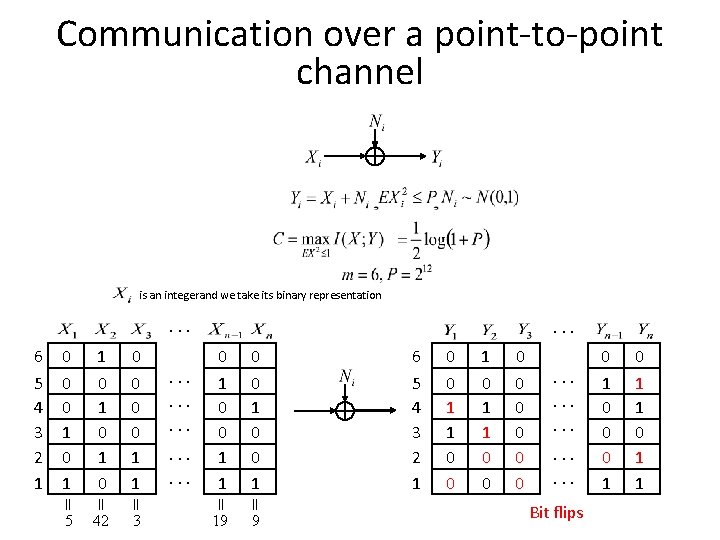
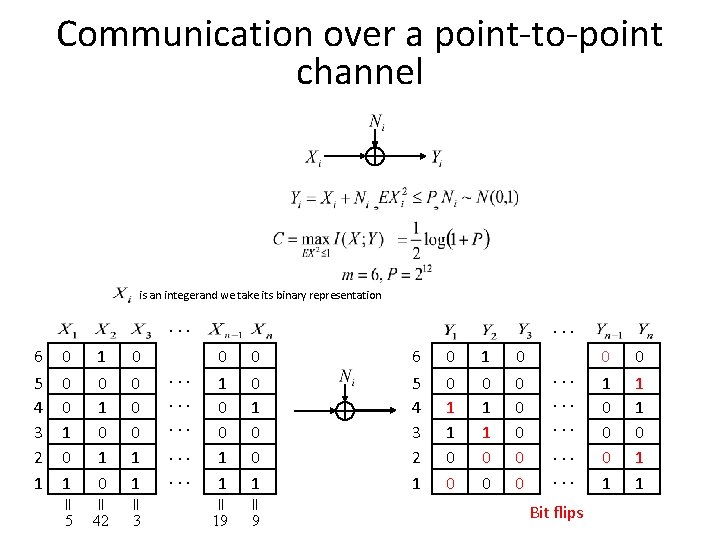
Communication over a point-to-point channel is an integerand we take its binary representation . . . 0 0 1 = = 1 0 1 0 0 0 1 1 = 0 1 0 0 1 1 = 0 0 0 1 = 6 5 4 3 2 1 5 42 . . . 3 19 9 . . . . 6 5 4 3 2 1 0 0 1 0 1 1 0 0 0 0 . . . . Bit flips 0 1 0 0 0 1 1
Communication over a point-to-point channel is an integerand we take its binary representation . . . 0 0 1 = = 1 0 1 0 0 0 1 1 = 0 1 0 0 1 1 = 0 0 0 1 = 6 5 4 3 2 1 5 42 . . . 3 19 9 . . . . 6 5 4 3 2 1 0 0 1 0 1 1 0 0 0 0 . . . . Bit flips 0 1 0 0 0 1 1
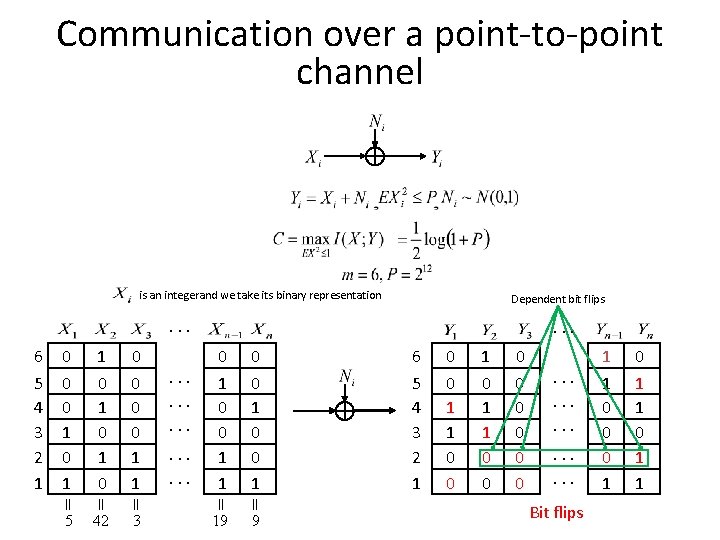
Communication over a point-to-point channel is an integerand we take its binary representation Dependent bit flips . . . 0 0 1 = = 1 0 1 0 0 0 1 1 = 0 1 0 0 1 1 = 0 0 0 1 = 6 5 4 3 2 1 5 42 . . . 3 19 9 . . . . 6 5 4 3 2 1 0 0 1 0 1 1 0 0 0 0 . . . . Bit flips 1 1 0 0 0 1 1
Communication over a point-to-point channel is an integerand we take its binary representation Dependent bit flips . . . = 0 0 1 1 5 42 3 19 9 . . . . Very noisy bit levels 6 5 4 3 2 1 0 0 1 0 1 1 0 0 0 0 . . . . Bit flips 1 1 0 0 0 1 1 Less noisy bit levels 0 0 1 = 1 0 1 0 = 0 1 0 0 1 1 = 0 0 0 1 = 6 5 4 3 2 1 . . .
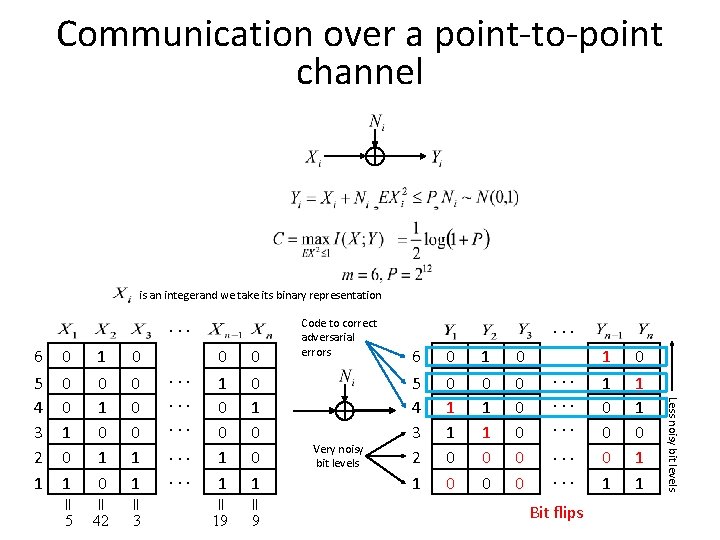
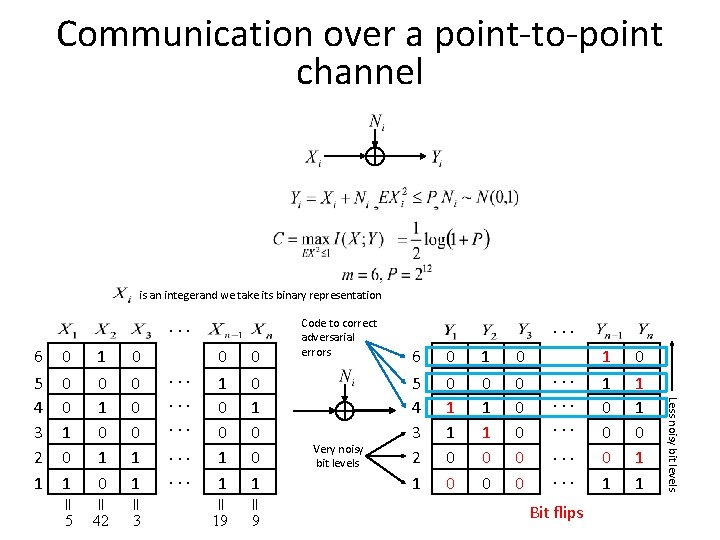
Communication over a point-to-point channel is an integerand we take its binary representation . . . = 0 0 1 1 5 42 3 19 9 . . . . Very noisy bit levels . . . 6 5 4 3 2 1 0 0 1 0 1 1 0 0 0 0 . . . . Bit flips 1 1 0 0 0 1 1 Less noisy bit levels 0 0 1 = 1 0 1 0 = 0 1 0 0 1 1 = 0 0 0 1 = 6 5 4 3 2 1 Code to correct adversarial errors
Communication over a point-to-point channel is an integerand we take its binary representation . . . = 0 0 1 1 5 42 3 19 9 . . . . Very noisy bit levels . . . 6 5 4 3 2 1 0 0 1 0 1 1 0 0 0 0 . . . . Bit flips 1 1 0 0 0 1 1 Less noisy bit levels 0 0 1 = 1 0 1 0 = 0 1 0 0 1 1 = 0 0 0 1 = 6 5 4 3 2 1 Code to correct adversarial errors
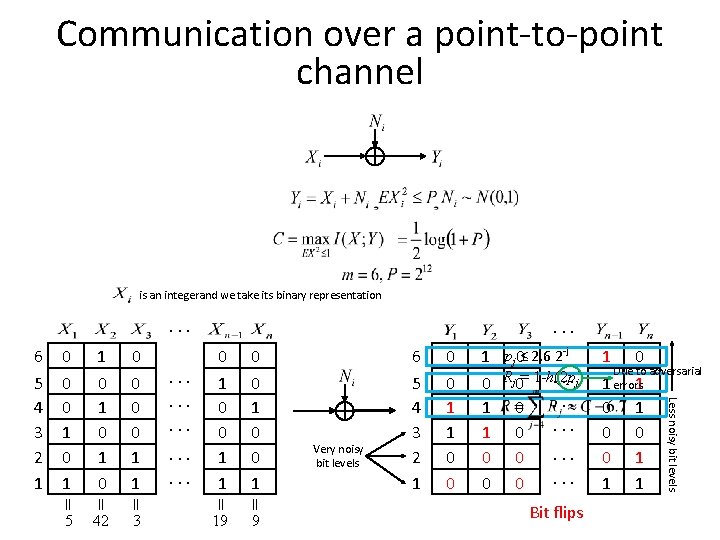
Communication over a point-to-point channel is an integerand we take its binary representation . . . = 0 0 1 1 5 42 3 19 9 . . . . Very noisy bit levels 6 5 4 3 2 1 0 0 1 pj 0≤ 2. 6 2 -j. . . j) 0 Rj 0= 1 -h(2 p. . . 1 0. . . 0 0 Bit flips 1 0 Due to adversarial 1 errors 1 0 0 0 1 1 1 Less noisy bit levels 0 0 1 = 1 0 1 0 = 0 1 0 0 1 1 = 0 0 0 1 = 6 5 4 3 2 1 . . .
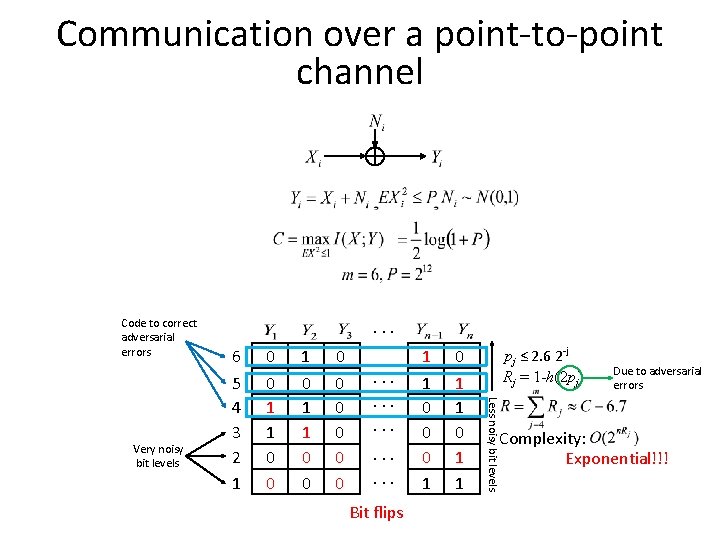
Communication over a point-to-point channel Code to correct adversarial errors 6 5 4 3 2 1 0 0 1 0 1 1 0 0 0 0 . . . . Bit flips 1 1 0 0 0 1 1 pj ≤ 2. 6 2 -j Rj = 1 -h(2 pj) Less noisy bit levels Very noisy bit levels . . . Due to adversarial errors Complexity: Exponential!!!
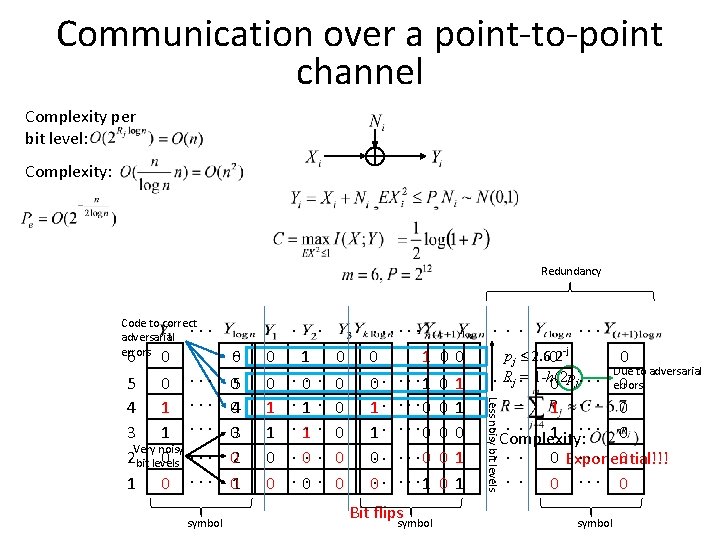
Communication over a point-to-point channel Complexity per bit level: Complexity: Redundancy Code to correct. . adversarial errors . . . . symbol . . . 06 05 04 03 02 01 0 0 1. 0. . 1. . 0. . . 0 0 0 0 1 0. . . 1 1. . . 0 0. . . 1 Bit flipssymbol . . . 0 0 0 0 1 1 . . . pj ≤ 2. 602 -j. R. j. = 1 -h(2 p 0 j). . . 0 Due to adversarial 0 errors . . . 1. . . 0 Complexity: . . . 0 Exponential!!!. . . 0 Less noisy bit levels 6 0 5 0 4 1 3 1 Very noisy 2 bit levels 0 1 0 . symbol
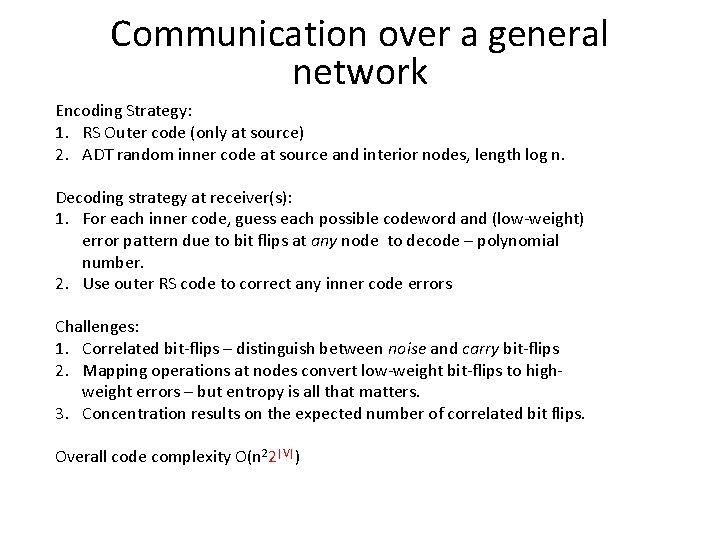
Communication over a general network Encoding Strategy: 1. RS Outer code (only at source) 2. ADT random inner code at source and interior nodes, length log n. Decoding strategy at receiver(s): 1. For each inner code, guess each possible codeword and (low-weight) error pattern due to bit flips at any node to decode – polynomial number. 2. Use outer RS code to correct any inner code errors Challenges: 1. Correlated bit-flips – distinguish between noise and carry bit-flips 2. Mapping operations at nodes convert low-weight bit-flips to highweight errors – but entropy is all that matters. 3. Concentration results on the expected number of correlated bit flips. Overall code complexity O(n 22|V|)
Questions?