
Salivary secretion Functions of saliva Composition of saliva
- Slides: 15
Salivary secretion • Functions of saliva • Composition of saliva primary secretion modifications • Regulation of salivary secretion roles of the parasympathetics and sympathetics
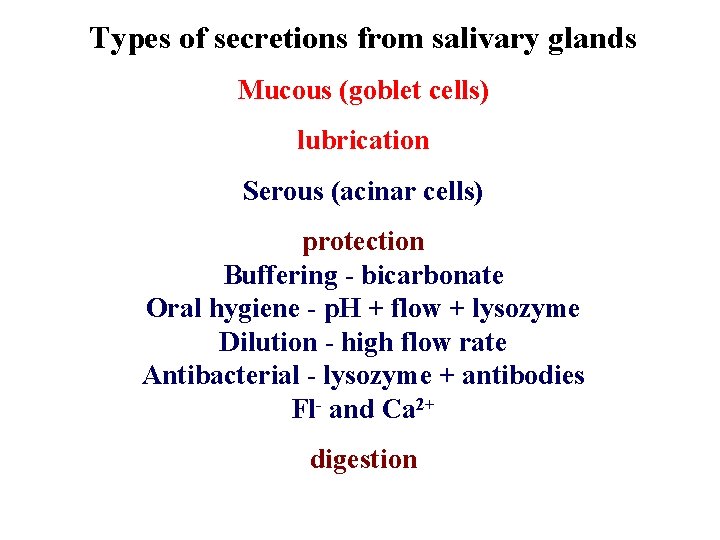
Types of secretions from salivary glands Mucous (goblet cells) lubrication Serous (acinar cells) protection Buffering - bicarbonate Oral hygiene - p. H + flow + lysozyme Dilution - high flow rate Antibacterial - lysozyme + antibodies Fl- and Ca 2+ digestion
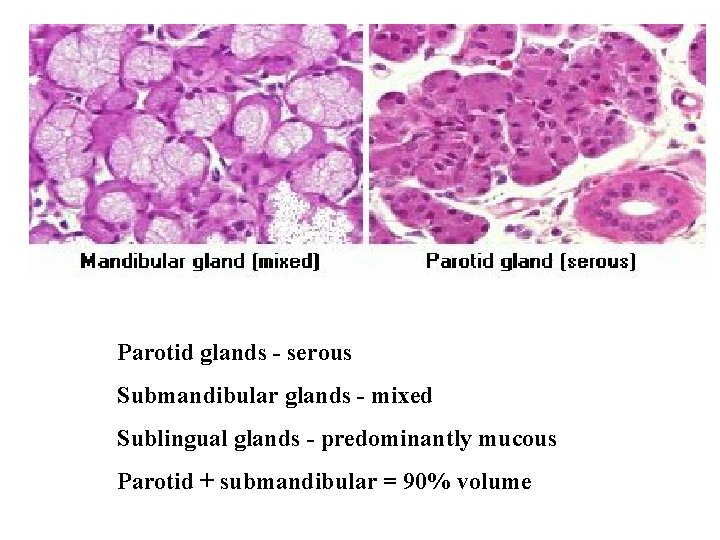
Parotid glands - serous Submandibular glands - mixed Sublingual glands - predominantly mucous Parotid + submandibular = 90% volume
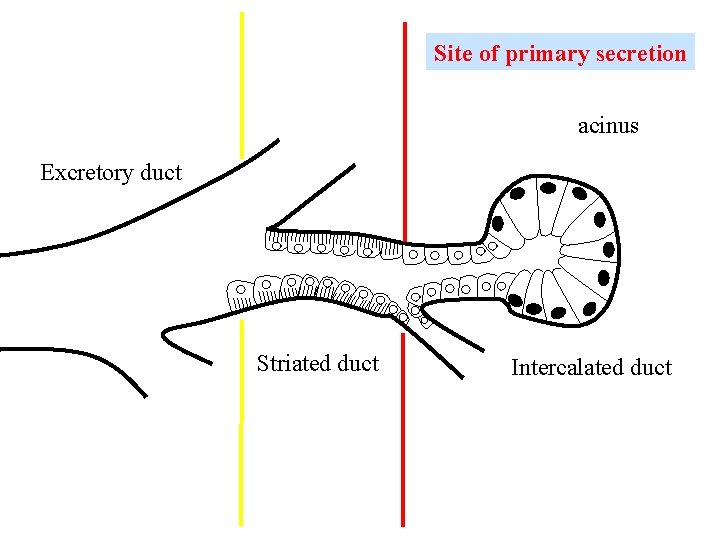
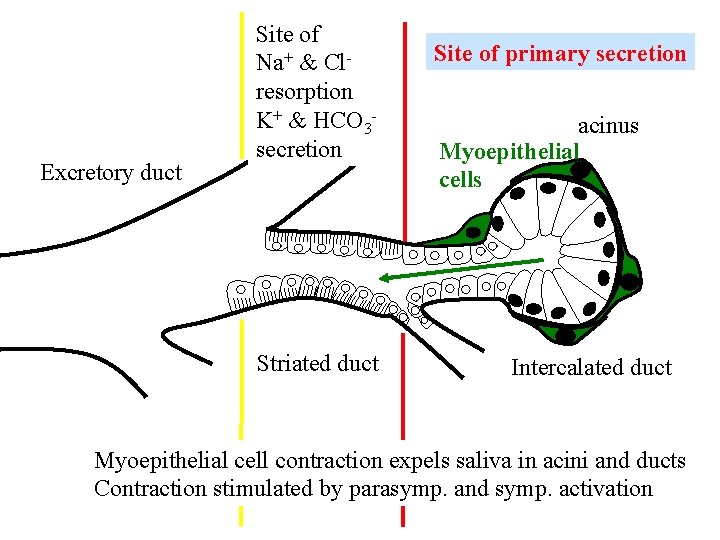
Site of primary secretion acinus Excretory duct Striated duct Intercalated duct
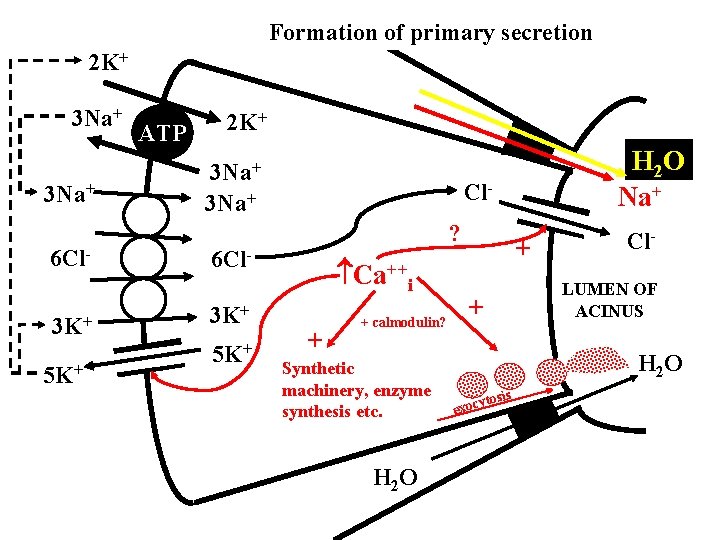
Formation of primary secretion 2 K+ 3 Na+ 6 Cl 3 K+ 5 K+ ATP 2 K+ 3 Na+ Cl? 6 Cl 3 K+ 5 K+ H 2 O Na+ Ca++i + + calmodulin? Synthetic machinery, enzyme synthesis etc. H 2 O + Cl. LUMEN OF ACINUS + H 2 O sis yto exoc
Excretory duct Site of Na+ & Clresorption K+ & HCO 3 secretion Striated duct Site of primary secretion acinus Myoepithelial cells Intercalated duct Myoepithelial cell contraction expels saliva in acini and ducts Contraction stimulated by parasymp. and symp. activation
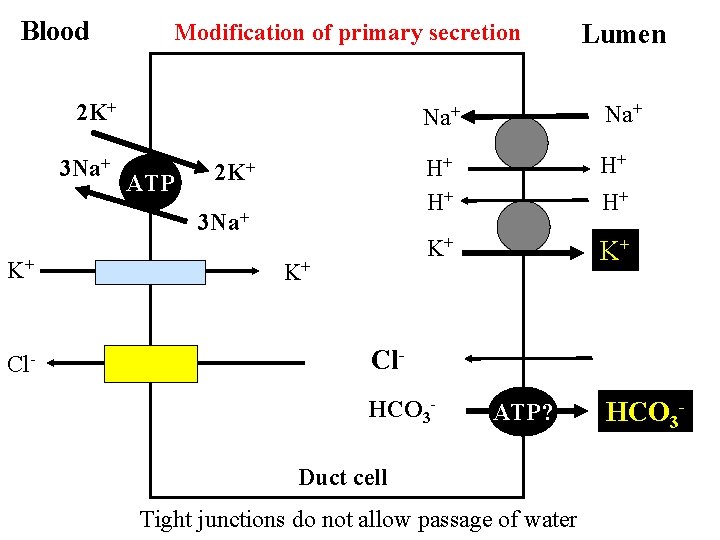
Blood Modification of primary secretion 2 K+ 3 Na+ ATP 2 K+ 3 Na+ K+ Cl- K+ Lumen Na+ H+ H+ H+ K+ K+ H+ Cl. HCO 3 - ATP? Duct cell Tight junctions do not allow passage of water HCO 3 -
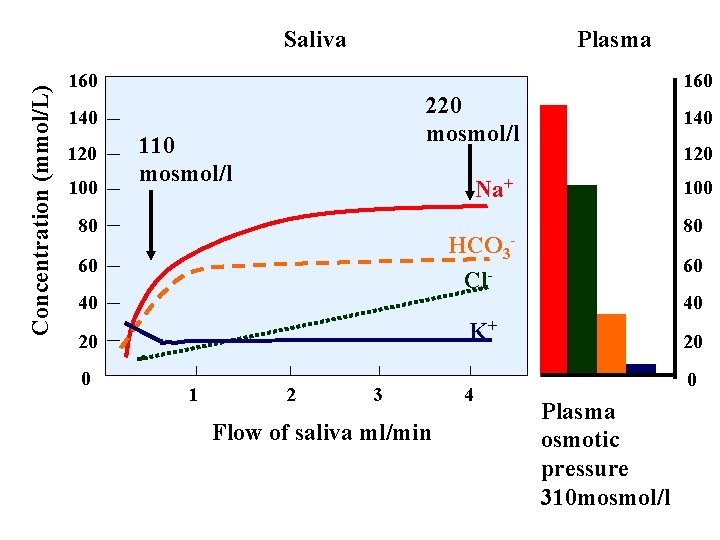
Concentration (mmol/L) Saliva Plasma 160 220 mosmol/l 140 120 100 110 mosmol/l 140 120 Na+ 80 100 80 HCO 3 Cl- 60 40 K+ 20 0 160 1 2 3 Flow of saliva ml/min 4 20 0 Plasma osmotic pressure 310 mosmol/l
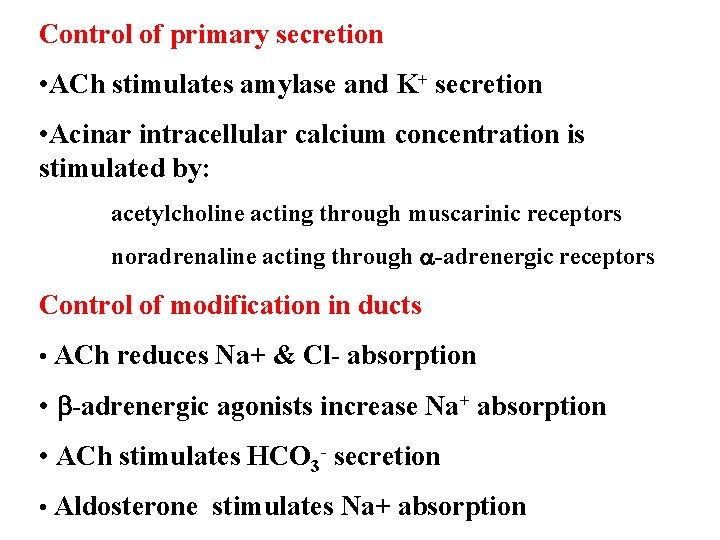
Control of primary secretion • ACh stimulates amylase and K+ secretion • Acinar intracellular calcium concentration is stimulated by: acetylcholine acting through muscarinic receptors noradrenaline acting through a-adrenergic receptors Control of modification in ducts • ACh reduces Na+ & Cl- absorption • b-adrenergic agonists increase Na+ absorption • ACh stimulates HCO 3 - secretion • Aldosterone stimulates Na+ absorption
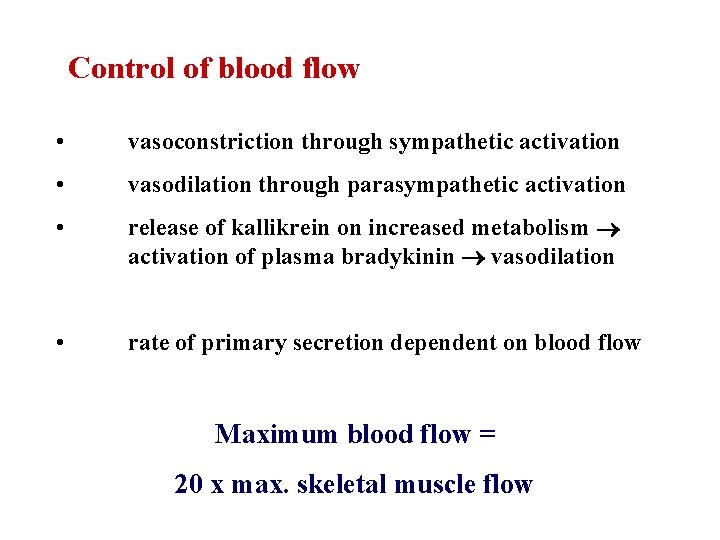
Control of blood flow • vasoconstriction through sympathetic activation • vasodilation through parasympathetic activation • release of kallikrein on increased metabolism activation of plasma bradykinin vasodilation • rate of primary secretion dependent on blood flow Maximum blood flow = 20 x max. skeletal muscle flow
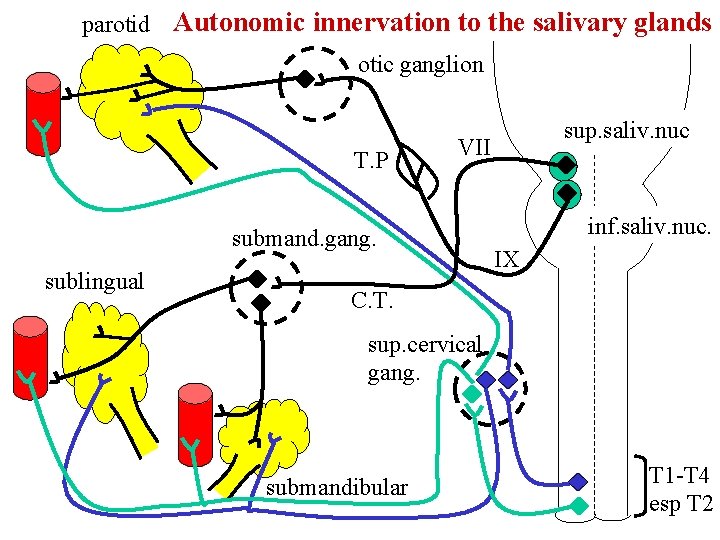
parotid Autonomic innervation to the salivary glands otic ganglion T. P VII submand. gang. sublingual sup. saliv. nuc inf. saliv. nuc. IX C. T. sup. cervical gang. submandibular T 1 -T 4 esp T 2
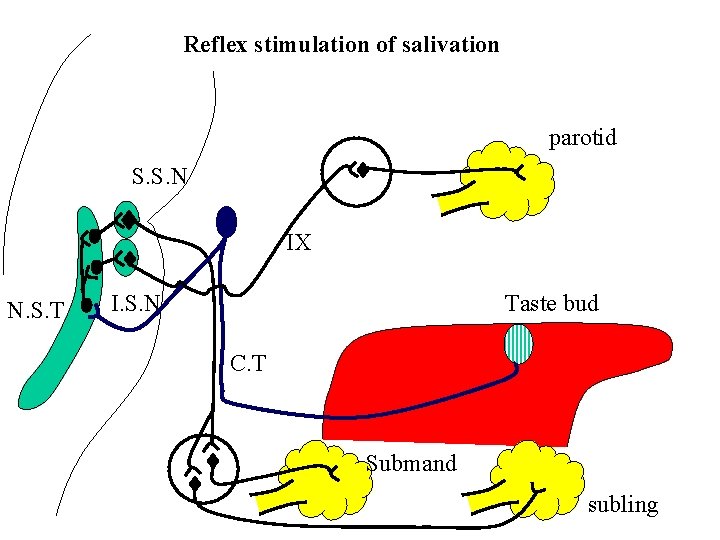
Reflex stimulation of salivation parotid S. S. N IX N. S. T I. S. N Taste bud C. T Submand subling
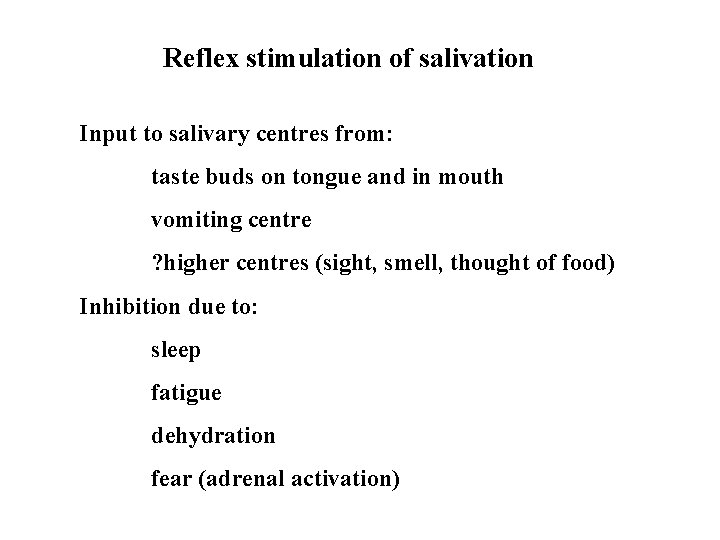
Reflex stimulation of salivation Input to salivary centres from: taste buds on tongue and in mouth vomiting centre ? higher centres (sight, smell, thought of food) Inhibition due to: sleep fatigue dehydration fear (adrenal activation)
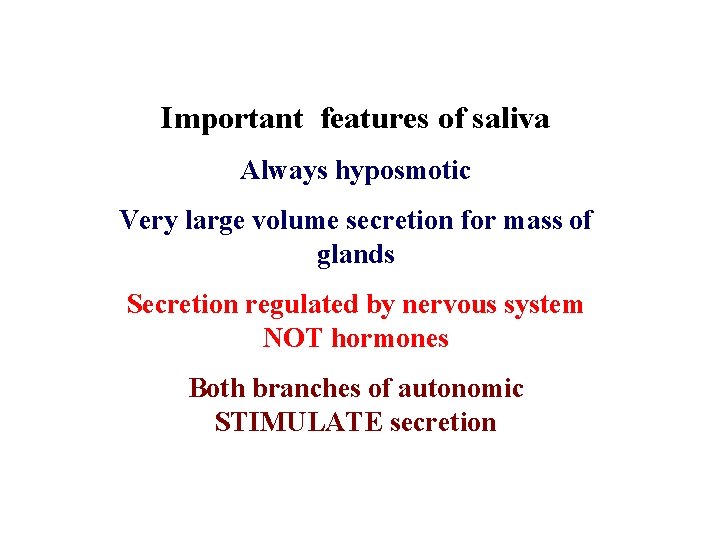
Important features of saliva Always hyposmotic Very large volume secretion for mass of glands Secretion regulated by nervous system NOT hormones Both branches of autonomic STIMULATE secretion
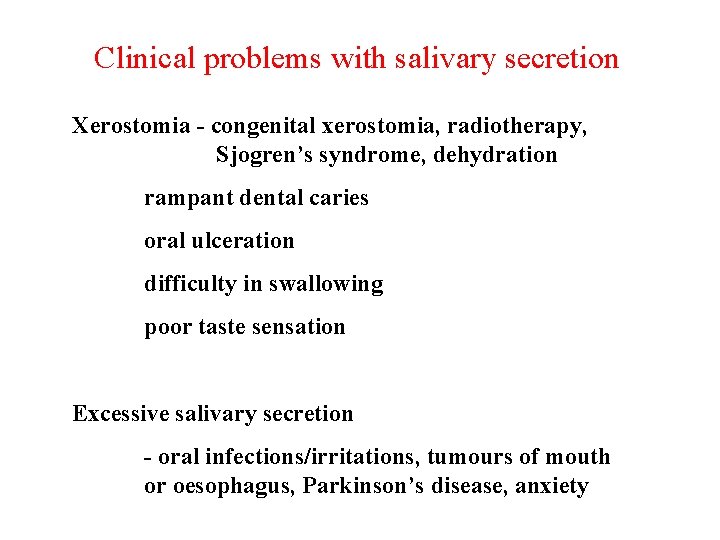
Clinical problems with salivary secretion Xerostomia - congenital xerostomia, radiotherapy, Sjogren’s syndrome, dehydration rampant dental caries oral ulceration difficulty in swallowing poor taste sensation Excessive salivary secretion - oral infections/irritations, tumours of mouth or oesophagus, Parkinson’s disease, anxiety