
Salivary gland pathology Markta Hermanov Parotid gland serous

- Slides: 34
Salivary gland pathology. Markéta Hermanová
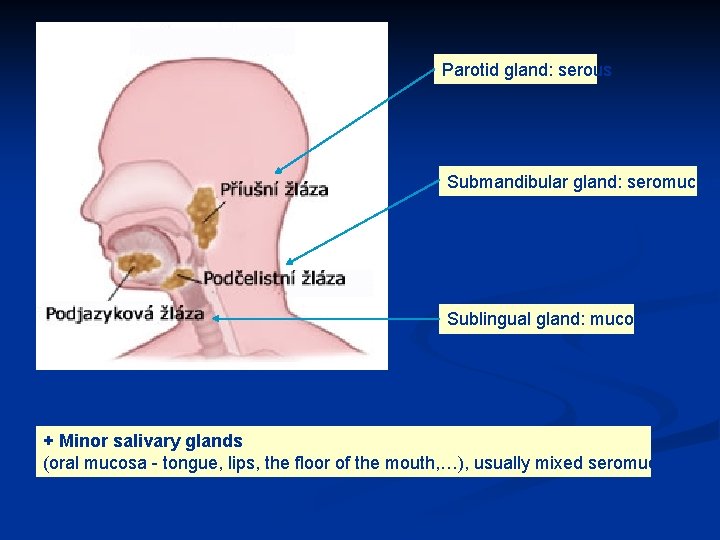
Parotid gland: serous Submandibular gland: seromucous Sublingual gland: mucous + Minor salivary glands (oral mucosa - tongue, lips, the floor of the mouth, …), usually mixed seromucinous
Developmental anomalies n Sialoadenitis n Obstructive and traumatic lesions n Sjögren syndrome (SS) n Sialoadenosis n HIV-associated salivary gland disease n Salivary gland tumor n Age changes in salivary glands n
Developmental anomalies Aplasia (congenital, parotid gland, ass. with other facial abnormalities – mandibulofacial dysostosis, aplasia of the lacrimal glands, hemifacial microsomia) n Atresia of one or more salivary gland ducts n Heterotopic salivary tissue (in the mandible – Stafne´s idiopathic bone cavity) n
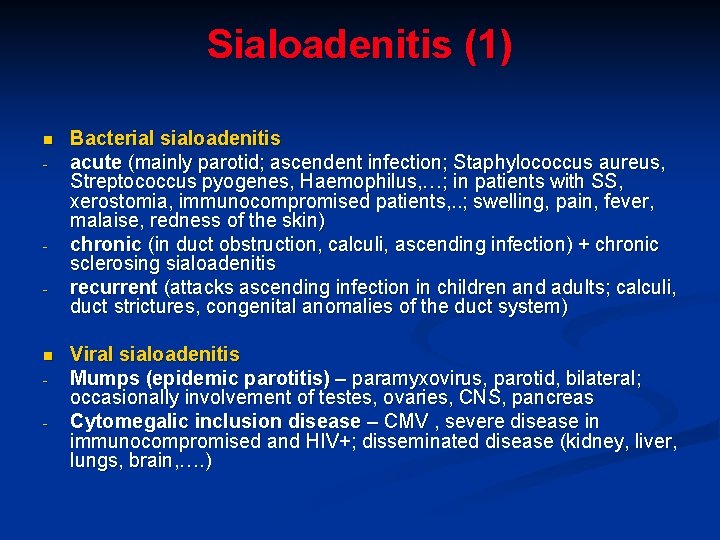
Sialoadenitis (1) n - - n - Bacterial sialoadenitis acute (mainly parotid; ascendent infection; Staphylococcus aureus, Streptococcus pyogenes, Haemophilus, …; in patients with SS, xerostomia, immunocompromised patients, . . ; swelling, pain, fever, malaise, redness of the skin) chronic (in duct obstruction, calculi, ascending infection) + chronic sclerosing sialoadenitis recurrent (attacks ascending infection in children and adults; calculi, duct strictures, congenital anomalies of the duct system) Viral sialoadenitis Mumps (epidemic parotitis) – paramyxovirus, parotid, bilateral; occasionally involvement of testes, ovaries, CNS, pancreas Cytomegalic inclusion disease – CMV , severe disease in immunocompromised and HIV+; disseminated disease (kidney, liver, lungs, brain, …. )
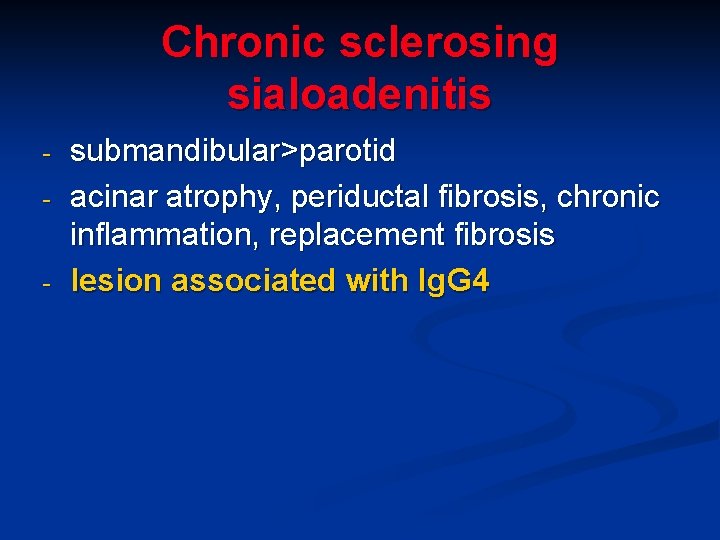
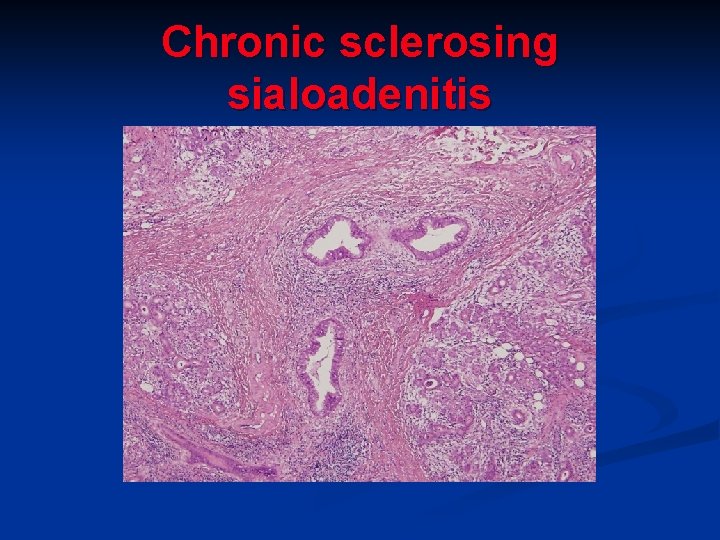
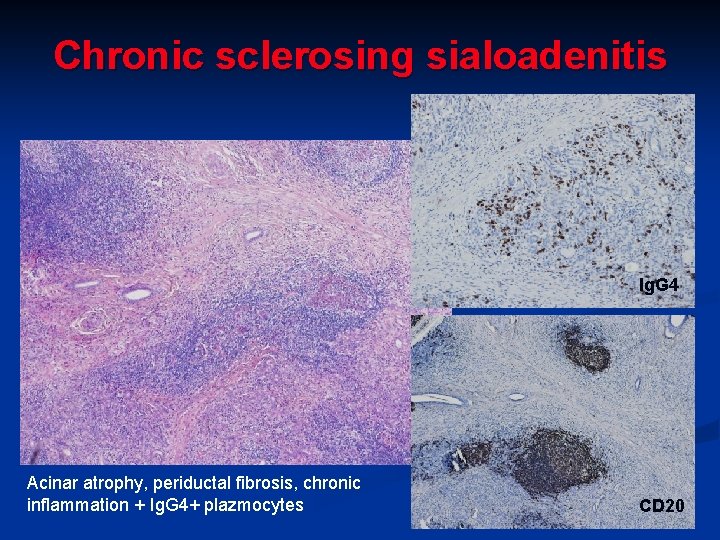
Chronic sclerosing sialoadenitis - - submandibular>parotid acinar atrophy, periductal fibrosis, chronic inflammation, replacement fibrosis lesion associated with Ig. G 4
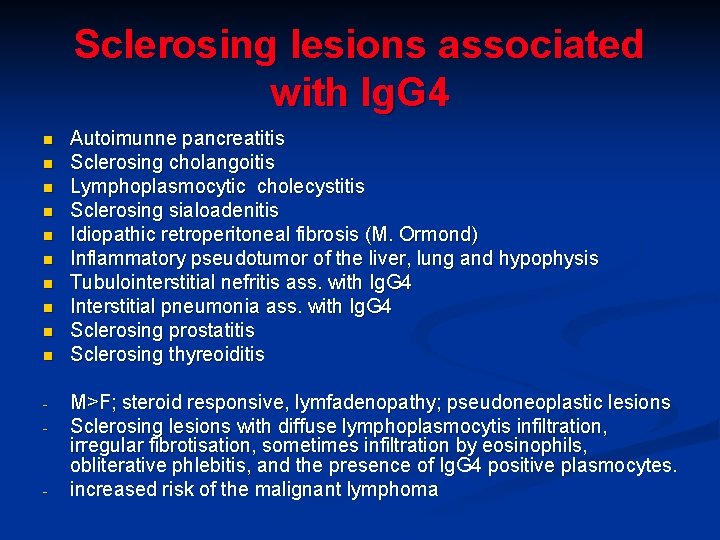
Sclerosing lesions associated with Ig. G 4 n n n n n - - Autoimunne pancreatitis Sclerosing cholangoitis Lymphoplasmocytic cholecystitis Sclerosing sialoadenitis Idiopathic retroperitoneal fibrosis (M. Ormond) Inflammatory pseudotumor of the liver, lung and hypophysis Tubulointerstitial nefritis ass. with Ig. G 4 Interstitial pneumonia ass. with Ig. G 4 Sclerosing prostatitis Sclerosing thyreoiditis M>F; steroid responsive, lymfadenopathy; pseudoneoplastic lesions Sclerosing lesions with diffuse lymphoplasmocytis infiltration, irregular fibrotisation, sometimes infiltration by eosinophils, obliterative phlebitis, and the presence of Ig. G 4 positive plasmocytes. increased risk of the malignant lymphoma
Chronic sclerosing sialoadenitis
Chronic sclerosing sialoadenitis Ig. G 4 Acinar atrophy, periductal fibrosis, chronic inflammation + Ig. G 4+ plazmocytes CD 20
Sialoadenitis (2) n Postirradiation sialoadenitis (fibrous replacement of acini, squamous metaplasia of ducts) n Sarcoidosis (minor glands, parotid; Heerfordt sy: sarcoidosis of salivary and lacrimal glands) n Sialoadenitis of minor gland in sarcoidosis, in Sjögren syndrome associated with mucous extravasation cysts, with stomatitis nicotina of the palate stomatitis glandularis (multiple involvement, multiple swelling, cystic dilatation of the ducts, chronic suppuration); lips affected -
Obstructive and traumatic lesions n n - - Salivary calculi (sialoliths) the most common cause of obstruction 70 -90 % in submandibular gland usually unilateral; calcium phosphate+carbonates pain, recurrent swelling predisposes to ascending infection and chronic sialoadenitis Necrotizing sialometaplasia hard palate in middle aged patients; M>F deep crater like ulcer lobular necrosis of salivary glands, squamous metaplasia of ducts and acini, mucous extravasation, inflammatory cell infiltration, pseudoepiteliomatous hyperplasia of the ovelying palatal mucosa etiology unknown; ischaemia and infarction? ? ? , previous trauma, surgery
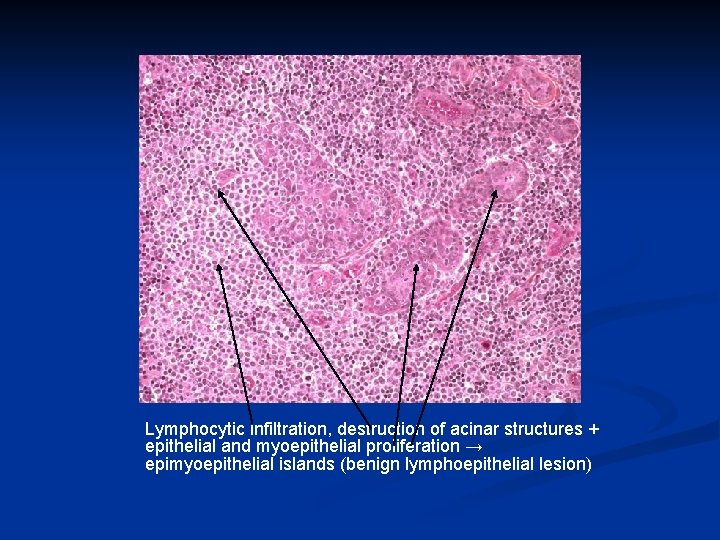
Sjögren syndrome (SS) n n Chronic autoimmune disease; F>M; ass. with other AI diseases – non-organ specific AI disease – multisystem involvement Primary (dry mouth (xerostomia)+dry eyes (xerophtalmia or keratoconjuctivitis sicca) Secondary (xerostomia+xerophthalmia+AI connective tissue disease (e. g. rheumatoid arthritis) Lymphocytic infiltration and acinar destruction of lacrimal and salivary glands→dry eyes and dry mouth; hyperplasia of ductal epithelium – benign lymphoepithelial lesion ass. with particular combination of HLA class II major histocompatibility genes + viruses (EBV) Increased risk of B cell malignant lymphoma (MALT)
European diagnostic criteria of SS n n n Ocular symptoms (xerophtalmia) Oral symptoms (xerostomia predisposing to candidosis, caries, sialoadenitis, oral dysfunction) Salivary gland function (sialography, scintiscanning, salivary flow rates, sialochemical studies) Labial salivary gland histology (lymphocytic sialoadenitis) Anti-Ro and anti-La autoantibodies (nuclear factors)+ RF, ANA, antithyroid antigastric parietal autoantibodies
Lymphocytic infiltration, destruction of acinar structures + epithelial and myoepithelial proliferation → epimyoepithelial islands (benign lymphoepithelial lesion)
Sialoadenosis (or sialosis) non-inflammatory, non-neoplastic, recurrent bilateral swelling of salivary glands n Hypertrophy of serous acinar glands n Parotid commonly affected n Abnormality of neurosecretory control (hormonal disturbances, malnutrition, liver cirrhosis, chronic alcoholism, and following administration of various drugs). n
HIV-associated salivary gland disease Sjögren syndrome-like disease associated with a benign lymphoepithelial lesion n parotid swelling as a part of persistent glandular enlargement n multiple lymphoepithelial cysts n
Salivary gland tumors 85 % in glandula parotis n 65 -80 % of tumors in gl. parotis benign n in other glands 35 -50 % tumors malignant n surgical treatment (n. facialis!!!), radiotherapy n late metastases n non-painful, palpable nodules n
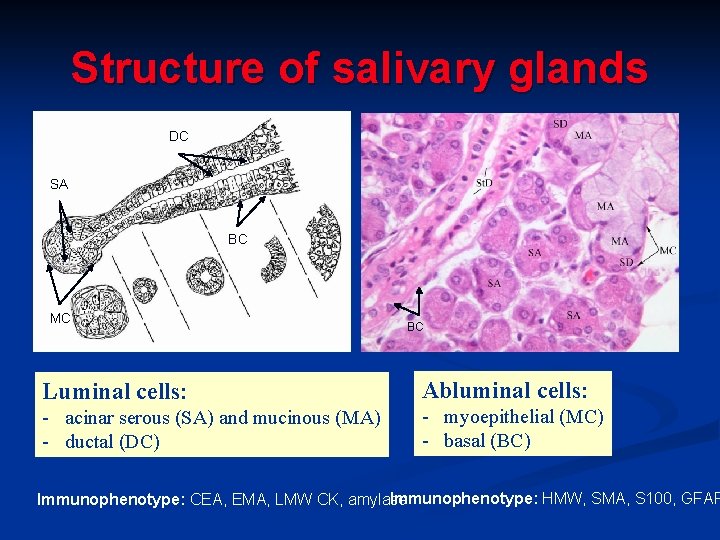
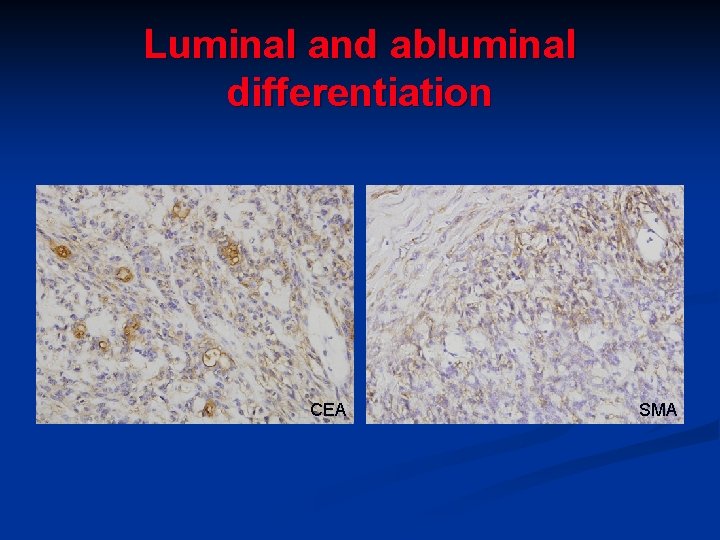
Structure of salivary glands DC SA BC MC BC Luminal cells: Abluminal cells: - acinar serous (SA) and mucinous (MA) - ductal (DC) - myoepithelial (MC) - basal (BC) Immunophenotype: HMW, SMA, S 100, GFAP Immunophenotype: CEA, EMA, LMW CK, amylase
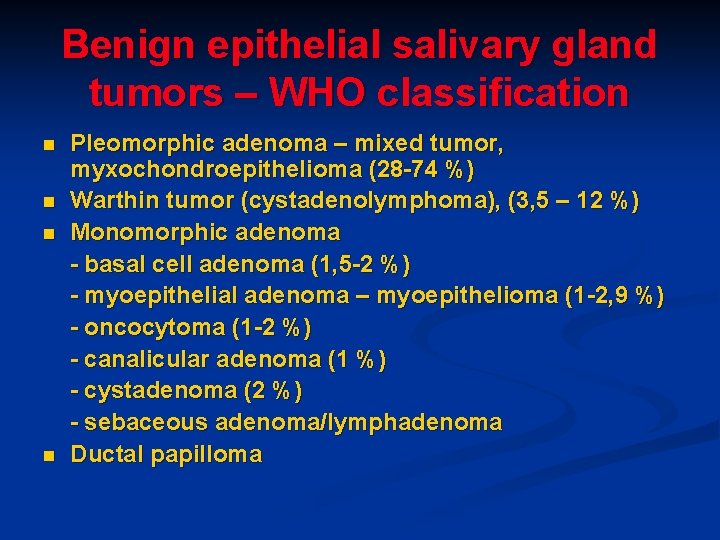
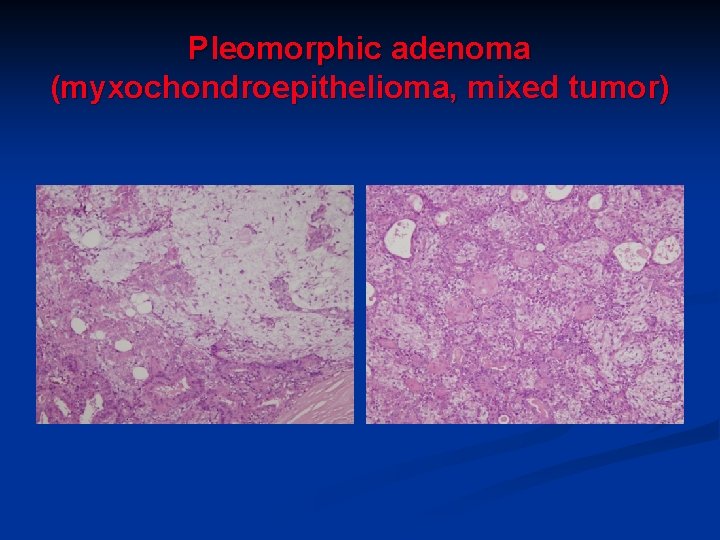
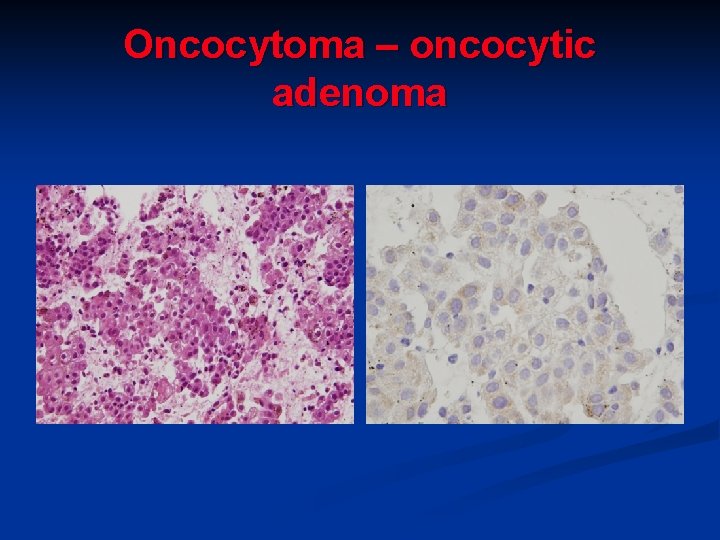
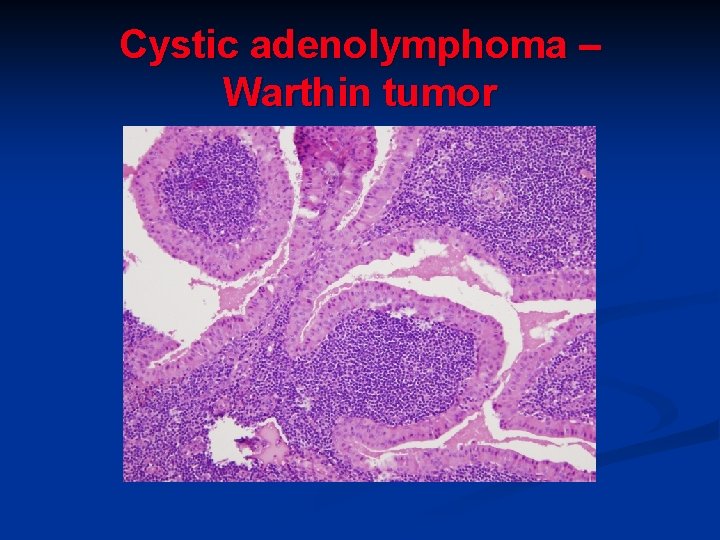
Benign epithelial salivary gland tumors – WHO classification n n Pleomorphic adenoma – mixed tumor, myxochondroepithelioma (28 -74 %) Warthin tumor (cystadenolymphoma), (3, 5 – 12 %) Monomorphic adenoma - basal cell adenoma (1, 5 -2 %) - myoepithelial adenoma – myoepithelioma (1 -2, 9 %) - oncocytoma (1 -2 %) - canalicular adenoma (1 %) - cystadenoma (2 %) - sebaceous adenoma/lymphadenoma Ductal papilloma
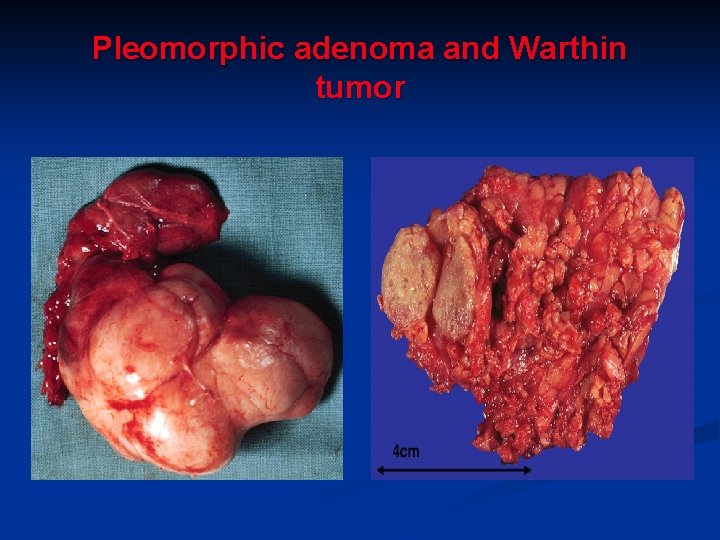
Pleomorphic adenoma and Warthin tumor
Pleomorphic adenoma (myxochondroepithelioma, mixed tumor)
Oncocytoma – oncocytic adenoma
Cystic adenolymphoma – Warthin tumor
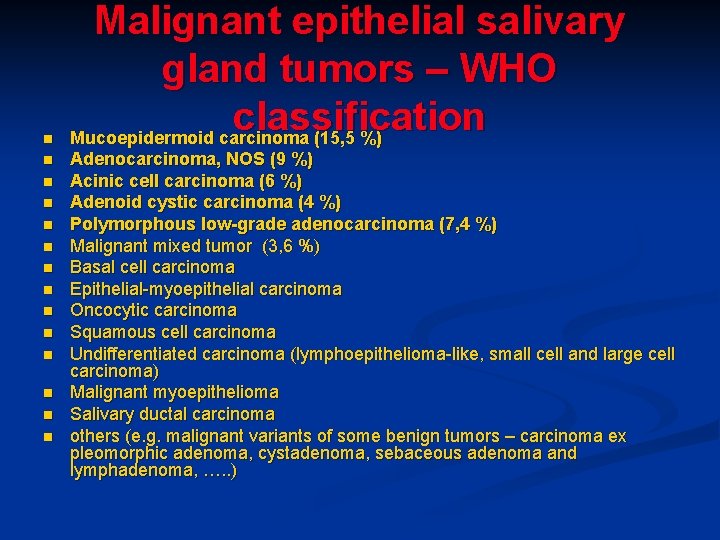
n n n n Malignant epithelial salivary gland tumors – WHO classification Mucoepidermoid carcinoma (15, 5 %) Adenocarcinoma, NOS (9 %) Acinic cell carcinoma (6 %) Adenoid cystic carcinoma (4 %) Polymorphous low-grade adenocarcinoma (7, 4 %) Malignant mixed tumor (3, 6 %) Basal cell carcinoma Epithelial-myoepithelial carcinoma Oncocytic carcinoma Squamous cell carcinoma Undifferentiated carcinoma (lymphoepithelioma-like, small cell and large cell carcinoma) Malignant myoepithelioma Salivary ductal carcinoma others (e. g. malignant variants of some benign tumors – carcinoma ex pleomorphic adenoma, cystadenoma, sebaceous adenoma and lymphadenoma, …. . )
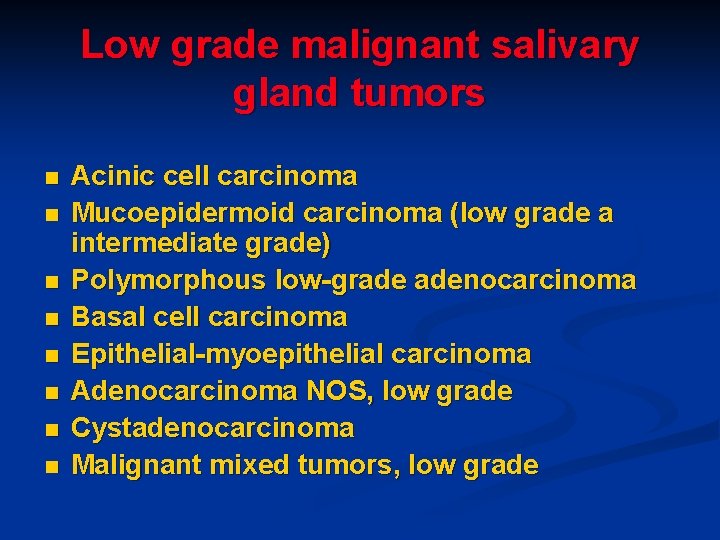
Low grade malignant salivary gland tumors n n n n Acinic cell carcinoma Mucoepidermoid carcinoma (low grade a intermediate grade) Polymorphous low-grade adenocarcinoma Basal cell carcinoma Epithelial-myoepithelial carcinoma Adenocarcinoma NOS, low grade Cystadenocarcinoma Malignant mixed tumors, low grade
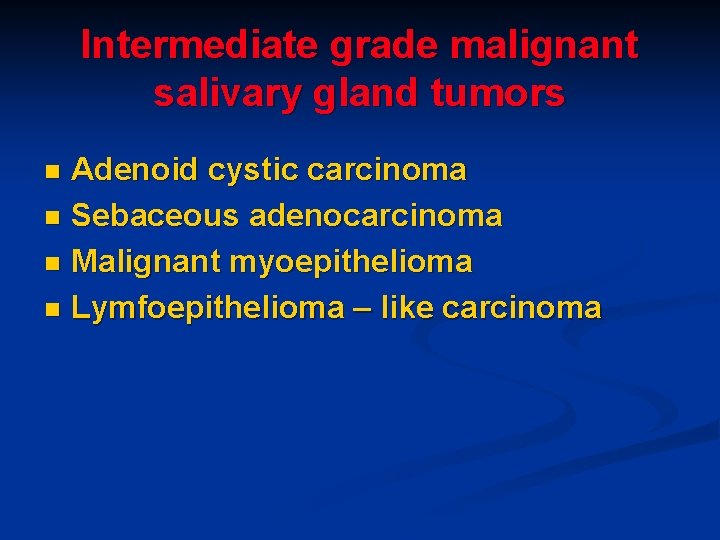
Intermediate grade malignant salivary gland tumors Adenoid cystic carcinoma n Sebaceous adenocarcinoma n Malignant myoepithelioma n Lymfoepithelioma – like carcinoma n
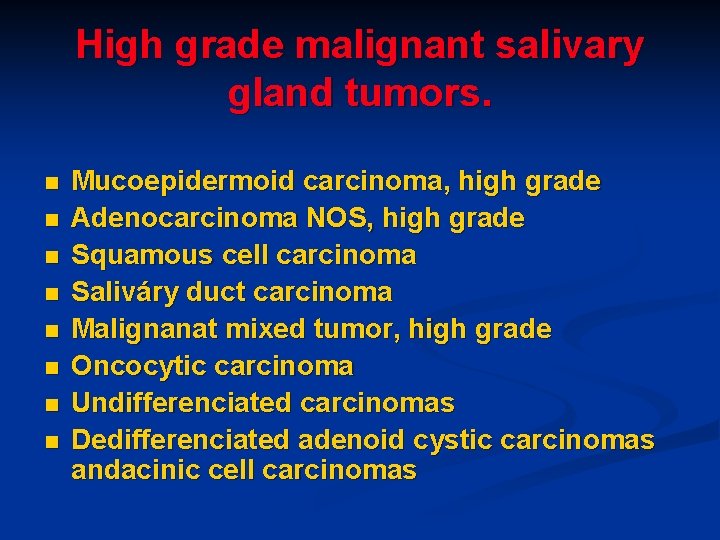
High grade malignant salivary gland tumors. n n n n Mucoepidermoid carcinoma, high grade Adenocarcinoma NOS, high grade Squamous cell carcinoma Saliváry duct carcinoma Malignanat mixed tumor, high grade Oncocytic carcinoma Undifferenciated carcinomas Dedifferenciated adenoid cystic carcinomas andacinic cell carcinomas
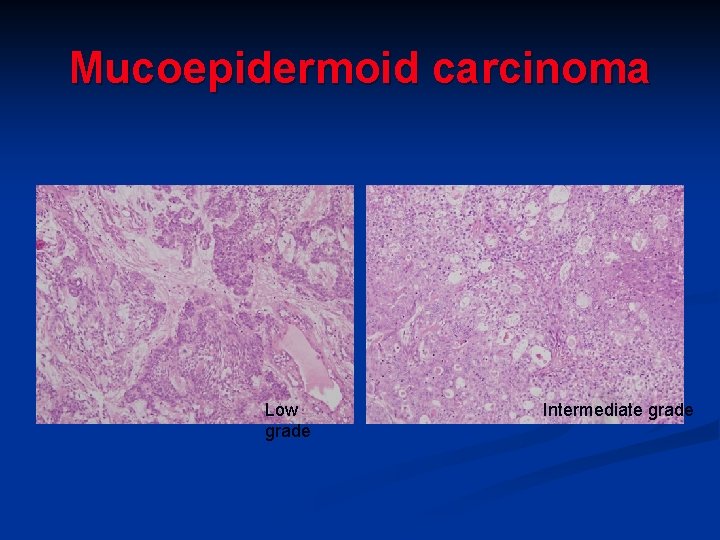
Mucoepidermoid carcinoma Low grade Intermediate grade
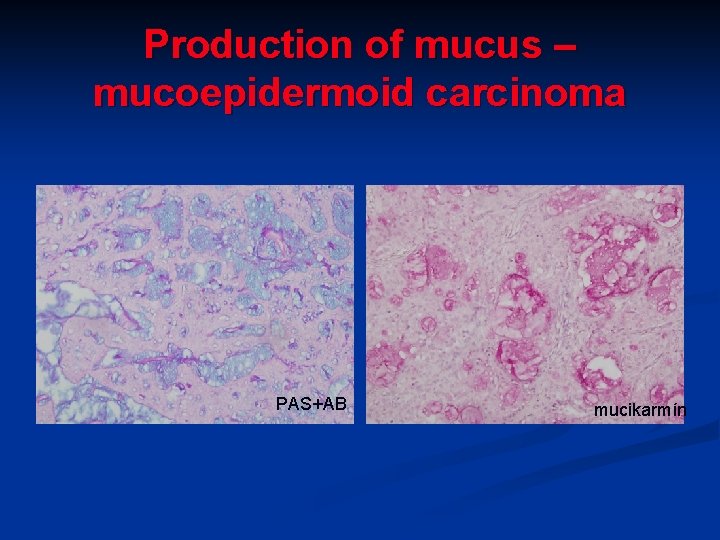
Production of mucus – mucoepidermoid carcinoma PAS+AB mucikarmín
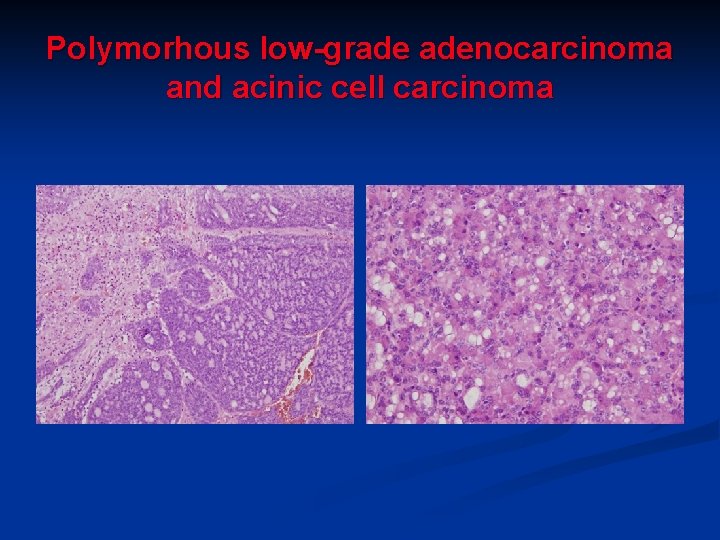
Polymorhous low-grade adenocarcinoma and acinic cell carcinoma
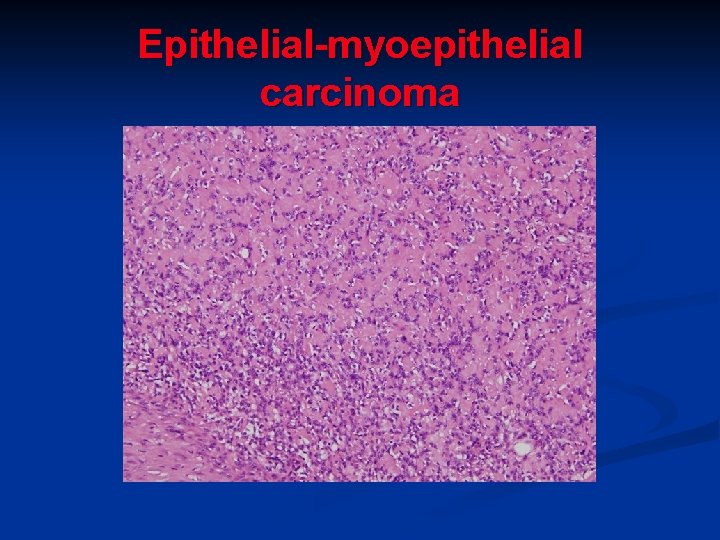
Epithelial-myoepithelial carcinoma
Luminal and abluminal differentiation CEA SMA
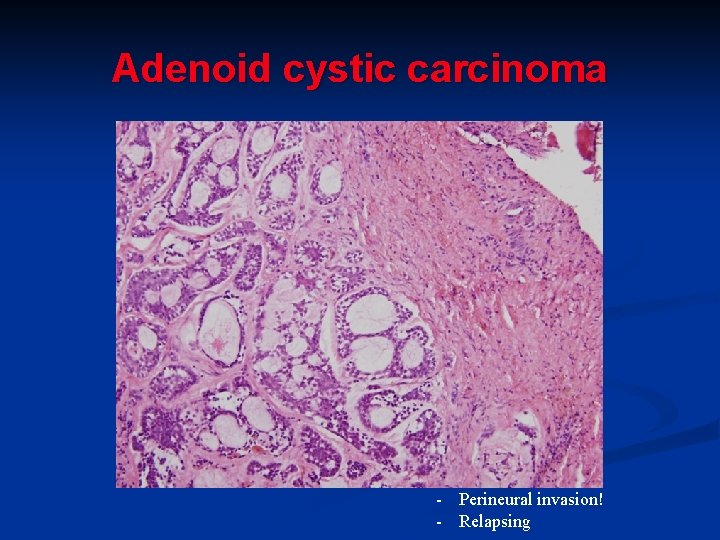
Adenoid cystic carcinoma - Perineural invasion! - Relapsing
Thank you for your attention …