
Saliva It is a watery secretion in the

- Slides: 29
Saliva • It is a watery secretion in the mouth produced by the salivary glands that aids in the digestion of food. • It serves as an aid to swallowing and digestion by moistening and softening food.
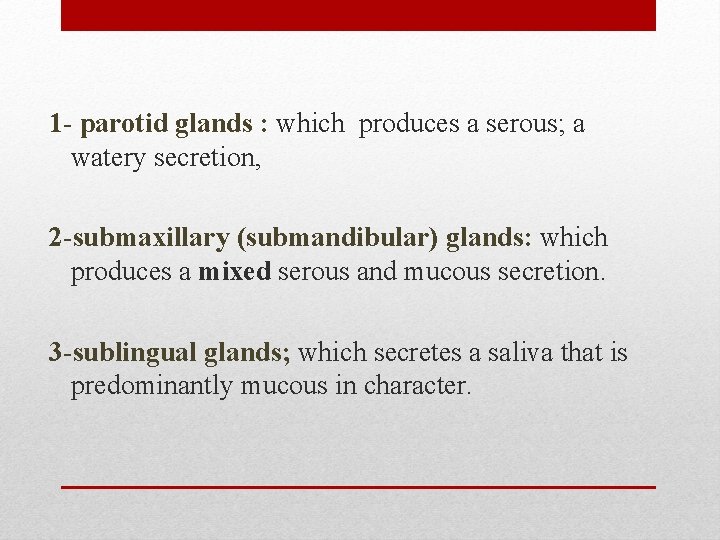
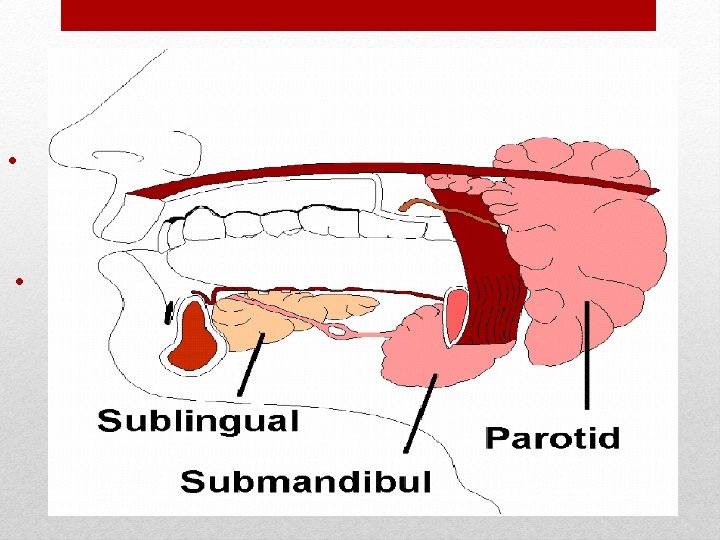
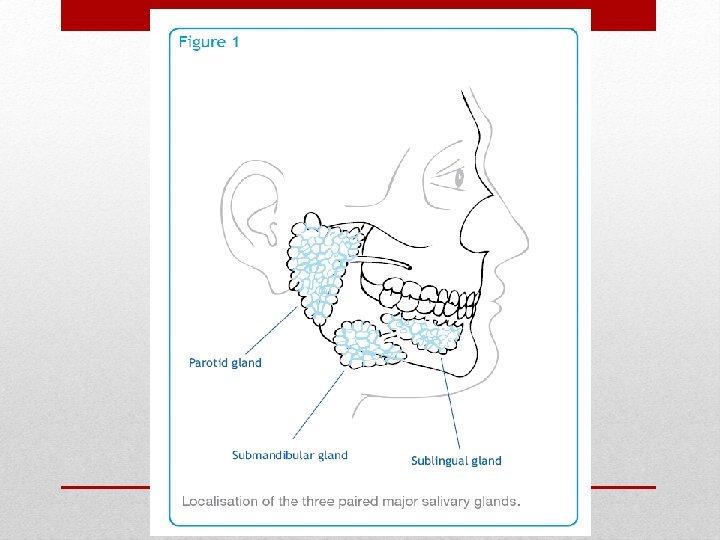
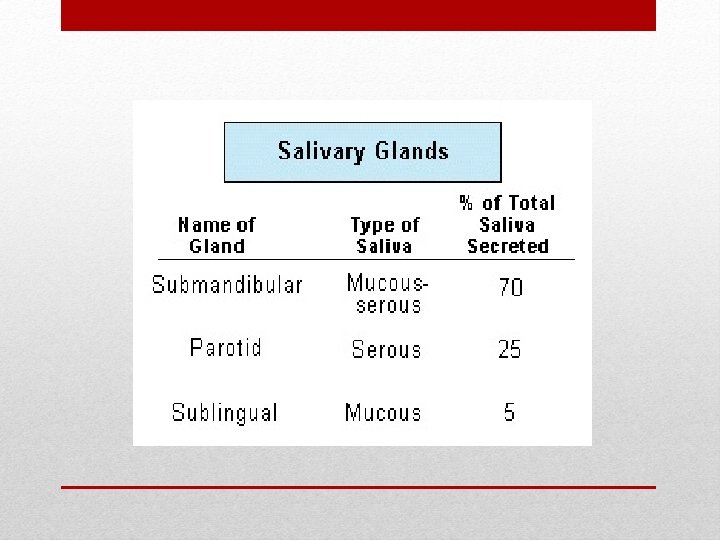
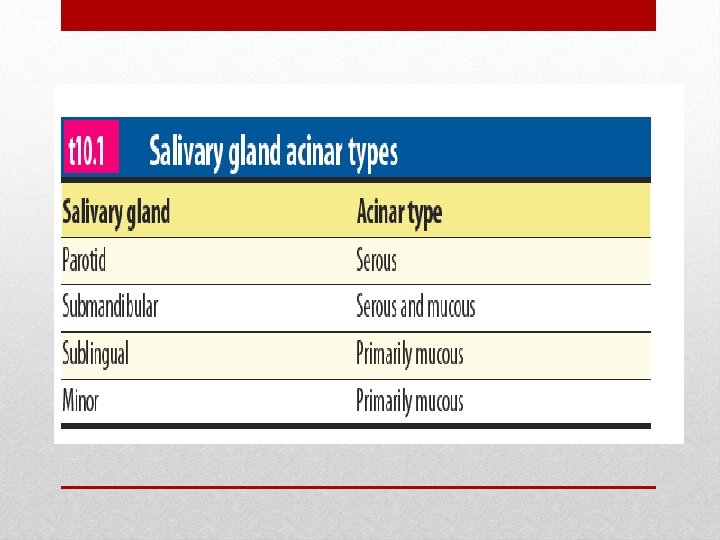
1 - parotid glands : which produces a serous; a watery secretion, 2 -submaxillary (submandibular) glands: which produces a mixed serous and mucous secretion. 3 -sublingual glands; which secretes a saliva that is predominantly mucous in character.
Salivary Gland • An exocrine gland in the mouth that secrete saliva. under normal physiological conditions. • Humans have three major pairs of salivary glands that differ in the type of secretion produced: 1 - parotid glands. 2 -submaxillary (submandibular) glands 3 -sublingual glands
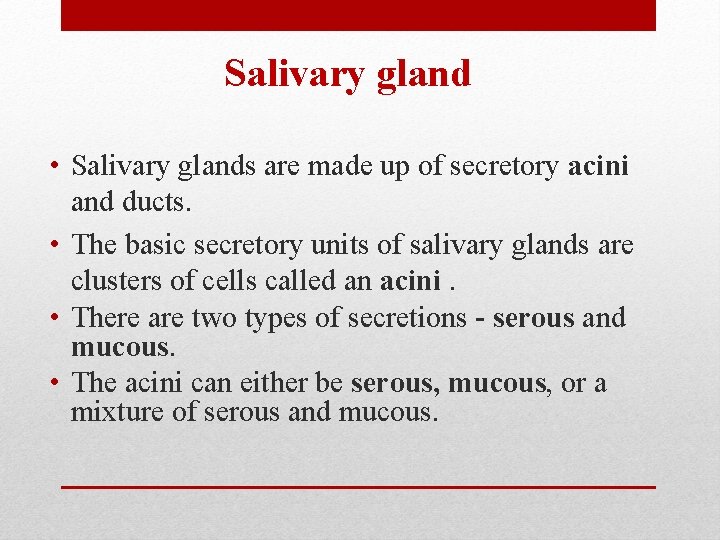
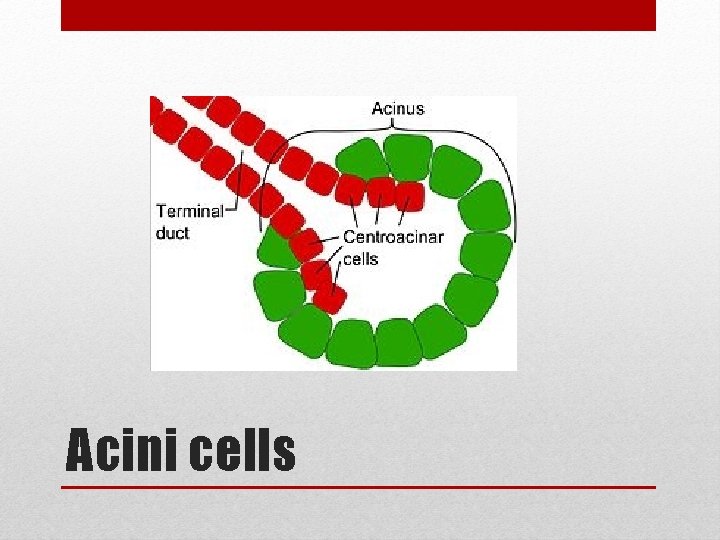
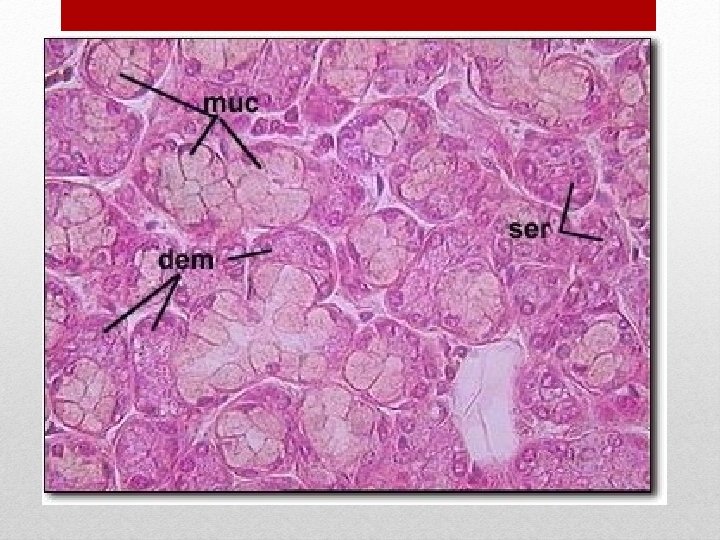
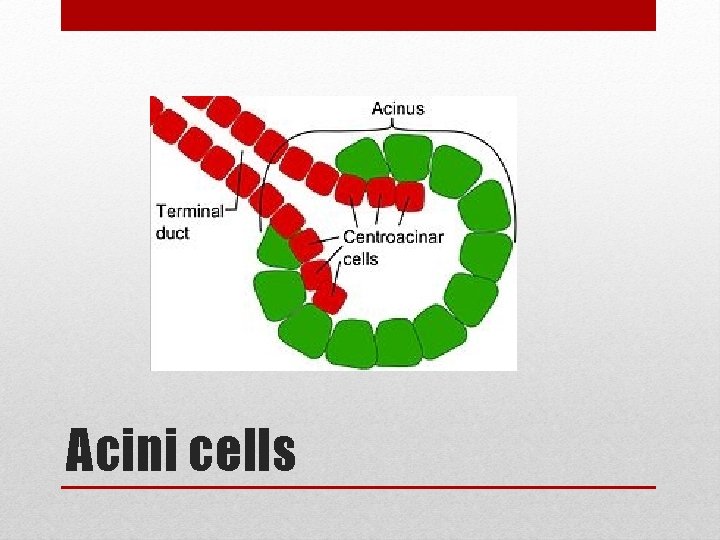
Salivary gland • Salivary glands are made up of secretory acini and ducts. • The basic secretory units of salivary glands are clusters of cells called an acini. • There are two types of secretions - serous and mucous. • The acini can either be serous, mucous, or a mixture of serous and mucous.
Acini cells
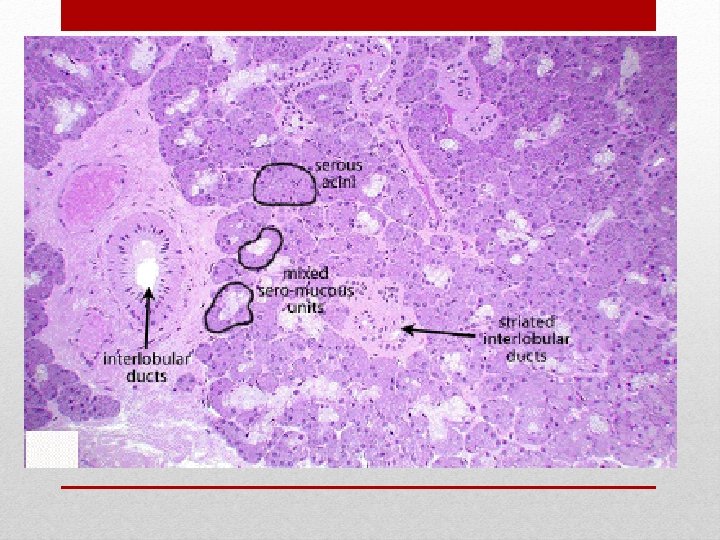
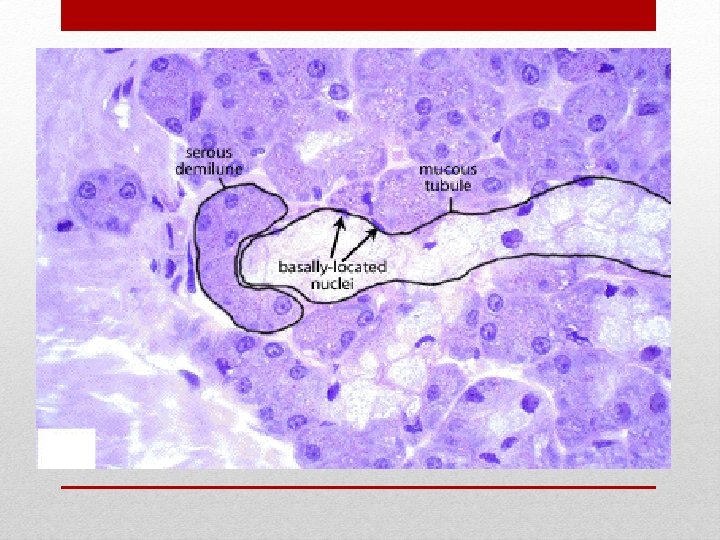
• A serous acinus secretes proteins in an isotonic watery fluid. • A mucous acinus secretes mucin-lubricants • In mixed serous – mucous acinus, the serous acinus forms a serous demilune around mucous acinus
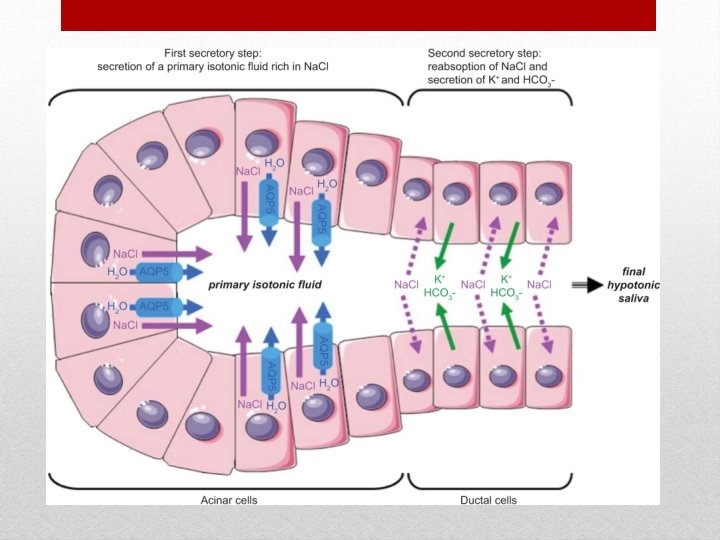
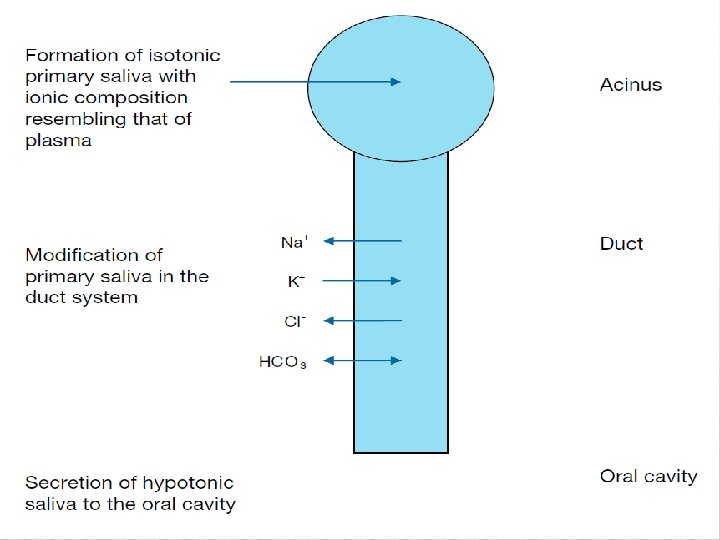
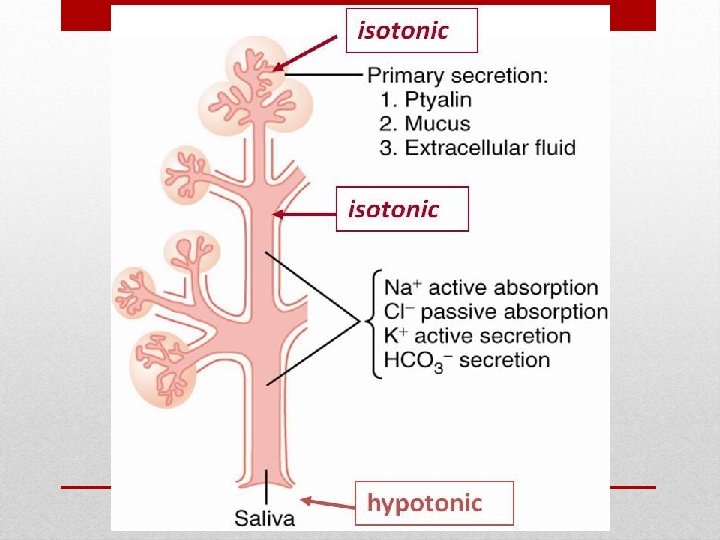
• The formation of saliva takes place in two stages: • First stage, the secretory acini produces an isotonic primary saliva with ionic composition is isotonic primary saliva similar to that of plasma. • Second stage, the primary saliva is modified as it passes through the duct system by selective reabsorption of Na+ and Cl- (but not water) and some secretion of K+ and HCO 3 - .
Acini cells
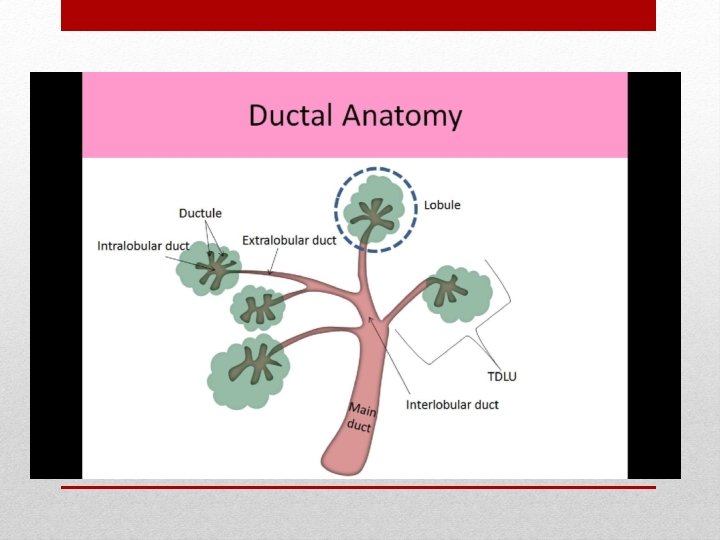
• The final saliva is secreted into the mouth. Thus, it becomes hypotonic with salt concentration below that of primary saliva. • Small ducts within salivary glands lead into larger ducts, eventually forming a single large duct that empties into the oral cavity.
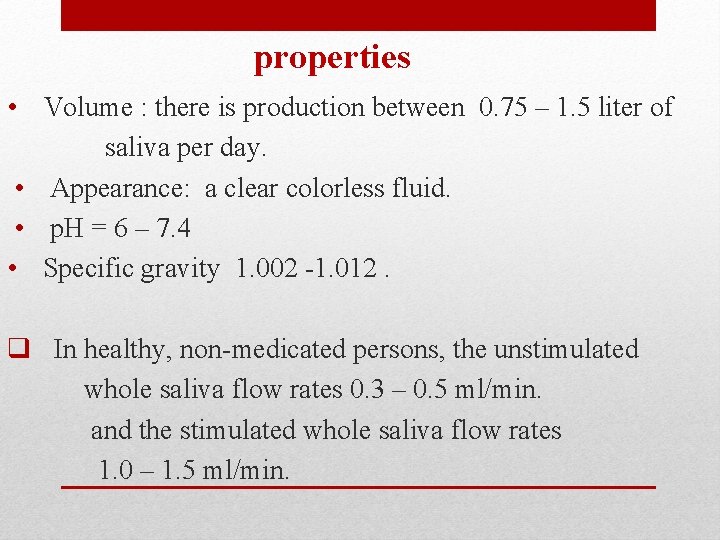
properties • Volume : there is production between 0. 75 – 1. 5 liter of saliva per day. • Appearance: a clear colorless fluid. • p. H = 6 – 7. 4 • Specific gravity 1. 002 -1. 012. q In healthy, non-medicated persons, the unstimulated whole saliva flow rates 0. 3 – 0. 5 ml/min. and the stimulated whole saliva flow rates 1. 0 – 1. 5 ml/min.
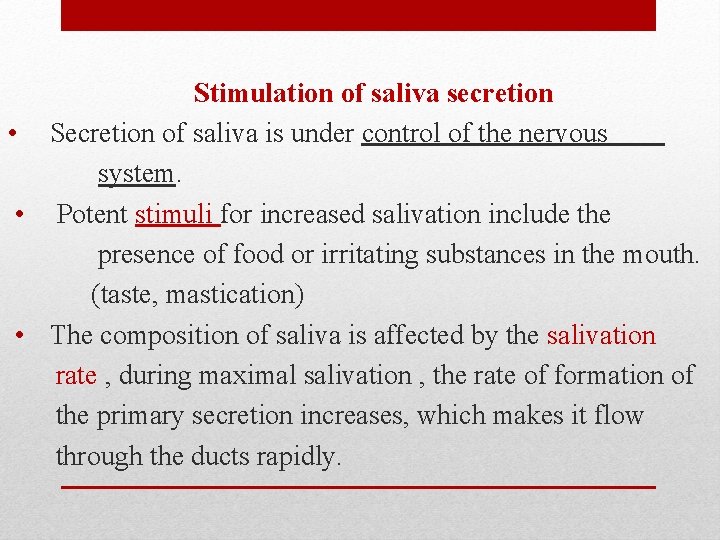
Stimulation of saliva secretion • Secretion of saliva is under control of the nervous system. • Potent stimuli for increased salivation include the presence of food or irritating substances in the mouth. (taste, mastication) • The composition of saliva is affected by the salivation rate , during maximal salivation , the rate of formation of the primary secretion increases, which makes it flow through the ducts rapidly.
Salivary Composition Normally saliva is composed of more than 99% water and less than 1% of solutes (such as electrolytes, enzymes, mucus, antibacterial compounds)
Organic Components of Saliva such as: Amylase Lysozymes Histatins Secretory Ig. A peroxidases Lipase Kallikrein proline-rich protein mucins Statherin
There are three major enzymes found in saliva. α-amylase : starts the digestion of starch before the food is even swallowed. It has a p. H optima of 7. 4. lingual lipase. Lingual lipase has a p. H optimum ~4. 0 so it is not activated until entering the acidic environment of the stomach. Antimicrobial enzymes that kill bacteria. �Lysozyme �Salivary lactoperoxidase �Lactoferrin �Immunoglobulin A ü Proline-rich proteins (function in enamel formation, Ca 2+-binding, microbe killing and lubrication)
Mucins: Mucins (glycoproteins) are essential components in human saliva. They lubricate the oral mucosa and give saliva its viscosity characteristic. Lactoferrin: It is an iron binding protein ( it can deprive microorganisms from iron acting as playing an antimicrobial role).
Statherins: It is a salivary protein that prevents precipitation or crystallization of supersaturated calcium phosphate in ductal saliva and oral fluid. Histatins: A group of small histidine-rich proteins that have an a antimicrobial and antifungal effect.
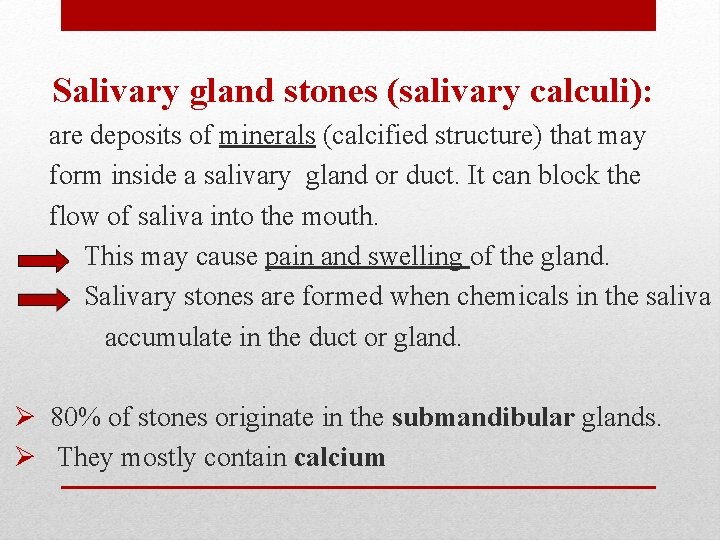
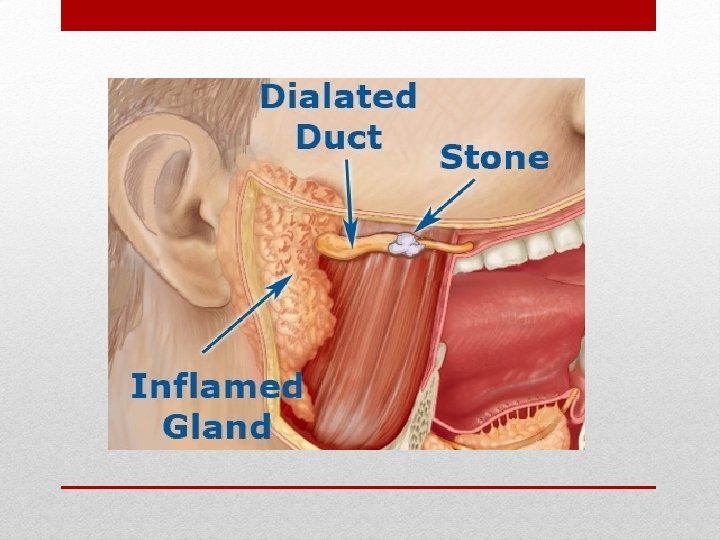
Salivary gland stones (salivary calculi): are deposits of minerals (calcified structure) that may form inside a salivary gland or duct. It can block the flow of saliva into the mouth. This may cause pain and swelling of the gland. Salivary stones are formed when chemicals in the saliva accumulate in the duct or gland. Ø 80% of stones originate in the submandibular glands. Ø They mostly contain calcium
• https: //www. youtube. com/watch? v=AEBo. OZQ_r 30 • https: //www. youtube. com/watch? v=BST 5 -J 4 x. CNE • https: //www. youtube. com/watch? v=3 j 6 f. Jxgb 1 f. M